
Review · PRIVATE
From Cusco: Ollantaytambo Fortress Half-Day Private Tour
Ollantaytambo is one of the Sacred Valley’s most rewarding stops because the Inca past is not confined to a ruin. You climb through a fortress of enormous pink granite blocks, then walk into a town where narrow streets, canals, courtyards, and old house layouts are still part of daily life. The 150-step climb to the upper ruins gives this five-hour private tour its main physical challenge.
I like the private format, which lets you spend more time on the details that catch your eye instead of moving with a large group. I also like the combination of the fortress and the living town. You get military and religious history above, then a close look at Inca urban planning below.
The main drawback is the extra cost of the Cusco Tourist Ticket, which is not included. The tour also suits people who can manage uneven ground and stairs better than wheelchair users or anyone looking for a completely easy outing.
Key points at a glance
- Climb 150 steps to the Temple of the Sun: The upper fortress contains six pink granite monoliths, each part of a structure built with remarkable weight and precision.
- See Ollantaytambo as more than a ruin: The town preserves narrow streets, canals, shared courtyards, and homes used continuously since Inca times.
- Understand its military role: Manco Inca defeated Hernando Pizarro’s Spanish troops here, giving the site a clear place in the story of resistance.
- Travel with a private bilingual guide: English and Spanish guiding is available, with pickup and drop-off from hotels in Cusco’s Historic Centre.
- Budget for the separate entrance ticket: The Cusco Tourist Ticket, known as the BTC, is required for the fortress and is not part of the $126 tour price.
- Allow five hours: The schedule covers the ride from Cusco, the archaeological complex, and a short town visit without trying to add several Sacred Valley stops.
Why Ollantaytambo makes a strong half-day trip
Ollantaytambo is about 80 kilometers from Cusco and 40 kilometers from Machu Picchu, in the province of Urubamba. Its location makes it especially useful for people who are already planning time in the Sacred Valley or continuing toward Machu Picchu, though this excursion is described as a round trip from Cusco hotels in the Historic Centre.
The site had several jobs at once. It was a religious center, a military stronghold, and a place tied to farming and food production. That mix explains why the ruins feel larger and more varied than a simple hilltop fort. You see terraces, stone platforms, large buildings, streets, and water channels working together as one planned settlement.
I like that the experience gives you a physical sense of Inca planning. Instead of looking at one isolated temple, you can trace how the settlement rose from the lower town toward the high ceremonial area. The cobbled streets and agricultural terraces help connect daily life with the more imposing stonework above.
The name Ollantaytambo comes from the Quechua term Ulla-nta-wi, translated as place to see down. That description makes sense once you reach the upper section. The high position gives the site its military value and helps you understand why the builders chose this difficult slope.
More Fortress and Citadel Tours in the world:
- Carcassonne: Castle and Ramparts Entry Ticket
★ 4.6 · 2,884 reviews - Salzburg: Hohensalzburg Fortress Admission Ticket
★ 4.6 · 2,236 reviews - Salzburg: Best of Mozart Fortress Concert and Dinner
★ 4.5 · 1,424 reviews
Starting from Cusco’s Historic Centre
Pickup and drop-off are included from hotels in Cusco’s Historic Centre. This is useful if you want door-to-door transport rather than arranging a separate taxi or trying to combine public transportation with a guided visit.
The pickup rule is narrow, so check your accommodation before booking. Private residences and Airbnb properties do not receive the included hotel pickup. If that applies to you, you need to contact the operator ahead of time and arrange a meeting point.
The tour lasts five hours, but the precise starting time depends on availability. You should think of it as a focused half-day rather than a full Sacred Valley circuit. It is designed around Ollantaytambo, not a long list of extra stops.
That focus is a strength. A private guide can explain the fortress in a clear sequence, then give you time to notice the town’s details. The tradeoff is that you do not get a broad tour of several Sacred Valley sites within the same booking.
Climbing through the fortress
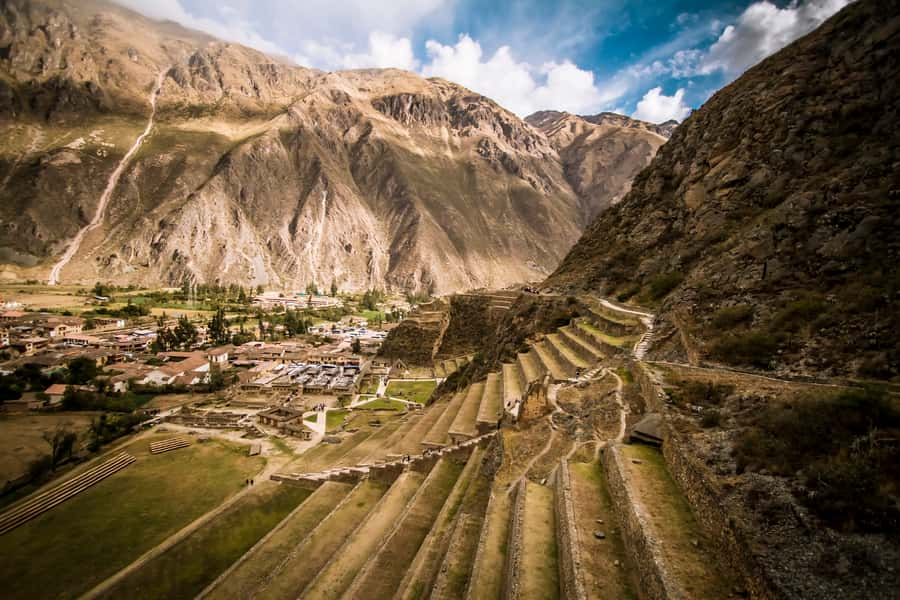
The main visit begins with the climb from the lower part of the complex toward the summit. The route includes about 150 steps. That is not an extreme number, but the stone stairs and uneven archaeological ground make comfortable shoes important.
Take the climb at a steady pace. The private format should make it easier to pause when needed, ask questions, or look back across the lower terraces. The experience is less about rushing to the top than understanding how the site rises in layers.
The fortress contains imposing buildings made from stone blocks more than four meters high. From close range, the size of the masonry changes your sense of scale. You are not simply seeing walls spread across a hillside. You are looking at a carefully assembled complex in which construction, defense, ceremony, and farming were linked.
The archaeological area can feel open and exposed, so bring sunscreen and comfortable clothing. The supplied information does not give a weather forecast or a specific dress code, so practical walking clothes are the safest choice.
The Temple of the Sun and six huge monoliths
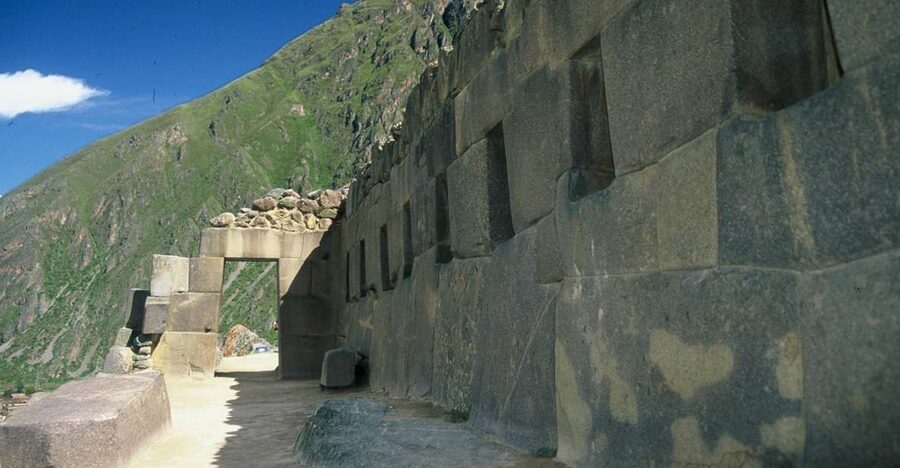
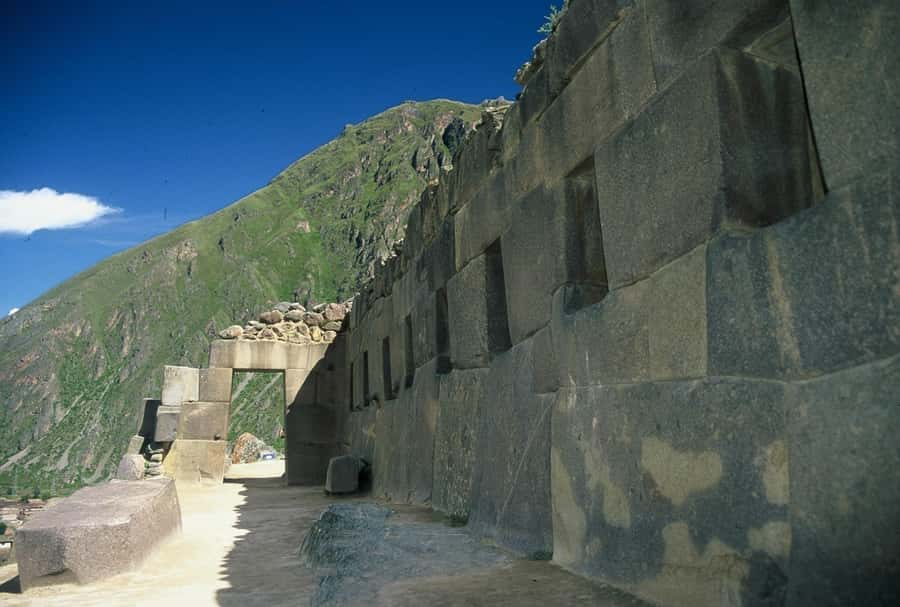
At the upper section, the Temple of the Sun is the star attraction. Its wall is formed by six enormous pink granite monoliths, each weighing more than 50 tons. Their size is the detail I would pay closest attention to, especially if your guide explains how the stones fit together and why this location mattered.
The temple is not a small shrine tucked away in the ruins. Its scale gives the upper fortress much of its power. The pink granite also contrasts with the surrounding stonework, making the structure easy to identify during the climb.
The Terrace of the Ten Niches is another important feature. Niches were built into Inca walls for ceremonial or practical purposes, and the terrace adds another layer to the site beyond the giant stones. Ask your guide to connect the terrace with the wider religious and administrative role of Ollantaytambo.
Because this is a private tour, you can shape the explanation around your interests. If you care about engineering, focus on the monoliths and platforms. If you prefer political history, ask about Manco Inca and the battle fought here. If urban design interests you, save time for the lower town and canals.
More Private Castle Tours in the world:
- Cairo Citadel, Old Cairo and Khan El Khalili: Private Tour
★ 4.6 · 741 reviews - From Amman: Jerash, Ajloun Castle or Umm Qais Private Tour
★ 4.7 · 360 reviews - Seville Private Walking Tour with Alcazar & Cathedral Tickets
★ 5.0 · 332 reviews - Sintra Cascais Private Tour with Pena Palace and Mouros Castle
★ 4.5 · 280 reviews
The place where Manco Inca won a battle
Ollantaytambo also carries a strong military story. Manco Inca confronted Hernando Pizarro’s Spanish troops here and won. That fact gives the fortress more meaning than its walls and stairways alone.
The site’s military value becomes easier to grasp from the elevated position. The terraces and high buildings created a defensible setting, while the surrounding routes through the Sacred Valley made Ollantaytambo strategically important.
I find this part of the visit most useful when it is tied directly to the physical setting. You can look from the upper ruins toward the lower settlement and see why control of the town mattered. The guide’s job is not just to recite the battle. It is to show you how the stonework and location shaped the conflict.
The supplied tour details do not name the individual guide, so you cannot choose a specific guide in advance. You can expect professional guiding in English or Spanish.
Walking the living Inca town
The half-day visit ends with a short stop in Ollantaytambo town. This is not just a modern village beside an archaeological park. Its streets and basic layout continue the urban plan established during the Inca era.
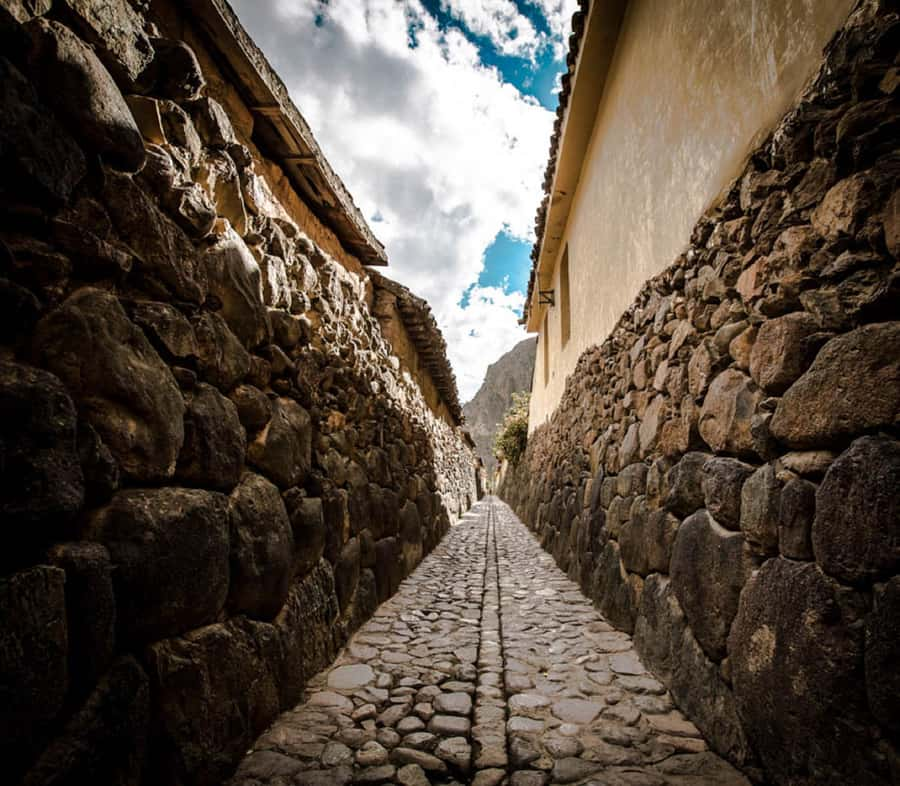
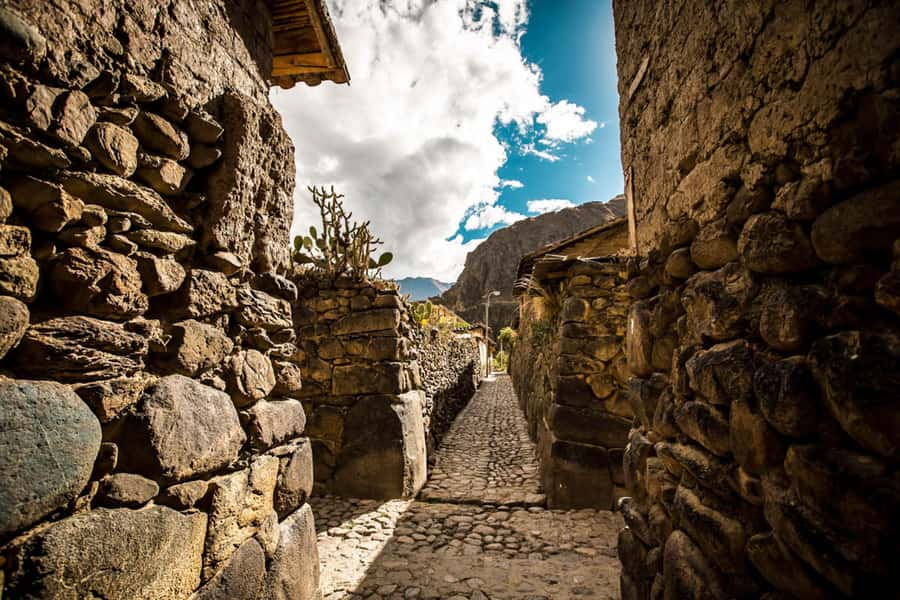
The roads are narrow, straight, and cobbled. Each block or courtyard contains a group of houses that share an entrance to a central patio. Canals run through the town, and the streets open toward the Urubamba River.
This is where the tour becomes more personal and grounded. The fortress tells you about power, religion, defense, and agriculture. The town shows how those ideas shaped ordinary movement and housing. You can see how residents still live among structures and patterns inherited from their Inca ancestors.
Small shops line parts of the town, adding a modest commercial side to the visit. You should not expect a long shopping session, since the town stop is short. The value is in walking the streets and noticing how old planning remains part of a lived place.
Ollantaytambo has been inhabited continuously since Inca times. That does not mean every building is unchanged, but the street pattern, canals, courtyards, and relationship to the river give the town a strong sense of continuity.
What the $126 price includes
At $126 per person, this is not the cheapest way to see Ollantaytambo. You are paying for a private group, round-trip transport from a qualifying Cusco hotel, and a professional bilingual guide. For two or more people who value direct transportation and personal guiding, that can be a reasonable package.
The price is less attractive if you only want transportation or prefer to explore on your own. The tour does not include the Cusco Tourist Ticket, and the ticket is required to enter Ollantaytambo fortress. Add that cost before comparing this experience with a taxi, shared excursion, or independent visit.
Personal expenses are also extra. The town has shops, so bring only the spending money you want to use. The provided details do not specify a meal or refreshments, so do not treat this as a food tour or assume lunch is included.
There is a useful booking advantage: you can reserve now and pay later, subject to availability. Cancellation is free up to 24 hours before the activity for a full refund. These terms help if your Cusco plans may shift, but they do not remove the need to arrange your fortress ticket separately.
Tax rules may affect some passengers. The stated rates do not apply to Peruvians or foreign passengers who have stayed in Peru for more than 60 days, because sales taxes are not included in the listed total and may be collected by the local operator.
Who will get the most from this tour
I would choose this tour if you want a clear introduction to Ollantaytambo without committing to a full-day Sacred Valley program. The private setup suits couples, families with older children, and small groups who want to ask questions and control the pace.
It is also a good fit if you care about the connection between archaeology and modern life. Many site visits stop at the fortress and miss the town. Here, the final walk through the old streets helps you understand the settlement as a place where people still live, not only as a preserved attraction.
You should think twice if stairs, uneven surfaces, or walking for several hours are difficult for you. The experience is not suitable for wheelchair users. Pets are not allowed, and unaccompanied minors cannot join.
If your main goal is Machu Picchu, this tour will not take you there. Ollantaytambo is about 40 kilometers from Machu Picchu, but this product is a half-day excursion from Cusco with return transportation to the Historic Centre. Do not confuse proximity on the map with inclusion in the tour.
Practical tips for making the visit better
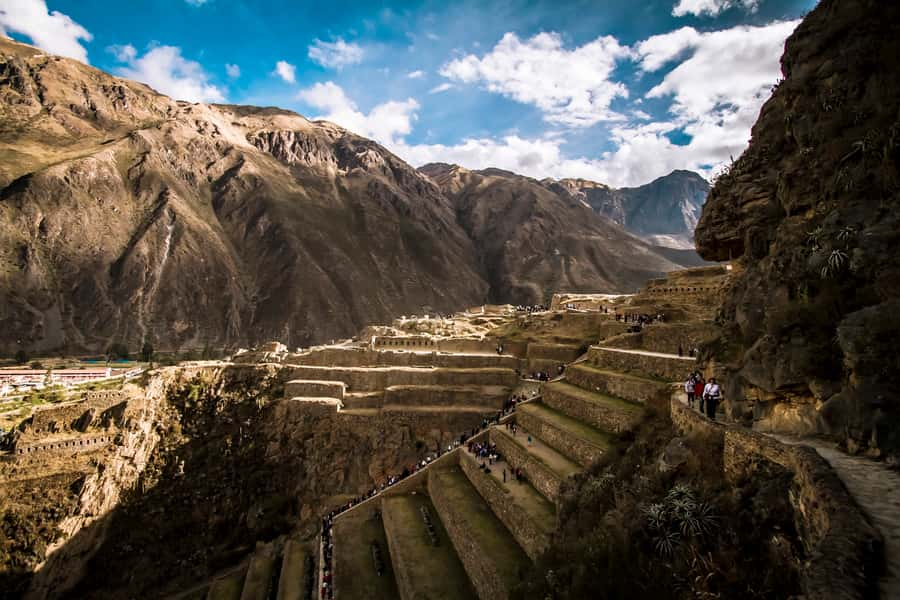
Wear shoes with a firm sole. The cobbled streets and 150 stone steps are part of the experience, but they are easier with footwear built for walking rather than fashion.
Apply sunscreen before leaving Cusco and carry comfortable clothing suitable for walking. The archaeological complex includes exposed terraces and a long climb, so you will appreciate having the basics handled before arrival.
Keep the Cusco Tourist Ticket in your planning budget. Since it is not included, confirm how and where to obtain it before the day of your visit. The tour price alone does not cover entry to the fortress.
Use the private guide well. Ask for the story behind the six pink granite stones, the purpose of the Terrace of the Ten Niches, and the way the town’s courtyards and canals fit the Inca plan. These questions will help turn a walk among impressive stones into a more connected visit.
Should you book the Ollantaytambo half-day tour?
Book it if you want private transport, bilingual guiding, and a focused visit to one of the Sacred Valley’s most important Inca sites. The strongest part is the pairing of the fortress with the living town. You get the giant stones and military setting, then the narrow streets and courtyards that still follow an old plan.
Skip it if you want the lowest possible price, need wheelchair access, or expect the Cusco Tourist Ticket to be included. For everyone else, the $126 cost can make sense when split among a small private group, especially if you value a calm pace and a guide who can connect the Temple of the Sun, the terraces, the battle site, and the town into one story.
FAQ
How long does the Ollantaytambo private tour last?
The tour lasts five hours, including transportation from Cusco’s Historic Centre, the fortress visit, and a short visit to Ollantaytambo town.
Is hotel pickup included?
Yes. Round-trip pickup and drop-off are included for hotels located in Cusco’s Historic Centre.
Can I be picked up from an Airbnb or private residence?
Not directly. Pickup from private residences and Airbnb properties is not included. You should contact the operator before the tour to arrange a meeting point.
Is the Cusco Tourist Ticket included in the price?
No. The Cusco Tourist Ticket, or BTC, is not included. You need this ticket to visit the Ollantaytambo fortress.
What languages are available for the guide?
The live guide service is available in English and Spanish.
Is this a private group tour?
Yes. The activity is organized as a private group experience.
What should I bring?
Bring comfortable shoes, sunscreen, and comfortable clothes. Pets are not allowed, and the activity is not suitable for wheelchair users.
More Half-Day Trips in the world
- From London: Half-Day Trip to Windsor with Castle Tickets
★ 4.4 · 840 reviews - From Gdansk: Half-Day Malbork Castle Tour with Audioguide
★ 4.7 · 174 reviews - From Ljubljana: Postojna Cave & Predjama Castle Half-Day
★ 4.7 · 137 reviews - Munich: Half-Day Skip-the-Line Neuschwanstein Castle Tour
★ 4.6 · 110 reviews
Newly walked in the world
- Private Tour Egyptian museum, Hanging Church, Castle of Saladin★ 5.0 · 2 reviews
- Cairo Egyptian museum, Cairo citadel and Alabaster mosque day tour★ 5.0 · 2 reviews
- Explore the History of Egyptian Museum Citadel and Khan Bazaar★ 5.0 · 2 reviews
- Egyptian Museum, Mohamed Ali Mosque and Citadel★ 5.0 · 12 reviews
- Egyptian Museum, Citadel and Old Cairo Tour★ 5.0 · 118 reviews
- Full-Day Private Guided Tour of Egyptian Museum, Pyramids and Cairo Citadel★ 5.0 · 2 reviews
- Cairo Tour to Egyptian Museum Citadel and Khan Khalili Bazaar★ 5.0 · 10 reviews
- Egyptian Museum, Cairo Citadel and Coptic Cairo Private Tour★ 5.0 · 5 reviews
Fortress & Citadel Tours, compared.



From Cairo Alexandria Catacombs, Citadel Day Trip with Lunch
Read our review →
Charleston historical walking tour with a Professor of History at The Citadel
Read our review →
Hue Customizable Tour with Imperial Citadel & Forbidden City
Read our review →
Desert Safari: Luxury Fortress Dinner, Camel Ride & Dune Bashing
Read our review →
Egyptian Museum, Citadel, and Old Cairo Guided Tour
Read our review →Browse the lists this tour appears in