
Review · PRAGUE
Prague Castle, St. Vitus Cathedral, Royal Palace, St. George’s Basilica
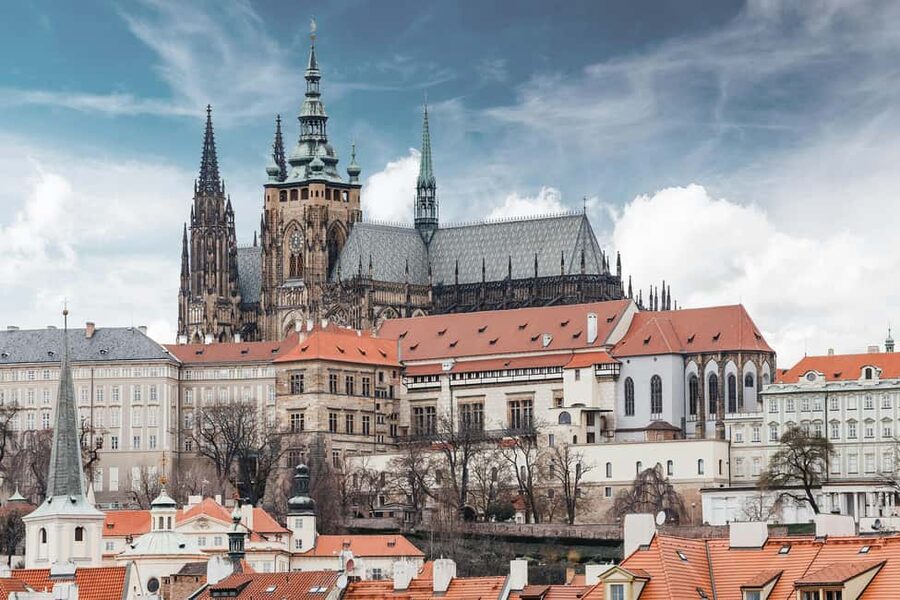
Prague Castle is best understood as a small historic city on a hill, not a single building. This three-hour tour with historian Robert Procházka takes you through its grandest interiors, from the Gothic St. Vitus Cathedral to the cramped Golden Lane, with city-wide views along the way.
I like the strong historical focus and the chance to visit several major buildings in one outing. I also like the practical arrangement: Robert helps you buy the admission ticket at a guide-only counter, so you spend less time waiting and more time inside.
The main consideration is that this is a serious history tour in German. Robert gives a great deal of information, which suits curious adults but may feel heavy if you prefer a quick architectural stroll. The castle interiors can also be cold, so bring an extra layer.
Key points to know
- Historian Robert Procházka leads the tour in German, with clear explanations and plenty of detail.
- The route covers four major sights: St. Vitus Cathedral, the Old Royal Palace, St. George’s Basilica, and Golden Lane.
- Admission is separate: adults pay 18 EUR and seniors aged 65 or older pay 14 EUR.
- The tour begins at the Pražský hrad tram stop and ends in Golden Lane.
- You get views across Prague from the castle grounds, along with Gothic, Renaissance, and Baroque architecture.
- Children under 10 are not accepted, and the tour is best for people who enjoy historical context.
Why this Prague Castle tour works well
Prague Castle can feel confusing on your own. It is a large enclosed complex with courtyards, churches, royal buildings, narrow lanes, and changing architectural styles. A guide gives the place a clear sequence.
Robert’s background as a historian matters here. You are not simply pointed toward a stained-glass window or an old tomb. You learn why the building exists, who used it, and how power shifted between Bohemian kings, emperors, religious leaders, and political factions.
The tour lasts three hours, enough time to see the main paid interiors without trying to cover every corner of the castle grounds. It is a good length for a first visit. You get substance, but you do not spend an entire day indoors.
The German-language format is central to the experience. The information is presented directly in German, and the tour is designed for people who want to ask questions and follow a detailed explanation. Robert’s pleasant speaking voice and clear German have been especially useful for families and mixed-age groups, including visitors whose children are adults.
One family described the tour as a private experience, with Robert adjusting the pace and steering around larger groups. Group size can vary, so you should not assume every departure will be private. Still, the tour’s small-scale feel is one of its appealing features when numbers are low.
More Castle and Cathedral Tours in Prague
- ️ Segway Fun Tour of Prague to Castle and Strahov Monastery viewpoint & Brewery
★ 5.0 · 188 reviews - Classic Prague Castle Tour, Strahov Monastery & Castle District
★ 5.0 · 182 reviews - Saint Vitus Cathedral and Hidden Gems of Prague Castle
★ 5.0 · 26 reviews
Meeting Robert at the Pražský hrad stop
The meeting point is the Pražský hrad tram stop, served by tram lines 22 and 23 in the direction of Bílá hora. Robert waits at the stop, which keeps the start simple. You do not need to search for a café, street corner, or separate office inside the castle grounds.
Arrive at the named stop rather than merely heading toward the castle. The tram is an important part of the plan, since the meeting point is specifically beside the stop. Once you meet Robert, he guides you toward the complex and helps arrange the required admission.
The tour finishes in Golden Lane, so it does not return you to the original meeting point. That is useful because Golden Lane is part of the castle visit, not an optional detour. It also means you should plan your next stop from the end point rather than from the tram stop where you began.
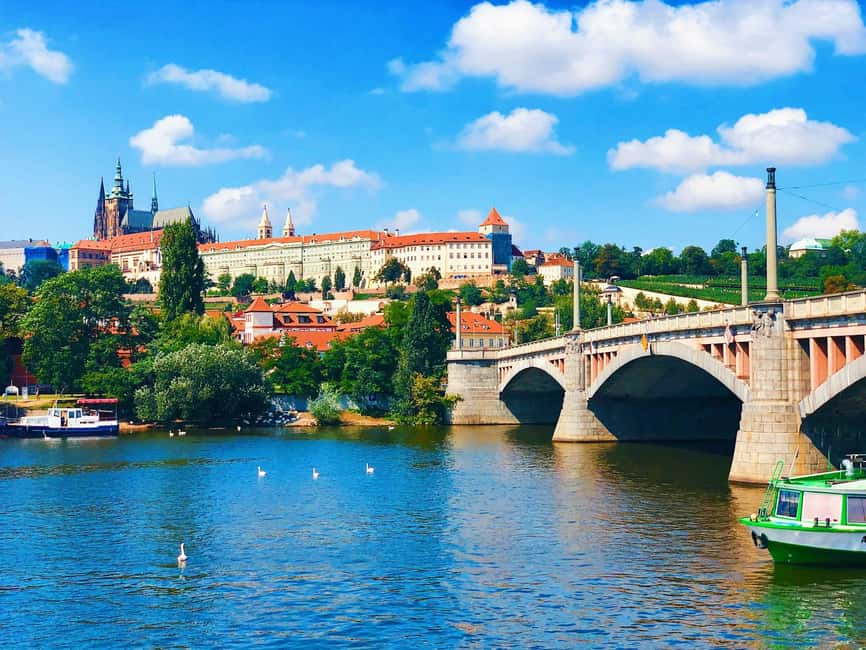
The castle is high above central Prague, and the approach gives you a change of perspective. You see the city spread below, with the castle grounds providing some of the best broad views in Prague. The exact view depends on where you are standing and the conditions, but the setting is a major part of the outing.
St. Vitus Cathedral and the Bohemian crown
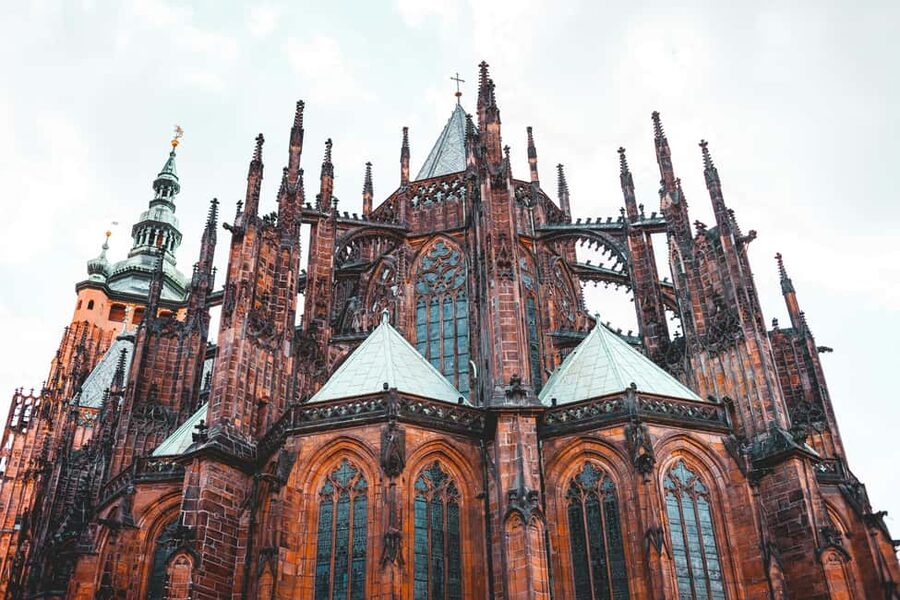
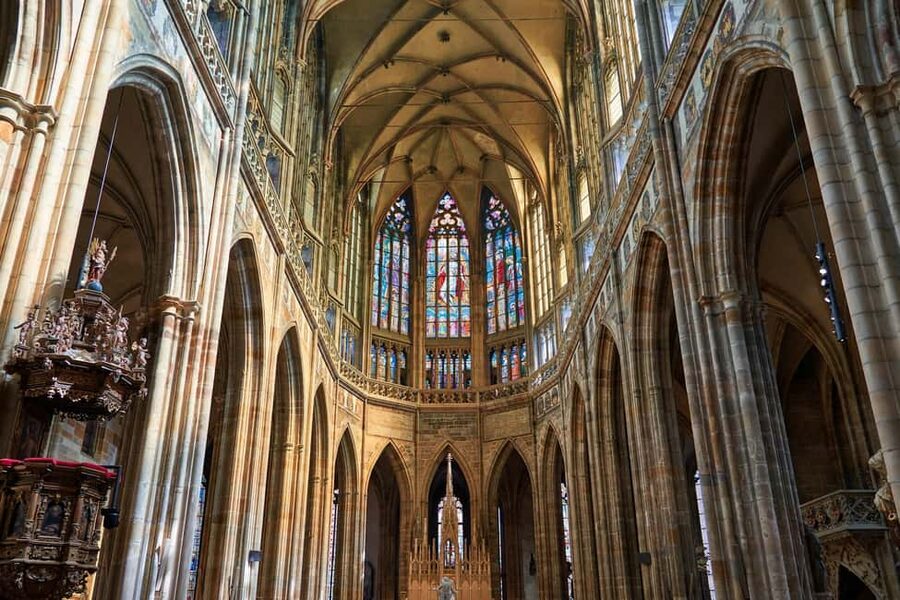
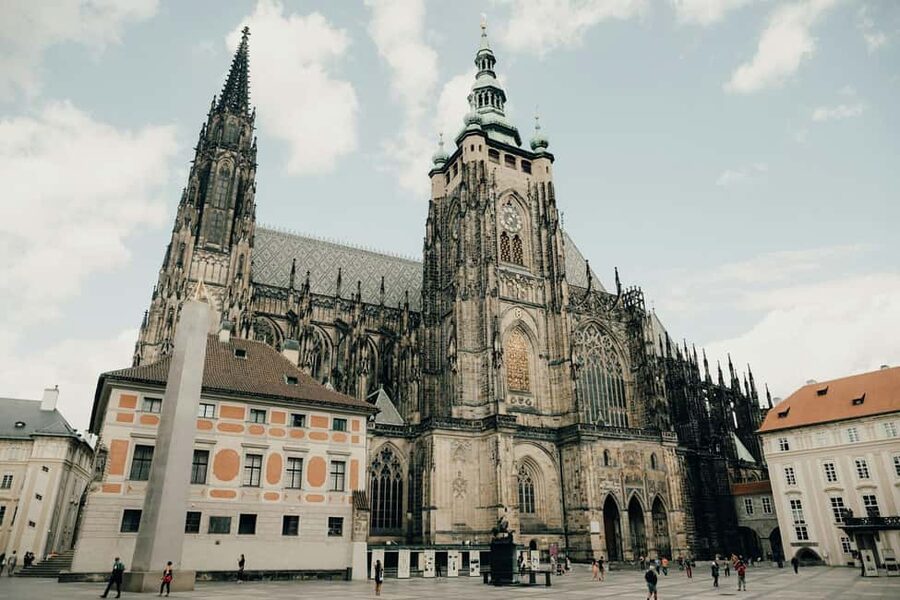
St. Vitus Cathedral is the emotional center of the tour. Its tall Gothic forms, chapels, tombs, and stained glass can feel overwhelming if you walk in without context. Robert helps sort the centuries into a story you can follow.
The cathedral is the burial and coronation church of Bohemian kings. Its oldest predecessor was a Romanesque rotunda founded around 925. The current Gothic masterpiece belongs mainly to the 14th century, though the building’s long development brought several periods together.
That mixture is worth watching. Prague Castle is not a clean architectural time capsule. Gothic work sits beside later Renaissance and Baroque additions, and the cathedral carries the marks of a project that developed over many generations.
The cathedral also holds the remains of important Czech patron saints, including St. Wenceslas and St. Adalbert. These names are not just decorative pieces of national mythology. They help explain why the cathedral became such an important religious and political center.
The St. Wenceslas Chapel is one of the most memorable details. It is decorated with semi-precious stones and contains the bones of St. Wenceslas in a Gothic shrine. A spiral staircase from the chapel leads toward the Crown Chamber, where the coronation insignia are kept.
You should not assume that every restricted chamber is open for ordinary viewing. The value of the explanation is partly in understanding how the chapel, shrine, crown, and royal ceremony fit together. This is where Robert’s historical detail adds more than a quick visit alone can provide.
Give yourself time to look upward. Gothic architecture is designed to pull your eye toward height, but the smaller details matter just as much: the chapels, stonework, tombs, and symbols of royal authority. If you try to hurry through, the cathedral becomes a blur of grand surfaces.
The Old Royal Palace and the Defenestration
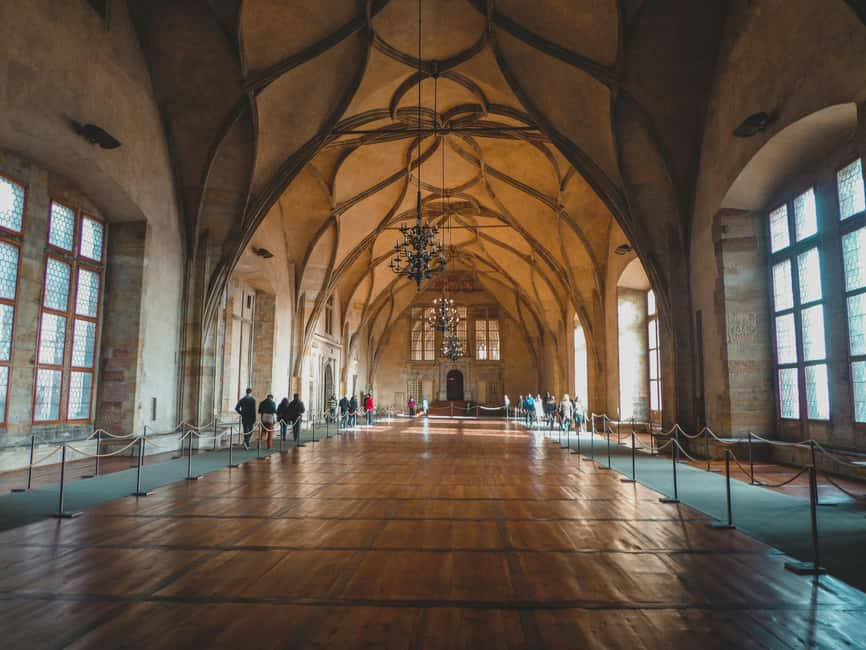
The Old Royal Palace brings the story out of church ceremony and into government. Here you see the largest late Gothic throne room in Central Europe, along with the State Chancellery, the site of Prague’s Third Defenestration.
The term sounds almost comic until you understand what happened. Political enemies were thrown from a window, an act that helped trigger the Thirty Years’ War. Robert’s explanation gives the event its proper weight and connects one dramatic moment to a much wider conflict.
The palace is also where you can see a replica of the Bohemian crown jewels. The replica allows you to understand the appearance and symbolism of the regalia without relying on a fleeting glimpse of the originals.
I like this stop because it balances the cathedral. St. Vitus shows royal power in sacred form. The Old Royal Palace shows how that power worked through courts, officials, rival factions, and political decisions. Together, they make the castle feel like a working seat of government rather than a collection of pretty rooms.
This section will appeal most if you like precise detail. Robert can explain the sequence of events, the people involved, and the setting in a way that rewards attention. If you prefer only the broad outline, the amount of information may feel dense.
A useful approach is to ask questions as they arise. Robert has been praised for taking questions seriously and explaining difficult subjects in an understandable way. You do not need advanced knowledge of Czech or European history, but some interest helps.
More Palace Tours in Prague:
- Prague: Prague Castle and Lobkowicz Palace Entry Tickets
★ 4.4 · 5,066 reviews - Prague Castle: Midday Classical Concert at Lobkowicz Palace
★ 4.6 · 1,106 reviews - Prague Castle: Royal Palace, Cathedral, and Golden Lane Tour
★ 4.4 · 24 reviews - Koblenz: Rhine Valley Castles and Palaces Boat Tour
★ 4.4 · 1,824 reviews
St. George’s Basilica and the story of Ludmila
St. George’s Basilica offers a different mood. Founded in the 10th century, it is older and more restrained than the cathedral. The Romanesque character gives you a clearer sense of the castle’s early religious foundations.
The basilica contains the tomb of St. Ludmila, the grandmother of St. Wenceslas. Her story is grim. She was strangled by Viking warriors acting on behalf of her daughter-in-law.
That detail may sound like a side story, but it shows how family, religion, and political power were tightly connected in early Bohemian history. Royal succession was not a smooth family matter. It could involve rival loyalties, violence, and competing claims to influence.
The basilica is a good place to slow down after the cathedral and royal palace. Its scale and age make it feel more intimate. You can focus on the architecture and the tombs without the same visual overload found in St. Vitus.
Robert’s approach is especially helpful here because the building’s importance may not be obvious at first glance. A smaller church can seem less impressive than the cathedral, yet its age and connection to early Czech rulers make it essential to the castle story.
Golden Lane, alchemists, and Franz Kafka
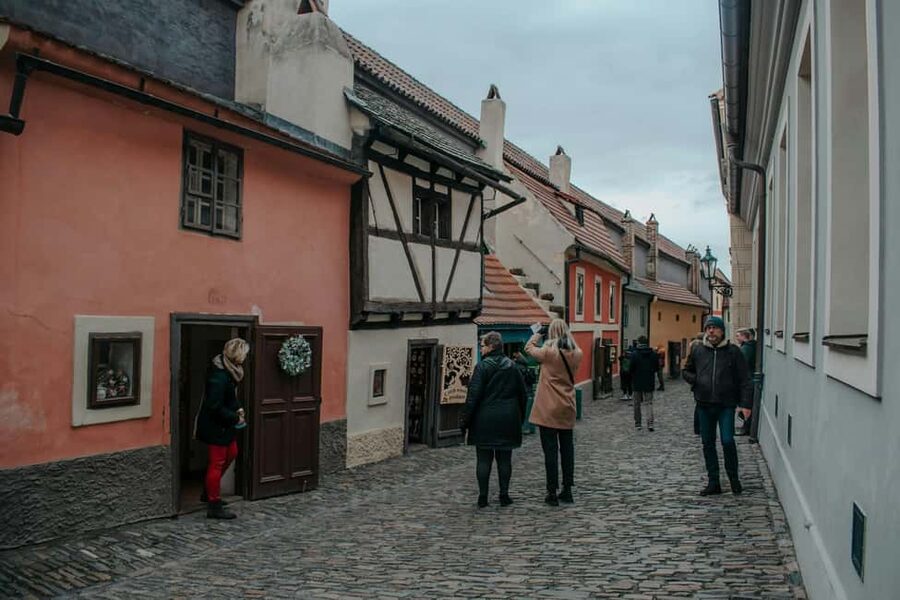
Golden Lane is the most picturesque stop and the tour’s endpoint. Its small, colorful houses create a sharp contrast with the ceremonial spaces you have just visited.
The lane takes you back to the 16th century, when Emperor Rudolf II’s alchemists were said to work in the castle area. Their goal was ambitious: find an elixir of life and turn lead into gold. The stories sit somewhere between science, court intrigue, and legend, which makes Golden Lane an enjoyable change of pace.
The tiny homes also show a less grand side of castle life. After seeing royal halls and religious monuments, you get a glimpse of cramped domestic spaces. The contrast helps you picture the castle as a place where people of very different status worked and lived.
Franz Kafka also lived in one of the little houses. His connection gives the lane a literary link, though you should not expect a full Kafka-focused visit. The stop is about the lane’s atmosphere and its changing uses, with Kafka as one part of the story.
Because the tour ends here, you can continue exploring on your own if you want more time. The practical advantage is that Robert does not rush you back to the starting point after Golden Lane. You finish at a natural point in the castle complex.
Architecture across several centuries
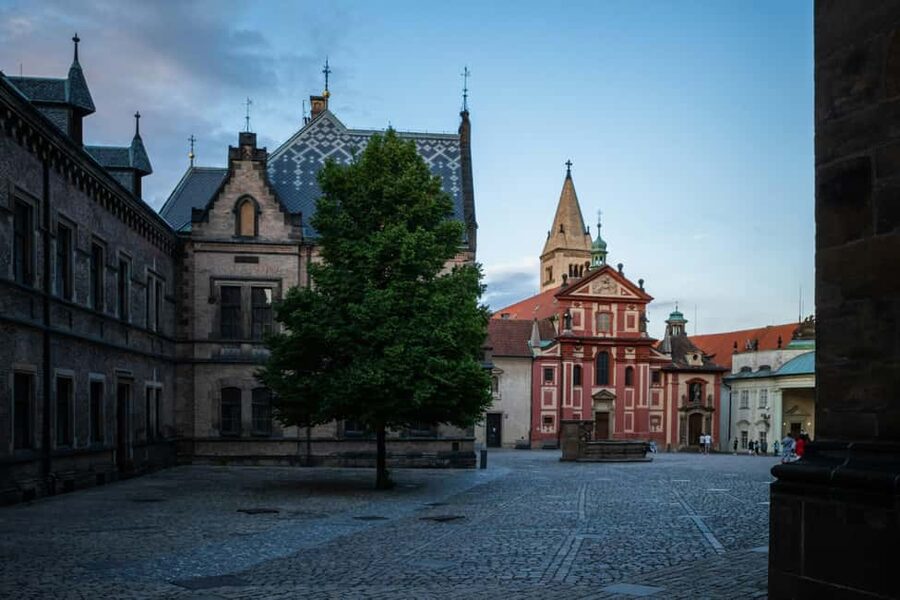
One reason this tour earns its price is the variety of architecture packed into three hours. You move between Gothic, Renaissance, Baroque, Romanesque, and later domestic forms without leaving the castle grounds.
St. Vitus Cathedral gives you the great Gothic experience: vertical lines, elaborate chapels, royal tombs, and a sense of religious authority. The Old Royal Palace brings late Gothic government architecture. St. George’s Basilica preserves an older Romanesque character, while Golden Lane offers small-scale historic buildings rather than grand monuments.
You also get the wider setting. The grounds are listed in the Guinness Book of Records as the largest enclosed castle grounds in the world. That claim helps explain why the complex feels more like a district than a single attraction.
Do not expect every minute to involve a dramatic view. Much of the tour takes place indoors, where the reward is architecture and explanation. The broad views of Prague come from the castle setting and selected points around the grounds, not from a continuous sightseeing platform.
The changing styles are easier to appreciate when someone points them out. On your own, you may notice that one building feels older than another. With Robert, you can connect those differences to dates, rulers, religious functions, and rebuilding.
What the 43 dollar price really includes
The tour costs 43 dollars per person, but that price does not include entrance to the four paid sights. Admission is 18 EUR for adults and 14 EUR for seniors aged 65 or older.
That puts the adult cost at 43 dollars plus 18 EUR, before any currency conversion. It is important to add the ticket expense when comparing this outing with a general walking tour or a self-guided castle visit.
The guide helps you buy the ticket at a counter reserved for guides. You can pay by card at the castle cashier, or give the admission amount in euros directly to Robert, who obtains the ticket for you. This is a useful service, particularly when the regular ticket line is long.
The value depends on how much you want from the visit. If you only want to see the castle courtyards and take photos, the added cost may not suit you. If you want the interiors explained in German by a historian, the price is easier to justify.
You are paying for structure, historical interpretation, and help with the admission process. The tour also saves you from trying to connect four separate sights on your own. For a first Prague visit, that can be worth more than a few euros saved.
Who will enjoy it most
I would choose this tour if you enjoy history, architecture, and detailed explanations. It is particularly suitable for German-speaking adults, older families, and couples who want to ask questions rather than simply follow a large flag through the castle.
The tour has also worked well for families with older children. Children under 10 are not accepted, and the amount of information makes it better for teenagers and adults than for young kids. A family with adult children found it to be the strongest outing of their Prague stay, which fits the tour’s serious but friendly style.
You should think twice if you want a light, fast introduction. Robert gives a lot of detail, and one participant felt the information could be overwhelming without at least a little background interest. That is a fair warning.
The physical setting also matters. Castle interiors can be cold, especially in winter. Wear warm clothing even if the weather outside seems mild. Comfortable shoes are sensible because the tour moves through a large complex, though the supplied details do not specify the exact amount of walking or the presence of stairs.
Booking details worth knowing
The tour lasts three hours, with starting times available according to the date you choose. It is conducted in German, and some content may be shown in its original language.
You can reserve now and pay later, which keeps your plans flexible. Cancellation is free up to 24 hours before the tour for a full refund.
The meeting point is the Pražský hrad tram stop on line 22 or 23 toward Bílá hora. The end point is Golden Lane. Since the tour does not finish where it begins, plan your afternoon from the castle’s interior rather than allowing time to return to the original tram stop.
Should you book this Prague Castle tour?
Book it if you want the castle explained by a historian, especially in German. Robert Procházka’s strength is detail, clarity, and a willingness to answer questions. The four-part route gives you the essential interiors, and the final stop in Golden Lane ends the visit on a lighter, more visual note.
Skip it if you prefer to wander independently, dislike long historical explanations, or want a tour with admission already included in the headline price. Remember to budget the separate 18 EUR adult ticket, or 14 EUR senior ticket.
For the right audience, this is a strong way to understand Prague Castle as a place of worship, government, legend, and everyday life. Bring warm clothes, allow three focused hours, and arrive at the correct tram stop. You will leave with more than photographs of beautiful buildings. You will understand why this hill has shaped Prague for centuries.
FAQ
How long does the Prague Castle tour last?
The tour lasts three hours.
In which language is the tour conducted?
The live tour is conducted in German. Some content is shown in its original language.
Where does the tour meet?
The meeting point is at the Pražský hrad, or Prague Castle, tram stop. Take tram line 22 or 23 in the direction of Bílá hora. Robert Procházka waits at the stop.
Which sights are included in the route?
The route includes St. Vitus Cathedral, the Old Royal Palace, St. George’s Basilica, and Golden Lane.
Is admission included in the 43 dollar tour price?
No. Admission to the four sights costs extra. Adults pay 18 EUR, while seniors aged 65 or older pay 14 EUR.
Can I pay for the admission ticket by card?
Yes. Robert accompanies you to the castle cashier, where you can pay for the admission ticket by payment card. You can also give the admission amount in euros directly to Robert, who will obtain the ticket for you.
Is the tour suitable for young children?
Children under 10 are not permitted. The detailed historical content is best suited to older children, teenagers, and adults.
Newly walked in Prague
- Tour of Prague Castle in italian language ticket included★ 4.9 · 25 reviews
- Tour around Prague Castle and Lesser Town in Spanish★ 5.0 · 2 reviews
- Prague Castle: Admission Ticket With Transfer And Audioguide★ 4.5 · 111 reviews
- Private Walking tour: From Charles Bridge to Prague Castle★ 4.7 · 13 reviews
- Prague: Castle and Jewish Quarter Tour★ 4.8 · 45 reviews
- Coutryside e-bike tour to Karlstejn Castle★ 4.9 · 9 reviews
- Prague: Tour to Prague Castle with tickets included. Spanish★ 4.8 · 4 reviews
- Prague’s Best Hidden Gem: Vysehrad Castle & Historic Fort★ 5.0 · 17 reviews
Castle & Cathedral Tours, compared.
Alcázar, Cathedral & Giralda Skip-the-Line Tour
Read our review →
Segovia and Toledo Tour, Alcazar, and Cathedral
Read our review →
Alcazar and Cathedral of Seville Tour with Skip the Line Tickets
Read our review →
Toledo & Segovia Tour with Cathedral and Alcazar Tickets & Lunch
Read our review →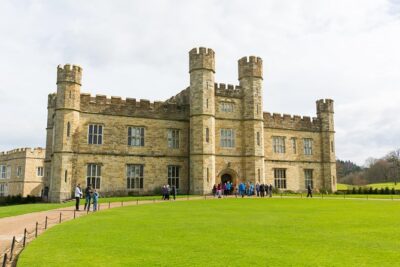
Leeds Castle, Cliffs of Dover and Canterbury Day Trip from London with Guided Cathedral Tour
Read our review →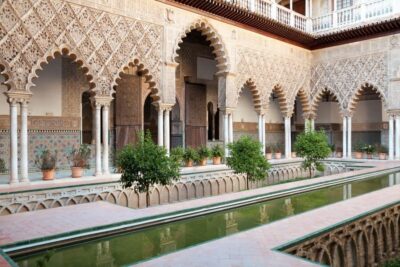
Alcázar, Cathedral & Giralda Fast Track Guided Tour
Read our review →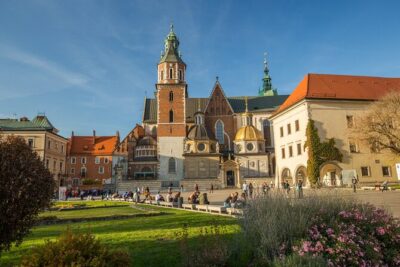
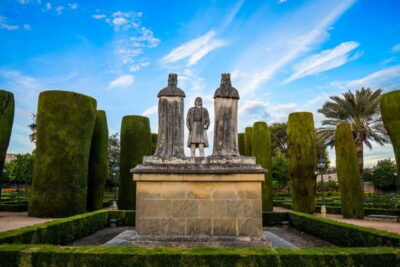
Mosque-Cathedral, Jewish Quarter and Alcázar Tour
Read our review →Browse the lists this tour appears in