
Review · VIETNAM
Hue Customizable Tour with Imperial Citadel & Forbidden City
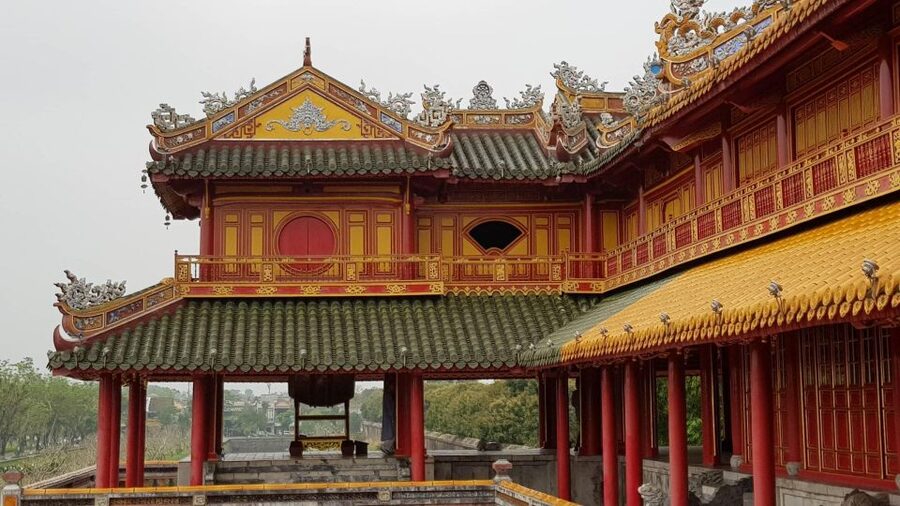
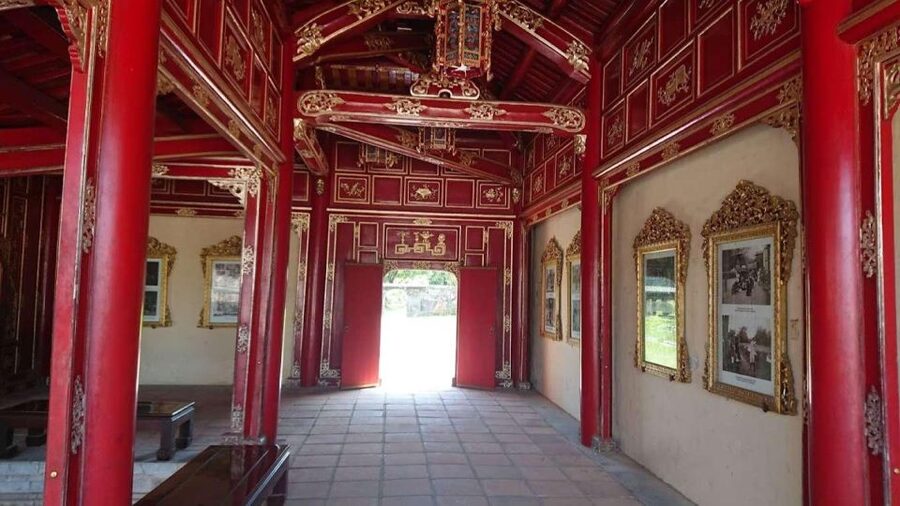
Hue’s Imperial Citadel makes much more sense with someone to explain it. A palace roof may look beautiful on its own, but the numbers, animals, colors, Confucian order, Feng shui, and Buddhist symbols turn the site into a readable map of royal power. This experience gives you a local guide for the main walking option, with about two and a half hours inside the citadel and Forbidden Purple City.
I like the small-group feel and flexible pace. Guides such as Misa, Nhi, Ha, Duy, Linh, and Nhien are praised for clear English, good storytelling, and giving people time for questions and photos. I also like the choice between a focused walking tour and a private car day that can include Minh Mang, Tu Duc, or Khai Dinh Tomb.
The main catch is simple: the $12 price does not include entry tickets, and the private car option comes with a driver rather than a licensed tour guide. You need to choose carefully at booking, since the walking tour meets at the citadel while car pickup is available from selected city-center locations.
Key points to know before you book
- Two very different tour styles: Choose a guided 150-minute walk inside the Imperial Citadel, or a private car itinerary lasting up to eight hours.
- The Forbidden Purple City is the heart of the walk: You learn how emperors, queens, secondary wives, concubines, and eunuchs lived within the royal compound.
- Guides bring meaning to the architecture: Misa, Nhi, Ha, Duy, Linh, Nhien, and other local guides explain royal customs, symbols, ceremonies, and the Nguyen emperors.
- The car option is built for sightseeing beyond the citadel: Add Thien Mu Pagoda, three imperial tombs, or Thuy Tien Abandoned Water Park.
- Entry tickets cost extra: Imperial City admission is listed at 200,000 Vietnamese dong for adults, with combo tickets available for the citadel and two or three tombs.
- Heat and rain matter: You will walk outdoors for much of the citadel visit, so early morning timing, water, shade, and sensible shoes make a real difference.
Why a guide changes the Hue Citadel visit
Hue’s Imperial City is large enough to overwhelm you if you simply wander through the gates. You see courtyards, temples, restored buildings, gardens, and empty spaces, but without context it can be hard to know what mattered and why.
A good guide gives the place a human shape. You learn about the Nguyen emperors, the order of court life, the role of ceremonies, and the private world behind the official palace buildings. The stories include emperors, wives, concubines, eunuchs, royal families, and the strict rules that separated public duties from daily life.
The strongest part of this tour is the explanation of symbolism. Guides have used questions and simple examples to show how Confucian ideas shaped the court, how Feng shui influenced the placement of buildings, and how animals and numbers carried meaning. That is useful for families, too. Children may not remember every emperor, but they often remember why a dragon, turtle, or certain number appears in the decoration.
The guides also adjust well to the group. Misa is noted for a calm pace, warm humor, and clear explanations. Nhi has been praised for making the history accessible and entertaining. Ha, Duy, Linh, and Nhien are also frequently described as friendly, patient, and easy to understand. Those details matter because the site involves a lot of walking and plenty of information.
More Fortress and Citadel Tours in the world:
- Carcassonne: Castle and Ramparts Entry Ticket
★ 4.6 · 2,884 reviews - Salzburg: Hohensalzburg Fortress Admission Ticket
★ 4.6 · 2,236 reviews - Salzburg: Best of Mozart Fortress Concert and Dinner
★ 4.5 · 1,424 reviews
Meeting the guide at the Nine Holy Cannons
The walking tour begins at the four bronze cannons near Ngan Gate, also called Cua Ngan. Look for a guide holding an A4 sheet with your name. There are five cannons on the opposite side, so check the meeting point carefully.
The Nine Holy Cannons are a fitting introduction to Hue’s royal past. Hue artisans cast them in 1803, during the second year of Emperor Gia Long’s reign. They are valued both as weapons and as bronze works of art. During the reign of Emperor Khai Dinh, they were moved to their present location.
You usually spend about 15 minutes here, enough for an explanation, photographs, and a first look at the defensive walls. The cannons help set up the story of the Nguyen Dynasty, but they are not the main event. The real reward begins once you enter the royal compound.
From the Flag Tower to Noon Gate
The Flag Tower rises from the middle of the citadel’s southern side, inside the Nam Chanh fortress. It remains one of Hue’s most recognizable landmarks, with the royal flag flying above the old defensive complex.
The stop is short, around five minutes, but it gives you a clear view of the southern approach. From here, your guide can explain how the citadel was organized and why the southern entrance mattered.
Next comes Noon Gate, or Ngo Mon Gate. Built in 1833 under Emperor Minh Mang, it was used for royal ceremonies and troop movements. Its position and formal design show how carefully the court controlled access to the emperor.
You get around 15 minutes here for photographs and an introduction to the royal route. The gate can be busy and bright, so listen closely before moving inside. The large scale is impressive, but the guide’s explanation of who could pass through which spaces is what makes the gate memorable.
Supreme Harmony Palace and the center of royal power
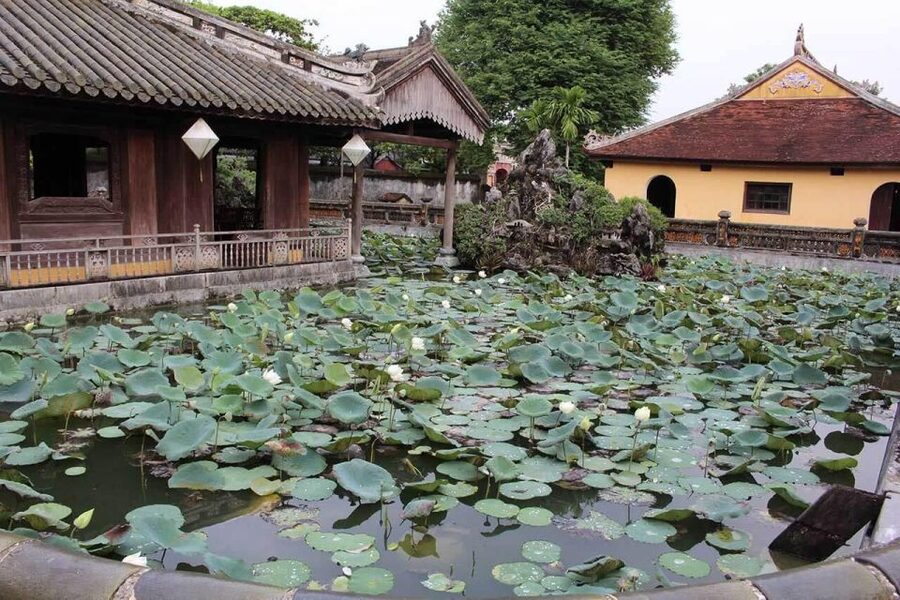
Supreme Harmony Palace, also called Thai Hoa Palace, was the coronation site for 13 Nguyen emperors, from Gia Long to Bao Dai. In the old imperial system, this was not simply a grand hall. It was treated as the symbolic center of the country.
The tour allows about 15 minutes here. You may hear about ceremonies, imperial authority, court etiquette, and the meaning of the palace’s placement within the citadel. The building has suffered damage over time, including wartime destruction across the wider complex, and some areas have been restored. That means you should appreciate both what survives and what has been rebuilt.
This is one of the places where a guide adds real value. The architecture can seem formal and repetitive at first glance. Once you understand the role of the hall and the rituals held there, the scale feels less decorative and more political.
More Castle Tours in the world:
- Seville: Royal Alcázar Entry Ticket
★ 4.6 · 28,378 reviews - Stonehenge, Windsor Castle, and Bath from London
★ 4.5 · 18,662 reviews - Bucharest: Dracula’s Castle, Peles Castle, & Brasov Old Town
★ 4.5 · 17,858 reviews - From Munich: Neuschwanstein & Linderhof Castle Full-Day Trip
★ 4.6 · 14,646 reviews
Hien Lam Pavilion, the dynastic urns, and the temple precinct
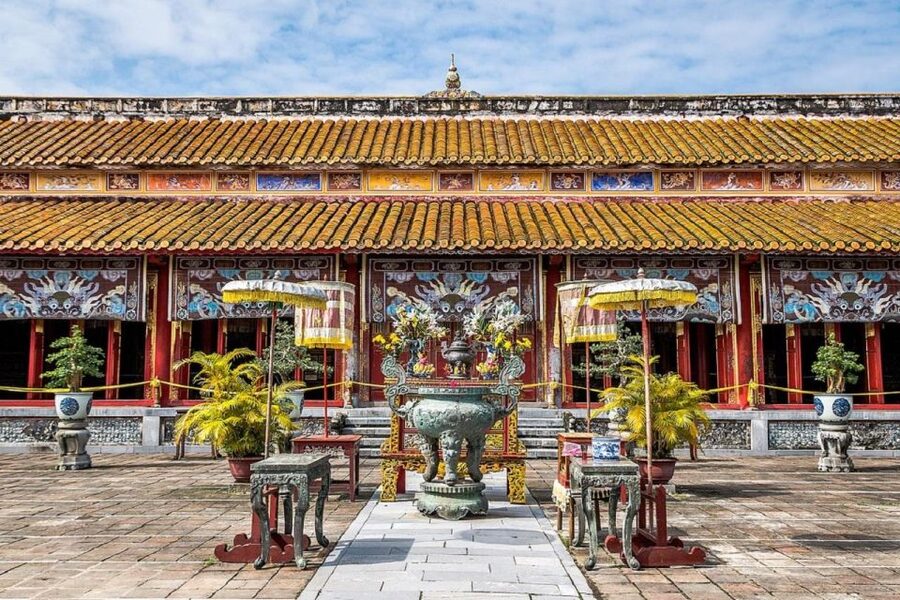
Hien Lam Pavilion comes next, followed by the Nine Dynastic Urns. These stops explain how the Nguyen court presented its own legitimacy and memory.
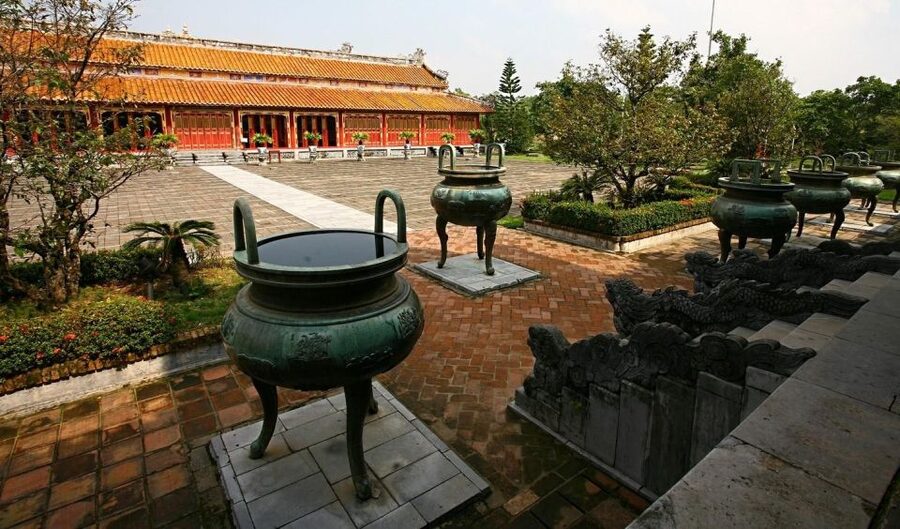
Emperor Minh Mang commissioned the nine bronze urns in 1835, and they were completed in 1837. They sit in front of The Mieu Temple, with each urn connected to an emperor and the dynasty’s official story. Their decoration includes symbolic images linked to the natural world, government, and royal authority.
Allow around 15 minutes for the pavilion and another 15 minutes for the urns. These are excellent stops for anyone interested in Vietnamese art, symbolism, or political history. The urns are not just large metal containers. They function as a permanent statement about the Nguyen line.
The temple area includes The Mieu, built in 1821 by Emperor Minh Mang. It was used to honor ten Nguyen emperors. You may also visit Hung To Mieu and Hung Mieu, smaller temple sites included in the route. The pace here is usually measured, with time for photographs and questions.
The temple buildings can feel quieter than the main gate and palace. I like that change of mood. After the public ceremony areas, you get a better sense of ancestor worship and the importance of continuity in the royal court.
Walking through the Forbidden Purple City
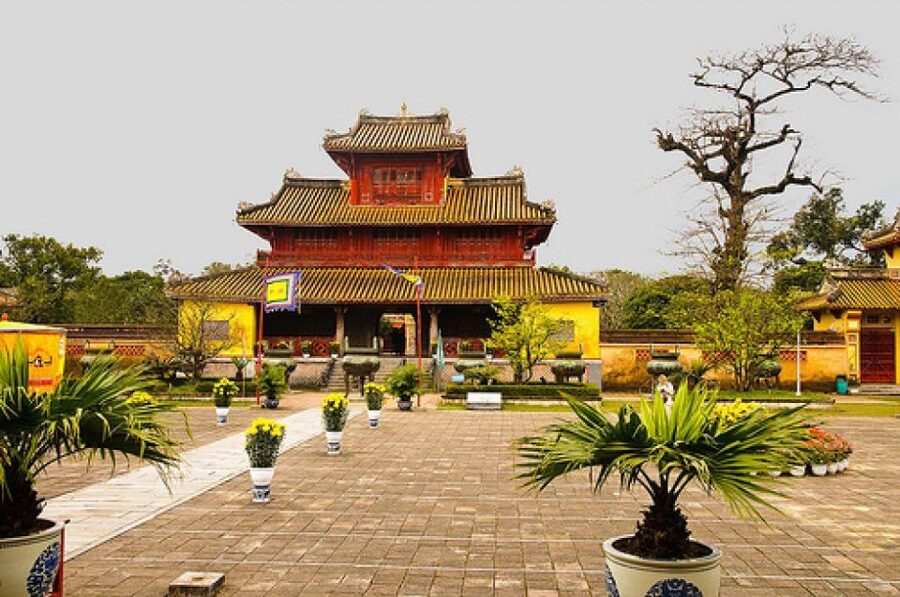
The Forbidden Purple City is the emotional center of the walking tour. It was first built by Gia Long in 1804 and renamed during Minh Mang’s reign in 1822. Located behind Thai Hoa Palace, it was the private center of imperial life.
This is where the tour moves from public authority to domestic court life. Your guide explains how the emperor, queens, secondary wives, concubines, and eunuchs fit into the palace system. The subject can be complex, but it is one of the most interesting parts of the experience because it shows that the citadel was not only a place for official ceremonies.
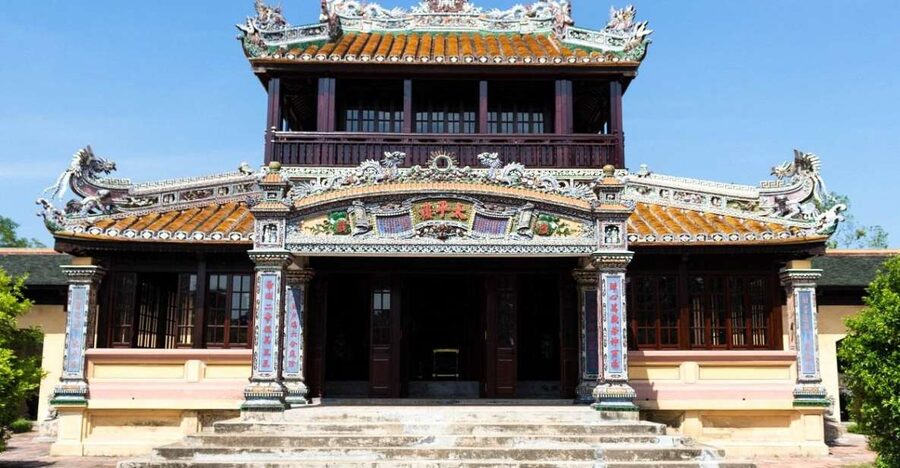
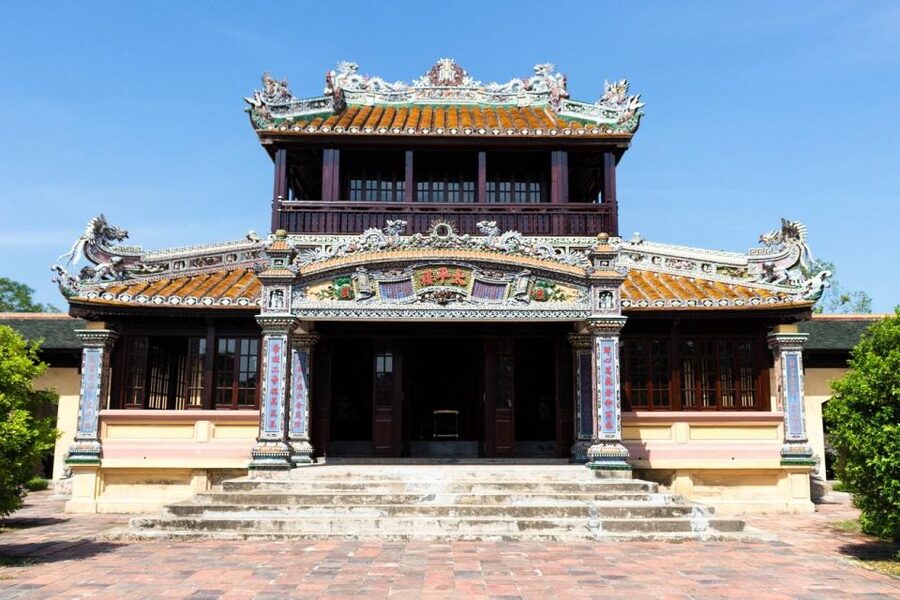
The route through the wider Imperial City lasts about two hours, with shorter stops at individual buildings and gardens. You may see or pass by Kien Trung Palace, Thai Binh Pavilion, Thieu Phuong Garden, Duyet Thi Duong Royal Theater, Trieu To Mieu, and Hien Nhon Gate.
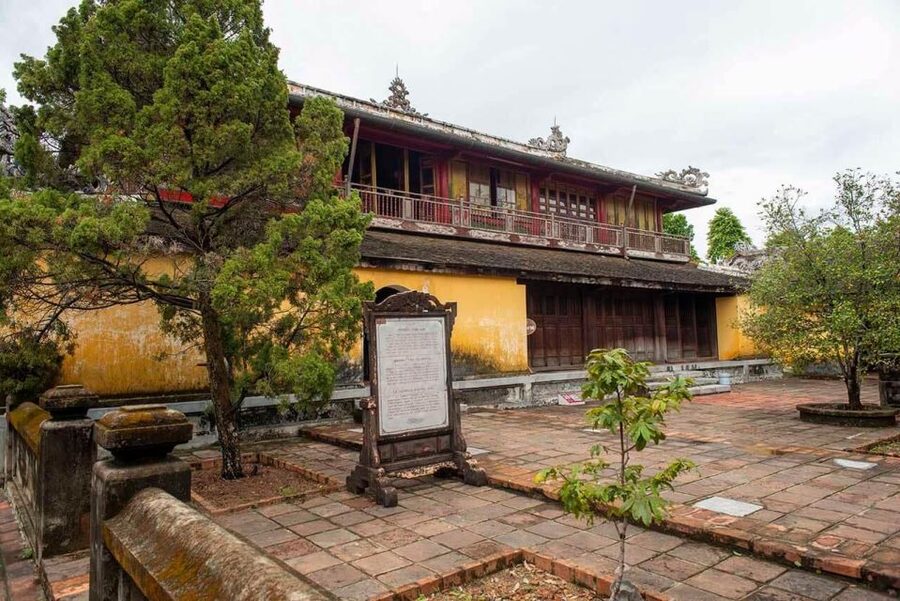
Some structures are restored, some are less complete, and some are remembered through their remaining foundations or setting. That uneven condition is part of the site’s story. You are not walking through a perfectly preserved royal compound. You are seeing a place shaped by time, war, reconstruction, and changing ideas about heritage.
Duyet Thi Duong Royal Theater adds a cultural angle. The theater reminds you that court life included music, performance, ceremony, and entertainment, not only administration. The gardens and pavilions offer welcome pauses, especially in hot weather.
The private car option beyond the citadel
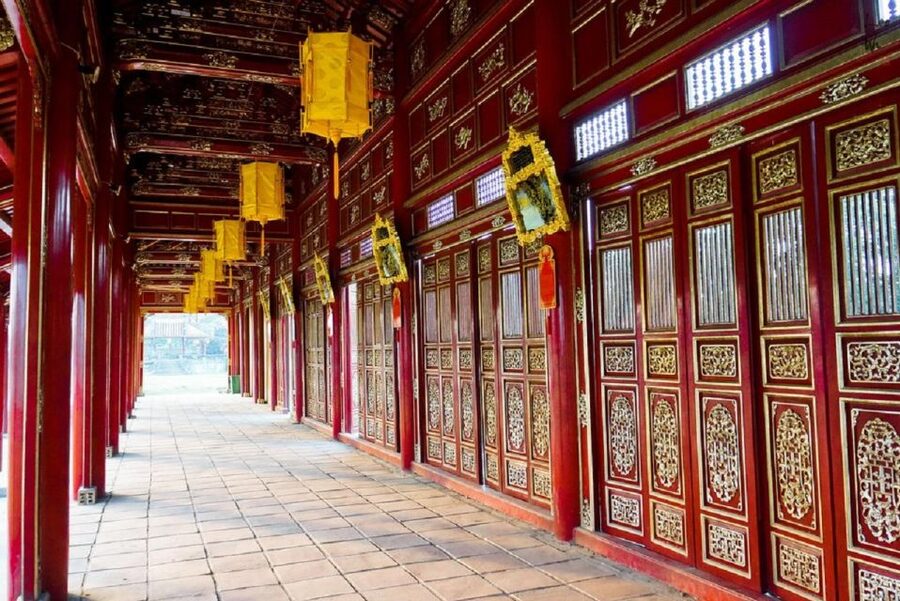
The private car choice works differently. An English-speaking driver can pick you up from a city-center hotel, Hue Railway Station, or selected pickup points in Hue, Hoi An, and at Phu Bai Airport. The driver can communicate in English, but this is not the same as having a professional guide with a tour license.
You can build the day around the Imperial City, Thien Mu Pagoda, Minh Mang Tomb, Tu Duc Tomb, Khai Dinh Tomb, or Thuy Tien Abandoned Water Park. This is useful if you want to cover several places without arranging separate taxis or negotiating every transfer.
The private car is best for people who already know how much explanation they want, or who mainly need reliable transport. If you want detailed interpretation at each monument, choose the walking option for the citadel or arrange a separate guide. The car gives you control over the route, but the quality of the commentary depends on the driver and should not be confused with a guided historical tour.
The wider itinerary can take up to eight hours, depending on your chosen stops. That gives you far more than the 150-minute citadel walk, but it also creates a longer, more demanding day. Tombs are spread around Hue, and fitting several sites into one trip means more time in the car and less time at each stop.
Choosing between the walking tour and the car
Pick the walking tour if the Imperial Citadel is your priority. It gives you a local English-speaking guide, a clear route, and detailed explanations of royal architecture and court life. It is also a good fit for a first visit, families, and anyone who wants the site to make sense rather than simply collect photographs.
Pick the private car if you want to combine several Hue sights. You can include the citadel with Thien Mu Pagoda and one or more tombs, or create a route that suits your schedule. It also helps if you are arriving by train or need transport between Hue and other nearby destinations.
The walking tour does not include hotel pickup. You meet at the four cannons near Ngan Gate. Private car pickup and drop-off are included only in specified city-center areas, with an additional charge possible for locations outside those zones. Confirm your exact pickup point before departure.
Price, tickets, heat, and practical value
At $12 per person, the walking option is inexpensive for a two-and-a-half-hour guided visit. The low price is especially good value if you care about the historical explanation, since wandering the citadel alone can leave you missing the meaning behind the buildings.
You still need to pay admission. Imperial City entry is listed at 200,000 Vietnamese dong per adult. If you plan to visit tombs, combo tickets are available at 420,000 dong for the Imperial City and two tombs, or 530,000 dong for the Imperial City and three tombs, valid for two days.
The route involves outdoor walking, open courtyards, and uneven pacing between sites. Wear comfortable shoes, bring water, and use sun protection. Early morning is a smart choice in hot months. One visitor who took a May tour at 8:30 recommended going early, since much of the route is outside.
Rain does not necessarily stop the tour, but it can change how comfortable the walk feels. Guides have continued in wet weather and have adjusted the pace during very hot days, including finding shade and allowing time to cool down. Still, you should check the forecast and dress for Hue’s changeable conditions.
The tour has a strong overall rating of 4.9 from 937 reviews, with 94 percent of ratings giving the transport a perfect score. I would read those figures as a sign of reliable organization and consistently strong guide performance, not as a promise that every departure will feel identical.
Who will get the most from this Hue tour
This experience suits you if you want to understand the Nguyen Dynasty without spending hours reading before your visit. It is also a good choice for families, since the guides use stories, questions, and symbols to keep the site approachable.
Solo visitors can benefit from the flexible approach. One solo participant had the route adjusted around personal interests and enjoyed the chance for longer conversations. Small groups can also feel nearly private when numbers are low.
You may prefer to explore alone if you want complete freedom to stop at every building or linger without a set route. The guided walk follows a broad sequence and includes many stops, so it is not designed for a slow architectural study of one palace.
Should you book it?
Book the walking tour if you want the best explanation of Hue’s Imperial Citadel and Forbidden Purple City. The combination of a modest price, local English-speaking guides, and a route covering the key royal buildings makes it a sensible first choice.
Choose the private car if your goal is to see several Hue sights in one day. Just remember that the driver is there for transport and basic communication, not the same historical service provided by the walking guide.
For most first-time visitors, I would start with the 150-minute walk. It gives you the royal story, the main architecture, and practical bearings. Add the car option only if you have enough time and want to connect the citadel with pagodas and imperial tombs.
FAQ
How long does the walking tour last?
The walking tour lasts about 150 minutes, or two and a half hours. The visit covers the Imperial Citadel and Forbidden Purple City.
How long can the private car option last?
The private car option can last from about 150 minutes up to eight hours, depending on the itinerary you choose.
What attractions are included in the walking tour?
The route includes the Nine Holy Cannons, Flag Tower, Noon Gate, Supreme Harmony Palace, Hien Lam Pavilion, Nine Dynastic Urns, temple buildings, the Forbidden Purple City, gardens, pavilions, the Royal Theater, and additional citadel gates and courtyards.
Can I visit imperial tombs with the private car option?
Yes. You can choose Minh Mang Tomb, Tu Duc Tomb, and Khai Dinh Tomb. You can also add Thien Mu Pagoda or Thuy Tien Abandoned Water Park.
Are entrance tickets included?
No. Entrance tickets are not included. Imperial City admission is listed at 200,000 Vietnamese dong per adult, and combo tickets are available for the citadel with two or three tombs.
Where does the walking tour meet?
The guide meets you at the four bronze cannons near Ngan Gate, or Cua Ngan, at the Hue Citadel. The guide holds an A4 sheet with your name.
Is hotel pickup included?
Pickup and drop-off are included for the private car option at specified city-center hotels in Hue and Hoi An, Hue Railway Station, and Phu Bai Airport. Pickup is not included for the small-group walking tour, and locations outside the central areas may cost extra.
Is the private car driver a tour guide?
No. The private car option includes an English-speaking driver for communication and transport, but not a professional licensed tour guide. The walking option includes a local English-speaking guide.
Newly walked in the world
- Bratislava: DayTrip: Castles around Vienna +underground lake★ 4.9 · 30 reviews
- Vienna: Guided Bratislava & Devín Castle Tour via Hainburg★ 4.6 · 88 reviews
- Warsaw: Skip-the-Line Royal Castle Guided Tour★ 4.9 · 79 reviews
- 3 hour: Warsaw Old Town with Royal Castle /inc. Pick-up/★ 4.7 · 14 reviews
- From Vienna: Bratislava with Local Guide, Castle & UFO Views★ 4.6 · 69 reviews
- Montreux: Chateau Chillon Entrance Ticket★ 4.7 · 158 reviews
- Day Trip to Montreux, Chaplin’s World & Chillon Castle& apéritif★ 4.5 · 178 reviews
- Lucerne CH Experience: Cheese, Chocolate, Chapel Bridge & Château★ 4.5 · 155 reviews
Fortress & Citadel Tours, compared.



From Cairo Alexandria Catacombs, Citadel Day Trip with Lunch
Read our review →
Charleston historical walking tour with a Professor of History at The Citadel
Read our review →
Desert Safari: Luxury Fortress Dinner, Camel Ride & Dune Bashing
Read our review →
Egyptian Museum, Citadel, and Old Cairo Guided Tour
Read our review →
Cairo Citadel, Old Cairo and Khan El Khalili: Private Tour
Read our review →Browse the lists this tour appears in