
Review · GERMANY
Augustusburg Castle: Guided tour
Augustusburg Castle’s best surprise is underground: its well house holds Saxony’s second-deepest well and an old driving galley that once lifted water to this hilltop stronghold. I also like the direct look at court life in the Lindenhaus chambers and the chance to see Lucas Cranach the Younger’s rare family portrait on the church altar. The catch is that the tour is in German, and the quality of the visit depends partly on the guide’s manner.
The one-hour route gives you a clear introduction without asking you to commit to a full day. The price is modest at $9, but remember that the main museum and exhibition admission is separate, so this works best as a focused guided visit rather than a complete castle ticket.
Key points at a glance

- The Lindenhaus reveals court life: See the electoral chambers and hear how August and Anna’s household functioned inside the Renaissance castle.
- The Cranach altar is the artistic high point: The castle church contains the only surviving portrait of Elector August, Anna, and their children together.
- The well house explains the castle’s survival: Water had to reach a fortress more than 500 meters above sea level.
- The driving galley is a rare mechanical relic: It is described as the oldest preserved example in Saxony.
- The tour lasts one hour: You get a brisk, organized introduction rather than a slow museum visit.
- German is the only listed tour language: English-speaking visitors should plan around that limitation.
Why Augustusburg Castle is worth your time
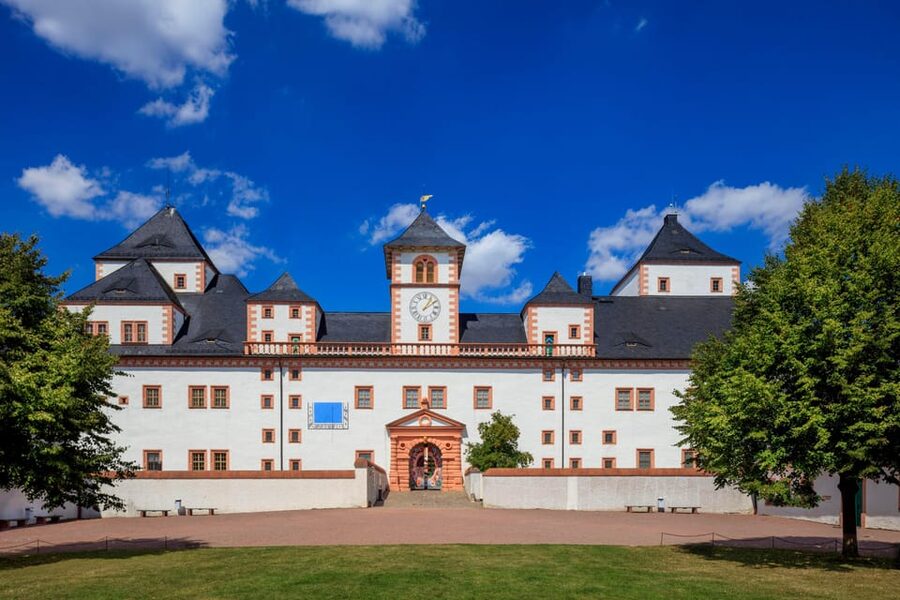
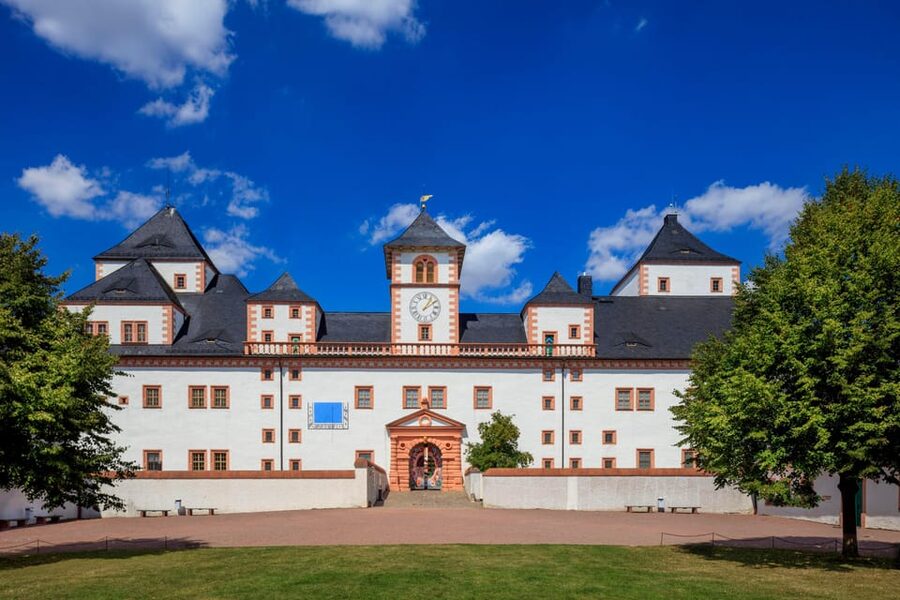
Augustusburg Castle rises above the Zschopau Valley at the edge of Germany’s Ore Mountains. Elector August of Saxony ordered this huge Renaissance residence more than 450 years ago, and its position was part of the message. From high above the valley, the castle announced wealth, authority, and control.
That setting gives the guided visit some useful context. This was not just a pretty residence placed on a hill. It was a working court, a symbol of electoral power, and an engineering problem. The court needed rooms, ceremony, art, and reliable water, all at an altitude of more than 500 meters.
I like that the tour covers both sides of the castle. The Lindenhaus and church show you status and belief. The well house shows you the less glamorous work that made life at court possible. You get portraits and chambers, then machinery and masonry. That balance keeps the hour from becoming a parade of rooms with dates attached.
The tour costs $9 per person and lasts one hour. That is fair value if you want a guided orientation to the castle’s main highlights. It is less of a bargain if you expect access to every exhibition. Museum and exhibition admission is not included, so you should treat this as a specific guided experience rather than the full Augustusburg Castle visit.
More Guided Castle Tours in Germany
- From Frankfurt: Heidelberg, Castle and Old City Guided Tour
★ 4.5 · 677 reviews - Erfurt: Guided Tour of The Petersberg Citadel
★ 4.8 · 674 reviews - Neuschwanstein Castle Ticket With Audio Guided Tour
★ 3.5 · 473 reviews
The Lindenhaus and the electoral chambers
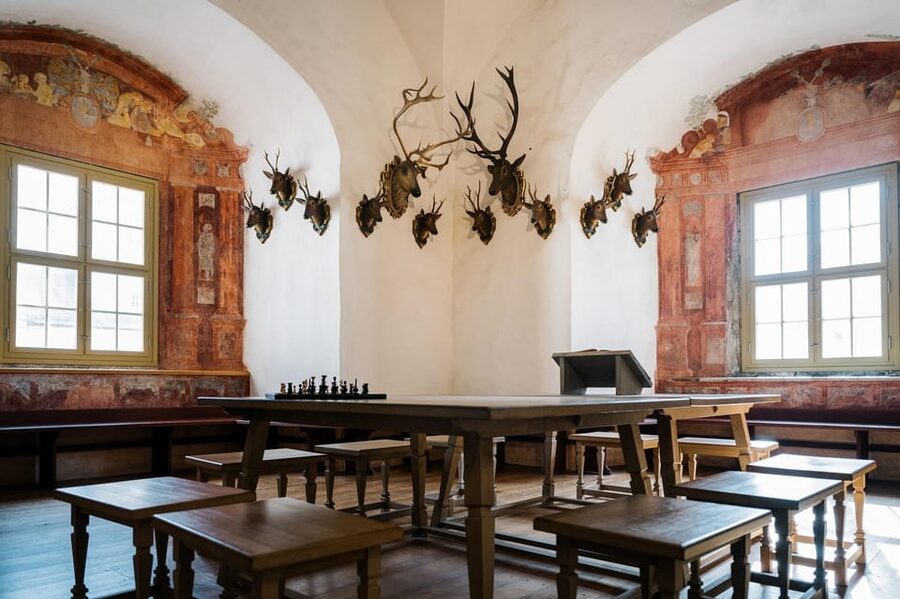
The tour begins with the Lindenhaus, where the electoral chambers offer the clearest look at the people who lived and worked inside Augustusburg. Your guide explains the castle’s construction and the daily life of the electoral family, including the court routines that shaped these rooms.
This part matters because grand architecture can otherwise feel distant. A Renaissance castle tells you about power through its size, but chambers tell you how that power was used. Court life involved ceremony, rank, family duties, and practical household management. The guide’s explanation helps connect those broad ideas to the rooms in front of you.
You should listen for the difference between public and private life. An elector’s residence was never simply a private home. Rooms had social rules, and visitors were received according to status. Even without a long visit to every chamber, the guided format helps you read the rooms as part of a court system.
The Lindenhaus is also where the tour earns its price for visitors who prefer stories to labels. You are not left to guess why a room mattered or how the electoral family used it. A guide takes you through the setting and answers questions along the way.
The pace is brisk. One hour must cover the chambers, church, and well house, so you should not expect time for a close inspection of every object. If you enjoy lingering over furniture, architectural details, or small display cases, plan to return afterward through the wider museum areas if your separate admission allows it.
The castle church and Cranach’s family portrait
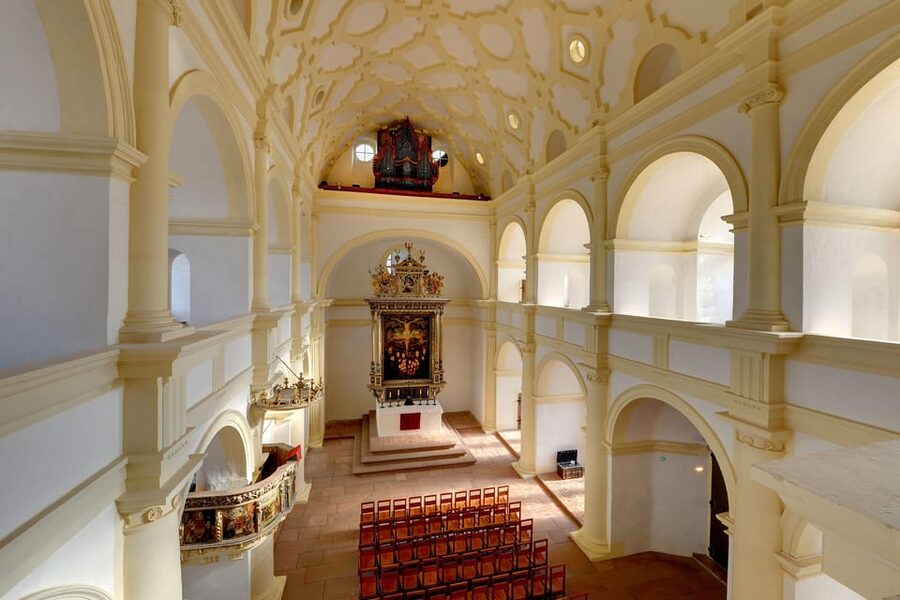
The castle church contains the tour’s most important work of art, an altarpiece painted by Lucas Cranach the Younger. It shows Elector August, Anna, and their children together, and it is described as the only surviving portrait of the electoral couple and their children as a group.
That detail changes how you look at the painting. This is not just a fine Renaissance altar. It is also a carefully shaped family image, presenting the ruling household as a unit. The portrait links religion, dynastic identity, and political authority in one place.
I would give the church your full attention, even if you are not an art specialist. The guide can point out why the altar matters, and the setting helps you understand how the electoral family wished to be seen. The portrait has European importance, but its appeal is also personal. You are looking at a family record made for a powerful court.
The church stop is relatively compact, which suits the one-hour format. You will not get an extended art-history seminar, and the tour does not promise one. Instead, you get the essential context and a chance to see the altar in the place for which it was made.
For many people, this will be the artistic center of the visit. The well house is more unusual, but the Cranach altar gives Augustusburg its strongest connection to major Renaissance painting.
The well house and Saxony’s second-deepest well
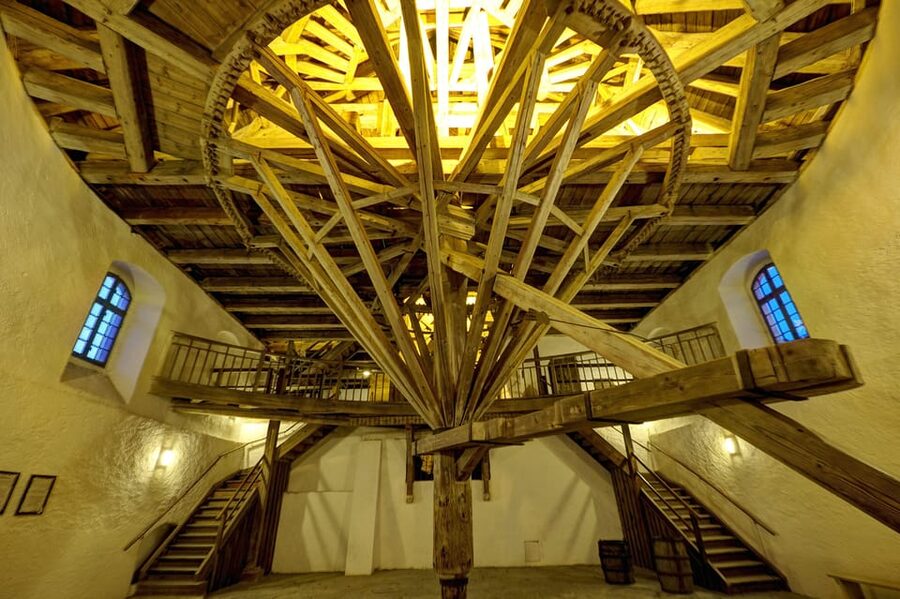
The fountain house, also called the well house, explains the practical challenge of building a major residence high above the valley. A court could not function without water, and bringing it to the castle required serious engineering.
Here you see Saxony’s second-deepest well. The well is not merely a record to repeat in a guidebook. It shows why the castle needed its own water system and why the fountain house belonged among the site’s essential working spaces.
The stop also includes the oldest preserved driving galley in Saxony. This water-lifting device is the kind of object that can make a historical site feel real. You can connect the machine to a basic need: water had to be raised and managed so people at the castle could live and work there.
I like this part because it adds useful friction to the grand story. Renaissance courts liked ceremony, art, and impressive buildings, but none of that worked without labor and machinery. The well house brings you back to the physical demands of daily life.
The tour description says multimedia elements add another layer to the visit and help you picture the sixteenth century. The exact format of those elements is not specified, so you should expect support for the explanation rather than a separate digital show. Their role is to make the castle’s past easier to picture while the guide leads you through the spaces.
Same walls, a different way in:
- From Munich: Neuschwanstein & Linderhof Castle Full-Day Trip
★ 4.6 · 14,646 reviews - Neuschwanstein & Linderhof Castle-Fairytale Day Tour from Munich
★ 4.5 · 7,275 reviews - Neuschwanstein Castle Tour from Munich
★ 4.5 · 5,117 reviews - From Munich: Neuschwanstein Castle Full-Day Trip
★ 4.7 · 3,977 reviews
What the one-hour format feels like
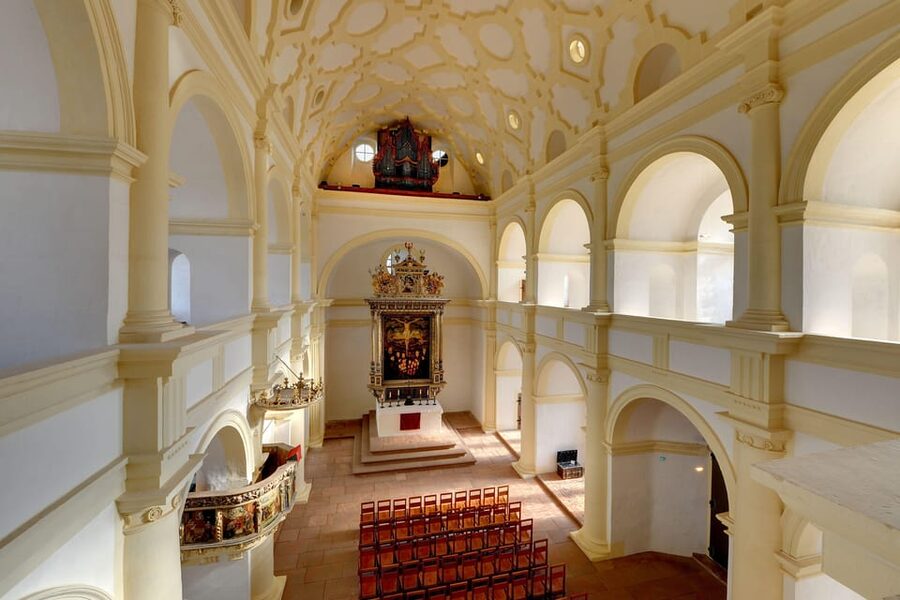
The route is short enough to fit into a busy day in northern Germany, yet it covers three different sides of Augustusburg. You move from electoral rooms to sacred art and then to water engineering. That variety is the main strength of the format.
A one-hour tour also imposes limits. You will receive an introduction, not an exhaustive study of the castle. If you want every exhibition, museum room, or display, you need separate admission and additional time. The tour ticket does not include museum and exhibition entry.
The listed meeting point is the main entrance. That keeps the start simple, but you should arrive with enough time to find the entrance and settle in before the group leaves. The activity includes skip-the-ticket-line access, which can be useful when the castle is busy, though it does not turn the tour into a private visit.
The tour has a live guide and is listed in German only. If you understand German, the format gives you a chance to ask questions and receive explanations tied to the rooms. If you do not, the visual appeal of the castle, altar, well, and machine remains, but you will miss much of the interpretation.
No guide names are provided for this activity. The feedback gives a useful warning about guide style: one guide was praised for clear, calm information and for answering questions well, while another visitor found a young guide too strict about not touching objects. That is a fair reminder that historic interiors require care, but the tone can affect your enjoyment. Expect firm instructions around fragile displays.
What the price includes, and what it does not

At $9 per person, this is a low-cost way to add structure to your castle visit. You receive a personal tour guide and access to the Lindenhaus electoral chambers, the castle church with the Cranach altar, and the well house with its deep well.
The value is strongest if you want the main story explained in a compact block. You are paying for access to selected spaces plus interpretation, not for a full museum pass. That distinction matters when you compare the tour with other castle admission options.
The ticket does not include meals, drinks, parking fees, or entry to museums and exhibitions. Those exclusions are ordinary, but they can affect your total budget. If you are driving, add parking to your planning. If you want to see all the castle’s displays, set aside extra money and time for separate admission.
I would book the guided hour first if the castle’s history is new to you. Afterward, you can decide if the additional exhibitions deserve more of your day. That approach keeps the initial cost low and gives you a clear foundation before you explore on your own.
Who should book this Augustusburg tour?
I would recommend it to anyone who wants a concise introduction to Augustusburg Castle and can follow a German-language tour. It suits history-minded visitors, Renaissance art fans, and people who enjoy seeing how old buildings solved practical problems.
Families may appreciate the mix of rooms, painting, and machinery, though the firm reminders not to touch objects may feel strict to younger children. The one-hour duration is manageable, especially if you plan other sights in the area.
Art lovers should focus on the Cranach altar. Architecture fans will get more from the castle’s scale and hilltop setting, while history fans will likely prefer the electoral chambers and explanations of court life.
I would be cautious about booking if you need English interpretation or if you want a relaxed, unstructured wander. The only listed language is German, and the group format keeps you moving. This is also not the right choice if you expect all museum exhibitions to be covered by the $9 ticket.
Free cancellation up to 24 hours before the start gives you some flexibility, and you can reserve now and pay later. Those terms are useful when your schedule is still shifting, but the main decision is language: if German works for you, the tour offers solid value.
Final verdict: book it for the focused history
Book this tour if you want the essential Augustusburg story in one hour, especially the electoral chambers, Cranach altar, and unusual waterworks. The low price is easy to justify because the guide connects art, court life, and engineering instead of showing you rooms without context.
Skip it if you require an English-language guide or want a full museum visit in one ticket. For German speakers, the tour is a practical first look at a powerful Renaissance castle, with the well house providing the most distinctive stop and the Cranach altar supplying the greatest artistic reward.
FAQ
How long does the Augustusburg Castle guided tour last?
The guided tour lasts one hour.
How much does the tour cost?
The listed price is $9 per person.
What language is the tour offered in?
The live guided tour is offered in German.
Where does the tour meet?
You meet at the main entrance of Augustusburg Castle.
What rooms are included in the guided tour?
The tour includes the Lindenhaus with its electoral chambers, the castle church with the Cranach altar, and the well house with the second-deepest well in Saxony.
Is the Cranach altar included?
Yes. Access to the castle church and its Cranach altar is included in the guided tour.
Is museum admission included?
No. Entry to museums and exhibitions is not included.
Are meals, drinks, or parking included?
No. Meals, beverages, and parking fees are not included.
Can I cancel the booking?
Yes. You can cancel up to 24 hours in advance for a full refund.
Newly walked in Germany
- Sightseeing flight Zugspitze Neuschwanstein Castle Alps Munich Augsburg★ 5.0 · 7 reviews
- Stuttgart: Landesmuseum Württemberg Old Castle Entry Ticket★ 4.6 · 21 reviews
- Stuttgart: 4-Castle Winter Hike with Costume Tour★ 4.5 · 2 reviews
- Stein: Guided tour of Count von Faber-Castell’s castle★ 4.9 · 27 reviews
- Sigmaringen: Hohenzollern Castle Admission & Audio Guide★ 4.9 · 15 reviews
- Segway Tour: Gerberbach, Schlosspark & Castle Weinheim★ 4.9 · 14 reviews
- Dresden: Scavenger Hunt to Elbe River & Castles★ 4.7 · 15 reviews
- Private tour to Neuschwanstein castle from Munich★ 5.0 · 23 reviews
Guided Castle Tours, compared.

Edinburgh Castle: Guided Walking Tour with Entry Ticket
Read our review →
Cathedral, Giralda & Alcazar Entry With Guided Tour
Read our review →Edinburgh Castle: Guided Walking Tour with Entry Ticket
Read our review →
Stonehenge, Windsor Castle and Bath Full Day Guided Tour
Read our review →
Alcázar of Seville Skip-the-Line Tickets and Guided Tour
Read our review →
Dublin Book of Kells, Castle and Molly Malone Statue Guided Tour
Read our review →
Quebec City: Guided Tour of Fairmont Le Château Frontenac
Read our review →Browse the lists this tour appears in