
Review · KHIVA
Ayazkala, Toprakkala & Kizilkala Fortress Tour From Khiva
The most striking part of this outing is the sudden change from Khiva’s blue-tiled streets to the wide, dry reaches of Karakalpakstan, where old mud-brick fortresses rise above cotton fields and open steppe. Toprakkala, Kizilkala, and Ayazkala offer a look at an ancient Khorezm that feels far removed from the polished monuments of Ichan Kala.
I like the private car, which gives you a comfortable way to reach sites that are difficult to visit independently. I also like the price: $90 per group of up to three people makes this a strong deal for a small party. The main catch is important: this is a driver-only tour, not a guided history tour, and several drivers have had little or no English.
Key points before you book
- Three fortresses in five hours: Visit Toprakkala, Kizilkala, and the three-part Ayazkala complex before returning to Khiva.
- Private transport for up to three people: The $90 group price works best when shared by two or three passengers.
- Toprakkala has unusual historical importance: It is linked with early urban planning, written Khorezm sources, a calendar, and plaster figures of singers.
- Ayazkala requires effort: Expect a walk across sand and a climb to reach the higher fortress areas.
- No guide is included: The driver speaks English or Russian according to the activity details, but individual experiences vary, so prepare translation tools and background reading.
- Flexible pickup: You can leave from your hotel in Ichan Kala, Khiva Railway Station, Urgench Airport, or Urgench Railway Station.
Why these fortresses are worth leaving Khiva for
Khiva is easier to love at first sight. Its mosques, minarets, and tiled courtyards are compact and photogenic. The fortress country outside the city asks more of you. You drive through open country, spend time in the sun, and climb over rough ground. In return, you get scale and solitude that the old city cannot provide.
The ancient Khorezm oasis once had so many fortresses that the area became known as Ellikkala, meaning 50 fortresses. The name gives you a sense of the old defensive network. These were not isolated ruins placed at random. Fortresses were built around the edges of the oasis to guard against raids from nomadic groups coming from the north.
The three sites on this route are among the better-preserved and most studied examples. Their value is not limited to impressive walls. Together, they show how Khorezm organized cities, garrisons, borders, and royal power in a difficult environment.
You should set your expectations correctly. This is not a museum visit with polished displays and explanatory panels at every turn. You will see broad ruins, eroded brickwork, open views, and traces of large settlements. Without a guide, the places can be hard to interpret. A little preparation makes a major difference.
More Fortress and Citadel Tours in the world:
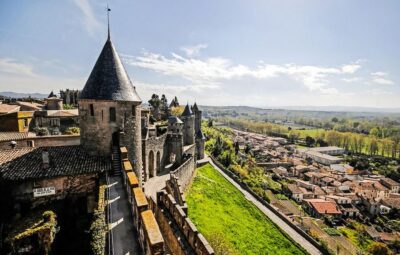
- Carcassonne: Castle and Ramparts Entry Ticket
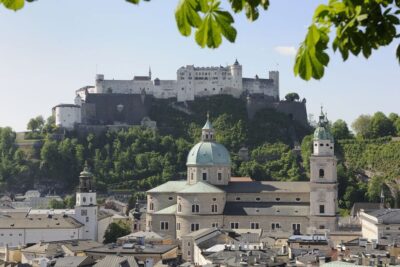
★ 4.6 · 2,884 reviews - Salzburg: Hohensalzburg Fortress Admission Ticket
★ 4.6 · 2,236 reviews - Salzburg: Best of Mozart Fortress Concert and Dinner
★ 4.5 · 1,424 reviews
The road from Khiva into Karakalpakstan
Pickup is available at the west gate, or Ata Darwaza, of Khiva’s Ichan Kala. Hotel pickup is also possible, and you can arrange collection at Khiva Railway Station, Urgench Airport, or Urgench Railway Station. Be ready in the lobby about five minutes before departure.
The route runs from Khiva to Toprakkala, then Kizilkala, then Ayazkala, before returning to Khiva. The stated duration is five hours, so this is a brisk outing rather than a slow archaeological day. The exact time you spend walking at each stop will matter, especially at Ayazkala.
The private air-conditioned vehicle is a real advantage. Karakalpakstan can be hot, bright, and exposed, and the distances between sites make a comfortable car much better than trying to piece together local transport. The vehicle also lets you keep your own pace within the limits of the schedule.
Drivers may speak English or Russian, but do not assume that English will be fluent. One recent booking had a driver who spoke no English at all, and another noted that a translation app would have been useful. If you want detailed explanations, arrange a separate guide or confirm guide availability before paying.
Driving standards may also vary. One passenger praised a driver named Sascha as friendly and safe, while another found the driving too fast and dealt with a flat tire. That does not predict every outing, but it is fair advice to ask the driver to slow down if the road feels uncomfortable.
Toprakkala, the clay fortress and former capital
Toprakkala means Clay Fortress, and it is the first major stop on the route. It is described as one of the first capitals of Khorezm, making it more than a simple military outpost. The remains help show how a planned city once functioned in the oasis.
This site is especially important because early examples of city planning were found here. The evidence has been linked to Khorezm statehood in the 4th century AD. If you take time to look beyond the walls, you can begin to picture a place designed around power, administration, and defense rather than a scattered village.
Toprakkala also produced some of the earliest written sources connected with Khorezm. A calendar was found here, along with plaster statuettes of singers. Those small discoveries give the ruins a human side. They point to a court or urban center with records, ceremony, music, and an organized society.
You will pay a modest entrance fee at each monument, generally about $1 to $2 per person. These fees are not included in the tour price. Bring small cash if possible, since the activity information does not specify payment methods.
Without a guide, Toprakkala can feel like a large mound of clay walls rather than a former capital. Read a short background account before leaving Khiva, or save notes on your phone. Ask your driver to identify the main areas, but do not expect a full archaeological explanation.
Kizilkala, the red garrison fortress
Kizilkala is a shorter and simpler stop, but it helps complete the picture. The name means Red Fortress, referring to the color of the clay. It served as one of the garrison fortresses in the oasis.
Think of Kizilkala as a military post rather than a grand capital. Its place on the route gives you another way to understand the network around Khorezm. Toprakkala represents urban and royal power. Kizilkala points more directly to soldiers, patrols, and border defense.
The fortress is visited along the way between Toprakkala and Ayazkala. Since the full outing lasts five hours, your stop here may be relatively brief. That is not necessarily a flaw. Kizilkala works well as a compact introduction to the fortress system before the larger Ayazkala complex.
The red clay can look subtle in strong sunlight, so do not expect a bright painted structure. The name refers to the material and color of the ruins. Wear shoes with a firm sole, since the ground around old mud-brick sites can be uneven.
More Castle Tours in the world:
- Seville: Royal Alcázar Entry Ticket
★ 4.6 · 28,378 reviews - Stonehenge, Windsor Castle, and Bath from London
★ 4.5 · 18,662 reviews - Bucharest: Dracula’s Castle, Peles Castle, & Brasov Old Town
★ 4.5 · 17,858 reviews - From Munich: Neuschwanstein & Linderhof Castle Full-Day Trip
★ 4.6 · 14,646 reviews
Ayazkala, the biggest physical challenge
Ayazkala is the final fortress stop and the one that usually demands the most from you. The complex has three parts and is regarded as one of the more important fortress groups in the oasis. It is also among the most remote and best-organized defensive sites on the route.
The name is translated as Severe Frost Fortress. The explanation is tied to the harsh cold of the steppe in winter. That name may sound odd when you are standing under a hot sun, but the open setting makes the old climate feel easy to imagine. There is little to block wind, heat, or cold.
Reaching the higher sections involves walking over sand and climbing uphill. One passenger described the climb as difficult, and another felt that reaching the top alone did not feel fully safe. Take those concerns seriously. Comfortable shoes, sunglasses, a sun hat, and light, practical clothing are not optional extras here.
The effort pays off with broad views across the surrounding steppe and oasis. Cotton fields and desert scenery form part of the route, and the contrast between cultivated land and dry open ground is one of the outing’s strongest visual features.
Stay within your own limits. If you have balance problems, limited mobility, or dislike loose sand and steep climbs, Ayazkala may be the hardest part of your Uzbekistan sightseeing. The tour is listed as wheelchair accessible, but the fortress climb itself includes sandy and uneven ground, so you should confirm what level of access is practical before booking.
What the driver-only format means
The $90 price covers round-trip air-conditioned transport and taxes for a private group of up to three. Split three ways, that is $30 per person before entrance fees. Even for two people, it can be good value because you are paying for a private vehicle and a route that would be awkward to arrange alone.
The price does not include a guide, monument tickets, or personal expenses. The entrance fees are small, but the absence of a guide matters more than the extra dollars. A driver can get you from site to site without being able to explain the difference between a capital, a garrison, and a border fortress.
I would book this format if you enjoy reading first, taking photographs, and exploring ruins at your own pace. I would hesitate if your main goal is to understand the political story of ancient Khorezm while you walk. In that case, ask whether a guide can be added, or arrange an independent guide in Khiva.
A translation app is a sensible backup. Download the language pack before leaving town, since phone service may not be dependable in every remote area. Keep your questions simple and show place names in writing if communication becomes difficult.
How to prepare for a better half-day
Start with the right clothes and footwear. You need shoes that handle sand, loose earth, and uneven ruins. A hat and sunglasses will make the exposed sections much more comfortable, and water is a sensible personal addition even though it is not listed among the included services.
Read about the three fortresses before departure. Focus on three ideas: Toprakkala as a capital and planned city, Kizilkala as a garrison, and Ayazkala as a defensive complex on the edge of the oasis. This simple framework will help the ruins make sense.
Allow for a basic, practical style of sightseeing. You are not being taken through a polished attraction with a timed entry system. You will get out of the car, walk across open ground, inspect old clay walls, and return to the vehicle.
The tour can finish in Khiva, but the listed pickup and drop-off choices also include Urgench Airport and Urgench Railway Station. That flexibility may help if you are connecting between Khiva and Urgench, but confirm the exact end point when booking so the driver knows your plan.
Free cancellation up to 24 hours before departure and reserve-now, pay-later terms make it easier to keep the outing flexible. Starting times depend on availability, so check the schedule rather than assuming any hour will work.
Who should book this fortress trip?
I recommend it most for people who have at least one spare day in Khiva and want to see more than the city walls. It suits couples, friends, or a small family group that can share the $90 vehicle cost and is comfortable exploring without a formal guide.
It is also a good choice for photographers and anyone who prefers open space to crowded monuments. The cotton fields, desert, clay walls, and distant horizons create a very different setting from the tiled buildings inside Ichan Kala.
You should think twice if you need constant English explanation, dislike rough walking, or have only a few hours in Khiva. The five-hour duration is efficient, but it is not leisurely. Ayazkala can be physically demanding, and the guide issue is the main weakness.
The overall rating of 4.3 from 33 bookings reflects that split experience. The strongest points are the friendly, punctual service from some drivers, the comfortable private car, and the chance to visit remarkable sites outside the city. The weakest points are uneven English, no included guide, occasional concerns about driving, and the climb at Ayazkala.
Should you book it?
Book this tour if you want a practical private ride to three important fortresses and are willing to supply your own historical context. At $90 for up to three people, it offers good transport value, especially when shared.
Do not book it expecting a guided archaeological lesson. Confirm the language situation, bring a translation app, prepare for sand and climbing, and ask about adding a guide if that is central to your plans. With those expectations in place, this is one of the more worthwhile day extensions from Khiva, particularly for anyone who wants to see the ancient oasis beyond the famous old city.
FAQ
Where does the Ayazkala fortress tour start?
Pickup is available at Ata Darwaza, the west gate of Ichan Kala in Khiva. Hotel pickup is also available, as are Khiva Railway Station, Urgench Airport, and Urgench Railway Station.
How long does the tour last?
The stated duration is five hours, including the route from Khiva to the fortresses and back or onward to the selected drop-off point.
Which fortresses are visited?
The route visits Toprakkala, Kizilkala, and Ayazkala before returning to Khiva or continuing to an agreed Urgench airport or railway station drop-off.
Is a guide included?
No. The tour includes a driver and private vehicle, but not a guide. English or Russian may be available from the driver, but English ability can vary.
What does the $90 price include?
The price covers a private round-trip air-conditioned vehicle for a group of up to three people, along with fees and taxes. Entrance tickets and personal expenses are not included.
What should I bring?
Bring comfortable shoes, sunglasses, a sun hat, and comfortable clothing. These are especially useful at Ayazkala, where the route includes sand and an uphill climb.
Newly walked in the world
- Bratislava: DayTrip: Castles around Vienna +underground lake★ 4.9 · 30 reviews
- Vienna: Guided Bratislava & Devín Castle Tour via Hainburg★ 4.6 · 88 reviews
- Warsaw: Skip-the-Line Royal Castle Guided Tour★ 4.9 · 79 reviews
- 3 hour: Warsaw Old Town with Royal Castle /inc. Pick-up/★ 4.7 · 14 reviews
- From Vienna: Bratislava with Local Guide, Castle & UFO Views★ 4.6 · 69 reviews
- Montreux: Chateau Chillon Entrance Ticket★ 4.7 · 158 reviews
- Day Trip to Montreux, Chaplin’s World & Chillon Castle& apéritif★ 4.5 · 178 reviews
- Lucerne CH Experience: Cheese, Chocolate, Chapel Bridge & Château★ 4.5 · 155 reviews
Fortress & Citadel Tours, compared.

From Cairo Alexandria Catacombs, Citadel Day Trip with Lunch
Read our review →
Charleston historical walking tour with a Professor of History at The Citadel
Read our review →
Hue Customizable Tour with Imperial Citadel & Forbidden City
Read our review →
Desert Safari: Luxury Fortress Dinner, Camel Ride & Dune Bashing
Read our review →
Egyptian Museum, Citadel, and Old Cairo Guided Tour
Read our review →Browse the lists this tour appears in