
Review · GERMANY
Berlin: Decolonial Berlin Castle/ Humboldt Forum Guided Tour
Berlin’s Humboldt Forum is not simply a museum visit. This two-hour tour asks you to look at the palace, its collections, and its symbols through an Afrocentric perspective, with colonial power at the center of the discussion. I like that the tour connects the building to the objects inside it, rather than treating the museum as a neutral box.
I also like the time spent on the Humboldt brothers and on missionaries who helped build colonial systems. The main drawback is clear: about one hour takes place outdoors, seated on white chairs, so the experience depends partly on good weather and your interest in discussion before you enter the museum.
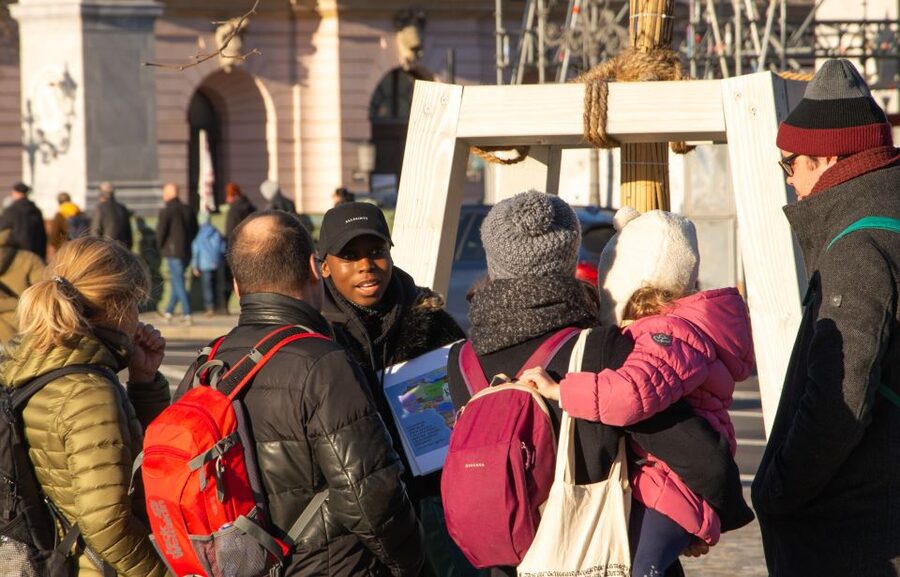
- Start at the reconstructed Sanchi Gate, near the Humboldt Forum, with seating available on white chairs.
- Spend about an hour outside discussing the palace, colonialism, missionaries, and the Humboldt brothers.
- Enter the ethnological collection for a guided look at objects and museum presentation.
- Study the cross on the roof and its symbolic connection to the building’s past and present.
- Use an audio walk to examine the collection from a critical perspective.
- Choose this tour for context and debate, not for a fast tour of every gallery.
Why This Berlin Tour Begins Outside the Museum

Most people approach the Humboldt Forum expecting a grand building and a display of objects from Asia, Africa, Oceania, and the Americas. This tour starts by slowing down the visit and asking a tougher question: how did these collections arrive in Berlin, and what stories have museums traditionally told about them?
You meet near the reconstructed Sanchi Gate. The meeting point is easy to identify, and white chairs are available, which matters because the opening discussion lasts roughly an hour. You are not walking through galleries during this first part. You are sitting outside and listening.
That format will suit you if you like history explained through conversation. It may feel less satisfying if you expected two full hours inside the Humboldt Forum. One review praised the historical background but felt that the museum portion became too short, so you should book with the right expectation: this is a discussion-led tour, not a standard museum sweep.
The outdoor section also gives the guide room to explain the palace itself. The present building is a reconstruction of the Berlin palace, a site with about five centuries of history. The tour treats that past as contested ground, linking the palace to Germany’s royal power, colonial expansion, and modern debates about how history should be presented.
Bring weather-appropriate clothes and comfortable shoes. Even though you are seated for much of the opening, the tour takes place outdoors before moving inside.
The Berlin Palace Through a Decolonial Lens

The palace is more than an impressive facade. It carries the memory of the Prussian court and the political world that shaped modern Germany. A decolonial reading asks you to connect that power at home with Germany’s actions and institutions abroad.
The tour explains key facts about colonialism and their relation to the palace. That connection is useful because colonial history can otherwise feel like a separate subject, tucked away in a specialist museum or a textbook chapter. Here, the palace becomes part of the same story.
You will also consider the symbolic meaning of the cross on the museum’s roof. The cross is not treated as a minor architectural detail. Its presence prompts questions about Christianity, authority, empire, and the way a reconstructed building communicates values to everyone who sees it.
This is where the tour differs from a conventional palace explanation. Instead of focusing mainly on architecture, royal residents, or decorative features, it asks what the building represents today. You are encouraged to examine the choices behind the reconstruction and the messages carried by its symbols.
The approach may challenge you. One low-scoring review objected strongly to the tour’s interpretation of history and felt that newer readings were being pushed too forcefully. That reaction is important to consider. This is not a neutral overview designed to keep every historical question comfortable. The guide presents a clear point of view and expects you to think about how old narratives were formed.
More Guided Castle Tours in Germany
- From Frankfurt: Heidelberg, Castle and Old City Guided Tour
★ 4.5 · 677 reviews - Erfurt: Guided Tour of The Petersberg Citadel
★ 4.8 · 674 reviews - Neuschwanstein Castle Ticket With Audio Guided Tour
★ 3.5 · 473 reviews
The Humboldt Brothers and German Science
The tour also introduces Wilhelm and Alexander von Humboldt, the brothers whose names now belong to the forum. Their importance is explained through their work as scientists and their place in German intellectual history.
That section helps you understand why the museum carries the Humboldt name. It is easy to see a grand institution called the Humboldt Forum and move on without asking who the Humboldts were. The tour gives you that background before turning to the harder question of how their legacy fits beside collections shaped by colonial systems.
You should not expect a long academic biography of both men. The available description presents their role as part of the wider story of science, empire, and German cultural memory. The point is to understand why their names were chosen and what their legacy means in this setting.
I find that connection useful because museums often use famous names to signal learning and authority. This tour asks you to notice that signal. Who gets remembered on the building? Whose work receives a place of honor? Which histories are placed beside that name, and which ones have been left out?
Missionaries, Colonial Structures, and the Roof Cross

One of the most distinctive parts of the experience is its attention to missionaries. The tour examines how various missionaries contributed to the establishment of colonial structures, rather than treating them only as religious figures.
That distinction matters. Missionary activity could involve education, conversion, language work, collecting, and relationships with local communities. In a colonial setting, those activities could also help create systems of control and unequal power. The tour uses this subject to show how colonial structures were built through more than military force or government offices.
The discussion of the roof cross ties this subject to the building above you. Religious imagery, royal authority, and colonial history are placed in the same frame. You are asked to see the cross not only as decoration, but as a symbol that raises questions about whose worldview is being given public space.
This part will be especially valuable if you want more than dates and names. It offers a way to read architecture as a political statement. At the same time, you should be ready for interpretation rather than a simple list of settled facts.
Entering the Ethnological Collection
After the outdoor discussion, you go inside the Humboldt Forum and visit the ethnological collection. Entry to this collection is included in the tour price.
The museum portion is where the earlier conversation becomes concrete. Instead of looking at objects as isolated examples of distant cultures, you are encouraged to ask who collected them, under what conditions, and how they have been described by European institutions.
An audio walk is part of the experience. It gives you another way to examine the collection from a critical perspective. The supplied details do not identify the individual objects or galleries covered, so you should not expect a fixed list of masterpieces. The focus is on interpretation and the systems surrounding the collection.
That can make the visit feel more thoughtful than a quick procession past display cases. You may notice labels, categories, and gaps that you would otherwise ignore. The tour encourages you to read between the lines and to consider how language shapes the way objects are understood.
One favorable German-language assessment specifically praised the way the guide brought out the meaning between the lines. That is a good description of the tour’s purpose. You are not only asking what an object is. You are asking how it was acquired, how it was named, and what the museum’s presentation may leave unsaid.
The tradeoff is time. With roughly one hour outside, the indoor visit cannot cover the entire Humboldt Forum in detail. If your main goal is to see as many galleries as possible, set aside extra time before or after the tour for your own exploration.
Same walls, a different way in:
- From Munich: Neuschwanstein & Linderhof Castle Full-Day Trip
★ 4.6 · 14,646 reviews - Neuschwanstein & Linderhof Castle-Fairytale Day Tour from Munich
★ 4.5 · 7,275 reviews - Neuschwanstein Castle Tour from Munich
★ 4.5 · 5,117 reviews - From Munich: Neuschwanstein Castle Full-Day Trip
★ 4.7 · 3,977 reviews
What the Two-Hour Schedule Means for You
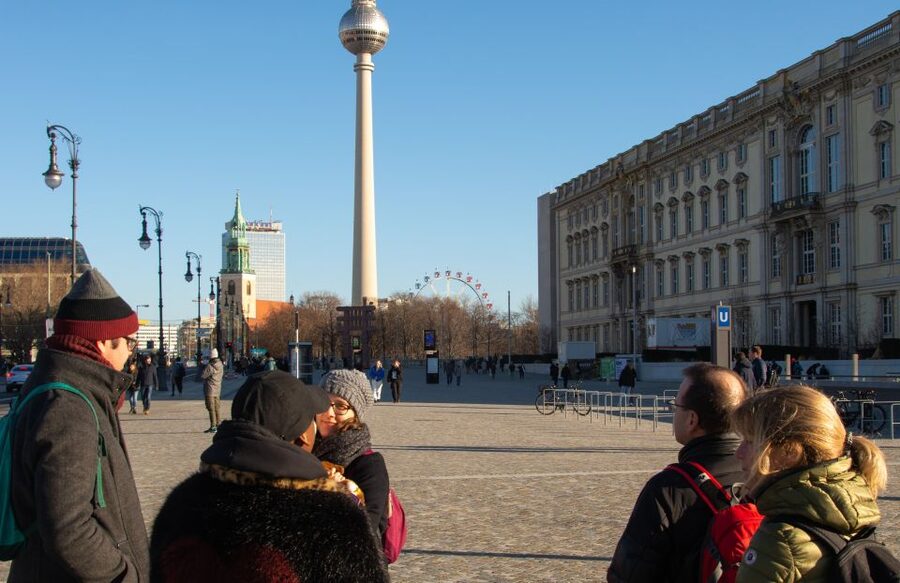
The two-hour length is manageable and works well as part of a day in central Berlin. It is long enough to establish an argument and visit the collection, but short enough that you can plan another museum or sight afterward.
The schedule is not evenly split between outside and inside. The first hour is spent seated outdoors, followed by the museum visit. That makes the weather a real factor. On a cold or wet day, the opening discussion may feel demanding, even with chairs provided.
The pace also depends on conversation. A guide-led discussion can move quickly when the group is engaged, but it may feel slower than a conventional tour that moves from room to room. You will get more from it if you arrive ready to listen, question familiar assumptions, and connect the building to the displays.
The tour is offered in English and is wheelchair accessible. Large bags and luggage are not allowed, and food and drinks are not permitted. Those rules are easy to manage, but they matter if you are visiting with bags between train connections or carrying a substantial day pack.
The meeting point is near the reconstructed Sanchi Gate. Arrive with enough time to find the white chairs and identify the guide. One serious complaint involved a guide not appearing at the agreed time or place, while other comments praised the guide’s competence and the tour’s organization. Because of that mixed record, I would keep your booking confirmation handy and double-check the exact meeting details before setting out.
Is $41 a Fair Price?

At $41 per person, this is not the cheapest way to enter a Berlin museum. The value depends on whether you want a standard museum visit or a focused interpretation of colonial history.
The price includes the live guide and entry to the ethnological collection. You are paying mainly for the framing: the outdoor discussion, the links between the palace and colonialism, the treatment of the Humboldt brothers, and the guided reading of the collection.
If you would otherwise visit the Humboldt Forum on your own, the tour can add useful context that is difficult to gain from labels alone. If you mainly want photographs, architecture, or a broad look at every gallery, you may feel that too much of the price goes toward discussion rather than sightseeing.
The rating supplied for the experience is 4.4 from 12 reviews. That is a small sample, but it fits the overall picture: strong praise for the subject and guides, alongside a few serious concerns about interpretation and one reported missed meeting.
Several high ratings describe the tour as interesting, informative, and important. A December 2024 booking praised the guide and recommended the experience strongly. Another recent German-language comment called it a very interesting and important tour. Those comments point to the main value: the subject keeps the visit active instead of turning it into a dry lecture.
The cost makes the most sense for you if you already want to understand colonial memory in Berlin. It makes less sense if your priority is a broad, neutral introduction to the building.
Who Will Get the Most From This Experience?
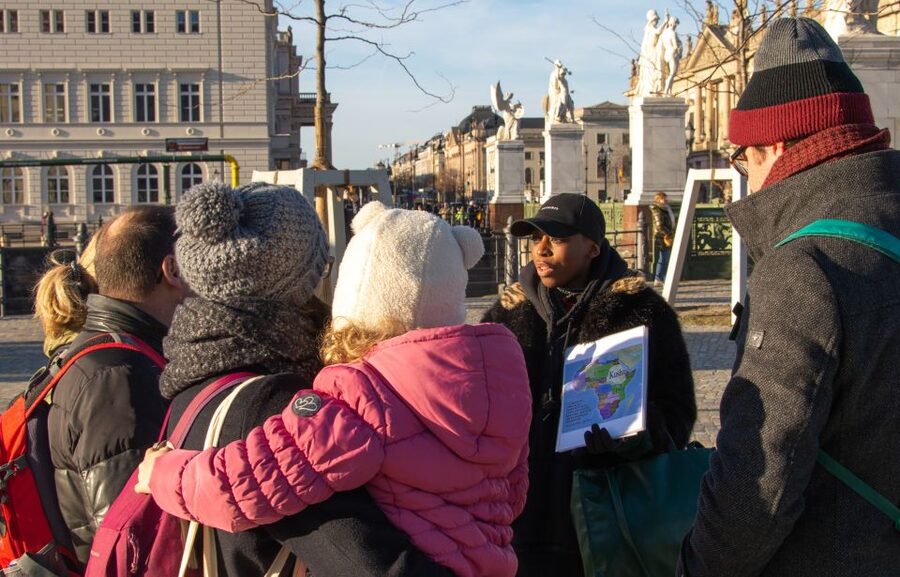
I would recommend this tour to you if you enjoy museums that ask uncomfortable questions. It is a good fit for visitors interested in colonial history, museum ethics, German identity, religion and empire, or the politics of public monuments.
It also suits repeat visitors to Berlin. If you have already seen the city’s major sights, this offers a different way to read a well-known building. You do not need a specialist background, but you should be comfortable with a clear decolonial and Afrocentric approach.
The tour may also work well for students, educators, and anyone comparing how European museums present cultural collections. The audio walk and critical look at labels can give you ideas to carry into other museums.
I would think twice if you want a relaxed palace tour with little debate. The experience is not designed to avoid difficult subjects or offer equal time to every interpretation. One reviewer felt uncomfortable with the way history was reframed, while other high ratings found that very approach informative and engaging.
That split does not make the tour poor. It tells you exactly what kind of booking this is. You are choosing a guided argument, not a neutral audio guide.
Practical Tips Before You Go
Wear shoes you can stand or walk in comfortably, even though the first hour is seated. The route moves from the outdoor meeting point into the museum, and weather can change the feel of the opening discussion.
Dress for the forecast. The outdoor hour is not a minor detail, and there is no promise of indoor seating before the museum portion begins.
Leave large bags and luggage elsewhere. Food and drinks are not allowed, so plan accordingly.
Keep the meeting point clear in your phone or booking details. The reconstructed Sanchi Gate is the stated location, with white chairs nearby. If you are unfamiliar with the Humboldt Forum, give yourself time to orient yourself.
Use the tour as a starting point rather than your entire Humboldt Forum visit. Because the guided museum section is limited, you may want extra time to explore independently afterward, though the included visit specifically covers the ethnological collection.
Cancellation is free up to 24 hours before the tour, and you can reserve now and pay later. That flexibility is useful when weather may affect your comfort during the outdoor opening.
Should You Book the Decolonial Berlin Castle Tour?
Book it if you want the Humboldt Forum explained through colonial history, Afrocentric insight, and close attention to the power of museum storytelling. The strongest parts are the connection between the palace and colonial structures, the discussion of missionaries, and the critical reading of the ethnological collection.
Skip it if you want a conventional palace tour, a mostly indoor visit, or a quick run through many galleries. The outdoor hour and firm interpretive viewpoint are central to the experience, not minor details.
At $41, I see this as a specialist tour with real value for the right audience. Go with an open mind, suitable clothing, and enough time to continue exploring the museum afterward. If you want Berlin’s buildings and collections to raise harder questions, this is a worthwhile choice.
FAQ
Where does the tour meet?
Meet near the reconstructed Sanchi Gate at the Humboldt Forum. White chairs are available at the meeting point.
How long does the tour last?
The tour lasts two hours.
What language is the tour offered in?
The live guided tour is offered in English.
How much does the tour cost?
The price is $41 per person.
Is entry to the museum included?
Entry to the ethnological collection is included.
How much of the tour takes place outdoors?
You will be seated outside for approximately one hour before entering the museum.
Is the tour wheelchair accessible?
Yes, the activity is listed as wheelchair accessible.
What should I bring?
Bring comfortable shoes and weather-appropriate clothing.
Are food, drinks, or large bags allowed?
Food and drinks are not allowed, and luggage or large bags are prohibited.
Can I cancel the booking?
Yes. You can cancel up to 24 hours in advance for a full refund. You can also reserve now and pay later.
Newly walked in Germany
- Sightseeing flight Zugspitze Neuschwanstein Castle Alps Munich Augsburg★ 5.0 · 7 reviews
- Stuttgart: Landesmuseum Württemberg Old Castle Entry Ticket★ 4.6 · 21 reviews
- Stuttgart: 4-Castle Winter Hike with Costume Tour★ 4.5 · 2 reviews
- Stein: Guided tour of Count von Faber-Castell’s castle★ 4.9 · 27 reviews
- Sigmaringen: Hohenzollern Castle Admission & Audio Guide★ 4.9 · 15 reviews
- Segway Tour: Gerberbach, Schlosspark & Castle Weinheim★ 4.9 · 14 reviews
- Dresden: Scavenger Hunt to Elbe River & Castles★ 4.7 · 15 reviews
- Private tour to Neuschwanstein castle from Munich★ 5.0 · 23 reviews
Guided Castle Tours, compared.

Edinburgh Castle: Guided Walking Tour with Entry Ticket
Read our review →
Cathedral, Giralda & Alcazar Entry With Guided Tour
Read our review →Edinburgh Castle: Guided Walking Tour with Entry Ticket
Read our review →
Stonehenge, Windsor Castle and Bath Full Day Guided Tour
Read our review →
Alcázar of Seville Skip-the-Line Tickets and Guided Tour
Read our review →
Dublin Book of Kells, Castle and Molly Malone Statue Guided Tour
Read our review →
Quebec City: Guided Tour of Fairmont Le Château Frontenac
Read our review →Browse the lists this tour appears in