
Review · PORTUGAL
Tomar: Convent of Christ and Templar Castle Tour Ticket
Tomar’s Convent of Christ is the sort of place where one doorway leads to another century. You begin among the 1160 Templar fortifications, then move into a Renaissance convent filled with carved stone, Manueline detail, and five very different cloisters. The round Charola, shaped in part by the Holy Sepulchre in Jerusalem, is the great surprise.
I like the way this visit connects a castle, a religious complex, and a major aqueduct in one historic site. I also like the freedom of a one-day ticket, which lets you take your time rather than rush from room to room. The main point to check before booking is the format: despite the tour wording and the availability of guides such as Mark and Anna, the listed inclusion is an entry ticket, so do not assume a guided tour is included.
Key points
- A rare round Charola: See the Templar prayer space inspired by Jerusalem’s Holy Sepulchre.
- Five cloisters in one convent: Compare Gothic, Renaissance, and Mannerist designs as you walk through the complex.
- A powerful Manueline centerpiece: Look closely at the nave, High Choir, and richly carved Chapter Window.
- The 16th-century Pegões Aqueduct: Finish with one of Portugal’s most striking engineering works.
- Good value at $17: The price is sensible for access to a UNESCO-listed complex, especially if you want time to explore independently.
- Bring practical gear: Wear comfortable shoes, carry a hat and sunscreen, and arrive 15 minutes early.
Why Tomar’s Convent of Christ deserves your time
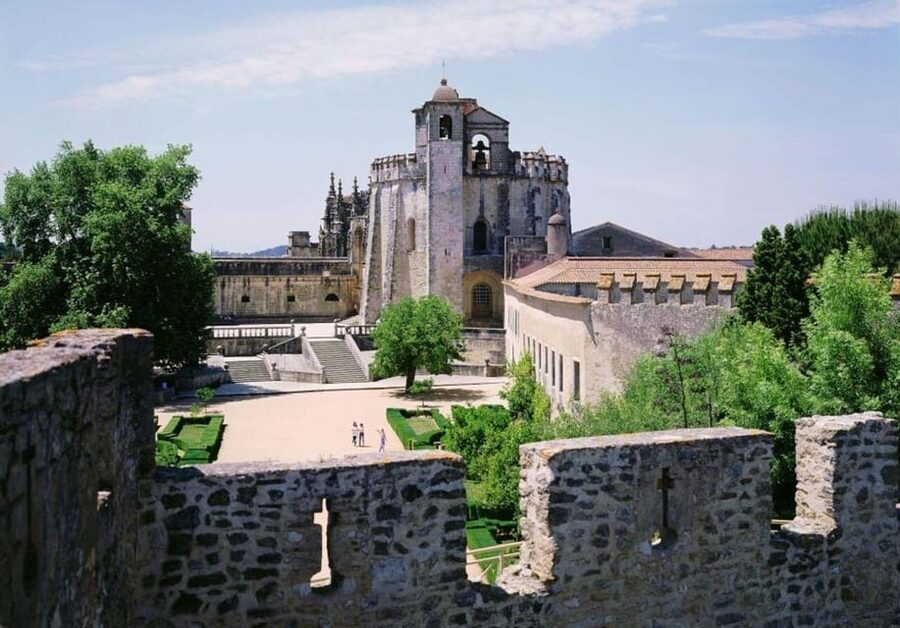
The Convent of Christ is not a single monument with one grand room at the end. It is a long sequence of spaces built and reshaped over about seven centuries. That layering is what gives the place its force.
You can begin with military stonework, move into a circular Templar temple, and then pass into a convent shaped by later Portuguese rulers and church leaders. The change is easy to read as you walk. The castle feels defensive and severe. The convent feels more ordered, decorative, and concerned with ceremony.
The site entered the UNESCO World Heritage List in 1983. That matters here because the designation reflects more than age. The complex brings together medieval fortifications, Templar design, Gothic construction, Renaissance planning, Manueline carving, and Mannerist touches within one visit.
At $17 per person, the ticket offers solid value if you care about architecture or Portuguese history. You are paying for access to a substantial complex, not a quick look at one chapel. The value improves if you use the full day and take time with the details rather than treating the visit as a short photo stop.
More Castle Tours in Portugal:
- Sintra: Castle of the Moors Skip-the-Line Ticket
★ 4.6 · 2,893 reviews - Lisbon: São Jorge Castle E-Ticket and Audio Guide
★ 4.3 · 2,182 reviews - Lisbon: Sao Jorge Castle Skip-the-Line Ticket with Guide
★ 4.6 · 1,191 reviews
Starting at the Templar Castle
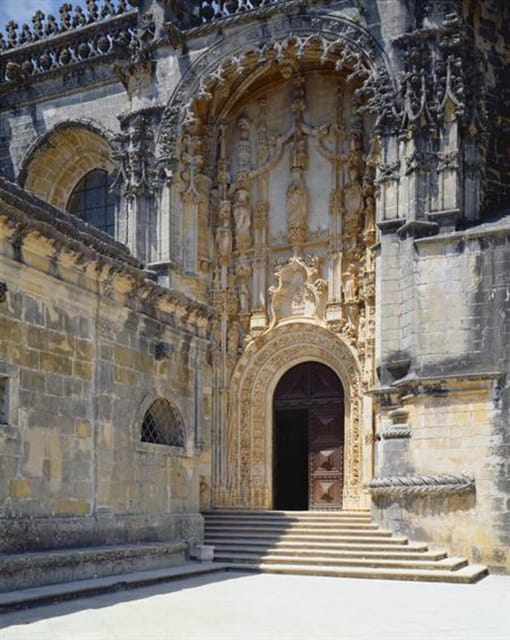
Your visit begins at the main entrance of the Convent of Christ. Arrive 15 minutes before the scheduled check-in time, even though the admission itself is valid for one day. That small margin gives you time to find the entrance and begin without a scramble.
The castle was founded in 1160. Its first impression is practical: walls, defensive planning, and a strong sense that this hilltop site had a military purpose. Walking through it helps you understand the Templars as an order that combined religious duty with armed protection.
Take your time with the fortifications. Their value is not only visual. The walls explain why the complex was placed and built as it was, while the later convent shows how the site changed once the military role gave way to a broader religious and royal one.
The castle section is also where a guide can add real value. A good explanation helps connect the Templar period to the buildings that came later. Mark is praised for putting the history together clearly and covering the main points before leaving you at the convent. Anna is also noted for explaining difficult ideas in an interesting way.
Still, the booking details need care. The experience is presented as a tour, but the basic listed inclusion is entry to the Convent of Christ. If you want a guide, check the exact option and meeting instructions before paying. The presence of guide names in some arrangements does not mean every ticket includes one.
The Charola, Tomar’s round Templar temple
The Charola is the most unusual room in the complex. Its round form was inspired by Jerusalem’s Holy Sepulchre, and it gives the Templar section a shape unlike the long naves found in many European churches.
This is the room to pause in. The circular plan changes how you read the space. Instead of moving toward one distant altar, your eye travels around the center and the surrounding structure. That design suited a religious order with a strong connection to Jerusalem and the Crusading world.
You might find the Charola more memorable than the larger rooms because it feels so different. It is not merely an old chapel inside a castle. Its form carries an idea about sacred geography, pilgrimage, and the Templars’ place in medieval Europe.
The site’s appeal is strongest when you let the buildings explain one another. The castle gives you the military setting. The Charola gives you the spiritual center. The convent then shows how later generations expanded and reshaped this foundation.
From Templar fortress to Renaissance convent
After the castle and Charola, the visit moves into the Convent of the Order of Christ. Here, the mood changes. You see a more formal religious complex, with spaces designed for communal life, worship, movement, and ceremony.
The Manueline nave is one of the major highlights. Manueline architecture is closely tied to Portugal’s maritime age, and its carved decoration often uses forms linked to ships, ropes, plants, and the sea. At Tomar, the style is not an isolated ornament. It helps show how Portugal’s growing power and overseas ambitions reached into religious architecture.
The High Choir adds another layer. It was built for ceremony and music, so look upward and consider how the room was meant to work, not just how it looks in a photograph. The combination of height, carved detail, and position gives you a clearer sense of the convent as a living religious institution.
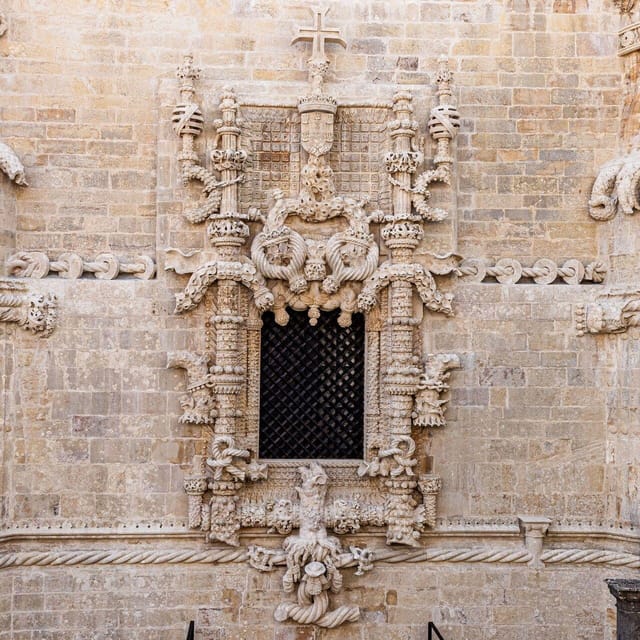
Then look for the Chapter Window. It is one of the best-known details in the complex and a symbol of Portugal’s maritime expansion. The carving rewards patience. From a distance, it reads as an elaborate window. Up close, its small forms and nautical references become easier to appreciate.
If you are visiting independently, this is where a little preparation helps. The complex contains enough detail to overwhelm you if you hurry. Pick out the nave, High Choir, and Chapter Window as your main targets, then allow time for the smaller architectural features between them.
Same walls, a different way in:
- Templar Tour Convent of Christ & Almourol Castle from Lisbon
★ 5.0 · 704 reviews - From Lisbon: Tomar, Convent of Christ & Almourol Castle
★ 4.8 · 663 reviews - São Jorge Castle Skip-the-line Entry Ticket
★ 4.5 · 440 reviews - Lisbon: Pena Palace, Moorish Castle, Qta. Regaleira & Sintra
★ 5.0 · 325 reviews
Five cloisters, five different moods
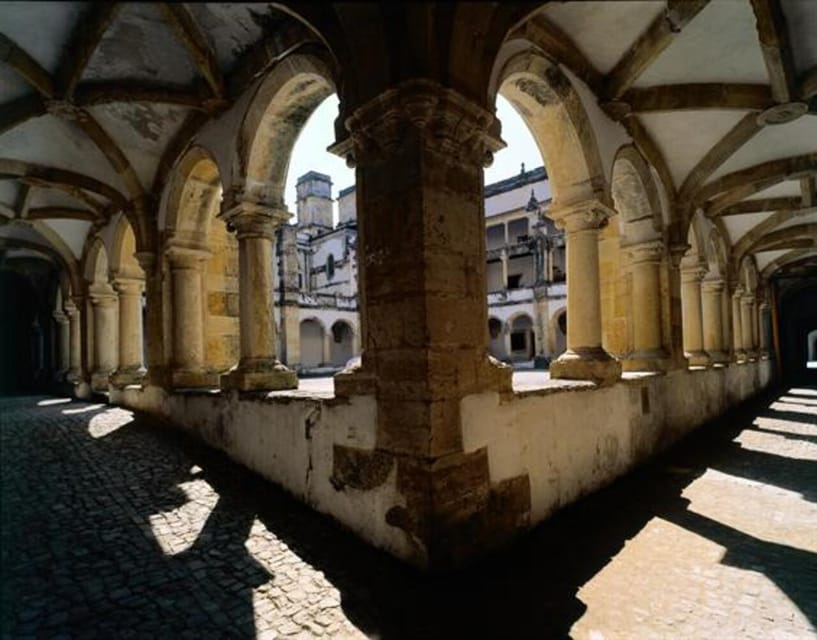
The five cloisters are a major reason this is more than a standard castle admission. They give you a chance to compare architectural styles rather than seeing one building frozen in one period.
You will find Gothic, Renaissance, and Mannerist elements across the convent. Each cloister has its own proportions and decorative language, so the walk becomes a lesson in how architectural taste changed over time.
The cloisters also provide breathing space between the darker, more crowded highlights. Their open layouts help you notice light, repeated arches, columns, and the balance between plain surfaces and decoration. You do not need to identify every style to enjoy them, but comparing one cloister with the next makes the differences clear.
I would not rush this section. The famous window and Charola may draw most of your attention, yet the cloisters explain how large religious communities organized daily life. They also show how the convent grew in stages instead of appearing as one complete design.
For anyone interested in architecture, the five cloisters may be the strongest part of the visit. Families and casual sightseers may prefer the Charola and Chapter Window, but the cloisters reward anyone who likes to look closely and notice change.
The Pegões Aqueduct and the final stretch
The Pegões Aqueduct brings an impressive engineering element to the experience. It was built during the period of the Spanish King Filipe and helped serve the needs of the convent.
Its scale gives the final part of the visit a different energy. Inside the castle and convent, you focus on rooms, carvings, and sacred spaces. At the aqueduct, you look at long lines, repeated arches, and the practical problem of moving water across distance.
This is a useful reminder that the Convent of Christ was not only a collection of beautiful rooms. Large religious communities required water, food, transport, and systems that could support daily life. The aqueduct makes that practical side visible.
The activity ends back at the meeting point in Tomar, leaving you well placed to continue exploring the town on your own. The ticket does not include meals, drinks, or personal expenses, so plan separately for those.
Is $17 a fair price?
For $17, this is a reasonable purchase if the admission covers the full Convent of Christ complex as described. You get access to the Templar Castle, Charola, Renaissance convent, five cloisters, and the Pegões Aqueduct. That is a substantial amount of architecture for the price.
The value depends on how you use the ticket. A rushed visit focused only on the best-known room will make the price feel less impressive. A slower visit that compares the fortifications, religious spaces, cloisters, and aqueduct gives you much more for your money.
The main value question is not the admission price. It is whether you expect a guided experience. One part of the booking information points to an entry ticket, while the tour presentation and some arrangements involve guides. Confirm this before purchase if explanation is important to you.
If you are happy to explore at your own pace, the ticket is straightforward and flexible. If you want someone to explain the complicated changes in architecture and history, look carefully at the specific option you select. Mark and Anna are the named guides associated with positive experiences, but you should not assume either will lead every booking.
Practical advice for a comfortable visit
Wear comfortable shoes. The complex covers multiple sections, and the visit includes outdoor castle areas as well as interior rooms and cloisters. A hat and sunscreen are sensible because the activity includes open-air walking.
Photography is allowed, but flash photography is not. The no-flash rule protects the atmosphere of the interiors and avoids distracting other people. Alcohol, drugs, explosive substances, and bare feet are not permitted.
The site is wheelchair accessible, which makes the experience possible for many people with mobility needs. Still, the complex contains historic architecture, so you may want to confirm the exact access arrangements for the parts you most want to see.
The ticket is valid for one day, with starting times shown through availability. It is not a timed all-day walking tour in the sense of being continuously led from one room to the next. Plan your arrival around the listed time and use the rest of the day at a comfortable pace.
Because the activity is non-refundable, check your date and format before booking. That is especially important if you are deciding between an independent ticket and an option with a guide.
Who will enjoy this experience most?
I would recommend this to you if you like castles, religious architecture, Portuguese history, or buildings that show several periods in one place. It is also a good choice if you want a major cultural site without committing to a full-day organized excursion.
Architecture students, photographers, and curious independent sightseers will have plenty to study. The five cloisters alone provide a useful comparison of changing styles, while the Charola and Manueline details give the visit memorable anchor points.
Families can enjoy the fortifications and aqueduct, though younger children may lose patience during the more detailed convent sections. A guide could help keep the story moving, but the booking format must be checked because admission is the clearly listed inclusion.
This may not suit you if you want a tightly scheduled guided tour with transport, meals, or a packed itinerary. None of those extras are included. You are primarily paying for access to the monument.
Should you book the Convent of Christ ticket?
Book it if you want to see one of Portugal’s most layered historic sites and can give the complex enough time to breathe. The round Charola, Manueline nave, Chapter Window, five cloisters, and Pegões Aqueduct make this much more than a quick castle visit.
I especially recommend it for independent explorers who value flexibility and can read the booking details carefully. At $17, it is good value for the amount of architecture included.
Hold off only if you require a guaranteed guided tour and have not confirmed that your chosen option includes one. Once that point is clear, this is an easy addition to a Tomar visit, with enough substance to occupy far more than a single photograph.
FAQ
Where does the activity begin?
The activity begins at the main entrance of the Convent of Christ.
Where does the activity end?
The activity ends back at the meeting point.
How long is the ticket valid?
The ticket is valid for one day. Check availability for the starting times offered.
What does the $17 price include?
The price includes entry to the Convent of Christ.
Are meals and drinks included?
No. Meals and beverages are not included.
Are personal expenses included?
No. Personal expenses are not included.
Is the site wheelchair accessible?
Yes, the activity is described as wheelchair accessible.
Can I take photographs?
Yes, photography is allowed, but flash photography is not permitted.
What should I bring?
Bring comfortable shoes, a hat, and sunscreen.
Do I need to arrive early?
Yes. You should arrive 15 minutes early for check-in.
Newly walked in Portugal
- Enjoy Silves Castle & Lagos and Ponta Da Piedade Private Tour★ 5.0 · 2 reviews
- Private Tour to Silves Castle Old Town stop at Chapel of Bones★ 4.5 · 2 reviews
- Albufeira Safari Tour with Waterfall*, Castle and Villages★ 5.0 · 29 reviews
- Tomar Walking Tour : Templar, Castle, Food, Ceramics, Fun!★ 5.0 · 25 reviews
- Tomar and Almourol Castle: Knights Templar Private Tour★ 4.9 · 8 reviews
- Tomar: Knight’s Templar Castle and Convent of Christ Tour★ 4.9 · 84 reviews
- From Lisbon: Tomar, Christ Convent & Almourol Castle Tour★ 5.0 · 64 reviews
- Sintra:Pena Palace,Moorish Castle & Q-Regaleira Private Tour★ 5.0 · 10 reviews
Portugal Castle Tours, compared.
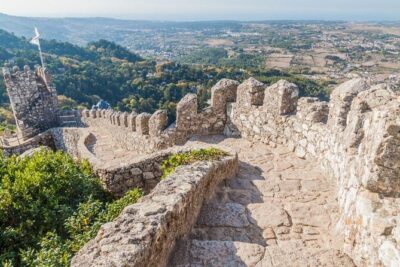
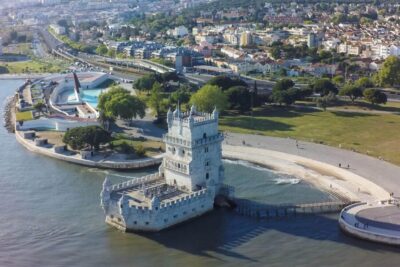

Templar Tour Convent of Christ & Almourol Castle from Lisbon
Read our review →
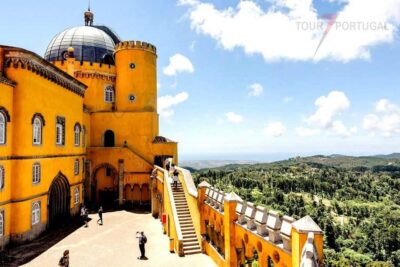
Pena Palace, Moorish Castle, Qta. Regaleira & Sintra
Read our review →
Sintra Cascais Private Tour with Pena Palace and Mouros Castle
Read our review →
Castle of the Moors & Quinta Entry with Audio Guides
Read our review →
Official Public Bus Transport: All Palaces & Castles
Read our review →Browse the lists this tour appears in