Review · BEIRUT, LEBANON
Guided Private Full Day Tour to Baalbek, Anjar and Chateau Ksara
Baalbek gives this day its punch: enormous Roman temples rise from the Bekaa Valley, and the nearby Stone of the Pregnant Woman shows just how audacious ancient builders could be. You’ll also see Anjar’s Umayyad ruins and finish with Lebanese wine in a cave at Chateau Ksara.
I like the private car and hotel pickup, which save you from arranging transport across the country. I also like the mix of Roman, Umayyad, Islamic, and modern Lebanese culture in one day. The catch is that entrance fees, wine tasting, and lunch are extra, so the $100 price is not the full day’s cost.
Key points
- Baalbek’s Temple of Bacchus and Temple of Jupiter: The main reason to make this long day trip from Beirut.
- A private eight-hour outing: Your group travels in an air-conditioned vehicle with hotel pickup and drop-off.
- The Stone of the Pregnant Woman: A brief but striking stop beside one of antiquity’s largest worked stone blocks.
- Anjar’s Umayyad city: See palace walls, baths, a mosque, and Roman-influenced columns at an important trading center.
- Chateau Ksara wine caves: Sample Lebanese wine in a historic winery setting, with the tasting fee paid separately.
- Flexible guiding: Guides such as Georgette and Albert have been praised for clear explanations and adapting the day to the group.
Why Baalbek makes this private day trip worthwhile
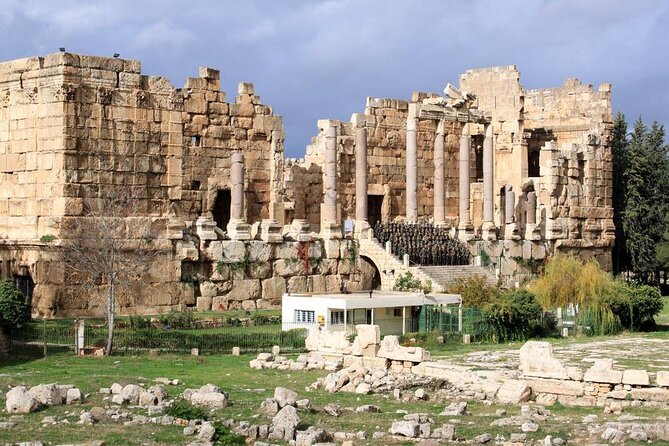
I would choose this tour for one main reason: Baalbek is not a small ruin you can understand in a quick photo stop. The sanctuary spreads across a large site, and its scale becomes clear only when you walk among the columns, stairways, platforms, and massive temple blocks.
The ancient city was known as Heliopolis during the Hellenistic period. Under Roman rule, it became a major sanctuary dedicated to the Heliopolitan triad: Jupiter, Venus, and Bacchus. The surviving monuments show Roman engineering at its boldest, with construction carried out over more than two centuries.
The Temple of Jupiter and Temple of Bacchus are the stars. The Temple of Bacchus is especially well preserved, while the Temple of Jupiter is remembered for its huge columns and monumental setting. Baalbek was added to the UNESCO World Heritage list in 1984, recognition that matches the site’s importance.
I like having a guide here. Without context, you may see impressive stones and columns but miss how the Phoenician religious tradition was reshaped under Greek and Roman rule. A good guide can connect the buildings to the worship of the three gods and explain why pilgrims came from across the Roman world.
The private format also matters at Baalbek. You are not tied to a large group’s pace, so you can ask about a carved detail, pause for photographs, or spend more time at a section that catches your attention. The supplied experience names Georgette and Albert as guides who have led this route. Georgette is described as enthusiastic and generous with historical explanation, while Albert is noted for combining site information with reflections on Lebanon today.
More Castle Day Trips in the world:
- From Munich: Neuschwanstein & Linderhof Castle Full-Day Trip
★ 4.6 · 14,646 reviews - Neuschwanstein & Linderhof Castle-Fairytale Day Tour from Munich
★ 4.5 · 7,275 reviews - Bucharest: Dracula’s Castle, Peleș Castle & Brașov Day Trip
★ 4.4 · 6,100 reviews
The long road from Beirut to the Bekaa Valley
The tour takes about eight hours, including transport and several visits. You leave Beirut by private vehicle and head toward the Bekaa Valley, with hotel pickup and drop-off included.
That arrangement is the tour’s practical backbone. Baalbek and Anjar are not Beirut sights, and organizing a private car, driver, and guide separately can be a nuisance. Here, your transport is air-conditioned, and only your own group takes part.
The drive is part of the experience, but it also explains why this is a full day rather than a quick excursion. You should expect several hours on the road, along with walking at the archaeological sites. Comfortable shoes make sense, and you will want water with you, since lunch is not included.
The route combines three very different kinds of stops. Baalbek supplies the grand ancient monuments. Anjar offers a more compact ruined city from the Umayyad period. Chateau Ksara changes the mood entirely, replacing stones and temples with cellars and Lebanese wine.
Walking through Baalbek’s Roman sanctuary
The Baalbek portion is divided into a broad visit to the city and a closer look at the temple complex. Together, the planned time is substantial, with roughly two hours at Baalbek and another hour and a half around the temples.
That amount of time gives you room to see more than the famous columns. The sanctuary sits at about 1,150 meters at the foot of the southwestern slope of the Anti-Lebanon range, beside the fertile Bekaa plain. Its setting helps explain why this became a major place of worship and why the builders could support such ambitious construction.
I would listen carefully to the guide before rushing toward the most photographed ruins. The key to Baalbek is understanding that this was not simply a Roman civic building. It was a religious center where a local Phoenician cult took on Roman names and forms.
The Temple of Bacchus is one of the most rewarding sections of the visit. Its scale and surviving decoration make it easier to picture the original sanctuary. The Temple of Jupiter, with its immense columns and monumental platform, gives you the strongest sense of the engineering effort behind the site.
The published timing lists admission as included for one Baalbek stop but says the temple complex entry ticket is not included. Treat all archaeological entrance fees as an extra expense and confirm the exact amount when booking or before departure. The tour price alone does not cover every ticket.
The Mosque of Sayyeda Khawla and the Stone of the Pregnant Woman
The visit also includes the Mosque of Sayyeda Khawla in Baalbek. It is associated with the belief that Sayyida Khawla, daughter of Imam al-Hussein and granddaughter of the Prophet Muhammad, was buried at this location.
This stop adds a living religious dimension to a day otherwise focused on ancient ruins. It also reminds you that Baalbek has remained a place of spiritual importance long after the Roman sanctuary ceased to function in its original form.
The Stone of the Pregnant Woman receives about 15 minutes. That sounds brief, but the stop works well as a focused look at one of the ancient world’s largest quarried monoliths.
The worked stone, along with another large block nearby, was likely intended for the Roman temple complex. Its size raises obvious questions about how it was quarried and moved. The tour does not promise a long archaeological lecture here, so use the guide’s explanation and take a moment to appreciate the sheer weight of the stone rather than treating it as a rushed photo stop.
More Full-Day Trips in the world:
- Stonehenge, Windsor Castle and Bath Full Day Guided Tour
★ 4.5 · 5,346 reviews - From Munich: Neuschwanstein Castle Full-Day Trip
★ 4.7 · 3,977 reviews - London: Windsor Castle, Stonehenge & Bath Full-Day Tour
★ 4.4 · 3,112 reviews - Transylvania and Dracula Castle Full Day Tour from Bucharest
★ 4.5 · 1,589 reviews
Anjar’s Umayyad streets and palace ruins
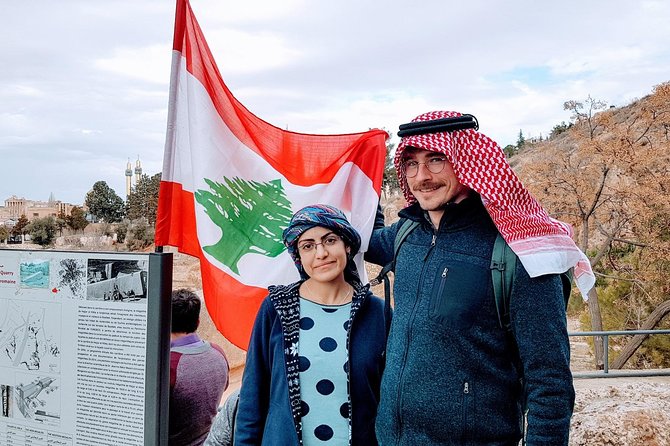
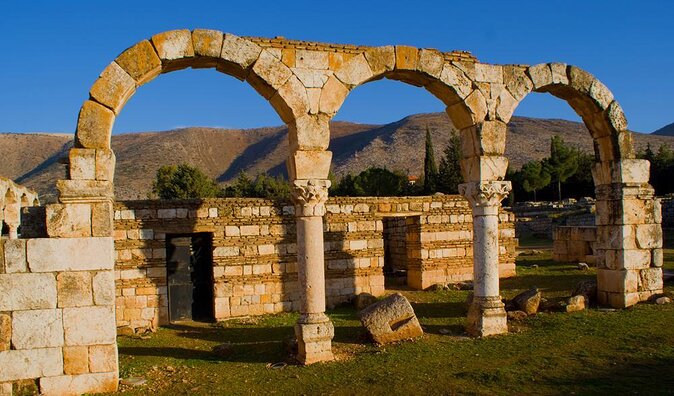
Anjar changes the historical focus from Roman religion to early Islamic urban life. The Umayyad ruins date from a period when this inland settlement served as a commercial center at the meeting point of routes from Beirut to Damascus and from the Bekaa toward Homs and Tiberiade.
The city was discovered by archaeologists only at the end of the 1940s. Today, you can see the remains of palace walls, harems, a mosque, the caliph’s great palace, thermal baths, and rows of pillars that show Roman architectural influence.
I find Anjar useful because it prevents the day from becoming a single-period history lesson. Baalbek shows the power of the Roman imperial world. Anjar lets you see how an Umayyad city used planning and architectural ideas in a different political and religious setting.
The stop lasts about 45 minutes, so expect an overview rather than a slow archaeological study. That is enough to understand the layout and see the main remains, but not enough for every corner of the site. If you enjoy ancient cities and want extended time for close inspection, the schedule may feel brisk.
Anjar’s location on old trade routes also gives the guide a natural way to explain why the Bekaa Valley mattered. This was not an isolated settlement. Its position connected inland Syria, the Lebanese coast, and routes across the region.
Admission is not included. Add the site ticket to your budget, just as you should for Baalbek.
Chateau Ksara, Lebanese wine in an old cave
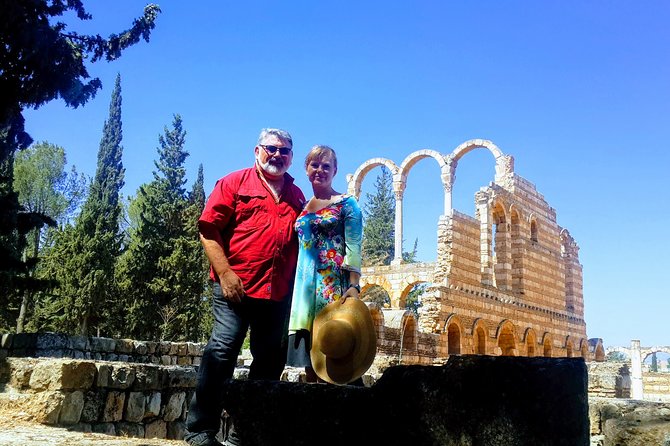
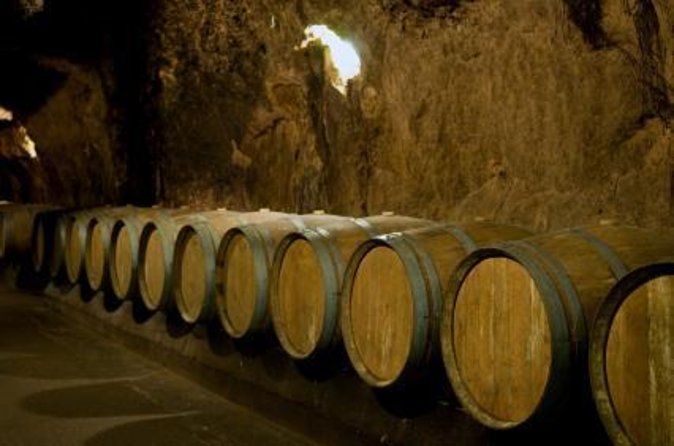
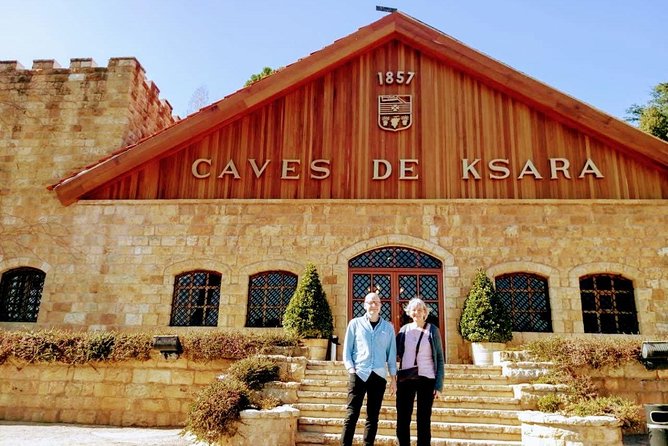
After the ruins, Chateau Ksara provides a welcome change of pace. The winery was founded in 1857 by Jesuit priests and went on to develop Lebanon’s first dry wine. It now produces about three million bottles a year and exports to more than 40 countries.
The planned visit lasts about an hour. The most distinctive detail is the chance to sample local wine while seated in a cave. That setting gives the final stop a stronger sense of place than a standard tasting room, and it lets you connect Lebanese wine with the Bekaa Valley where the grapes are grown.
The tasting is not included in the $100 tour price. You should ask about the fee before the visit and remember that the tour price also excludes lunch. The winery stop is best understood as an optional paid finish, not a free add-on.
I like this ending because it gives the day a human, contemporary side. After temples, sacred sites, and ruined palaces, you get a chance to talk about Lebanon as a current food and wine destination. If you do not drink wine, Chateau Ksara may be less important to you, but the winery still marks a clear change from the archaeological stops.
What the $100 price really covers
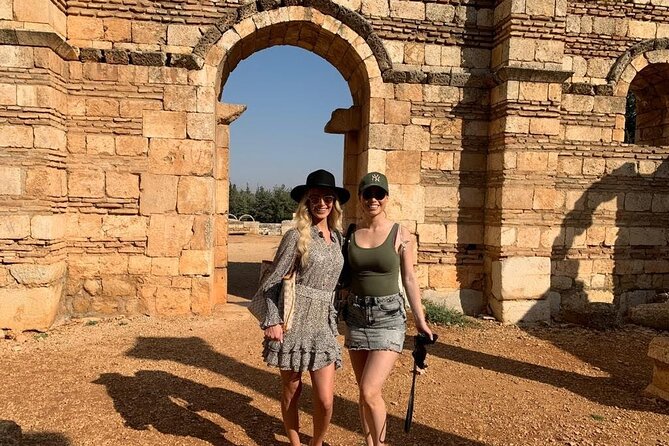
At $100 per person, the value depends on how much you would otherwise pay for transport and guiding. The price includes a private vehicle, air conditioning, hotel pickup and drop-off, a tour leader, and a professional guide.
For a private day from Beirut to several destinations in the Bekaa Valley, that package is easier to justify than a simple transfer. You are paying for a driver, route planning, interpretation, and the ability to travel with only your own group. The private format is especially useful if your party wants to ask questions or adjust the pace within the available time.
The headline price does not include lunch, archaeological entrance fees, or wine tasting. Those extras can change the final amount, so I would set aside additional cash or confirm payment arrangements before leaving Beirut.
Group discounts are available, though the exact discount is not specified. If you are traveling with several people, ask for the group rate. The cost per person may become more attractive as your group fills the vehicle.
The tour offers free cancellation up to 24 hours before the start time. Cancellations made less than 24 hours before departure are not refunded, and late changes are not accepted.
Who will get the most from this day
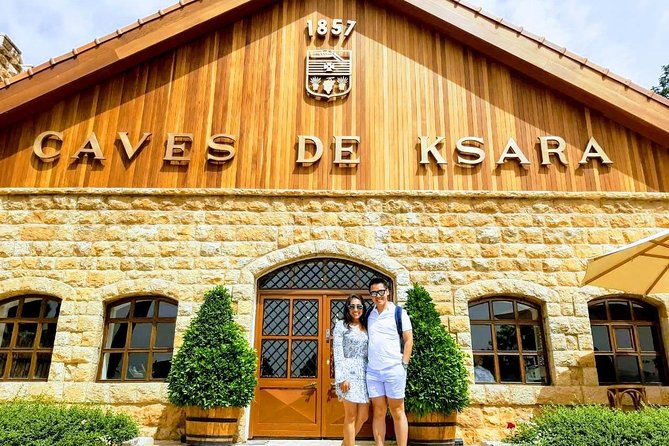
I would recommend this trip to you if you want Lebanon’s major inland sights without handling intercity transport yourself. It works particularly well for first-time visitors based in Beirut who want a single day devoted to ancient sites, early Islamic archaeology, and local wine.
It is also a good match if you prefer a private setting over a large coach. Guides such as Georgette and Albert have been praised for explaining the past clearly, answering questions, and adjusting to the group. That personal contact can make a major difference at Baalbek, where the monuments are impressive but easy to misunderstand without context.
You should think twice if you want a slow, highly specialized archaeological tour. The day covers three destinations, and Anjar receives less than an hour. You will see the main points, but the schedule is designed for variety rather than exhaustive study.
I would also be cautious about choosing it if your budget must include every expense. The $100 rate is only the starting point because lunch, entry tickets, and the Ksara tasting are separate.
Should you book this Baalbek and Bekaa Valley tour?
Book it if your priorities are private transport, strong guiding, and maximum variety in one day. Baalbek alone is worth the journey, and Anjar adds a less familiar but important chapter of Lebanese history. Chateau Ksara then gives you a relaxed modern finish.
The best reason to book is convenience without giving up depth. You get door-to-door transport from Beirut, a guide who can explain the sites, and a day built around places that are difficult to combine independently.
Skip it if you want to spend an entire day at Baalbek, avoid paid extras, or prefer to travel at a slower pace. For most visitors with one free day in Beirut, though, this is a well-shaped outing with a sensible mix of monumental ruins, religious history, and Lebanese wine.
FAQ
How long does the tour last?
The tour lasts approximately eight hours.
Where does the tour start?
Pickup and drop-off are offered at your Beirut hotel.
Is the tour private?
Yes. This is a private activity, and only your group participates.
What transportation is provided?
The tour includes comfortable transportation in an air-conditioned private vehicle.
Are entrance fees included?
No. Entry fees for the relevant archaeological sites are not included in the tour price.
Is the Chateau Ksara wine tasting included?
No. The wine tasting at Chateau Ksara is not included.
Is lunch included?
No. Lunch is not included in the tour.
Can I cancel for a full refund?
Yes, if you cancel at least 24 hours before the experience start time. Cancellations made less than 24 hours in advance are not refunded.
Newly walked in the world
- Private Tour Egyptian museum, Hanging Church, Castle of Saladin★ 5.0 · 2 reviews
- Cairo Egyptian museum, Cairo citadel and Alabaster mosque day tour★ 5.0 · 2 reviews
- Explore the History of Egyptian Museum Citadel and Khan Bazaar★ 5.0 · 2 reviews
- Egyptian Museum, Mohamed Ali Mosque and Citadel★ 5.0 · 12 reviews
- Egyptian Museum, Citadel and Old Cairo Tour★ 5.0 · 118 reviews
- Full-Day Private Guided Tour of Egyptian Museum, Pyramids and Cairo Citadel★ 5.0 · 2 reviews
- Cairo Tour to Egyptian Museum Citadel and Khan Khalili Bazaar★ 5.0 · 10 reviews
- Egyptian Museum, Cairo Citadel and Coptic Cairo Private Tour★ 5.0 · 5 reviews
Castle Day Trips, compared.

Neuschwanstein & Linderhof Castle Full-Day Trip
Read our review →
Neuschwanstein & Linderhof Castle-Fairytale Day Tour from Munich
Read our review →
Dracula’s Castle, Peleș Castle & Brașov Day Trip
Read our review →
Windsor Castle, Stonehenge, and Oxford Day Trip from London
Read our review →
Isle of Skye and Eilean Donan Castle Day Trip
Read our review →
Loire Valley Castles Day Trip from Paris with Complementary Wine
Read our review →
Windsor Castle, Stonehenge & Bath Full-Day Tour
Read our review →