

Review · USA
Charleston historical walking tour with a Professor of History at The Citadel
Charleston’s past comes into sharper focus when the person explaining it has a Ph.D. in history and teaches at The Citadel. Eric Lager leads this small-group walk through the old city, linking grand churches and civic buildings with the people and political conflicts behind them.
I like the 12-person limit, which makes it easy to hear and ask questions. I also like the route’s range: you get colonial streets, French Huguenot influence, Revolutionary-era sites, Civil War landmarks, and a look across the harbor toward Fort Sumter. The main consideration is pace. Three hours on foot, packed with detail, suits serious history fans better than anyone seeking a light, casual stroll.
Key points to know
- Eric Lager, Ph.D., leads the walk: He teaches history at The Citadel and brings a strong focus on Charleston, the Civil War, architecture, religion, and politics.
- The group never exceeds 12 people: That small size gives you room to ask detailed questions and stay close enough to hear.
- The route covers about 400 years: You move from early Charleston and French Huguenot settlers to the Revolution, the Constitution, secession, and the Civil War.
- Fort Sumter is viewed from the Battery: This tour does not include the boat trip or admission to the fort itself.
- Some attractions are exterior stops only: Admission to the Heyward-Washington House, Old Exchange and Provost Dungeon, and Hibernian Hall is not included.
- The Battery is the finish: You end near 39 East Battery and the Rainbow Row area, a useful location for continuing your Charleston sightseeing.
Why this Charleston walk feels different
Many city walks give you a string of dates and building names. This one is designed more like a compact history class with the city as its classroom. Eric Lager’s background matters because the route crosses several periods and subjects at once. You are not just looking at an old church. You are hearing how religion, trade, government, slavery, war, architecture, and local power shaped the streets around it.
That depth has a clear payoff. You can ask about a building, a political figure, or a turning point and expect the discussion to go beyond a memorized paragraph. The small group helps here. The guide can respond to individual questions rather than rushing a large crowd from one photo stop to the next.
The tour has earned a five-star rating from 1,284 reviews, with 100 percent of participants recommending it. More important for deciding if it suits you, the strongest praise centers on Eric’s teaching style, humor, accuracy, and ability to keep a three-hour talk moving. Several people describe the experience as dense but engaging, so you should arrive ready to listen.
More Fortress and Citadel Tours in the world:
- Carcassonne: Castle and Ramparts Entry Ticket
★ 4.6 · 2,884 reviews - Salzburg: Hohensalzburg Fortress Admission Ticket
★ 4.6 · 2,236 reviews - Salzburg: Best of Mozart Fortress Concert and Dinner
★ 4.5 · 1,424 reviews
Starting at Mills House on Meeting Street
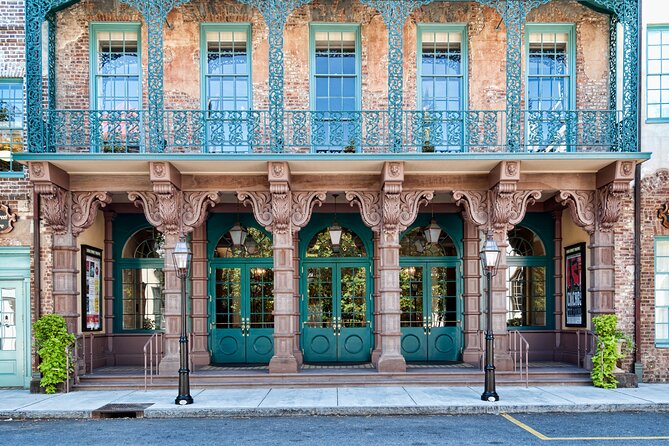
The walk begins at 108 Meeting Street, outside the Mills House Charleston, Curio Collection by Hilton. The hotel is not simply a meeting marker. It provides an early connection to the American Civil War and gives Eric a chance to set Charleston’s political and military story in motion.
This opening stop lasts about 10 minutes and requires no admission fee. It is a useful beginning because you start with a specific building and then widen the lens to the city’s role in the events that led to war. Expect context rather than a long interior visit.
From there, the route moves on foot through the historic center. You need a moderate level of fitness. The route lasts about three hours, and the exact amount of walking between stops means comfortable shoes will matter more than dressy footwear.
Dock Street Theater and Charleston’s stage
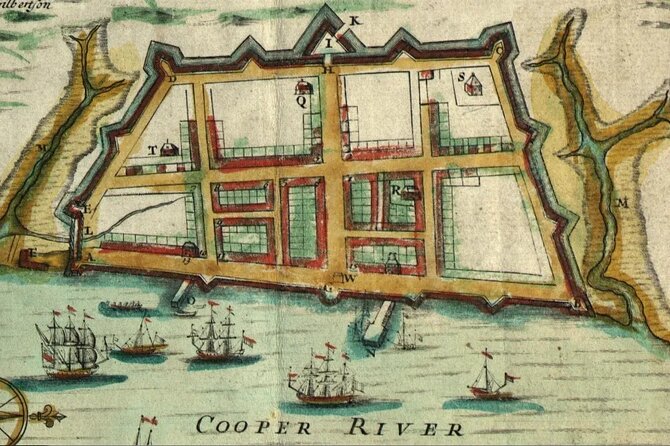
At Dock Street Theater, Eric discusses what is described as the first theater built in North America, along with the colorful and sometimes notorious figures tied to its story. The stop lasts about 10 minutes and is free.
This is one of the route’s helpful shifts in subject. Charleston is often reduced to mansions, churches, and war history, but theater reveals another side of the city: public entertainment, status, scandal, and social life. You get a sense of how a building can tell stories about behavior as much as architecture.
The stop is primarily about explanation and exterior context. If you hope to see a performance or take a full theater tour, that is not part of this experience.
The Pink House and early Charleston
The Pink House Gallery, dating to about 1712, receives a shorter five-minute stop. Its age makes it a useful reminder that Charleston’s old streets are not filled only with nineteenth-century façades. Some surviving structures reach much farther back into the city’s early period.
The brief timing is sensible. This is a visual stop and a chance to hear how early buildings fit into the city’s growth. You should not expect a long visit inside the gallery. The value lies in connecting a small, old structure to the larger story unfolding around it.
More Castle Walking Tours in the world:
- Edinburgh Castle: Guided Walking Tour with Entry Ticket
★ 4.7 · 11,699 reviews - Prague: 3-Hour Walking Tour of Old Town & Prague Castle
★ 4.7 · 5,696 reviews - Edinburgh Castle: Guided Walking Tour with Entry Ticket
★ 5.0 · 5,540 reviews - Edinburgh Castle Guided Walking Tour in English
★ 5.0 · 5,214 reviews
Washington Square and the making of civic Charleston
Washington Square gets about 15 minutes, making it one of the longer stops. The square contains several monuments, and Eric uses the setting to discuss the people and events commemorated there.
I appreciate stops like this because monuments are never only decoration. They show what a community chose to remember, honor, or place in public view. A historian can help you notice the politics behind those choices instead of treating each statue as a simple label.
The square also gives you a natural pause in the walk. Charleston’s old center can feel like a sequence of tightly packed streets and buildings. An open public space helps you understand how the city’s civic core was organized.
City Hall and the old statehouse

Charleston City Hall has had several lives. Before becoming City Hall, the building served as a meat market and a bank. That change in use gives Eric a practical way to explain how Charleston’s institutions developed over time.
The stop lasts about 10 minutes and is free. I like the subject because it moves the tour beyond military milestones. Markets, banks, courts, and government offices tell you how a city worked on ordinary days. The building’s changing roles also show that historic places are not frozen in one era.
Nearby, the Charleston County Courthouse adds another political layer. It occupies the site of what was once the old South Carolina statehouse. Expect about 10 minutes here, with attention to the building and the state’s earlier political life.
Together, these two stops help you see Charleston as a working capital, not just a preserved old town. They also prepare you for later discussion of the Revolution, the Constitution, and secession.
St. Michael’s Church and the city’s religious story
St. Michael’s Church was completed in 1761 and is described as Charleston’s oldest church edifice. The visit lasts about 10 minutes and is free.
The church is important for its age, but the better reason to pay attention is the way it connects faith, public life, and local power. Charleston’s religious institutions helped shape the city’s social order. A history professor can place the church in that wider setting instead of limiting the talk to its façade and construction date.
Architecture fans should enjoy this section of the route. You will hear about the building itself while also considering why such a church mattered in an eighteenth-century city. The experience does not include a separate paid interior visit, so your focus remains on the exterior and the historical explanation.
George Washington at the Heyward-Washington House
The Heyward-Washington House marks the visit of George Washington to Charleston in 1791. The stop lasts about 10 minutes, but admission is not included.
This is a good example of the tour’s method. Rather than treating Washington as a distant national figure, the route puts him at a specific Charleston address. You can connect the young United States to the physical city he visited.
If you want to go inside the house, plan for a separate admission. The walking tour gives you the setting and the story, but it does not serve as the ticket for the interior attraction.
The Old Exchange and Provost Dungeon
The Old Exchange and Provost Dungeon is another short stop, about five minutes, with admission not included. The building is described as the last public building built by the British in North America. It is also tied to the ratification of the Constitution in 1788.
That combination makes this one of the most politically charged points on the route. British rule, the American Revolution, the formation of the federal government, and Charleston’s place in the new nation all meet at one address.
The short timing means Eric is likely using the building as a launch point for explanation rather than taking the group through every room. If the dungeon and interior displays interest you, budget separately for admission and return at another time.
French Huguenot influence and the Gothic Revival
The French Huguenot Church gets about 10 minutes. Here the focus turns to the French Huguenots in Charleston and the first church built in the Gothic Revival style.
This stop adds an important thread to the city’s story. Charleston developed through more than one immigrant, religious, and cultural tradition. The French Huguenot presence helps explain why the city’s architecture and institutions cannot be understood through an English colonial lens alone.
The Gothic Revival detail is especially useful for anyone who enjoys buildings. You will be looking at form and style, but also at the communities that built and used the church.
The French Quarter, where streets become the story
The French Quarter receives about 15 minutes. This is not a single monument but a district, so it gives you time to absorb the scale and character of the old city.
The name can mislead you if you expect a direct copy of New Orleans. Here, the useful point is Charleston’s connection to French Huguenot settlers and the way the district preserves a concentrated group of historic streets and buildings. Eric’s discussion helps tie the neighborhood’s appearance to the people and institutions that shaped it.
I would pay attention to how the route moves through the quarter rather than only waiting for a famous façade. The value is in seeing several buildings and streets in relation to one another. This is also a good point to ask about architecture, local customs, or the city’s changing population.
Hibernian Hall and the road to disunion
Hibernian Hall gets about 10 minutes and has no included admission. The building is linked to the seeds of disunion and to America’s connection with Greek Revival architecture.
This stop gives the Civil War story a political setting. Instead of jumping straight from Fort Sumter to the first shots, you hear about ideas, organizations, and tensions that helped produce secession. The Greek Revival connection also keeps architecture in the conversation.
The tour is strongest when it makes these links. A building style can express national ideals, while a meeting place can become part of a conflict over those ideals. If you prefer a simple list of famous sights, this level of connection may feel like too much. If you want causes and context, it is exactly the point.
Fort Sumter from the Battery
The route ends at 39 East Battery, near Rainbow Row, with a view toward Fort Sumter across Charleston Harbor. This stop lasts about 10 minutes. You do not go out to the fort, and admission to Fort Sumter is not included.
That limitation is important. The tour gives you the location where the first shots of the Civil War were fired and the chance to see the fort from the Battery. It does not replace the separate boat excursion to Fort Sumter National Monument.
Ending here works well. The Battery provides a physical closing point for the political and military story that has run through the walk. After the tour, you are already near one of Charleston’s best-known waterfront areas and the Rainbow Row section, so you can continue exploring on your own.
What $40 buys you
At $40 per person, this is priced as a specialist walking tour rather than a quick orientation stroll. You are paying for about three hours with a guide who has a Ph.D. and teaches at The Citadel, plus a group capped at 12 people.
The value is strongest if you would otherwise pay for several separate experiences: a basic city walk, an architecture talk, and a Civil War overview. Here, those subjects are tied together in one route. You also avoid the problem of a large group where questions are difficult and the guide’s voice fades into street noise.
The price does not include bottled water, private transportation, or admission to the Heyward-Washington House, Old Exchange and Provost Dungeon, Hibernian Hall, or Fort Sumter. All listed tour fees and taxes are included. Bring your own water and set aside extra money if you want to enter the paid sites.
Who should book this walk
I would choose this tour early in a Charleston visit if I wanted a strong framework for the city. The route can help you decide which buildings and museums deserve a longer return visit. It also suits solo visitors and couples who prefer discussion over entertainment.
History buffs will get the most from it, especially anyone interested in the Revolution, the Civil War, political institutions, religion, or architecture. Eric’s background lets you ask detailed questions, and the small group gives those questions room.
The tour may be less suitable if you want frequent indoor breaks, a relaxed pace, or a short introduction with only the main facts. The three hours are packed, and the experience continues in rain unless poor weather leads to a cancellation or rescheduling. Cold conditions can also make the walk harder, so check the forecast and dress for the season.
Service animals are allowed, and the meeting point is near public transportation. You should still be comfortable walking for several hours and standing during the stops.
Should you book it?
Book this Charleston walk if you want the city explained by a real academic who can connect buildings, politics, religion, architecture, and war. Eric Lager’s teaching background, the 12-person cap, and the route’s broad time span give you more substance than a standard sightseeing loop.
Skip it if your main goal is to enter every attraction or visit Fort Sumter itself. In that case, use this as a city history introduction and add separate admissions or a boat trip. For $40, it is a strong choice for an informed first look, especially if you enjoy asking questions and prefer Charleston’s complicated past to be treated with care.
FAQ
How long does the Charleston historical walking tour last?
The tour lasts approximately three hours, including the walking route and stops at historic sites across Charleston.
Who leads the tour?
The tour is led by Eric Lager, Ph.D., a professor of history at The Citadel.
How large is the group?
The group is limited to a maximum of 12 participants.
Does the tour go to Fort Sumter?
The tour ends with a view of Fort Sumter from the Battery. It does not include transportation out to the fort or admission to Fort Sumter National Monument.
Are attraction admissions included?
All tour fees and taxes are included, but admission is not included for the Heyward-Washington House, Old Exchange and Provost Dungeon, Hibernian Hall, or Fort Sumter National Monument.
Where does the tour start and finish?
The tour starts at 108 Meeting Street in Charleston and ends at 39 East Battery near the Rainbow Row area.
More History Inside the Walls in the world
- Edinburgh: Edinburgh Castle Guided History Tour with Tickets
★ 4.8 · 9,933 reviews - Buda Castle District Dark History, Legends and Vampire Night Tour
★ 4.5 · 1,240 reviews - Luxembourg: Nature, History and Castles Full-Day Tour
★ 4.5 · 529 reviews - Dublin to Cork, Blarney Castle & Cóbh Heritage Centre by train
★ 4.5 · 510 reviews
Newly walked in the world
- Gdansk and Malbork Castle Small Group Tour from Warsaw with Lunch★ 4.5 · 20 reviews
- Everyday Chopin Concert at 7 PM with candlelight by the Castle★ 4.5 · 100 reviews
- Bratislava: DayTrip: Castles around Vienna +underground lake★ 4.9 · 30 reviews
- Vienna: Guided Bratislava & Devín Castle Tour via Hainburg★ 4.6 · 88 reviews
- Warsaw: Skip-the-Line Royal Castle Guided Tour★ 4.9 · 79 reviews
- 3 hour: Warsaw Old Town with Royal Castle /inc. Pick-up/★ 4.7 · 14 reviews
- From Vienna: Bratislava with Local Guide, Castle & UFO Views★ 4.6 · 69 reviews
- Montreux: Chateau Chillon Entrance Ticket★ 4.7 · 158 reviews
Fortress & Citadel Tours, compared.



From Cairo Alexandria Catacombs, Citadel Day Trip with Lunch
Read our review →
Hue Customizable Tour with Imperial Citadel & Forbidden City
Read our review →
Desert Safari: Luxury Fortress Dinner, Camel Ride & Dune Bashing
Read our review →
Egyptian Museum, Citadel, and Old Cairo Guided Tour
Read our review →
Cairo Citadel, Old Cairo and Khan El Khalili: Private Tour
Read our review →Browse the lists this tour appears in