
Review · CENTRAL HUNGARY, HUNGARY
Budapest: Official Buda Castle Electric Hop-On Hop-Off Bus
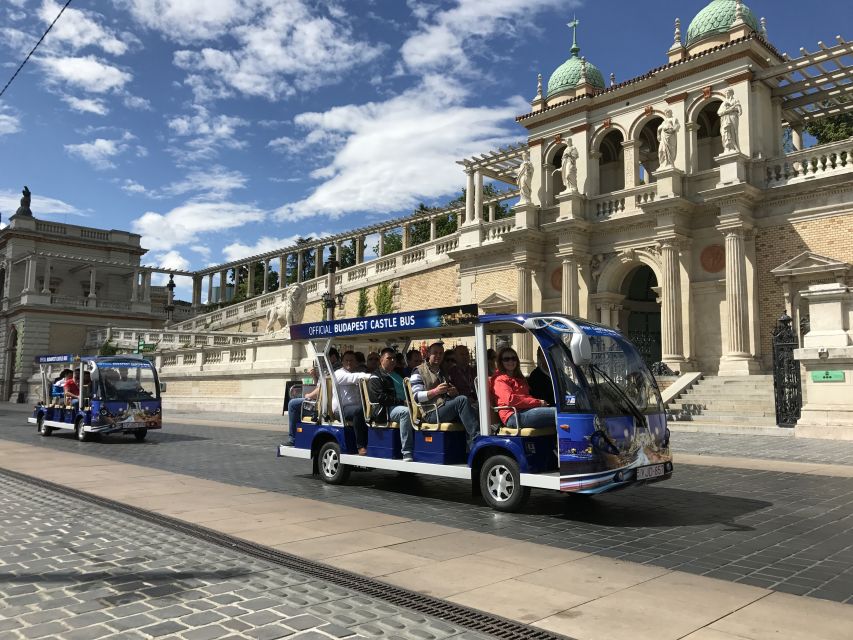
Buda Castle sits on a hill above the Danube, and this open-air electric bus gives you a lift past the steepest climbs. For $21, you ride from Clark Adam Square near the Chain Bridge into the Castle District, with five stops close to the area’s main sights.
I like two things here: the bus saves time and leg power, and the drivers often point out what you can see at each stop. It is especially useful for older visitors, families, or anyone who wants to spend energy inside the palace and churches rather than on the uphill roads.
The main catch is the ticket wording. It may be described as hop-on hop-off, but it is not an unlimited all-day pass. You can use it up to three times, and the ticket expires when you return to Clark Adam Square, so plan your stops before completing the circuit.
Key points to know before riding
- Start beside the Chain Bridge: Activate your ticket at Clark Adam Square, where a greeter scans it before you board.
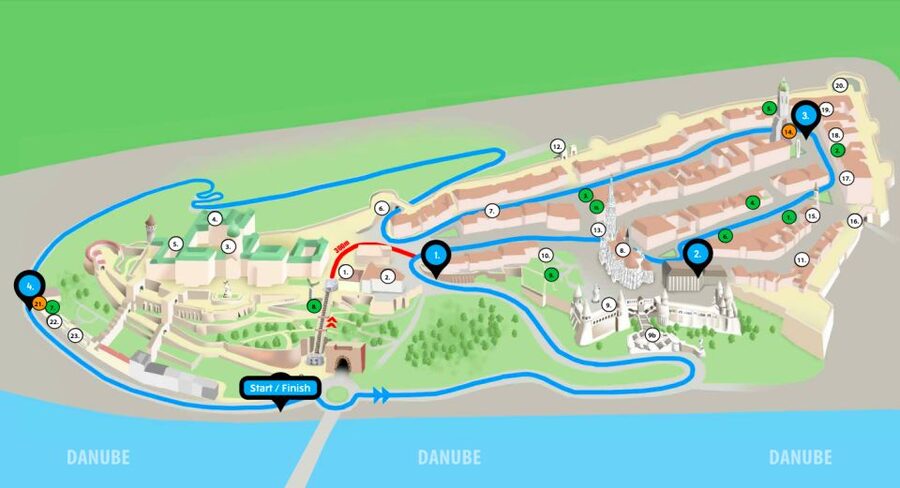
- Five stops cover the Castle District: The route reaches the palace, Fisherman’s Bastion, Matthias Church, Vienna Gate, and other major sights.
- You can save a serious uphill walk: The bus is a practical choice if steep streets are a concern.
- The ride is open-air: You get broad views of Buda Castle and the Danube, though weather will affect comfort.
- Use the ticket strategically: The ticket is valid for one round and can be used up to three times before returning to the start.
- Commentary depends on the driver: Sit near the front if you want the best chance of hearing stop information.
Getting from Clark Adam Square to Buda Castle

The natural starting point is Clark Adam Square, just beside the Chain Bridge on the Buda side of the Danube. A greeter checks your mobile ticket there, then directs you to the official castle bus.
This location is handy if you have just crossed the Chain Bridge or arrived from central Pest. It also puts you at the foot of the hill, where you can make a simple choice: walk up, take the funicular, or use the electric bus.
The bus climbs into the protected upper zone of Castle Hill. That matters because the Castle District is not a compact single attraction. The Royal Palace is at one end, Fisherman’s Bastion and Matthias Church are farther north, and the streets between them include slopes, cobbles, and several tempting places to stop.
The ride itself is short enough to be useful, but it is not meant to replace walking entirely. Think of it as a shuttle between sights. Get off where you want to explore, then board again at an official stop when your feet need a rest.
The buses are reported to come frequently, sometimes about every five minutes. That makes the service forgiving when one bus is full. At busy stops, though, you may need to wait for the next vehicle rather than assume there will be an empty seat immediately.
More Castle Tours in the world:
- Seville: Royal Alcázar Entry Ticket
★ 4.6 · 28,378 reviews - Stonehenge, Windsor Castle, and Bath from London
★ 4.5 · 18,662 reviews - Bucharest: Dracula’s Castle, Peles Castle, & Brasov Old Town
★ 4.5 · 17,858 reviews
What the five stops put within reach
The service is useful because its stops are close to the main concentration of sights. The route covers more than a simple ride to the palace, and each part of the district has a different feel.
Alexander Palace and the Prime Minister’s Office
Near the top of the hill, you pass the Alexander Palace and the Prime Minister’s Office. These grand government buildings help show that Castle Hill is not only a museum quarter. It remains an important civic center.
You may want to hop off here for a look at the architecture and the surrounding streets. This stop is also useful for getting your bearings before moving toward the Royal Palace or the northern part of the district.
Do not expect a guided explanation of the buildings. Some drivers provide useful information about the stops, but the amount of commentary varies. If you want to hear what is being pointed out, sit behind the driver rather than at the very back of the bus.
The Royal Palace and Hungarian National Gallery
The Royal Palace is the largest sight on the route and a sensible place to spend a good part of your day. The Hungarian National Gallery occupies part of the palace complex, giving you a chance to combine the bus ride with serious museum time.
This is also where the uphill journey pays off. Instead of arriving tired after climbing from the river, you can step off near the palace and start sightseeing at once.
The palace area has broad views across Budapest, and the open-air ride gives you a preview before you get off. I would use the bus to reach this end of the Castle District, then walk through the palace grounds at your own pace.
Nearby points include the Ritual Jewish Bath, also called a mikve, the Labyrinth of Budapest Castle, and the medieval Jewish prayer house. These smaller sites add layers to the district, but they are not all directly beside one another. Check the supplied map carefully, since one visitor found it hard to read and not well oriented.
Same walls, a different way in:
- From Munich: Neuschwanstein & Linderhof Castle Full-Day Trip
★ 4.6 · 14,646 reviews - Edinburgh Castle: Guided Walking Tour with Entry Ticket
★ 4.7 · 11,699 reviews - Seville: Alcázar, Cathedral & Giralda Skip-the-Line Tour
★ 4.8 · 11,525 reviews - Prague: Skip-the-line Castle Ticket and Optional AudioGuide
★ 4.3 · 11,121 reviews
Matthias Church and Fisherman’s Bastion
This is the most popular part of the route, and for good reason. Matthias Church brings elaborate architecture and a strong visual focus to the square, while Fisherman’s Bastion provides some of the best views toward Pest and the Danube.
You can get off near these sights, explore on foot, and then return to the same area for the next bus. The square can be crowded, especially around Fisherman’s Bastion, so do not expect the bus stop to feel quiet or private.
The bus is particularly useful here if you want to see the views without spending the whole day walking between the palace and the northern end of the hill. One practical warning: some parts of the panoramic viewing area require a paid ticket, so the bus fare does not cover every attraction you encounter.
If you have only a few hours before a flight or another booking, make this your priority stop. One visitor used the bus to reach Fisherman’s Bastion quickly, enjoy the views, and return to the city with time to spare.
The Museum of Music History and Hospital in the Rock
The route also serves sights that are easy to miss if you only walk between the palace and Matthias Church. The Museum of Music History and the Institute for Musicology offer a quieter stop for anyone interested in Hungary’s musical life.
The Hospital in the Rock is another notable attraction in the district. Its name hints at its unusual setting, although the bus service itself does not include admission or a guided visit.
These stops show the value of the shuttle as a practical link rather than a sightseeing ride with a fixed script. You can select the places that suit your interests, then use the bus to avoid repeating the steepest sections.
Maria Magdalena Tower, Vienna Gate, and the National Archives
Farther through the district, the route reaches Maria Magdalena Tower, also called Buda Tower, the Vienna Gate, and the National Archives of Hungary. This northern and eastern side of Castle Hill tends to feel less concentrated than the palace and Fisherman’s Bastion area.
Vienna Gate is useful as a reference point for the old town streets. City Hall and Hungary’s No. 1 Flag are also included among the landmarks along the route.
I would not try to rush through every listed sight. The bus gives you access, but each attraction has its own opening hours and admission rules, and those details are not included with the ticket. Choose two or three stops, then leave time for walking, a meal, or a museum.
How the ticket really works
This is the most important practical point. The experience is advertised as hop-on hop-off, and the information also refers to unlimited rides within the protected Castle Hill zone. At the same time, the ticket is described as valid for one round and expiring when you return to Clark Adam Square.
The clearest way to use it is this: you can board at the starting point, get off at selected Castle District stops, and board again during that round. The supplied information says you can use the ticket a total of three times. Do not assume you can circle the hill all day or return to the start and then keep riding.
A simple plan works best:
- Board at Clark Adam Square.
- Ride uphill and get off at your first major sight.
- Reboard near the palace or Fisherman’s Bastion.
- Make a second stop, then use the final ride either to reach another point or return toward the starting area.
The exact boarding pattern may depend on staff instructions at the stop. Ask before you get off if you are unsure how many uses remain. This avoids the unpleasant surprise of reaching the start and finding that the ticket has expired.
The official stops are important. You cannot simply flag down the bus anywhere along the road. Show the ticket to the staff or driver when boarding again.
Open-air comfort, weather, and what you can hear
The electric buses offer an open-air upper level, which is one of the pleasures of the ride. You get clear views of the Castle District and the city below, without looking through a closed coach window.
That design also makes the ride weather-dependent. On a cool or rainy day, you may value the short transfer more than the open-air seating. On a pleasant day, the upper level is the best place for views, but bring whatever protection you normally need for an exposed ride.
Comfort is one of the strongest reasons to choose this service. It saves your legs on roads that rise steadily from the river, and the ride is easier than tackling the hill on foot. If you are traveling with older parents, have limited stamina, or simply want to reserve your energy for the sights, the $21 fare can make sense.
The downside is that comfort and capacity are not always the same thing. Buses can fill up at popular stops, especially later in the route. If the first bus has no room, wait for the next one rather than forcing your plan around a crowded ride.
The driver commentary is another variable. Some drivers explain the stops and encourage you to get off at the sights. Others provide little information, and the sound can be hard to hear from the back. Sit behind the driver if the explanations matter to you.
This is not a substitute for a proper guided tour. There is no guide included, and you should not expect a detailed account of Budapest’s history during the ride.
What $21 buys you
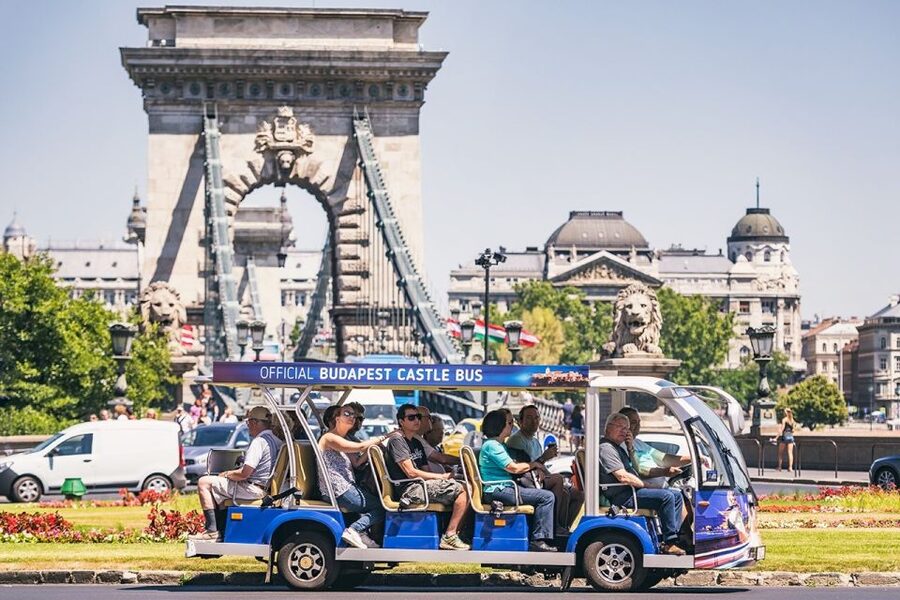
At $21 per person, the value depends on how you plan to spend the day. If you are fit, enjoy hills, and want to walk every street, you may prefer to save the money. Castle Hill is attractive on foot, and walking lets you stop whenever you like.
For many people, though, the bus earns its price by saving time and effort. You are paying for transport between several major sights, not just a one-way lift from the river. The value improves if you use the ride to reach the far end of the district, get off for sightseeing, and then board again rather than paying for separate transport.
It is also useful when your schedule is tight. One visitor had little time before a flight and found the bus helped make the Castle District possible. That is a strong use case: you can cover the hill efficiently, then return to the city without spending your limited time on the climb.
Do keep the ticket limits in mind. A person who expects an unlimited all-day shuttle may feel the price is high. A person who uses it as a three-boarding link between the river, palace, and northern sights is more likely to find it worthwhile.
Some attractions, cafes, or tourist venues may offer discounts when buying a ticket directly from the bus rather than through a booking app. The available information does not give a current discount list, so ask at the bus if that matters to your budget.
A good plan for one day on Castle Hill
Start early enough to give yourself time at the main sights. Board at Clark Adam Square and ride up to the Royal Palace or the stop that best matches your first destination.
Spend time at the palace and Hungarian National Gallery, then walk toward Matthias Church and Fisherman’s Bastion. This section gives you the grandest buildings and the most famous views.
Use another boarding for the northern sights, such as the Museum of Music History, Maria Magdalena Tower, Vienna Gate, or the National Archives. You do not need to visit every one. Pick according to your interests and leave room for lunch or a cafe stop.
The buses also stop near restaurants and bars, so you can pause for food or a drink without abandoning the route. Just watch the clock and remember that returning to Clark Adam Square ends the ticket’s validity.
If you have a full day, walk some of the connections between stops. The bus is most useful for the steepest or longest sections. If you have only a few hours, use it more aggressively and focus on the palace, Matthias Church, and Fisherman’s Bastion.
Who should book this electric bus
I would recommend it to anyone who wants to see Buda Castle without treating the hill as a workout. It is especially practical for older visitors, families with children, people carrying luggage, and anyone with limited time.
It also suits first-time visitors who want a quick orientation before choosing where to walk. The route shows you how the sights fit together, and the drivers may point out useful landmarks.
I would be less keen on it if you want a full guided explanation, unlimited transport all day, or a completely flexible route. The bus does not include a guide, commentary is not guaranteed, and the ticket expires at the start after one round.
Book up to 24 hours ahead for a full refund if your plans change. You can also reserve now and pay later. Check the available start times for your date, since the activity is valid for one day rather than being a fixed multi-day pass.
Should you book it?
Book this bus if your priority is saving time and avoiding the climb while still reaching the main sights of Castle Hill. The frequent service, open-air seats, and five-stop route make it a useful transport tool, not just a novelty ride.
Skip it if you love walking hills, want a detailed history tour, or expect unlimited all-day rides. For most people spending a day in Buda Castle, the best approach is to use the bus for the uphill and long connections, then explore the palace district on foot.
FAQ
Where does the Buda Castle electric bus start?
The service starts at Clark Adam Square beside the Chain Bridge on the Buda side of Budapest.
Can I board at another stop?
Yes. The meeting information allows boarding at any official castle bus stop, and you can hop off and board again during the valid round.
How many stops are on the route?
The route includes five stops serving the main landmarks of Buda Castle.
Can I use the ticket all day?
The ticket information says it is valid for one round and expires when you return to Clark Adam Square. It also states that you can use it a total of three times, so do not treat it as an unlimited all-day pass.
Is a guided tour included?
No. A guided tour is not included. Some drivers explain the stops, but the amount of information can vary.
Which sights can I reach by bus?
The route serves landmarks including the Royal Palace, Hungarian National Gallery, Matthias Church, Fisherman’s Bastion, Vienna Gate, Maria Magdalena Tower, Hospital in the Rock, the Museum of Music History, and the National Archives of Hungary.
Does the ticket include entry to the attractions?
No. The fare covers the official electric bus service. Admission fees for attractions and panoramic viewing areas are separate.
Is the bus open-air?
Yes. The service uses a comfortable open-air electric bus, including an upper level within the protected Castle Hill zone.
How often do the buses run?
The available information says buses can arrive about every five minutes. At busy stops, a bus may be full, so you may need to wait for the next one.
Can I cancel my booking?
You can cancel up to 24 hours in advance for a full refund. The reserve-now, pay-later option is also available.
Newly walked in the world
- Private Guided Day Tour to Egyptian Museum, Citadel and Khan el Khalili Bazaar★ 4.5 · 2 reviews
- Private Day Tour Egyptian Museum, Citadel ,Mohamed Ali Mosque and Coptic Cairo★ 5.0 · 34 reviews
- Pyramids of Giza &Sphinx – Citadel – Coptic Cairo Tour★ 5.0 · 7 reviews
- Private Day Tour to Egyptian Museum, Citadel and Old Cairo★ 5.0 · 5 reviews
- Private Day Tour to Salah El Din Citadel – Old Cairo★ 4.5 · 2 reviews
- Half-Day Private Tour in Old Cairo and Citadel★ 5.0 · 5 reviews
- Private Day Tour to Egyptian Museum, Citadel and Old Cairo Tour★ 5.0 · 8 reviews
- From National Museum to Citadel & Bazaars★ 5.0 · 6 reviews