
Review · FRANCE
Carcassonne: Castle and Ramparts Entry Ticket
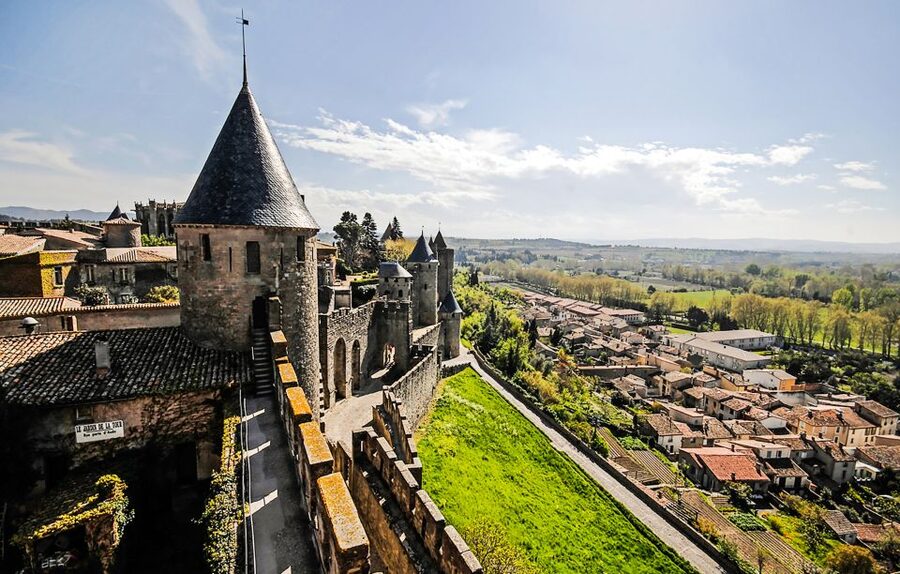
Carcassonne’s Château Comtal and double-walled ramparts give you the clearest picture of this famous medieval city. I like the chance to walk the square Bishop’s Tower, the only structure crossing both walls, and to see the early 15th-century alabaster figures in the Salle Pierre Embry. You also get time to explore at your own pace rather than follow a guide’s clock.
I especially like the low $15 price, which covers the castle, museum, courtyards, and ramparts for a full day. The optional €3 audio guide adds useful context and humor, while the signs and leaflet are enough if you prefer a quieter visit. The main drawback is the uneven stonework and high steps on parts of the walls, plus narrow passages that can feel crowded later in the morning.
Key points
- Walk the western ramparts: See Carcassonne and the countryside from several medieval viewpoints.
- Look for the Bishop’s Tower: This square tower crosses both city walls, a rare feature in the fortress.
- Visit the Salle Pierre Embry: Three polychrome alabaster statues form an unusual early 15th-century window.
- Choose your level of interpretation: Use the multilingual leaflet and signs, or rent the €3 audio guide.
- Go early: Entry is easier before the queues build and the narrow ramparts become busy.
- Plan for steps: The main courtyard and Barbican are accessible, but the walls include uneven surfaces and high steps.
Carcassonne’s Castle Is the Best Place to Begin
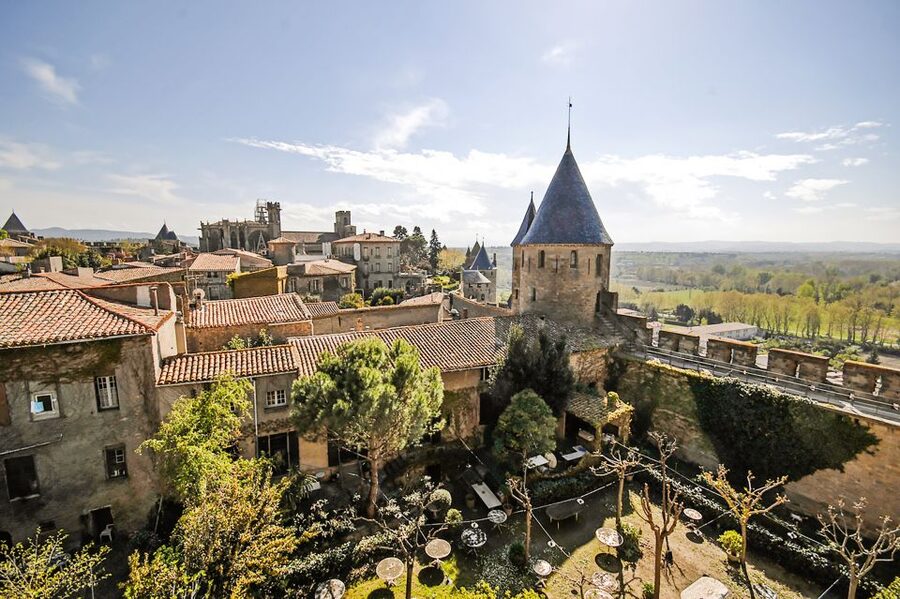
Carcassonne is more than a pretty medieval street scene. Inside the fortified city, shops, cafés, and restaurants can make it feel like a modern tourist quarter. Château Comtal and the ramparts are where the place makes sense as a military stronghold.
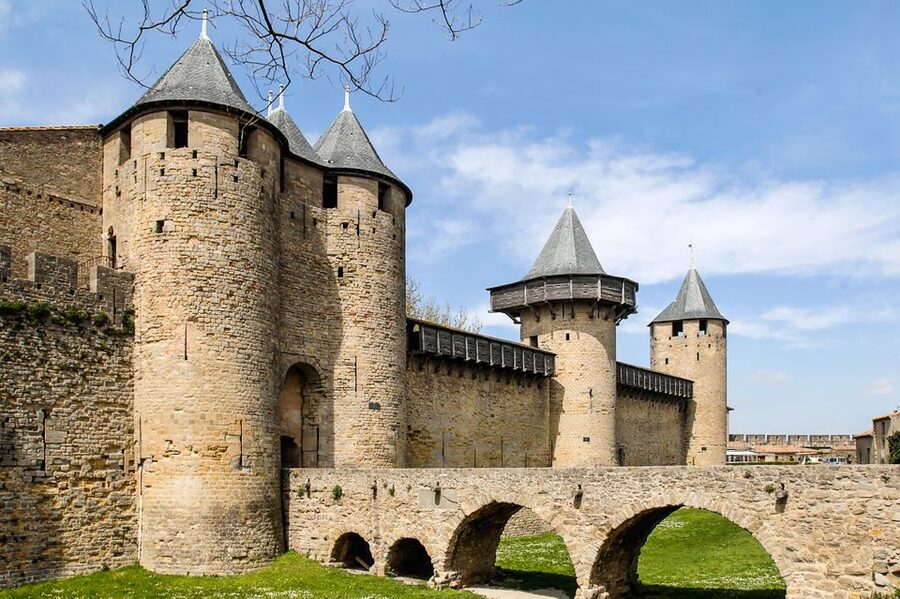
The ticket takes you into the castle complex, its courtyards, the archaeological museum, and the medieval walls. You can move through these areas in your own order, though I would begin with the château. The castle closes before the ramparts, so seeing it first protects you from having to rush later.
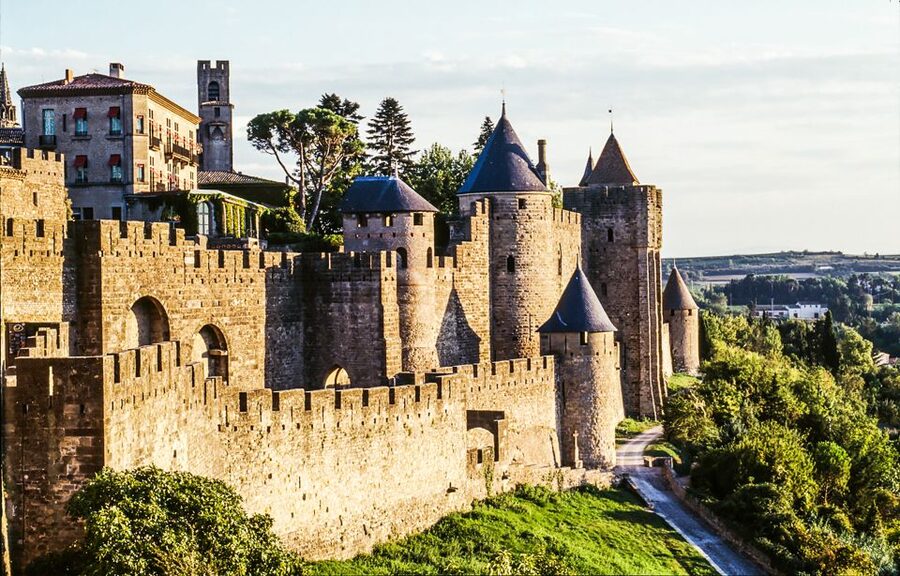
Carcassonne’s story reaches back to a settlement from the sixth century BC. It later became an important Roman town, then a fortified site in the fourth century. Its most recognizable form came in the 13th century, when the French king ordered the double-walled defenses and expanded the castle.
That detail matters when you walk the site. You are not looking at one isolated castle, but at layers of defense: an outer wall, an inner wall, towers, gates, courtyards, and the castle at the center. The arrangement shows how rulers used the hilltop location to control movement through the region.
More Castle Entry Tickets in France
- Chambord: Entry Ticket to the Castle
★ 4.6 · 1,841 reviews - Chenonceau Castle Admission Ticket
★ 4.7 · 1,515 reviews - Loire Valley: Château Royal d’Amboise Entrance Ticket
★ 4.6 · 476 reviews
Walking Through Château Comtal

The castle portion is a self-guided visit through courtyards, rooms, defensive areas, and museum displays. You will find information panels along the way, with much of the basic material available in English as well as French and other languages.
I like this setup for visitors who want freedom. You can stop to study a sculpture, pause for photographs, or move quickly through sections that interest you less. The tradeoff is that you need to create your own rhythm. There is no guide pointing out the best detail or explaining how one room connects to the next.
The optional audio guide costs €3 and is rented on site. It has been praised for being informative and occasionally funny, and it adds a fuller explanation to the castle and ramparts. You may need to leave identification when renting it, so bring an ID card or passport as requested in the practical information.
If you are short on time, the printed leaflet and signs can provide enough background. If this is your main historical stop in Carcassonne, I would spend the extra €3. The price is small, and the audio gives more meaning to otherwise plain stone walls and defensive spaces.
Do not rush through the courtyards. Look at the thickness of the walls, the shape of the towers, and the way openings were positioned for defense. The architecture becomes easier to understand when you notice that every passage and wall served a practical purpose.
The Bishop’s Tower and the Double Defenses
The square Bishop’s Tower is one of the most distinctive points on the route. It is the only construction that straddles both the inner and outer city walls, so it helps you see how the fortress worked as a layered defensive system.
As you walk, notice how the walls are not simply a single ring around the town. The space between the walls created an additional barrier for anyone trying to attack the city. Towers allowed defenders to watch the approaches and protect sections of the walls from several angles.
The route is not a flat promenade. Some parts include high steps, uneven stones, and narrow stretches. You can leave the ramparts at various points if you need a break, but you should still wear sensible shoes and allow extra time if stairs are difficult.
For anyone with limited mobility, the Barbican and main courtyard are accessible. The full rampart walk is more demanding. It is worth treating this as a historic defensive walkway rather than a smooth sightseeing path.
The Salle Pierre Embry and the Archaeological Museum
The Salle Pierre Embry contains one of the visit’s small but memorable details: a window made from three polychrome alabaster statues dating from the early 15th century. It is easy to miss if you are focused only on towers and views, so keep an eye on the room names and displays.
The archaeological museum adds another layer to the visit. Carcassonne’s story spans roughly 2,500 years, and the displays help connect the Roman period, medieval fortifications, and later restoration work.
This is not a large museum visit that requires a separate half-day. Think of it as a useful part of the castle route. It gives you objects and details to look at after the larger architectural impression has begun to settle in.
I find these smaller interior details valuable because the outside walls can make the site feel almost too grand to understand. A carved figure, a window, or an archaeological object brings the story down to human scale.
More Fortress and Citadel Tours in France:
- Carcassonne: Private Guided Tour of the Medieval Fortress
★ 4.5 · 64 reviews - Salzburg: Hohensalzburg Fortress Admission Ticket
★ 4.6 · 2,236 reviews - Salzburg: Best of Mozart Fortress Concert and Dinner
★ 4.5 · 1,424 reviews - From Cairo Alexandria Catacombs, Citadel Day Trip with Lunch
★ 4.6 · 1,312 reviews
The Western Ramparts Offer the Big Views
The newer self-guided addition includes access to the western ramparts, where you can look over the city and the surrounding countryside. This is the part many people remember most clearly because the views explain why Carcassonne was such a powerful defensive position.
The complete walk around the ramparts takes about 30 minutes at a steady pace, though you will probably spend longer if you stop for photographs or read the signs. From the walls, you get changing views rather than one fixed lookout. Towers and corners open new angles over the fortified city and the land beyond it.
Wind can be strong on the walls, even on a pleasant day. One visit was made uncomfortable by icy wind, so carry an extra layer outside the warmer months. In summer, bring water and avoid assuming that the stone walk will be cool simply because the castle is old.
The ramparts are also where timing matters most. Arriving around 10:30 can mean a calm start, while queues may have formed by midday. The walkway is narrow in places, and crowds make it harder to stop without blocking the route.
Why the Restoration Matters
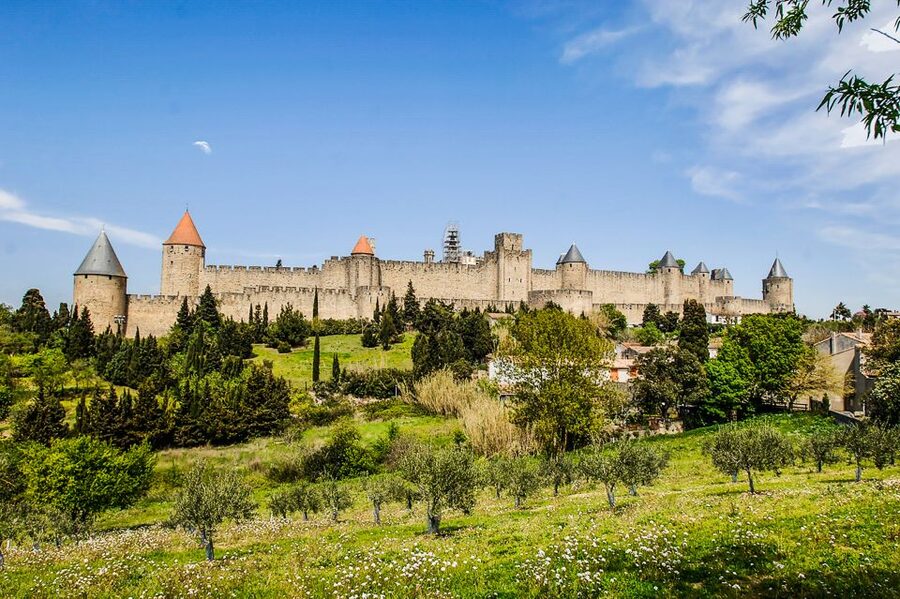
The fortress you see today was not left untouched from the Middle Ages. After the Cathar Crusade from 1209 to 1229, the Inquisition, and the exile of the Trencavel family, Carcassonne fell into poor condition.
French architect Eugène Viollet-le-Duc began restoration work in 1844 at the request of the French state. The work was completed in 1911 under his pupil Paul Boeswillwald. Carcassonne was then added to the UNESCO World Heritage list in 1997.
The restoration is important to understand before you arrive. This is a medieval fortress shaped by later repair, interpretation, and reconstruction. That does not make the visit less worthwhile, but it does mean you are seeing a preserved and restored historic monument, not an untouched medieval town.
I like knowing this in advance because it prevents a false expectation. The dramatic towers and rooflines look wonderfully medieval, yet the present appearance reflects 19th and early 20th-century decisions as well as older masonry.
A Self-Guided Visit That Lets You Set the Pace
A self-guided ticket works well here because the castle and walls reward different speeds. You might move slowly through the museum, pause at the Bishop’s Tower, then walk the ramparts at a faster pace. You can also take a break in the medieval city before continuing.
The included leaflet is available in French, English, German, Italian, Spanish, Portuguese, Dutch, Japanese, Chinese, Russian, and Polish. That makes the basic visit practical for a wide range of visitors.
The small-group designation, limited to 10 participants, is worth clarifying. This is still an entry ticket rather than a scheduled private tour with a named guide. You are not being led from stop to stop. The benefit is controlled admission rather than a fixed group experience.
Some people prefer this independence. Others may miss the chance to ask questions. If you want a personal explanation of every tower and historical figure, this is not a substitute for a private guide. If you want to explore without being hurried, it is a strong choice.
Getting the Timing Right
The attraction is valid for one day, and you should check availability for the available start times. A pre-booked ticket can save time at the entrance, especially during busy months. Several visits have been made noticeably easier by going straight in rather than waiting in the ticket line.
I would aim for the earliest practical entry. The castle is quieter in the morning, and the narrow ramparts are easier to enjoy before larger numbers arrive. Starting early also leaves time to stop for food inside the fortified city without turning the castle visit into a rushed march.
The site closes at 4:00 PM on December 24 and December 31. It is closed on January 1, May 1, and December 25. The ramparts close on July 14 because of the fireworks.
The surrounding medieval city has cafés, restaurants, and souvenir shops, so you can combine the ticket with a longer visit. Keep in mind that the ticket covers the castle, museum, and ramparts, not meals or any separate attraction.
Price, Accessibility, and What to Bring
At $15 per person, this is good value if you plan to walk the walls and spend time inside the castle. The ticket gives you a full day of access, so you are not paying for a short look through one room.
Bring your passport or ID card and some cash. You will need an ID for certain practical matters, including renting the audio guide on site. The audio costs an additional €3, which I consider worthwhile if you want more than the information panels.
Large luggage, bicycles, scooters, helmets, and non-folding strollers are not allowed inside the Château Comtal or on the ramparts. Animals are also not permitted inside the monument. Plan around these restrictions rather than arriving with a large bag and expecting to store it inside.
Free entry is available to people under 18 and EU citizens under 26 with valid identification, but a time slot must still be booked in advance through the official Carcassonne ramparts website. Free admission also applies on the first Sunday of January, February, March, November, and December, as well as during European Heritage Days on the third weekend of September.
Who Will Enjoy This Most
I would recommend this experience to anyone interested in castles, military architecture, medieval politics, or wide views. It also suits independent visitors who prefer to pause when they wish and skip a formal guided group.
Families can enjoy the towers and walls, but the steps and uneven surfaces require attention. Younger children may find the fortifications exciting, while the museum and historical panels may hold less interest. A stroller that does not fold is not permitted inside.
If you have limited mobility, focus on the accessible Barbican and main courtyard, and ask on arrival about the sections that suit you. Do not assume the full rampart circuit will be easy. The high steps and narrow passages are the main physical challenge.
This ticket is less suitable if you have only a few minutes in Carcassonne or if you want a guide to explain every stage. In that case, the entry still gives you access, but you may not get the full value from the museum and ramparts.
Should You Book the Carcassonne Castle Ticket?
Yes, if you want to understand why Carcassonne is famous rather than simply photograph its walls. The castle explains the fortress, the museum adds historical detail, and the western ramparts give you the best sense of the site’s position.
Book ahead if you are visiting in summer or on a busy day, and arrive early to avoid queues and crowded walls. Add the €3 audio guide if you want more storytelling, but the leaflet and signs work well for a shorter or more independent visit.
Skip it only if stairs are a serious problem, your schedule is extremely tight, or you are content to see the fortified city from its streets. For most visitors, the $15 ticket is the part of Carcassonne that turns a striking backdrop into a place you can actually understand.
FAQ
How long is the Carcassonne castle and ramparts ticket valid?
The ticket is valid for one day.
What does the ticket include?
It includes a self-guided visit to the castle courtyards, archaeological museum, and ramparts, along with a leaflet in several languages.
Is an audio guide included?
No. An audio guide can be rented on site for an additional €3.
Is the audio guide available in several languages?
The provided information confirms multilingual leaflets in French, English, German, Italian, Spanish, Portuguese, Dutch, Japanese, Chinese, Russian, and Polish. It does not specify the audio guide languages.
Can people with limited mobility visit the monument?
The Barbican and main courtyard are accessible to people with limited mobility. Parts of the ramparts include high steps and uneven surfaces.
When is the attraction closed?
It is closed on January 1, May 1, and December 25. The ramparts are also closed on July 14 for fireworks. On December 24 and December 31, the attraction closes at 4:00 PM.
Is entry free for children or young EU citizens?
Entry is free for people under 18 and EU citizens under 26 with valid identification. A time slot must still be booked in advance.
Newly walked in France
- Private tour: Chateaux de Vaux le Vicomte & Fontainebleau★ 5.0 · 8 reviews
- Chateau of Fontainebleau and Vaux le Vicomte 9-Hour Private Tour★ 5.0 · 14 reviews
- Private Day Trip to the Châteaux DE la Loire★ 4.5 · 13 reviews
- 5H00 ALSACE PRIVATE TOUR-Castle, Villages, Wine, Friendly Driver★ 5.0 · 35 reviews
- Loire Valley Castles VIP Private Tour: Chambord, Chenonceaux, Amboise★ 5.0 · 37 reviews
- Château of Versailles and Marie Antoinette’s Petit Trianon Private Tour★ 4.0 · 126 reviews
- From Paris: Fontainebleau & Vaux-le-Vicomte Private Tour★ 4.8 · 34 reviews
- Nice : Wine Tasting at a Historic Château in a Land Rover !★ 4.9 · 156 reviews
Fortress & Citadel Tours, compared.


From Cairo Alexandria Catacombs, Citadel Day Trip with Lunch
Read our review →
Charleston historical walking tour with a Professor of History at The Citadel
Read our review →
Hue Customizable Tour with Imperial Citadel & Forbidden City
Read our review →
Desert Safari: Luxury Fortress Dinner, Camel Ride & Dune Bashing
Read our review →
Egyptian Museum, Citadel, and Old Cairo Guided Tour
Read our review →
Cairo Citadel, Old Cairo and Khan El Khalili: Private Tour
Read our review →Browse the lists this tour appears in