
Review · FRANCE
Chateau Gaillard Royal Domain Admission Ticket
Château Gaillard is a small royal residence with an unusually personal story: it was shaped by Charles VIII and the Italian gardener Dom Pacello da Mercoliano, who helped bring France’s first orange trees here. I like the human scale of the château and the chance to wander without the crush found at larger Loire Valley palaces. I also like the gardens, caves, and citrus stop, which give the visit more variety than a string of painted rooms.
The main consideration is that this is a restored, intimate site rather than a grand, polished palace. Some rooms contain period furniture, paintings, and unusual objects, but the presentation can feel modest beside bigger Loire attractions. The optional guided tour is free, though it is offered in French.
Key points to know before you go

- France’s first orange trees: Learn how Dom Pacello da Mercoliano developed the royal orangery after Charles VIII brought him from Naples.
- A small château with a personal feel: Expect a 2 to 3 hour visit, not an all-day palace complex.
- Seven paths through the grounds: Walk beneath mature trees, explore hillside caves, and see the gardens at an easy pace.
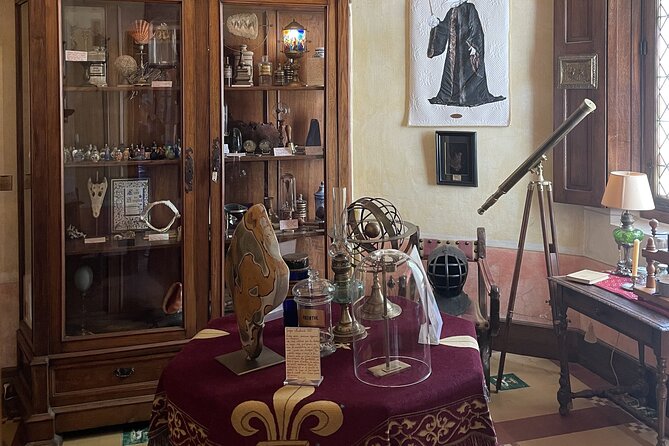
- A surprising mix of art and interiors: Look for Italian collections, Renaissance pieces, unusual furnishings, and Mary Stuart’s room.
- A free French tour: The art historian-led tour adds context, but you need to understand French to get the full benefit.
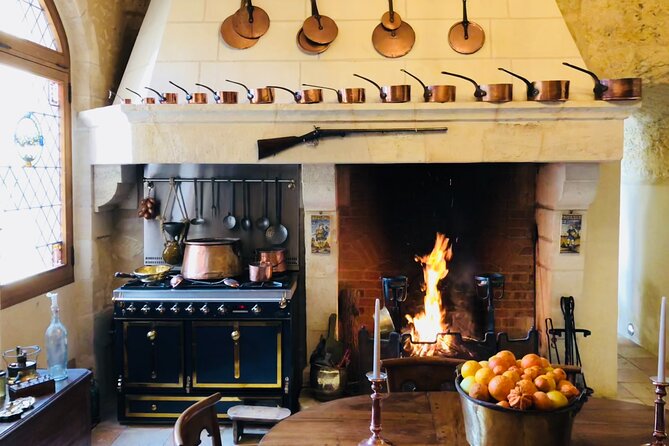
- Citrus treats at the end: Orange cake, fresh orange juice, orange blossom jelly, honey, and blood orange wine make the final stop worthwhile.
Why Château Gaillard feels different from the big Loire palaces
The Loire Valley has no shortage of grand châteaux. Château Gaillard offers something smaller and more relaxed. Its story is tied to royal ambition, Italian garden design, and horticultural experiments rather than only to military power or court ceremony.
Charles VIII wanted this palazotto after returning from Italy. The design and collections reflect the French fascination with Italian art during the Renaissance. The royal connections continued through Louis XII, Anne of Brittany, François I, Catherine de Medici, the Cardinal de Guise, and Mary Stuart.
That list can sound grander than the building feels, so set your expectations correctly. You are not entering the vast formal world of Versailles. You are visiting a compact residence that has passed through many hands and periods of restoration.
I like that contrast. The smaller scale helps you notice details without trying to cover room after room. You can pause over furniture from different eras, paintings, glasswork, and decorative objects. The interior does not present one perfectly uniform period, and that gives it a lived-in quality.
A full restoration took five years and involved 300 Loire Valley workers, including master artisans. That does not make every surface look brand new. Instead, it helps explain why the property feels like a work of careful repair, with old character still visible.
More Castle Entry Tickets in France
- Carcassonne: Castle and Ramparts Entry Ticket
★ 4.6 · 2,884 reviews - Chambord: Entry Ticket to the Castle
★ 4.6 · 1,841 reviews - Chenonceau Castle Admission Ticket
★ 4.7 · 1,515 reviews
Inside the palazotto: art, furniture, and Mary Stuart’s room
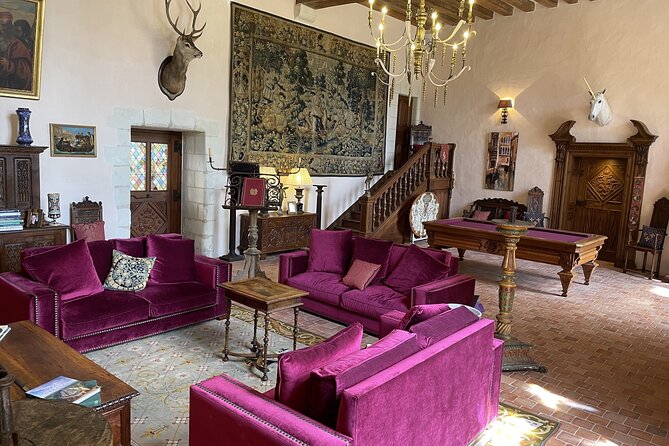
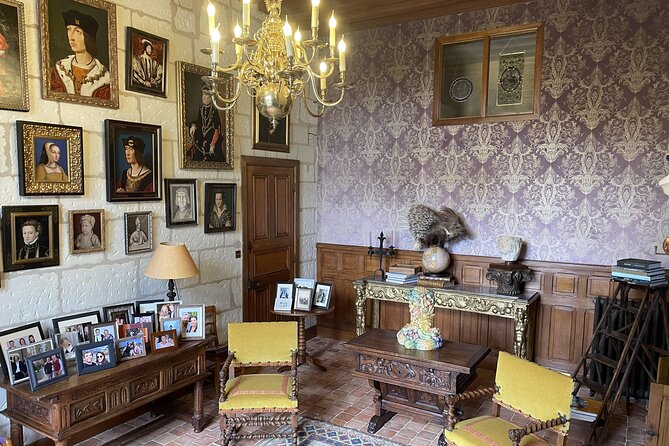
The interior is the heart of the visit for anyone who enjoys rooms with layers of history. You will see furniture from different periods, Renaissance collections, Italian works, and decorative details that reward a slower pace.
The collection includes works associated with major European art, including Rembrandt and Titian. The material also includes Commedia dell’Arte tapestry and Italian pieces. One unusual detail is the claim of 8,000 handmade glass windows, a feature worth watching for as you move through the building.
Do not rush past the rooms simply because the château is small. A compact site can be easy to underestimate. Give yourself time to look at how the objects relate to the restored rooms and to notice the changes in style from one area to the next.
Mary Stuart’s room adds a direct personal connection. She lived at Château Gaillard for three weeks after her marriage to François II of Valois. The stay was brief, but the room gives the royal story a more intimate scale than a list of famous names.
You may find the interiors uneven in polish. That is part of the trade-off. The château is charming and unusual, but it is not designed as a grand theatrical display at every turn. If you prefer large halls, sweeping ceremonial rooms, and monumental architecture, you may want to pair this visit with one of the Loire’s bigger palaces.
If you prefer smaller historic buildings where the objects feel close at hand, Château Gaillard makes good sense.
Dom Pacello and the beginning of the French orangery
The most distinctive part of the story belongs to Dom Pacello da Mercoliano, a Neapolitan monk and master gardener. Charles VIII brought him back from Italy in 1496, along with the knowledge needed to grow citrus trees in France.
In 1500, the estate became known as Les Jardins du Roy. Pacello inherited it in exchange for an annual gift of orange blossoms to the king. That arrangement captures the period nicely: royal favor, botanical experiments, and a little ceremony wrapped into one fragrant payment.
The orangery is more than a pretty greenhouse. It represents an early effort to acclimatize orange trees in France, a serious challenge in a cooler climate. The site became a testing ground for Pacello’s garden ideas.
His work also included the beginnings of French-style gardens and the development of a new plum variety, the greengage. These details make the gardens more interesting than a simple walk among clipped hedges. You are seeing a place where horticulture and royal display developed together.
The orange trees and citrus collections are also the reason to visit at an unhurried pace. Pay attention to the scent in the greenhouses and to the connection between the gardens, the orangery, and the citrus bar. The food and drink at the end are not random add-ons. They continue the central story of the estate.
Seven walking paths, caves, and mature trees
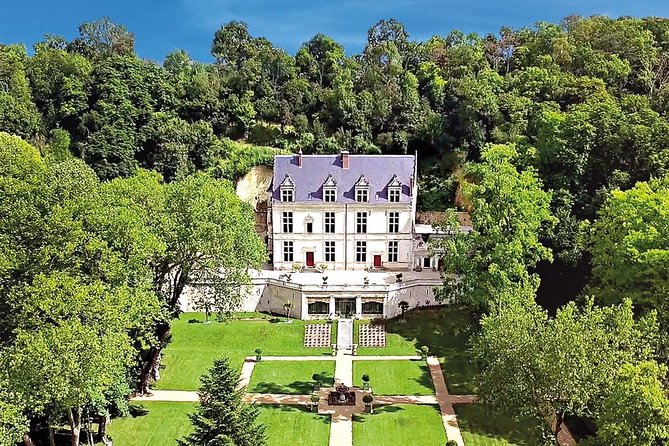
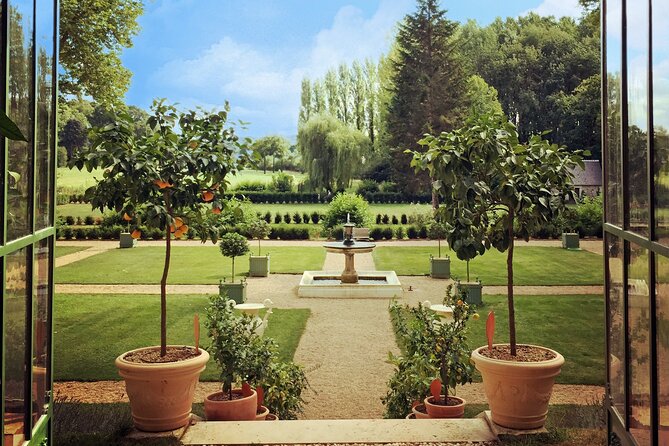
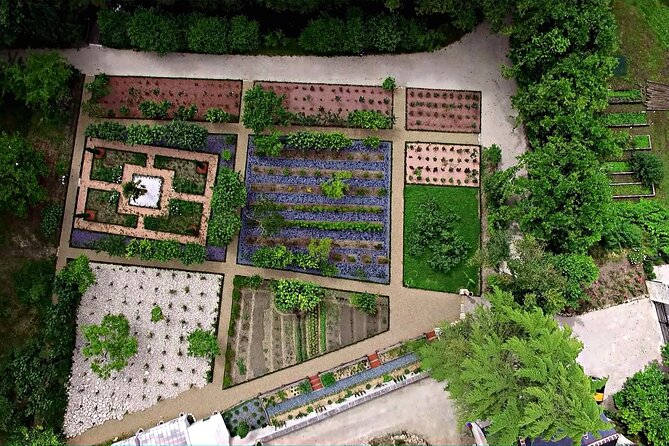
The grounds cover 15 hectares, giving the visit room to breathe. Seven walking paths lead through what is called the Paths of Paradise. You can stroll beneath tall mature trees, move through the garden areas, and explore caves cut into the hill.
The outdoor portion helps balance the interior visit. After looking at paintings, furniture, and glasswork, you can step outside and take in the site at a gentler pace. The paths also make Château Gaillard a good choice if you want an attraction that is not only about standing in rooms.
The caves add a bit of variety. They are part of the hillside setting and give the grounds a more unusual character than a formal garden alone. The provided information does not specify the length or difficulty of the paths, so you should think of the grounds as a place for casual walking rather than a demanding hike.
The gardens are described as pleasant rather than monumental. That is fair. You will find mature trees, citrus plants, greenhouses, and garden spaces, but do not expect the grand geometric scale of the most famous royal gardens in France.
I would plan to wander rather than rush from one marked point to another. The appeal is in the mix of shade, scent, old walls, paths, and small discoveries. If your schedule allows only a very quick stop, you may miss much of what makes the site distinct.
More Castle Entry Tickets in Tours:
- Edinburgh Castle: Guided Walking Tour with Entry Ticket
★ 4.7 · 11,699 reviews - Prague: Castle Tour with Local Guide and Entry Ticket
★ 4.6 · 10,422 reviews - Prague Castle 2.5-Hour Tour Including Admission Ticket
★ 4.7 · 8,927 reviews - Edinburgh Castle: Guided Walking Tour with Entry Ticket
★ 5.0 · 5,540 reviews
The citrus bar is part of the visit
The final food stop gives Château Gaillard an unusually enjoyable finish. You can taste honey from the garden, orange blossom jelly, homemade orange cake, and freshly pressed orange juice.
The orange cake is especially useful as a small reward after walking the grounds. The orange juice keeps the focus on the estate’s citrus story. You may also find blood orange wine at the bar, and a bottle makes a practical souvenir if you want something connected to the visit rather than a generic shop purchase.
This is one of the strongest details for families and for anyone who likes food as part of sightseeing. The tasting does not replace the historical visit, but it makes the horticultural story easier to remember. You see the trees, hear about their arrival in France, smell the citrus, then taste the result.
The bar also gives you a natural place to slow down. Château Gaillard is not a site to conquer in a hurry. The best visit combines the rooms, the gardens, and a little time at the end for the citrus offerings.
A French tour, or your own pace
Admission includes access to a professional art historian guide, and free guided tours are offered in French. If you understand French, take advantage of the tour. The guide can connect the royal figures, artwork, restoration work, garden design, and citrus history in a way that labels alone cannot.
If you do not speak French, you can still visit the château and grounds at your own pace. The booking information identifies English as an offered language, but the free guided tour itself is specifically described as French. That distinction matters, so do not assume an English tour is included.
A self-guided visit may actually suit some people better. You can spend more time in Mary Stuart’s room, pause over the Italian pieces, or linger in the greenhouse without keeping up with a group. Families and photographers often appreciate that flexibility.
The group limit is 40 people. That is not a guarantee of a quiet visit, but it does place a reasonable ceiling on the size of an organized group. The site is generally more intimate than the Loire’s largest attractions, and its smaller rooms make timing worth considering.
Allow about 2 to 3 hours. That gives you enough time for the château, gardens, caves, orangery, and citrus bar without making the day feel hurried.
Price, location, and practical value
The admission price is $24.14 per person. At first glance, that may seem high for a smaller château. The value depends on how you use the visit.
You are paying for more than entry into a building. The ticket covers the royal residence, restored interiors, art and furnishings, a 15-hectare park, walking paths, caves, greenhouses, and the orangery story. The free French tour adds further value if you can follow it.
I would consider the price fair for a slow 2 to 3 hour visit, especially if you enjoy gardens and historic interiors equally. It is less compelling if you only want a quick look at an imposing exterior or a massive royal hall.
The location is 29 allée du Pont Moulin, 37400 Amboise. The attraction is listed under Tours, but the stated pedestrian access point is in Amboise, so check your route carefully before setting out. Transportation to and from the attraction is not included.
The site is near public transportation, and service animals are allowed. Most people can take part. Booking ahead is sensible because admission can be limited, and the experience is commonly booked around 15 days in advance.
Free cancellation is available if you cancel at least 24 hours before the start time. Changes or cancellations made inside that window are not refunded.
Who will enjoy Château Gaillard most
I would recommend this visit to you if you like the less obvious side of French royal history. It suits people who enjoy gardens, restoration, decorative arts, and food connected to a place.
It is also a good choice for a quieter break from larger Loire attractions. The mature trees and walking paths give you room to slow down, while the compact interiors keep the visit manageable.
Families may appreciate the caves, gardens, citrus scents, and cake more than a long sequence of formal state rooms. The site also works for couples and solo visitors who want time to wander without a tightly timed program.
You may want to skip it if your priority is monumental architecture, vast formal gardens, or a fully English guided tour. The French tour is free, but language limitations can reduce its value if you cannot follow French.
Should you book Château Gaillard?
Book it if you want an intimate royal site with a strong garden story and a memorable citrus finish. The combination of Mary Stuart’s room, Italian Renaissance connections, early orange cultivation, hillside caves, and homemade orange treats is unusual.
Think of Château Gaillard as a half-day stop rather than the single grand château of your Loire Valley trip. At $24.14, it earns its price best when you allow the full 2 to 3 hours and include the park, orangery, and citrus bar.
If you prefer quiet charm, unusual details, and a visit that mixes art with plants and food, I would add it to your Amboise plans. If you want scale and spectacle above all else, choose a larger palace instead.
FAQ
Where is Château Gaillard located?
The stated access address is 29 allée du Pont Moulin, 37400 Amboise, France. The experience is associated with the Tours area of the Loire Valley.
How long should I allow for the visit?
Plan on approximately 2 to 3 hours. That allows time for the château, gardens, paths, caves, greenhouses, and citrus bar.
Is a guided tour included?
A free guided tour led by a professional art historian is offered in French. Admission to the site is included with the ticket.
Is an English tour available?
English is listed as an offered language, but the free guided tour is specifically described as being in French. Confirm the language arrangement before relying on a guided tour in English.
Is transportation included?
No. Transportation to and from the attraction is not included. The site is near public transportation, and access is pedestrian only at the stated address.
Can I cancel my ticket for a refund?
Yes. You can receive a full refund if you cancel at least 24 hours before the experience start time. Cancellations or changes made less than 24 hours before the start time are not accepted for a refund.
Newly walked in Tours
- Vienna: Guided Bratislava & Devín Castle Tour via Hainburg★ 4.6 · 88 reviews
- Warsaw: Skip-the-Line Royal Castle Guided Tour★ 4.9 · 79 reviews
- Gdansk and Malbork Castle Small Group Tour from Warsaw with Lunch★ 4.5 · 20 reviews
- Brașov: Bran, Râșnov, and Peleș Castles Tour with Guide★ 4.8 · 59 reviews
- Bucharest: Peles Castle, Bran Castle & Brașov Day Tour★ 4.5 · 52 reviews
- From Madrid: Segovia Tour with Cathedral and Alcazar Entry★ 4.3 · 158 reviews
- From Seoul: Suwon Hwaseong Fortress Tour★ 5.0 · 108 reviews
- Guided tour of Segovia in Spanish: Cathedral and Alcázar★ 3.8 · 18 reviews
Castle Entry Tickets, compared.


Edinburgh Castle: Guided Walking Tour with Entry Ticket
Read our review →
Castle Tour with Local Guide and Entry Ticket
Read our review →
Prague Castle 2.5-Hour Tour Including Admission Ticket
Read our review →
Edinburgh Castle: Guided Walking Tour with Entry Ticket
Read our review →
Prague Castle and Lobkowicz Palace Entry Tickets
Read our review →
Alcázar and Cathedral Entry Ticket and Guided Tour
Read our review →Browse the lists this tour appears in