
Review · BUDAPEST
Budapest Castle Walk
Buda Castle is not just a palace with a fine view. It is a hilltop record of Budapest’s past, with medieval foundations, Ottoman traces, Habsburg rebuilding, Jewish history, and the scars of the 1945 siege packed into a few old streets. This three-hour walk gives you a useful way to read that complicated setting.
I especially like the visit inside Matthias Church, which includes admission, and the small-group format, capped at eight people. The coffee break also gives the walk a natural pause. The main drawback is timing: the tour starts at 3 p.m. and can run beyond three hours, so you should not schedule a tight evening commitment afterward.
Key points to know before booking
- Buda Castle is treated as a living district: You see royal buildings, old homes, gardens, courtyards, and streets where ordinary residents still live.
- The history covers seven centuries: The walk moves from the first royal residence in the 1200s through Ottoman and Habsburg rule to World War II.
- Matthias Church admission is included: You can see the patterned roof and ornate interior without arranging a separate ticket.
- The group stays small: The standard format allows up to eight people, with private and larger-group choices available.
- The views are a major reward: Fisherman’s Bastion and other points on the hill look across the Danube and central Budapest.
- The meeting point requires attention: You begin at the Zero Kilometre Stone near Clark Ádám tér and finish at Matthias Church, not where you started.
Why this Buda Castle walk is more than a palace visit
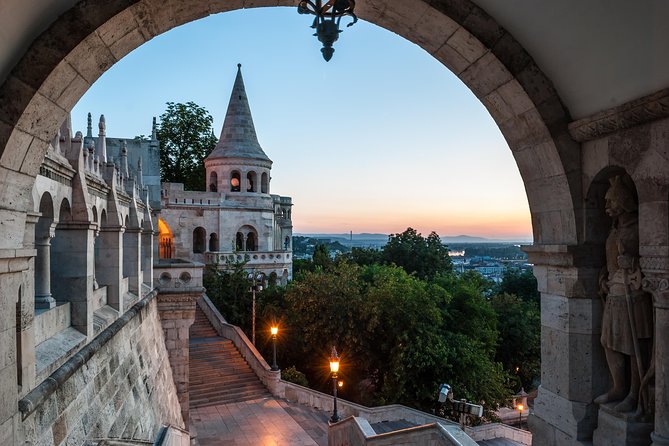
Many first-time visits to Buda Castle become a quick circuit of the Royal Palace, a few photographs at Fisherman’s Bastion, and a look inside Matthias Church. That approach gives you the postcard sights but misses the reason this hill matters.
This walk connects the pieces. Your guide explains how the first royal residence appeared here in the mid-13th century, how the royal court helped Buda grow in the 14th and 15th centuries, and how later Ottoman, Habsburg, and wartime events changed the quarter. You are not simply looking at old stone. You are learning why the street plan, rebuilt buildings, and surviving fragments look the way they do.
I also appreciate the attention given to the district’s Jewish past. You see an old street and former synagogue site associated with the Jewish community that once lived here. That adds a needed human scale to a place often presented only as a royal and military center.
The walk is operated by Taste Hungary and is led by an English-speaking local guide. No guide name is supplied in the booking details, so you should not book this expecting a particular named historian. The value comes from the route and the chance to ask questions as you move through the quarter.
More Castle Walking Tours in Budapest
- Budapest: Buda Castle Walk with Saint Stephen’s Hall
★ 4.5 · 3,012 reviews - Budapest: Buda Castle District Walking Tour
★ 4.6 · 2,108 reviews - Budapest: 3-Hour Grand City Tour and Castle Walk
★ 4.3 · 1,437 reviews
Starting at the Zero Kilometre Stone
The meeting point is the Zero Kilometre Stone at Clark Ádám tér, near the lower end of the Buda Castle hill. This is a practical starting point because it places you below the castle district, close to public transportation and the route up toward the historic quarter.
Pay attention to the meeting instructions. The tour does not begin at Matthias Church or in the palace courtyard. It ends at Matthias Church, so you finish in the upper castle district rather than returning to the river.
The start time is 3 p.m. That timing can work well if you have spent the morning elsewhere in Budapest and want cooler light for the Danube views. It also means you should think about seasonal daylight and your evening plans. The walk is described as three hours, but it may stretch longer if nobody is in a hurry.
Wear shoes suited to cobbles and a hill. The route follows old streets on a raised district, and the experience is a walking tour first, not a vehicle-assisted sightseeing trip. The information says most people can participate, but anyone concerned about hills or uneven paving should plan accordingly.
Fisherman’s Bastion and the first city views
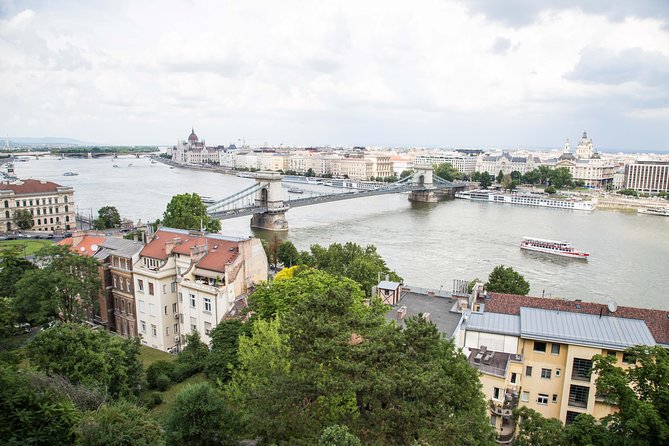
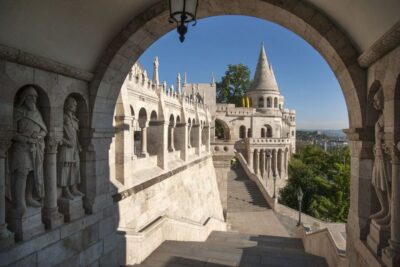
Fisherman’s Bastion is one of the tour’s first important stops. Its terraces offer broad views over the Danube and Pest, making it an easy place to grasp Budapest’s geography before the history becomes more detailed.
The stop itself is listed as about 10 minutes, but the guide uses the surrounding streets to explain how the hill developed. The roads follow the shape of the ridge, and the site has been tied to royal power since the first residence was built here in the 13th century.
The best part is the connection between the view and the story. From above, the castle quarter can look like a decorative set piece. Your guide points you toward the forces that shaped it: Hungarian royalty, the Habsburg Empire, the Ottoman period, and the Jewish community that once formed an important part of local life.
Do not expect the first stop to be a long architectural lecture inside a monument. It is more of an orientation point, with time for photographs and questions. If your main goal is to spend a long time at the terraces, you may want to return independently after the tour.
Matthias Church, with the entrance fee included
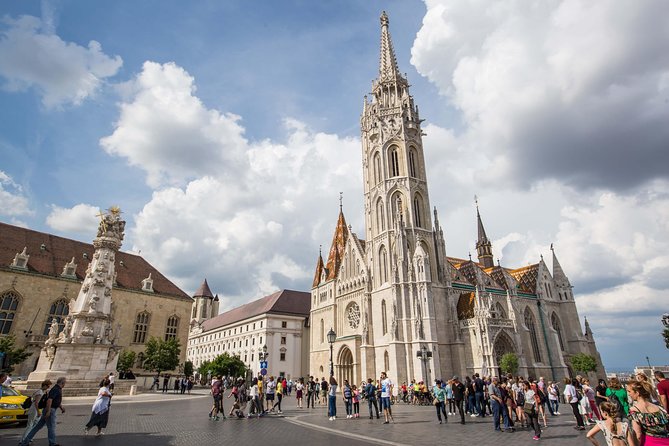
Matthias Church is the central indoor visit and one of the clearest advantages of this tour. Admission is included, and the scheduled visit lasts about 20 minutes.
Inside, you can look at the church’s decorated interior and its distinctive multicolored tiled roof. The building also serves as a useful marker for the changing fortunes of Buda. It was connected to the coronation of Hungarian kings, and the surrounding quarter reflects the city’s shifts in power and religion.
The church is not treated as an isolated work of architecture. The guide places it within the story of Buda as a major European city in the 15th century and as a meeting point for different nationalities. That context makes the visit more useful than simply taking in the patterned roof and ornate details.
The time allowed is enough for an introduction, but not for a long, quiet examination of every chapel or decorative feature. If church interiors are your main interest, you may want to return on your own if opening hours permit. Still, including the admission removes one common extra cost and gives the walk a strong centerpiece.
Same walls, a different way in:
- Budapest: Buda Castle Cave Tour
★ 4.7 · 5,677 reviews - Budapest: Buda Castle District Vampires and Myths Night Tour
★ 4.6 · 3,830 reviews - Buda Castle District Dark History, Legends and Vampire Night Tour
★ 4.5 · 1,240 reviews - Budapest: Buda Castle District Walking Tour with a Historian
★ 4.9 · 867 reviews
The Royal Palace and National Széchényi Library
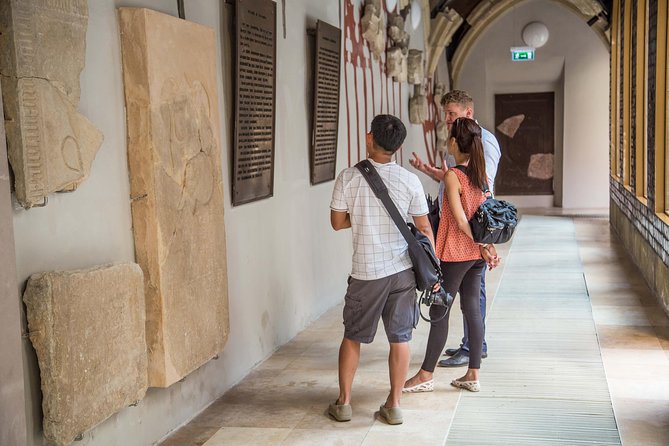
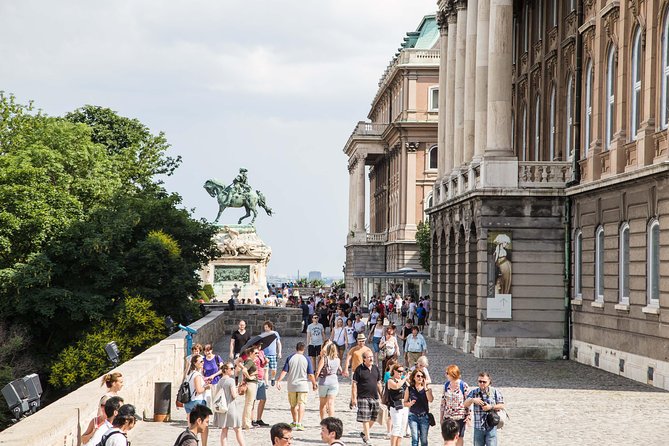
The Royal Palace is one of the most recognizable features of the hill, but its story is less straightforward than its grand facade suggests. The palace and the district have been destroyed and rebuilt several times, especially after the severe damage of World War II.
At the National Széchényi Library, the guide explains how the arrival of the royal court helped begin a long period of growth. One unusual detail is that the palace complex and royal presence shaped the neighborhood even though no royals ever resided in the particular setting discussed on the tour.
This is where the walk helps you avoid a common mistake: assuming that every old-looking part of Buda Castle survived from the medieval period. Some structures preserve older foundations or street patterns, while others reflect later Baroque, Gothic, or postwar rebuilding.
The stop is listed at about 10 minutes, so expect an outdoor explanation rather than a full library visit. Museum admission is not included, and the tour does not promise entry to palace museums. If you want to tour those collections, treat this walk as an introduction and arrange museum visits separately.
Castle Garden and the Danube-side Várkert Bazaar
The Castle Garden section brings you toward the Danube and the restored Várkert Bazaar, a neo-Renaissance complex at the foot of the hill. This part gives the tour a different feel from the medieval lanes and church square.
The garden and riverfront help show how Buda has been used beyond royal ceremonies and military defense. You also hear about the people who live in the district today, including the Hungarian president and several hundred residents in old buildings.
That detail matters. Buda Castle is not only a heritage zone emptied of daily life. It remains a neighborhood, even though tourism and official buildings shape much of its character.
The Castle Garden stop is listed at about 10 minutes. You will have time to see the setting and hear its role in the district, but not necessarily time to explore every path or building. The Várkert Bazaar is a worthwhile feature of the route because it adds 19th-century design and river access to a tour otherwise focused on the upper hill.
Quiet courtyards, gardens, and former Jewish sites
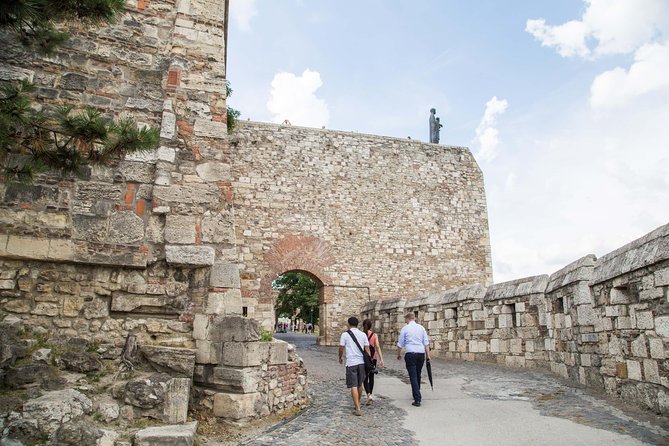
Some of the tour’s most useful moments come between the headline sights. The guide takes you through courtyards, gardens, palaces, statues, and old street areas that are easy to miss if you follow only the main route between the palace and Fisherman’s Bastion.
These smaller spaces give you a better sense of how the quarter developed. A statue can point to a political period. A courtyard can reveal how grand homes were arranged. An old street and synagogue site can remind you that Buda once had a significant Jewish population, not just royal officials and soldiers.
This is also where the small group earns its keep. With a maximum of eight people, it should be easier to stop without blocking a narrow lane, hear the guide clearly, and ask about a detail that catches your eye. The minimum is two people, so the tour can be canceled if that number is not reached, with an alternative or full refund offered.
The route’s quieter corners may be more rewarding than another quick look at a famous facade. They also require attention. If you want a fast checklist of Budapest’s top sights, this history-led walk may feel slower than expected.
The World War II siege and the bunker visit
The final historical turn is the Siege of Budapest in 1945. German and Russian forces fought through the streets, and the castle district suffered extensive destruction.
You visit a World War II bunker and hear about the people and armies connected with the battle. This gives the rebuilt quarter a darker and more recent layer. Many visitors see polished facades and assume the district has remained intact, but the siege changed the physical fabric of Buda in a major way.
The bunker stop is especially useful because it shifts the story from kings and architecture to civilians, soldiers, destruction, and reconstruction. It also explains why the current appearance of the castle district is a mixture of medieval remnants, later rebuilding, and modern restoration.
The precise bunker access can depend on the tour’s operating arrangements, so you should follow the guide’s instructions on the day. The supplied details identify a WWII bunker visit but do not promise entry to every museum or military exhibit in the district.
Coffee, questions, and the pace of the afternoon
A coffee, tea, or another drink is included during the walk. This is a small feature, but it matters on a three-hour route. You get a chance to sit or pause, collect the many historical periods, and ask questions rather than absorb a nonstop stream of dates.
The tour also allows many stops for photographs and questions. That makes it a better fit for people who want explanation along with sightseeing. The guide can adjust the pace if the group is not rushing, though the stated duration is approximate and the walk may continue past three hours.
The 3 p.m. start gives the coffee break a late-afternoon place in the schedule. You might prefer that timing after a morning of museums, while others may find it too late for a full day of sightseeing. The key is to leave room afterward.
Is the $125 price good value?
At $125 per person, this is not a bargain-priced orientation walk. The value depends on how much you want a guide to connect the castle district’s separate sights.
Your price covers an English-speaking local guide, the coffee or another drink, and admission to Matthias Church. It does not cover museums, so you should budget separately if the Royal Palace museums or other collections are part of your plan.
The small group changes the calculation. A maximum of eight people is more personal than a large coach-style tour, and a private option is available if you want a customized route. Larger groups can also book a separate group option with a minimum of eight people.
I would consider the price reasonable for a first visit if you care about history, want to ask questions, and would otherwise pay for church admission plus a separate guide. It is harder to justify if you mainly want photographs and already plan to read about the castle district yourself.
The rating provided is 4.3 from three reviews, which is too small a sample to treat as a firm measure of quality. One booking issue did appear in the feedback: the start time was not clear to one customer, and attempts to reach the operator from abroad were difficult. Confirm the 3 p.m. meeting time and location carefully before leaving home, especially since the starting point is different from the finish.
Who should book this walk?
I would recommend it to first-time visitors who want a clear introduction to Buda Castle without spending a full day on museums. It also suits history-minded people who want the Ottoman, Habsburg, Jewish, and WWII periods included rather than receiving only a royal-palace story.
The walk works well for couples, families with older children, and small groups that like to stop for questions. The private option may suit anyone with a specific interest in Jewish Budapest, the siege, architecture, or royal history, since the private format can be customized.
You may want another plan if you have limited mobility on cobbled streets, dislike hill walking, or need to finish at an exact time. You should also skip it if your only goal is a long visit inside the palace museums, since those entrances are not included.
Free cancellation is available up to 24 hours before the start time. Changes or cancellations inside that window are not refunded, and the tour requires at least two people to operate.
Should you book the Budapest Castle Walk?
Book this tour if you want Buda Castle explained as a layered neighborhood rather than a string of photo stops. Matthias Church, the Danube views, the Várkert Bazaar, the quieter courtyards, and the WWII bunker give the afternoon a good range.
The strongest reason to choose it is the route’s historical breadth and small-group size. The strongest reason to hesitate is the $125 cost, plus the fact that the three-hour schedule may stretch and does not include palace museums.
For a first visit, I think the walk earns its place when you want context, conversation, and a well-organized introduction. If you prefer to move quickly and explore interiors independently, use the included church visit as a guide to the district, then tour Buda Castle on your own.
FAQ
How long does the Budapest Castle Walk last?
The tour is scheduled for about three hours. It can run longer if the group is not in a hurry, so avoid booking another activity immediately afterward.
Where does the tour begin?
The meeting point is the Zero Kilometre Stone at Clark Ádám tér, 1013 Budapest, near the Buda Castle hill.
Where does the tour finish?
The tour ends at Matthias Church at Szentháromság tér 2, 1014 Budapest.
What time does the tour start?
The listed start time is 3 p.m.
Is Matthias Church admission included?
Yes. Entrance to Matthias Church is included in the tour price.
Is coffee included?
Yes. One coffee, tea, or another drink is included during the coffee break.
How large is the standard group?
The standard small-group tour has a minimum of two people and a maximum of eight.
Are palace museums included?
No. Entrance to museums is not included.
Can I cancel for a refund?
Yes. You can cancel at least 24 hours before the local start time for a full refund. The tour may also be canceled if the minimum number of participants is not reached, in which case you are offered an alternative or a full refund.
Newly walked in Budapest
- UNESCO Holloko and Eger Castle Private Tour with Transport★ 5.0 · 4 reviews
- True Crime Walking Tour in the Buda Castle district★ 5.0 · 17 reviews
- Private Budapest Sightseeing Tour: Royal Castle, Heroes Square, Chain Bridge★ 5.0 · 4 reviews
- Buda Castle Walking Tour with Audioguide on Your Smartphone★ 4.0 · 24 reviews
- Live virtual walking tour in the Buda Castle quarter★ 5.0 · 10 reviews
- Private Sissi Castle Tour★ 4.5 · 12 reviews
- Private Buda Castle walking tour & Danube river cruise with Margaret Island stop★ 5.0 · 2 reviews
- Private Buda Castle Walk with Entry to Matthias Church★ 4.5 · 8 reviews
Castle Walking Tours, compared.

Edinburgh Castle: Guided Walking Tour with Entry Ticket
Read our review →
3-Hour Walking Tour of Old Town & Prague Castle
Read our review →Edinburgh Castle: Guided Walking Tour with Entry Ticket
Read our review →

Prague 3-hour Afternoon Walking Tour including Prague Castle
Read our review →
Royal Mile and Edinburgh Castle – Small Group Walking Tour
Read our review →
Browse the lists this tour appears in