
Review · BUDAPEST
Budapest: The WWII Siege of Buda Castle & Bomb Shelter Tour
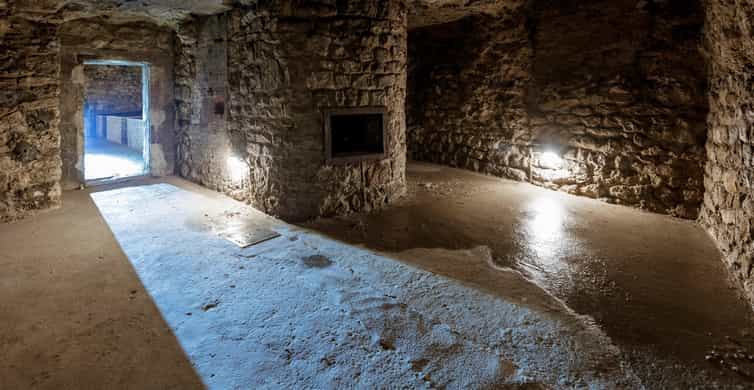
The most striking part of this tour is the change in scale. You begin among the grand buildings of Buda Castle, then go below the streets into dark, cold spaces where soldiers, wounded people, and civilians crowded together during the 52-day siege of Budapest. The caves make the history physical. You are not just looking at a plaque or palace facade. You are standing where people waited for water, food, and news.
I like two things especially. First, the guide uses diaries and memoirs to explain what happened, which gives the story a human voice. Second, the route mixes outdoor clues, such as bullet holes and ventilation shafts, with the old cellar and authentic bomb shelter below ground. The main drawback is practical: steep stairs, narrow passages, wet or solid surfaces, and a cool 12°C temperature make this a poor fit for anyone with mobility limits or claustrophobia.
Key points at a glance
- The siege becomes personal: Hear about civilians, wounded people, and German and Hungarian troops sheltering beneath Buda Castle.
- An original wartime shelter: Enter an underground bomb shelter in the Buda Castle Cave system.
- Useful above-ground details: Guides point out bullet holes, secret doorways, and ventilation shafts linked to public shelters.
- Strong English guiding: Guides including Rita, Jonas, Kopp, and Balacsz have led engaging, history-focused walks.
- A compact 90-minute route: The tour packs a serious subject into a manageable time, with about 35 minutes listed for the cave visit.
- Know the physical demands: Expect cobbles, stairs, narrow corridors, darkness, and temperatures near 54°F.
Why Buda Castle mattered during the siege
On Christmas Eve 1944, the Soviet Red Army encircled German-occupied Budapest. The city then endured 52 days of fighting, shortages, fear, and isolation. Buda Castle became more than a royal and historic district. Its cellars, caves, and underground passages became places of refuge for large numbers of people.
The people underground were not one tidy group. German and Hungarian soldiers shared the spaces with wounded men and local civilians. Some were trying to protect family members. Others were trying to save belongings or royal treasures. Everyone faced the same basic problems: cold, darkness, hunger, thirst, overcrowding, and disease.
That mix is what gives the tour its force. I appreciate that it does not treat the siege as a distant military contest alone. You learn about the fighting, but you also learn what it meant to live below ground with little water and no clear idea of when the danger would end.
The siege is often compared with Stalingrad because of its brutal encirclement and the suffering of those trapped inside. You do not need to arrive with a detailed grasp of wartime Hungary. A good guide sets out the events before the siege, explains what happened during those weeks, and shows how the district was affected afterward.
More Castle Tours in Budapest:
- Budapest: Buda Castle Cave Tour
★ 4.7 · 5,677 reviews - Budapest: Buda Castle District Vampires and Myths Night Tour
★ 4.6 · 3,830 reviews - Budapest: Buda Castle Walk with Saint Stephen’s Hall
★ 4.5 · 3,012 reviews
Meeting at Dísz Square
The walk begins at De la Motte B. Palace, also called Beer-palota, at Dísz Square 15. Look beside the Posta building for the large green gate and a staff member carrying a turquoise umbrella with the Buda Castle Walks logo.
This is a useful meeting point, but allow time to find it. Building work around the Castle district has made the start harder to spot at times. The tour starts promptly, and the group cannot wait for late arrivals. I would arrive early rather than try to locate the green gate at the last moment.
The route finishes at Szentháromság Square, so you do not return to the meeting point. That makes the tour easy to connect with further sightseeing in the Castle district, though you should remember where you left your belongings and plan your route afterward.
An on-site visit planner provides current information about traffic conditions and closures in the Buda Castle Palace District. It is worth checking before you set out, especially if construction or access changes could affect your approach to Dísz Square.
Walking Úri Street above ground
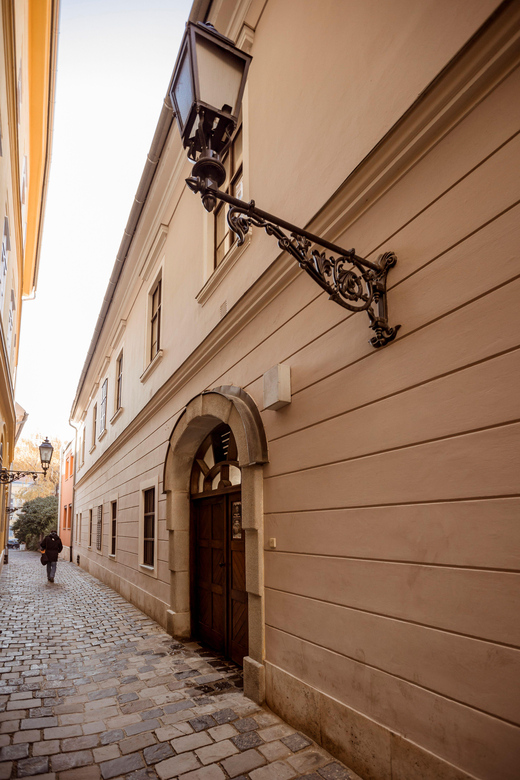
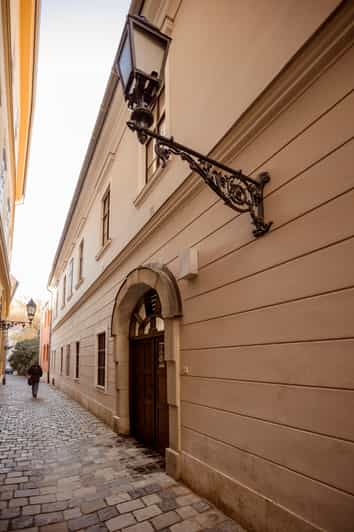
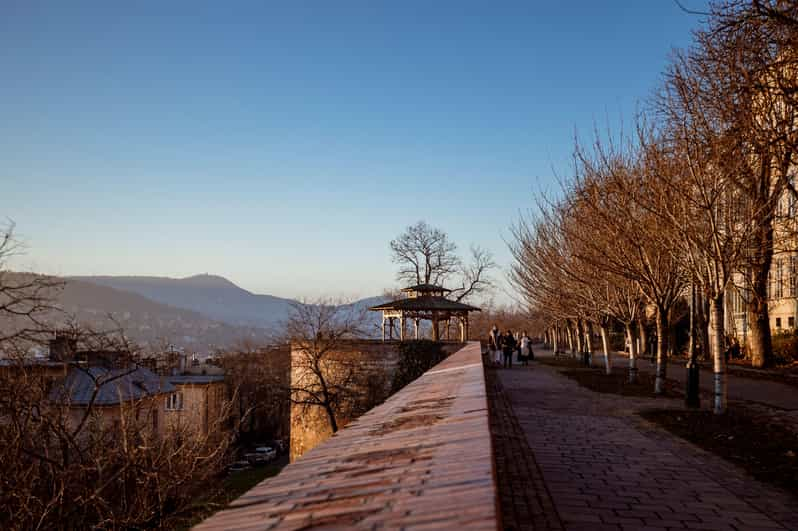
The first part follows Castle Hill and Úri Street. This outdoor section gives you the setting before the tour moves underground. You walk through the historic residential quarter, where old buildings and lanes still conceal signs of the fighting.
The above-ground details are small but useful. Guides have pointed out remaining bullet holes, concealed doorways, and ventilation shafts leading upward from public shelters. These features can be easy to miss when you walk around the Castle district alone. Once someone explains what they are, the streets stop looking like a collection of attractive facades and start to reveal their wartime purpose.
I like this part because it prevents the cave visit from feeling detached from the city. The underground spaces were not isolated attractions. They were tied to the homes, cellars, courtyards, and public buildings above them.
You should wear shoes with a firm sole. The walk crosses cobbled streets, and the route continues through dark but lit areas, steep stairs, and uneven surfaces. Comfortable shoes matter more here than stylish ones.
Entering the Buda Castle Cave
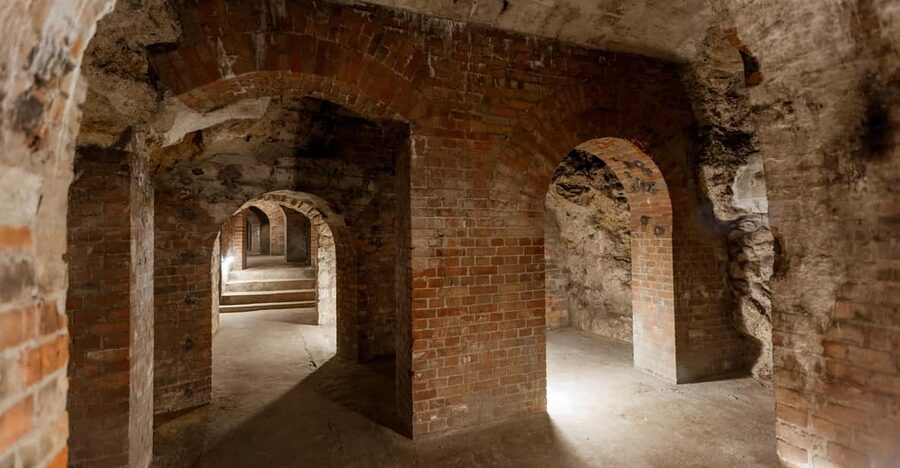
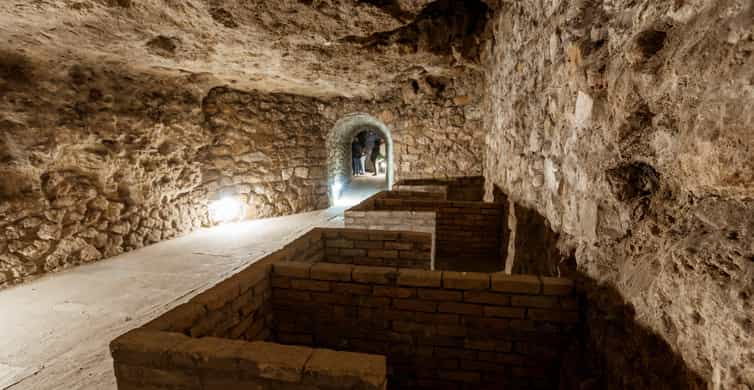
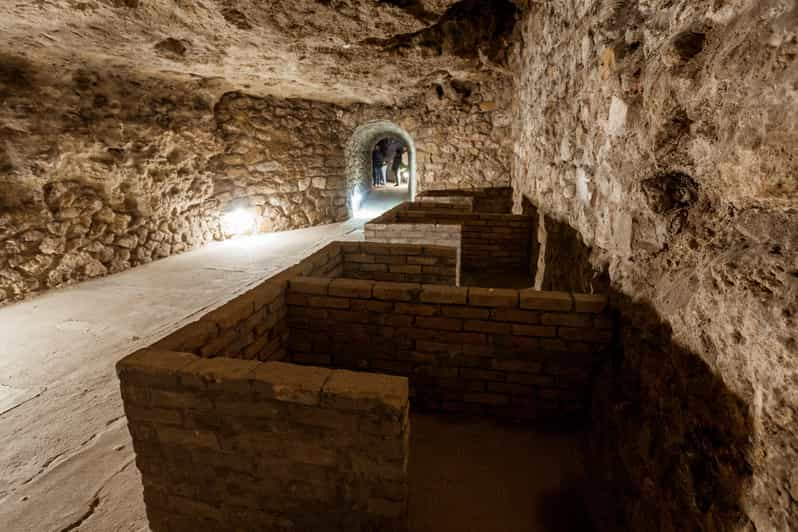
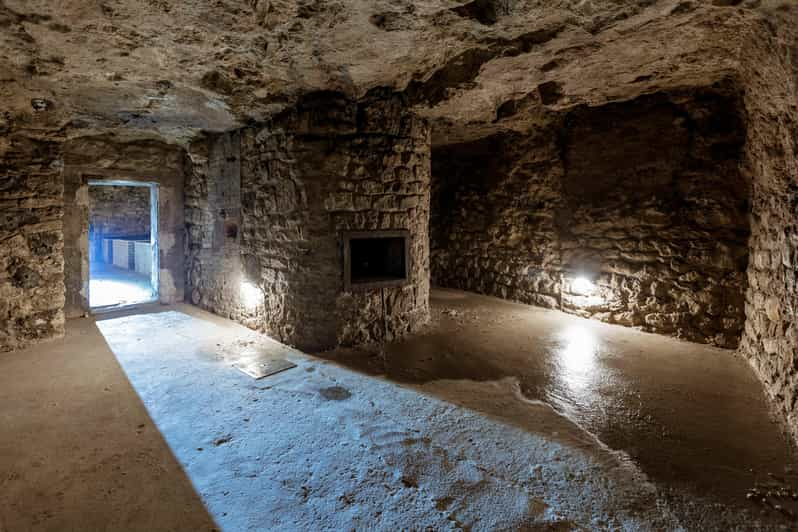
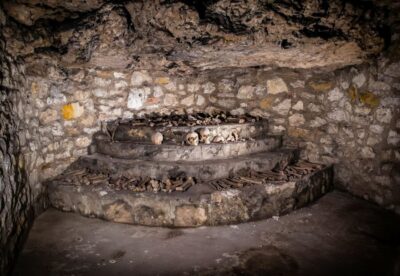
The central part of the experience takes you into the Buda Castle Cave, part of the underground maze beneath the historic quarter. The route includes a cellar in an old dwelling house and an original Second World War bomb shelter. About 35 minutes is assigned to the cave visit, though much of the overall tour has an underground focus.
Do not expect a polished museum tunnel with wide floors and bright displays. The appeal is the opposite. The spaces feel enclosed, plain, and functional. You move through corridors and rooms that help explain why underground shelter became so important during the siege.
The temperature remains around 12°C, or 54°F, throughout the year. In warm weather, the change can feel sudden. In winter, you may already be dressed properly, but a few layers still help because the outdoor and indoor portions feel very different.
The cave is illuminated, but it remains dark enough to create a strong sense of place. The corridors can feel tight, and some surfaces may be wet. If confined spaces make you uneasy, this is not a minor detail. Claustrophobia is specifically listed as a reason to avoid the tour.
Same walls, a different way in:
- Budapest: Buda Castle District Walking Tour
★ 4.6 · 2,108 reviews - Budapest: 3-Hour Grand City Tour and Castle Walk
★ 4.3 · 1,437 reviews - Buda Castle District Dark History, Legends and Vampire Night Tour
★ 4.5 · 1,240 reviews - Budapest: Buda Castle District Walking Tour with a Historian
★ 4.9 · 867 reviews
The bomb shelter and the people below ground
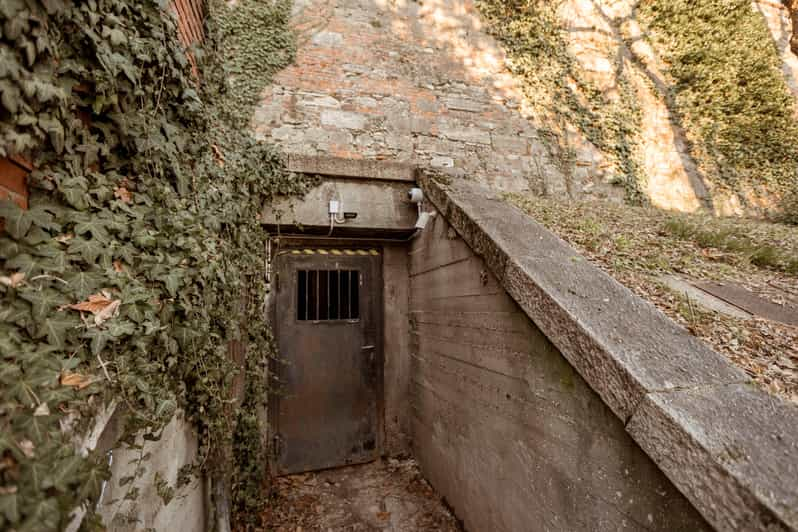
The bomb shelter is the emotional center of the route. It helps you picture the conditions faced by people who had nowhere else to go. They dealt with limited food and water, cold, disease, and constant fear while trying to protect children, relatives, possessions, and their own lives.
The guide builds this account from diaries and memoirs. That choice matters. Dates and troop movements explain the siege, but personal records show how the crisis felt from inside the shelters. You hear about the shared terror of death and the equally strong instinct to survive.
The story also includes the soldiers and wounded people in the caves, not just civilians. That makes the setting more complicated. The shelters were places of refuge, but they were also crowded wartime spaces filled with people under pressure.
The subject can be upsetting. One part of the tour deals with suffering in a direct way, and I would not recommend it to young children. The minimum suggested age is 14. Older teenagers with an interest in history may find it worthwhile, but parents should decide if the subject suits them.
Guides who make the history work
The guide matters a great deal on a tour like this. The tunnels alone cannot explain the siege. You need someone who can connect the rooms, streets, and surviving traces to the events of 1944 and 1945.
Several guides have received especially warm praise for their delivery. Rita has led detailed tours that cover Budapest before, during, and after the Second World War. Jonas, sometimes introduced by a nickname, has been described as engaging, clear, and good at keeping the group involved. Kopp has handled follow-up questions well and has a lively way of explaining the subject. Balacsz brings a strong personal interest in the history of the period.
The quality of English can vary a little by guide. One participant found Jonas difficult to understand at times because of pronunciation, while still finding the tour worthwhile. That is a fair point for anyone who is not a native English speaker.
Personal headphones have also been used on the tour, which helps when the group is spread through a corridor or standing outdoors near street noise. Small groups make it easier to hear and ask questions. On some departures, the group may be very small, even turning into a private-feeling walk, though you should not book on the assumption that this will happen.
The final walk along Lovas Way
After the underground section, the route continues along Lovas Way before ending at Szentháromság Square. This final outdoor stretch gives you time to think about what you have seen and puts the caves back into the wider Castle district.
The end point also works well for continuing your visit. You can remain in the Castle area rather than retracing the route to Dísz Square. If the timing lines up with late afternoon, the western side of the castle walls can offer good views near sunset, though the tour itself is focused on history rather than sightseeing.
The outdoor portion also matters for comfort. You are not underground for the full 90 minutes, but you should still plan for both conditions. Rain does not automatically cancel the programme, so bring suitable clothing in wet weather.
Is $24 a fair price?
At $24 per person, this is good value if you want a focused history tour rather than a general introduction to Buda Castle. The price includes an English guided walk through the Palace District and the Buda Castle Cave, with the underground shelter providing access to a place you would not understand fully from the street.
The tour lasts 90 minutes, which is a sensible length for this subject. A shorter walk might reduce the siege to a few dramatic facts. A much longer programme could become heavy, especially because the story includes death, hunger, illness, and fear. This one gives you enough time for context and questions without taking over half your day.
I would not compare the price with a standard castle sightseeing stroll. The value comes from the guide’s explanation, the survivor accounts, and access to the underground spaces. If you only want grand architecture and river views, another Buda Castle walk may suit you better. If you want to understand what happened to people living beneath this district during the war, the cost is modest.
Free cancellation up to 24 hours before the start and the option to reserve while paying later also reduce the risk of fitting it into a changing Budapest schedule.
Who should book this walk?
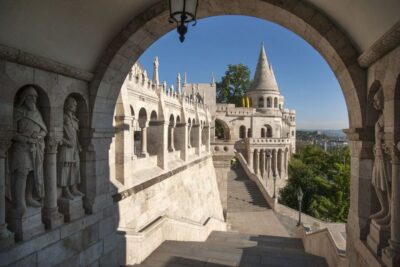
I would recommend it to adults and teenagers aged 14 or older who enjoy military history, local history, politics, or stories about ordinary people caught in major events. It also suits repeat visitors to Budapest who have already seen Matthias Church, Fisherman’s Bastion, and the main palace sights and want a different side of Castle Hill.
The tour is a good choice if you prefer learning through places rather than displays. Walking over the streets, seeing traces of damage, and then entering the shelters creates a clear link between the city you see today and the city under siege.
I would choose something else if you have trouble with stairs, use a wheelchair, or need a fully accessible route. The tour is not suitable for wheelchair users or people with mobility impairments. Narrow corridors, steep stairs, darkness, and sometimes wet floors are part of the experience, not unusual exceptions.
You should also skip it if confined spaces cause serious anxiety. The caves are lit, but they are still underground and enclosed. Bring water and a snack, since the programme moves continuously, and dress in layers for the 12°C cellar and cave.
Should you book the Buda Castle siege tour?
Book it if you want the wartime story of Budapest told from inside the shelters, not just from a street-level viewpoint. The strongest parts are the survivor accounts, the original bomb shelter, the traces of damage above ground, and the guides’ ability to explain what happened before, during, and after the siege.
I would make this a priority for history-minded visitors with steady footing and a tolerance for enclosed spaces. At $24 and 90 minutes, it is a compact, serious, and well-priced addition to a Budapest itinerary. Just arrive early at the green gate on Dísz Square, wear proper shoes, bring a warm layer, and expect a sobering experience rather than a light sightseeing outing.
FAQ
How long does the Buda Castle siege tour last?
The tour lasts 90 minutes, or one and a half hours. The cave portion is listed as about 35 minutes, with the rest covering the outdoor sections and the Castle district.
Where does the tour begin?
It begins at De la Motte B. Palace, also called Beer-palota, at 1014 Budapest, Dísz tér 15. Meet next to the Posta building at the large green gate and look for the turquoise Buda Castle Walks umbrella.
Where does the tour finish?
The tour finishes at Szentháromság Square, rather than returning to the starting point.
What language is the tour conducted in?
The live guided tour is conducted in English.
Is the tour suitable for children?
It is recommended for ages 14 and older. Children under 14 are not suitable for this programme.
What should I wear for the cave?
Wear comfortable walking shoes and dress in layers. The cellar and Buda Castle Cave stay at about 12°C, or 54°F, throughout the year.
Is the route suitable for people with mobility impairments or claustrophobia?
No. The route includes cobbled streets, steep stairs, narrow corridors, dark illuminated areas, and sometimes wet surfaces. It is not suitable for wheelchair users, people with mobility impairments, or people with claustrophobia.
Newly walked in Budapest
- UNESCO Holloko and Eger Castle Private Tour with Transport★ 5.0 · 4 reviews
- True Crime Walking Tour in the Buda Castle district★ 5.0 · 17 reviews
- Private Budapest Sightseeing Tour: Royal Castle, Heroes Square, Chain Bridge★ 5.0 · 4 reviews
- Buda Castle Walking Tour with Audioguide on Your Smartphone★ 4.0 · 24 reviews
- Live virtual walking tour in the Buda Castle quarter★ 5.0 · 10 reviews
- Private Sissi Castle Tour★ 4.5 · 12 reviews
- Private Buda Castle walking tour & Danube river cruise with Margaret Island stop★ 5.0 · 2 reviews
- Private Buda Castle Walk with Entry to Matthias Church★ 4.5 · 8 reviews
Budapest Castle Tours, compared.

Buda Castle District Vampires and Myths Night Tour
Read our review →


Buda Castle District Dark History, Legends and Vampire Night Tour
Read our review →
1.5 Hour Budapest Segway Tour – To The Castle Area
Read our review →Browse the lists this tour appears in