
Review · CLUJ-NAPOCA
Cluj-Napoca: Turda Salt Mine & Alba Carolina Fortress Tour
The most striking part of this day is the contrast: above ground, you walk through Alba Iulia’s grand Alba Carolina Fortress, then descend into Turda Salt Mine, where huge rooms were cut from salt. Few day trips give you such a sharp change of setting.
I like the private format, which gives you room to ask about Romania, Transylvania, local customs, and the sites themselves. I also like the guides’ personal approach. Joseph, also spelled Josif in one account, is described as attentive and able to keep a long day interesting. The main drawback is the length: ten hours, with walking, stairs, and cool underground rooms, can be tiring.
Key points
- A six-pointed fortress: Alba Carolina is Romania’s largest fortress, with 12 kilometers of walls and six decorated entrances.
- Three layers of history: The site began as a Roman fort, later became a medieval stronghold, and was then rebuilt as a Vauban-style citadel.
- A 90-meter salt chamber: Turda Salt Mine opens into an enormous underground room carved from deposits formed 13 million years ago.
- A private guide: You can ask questions throughout the day, with English guiding included and German or French available on request.
- A cool underground stop: Turda stays between 10 and 12 degrees Celsius all year, so a light jacket is useful even in summer.
- A full-day commitment: The 10-hour schedule suits visitors who want two major sights in one outing, not those seeking a relaxed half-day trip.
Two very different sides of Transylvania in one day
This tour links Alba Iulia and Turda, two places that feel quite different despite being visited on the same outing. Alba Iulia gives you open courtyards, ceremonial gates, churches, and military architecture. Turda takes you below ground into a former salt mine with dramatic scale and a steady, chilly temperature.
That contrast gives the day its shape. You are not simply moving from one old building to another. You first walk through a city shaped by Roman, German, Hungarian, and Romanian influences. Later, you enter a mine where two thousand years of salt extraction created galleries and giant chambers.
The private-group format matters here. You can ask your guide to spend more time on military design, Roman history, Transylvanian customs, or the mine itself. Several guides have been praised for answering questions well, and Joseph or Josif is specifically described as a history major who could explain both the main sights and wider questions about Romania.
The schedule begins in the morning and lasts about ten hours. That is a serious portion of your day, but it lets you visit two major sights without trying to fit them into separate outings. You should plan on a long day rather than a quick excursion.
More Fortress and Citadel Tours in Romania
- Brasov: Peles Castle, Bran Castle & Rasnov Fortress Day Tour
★ 4.8 · 238 reviews - Small Group Tour to Viscri Church Sighisoara Town Rupea Fortress
★ 5.0 · 225 reviews - Brasov: Bear Sanctuary, Bran Castle & Rasnov Fortress GUIDED Tour
★ 5.0 · 88 reviews
Alba Iulia, the Roman foundation beneath the fortress
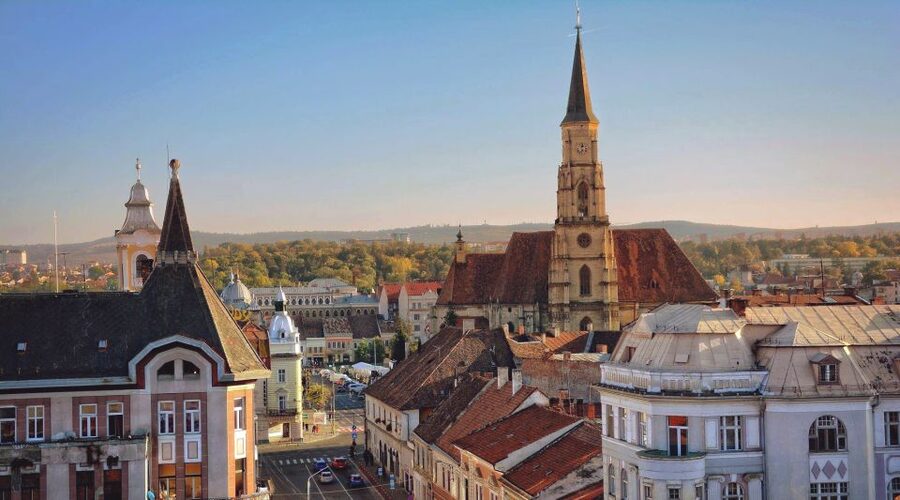
Your first major stop is Alba Iulia, a town in the center of Transylvania. Its importance goes back to Apulum, the Roman settlement that became the largest Roman castrum in the area because of its strategic position.
That Roman foundation is only the beginning. Over the centuries, the town was shaped by German and Hungarian influences as well as Romanian traditions. You will see this mixture in the architecture and in the way the city’s story moves across several periods.
The appeal of Alba Iulia is not based on one single monument. It is the chance to see Roman military planning, medieval development, and later imperial architecture in one place. Baroque and Romanesque churches, Roman remains, and an unusual Babylonian-style building are all part of the visual mix described for the visit.
I would give this portion your attention even if you are mainly excited about the salt mine. The mine provides the dramatic photographs, but Alba Iulia supplies the historical framework. It shows why this part of Transylvania mattered to Romans, medieval rulers, and later military planners.
Your guide can make a real difference here. Instead of simply pointing to gates and walls, a good guide can connect the Roman castrum with the later fortress and explain how different ruling powers left their mark. The private setting makes it easier to stop and ask about details that might otherwise pass quickly.
Walking through Alba Carolina’s six entrances
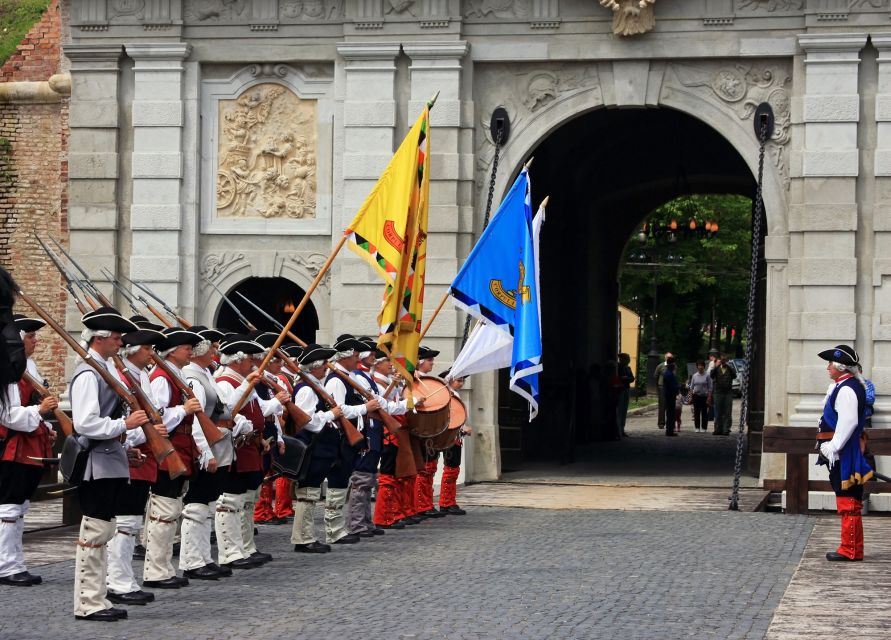
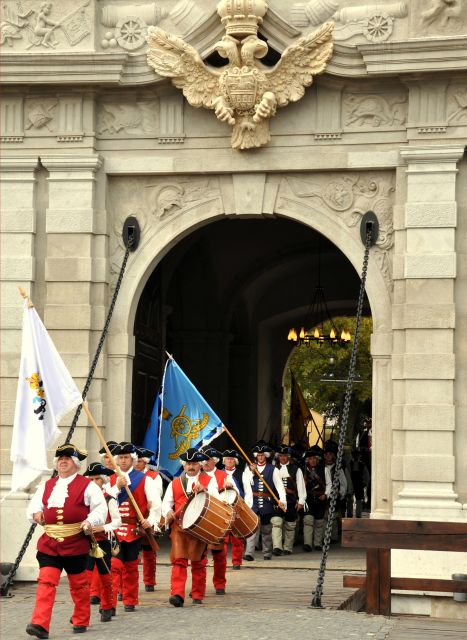
Alba Carolina Fortress is the centerpiece of the morning. It is Romania’s largest fortress, built in the 18th century as a six-pointed star-shaped fortification surrounded by about 12 kilometers of walls.
The star shape is not just a decorative feature. The fortress was designed as a Vauban-style citadel, with bastions and carefully planned defenses. Its six entrances feature Baroque decoration, giving the military complex a more formal and theatrical appearance than you might expect from a fortress.
Each gate offers something different to notice. You may find yourself looking first at the sculpted details, then at the practical design of the walls, bastions, and passages. The combination of polished Baroque work and defensive engineering is what makes the site memorable.
The fortress also carries symbolic weight in Romania. It sits near the center of the country, surrounded by the Carpathian Mountains, and is associated with the coronation of Romanian kings. That gives the visit a national dimension beyond its military purpose.
The site passed through several stages. It began as a Roman fort, became a medieval fortress, and was later rebuilt as the large Vauban citadel you see today. I like this layered story because you are not looking at a structure from one period. You are seeing how one strategic site was repeatedly adapted as warfare and political power changed.
Allow yourself time to look beyond the main route. The six entrances are worth examining, and the scale of the walls is easier to appreciate when you pause rather than rush from one gate to the next. Comfortable shoes are important, since this is a walking stop and the full day includes the mine as well.
A medieval-style lunch break, with food at your own cost
After the fortress visit, lunch is planned in a medieval atmosphere. Lunch is not included, and the expected cost is about 12 euros per person.
That arrangement gives you a simple choice. You can enjoy the setting and order a proper meal, or keep lunch lighter if you want to preserve energy for Turda. Since this is a ten-hour day, I would not treat the meal as an afterthought. A sit-down break can help you reset before the second major stop.
The medieval setting fits the town’s character, but you should budget for it separately. Personal expenses are also excluded, so the advertised price is not the complete cost of every item you may choose during the day.
Same walls, a different way in:
- Bucharest: Dracula’s Castle, Peles Castle, & Brasov Old Town
★ 4.5 · 17,858 reviews - Bucharest: Dracula Castle, Peles Castle & Brasov Old Town
★ 4.6 · 10,891 reviews - Bucharest: Dracula’s Castle, Peleș Castle & Brașov Day Trip
★ 4.4 · 6,100 reviews - Bucharest: Day Trip to Dracula Castle, Peles Castle & Brașov
★ 4.4 · 3,049 reviews
Turda Salt Mine and its enormous underground chamber
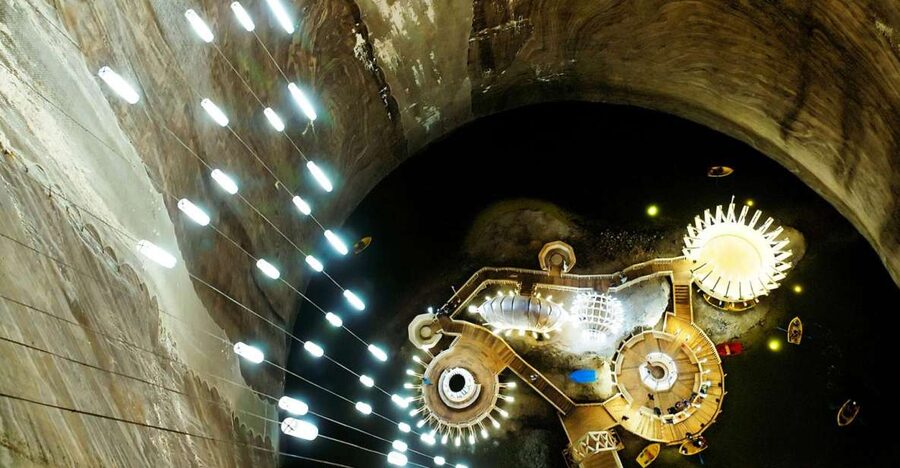
The afternoon takes you to Turda Salt Mine, one of the tour’s most unusual stops. Salt deposits in the area formed 13 million years ago, and roughly two thousand years of extraction created the galleries and chambers you visit today.
The first impression comes from the scale. Long galleries open into a huge chamber carved from salt, with a height of about 90 meters. That is the kind of place where photographs help, but they cannot fully convey the size of the room when you are standing inside it.
The mine is also visually different from Alba Iulia. There are no grand gates or open courtyards here. Instead, the walls, ceiling, and floor reveal the material that made the site valuable. The salt itself becomes the architecture.
A salt lake lies in the mine, and a boat ride is available in the underground chamber. The details of the boat ride can depend on operating conditions, so ask your guide about timing when you arrive. Even without the ride, the lake adds another layer to the visit and gives the chamber a striking focal point.
A glass elevator provides an overview of the mine. This is especially useful because the mine’s scale can be difficult to understand from one level. Looking down or across the excavated space gives you a better sense of how much material was removed over the centuries.
You will also notice the temperature. Turda remains between 10 and 12 degrees Celsius throughout the year. Bring a light jacket or sweater, even if Cluj-Napoca and Alba Iulia are warm outside. The cool, salty air is often described as helpful for people with respiratory problems, but you should treat that as a feature of the environment rather than a substitute for medical care.
How the private guide changes the day
A private group is one of the strongest reasons to choose this experience. You are not locked into a large group’s pace or limited to a fixed set of questions. The guide can respond to your interests and make the transitions between sights more useful.
English guiding is included. German and French-speaking guides are available on request, although the listed language for the activity is English. It is worth confirming your preferred language before booking if English is not comfortable for you.
The feedback attached to the experience places strong emphasis on the guides. Joseph is described as attentive and able to maintain interest even late in a long vacation. Another account highlights a guide’s ability to work around a personal schedule, while other comments point to clear explanations and strong organization.
That does not mean every guide will have the same personality. It does suggest that the guiding element is central to the experience, not just a way to get from one entrance to the next. You can ask about the Roman period, the fortress, Romanian kings, Transylvanian customs, or daily life in the country.
A bottle of water is included, and one account specifically notes that the guide kept the group hydrated and allowed enough personal time. Even so, bring extra water if you normally drink a lot during a full day of walking.
Is $274 per person good value?
At $274 per person, this is not a budget outing. The price needs to be judged against the private format, the ten-hour duration, the English-speaking guide, and admission to Turda Salt Mine.
The fortress visit and the Alba Iulia portion are important parts of the day, but the included entrance fee specifically covers Turda Salt Mine. Lunch costs about 12 euros per person extra, and personal purchases are not included. You should also confirm exactly what transportation arrangement applies when booking, since the supplied details explain the meeting and touring plan but do not list transport as a separate inclusion.
For a solo visitor or couple who values a private guide, the price may make sense because you get a full day built around two distinctive sights. The guide’s ability to answer broad questions about Romania adds value that is hard to measure by admission fees alone.
For a larger private party, the per-person cost may feel easier to justify. A tour-leader place is listed as free for groups of at least 20 people, though that condition is aimed at larger groups and may not affect most bookings.
I would not choose this tour simply because it is the cheapest way to see Turda. I would choose it if you want historical context, a private group, and a carefully guided day that combines the mine with Alba Iulia.
Who will enjoy this day most?
This tour suits you if you want a strong overview of central Transylvania and prefer having a guide available for questions. It is especially useful for first-time visitors to Romania who want more than a quick photo stop.
History fans will get the most from Alba Iulia, with its Roman beginning, medieval phase, and Vauban redesign. Architecture fans will appreciate the six gates and their Baroque decoration. Anyone drawn to unusual places will likely remember Turda Salt Mine, particularly the 90-meter chamber, underground lake, and glass elevator.
The day is less suitable if you dislike long outings or prefer slow travel with plenty of free time. Ten hours is enough to make the experience tiring, especially when combined with walking and the cold air underground.
The activity is not suitable for people with mobility impairments or wheelchair users. Pets are not allowed. Comfortable shoes are required, and you should bring a passport or ID card as requested in the practical information.
Free cancellation is available up to 24 hours before the start time, and you can reserve now and pay later. Those terms make the booking less rigid, but they do not change the physical demands of the day.
Should you book the Alba Iulia and Turda tour?
Book it if you want two major sights in one day and value a private guide who can connect Roman, medieval, military, and modern Romanian history. The strongest reasons are the contrast between Alba Carolina’s open fortress and Turda’s giant underground rooms, plus the chance to ask questions throughout the day.
Skip it if you want a short outing, have limited mobility, or would rather explore one place at a slower pace. At $274 per person, this is a specialist day trip rather than a bargain excursion, but the ten-hour schedule and private guiding can make it worthwhile for visitors who want context as well as scenery.
FAQ
How long does the tour last?
The tour lasts 10 hours and begins in the morning. Starting times depend on availability.
Is the tour private?
Yes. The experience is offered for a private group.
What language does the guide speak?
An English-speaking live guide is included. German and French-speaking guides are available on request.
Is lunch included?
No. Lunch is not included and costs approximately 12 euros per person. Personal expenses are also separate.
What should I bring?
Bring a passport or ID card, comfortable shoes, and a light jacket for Turda Salt Mine, where the temperature stays between 10 and 12 degrees Celsius year-round.
Is the tour suitable for wheelchair users?
No. The activity is not suitable for people with mobility impairments or wheelchair users. Pets are also not allowed.
Newly walked in Romania
- A day at the castles – Transylvania full day private tour★ 5.0 · 2 reviews
- 3 Castles Tour From Bucharest: Peles, “Wednesday” & Dracula★ 4.8 · 117 reviews
- Dracula’s Castle & Sighisoara 2-Day Tour from Bucharest★ 5.0 · 2 reviews
- 1-Day Minivan Tour 3 Castles: Peles, Wednesday & Dracula’s★ 5.0 · 5 reviews
- 1-Day Guided Tour: Bucharest-Peles, Dracula Castle & Brasov★ 4.3 · 7 reviews
- 3 Castle Bucharest: Dracula Castle, Wednesday & Peles Castle★ 4.9 · 49 reviews
- From Braşov: Bran Castle Peles Pelisor Cantacuzino & Sinaia★ 4.9 · 128 reviews
- Brașov: Bran, Râșnov, and Peleș Castles Tour with Guide★ 4.8 · 59 reviews
Fortress & Citadel Tours, compared.
From Cairo Alexandria Catacombs, Citadel Day Trip with Lunch
Read our review →
Charleston historical walking tour with a Professor of History at The Citadel
Read our review →
Hue Customizable Tour with Imperial Citadel & Forbidden City
Read our review →
Desert Safari: Luxury Fortress Dinner, Camel Ride & Dune Bashing
Read our review →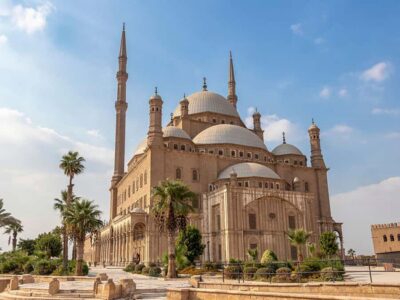
Egyptian Museum, Citadel, and Old Cairo Guided Tour
Read our review →Browse the lists this tour appears in