
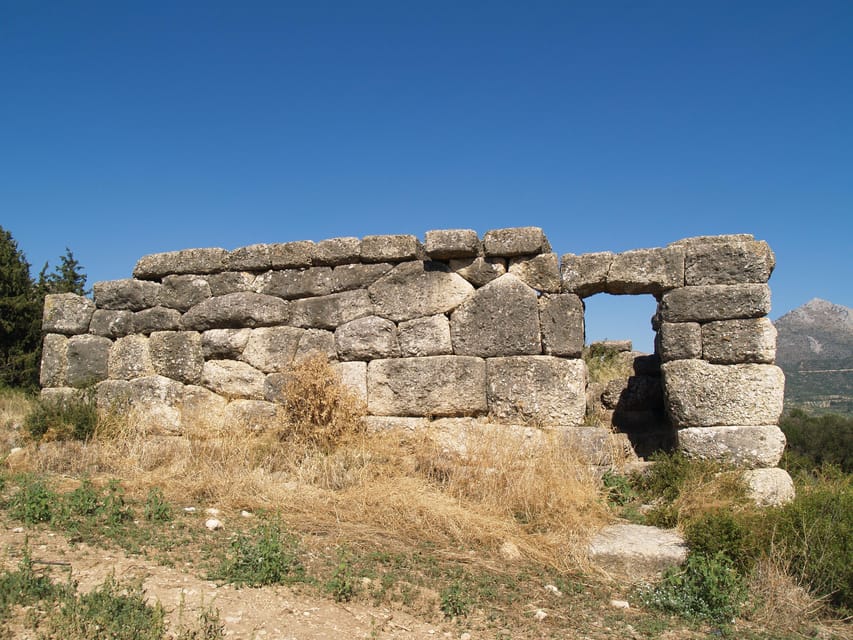
Review · GREECE
From Nafplio: pyramid, castles, major attractions of Argolis
The oldest bridge in Europe, a disputed pyramid, and the marsh where Hercules fought the Hydra all fit into this compact trip from Nafplio. That is the appeal: you get to see the small, puzzling places that usually lose out to Greece’s headline ruins.
I like the private car and the unusual route. You can cover several scattered sites without arranging transport, and the English-speaking guide can connect Argos, Lerna, Tiryns, and the Mycenaean road network. I also like the human scale of the experience, including the chance to see orange groves and meet local farmers along the way.
The main drawback is physical. You will climb and walk over uneven ground, and some stops have little shade. At $106 per person for four hours, the value depends on how much you want obscure history rather than a long visit to one major archaeological site.
Key points to know before booking
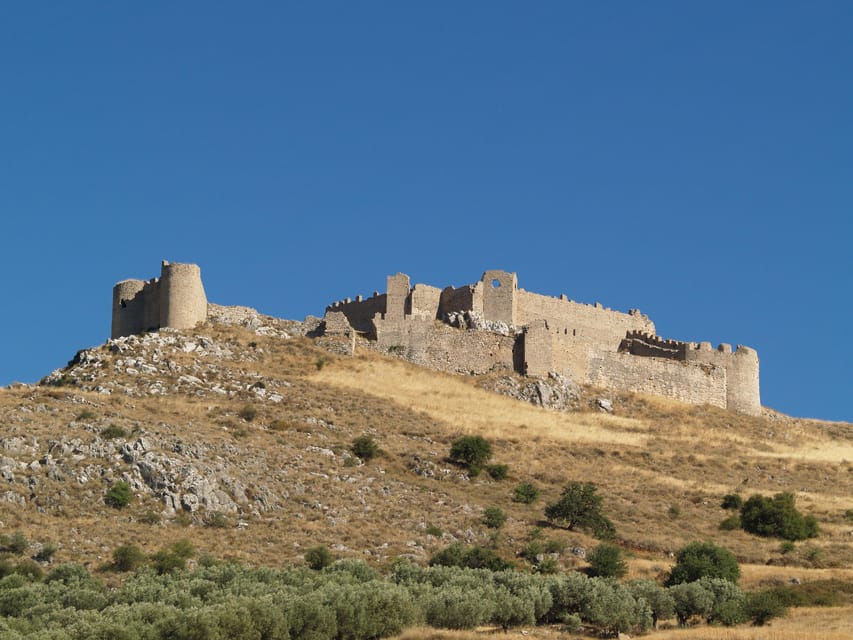
- Five very different stops fit into four hours: You move from a medieval castle to a disputed ancient pyramid, a mythic marsh, a royal tomb, and a Mycenaean bridge.
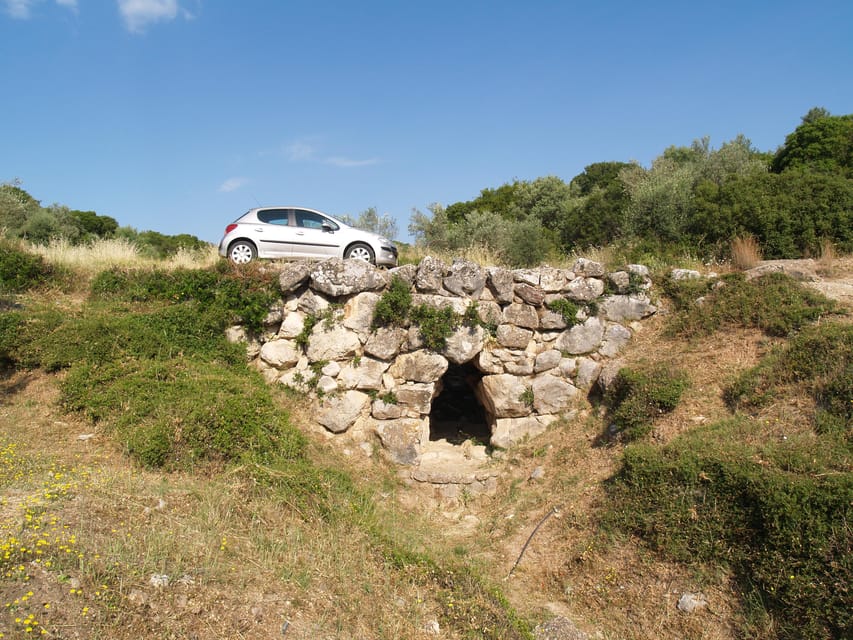
- The Kazarma Bridge is the star for history lovers: It remains functional after roughly 3,000 years and once formed part of the road between Mycenae and Epidaurus.
- Argos Castle layers several eras in one place: Parts of the fortification are medieval, ancient, and possibly Mycenaean.
- This is a small-group private experience: Pick-up, sightseeing by car, water, and the return to Nafplio are included.
- Wear proper shoes: Expect uneven surfaces, uphill walking at Argos, sun exposure, and limited comfort at some stops.
- The sites have no entry ticket: That helps the $106 price, though lunch is not included.
Why this Argolis side trip is different
Most visitors based in Nafplio head first to places such as Mycenae, Epidaurus, and the Palamidi Fortress. This trip takes a quieter route through the Argolic plain, where the remains are smaller but often more puzzling.
You are not simply checking off famous ruins. You are looking at places whose purpose, date, or original builders are not fully settled. That gives the tour a pleasant sense of detective work. The guide is not just pointing out stones. The route asks you to consider how people moved, farmed, defended themselves, and told stories across the region.
The setting also changes often. You begin near Nafplio, climb toward a castle above Argos, look across open country toward the sea at Elliniko, reach the shores of the Argolic Gulf at Myloi, then continue through orange groves near Tiryns. The short drive between stops is part of the experience because it shows how closely these places sit within the same historic area.
This is a four-hour private tour, so the pace is brisk. You will not have long archaeological-site visits at every stop. Instead, you get a well-packed introduction to five unusual places without needing to rent a car or study local roads.
More Castle Tours in the world:
- Seville: Royal Alcázar Entry Ticket
★ 4.6 · 28,378 reviews - Stonehenge, Windsor Castle, and Bath from London
★ 4.5 · 18,662 reviews - Bucharest: Dracula’s Castle, Peles Castle, & Brasov Old Town
★ 4.5 · 17,858 reviews
Argos Castle and the hill above one of Europe’s oldest cities
The first major stop is Argos Castle, reached by a narrow road that climbs the hill. The climb and the approach matter. Argos is described as one of Europe’s oldest cities, and the castle shows how different periods reused the same strategic high ground.
You can expect parts of the fortification to reflect medieval construction, with older ancient and Mycenaean material woven into the story. That layering is more interesting than a single-period ruin. The hill was useful for defense long before the medieval walls appeared, so you are looking at a place shaped by repeated settlement and military use.
The views are another reason to come. From the hill, you can look across the Argolic plain and understand why the site mattered. Roads, passes, farmland, and access to the coast all meet in this part of the Peloponnese.
Allow about 45 minutes here. That is enough time for the approach, a look at the fortifications, and an explanation of the different periods. It is not enough for a slow, detailed archaeological study, but the private format lets you ask questions and focus on the parts that interest you most.
The drawback is clear: this is not an easy stop for anyone with limited mobility. The narrow road and uneven walking surface require steady footing. Comfortable shoes are not optional.
Elliniko Pyramid and the pleasure of an unsolved question
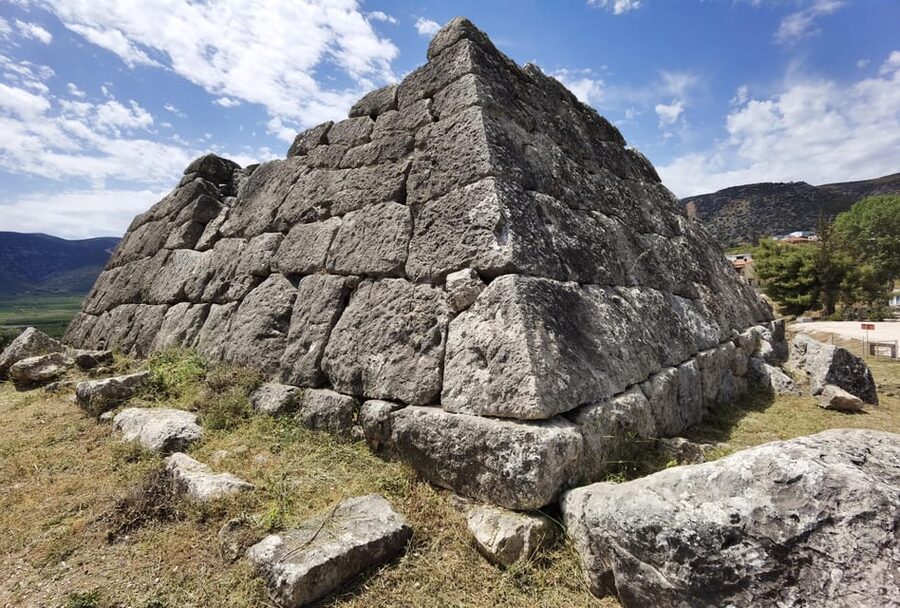
The next stop is in the nearby village of Elliniko, home to what is described as the only ancient pyramid in Europe. Its shape immediately catches your eye, but the real interest lies in the argument around it.
Both the date and the original use remain disputed. Was it a tomb, a defensive structure, a marker, or something else? The tour does not give you a tidy answer, and that is exactly why the stop works. Ancient sites are often presented as if every stone has a fixed label. Here, you get to consider the evidence and the limits of what can be known.
The pyramid sits where mountain passes from Arcadia open into the Argolic plain. It also has an unobstructed view toward the sea. That position gives the site more meaning than its size might suggest. You can see how geography may have influenced whoever built or used it, even if the original purpose remains uncertain.
The visit lasts about 20 minutes. Think of it as a sharp, focused stop rather than a large ruin complex. The guide can explain the competing ideas, while you take in the unusual form and the open setting.
Bring sunglasses, a hat, and sunscreen. There is no promise of shade, and the bright open ground can make a short walk feel longer in the warmer months.
Lerna at Myloi, where myth meets a real marsh
At Myloi, the route reaches the Argolic Gulf and the area identified with ancient Lerna. In Greek myth, this was the home of the Lernean Hydra, the monster Hercules killed during his second labor with help from Iolaus.
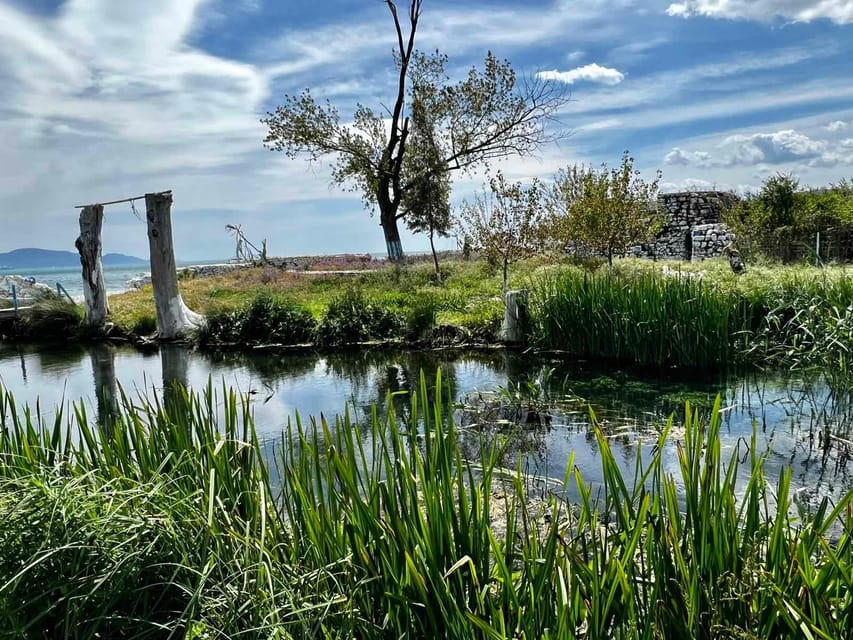
The stop includes the marsh and the mouth of the river. That physical setting helps the story make sense. Instead of imagining Lerna as a vague place from a legend, you can see the wet ground and waterways that may have helped inspire tales of a dangerous creature hiding in the marsh.
The visit also includes a German military facility from the Second World War. That detail adds a much more recent layer to the site. Ancient myth, a living water system, and twentieth-century military remains occupy the same broad area, which is typical of the Peloponnese. New eras rarely erase the old ones completely.
The stop lasts about 25 minutes. You should expect a brief look rather than a long nature walk. The value comes from the connection between the physical setting and the myth, plus the contrast with the military remains.
This part of the route may appeal to families and anyone who enjoys mythology, but the setting is not arranged like a polished museum visit. Food and drinks are restricted at certain sites, so wait until you are back in the car if you need a snack.
Same walls, a different way in:
- From Munich: Neuschwanstein & Linderhof Castle Full-Day Trip
★ 4.6 · 14,646 reviews - Edinburgh Castle: Guided Walking Tour with Entry Ticket
★ 4.7 · 11,699 reviews - Seville: Alcázar, Cathedral & Giralda Skip-the-Line Tour
★ 4.8 · 11,525 reviews - Prague: Skip-the-line Castle Ticket and Optional AudioGuide
★ 4.3 · 11,121 reviews
The royal tholos tomb near ancient Tiryns
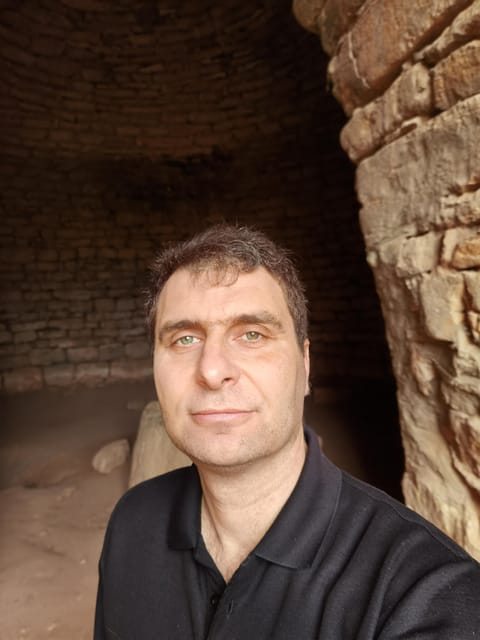
The tour then heads to an orange grove near ancient Tiryns, where you will see a large vaulted, or tholos, tomb. It is described as a royal tomb, although it was looted in ancient times and there is no surviving information about the person buried inside.
That missing identity is part of the fascination. You are standing in front of a major burial structure without a named ruler to attach to it. The architecture has to carry the story.
A tholos tomb is built around a circular chamber with a beehive-like vaulted roof. Even without a preserved burial, the form points to the skill and resources available to the people who built it. The placement among orange groves also gives the visit a distinctly local feel. This is not just a monument isolated behind a large visitor center. It is part of the working countryside around Tiryns.
The stop takes about 15 minutes, making it the quickest visit on the route. You should not expect the same scale or services as a major archaeological park. Instead, you get a close look at a lesser-known structure and a useful link to the wider Mycenaean world.
The orange-growing setting may also provide one of the trip’s most personal moments. A past booking included a meeting with local orange farmers, who offered freshly picked oranges and talked about their farm. That kind of encounter is not guaranteed, but it shows how the route can connect ancient remains with life in the region today.
Kazarma Bridge, the unforgettable final stop
The final attraction is the Mycenaean Kazarma Bridge, described as the oldest bridge in Europe and possibly the oldest in the world. It dates to the 13th century BC and remains functional today.
That claim deserves a little care. Ancient structures often carry competing superlatives, and the exact title can depend on how a bridge is defined. Still, the important point is not the slogan. This is an ancient road bridge that has survived in working form, and that is remarkable in itself.
The bridge once helped connect Mycenae with Epidaurus. It was the largest bridge along that route, which included several other bridges that are now inaccessible. Standing on or near the Kazarma Bridge gives you a practical sense of Mycenaean engineering. This was not only a culture of palaces and tombs. It also built roads and crossings that supported movement through difficult terrain.
The bridge is untouched by time in the sense that it remains a simple, functioning structure rather than a rebuilt monument. That makes it a strong final stop. After seeing castles, tombs, and a disputed pyramid, you finish with something that still performs the job it was made to do.
You have about 20 minutes here. The visit is short, but the bridge rewards close attention. Look at how the stones are arranged, consider the road it carried, and ask the guide about the route between Mycenae and Epidaurus.
What $106 buys you in four hours
The price is $106 per person. That is not a budget sightseeing outing, but it includes private transport from Nafplio, an English-speaking live guide, the sightseeing stops, water, and the return to the city. The attractions themselves do not require an entry ticket, so you are paying mainly for the vehicle, the guide’s time, and the convenience of reaching scattered places.
I see the value if you do not have a rental car or if you want a local person to explain the links between the sites. Driving from one stop to the next on your own would require planning, navigation, and research into places that are not always the first names in a guidebook.
The value is weaker if you prefer to spend four hours at one major archaeological site, or if you want a slow lunch built into the outing. Lunch is not included, and the schedule leaves little time for an extended meal.
The private format is a real advantage. You are not tied to a large coach group, and you can ask about the details that catch your eye. Previous bookings have named the guides Yannis and John. Since both names appear in the available information, confirm who will lead your tour when you book.
Timing, walking, and what to bring
The meeting point is outside Droges pharmacy on Mpoumpoulinas 37 in Nafplio. From there, you travel by private car and return to the same area after about four hours.
The walking is manageable for an active visitor, but it is not suitable for people with mobility impairments. Argos Castle involves an uphill approach, and several sites have uneven surfaces. Sandals may be fine for some parts of the route, but sturdy comfortable shoes are the safer choice.
Bring:
- Water, although water is provided
- A hat and sunscreen
- Sunglasses
- Comfortable shoes
- A camera
The best seasons for this route are likely spring and fall, when outdoor walking may be more pleasant. That advice comes directly from the practical nature of the stops. Summer heat can make exposed sites and uphill ground tiring, especially when there is little shade.
Smoking and eating are restricted at certain sites. Plan to follow the guide’s instructions rather than treating each stop as a picnic area.
Who should book this experience
I would choose this tour if you have already seen Nafplio’s best-known sights and want something less predictable. It suits people who enjoy ancient engineering, mythology, uncertain archaeological questions, and small sites with strong local connections.
It is also a smart choice if you do not have a car. The attractions are spread across the Argolis region, and the private ride removes the trouble of finding each one.
Families with older children may enjoy the range of subjects. One stop offers a monster from Greek myth, another presents a strange pyramid, and the bridge gives you a clear, physical example of ancient engineering. The short visits also prevent the day from becoming a long march through ruins.
I would hesitate if you need step-free access, dislike sun exposure, or want a relaxed meal and long visits at each place. The route is packed, and the sites are modest rather than grand.
Should you book the Argolis pyramid and castle tour?
Book it if you want to see the overlooked side of Argolis and value a private guide who can tie together myth, farming, military history, and Mycenaean engineering. The Kazarma Bridge is the strongest reason to go, while the pyramid and Lerna provide the mystery and storytelling.
Skip it if your priority is a major, fully developed archaeological site or an easy-access excursion. For the right person, $106 buys a useful half-day of unusual places that would be hard to reach and understand alone.
FAQ
How long does the tour last?
The experience lasts four hours, including travel from Nafplio, sightseeing, and the return to the meeting point.
Where does the tour begin?
It begins outside Droges pharmacy at Mpoumpoulinas 37 in Nafplio.
Is transportation included?
Yes. Pick-up from the meeting point, sightseeing by private car, and the return to Nafplio are included.
Is the tour private?
Yes. The group type is private, with an English-speaking live guide.
Which sites does the tour visit?
The route includes Argos Castle, the ancient pyramid at Elliniko, the Lerna area at Myloi, a royal tholos tomb near ancient Tiryns, and the Mycenaean Kazarma Bridge.
Are entrance tickets included?
The attractions do not have a ticket, so there is no separate admission cost listed for the stops.
Is lunch included?
No. Lunch is not included.
Is water provided?
Yes. Water is included, though you should still bring enough for walking and sun exposure.
Is the tour suitable for people with mobility impairments?
No. The experience includes uneven surfaces and walking, including an uphill approach at Argos Castle.
What should I bring?
Bring comfortable shoes, sunglasses, a sun hat, sunscreen, water, and a camera. Sandals are also listed as an option, but sturdy footwear is better for uneven ground.
Newly walked in the world
- Private Tour Egyptian museum, Hanging Church, Castle of Saladin★ 5.0 · 2 reviews
- Cairo Egyptian museum, Cairo citadel and Alabaster mosque day tour★ 5.0 · 2 reviews
- Explore the History of Egyptian Museum Citadel and Khan Bazaar★ 5.0 · 2 reviews
- Egyptian Museum, Mohamed Ali Mosque and Citadel★ 5.0 · 12 reviews
- Egyptian Museum, Citadel and Old Cairo Tour★ 5.0 · 118 reviews
- Full-Day Private Guided Tour of Egyptian Museum, Pyramids and Cairo Citadel★ 5.0 · 2 reviews
- Cairo Tour to Egyptian Museum Citadel and Khan Khalili Bazaar★ 5.0 · 10 reviews
- Egyptian Museum, Cairo Citadel and Coptic Cairo Private Tour★ 5.0 · 5 reviews
Greece Castle Tours, compared.

Santorini Highlights and Venetian Castles Small-Group Day Tour
Read our review →
Naxos Castle Walking Tour and Sunset at the Portara
Read our review →
Naxos: Old Town, Castle & Portara Guided Sunset Tour
Read our review →
Santorini: Small-Group Highlights Tour of Venetian Castles
Read our review →

Full Day Private Tour to Monemvasia Medieval Fortress Town and Sparta
Read our review →
Monolithos: Small Group Hike and Sunset at Monolithos Castle
Read our review →Browse the lists this tour appears in