
Review · SEOUL
From Seoul: Suwon Hwaseong Fortress Tour
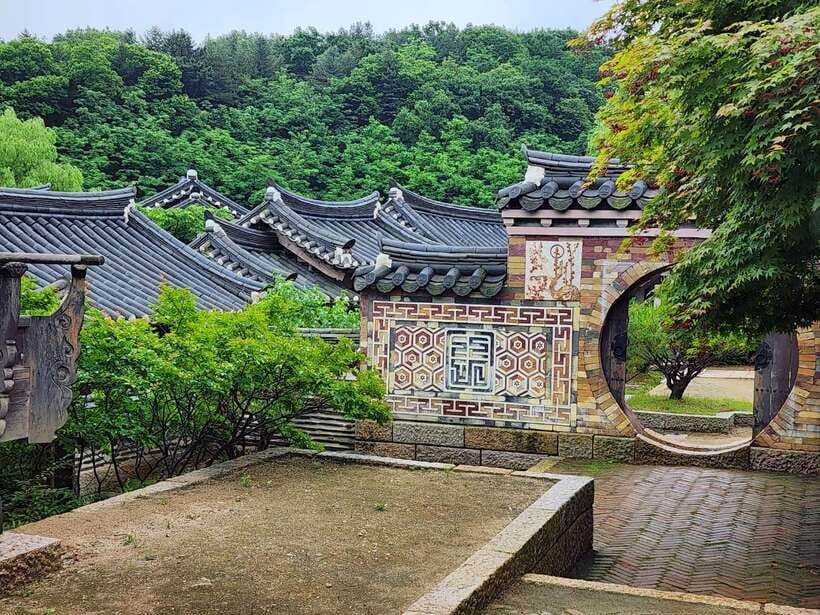
Suwon Hwaseong is more than a wall with a few gates. It is a late Joseon military project wrapped around Suwon, with lookout points, command posts, and royal connections. I like the way this tour pairs the fortress with Hwaseong Haenggung Palace, so you see both defense and court life. I also like the choice between a focused half-day visit and a fuller day that adds Korean Folk Village.
The main drawback is value on the half-day option. One traveler felt the price was high for seeing only the fortress area, and that is a fair concern if you have already visited Seoul’s major palaces. You may also walk less of the wall than expected if the group moves slowly or the weather is harsh.
Key points to know before booking
- Two tour lengths: Choose roughly four hours for Suwon Fortress and Haenggung Palace, or up to eight hours for the full-day version.
- Strong guides: Leo, Shin, Sophie, Stella, Thomas, Rachel, and others have been praised for clear explanations, patience, and thoughtful route planning.
- A useful history pairing: The fortress shows military planning, while Haenggung Palace explains royal life outside Seoul.
- Full-day cultural stop: Korean Folk Village includes restored Joseon-era homes, cultural classes, seasonal customs, music, weddings, and martial arts displays when scheduled.
- Comfortable transport: Air-conditioned buses or minivans take you from Seoul, with drop-off near Myeongdong Station.
- Plan for walking: Wear comfortable shoes. The tour is not suitable for wheelchair users.
Why Suwon Hwaseong makes a good Seoul escape
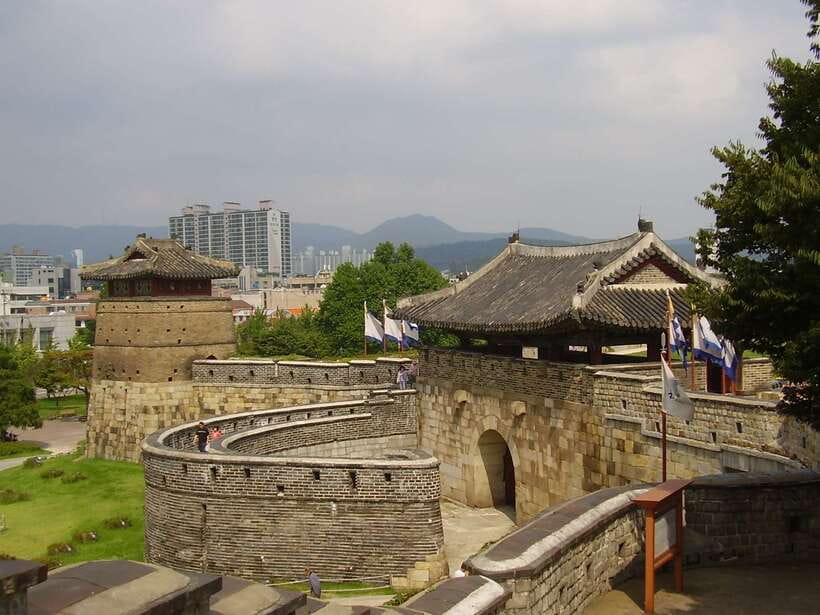
Seoul has plenty of palaces, but Suwon offers a different look at the Joseon Dynasty. The fortress was built in the late 18th century by King Jeongjo as a defensive stronghold. It also reflects his interest in Suwon as an important royal city, making the site more than a simple military barrier.
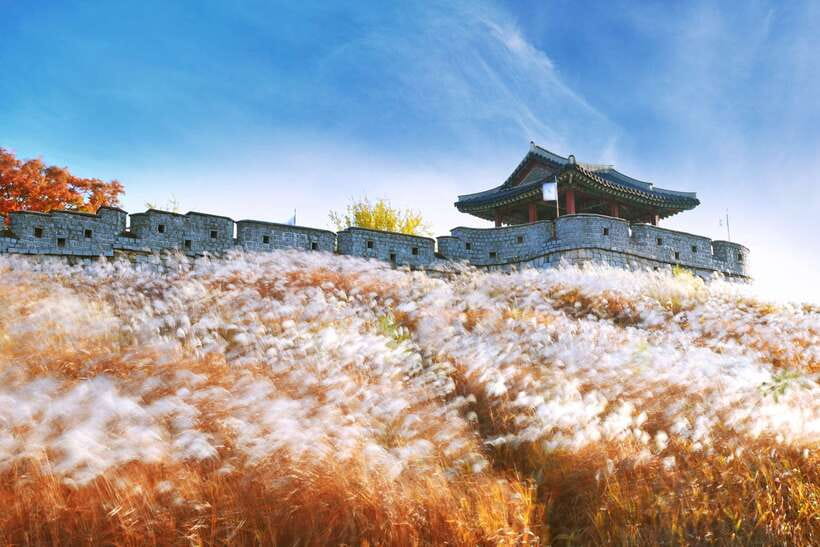
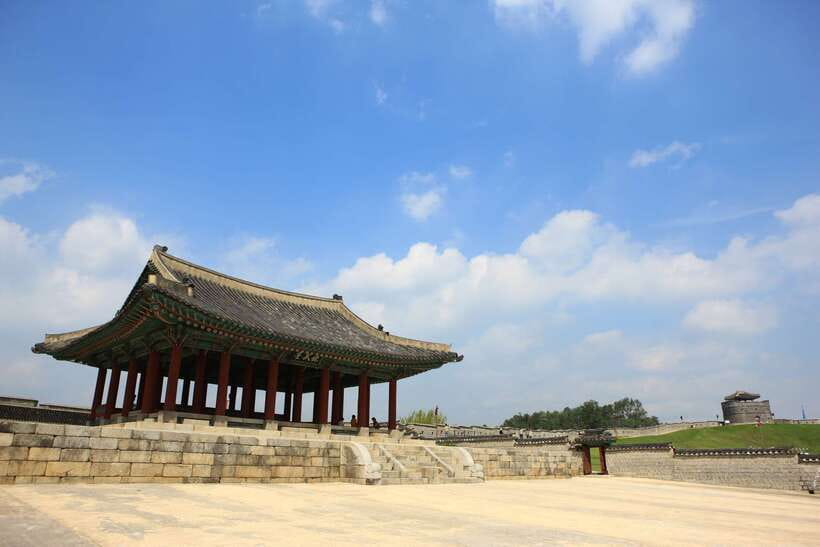
The walls are the star. You can walk beside or along sections of the fortification and see how gates, towers, and lookout points worked together. The scale becomes clearer as you move through the site, especially when your guide explains how troops watched approaches and protected the city.
I like having a guide here because the fortress does not explain every detail on its own. A good guide turns stone walls into a story about royal power, military planning, religion, and daily life. Shin, Leo, Stella, and Thomas have each been praised for making Korean history easy to follow, while Sophie has been singled out for her helpful manner and clear explanations.
The setting also gives you a break from Seoul’s dense city center. The trip is not a wilderness outing, but it feels like a change of pace. You get open views around the walls, traditional buildings, and a chance to see a historic city beyond the capital.
More Fortress and Citadel Tours in the world:
- Carcassonne: Castle and Ramparts Entry Ticket
★ 4.6 · 2,884 reviews - Salzburg: Hohensalzburg Fortress Admission Ticket
★ 4.6 · 2,236 reviews - Salzburg: Best of Mozart Fortress Concert and Dinner
★ 4.5 · 1,424 reviews
Walking the fortress walls in Suwon
Your route will depend on the group, the weather, and the guide’s plan. Some groups walk more of the wall, while others concentrate on nearby highlights. That difference matters. If your main goal is to complete a long wall walk, say so early and ask how much walking is planned.
The fortress includes imposing walls and defensive structures that help you understand the engineering of the period. Your guide can point out where soldiers watched for danger and how the fortification served as a working military complex rather than a decorative palace.
Summer heat can change the pace. One group used the small tourist train for part of the route, allowing them to avoid some of the heat before continuing on foot. This is a useful reminder that you should not expect every group to follow the same route. In hot weather, the guide may shorten or adjust the walk for comfort.
In cooler weather, the wall walk can be the most satisfying part of the half-day tour. In February, January, or late autumn, you may find the outdoor portion easier to enjoy without intense heat. Still, comfortable shoes matter year-round. The site involves walking, and this is not a good choice if you need wheelchair access.
Photography is another strength. Guides such as Orota and Leo have helped visitors find good picture spots, and Leo has also pointed out locations linked with Korean dramas. You will have chances for photos of the walls, traditional buildings, and wider views around Suwon, though the exact stops depend on timing.
Inside Hwaseong Haenggung Palace
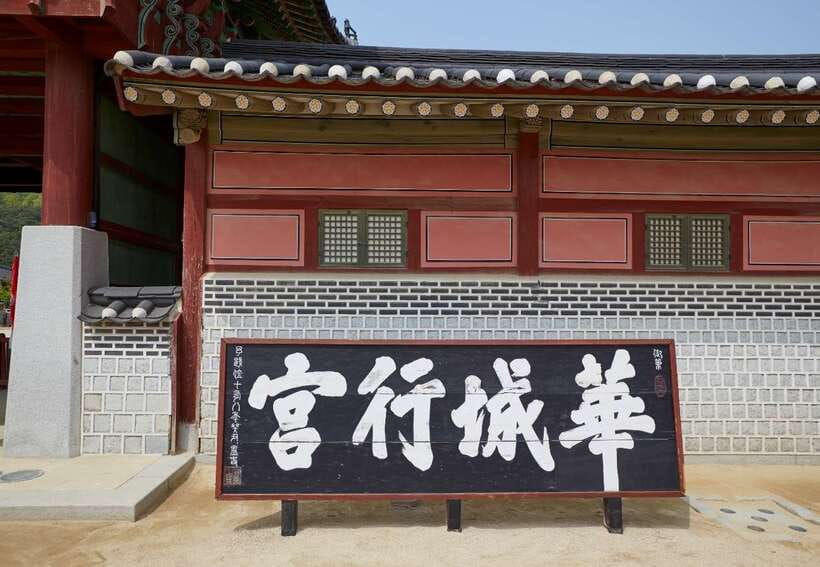
Hwaseong Haenggung was a temporary royal residence for Joseon kings and their entourage when they traveled outside the capital. It gives the fortress visit a human side. Instead of focusing only on walls and weapons, you see where royal business and daily court life could take place during a stay in Suwon.
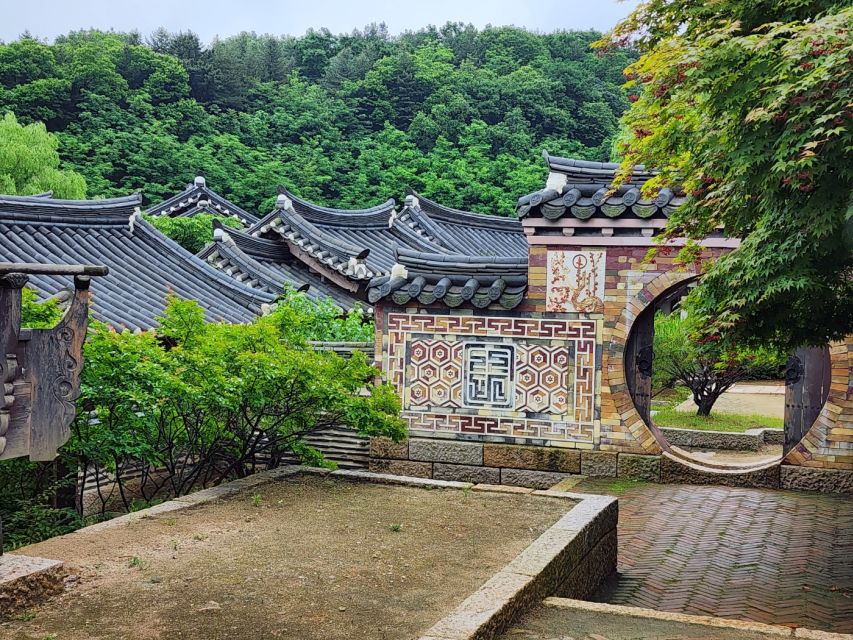
The palace buildings use traditional Korean architectural forms, with courtyards and wooden structures that reward a slower look. Your guide will explain the palace’s role and the important events connected with it. The value here comes from context: once you understand why the king needed a temporary residence, Suwon’s political and military importance becomes easier to grasp.
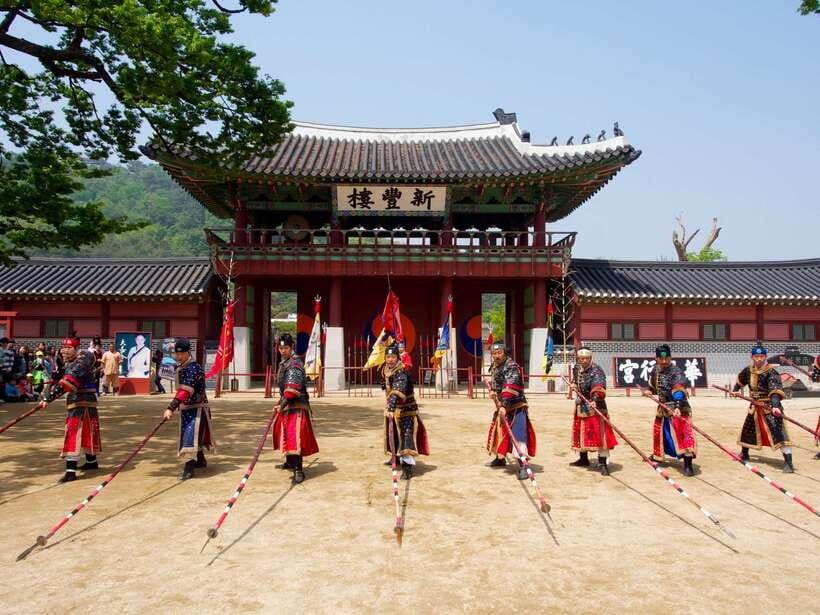
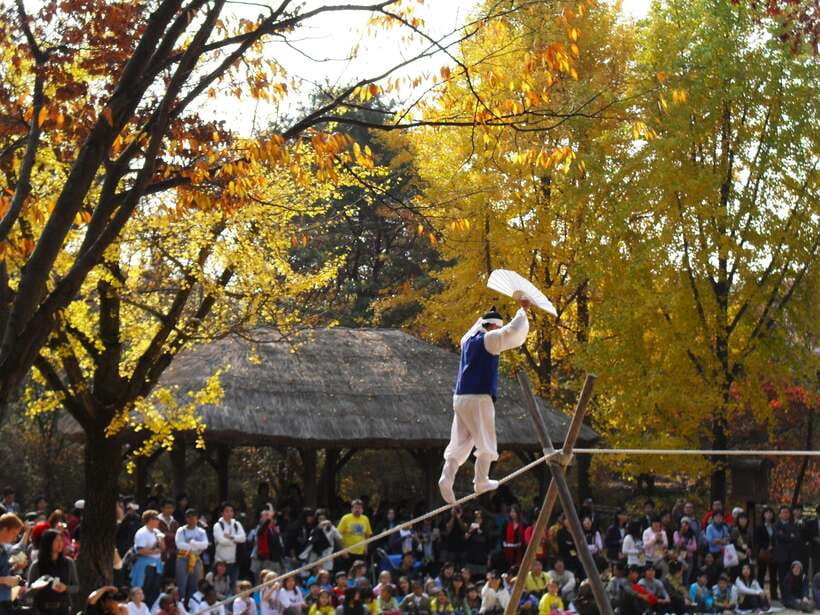
The palace may also host performances, including martial arts displays. One visitor enjoyed an unexpected martial arts show at the end of a half-day visit. Another saw a martial arts event arranged into the schedule by Leo. These performances are not guaranteed, so treat them as seasonal extras rather than a promise.
This stop works especially well for families and young people. Leo kept a 14-year-old engaged through storytelling, and several guides have been praised for answering many questions without making the visit feel like a lecture. If you are traveling with children, ask your guide about demonstrations or performances available that day.
What the full-day Korean Folk Village adds
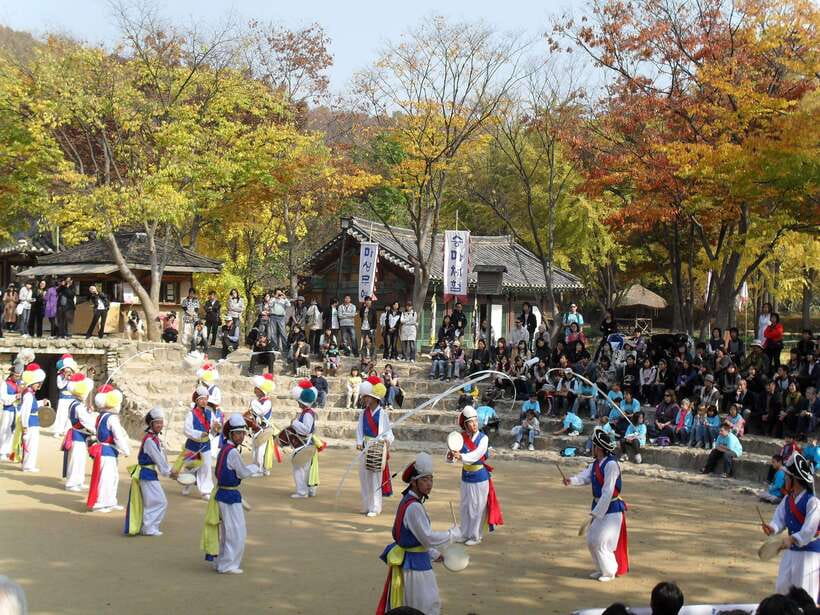
The full-day option continues to Korean Folk Village in Yongin after lunch. Lunch is not included, so you pay for your own meal. The schedule gives you a pause between the fortress and the afternoon cultural visit, but the length of the lunch stop can vary with the day’s plan.
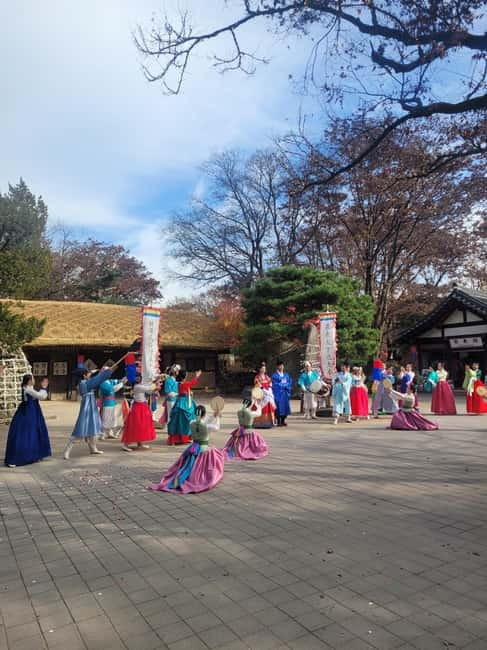
Korean Folk Village is designed as an open-air museum of traditional life, with restored houses from the Joseon period. The idea is to show how people lived, worked, worshipped, celebrated, and organized community life. It offers a broader social picture than the royal buildings in Suwon.
You might see cultural classes, seasonal customs, shaman traditions, and traditional performances. Nongak, or farmer’s music, traditional weddings, horseback martial arts, and other special events are available by season. The schedule is important: one visitor was disappointed that horseback martial arts were not running that day, while the musical performance was excellent. Plan on seeing what is scheduled, not every listed activity.
The village can be the favorite stop for visitors who want more than palace architecture. It gives you a look at ordinary traditions and community customs, not only kings and generals. Stella made this section especially engaging by connecting some displays with practices she had seen in her own youth, which helped make the presentation feel less distant.
The tradeoff is time. The full-day option is much more complete, but it leaves less free time in Seoul. If you have only a short stay and want to keep your afternoon for shopping, food, or another palace, the half-day tour may suit you better. If you want one organized day focused on Korean history and traditional culture, the added village is worth considering.
More Castle Tours in the world:
- Seville: Royal Alcázar Entry Ticket
★ 4.6 · 28,378 reviews - Stonehenge, Windsor Castle, and Bath from London
★ 4.5 · 18,662 reviews - Bucharest: Dracula’s Castle, Peles Castle, & Brasov Old Town
★ 4.5 · 17,858 reviews - From Munich: Neuschwanstein & Linderhof Castle Full-Day Trip
★ 4.6 · 14,646 reviews
The half-day or full-day choice
The half-day tour lasts about four hours and centers on Suwon Hwaseong Fortress and Haenggung Palace. It is a sensible choice if you want a guided introduction without giving up the rest of your day. One couple found the half-day length ideal because they wanted to continue exploring Seoul independently.
The full-day tour lasts up to eight hours and adds Korean Folk Village or Dae Jang Geum Park, depending on the option available. The supplied details emphasize the folk village, while the included features also list Dae Jang Geum Park as a possible full-day visit. Check the exact option before paying so you know which afternoon stop you are choosing.
I would choose the half-day version for:
- A first visit to Seoul with a packed schedule
- Visitors mainly interested in fortress architecture
- Families who may not want a full day of organized sightseeing
- Anyone who prefers a focused history visit and independent lunch plans
I would choose the full-day version for:
- People who want Joseon-era culture beyond royal buildings
- Visitors interested in music, traditional weddings, or seasonal events
- Families who appreciate a varied itinerary
- Anyone who wants transport and guiding handled for the whole day
The price is $52 per person. For the full-day option, that is a reasonable package because admission, a guide, transportation, and the second attraction are included. Lunch and drinks are extra. For the half-day option, value depends on how much you want interpretation and convenient transport. If you are comfortable arranging your own trip to Suwon and reading about the sites yourself, the price may feel high. If you want a clear route, English or Japanese explanation, and a ride back to Seoul, it is easier to justify.
Guides, transport, and meeting details
You meet the guide outside Exit 10 at Myeongdong Station. Optional pickup is available from centrally located hotels in Gangnam, Myeongdong, Gwanghwamun, Itaewon, and Dongdaemun. If your hotel or guesthouse is hard to reach, the guide may arrange a meeting point at a nearby central hotel or subway station.
The ride uses an air-conditioned bus or minivan. Transport has earned a 98 percent perfect score, and the repeated praise for drivers is easy to understand: comfortable vehicles and careful timing matter when the day includes several sites. The guide and driver combination also helps when weather, traffic, or event schedules require a small change.
Drop-off is in Seoul’s Myeongdong area, near Myeongdong Station. That is convenient if you are staying nearby or want to continue shopping and dining in central Seoul. Hotel drop-off is not part of the standard arrangement.
The tour offers live guiding in English or Japanese, and private groups are available. The strongest guide feedback centers on patience, clear English, personal attention, and good route planning. Shin, Leo, Sophie, Stella, Thomas, Rachel, Henry, and Orota are among the guides praised for making the day friendly and easy to follow.
Practical drawbacks to weigh
The tour is not suitable for wheelchair users. The fortress involves outdoor walking, and access conditions may make the route difficult for anyone with limited mobility.
Performances at the folk village are seasonal. You could see farmer’s music, a traditional wedding, or horseback martial arts, but none should be treated as guaranteed. The same applies to special fortress events.
The amount of wall walking is not fixed. If you want a long trek, ask the guide at the start. A group may choose a shorter route because of heat, time limits, or the needs of other people.
Lunch and drinks are not included. Bring a payment method suitable for your group’s meal, and remember that the full-day itinerary needs time for eating as well as sightseeing.
You should also avoid alcohol and drugs, and minors must be accompanied. Comfortable shoes are the one item the tour specifically asks you to bring, and that advice is worth taking seriously.
Should you book the Suwon Hwaseong tour?
Book it if you want context, transport, and a human guide rather than a quick photo stop. The combination of fortress, royal residence, and optional folk village gives you a clear path through Korean military, royal, and everyday culture.
Choose the half-day option if your time is tight or you mainly want Suwon’s fortress. Choose the full-day option if the folk village appeals to you and you want traditional performances and restored homes added to the day.
I would hesitate only if you dislike group schedules, want to walk every meter of the wall, or are comparing the half-day price with a self-guided trip. For most first-time visitors who want an easy day outside Seoul, the strong guide service, comfortable transport, and flexible tour length make this a sound choice.
FAQ
Where does the Suwon Hwaseong tour meet?
The standard meeting point is outside Exit 10 of Myeongdong Station in Seoul.
Is hotel pickup available?
Optional pickup is available from centrally located hotels in areas such as Gangnam, Myeongdong, Gwanghwamun, Itaewon, and Dongdaemun. If your accommodation is difficult to access, you may be asked to meet at a nearby central hotel or subway station.
How long does the tour last?
The experience lasts about four to eight hours, depending on whether you choose the half-day or full-day option.
What does the half-day tour include?
The half-day tour focuses on Suwon Hwaseong Fortress and Hwaseong Haenggung Palace, with a guide, transportation, and admission fees included.
What does the full-day tour add?
The full-day option includes a visit to Korean Folk Village or Dae Jang Geum Park, depending on the selected option. The supplied itinerary describes Korean Folk Village in detail.
Is lunch included?
No. Lunch and drinks are not included, so you pay for your own meal during the full-day tour.
Which languages are available?
Live guiding is available in English and Japanese.
Is transportation included?
Yes. Transportation is provided by air-conditioned bus or minivan, with drop-off in Seoul’s Myeongdong area.
Are performances at Korean Folk Village guaranteed?
No. Performances such as nongak, traditional weddings, and horseback martial arts are available by season and may not run on every tour date.
Can wheelchair users join?
The tour is not suitable for wheelchair users. You should also bring comfortable shoes because the fortress visit includes walking.
Newly walked in the world
- Montreux: Chateau Chillon Entrance Ticket★ 4.7 · 158 reviews
- Day Trip to Montreux, Chaplin’s World & Chillon Castle& apéritif★ 4.5 · 178 reviews
- Lucerne CH Experience: Cheese, Chocolate, Chapel Bridge & Château★ 4.5 · 155 reviews
- Postojna Cave & Predjama Castle from Trieste★ 4.5 · 122 reviews
- Gdansk and Malbork Castle Small Group Tour from Warsaw with Lunch★ 4.5 · 20 reviews
- Everyday Chopin Concert at 7 PM with candlelight by the Castle★ 4.5 · 100 reviews
- Bratislava: DayTrip: Castles around Vienna +underground lake★ 4.9 · 30 reviews
- Vienna: Guided Bratislava & Devín Castle Tour via Hainburg★ 4.6 · 88 reviews
Fortress & Citadel Tours, compared.



From Cairo Alexandria Catacombs, Citadel Day Trip with Lunch
Read our review →
Charleston historical walking tour with a Professor of History at The Citadel
Read our review →
Hue Customizable Tour with Imperial Citadel & Forbidden City
Read our review →
Desert Safari: Luxury Fortress Dinner, Camel Ride & Dune Bashing
Read our review →
Egyptian Museum, Citadel, and Old Cairo Guided Tour
Read our review →Browse the lists this tour appears in