Review · CAIRO
Full Day Private Tour in Cairo Citadel and Islamic Cairo
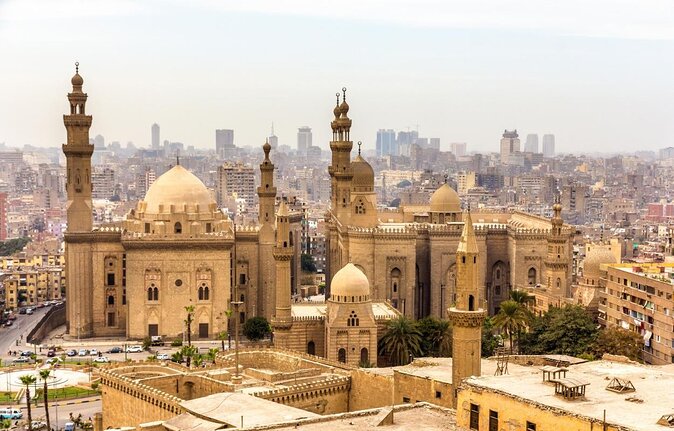
Cairo’s Islamic quarter packs centuries of power, faith, and royal ambition into a remarkably small area. This private tour takes you from Saladin’s Citadel to Ottoman-style domes, enormous Mamluk architecture, royal tombs, and an old Cairo house filled with collected objects.
I like the private car and hotel pickup, which spare you the trouble of arranging transport between sites. I also like the mix of major monuments and the Gayer-Anderson Museum, a quieter stop with mashrabiyya screens and marble inlays. The main catch is that entrance fees and lunch are not included, so the $39 price is a starting point rather than the full cost.
Key Points at a Glance
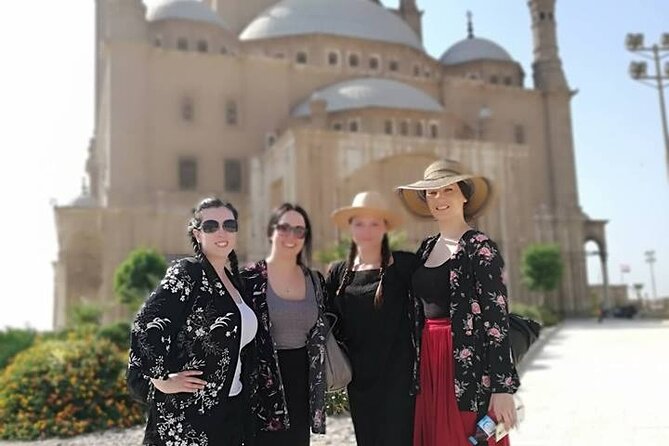
- Five very different Cairo sights: You see a fortress, two major mosque complexes, a royal-era mosque, and a historic house museum.
- Private transport from Cairo or Giza: Your group travels in an air-conditioned vehicle rather than joining a larger shared coach.
- A qualified Egyptologist guide: Expect context about the buildings, their rulers, and the architectural changes that shaped them.
- Six hours with an 8:00 am start: The early departure gives you a useful morning-to-afternoon block for Islamic Cairo.
- Admission fees are separate: Budget extra for every listed stop, along with lunch if you want a meal during the outing.
- Free cancellation until 24 hours before departure: Late cancellations and changes are not refunded or accepted.
Why This Private Cairo Tour Works
I see this as a good first look at Islamic Cairo, especially if you want major sights without planning several separate taxi rides. The route links buildings from the Ayyubid, Mamluk, and Muhammad Ali periods, so you can compare how Cairo’s rulers used forts, mosques, schools, and royal mausoleums to show authority.
The private format matters here. You are not tied to a large group, and only your own party takes part. Pickup and drop-off at a hotel in Cairo or Giza make the morning simple, while private transportation gives you a practical way to connect sites that are not best handled on foot in one continuous stretch.
The guide is an important part of the value. A good explanation helps you notice why the Citadel sits where it does, how Mamluk religious schools were organized, and why Muhammad Ali’s mosque looks more Ottoman than medieval Egyptian. The guide is described as friendly and well-informed, and Isaac, the organizer, is easy to contact if you need help before the tour.
At $39 per person, the package is appealing for a private six-hour outing with transportation, bottled water, a guide, and hotel service. Still, you need to add admission fees at the sights and pay separately for lunch. If you are comparing the price with a self-guided day, count those extras before making your decision.
More Fortress and Citadel Tours in Cairo
- From Cairo Alexandria Catacombs, Citadel Day Trip with Lunch
★ 4.6 · 1,312 reviews - Cairo: Egyptian Museum, Citadel, and Old Cairo Guided Tour
★ 4.7 · 853 reviews - Cairo Citadel, Old Cairo and Khan El Khalili: Private Tour
★ 4.6 · 741 reviews
Saladin’s Citadel Above Cairo
The Citadel is the natural opening act. It was built on a rocky promontory below the Muqattam Hills, a defensive position chosen because it was hard to attack. From here, Cairo’s rulers could protect and oversee the city.
The site took shape in several major building periods. Saladin began the Ayyubid work in the 12th century, Mamluk ruler al-Nasir Muhammad added to it in the 14th century, and Muhammad Ali transformed parts of it in the 19th century. That layering gives the Citadel its value: you are not looking at one ruler’s project, but at a place repeatedly reshaped as power changed hands.
The scheduled visit is about 30 minutes, and admission is extra. That is enough time for an introduction and a look at the main setting, but it may feel short if you want to study every wall, courtyard, or view. I would listen closely to the guide here, because the site’s importance comes as much from its position and changing role as from any single structure.
The Citadel also sets up the next stop. Muhammad Ali’s mosque dominates the visitor’s sense of the site, but it belongs to a much later chapter than Saladin’s original fortress.
The Ottoman Look of Muhammad Ali Mosque
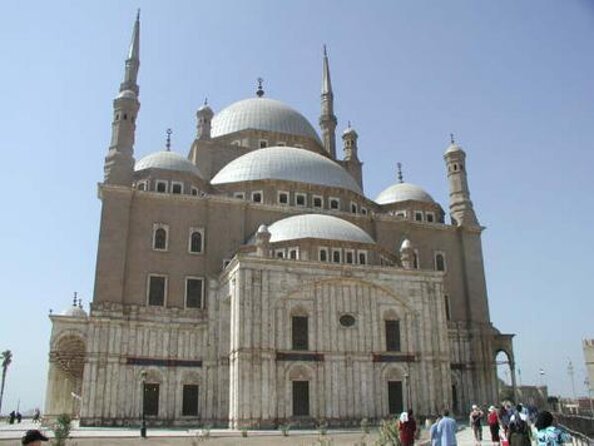
Muhammad Ali Mosque was built inside the Citadel between 1830 and 1848, though work was not finished until 1857 under Said Pasha. Its architect, Yusuf Bushnak from Istanbul, used the Sultan Ahmed Mosque in that city as a model.
You will notice the difference at once. The mosque’s large dome, smaller surrounding domes, and Ottoman design give it a look unlike the earlier Mamluk buildings nearby. The tour description compares it with Istanbul’s famous Blue Mosque, though this Cairo version is smaller.
The name alabaster mosque comes from the alabaster panels once used on the upper walls. Some were later removed for use in the palaces of Abbas I. The stripped walls were covered with wood painted to resemble marble, an alteration that adds another layer to the building’s story.
The visit lasts about an hour, making it the longest stop on the route. That is useful because the mosque has more to explain than its exterior appearance. You can take in its scale, consider the Ottoman influence, and ask the guide about the materials and changes made during and after construction.
Admission is not included. If grand interiors and later Cairo architecture interest you, this is likely to be one of the most rewarding stops. If your main goal is medieval architecture, you may prefer the Sultan Hassan complex later in the day.
Sultan Hassan’s Massive Mamluk Complex
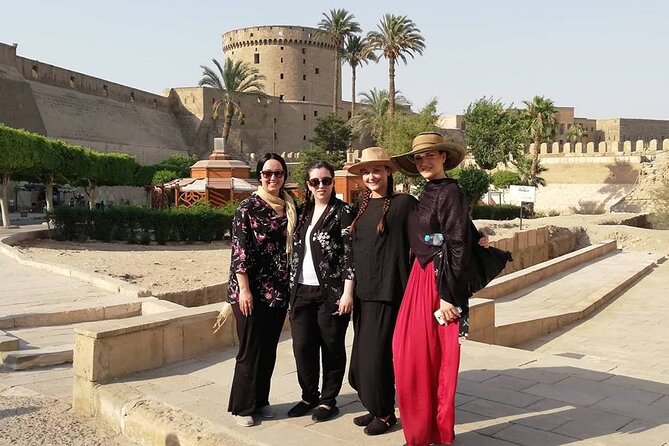
The Mosque-Madrassa of Sultan Hassan was built between 1356 and 1363 during the Bahri Mamluk period. Sultan an-Nasir Hasan commissioned it, and the building was intended to function as both mosque and madrassa, or religious school.
Its size is the first thing you notice. The complex covers nearly 8,000 square meters, with dimensions given as about 500 meters long, 68 meters wide, and 36 meters high. Its main doorway at the north corner rises nearly 26 meters. These figures help explain why the building feels monumental before you even step inside.
The visit is scheduled for about 30 minutes. That gives you time to appreciate the huge exterior, enter the complex, and see the basic arrangement, but it is not a long architectural study. I would focus on the proportions, the tall entrance, and the way the building presents itself as both a place of worship and a school.
Sultan Hassan is paired with Al Rifai Mosque, which sits nearby and looks back toward it stylistically. Seeing both in one outing makes the contrast clearer: one is a major Mamluk monument from the 14th century, while the other was built much later as part of an effort to connect modern Egypt with its earlier traditions.
More Fortress and Citadel Tours in Egypt
- Museum of Egyptian Civilization, Citadel & Old Cairo Tour
★ 4.7 · 530 reviews - The Egyptian Museum, the Citadel, Khan Khalil Bazaar & Old Cairo
★ 5.0 · 418 reviews - Cairo: Salah El Din Citadel and Old Cairo Bazar Guided Tour
★ 4.7 · 176 reviews - Egyptian Museum, Citadel and Old Cairo Tour
★ 5.0 · 118 reviews
Al Rifai Mosque and the Muhammad Ali Dynasty
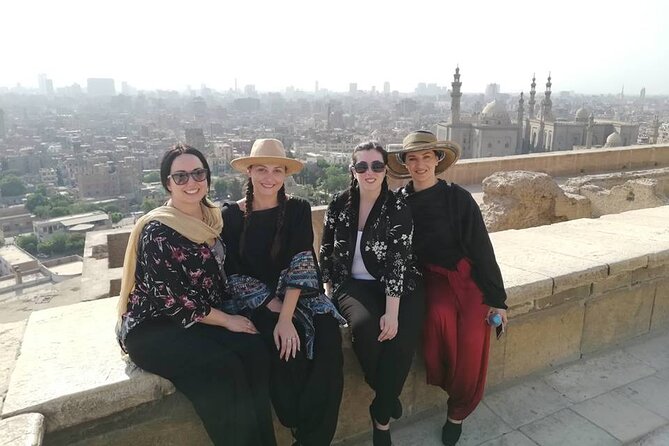
Al Rifai Mosque was built to resemble the neighboring Sultan Hassan Mosque and to link 19th-century Egypt with its celebrated past. Its style makes more sense after you have just seen Sultan Hassan. Rather than viewing it alone, you can compare the two buildings directly.
The mosque also serves as a burial place. It contains the tomb of Imam Rifai and the graves of later members of the Muhammad Ali dynasty, including Sultan Hussein Kamel, King Fuad, and King Farouk. The last Shah of Iran is also buried here.
That gives Al Rifai a particular appeal if you are interested in the politics of 19th- and 20th-century Egypt. The building is not only a religious site or architectural copy. It is tied to royal succession, national identity, and the final years of a ruling family.
The planned visit is about 30 minutes, with admission extra. I would use the time to look beyond the decoration and ask the guide about the people buried there. Without that context, Al Rifai can seem like simply another grand mosque. With it, the stop becomes a compact lesson in Egypt’s modern royal past.
Gayer-Anderson Museum’s Old Cairo Houses
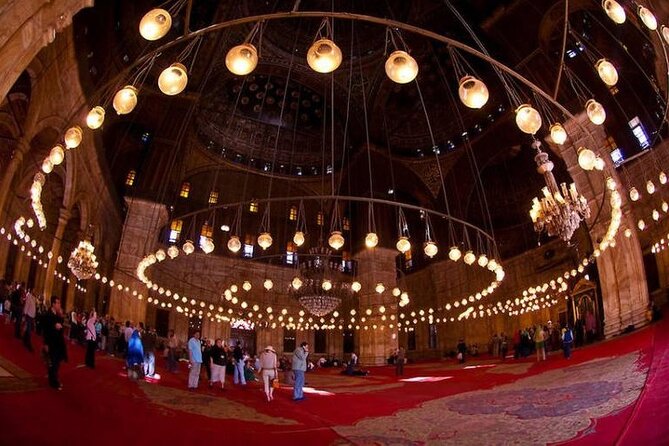
The Gayer-Anderson Museum changes the pace. Instead of a huge religious complex, you enter two connected houses from the 16th and 17th centuries. John Gayer-Anderson, a British member of the Egyptian civil service in the 1930s and 1940s, restored the houses and filled them with objects he collected.
The buildings themselves are a main reason to visit. They feature mashrabiyya screens and marble inlays, details that give you a sense of domestic architecture rather than state power. The museum lets you consider how people lived in historic Cairo, not only how rulers built monuments.
The scheduled time is 30 minutes. That is enough for a quick look, but anyone drawn to interiors, decorative arts, or old houses may want more time than the itinerary allows. Since the tour is private, you can ask your guide which rooms or objects deserve your attention, though the actual pace remains part of the six-hour schedule.
I especially like this stop as a counterweight to the Citadel and mosques. The grand buildings show public authority. Gayer-Anderson offers a more intimate setting shaped by screens, courtyards, collected objects, and domestic design.
Timing, Transport, and Comfort
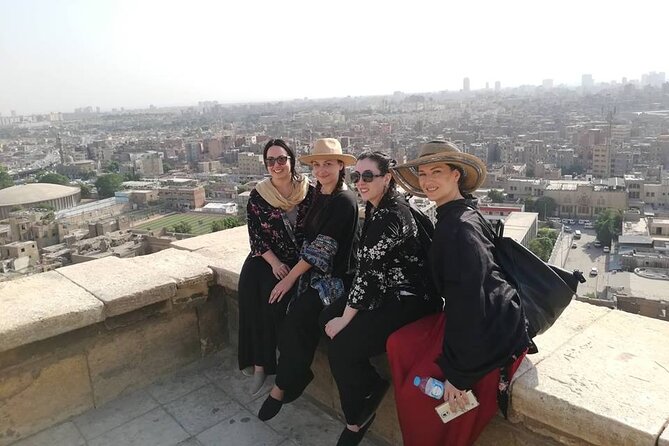
The tour begins at 8:00 am and lasts about six hours. That gives you a solid half-day plus, with the listed visits taking roughly three hours before allowing for driving, hotel pickup and drop-off, site entry, and any pauses along the way.
Pickup is offered from hotels in Cairo or Giza. The air-conditioned private vehicle is included, as is private transportation and bottled water. Those details matter in Cairo, where moving between several districts can take effort even when the sights look close together on a map.
Lunch is not included. The tour information does not specify a restaurant or a set meal, so plan on paying separately if you want to eat during the outing. I would also remember that every listed stop has an admission fee that is separate from the tour price.
The schedule gives most stops about 30 minutes, with one hour at Muhammad Ali Mosque. That works well for a broad introduction, but it is not designed for slow photography, extended museum time, or detailed architectural study. If you like to read every panel and linger in every courtyard, you may find the day brisk.
Who Will Get the Most from This Tour
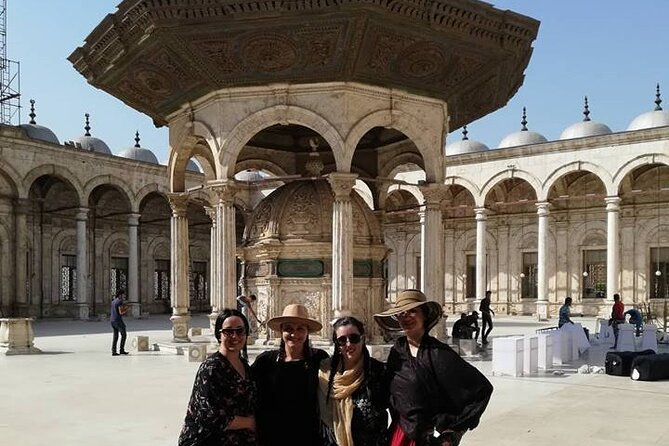
I would choose this experience if you want a private introduction to Islamic Cairo and prefer a guide to explain what you are seeing. It suits first-time visitors who want several major monuments in one organized outing, as well as couples or small groups who value their own vehicle and pickup service.
It is also a good fit for anyone interested in architecture across several periods. You can compare Ayyubid fortification, Mamluk mosque and madrassa design, Ottoman influence, 19th-century royal architecture, and historic domestic interiors in a single day.
The tour may be less suitable if you want a slow, specialist visit to one monument. The half-day schedule covers a lot, but the 30-minute stops leave limited time at the Citadel, Sultan Hassan, Al Rifai, and Gayer-Anderson Museum. Entrance fees also make the advertised price less than the final spend.
The guide’s role is especially important. The experience is strongest when you ask questions and use the private setting to connect the buildings rather than treating them as isolated photo stops. Isaac’s easy communication is another practical advantage when you are arranging the day.
Booking, Cancellation, and Final Verdict
Confirmation is provided at booking, and the tour is usually reserved about five days ahead. Free cancellation is available up to 24 hours before the start time for a full refund. Changes or cancellations made inside that window are not accepted or refunded. The experience also depends on good weather, with a different date or full refund offered if poor weather causes cancellation.
I would book this tour if you want efficient sightseeing with private transport, a guide, and a clear introduction to Cairo’s Islamic monuments. The mix is strong, and the Gayer-Anderson Museum keeps the day from becoming a string of similarly grand mosques.
I would hesitate only if you dislike extra entrance costs or prefer long visits at fewer sites. For everyone else, $39 per person is a reasonable base price for a private six-hour route, as long as you budget for admission fees and lunch before you book.
FAQ
What is included in the tour price?
The price includes an air-conditioned vehicle, private transportation, bottled water, a qualified Egyptologist guide, and hotel pickup and drop-off.
Are entrance fees included?
No. Admission fees for the Citadel, Muhammad Ali Mosque, Sultan Hassan, Al Rifai Mosque, and Gayer-Anderson Museum are not included.
Is lunch included?
No. Lunch is not included in the tour price.
Where does hotel pickup take place?
Pickup is offered from hotels in Cairo or Giza.
What time does the tour start?
The tour starts at 8:00 am.
How long does the experience last?
The tour lasts approximately six hours.
Is this a private tour?
Yes. Only your own group participates in the activity.
Does the tour include a guide?
Yes. A qualified Egyptologist guide is included.
Is bottled water provided?
Yes. Bottled water is included.
Can I cancel for a full refund?
Yes, if you cancel at least 24 hours before the experience start time. Cancellations made less than 24 hours ahead are not refunded, and changes inside that period are not accepted.
More Private Castle Tours in Egypt
- Egyptian Museum, Cairo Citadel and Coptic Cairo Private Tour
★ 5.0 · 5 reviews - Private Tour Giza Pyramids & Egyptian Museum and Citadel & Old Cairo and Bazaar
★ 4.0 · 4 reviews - Egyptian Museum and Citadel Full-Day Private Tour in Cairo
★ 5.0 · 3 reviews - Cairo: Private Tour to Museum, Citadel & Coptic Churches
★ 4.7 · 3 reviews
More Private Castle Tours in Cairo
- 6 Hour Private Tour in Giza Pyramids, Citadel and Coptic Cairo
★ 5.0 · 75 reviews - 2 Day Pyramid, Sakkara, Memphis, Museum, and Citadel Private Tour
★ 5.0 · 42 reviews - Private Tour in Cairo Citadel
★ 5.0 · 28 reviews - Cairo 2-Day Private Tours Pyramids Museum Citadel Khan El Khalili With Lunch
★ 5.0 · 6 reviews
Newly walked in Cairo
- Private Tour Egyptian museum, Hanging Church, Castle of Saladin★ 5.0 · 2 reviews
- Cairo Egyptian museum, Cairo citadel and Alabaster mosque day tour★ 5.0 · 2 reviews
- Explore the History of Egyptian Museum Citadel and Khan Bazaar★ 5.0 · 2 reviews
- Egyptian Museum, Mohamed Ali Mosque and Citadel★ 5.0 · 12 reviews
- Egyptian Museum, Citadel and Old Cairo Tour★ 5.0 · 118 reviews
- Full-Day Private Guided Tour of Egyptian Museum, Pyramids and Cairo Citadel★ 5.0 · 2 reviews
- Cairo Tour to Egyptian Museum Citadel and Khan Khalili Bazaar★ 5.0 · 10 reviews
- Egyptian Museum, Cairo Citadel and Coptic Cairo Private Tour★ 5.0 · 5 reviews
Cairo Citadel & Old Cairo Tours, compared.

Egyptian Museum, Citadel, and Old Cairo Guided Tour
Read our review →
Cairo Citadel, Old Cairo and Khan El Khalili: Private Tour
Read our review →
The Egyptian Museum, the Citadel, Khan Khalil Bazaar & Old Cairo
Read our review →
Salah El Din Citadel and Old Cairo Bazar Guided Tour
Read our review →

Private Day Tour in Egyptian Museum, Citadel and Coptic Cairo
Read our review →
Cairo/Giza: Saladin Citadel, Egyptian Museum, & Bazaar Tour
Read our review →