
Review · VIETNAM
Hue: Hue Walking Tour to Imperial Citadel with Tour Guide
Hue’s Imperial City is much easier to understand when someone explains who lived where, why the gates mattered, and how the royal family worked behind the walls. This tour covers the 13 Nguyen emperors, from grand ceremony halls to the private world of the Forbidden Purple City and the Queen Mother’s residence.
I like the way the tour combines the major sights with smaller details, including the old royal theater, palace gardens, and stories about court life. I also like the personal format: guides such as Austin, Anna, Tâm, and Nhi Tran have been praised for answering questions, taking photos, and adjusting the pace. The main drawback is that the entrance ticket costs extra, and two and a half hours can feel brisk in such a large complex.
Key points to know before you book
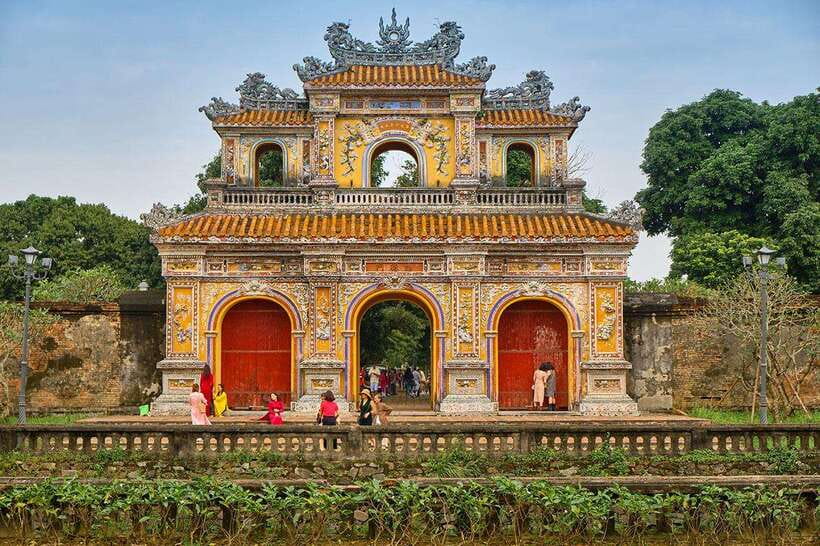
- Royal ceremony comes first: Ngo Mon Gate and Thai Hoa Palace explain how the Nguyen court presented power to the public.
- The guide adds the missing context: You learn about 13 emperors, royal family life, succession, and the harem rather than simply walking past old buildings.
- The route includes more than the headline sights: Duyet Thi Duong Theater, Thieu Phuong Garden, Thai Binh Pavilion, and Kien Trung Palace add variety.
- Private touring is available: A private group lets you ask questions and set a more comfortable walking rhythm.
- The price is low, but the ticket is separate: At $15 per person, the tour is good value if you want interpretation, but budget for admission at the gate.
- Plan for a walking visit: Water is included, yet Hue can be hot, and the citadel grounds are large.
Why a guide helps inside Hue’s Imperial City
Hue’s Imperial City can look like a collection of gates, courtyards, walls, and half-restored halls if you walk through it without context. A guide gives each place a role in the larger story.
You will hear about the Nguyen Dynasty’s 13 kings, the rituals that shaped royal life, and the strict division between public ceremony and private residence. That distinction matters. Thai Hoa Palace was for formal power, while the Forbidden Purple City was reserved for the emperor and royal family.
The stories about the harem are another reason to choose a guide. The buildings alone cannot explain the rules, relationships, and restricted access that shaped life inside the court. Ask questions as you go. The private format is especially useful here because you can stop when a subject catches your interest instead of following a fixed audio track.
The guide also helps with orientation. You meet at Cuu Than Cong in Cua Ngan, near the Nine Holy Cannons, and the guide assists with buying your entrance ticket before the walk begins. Hotel pickup and drop-off can be selected as an option, with the driver collecting you at the hotel reception lobby.
More Fortress and Citadel Tours in the world:
- Carcassonne: Castle and Ramparts Entry Ticket
★ 4.6 · 2,884 reviews - Salzburg: Hohensalzburg Fortress Admission Ticket
★ 4.6 · 2,236 reviews - Salzburg: Best of Mozart Fortress Concert and Dinner
★ 4.5 · 1,424 reviews
Ngo Mon Gate and the Flag Tower set the scene
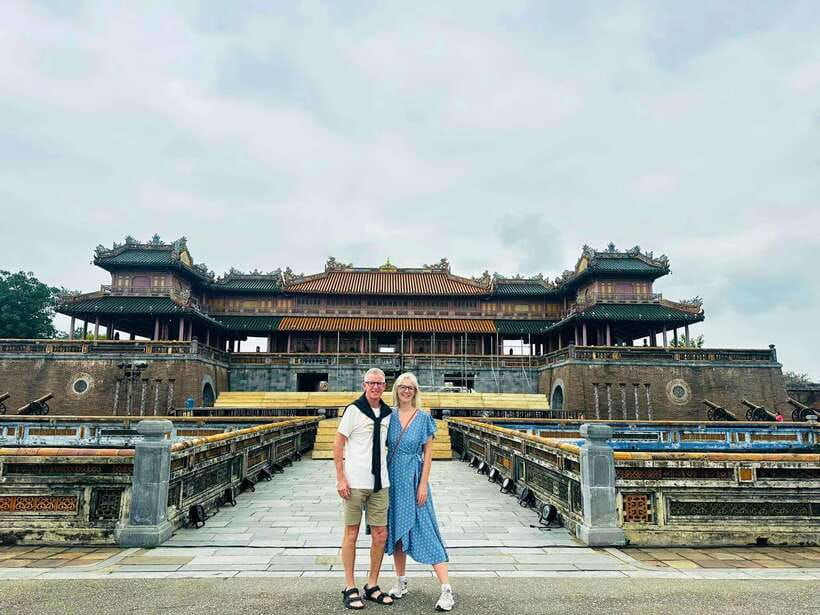
The tour begins with two powerful symbols of the old capital: the Flag Tower and Ngo Mon Gate.
The Flag Tower, or Ky Dai Hue, rises from the Nam Chanh fortress area. It was used to fly the royal flag, making it a useful first stop for understanding how the citadel announced authority. Your guide uses the short visit to explain the defensive and ceremonial character of the outer complex.
At Ngo Mon Gate, you see one of Hue’s most recognizable structures. Emperor Minh Mang ordered it built in 1833, and it served as the principal entrance to the Royal Palace. It was also used as a ceremonial platform during major Nguyen Dynasty events.
You get about 10 minutes at each of these early stops, enough for photographs and an introduction. Do not expect a long architectural lecture here. The value comes from the sequence: first the flag that represented the court, then the gate through which formal royal business was controlled.
Thai Hoa Palace explains royal power

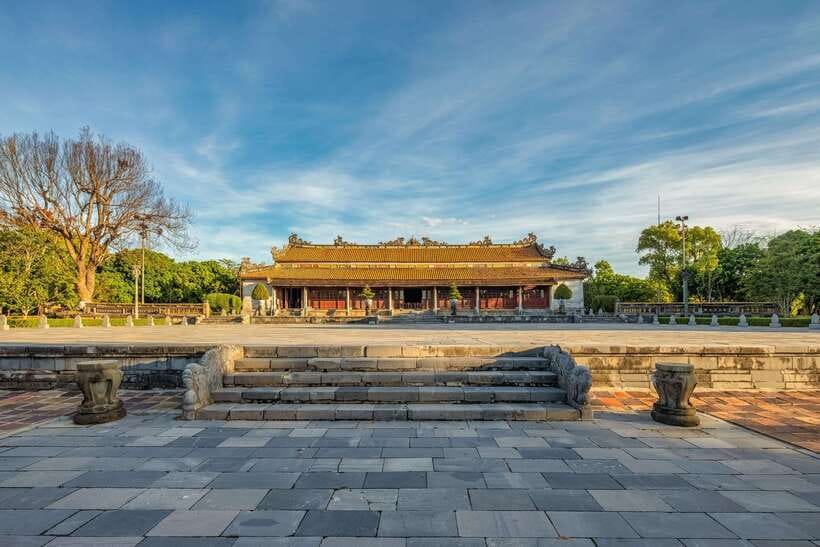
Thai Hoa Palace is one of the most important stops because it was the coronation site of the 13 Nguyen kings. The building represents the public face of the dynasty, where ceremony, rank, and imperial authority were carefully displayed.
The stop lasts about 15 minutes. That is enough time to hear how the palace functioned and to look at its position within the citadel. Your guide can connect the building to the larger political story, helping you understand why a coronation hall mattered in a court built around ritual.
The tour then continues through the historic citadel area. This is a good point to ask about the difference between the Imperial City, the Forbidden Purple City, and the wider fortified complex. The names can blur together, especially on a short visit, but they refer to different layers of the royal center.
The royal theater offers a change of pace
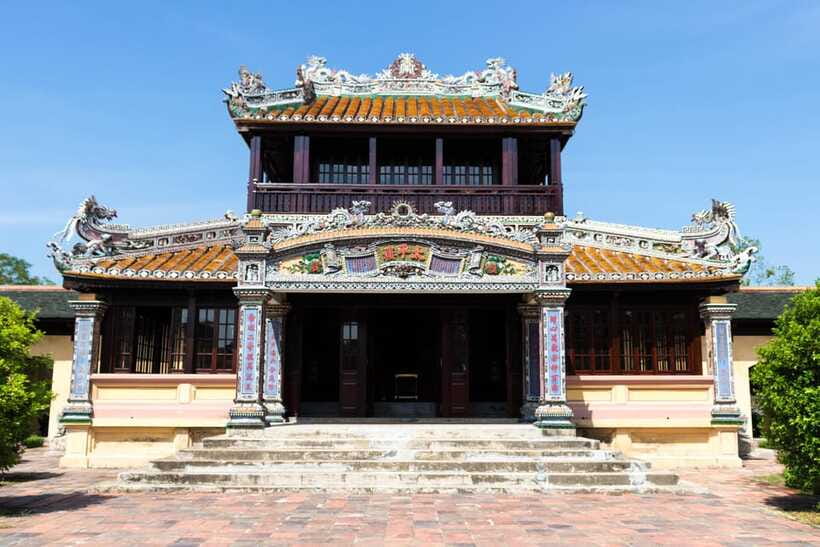
Duyet Thi Duong Royal Theater gives the walking tour a welcome change from gates and palace halls. It was one of four theaters built during the Nguyen Dynasty and is the oldest preserved theater from that period.
You spend about 15 minutes here, with time for sightseeing and photographs. The theater helps you picture court life beyond official ceremonies. Music, performance, and formal entertainment were part of palace culture, and this stop shows that the Nguyen court was not only about administration and military display.
If you enjoy architecture, this is a useful place to look closely at the building’s layout and decorative details. If you prefer political history, ask your guide how performances fit into royal life. The guide’s role is important because a theater can otherwise seem like a brief photo stop.
More Castle Walking Tours in the world:
- Edinburgh Castle: Guided Walking Tour with Entry Ticket
★ 4.7 · 11,699 reviews - Prague: 3-Hour Walking Tour of Old Town & Prague Castle
★ 4.7 · 5,696 reviews - Edinburgh Castle: Guided Walking Tour with Entry Ticket
★ 5.0 · 5,540 reviews - Edinburgh Castle Guided Walking Tour in English
★ 5.0 · 5,214 reviews
Gardens and pavilions reveal quieter palace life
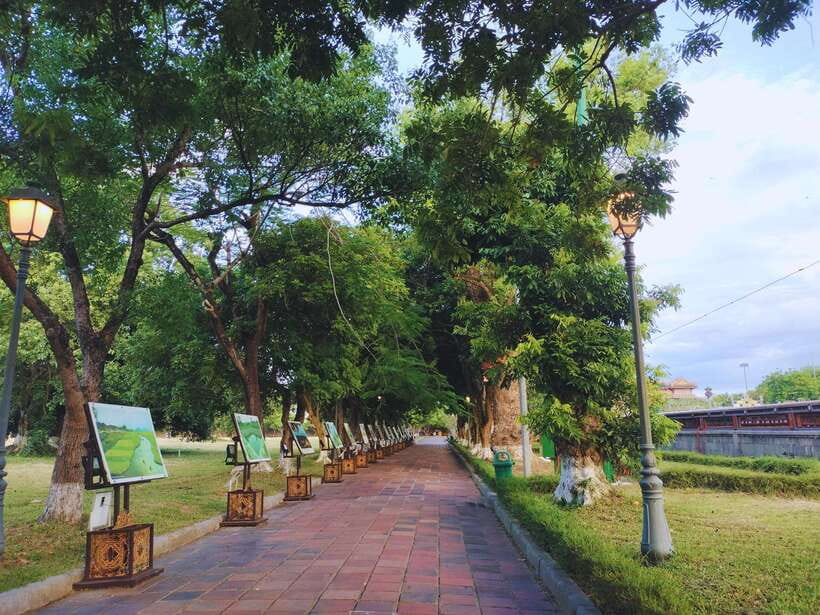
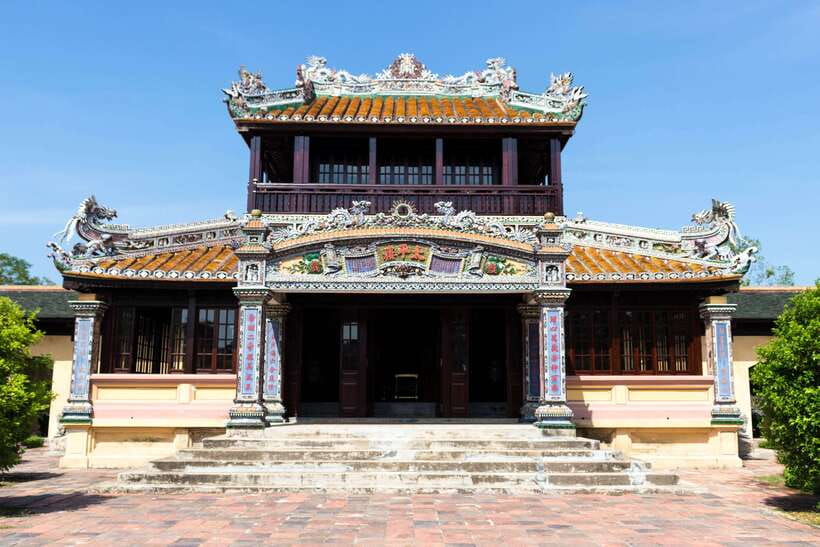
The route moves into less imposing spaces at Thieu Phuong Garden and Thai Binh Pavilion. These stops offer a break from the large ceremonial buildings and show how the court used gardens and pavilions for quieter moments.
Thieu Phuong Garden receives about 10 minutes. The visit is brief, but it adds balance to the tour. Imperial cities were not made only for processions. Gardens created controlled spaces for rest and private court life.
Thai Binh Pavilion receives another 10-minute visit and photo stop. This is a good chance to slow down, listen, and ask your guide about how royal family members used the inner grounds. The pace may feel quick if you want extended photography, so tell the guide if you need a little extra time.
Kien Trung Palace shows Hue’s changing taste
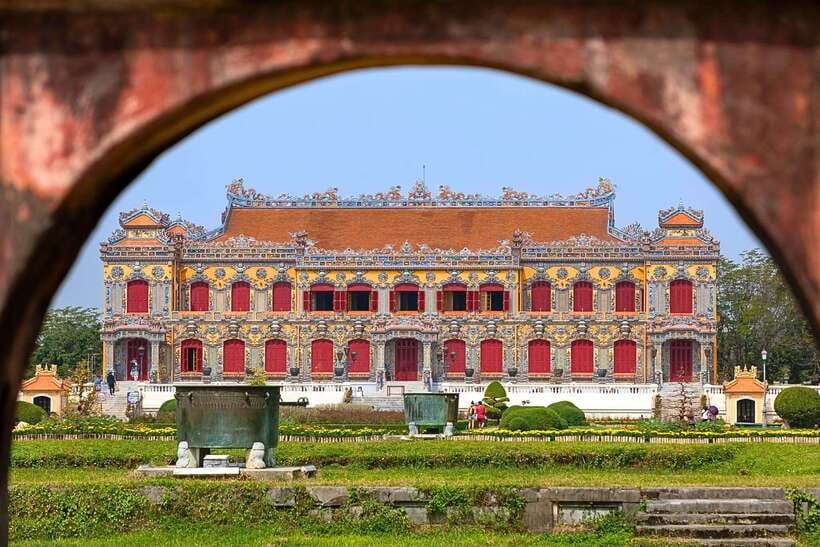
Kien Trung Palace is one of the more unusual buildings on the route. Emperor Khai Dinh built it in 1923, using a European design influenced by Italian Renaissance and French classicism rather than the more familiar traditional Vietnamese style.
You get around 15 minutes here. The contrast is the point. After seeing structures shaped by older Vietnamese court traditions, you encounter a palace that reflects the late Nguyen period and its contact with Europe.
This stop also helps explain that the dynasty was not frozen in one architectural style. The royal compound changed over time, and Kien Trung Palace shows how different influences entered court design. Ask about Emperor Khai Dinh and the reason this building looks so different from the surrounding halls.
Dien Tho Palace and the private court
Dien Tho Palace was the residence of the Queen Mother. Its scale, carved details, and elegant main hall make it one of the most important residential stops on the walk.
The visit lasts about 10 minutes and includes walking through the grounds. The palace helps you shift attention from the emperor to the women of the royal household. That is where the discussion of family life and the harem becomes more meaningful.
The term harem can sound sensational, but inside Hue’s court it points to a highly ordered household with rank, rules, and restricted movement. Your guide can explain the people connected to the palace and how the Queen Mother’s position differed from that of the emperor and other members of the court.
Dien Tho Palace appears in the program description more than once, but on the route it functions as one residential highlight. The short stop is best treated as an introduction rather than a full study of the palace.
The Nine Dynastic Urns honor the emperors
The Nine Dynastic Urns, or Cuu Dinh, were commissioned by Emperor Minh Mang in 1835 and placed in front of The Mieu. Each urn is part of a larger royal statement about the dynasty and its place in the Vietnamese realm.
You spend about 10 minutes here, usually with a photo stop and explanation. The urns are not simply decorative objects. Their placement beside the ancestral temple links the ruling family to worship, succession, and the memory of past emperors.
The route also includes Hien Lam Pavilion, another 10-minute stop with a short walk and guided explanation. Together, the urns, The Mieu area, and Hien Lam Pavilion form an important ceremonial group. The Mieu is dedicated to worshipping 10 Nguyen kings, so this section gives you a clearer sense of how the dynasty honored its own line.
The itinerary names The Mieu as a major point of interest, even though the timed route gives the Nine Dynastic Urns and Hien Lam Pavilion separate stops. Your guide can connect these sites so they do not feel like unrelated monuments.
The Forbidden Purple City and the lost inner court

The Forbidden Purple City was reserved for the emperor and royal family. Officials and civilians could not enter unless their duties required it. This restriction made the area the most private layer of the imperial compound.
For you, the main value of this section is understanding the boundary between public and private life. Ngo Mon Gate and Thai Hoa Palace represent official power. The Forbidden Purple City represents the household behind that public image.
Much of Hue’s palace complex has suffered damage and requires restoration, so you may find open spaces and reconstructed buildings rather than a fully intact royal residence. That can be disappointing if you expect a complete palace city. At the same time, the gaps make the guide’s explanations more useful. You need help imagining how the residences, courtyards, and service areas once worked together.
The tour’s focus on royal family life, the harem, and restricted access gives this part more substance than a simple walk through ruins.
How the $15 price works in practice
At $15 per person, this is a modestly priced guided walk for a major historical site. The fee includes an English-speaking guide, bottled water, and local insurance. The entrance ticket is not included, so account for that extra cost before you arrive.
The value depends on what you want. If you only need directions and photographs, you can visit the citadel independently. If you want to understand the 13 kings, the court system, the palace divisions, and the purpose of each building, the guide adds real value.
A private group is available, and that option has practical benefits. You can ask more questions, keep a slower pace, and spend longer at places that interest you. Austin is described as especially attentive and good at answering questions. Tâm was praised for her command of the dynasty and for making the visit more useful than an audio tour. Nhi Tran was noted for covering the essentials in two and a half hours and taking successful photographs.
The experience has a perfect 5 rating from 10 supplied bookings, with repeated praise for clear English, humor, patience, personal attention, and strong knowledge of Hue’s emperors and royal family. Those details suggest that the human guide is the main reason to book, not simply the route itself.
Timing, meeting point, and walking comfort
You can choose a morning or afternoon departure. The guided visit lasts about 2 to 2.5 hours, with the listed duration set at 150 minutes. This is long enough to see the main points but short enough to fit around other Hue plans.
Meet the guide at Cuu Than Cong in Cua Ngan, near the Nine Holy Cannons. The guide is supposed to hold a welcome sign with your name. The information also spells the meeting point as Cuu Vi Than Cong in one place, so confirm the exact wording and location after booking.
Hotel pickup and drop-off are optional. If selected, the driver collects you at the hotel reception lobby. If you meet at the citadel, allow time to find the correct cannon area and do not rely on arriving at the last minute.
Wear comfortable shoes and bring sun protection. Bottled water is supplied, but the grounds are large and the walk includes several outdoor sections. Morning may suit you if you want cooler conditions. The afternoon slot can work well if your schedule begins later, but Hue’s heat can make a long walk tiring.
Who will get the most from this tour
I would choose this tour if you are visiting Hue for the first time and want the citadel to make sense. It is also a strong choice for couples or small groups who like asking questions instead of listening to a standard recording.
The route suits people interested in:
- Nguyen Dynasty emperors and succession
- Palace architecture and restoration
- Royal family life and the harem
- Ceremonial spaces and ancestor worship
- A private or small-group walking pace
- English-language explanations
It may not suit you if you want a slow photographic study of every courtyard. The schedule gives most stops 10 to 15 minutes, so the guide must keep moving. It is also not the best fit if you want transportation around the entire complex rather than a walking visit.
Should you book the Hue Imperial City walking tour?
Book it if you want the major citadel sights explained by a real person, especially if you are curious about the difference between public ceremony, royal residence, and the Forbidden Purple City. The low price, included water, optional private group, and guide assistance with the ticket make it a practical choice.
Before booking, remember two things: the entrance fee is extra, and the 150-minute route is fairly full. If you accept that pace, this tour gives you a clear introduction to Hue’s emperors, palaces, theaters, gardens, temples, and court life. I would choose a private option if your budget allows and confirm the meeting point in advance.
FAQ
How long does the Hue Imperial City walking tour last?
The tour lasts 150 minutes, with guided visits generally taking about 2 to 2.5 hours.
Is the tour offered in the morning and afternoon?
Yes. You can choose a morning or afternoon time slot, subject to availability.
What language does the guide speak?
The tour includes an English-speaking live guide.
Is the entrance ticket included in the $15 price?
No. The entrance ticket is not included. The guide assists with purchasing it before the tour begins.
Where does the tour meet?
The guide meets you at Cuu Than Cong in Cua Ngan, near the Nine Holy Cannons. The guide holds a welcome sign with your name. The supplied information also uses the name Cuu Vi Than Cong, so confirm the exact meeting point after booking.
Is hotel pickup available?
Yes. Pickup and drop-off are optional, with the driver meeting you at the hotel reception lobby.
Is bottled water included?
Yes. Bottled water is included with the English-speaking guide and local insurance.
Can I book a private group?
Yes. A private group option is available.
Can I cancel the tour for a full refund?
Yes. You can cancel up to 24 hours in advance for a full refund.
Newly walked in the world
- Private Tour Egyptian museum, Hanging Church, Castle of Saladin★ 5.0 · 2 reviews
- Cairo Egyptian museum, Cairo citadel and Alabaster mosque day tour★ 5.0 · 2 reviews
- Explore the History of Egyptian Museum Citadel and Khan Bazaar★ 5.0 · 2 reviews
- Egyptian Museum, Mohamed Ali Mosque and Citadel★ 5.0 · 12 reviews
- Egyptian Museum, Citadel and Old Cairo Tour★ 5.0 · 118 reviews
- Full-Day Private Guided Tour of Egyptian Museum, Pyramids and Cairo Citadel★ 5.0 · 2 reviews
- Cairo Tour to Egyptian Museum Citadel and Khan Khalili Bazaar★ 5.0 · 10 reviews
- Egyptian Museum, Cairo Citadel and Coptic Cairo Private Tour★ 5.0 · 5 reviews
Fortress & Citadel Tours, compared.



From Cairo Alexandria Catacombs, Citadel Day Trip with Lunch
Read our review →
Charleston historical walking tour with a Professor of History at The Citadel
Read our review →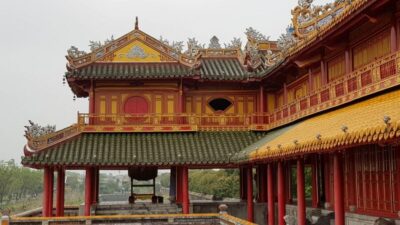
Hue Customizable Tour with Imperial Citadel & Forbidden City
Read our review →
Desert Safari: Luxury Fortress Dinner, Camel Ride & Dune Bashing
Read our review →
Egyptian Museum, Citadel, and Old Cairo Guided Tour
Read our review →Browse the lists this tour appears in