
Review · GUIDED
Oxford Castle and Prison: Guided Tour
Oxford Castle and Prison packs a surprising amount into one hour. You climb a Saxon tower, walk through a 900-year-old crypt, see prison cells used until 1996, and hear stories that link the site to Empress Matilda, King Arthur legends, Oxford’s early education, and modern criminal cases. The 360-degree view from St. George’s Tower is a fine reward for the stairs.
I like the way the tour joins grand medieval events to ordinary prison life. I also like the balance between a lively guide-led visit and time to explore alone afterward, including the interactive displays, staged cells, mugshots, and prisoner photo activities. The main drawback is physical: narrow stairs and uneven access make this a poor choice if you have limited mobility.
Key points to know before you go
- A 50-minute guided tour covers the main historic rooms, followed by self-guided time in the exhibition and prison areas.
- St. George’s Tower gives you wide views across Oxford, but children under five cannot climb it for safety reasons.
- The crypt is the only surviving part of St. George’s Chapel, and its underground setting gives the visit much of its atmosphere.
- The prison remained in use until 1996, making the site feel much more recent than a typical medieval castle.
- Costumed English-speaking guides shape the experience, with guides such as Rory, Anne, Yiyang, Melissa, Ciaran, and Emily praised for clear storytelling and humor.
- The $28 price is fair if you value a guided explanation, but less appealing if you only want to wander through old buildings at your own pace.
Oxford Castle is more than a ruined medieval fortress

Oxford Castle and Prison is easy to underestimate. From outside, you might expect a few broken walls and a tower. Inside, the site unfolds across nearly 1,000 years, shifting from Norman stronghold to religious center, royal residence, county jail, and modern heritage attraction.
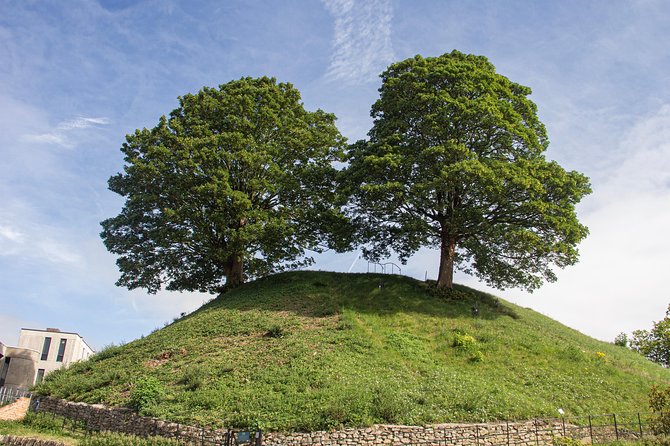
The castle was built in 1071, soon after the Norman conquest. Its most visible medieval feature today is the large Motte-and-Bailey mound, an earthwork defensive structure that once supported a timber castle. You can climb the mound as part of the visit and see the castle remains from a higher angle.
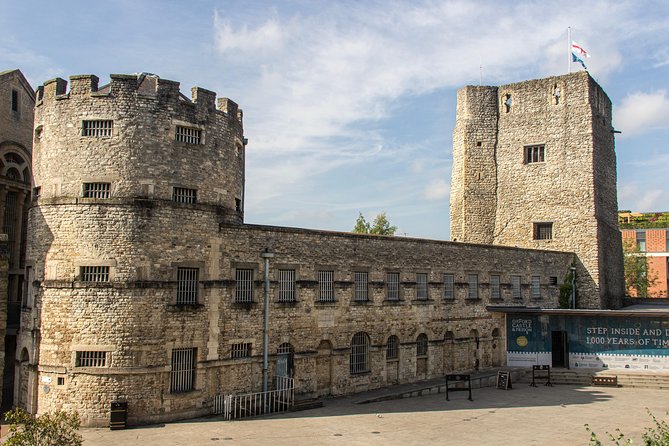
The site’s story is not limited to kings and battles. It also connects with the beginnings of education in Oxford, legends associated with King Arthur, and the escape of Empress Matilda. Later, the castle became a place of punishment and confinement, with its prison operating until 1996.
That last date changes how you read the site. This is not only a medieval relic. Some of the cells and prison spaces belong to the modern era, and the exhibition helps you trace the institution’s final years.
More Guided Castle Tours in the UK
- Edinburgh Castle: Guided Walking Tour with Entry Ticket
★ 4.7 · 11,699 reviews - Edinburgh Castle: Guided Walking Tour with Entry Ticket
★ 5.0 · 5,540 reviews - Stonehenge, Windsor Castle and Bath Full Day Guided Tour
★ 4.5 · 5,346 reviews
The tour begins with a guide who brings the rooms to life
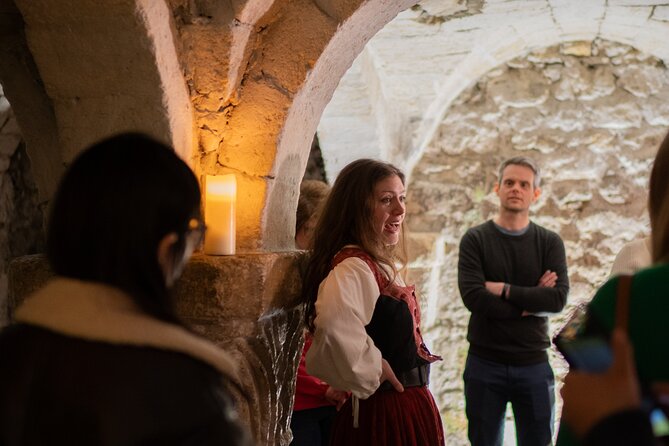
The guided portion lasts about 50 minutes, though you should allow extra time afterward for the exhibition and prison displays. An English-speaking costumed guide leads the group from one part of the site to the next, adding context that would be easy to miss if you walked through alone.
The strongest part of this format is the storytelling. Guides including Rory, Anne, Yiyang, Tea, Emily, Melissa, Ciaran, Rob, and James have been singled out for clear explanations, energy, humor, and strong command of the subject. The quality of the visit depends partly on your guide’s style, but the repeated praise for the staff suggests that storytelling is central to the experience rather than an afterthought.
I like the use of costumes here because it helps separate the tour from a plain museum talk. The guides also adapt to the group. Children can follow the more dramatic stories, while adults get the political and legal background. One family found that a guide included children aged three to eleven without speaking down to them. Another parent said a seven-year-old enjoyed the mix of photographs, history, and free exploration.
The tone can include grim material. The prison displays cover crime, punishment, and harsh conditions, so this is not a polished royal palace tour. If you prefer history without stories of violence or imprisonment, some sections may feel heavy.
St. George’s Tower rewards the climb

St. George’s Tower is one of the oldest buildings in Oxford, and climbing it is the physical high point of the tour. The stairs are part of the experience, not simply a route to a viewpoint. As you rise through the old structure, the scale of the castle and the city begins to make more sense.
At the top, you get a 360-degree view across Oxford. This is the clearest way to understand how the castle sits within the city rather than treating it as an isolated monument. The views have been a favorite part of the visit for many people, and they give you a useful visual pause before the tour heads underground.
The tower has an important restriction. Children under five are not permitted to climb it because of health and safety rules. If you cannot manage the stairs, you can wait at the bottom with a guardian and watch a Story of Oxford Castle video. You may rejoin the group when it returns from the tower, then continue with the rest of the tour.
Weather can also affect this part of the visit. Poor conditions may prevent access to the mound, as happened to one January visitor. You can still see the mound and continue with the indoor sections, but the outdoor climbs are less reliable than the main tour route.
The 900-year-old crypt gives the visit its mood
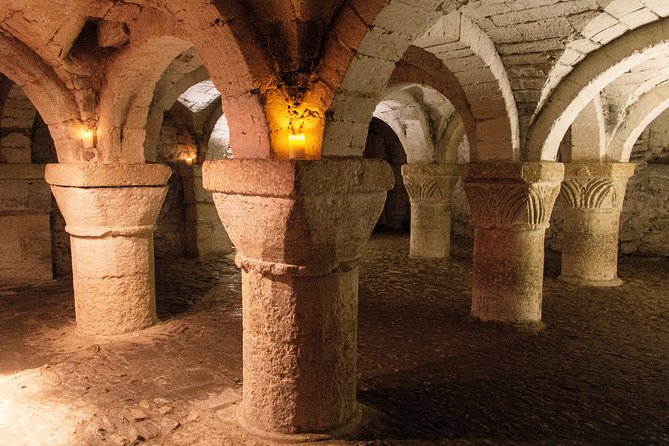
After the tower, the tour descends into the crypt, the only surviving remains of St. George’s Chapel. It is about 900 years old, and the underground setting feels very different from the open city views above.
This is where the site’s religious past becomes tangible. The crypt is not simply another old room with a label on the wall. Its low, enclosed character helps you picture the castle as a working religious and defensive center, rather than just a collection of surviving masonry.
The crypt also breaks up the pace of the tour. You move from a high viewpoint into a confined underground space, then on to the prison. That contrast is one reason the visit feels varied despite lasting only an hour.
Access is a serious point here. The tour is not recommended for people with mobility impairments, and the combination of stairs, narrow passages, the tower, the mound, and underground areas may be difficult. Check the local access information before booking if you have any concern about walking or stairs.
Same walls, a different way in:
- Stonehenge, Windsor Castle, and Bath from London
★ 4.5 · 18,662 reviews - Edinburgh: Edinburgh Castle Guided History Tour with Tickets
★ 4.8 · 9,933 reviews - Stonehenge, Windsor Castle and Bath with Pub Lunch in Lacock
★ 4.5 · 7,402 reviews - Windsor Castle Admission Ticket
★ 4.7 · 7,032 reviews
The mound and Well Chamber reveal the castle’s military past

The 11th-century Motte-and-Bailey castle mound is one of the site’s most important surviving features. An earth mound can look less impressive than a stone keep, but it tells you how quickly Norman power was established after 1066. The mound was part of a defensive castle built in 1071, when earth and timber could create a strong position with speed.
The climb gives you another perspective on the site and the city. It is not the same kind of view as the tower. The tower offers a broad panorama, while the mound helps you understand the castle’s own structure and defensive purpose.
You also visit the vaulted Well Chamber. Its function gives the castle story a practical edge. A fortified site needed a dependable water supply, especially during conflict, and the chamber shows the infrastructure behind medieval power.
The outdoor sections are weather-sensitive. Bring sensible footwear and expect conditions to affect what can be reached. If the mound is closed, you still have the tower, crypt, prison, and exhibition, but the experience loses one of its key medieval elements.
Debtors’ Tower and Prison D-Wing show the less romantic side

The 18th-century Debtors’ Tower and Victorian Prison D-Wing shift the focus from defense and religion to law, poverty, and punishment. These are the sections that give Oxford Castle and Prison its modern emotional weight.
The Debtors’ Tower reflects a period when unpaid debts could lead to confinement. That history matters because it shows how prison was not reserved only for violent criminals. Losing money could also mean losing your freedom, depending on the law and your circumstances.
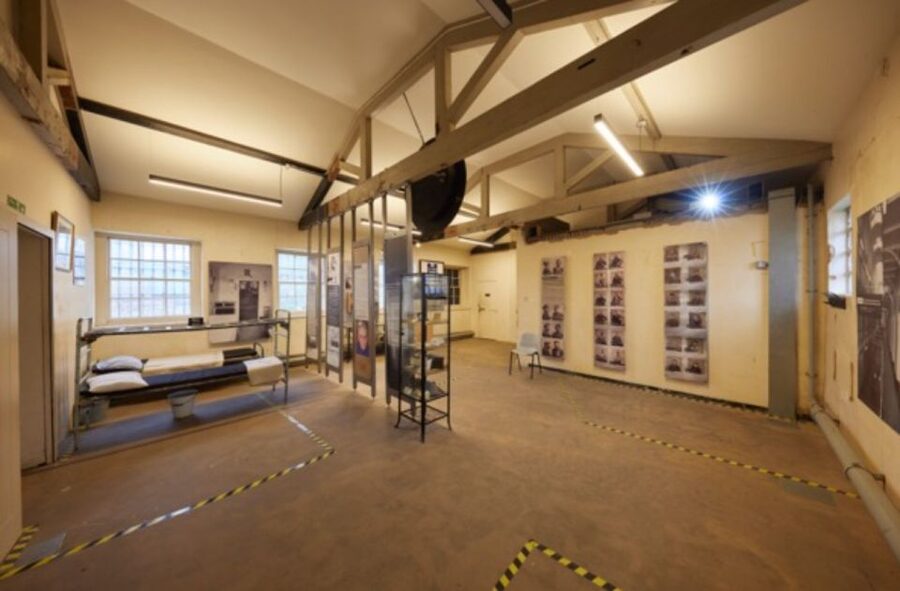
Prison D-Wing brings you closer to the daily reality of incarceration. The austere cells are arranged to suggest how the prison operated, and some spaces are set up to represent historical conditions. You can also see mugshots and interactive displays, with some opportunities to have your picture taken in the style of a prisoner.
This part works best when you take your time. The guided section gives you the main explanation, but the later self-guided visit lets you stop at the displays that interest you. I would not rush away after the guide finishes. The prison rooms reward a slower look, especially if you want to read captions or examine the staged cells.
The fact that the prison closed only in 1996 makes these rooms unusually accessible in historical terms. You are not looking at a place that disappeared centuries ago. The site’s final prison era is within living memory, and that can make the conditions feel more immediate.
The exhibition wing adds time after the formal tour
Once the guided portion ends, you can explore the exhibition wing and prison areas at your own pace. This is a useful feature for different kinds of visitors. If you want the guide’s full story, stay with the group. If a certain display catches your attention, you can return to it later rather than trying to absorb everything while the group moves on.
The exhibition covers the site’s modern history and its inmates. Interactive displays, historical photographs, mugshots, and recreated cells make the information easier to grasp than a row of text panels alone.
Families benefit from this freedom. Younger children can focus on the visual displays, dressing-up or prisoner-photo activities, while adults spend more time on the background. The layout also suits visitors who prefer reading quietly after a live tour.
One useful detail is that the guide-led portion does not mark the end of your visit. You have extra time to take photographs, revisit a room, and look more closely at the prison wing. That makes the one-hour advertised duration feel more generous, provided you use the self-guided time rather than leaving immediately.
Is $28 good value for an hour?
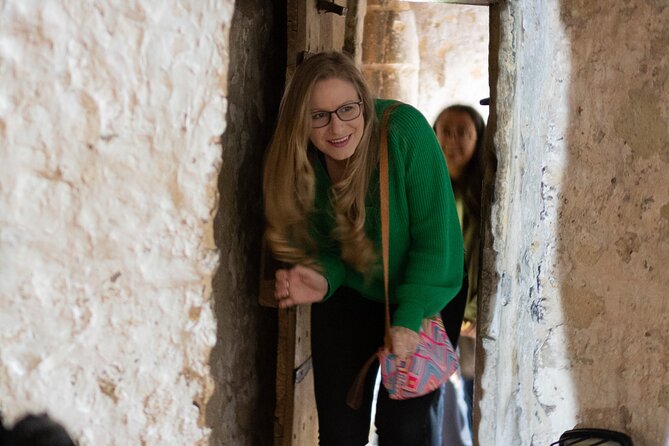
At $28 per person, this is not the cheapest way to spend an hour in Oxford. The value depends on what you want from the site.
If you only want a quick look at the exterior or a medieval photo stop, the price may feel high. The attraction earns its fee through the guide, tower access, crypt, mound, prison spaces, and follow-on exhibition. You are paying for a structured explanation as well as entry.
The guided element matters here. Without a guide, the castle’s separate buildings and time periods could feel disconnected. The guide links the Norman castle, St. George’s Chapel, royal stories, the county jail, and recent prison history into one route.
I consider the price reasonable for visitors who want context and enjoy live storytelling. It is also a good choice for families because the guide can keep younger visitors engaged, while the displays give adults more to study. If you are already taking several paid attractions in Oxford, compare your priorities. This visit offers a concentrated hour rather than a full-day museum experience.
The booking terms also give you some flexibility. You can cancel up to 24 hours before the activity for a full refund, and you can reserve now and pay later. Starting times vary, so check availability for your date.
Who should book Oxford Castle and Prison?
I would choose this tour if you want a break from Oxford’s university colleges and grand academic buildings. The castle presents a grittier side of the city, with law, poverty, crime, punishment, and ordinary confinement alongside medieval power.
It suits:
- Families with school-age children who like stories, costumes, photographs, and interactive displays
- First-time Oxford visitors who want a compact introduction to the city’s older past
- History fans interested in the link between medieval buildings and a prison used until 1996
- Visitors who prefer a guide to explain complicated events and connect separate rooms
- Anyone who wants a city viewpoint but does not mind climbing stairs
I would think twice if you have limited mobility or dislike enclosed spaces. The tower and mound require climbing, and the crypt, prison areas, and old passageways may be uncomfortable. You can wait below during the tower section, but the whole tour is not designed around step-free access.
Practical details for a smoother visit
Oxford Castle and Prison is the meeting point, so you do not need to arrange transport to a separate starting location. Some visitors have found the site easy to find, with nearby parking, though parking details are not part of the activity itself.
Arrive ready for a guided start rather than assuming you can walk straight into the castle areas. The tour is conducted in English, and translation support may be available through the venue, but you should ask at the desk rather than rely on it.
Wear shoes suitable for stairs and uneven historic surfaces. Allow more than the stated one hour if you want to read the exhibition, revisit the prison, and take photographs. The formal tour is about 50 minutes, followed by time to explore independently.
The best guide experience comes from staying engaged. Ask questions when invited, listen for the links between the medieval and modern sections, and save enough time afterward for the exhibition. The guides are often funny and energetic, but the subject matter also deserves attention because the prison story can be stark.
Should you book it?
Book Oxford Castle and Prison if you want a lively, compact history experience with real variety. The tower, crypt, mound, Well Chamber, Debtors’ Tower, and Prison D-Wing each show a different chapter, and the guide makes those changes easier to follow.
The strongest reasons to go are the city views, the atmospheric crypt, and the unusual fact that the prison remained open until 1996. The main reason to skip it is accessibility, not lack of content. At $28, I think it offers solid value for families, first-time visitors, and anyone who wants Oxford’s less polished and more revealing side.
FAQ
How long does the Oxford Castle and Prison tour last?
The guided tour lasts approximately 50 minutes. Afterward, you can explore the exhibition and prison areas at your own leisure.
What language is the tour conducted in?
The live tour guide speaks English.
What does the admission include?
Admission includes access to Oxford Castle, the prison, and the mound, along with the guided tour.
Can children under five climb St. George’s Tower?
No. Children under five are not permitted to access St. George’s Tower because of health and safety regulations.
What happens if I cannot climb the tower?
You may wait at the bottom with a guardian and watch the Story of Oxford Castle video. You can rejoin the group when it returns from the tower and continue with the tour.
Is the tour suitable for people with limited mobility?
The tour is not recommended for people with mobility impairments. Check the local partner’s access information before booking.
Can I explore the prison after the guided tour?
Yes. After the guided portion, you can explore the exhibition and prison areas independently and revisit parts of the site.
Can I cancel the booking for a refund?
You can cancel up to 24 hours in advance for a full refund.
Can I reserve the tour without paying immediately?
Yes. The reserve-now, pay-later option lets you hold a place without paying at the time of booking.
Newly walked in the UK
- Private Tour to Stonehenge and Windsor Castle★ 5.0 · 11 reviews
- Private Tour to Canterbury, Leeds Castle and The White Cliffs of Dover★ 5.0 · 42 reviews
- Canterbury Cathedral, Leeds Castle and Dover Castle Private Tour★ 4.5 · 10 reviews
- Leeds Castle Canterbury and Dover Private Tour from London★ 5.0 · 68 reviews
- Highlands Cows Glencoe and Castles Private Tour from Edinburgh★ 5.0 · 32 reviews
- Private Tour of Highlands, Lochs & Castles from Edinburgh★ 5.0 · 26 reviews
- Stirling Castle and Loch Lomond Full-Day Private Tour in a Premium Minivan★ 5.0 · 36 reviews
- Wallace monument, Stirling Castle, Linlithgow Palace Private Tour★ 5.0 · 46 reviews
Guided Castle Tours, compared.

Edinburgh Castle: Guided Walking Tour with Entry Ticket
Read our review →
Cathedral, Giralda & Alcazar Entry With Guided Tour
Read our review →Edinburgh Castle: Guided Walking Tour with Entry Ticket
Read our review →
Stonehenge, Windsor Castle and Bath Full Day Guided Tour
Read our review →
Alcázar of Seville Skip-the-Line Tickets and Guided Tour
Read our review →
Dublin Book of Kells, Castle and Molly Malone Statue Guided Tour
Read our review →

Quebec City: Guided Tour of Fairmont Le Château Frontenac
Read our review →Browse the lists this tour appears in