
Review · GUIDED
Oxford Castle and Prison Guided Tour
Oxford Castle is less a grand royal palace than a compact, layered history lesson. In one hour, you climb St. George’s Tower, descend into a 900-year-old crypt, and walk through prison spaces that show how sharply Oxford’s past changed over the centuries.
I like the mix of views and underground atmosphere, especially the crypt beneath the remains of St. George’s Chapel. I also like the costumed guides, with guides such as Joe, Natalia, Freya, Emily, and Anne praised for lively storytelling. The main drawback is the brisk pace. If you want time to read every display, the guided hour can feel short.
Key points at a glance
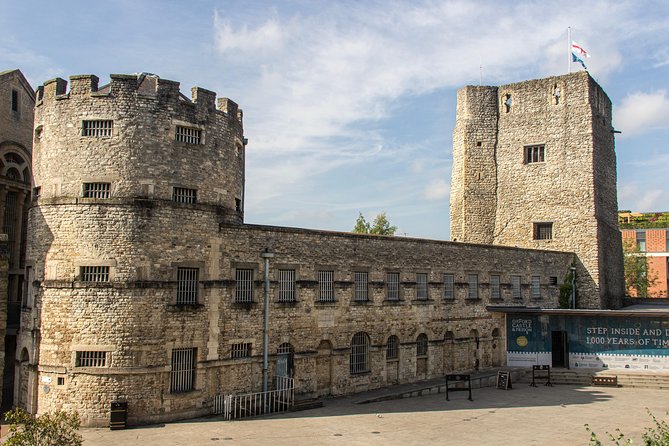
- A 30-foot tower climb: St. George’s Tower gives you wide views toward Oxford’s famous dreaming spires.
- A rare underground survivor: The 900-year-old crypt is the only remaining part of St. George’s Chapel.
- A castle with a prison afterlife: You see the 11th-century mound, Debtors’ Tower, and the prison’s D-Wing.
- Character-led storytelling: Your guide appears in costume and tells the story from the point of view of a historical character.
- Flexible tour times: Departures run every 20 minutes from 10am through 4:20pm, subject to change.
- Extra time after the tour: Once the guided visit ends, you can explore the prison and wider site at your own pace.
Oxford Castle is a small site with a very long story

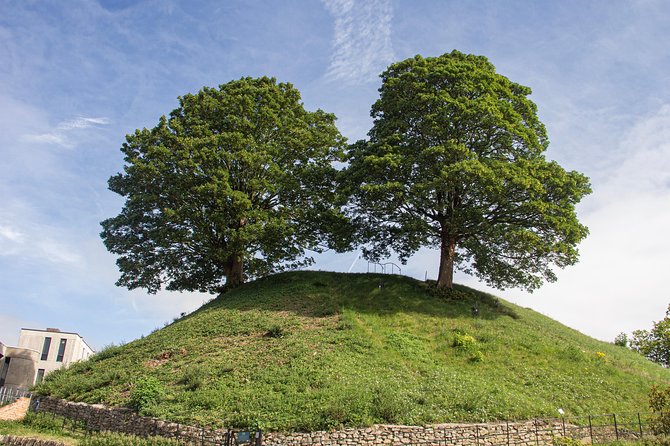
You begin at Oxford Castle Quarter, at 45 Oxford Castle. The castle’s story reaches back to the Norman conquest, when William the Conqueror won the Battle of Hastings in 1066 and the Normans chose Oxford as a useful place for a motte-and-bailey castle.
The mound is the first clue that this is not a single-period monument. A motte-and-bailey castle used an earth mound, or motte, with defensive buildings and an enclosed area below. At Oxford Castle, that mound remains part of the visit, giving you a clear sense of how the site began before later towers, chapel buildings, and prison structures changed its purpose.
The attraction is now presented as Oxford Castle and Prison, not simply as a medieval castle. That matters when you decide what to expect. You will not spend an hour walking through a vast palace with grand halls and royal furnishings. Instead, you move through a tight urban site where medieval remains, prison architecture, displays, and later alterations occupy the same ground.
That compact scale is useful. You can see several chapters of Oxford’s past without spending half a day on the visit. It also means the experience feels more like a guided historical walk through connected spaces than a traditional castle tour.
More Guided Castle Tours in the UK
- Edinburgh Castle: Guided Walking Tour with Entry Ticket
★ 4.7 · 11,699 reviews - Edinburgh Castle: Guided Walking Tour with Entry Ticket
★ 5.0 · 5,540 reviews - Stonehenge, Windsor Castle and Bath Full Day Guided Tour
★ 4.5 · 5,346 reviews
The costumed guide sets the tone
Admission to the castle is by guided tour, so your guide is central to the experience. The character-led format gives the hour more energy than a standard audio guide or a row of information panels. Your guide tells stories as someone connected to the period, then leads you from the tower to the crypt and prison spaces.
The quality of the hour depends partly on the person leading it. Guides named Joe, Emily, Natalia, Anne, and Freya have all been singled out for being funny, clear, enthusiastic, or good at making the stories easy to follow. Joe, in particular, was praised for mixing information with a sense of fun, while Natalia was noted for her tales about the castle and prison.
You should still keep your expectations sensible. A character guide makes history more approachable, but the tour remains fairly short. One guide may give you a lively, story-filled hour, while another part of the attraction may feel more ordinary if you prefer detailed architectural interpretation.
For families, the format should work well because the guide provides a human focus. Adults who want a scholarly treatment of every phase of the building may find the presentation lighter than they would like. I see that as a choice of style, not a flaw, but it is worth knowing before you book.
St. George’s Tower rewards the climb

The first major physical challenge is St. George’s Tower. You climb about 30 feet, or 9 metres, by a set of steps. This is one of Oxford’s oldest buildings, and reaching the top gives you a 360-degree view across the city.
The panorama is one of the clearest reasons to include the tour in an Oxford day. From above, you can look toward the city’s famous dreaming spires and see how the castle sits within the historic centre. The view helps place the site in the wider city rather than leaving you with only a sequence of enclosed rooms.
The tower is also where the practical limits of the visit become clear. The climb is not suitable for everyone, and children under five cannot enter St. George’s Tower for health and safety reasons. If you cannot climb, you may wait below with a guardian and watch a Story of Oxford Castle video. You can then rejoin the group when it returns from the tower.
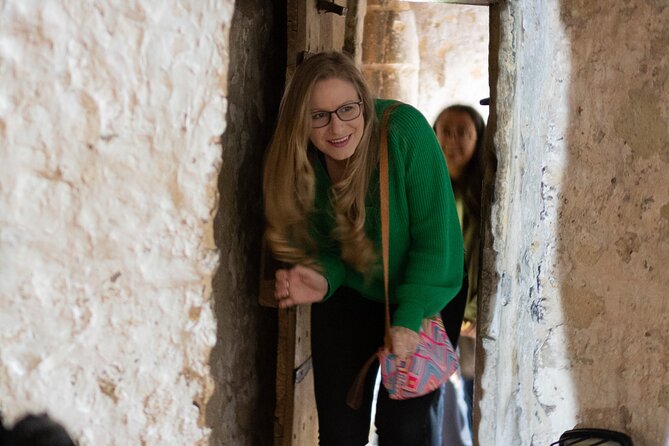
The attraction is described as wheelchair accessible, but that should not be read as meaning every part is step-free. The tower climb has its own restriction, and the historic building has narrow doors that do not accommodate prams or pushchairs. Staff look after pushchairs in the reception area while you visit.
Take the tower seriously if you have mobility concerns. Ask about the current access arrangements before arrival, since the site’s practical policies matter more here than a general accessibility label.
The crypt is the most atmospheric stop
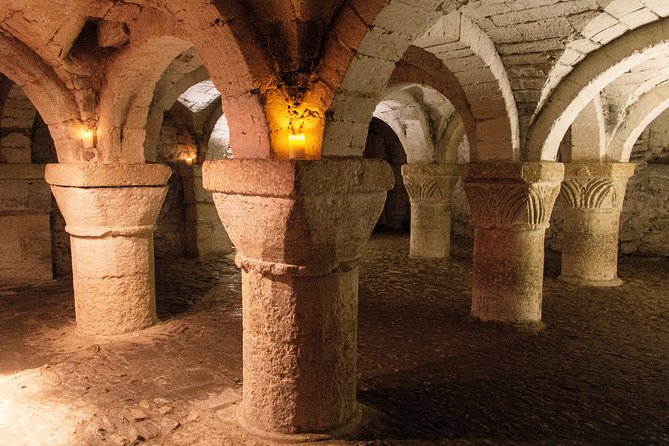
After the tower, the route heads underground to the crypt. This is the only surviving part of St. George’s Chapel, and it is about 900 years old. The change in mood is immediate: the open city view gives way to a dark, enclosed space with a much older feel.
The crypt is important for more than its age. St. George’s Chapel is linked with the early education for which Oxford became famous, and the site is also associated with Geoffrey of Monmouth writing the Legends of King Arthur. These connections give the crypt a wider cultural role. You are not simply looking at old stone. You are standing in a place tied to the stories and learning that shaped Oxford’s identity.
The crypt is likely to be the highlight for anyone who prefers atmosphere over spectacle. It is not a huge chamber, and the tour does not present it as a grand cathedral interior. Its appeal comes from its survival and its setting below the modern city.
The site also carries ghost stories. The tour presents the crypt and other prison spaces with an eerie edge, but the main value is historical rather than a dedicated ghost-hunting experience. If you enjoy old buildings with a slightly unsettling mood, this section should appeal. If you want a large collection of artefacts or elaborate medieval interiors, you may find it modest.
Same walls, a different way in:
- Stonehenge, Windsor Castle, and Bath from London
★ 4.5 · 18,662 reviews - Edinburgh: Edinburgh Castle Guided History Tour with Tickets
★ 4.8 · 9,933 reviews - Stonehenge, Windsor Castle and Bath with Pub Lunch in Lacock
★ 4.5 · 7,402 reviews - Windsor Castle Admission Ticket
★ 4.7 · 7,032 reviews
Debtors’ Tower and D-Wing show the prison’s harder side

The tour then moves into the 18th-century Debtors’ Tower and the prison’s D-Wing. These sections change the subject from medieval defence and chapel life to confinement and punishment.
The prison displays help explain daily life inside the institution. After the guided hour, you can spend more time reading the information and looking at the exhibits. This self-guided portion is useful because the tour gives you the main story, while the displays allow you to stop at details that caught your attention.
The prison side may be more engaging than the castle remains for some people. One reason is that the spaces feel more directly connected to ordinary lives. The castle mound tells you how power was defended. The prison rooms show how the site was later used to control and punish people.
You should also expect a sober tone. The prison’s history includes harsh Victorian attitudes toward punishment, and the displays present a less romantic part of Oxford’s past. This is a strength if you want social history rather than just medieval architecture.
The D-Wing and Debtors’ Tower are not presented as a long independent prison tour with every room open for extended study. They form part of the guided route, followed by time to explore the wider site. If a full prison museum is your main goal, you may wish the visit lasted longer.
The self-guided time makes the hour more useful

Once the guided section ends, you are inducted into the prison and wider castle area. You can then explore at your own pace, take photographs, and read the displays without having to keep up with the group.
This extra time improves the value of the admission. The guided hour gives structure and access to the main historic spaces, while the self-guided portion lets you return to details you missed. One useful approach is to listen closely during the guide’s main explanations, then use the later displays to fill in the prison story.
The visit also includes opportunities for photographs, including the tower view and costume-related displays. Souvenir photographs are not included, but they are available to buy. You can simply use your own camera where permitted if you do not want an additional purchase.
A café and gift shop are part of the wider site, though dogs are not allowed in the attraction, mound, café, or gift shop except for guide dogs. One visitor specifically enjoyed the café’s chai latte, so you can treat it as a convenient stop rather than planning a separate café visit immediately after.
Timing matters more than it first appears
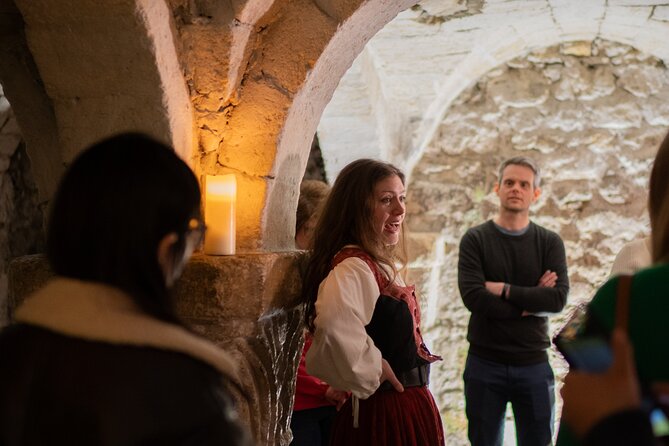
The tour lasts about one hour, with departures scheduled every 20 minutes from 10am to 4:20pm. You choose a tour time when booking, and you should arrive at the Oxford Castle Quarter meeting point with a paper or electronic voucher.
Do not assume that buying online means you can arrive at any time and join the next group. The tour uses timed departures, and a gap may leave you waiting. One person arrived at 11am expecting to go straight in but had to wait until 1pm, which is a good warning to treat your selected time as important.
The published schedule says the final departure is at 4:20pm, but opening hours can change. An account of a 4:40pm visit described a rushed experience as the prison was closing. I would avoid booking the latest possible slot if you want time for the displays and wider site, and I would confirm the day’s hours before setting out.
The activity information lists a maximum of four participants. That is unusually small if applied to your booking, but group arrangements can vary, so check the current confirmation details. In any case, a smaller group should make it easier to hear the character guide and ask questions.
What the experience is worth
No ticket price is provided here, so I cannot judge the exact cost against comparable Oxford attractions. I can judge what you receive: a one-hour guided route, a costumed character presentation, the tower climb, the crypt, the prison sections, and additional time to explore the site independently.
That is solid value if you want several different experiences in one stop. You get a city view, medieval remains, an underground chapel crypt, and prison interpretation without arranging separate admissions. The tour is especially useful if you have only a short time in Oxford and want something beyond the colleges and university buildings.
The value is weaker if you only want a large castle with extensive ruins. Oxford Castle is compact, and some of its most important spaces are seen in a fairly quick sequence. You are paying for the interpretation and access to the combined castle and prison site as much as for the masonry itself.
The high overall rating and 96 percent recommendation figure suggest that the format works for most people, but the mixed reactions point to a clear pattern: the guide can make the hour memorable, while the basic physical scale of the castle remains unchanged. Book it for the stories and the variety, not because you expect a massive fortress.
Who should book Oxford Castle and Prison?
I would recommend this to families, first-time Oxford visitors, and anyone who wants a guided introduction to the city’s less familiar past. The character format keeps the hour moving, and the combination of a tower, crypt, mound, and prison avoids the monotony that can come with a single-theme museum.
It also suits people who enjoy historic buildings with a slightly eerie side. The crypt and prison spaces have a different mood from Oxford’s polished college quadrangles, and that contrast makes the visit worthwhile.
I would be more cautious if you have difficulty with steps, are travelling with a pushchair, or want a long, detailed architectural study. Children under five cannot enter the tower, and anyone who skips the climb will need to wait below before rejoining the group.
Allow extra time after the tour if the prison displays interest you. The guided hour is the spine of the visit, but the independent section is where you can slow down and examine the site’s later history.
Practical details before you go
You meet at 45 Oxford Castle, Oxford OX1 1BY, and the activity ends back at the meeting point. The site is near public transportation, and confirmation is sent at booking.
The tour is offered in English and uses mobile tickets. Payment must be made when booking by credit or debit card. Free cancellation is available if you cancel at least 24 hours before the start time. Inside the final 24 hours, refunds are not available and changes are not accepted.
The attraction allows guide dogs but no other dogs. Pushchairs must remain in the reception area because they do not fit through the historic doors. Most people can take part, but the tower climb is the key physical consideration.
Should you book it?
Book Oxford Castle and Prison if you want a lively, compact history experience with more variety than the name alone suggests. The best parts are the views from St. George’s Tower, the old crypt, and the contrast between the Norman castle mound and the later prison.
Skip it if your priority is a large, open castle complex or a long museum visit. For most people, though, the hour is well spent, especially when you add time for the prison displays afterward and choose a departure early enough to avoid a rushed closing period.
FAQ
How long does the Oxford Castle and Prison tour last?
The guided tour lasts approximately one hour. Afterward, you can explore the prison and wider site at your own pace.
Where does the tour begin?
The meeting point is Oxford Castle Quarter, at 45 Oxford Castle, Oxford OX1 1BY, UK.
What language is the tour offered in?
The tour is offered in English.
How often do tours run?
Tours run every 20 minutes between 10am and 4:20pm. Opening times may change, so confirm the current schedule before visiting.
Is the tour wheelchair accessible?
The attraction is wheelchair accessible, but St. George’s Tower requires a climb of about 30 feet, or 9 metres, by steps. Visitors who cannot climb may wait at the bottom and watch a video before rejoining the group.
Can children under five climb St. George’s Tower?
No. Children under five are not permitted to enter St. George’s Tower for health and safety reasons.
Can I bring a pushchair?
Pushchairs do not fit through the historic doors and must be left in the reception area, where staff look after them.
Are dogs allowed?
Dogs are not allowed in the attraction, mound, Castleyard Cafe, or gift shop. Guide dogs are permitted.
Is admission to the castle included with the guided tour?
Yes. Admission to the castle is included, and access to the castle is by guided tour only.
Can I cancel the booking for a refund?
You can cancel up to 24 hours before the start time for a full refund. Cancellations or changes made less than 24 hours before the start time are not accepted, and the amount paid is not refunded.
Newly walked in the UK
- Private Tour to Stonehenge and Windsor Castle★ 5.0 · 11 reviews
- Private Tour to Canterbury, Leeds Castle and The White Cliffs of Dover★ 5.0 · 42 reviews
- Canterbury Cathedral, Leeds Castle and Dover Castle Private Tour★ 4.5 · 10 reviews
- Leeds Castle Canterbury and Dover Private Tour from London★ 5.0 · 68 reviews
- Highlands Cows Glencoe and Castles Private Tour from Edinburgh★ 5.0 · 32 reviews
- Private Tour of Highlands, Lochs & Castles from Edinburgh★ 5.0 · 26 reviews
- Stirling Castle and Loch Lomond Full-Day Private Tour in a Premium Minivan★ 5.0 · 36 reviews
- Wallace monument, Stirling Castle, Linlithgow Palace Private Tour★ 5.0 · 46 reviews
Guided Castle Tours, compared.

Edinburgh Castle: Guided Walking Tour with Entry Ticket
Read our review →
Cathedral, Giralda & Alcazar Entry With Guided Tour
Read our review →Edinburgh Castle: Guided Walking Tour with Entry Ticket
Read our review →
Stonehenge, Windsor Castle and Bath Full Day Guided Tour
Read our review →
Alcázar of Seville Skip-the-Line Tickets and Guided Tour
Read our review →
Dublin Book of Kells, Castle and Molly Malone Statue Guided Tour
Read our review →

Quebec City: Guided Tour of Fairmont Le Château Frontenac
Read our review →Browse the lists this tour appears in