
Review · FRANCE
Paris: Château de Vincennes Entry Ticket
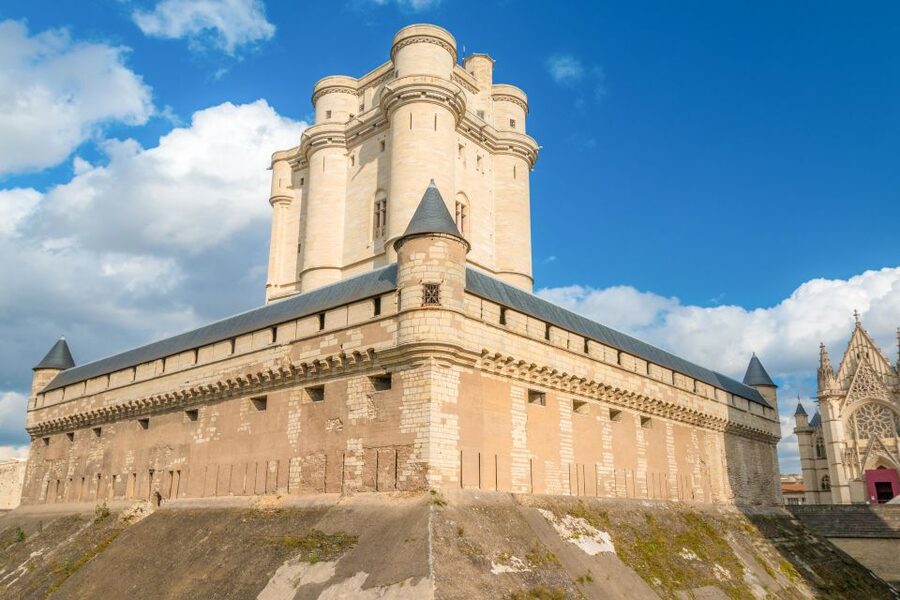
Château de Vincennes gives you a rare chance to see a royal fortress beside Paris that later became a prison, barracks, arsenal, and national memorial. The 52-meter keep is the main event: a tall, stern medieval tower with rooms tied to kings, prisoners, and military history.
I like the ticket’s long 365-day validity, which lets you fit the château around a Paris trip instead of racing across town. I also like the blend of self-guided material, multilingual information, and free French tours each afternoon. The main drawback is the climb: stairs are central to the visit, and the château is not a quick, flat museum stop.
Key points to know before you go
- A 52-meter medieval keep: Climb the tallest fortified tower of its kind in Europe.
- Royal power before Versailles: The château served the French monarchy until Louis XIV moved to Versailles in 1682.
- Prison rooms with famous names: See rooms linked with Fouquet, the Marquis de Sade, and Mirabeau.
- A ticket with unusual flexibility: Your admission remains valid for 365 days.
- French tours at two set times: Guided visits run daily at 2:15 PM and 3 PM, with no reservation required.
- Useful extras inside: You receive multilingual visitor material and can use an augmented reality terminal in Charles V’s study.
Why Château de Vincennes is worth the short trip east
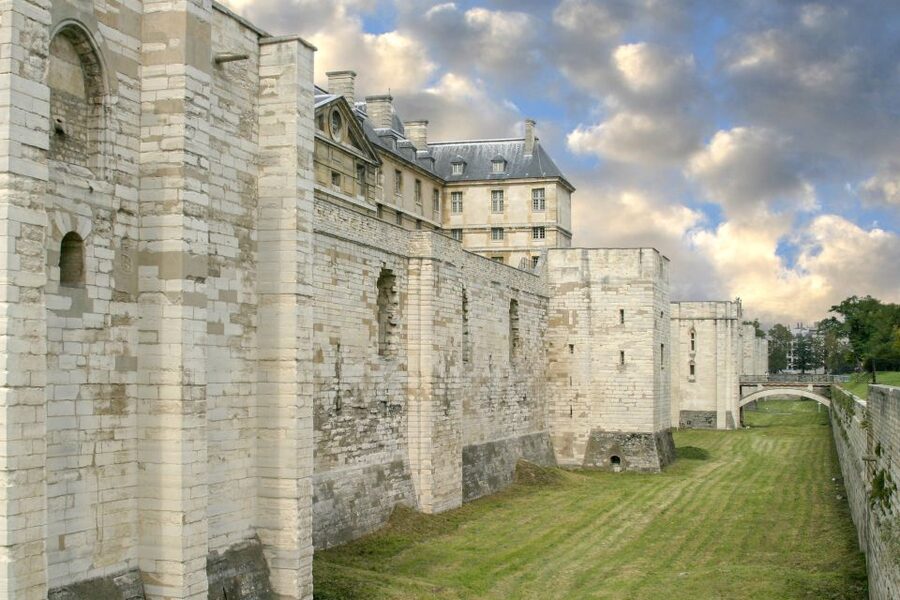
The journey from central Paris takes you to Vincennes, in the eastern suburbs, where a serious medieval fortress rises beside Avenue de Paris. This is not a decorative palace built mainly for grand rooms and polished gardens. It was designed to guard the capital, protect the monarchy, and remind people who held power.
That purpose gives the visit its edge. You can read French history in the building itself. Its thick walls speak of defense. Its royal connections explain the strength of the monarchy. Its prison rooms show how a place built to protect kings could later confine political and aristocratic prisoners.
I find that more useful than visiting a monument that offers only pretty interiors. Here, the changes in use are the story. The château moved from royal residence to prison, then to military site and place of national remembrance.
The admission price of $15 is reasonable for a major historic site, especially because the ticket remains valid for a full year. You are not paying for a short timed attraction with one fixed viewing route. You get access to a large monument with self-guided options, daily French tours, and added interpretation in several languages.
The value is strongest if you enjoy history and want more than a quick photograph. If you have only a few hours in Paris and prefer famous art museums or grand royal interiors, the trip may feel less essential. But for a clear look at how French power developed, this is a strong choice.
More Castle Entry Tickets in France
- Carcassonne: Castle and Ramparts Entry Ticket
★ 4.6 · 2,884 reviews - Chambord: Entry Ticket to the Castle
★ 4.6 · 1,841 reviews - Chenonceau Castle Admission Ticket
★ 4.7 · 1,515 reviews
Entering the fortress and reading its royal purpose

Start by taking in the château as a defensive complex rather than heading straight for the keep. The site was built in the 14th century to affirm the power of the monarchy, guard Paris, and shelter the kings from uprisings.
That setting matters. Medieval royal buildings were not just homes. They were political statements, fortified headquarters, and safe places in uncertain times. Vincennes carried all three roles.
The château remained at the heart of the French monarchy until 1682, when Louis XIV chose Versailles. That change is a useful point of comparison. Versailles is associated with ceremony, display, and court life. Vincennes helps you understand an earlier phase, when security and royal presence were closely linked.
You will likely spend part of the visit looking at walls, gates, towers, and defensive features. Do not treat those as background scenery. They explain why the site was placed where it was and why the monarchy invested in such a strong complex near the capital.
The monument also gives you a different view of French royal history. Instead of starting with Louis XIV’s famous palace, you see the older machinery of rule. That makes the later move to Versailles easier to understand.
Climbing the 52-meter keep
The keep is the clear centerpiece. At 52 meters, it is the tallest medieval fortified tower of its kind in Europe, and reaching its upper levels requires climbing stairs.
That climb is both the attraction and the practical concern. You gain a stronger sense of the tower by moving through it level by level, but this is not the easiest stop for anyone who dislikes stairs or needs a completely accessible route. Bring a comfortable pair of shoes and allow time rather than trying to hurry through.
The height gives the keep its power. From ground level, you see a massive fortified tower. Inside, the stairway shows how the building worked vertically, with rooms and defensive positions stacked within thick masonry.
I like visits where the architecture makes you work a little for the reward. Here, the stairs are not an empty obstacle between displays. They help you understand the scale and purpose of a medieval keep.
The climb also separates this experience from a standard museum visit. You are not simply passing from gallery to gallery. You are moving through the actual structure that shaped the lives of kings, guards, prisoners, and soldiers.
Take your time as you go up. The ticket is flexible, so there is no reason to turn the keep into a race. If you are visiting with children, teenagers, or anyone who tires easily, plan the pace around the stairs rather than around a fixed schedule.
Prison rooms linked to Fouquet, de Sade, and Mirabeau
From the 16th through the 19th century, the keep served as a prison. That long period changed the mood of the building. It was no longer only a royal stronghold. It also became a place where the state confined important and difficult people.
The rooms connected with Fouquet, the Marquis de Sade, and Mirabeau give the visit a human focus. These names turn the fortress from a broad historical symbol into a place tied to individual stories, power struggles, and punishment.
You can also see the room where King Henry V died. That detail adds another layer to the building’s royal past. The same complex held a king at the end of his life and later held prisoners under confinement.
I find these rooms more affecting than a long list of dates. They help you picture the château as a working place, not a frozen monument. Its spaces were occupied, guarded, altered, and reused over centuries.
Do not expect every room to feel richly furnished like a palace interior. The importance here comes from the structure, the people connected with it, and the changing role of the keep. If you want ornate decoration, this may not satisfy you as much as Versailles. If you want political and prison history, it offers far more substance.
Same walls, a different way in:
- Loire Valley Castles Day Trip from Paris with Complementary Wine
★ 4.5 · 3,907 reviews - From Paris: Loire Valley Castles Day Trip With Wine Tasting
★ 4.6 · 1,727 reviews - Medoc or Saint Emilion Wine Tasting and Chateau from Bordeaux
★ 5.0 · 1,415 reviews - ★ Walking Tour of Old Nice and Castle Hill
★ 5.0 · 1,318 reviews
From royal fortress to Napoleon’s military site
Under Napoleon I, the building was transformed into a barracks and arsenal. That change shows how old fortifications could be adapted to new military needs.
The château later helped protect Paris during invasions in the 19th century. Again, the building was not simply preserved as an old royal relic. It remained tied to national defense and the changing demands of the state.
This is one of the best reasons to visit Vincennes instead of seeing only a royal palace. The site covers several periods of French history without requiring you to move between separate monuments.
The military story also gives context to the castle’s present identity. Its importance is not limited to the monarchy. It became part of the country’s wider defense system and now houses the historical services of France’s three armed forces.
That final detail may appeal especially to readers interested in military history. It also explains why some parts of the site may feel more institutional than theatrical. The château is connected to active historical services, not just tourism.
War damage and the modern meaning of the château
The fortress suffered extensive damage during the Second World War and was later restored. Restoration changes the way you read any old monument. What you see today is a mixture of medieval construction, later alterations, and work done to preserve the site after wartime destruction.
The château is now considered a place of national remembrance. That phrase matters because it gives the visit a modern purpose. You are not looking only at medieval stone. You are also seeing a monument shaped by conflict in the 20th century and by France’s effort to preserve its national story.
For me, this makes the château more useful than a simple royal attraction. Its meaning did not stop when the monarchy left. It continued through imprisonment, military use, invasion, wartime damage, restoration, and present-day remembrance.
The different periods may not be presented in one smooth, theatrical story. You may need to connect the pieces yourself using the visitor material and the site’s interpretation. That is a minor drawback for visitors who prefer a guide to explain everything in a single narrative.
Self-guided material, French tours, and the augmented reality terminal
You can visit independently with self-guided information, and a visitor guide is available in several languages. This is the safest option if you want to move slowly, pause in the keep, or focus on the periods that interest you most.
The château also offers guided tours in French every day at 2:15 PM and 3 PM. No reservation is required for these tours. If you understand French, these set times can add structure and help connect the royal, prison, military, and memorial chapters.
The activity information describes the tours as guided in French, while the admission itself includes self-guided options. If you do not speak French, plan on using the multilingual material rather than expecting an English-speaking guide.
An augmented reality terminal in Charles V’s study adds a more modern layer. It is a useful touch because the site spans so many centuries, and digital interpretation can help you picture how an older room functioned.
I would not make the visit depend on one piece of technology. The keep, prison rooms, and fortress remain the main reasons to come. But the terminal gives you another way to connect the physical room with its past, especially if you enjoy visual explanations.
Planning your visit from Paris
The meeting point is Château de Vincennes, Avenue de Paris, 94300 Vincennes, France. Transport is not included, so you need to arrange your own way from Paris.
The practical advantage is that the ticket is not tied to one narrow visit date. It is valid for 365 days, and you should still check available starting times before booking. This is useful if weather, fatigue, or a crowded Paris schedule forces you to change plans.
The last entry is 45 minutes before closing. Do not arrive near the end of the day and assume you can complete the full keep visit. The stairs and historical material deserve enough time to make the admission worthwhile.
The château closes on January 1, May 1, and December 25. Free admission is offered on the first Sunday of January, February, March, November, and December, as well as during European Heritage Days on the third weekend of September each year.
Visitors under 18 and EU citizens under 26 can enter free, but you must show a photo ID at the ticketing station before going to the monument entrance. Bring a passport or identity card, particularly if you may qualify for free admission.
The activity is non-refundable, so check your plans before purchasing. Group size is limited to 10 participants, though the self-guided nature of the visit means the experience is not built around one large tour group.
Who will enjoy this visit most
I would recommend Château de Vincennes to you if you like:
- Medieval fortifications and royal history
- Prisons, military sites, and political history
- Visiting monuments outside the most familiar Paris routes
- Self-guided sightseeing at your own pace
- Climbing historic towers and seeing how buildings were used
- Places that connect medieval history with modern national memory
Families with older children may find the keep and prison stories more engaging than a formal palace tour. The stairs can also make the visit feel more active, though you should judge the climb according to your group’s needs.
History-minded visitors will get the most from the ticket. The site covers the 14th century through the present, but you need to pay attention to the transitions. This is not a single-period monument.
The château may be less suitable for you if you want lavish interiors, a full English-language guided tour, or a visit with no stairs. The daily guided tours are in French, and transport and food are not included.
The 4.5 rating from 342 reviews supports the basic appeal of the experience, and the short comments describe it as interesting, beautiful, and marvelous. The strongest praise centers on the château itself and the sense of discovery, not on a named guide or a special group leader. No guide names are provided, so I would choose this for the monument rather than for a particular personality.
Should you book Château de Vincennes?
Book it if you want a substantial historic site for $15, especially one that offers much more than a royal residence. The 52-meter keep, former prison rooms, Napoleon-era military role, wartime damage, and national memorial status give you several good reasons to make the trip east.
The ticket is particularly useful for flexible Paris planning because it lasts 365 days. You can use the self-guided material in several languages, or join a French tour at 2:15 PM or 3 PM.
Skip it if you have limited time, dislike stairs, or want a polished palace filled with decorative rooms. For everyone else, Château de Vincennes offers a direct look at France’s changing centers of power, with enough unusual detail to justify leaving central Paris for the afternoon.
FAQ
Where is Château de Vincennes located?
It is on Avenue de Paris in Vincennes, in the eastern suburbs of Paris, in the Île-de-France region.
How much does admission cost?
The ticket costs $15 per person.
How long is the ticket valid?
The ticket is valid for 365 days. Check availability for starting times before your visit.
Are guided tours included?
French guided tours are included and take place every day at 2:15 PM and 3 PM. No reservation is required. Self-guided visits are also available.
Is information available in languages other than French?
Yes. A visitor guide in several languages is included, along with an augmented reality terminal in Charles V’s study.
Can young visitors enter for free?
Visitors under 18 can enter free. EU citizens under 26 can also enter free, but they must show photo ID at the ticketing station before going to the monument entrance.
When is Château de Vincennes closed?
The château is closed on January 1, May 1, and December 25. It also offers free admission on the first Sunday of January, February, March, November, and December, and during European Heritage Days on the third weekend of September.
Newly walked in France
- Chateau of Fontainebleau and Vaux le Vicomte 9-Hour Private Tour★ 5.0 · 14 reviews
- Private tour: Chateaux de Vaux le Vicomte & Fontainebleau★ 5.0 · 8 reviews
- Private Day Trip to the Châteaux DE la Loire★ 4.5 · 13 reviews
- From Paris: Fontainebleau & Vaux-le-Vicomte Private Tour★ 4.8 · 34 reviews
- 5H00 ALSACE PRIVATE TOUR-Castle, Villages, Wine, Friendly Driver★ 5.0 · 35 reviews
- Loire Valley Castles VIP Private Tour: Chambord, Chenonceaux, Amboise★ 5.0 · 37 reviews
- Château of Versailles and Marie Antoinette’s Petit Trianon Private Tour★ 4.0 · 126 reviews
- Nice : Wine Tasting at a Historic Château in a Land Rover !★ 4.9 · 156 reviews
Castle Entry Tickets, compared.


Edinburgh Castle: Guided Walking Tour with Entry Ticket
Read our review →
Castle Tour with Local Guide and Entry Ticket
Read our review →
Prague Castle 2.5-Hour Tour Including Admission Ticket
Read our review →
Edinburgh Castle: Guided Walking Tour with Entry Ticket
Read our review →
Prague Castle and Lobkowicz Palace Entry Tickets
Read our review →
Alcázar and Cathedral Entry Ticket and Guided Tour
Read our review →Browse the lists this tour appears in