
Review · GERMANY
Premiumstadtführung (historische Altstadt und Schlossberg)
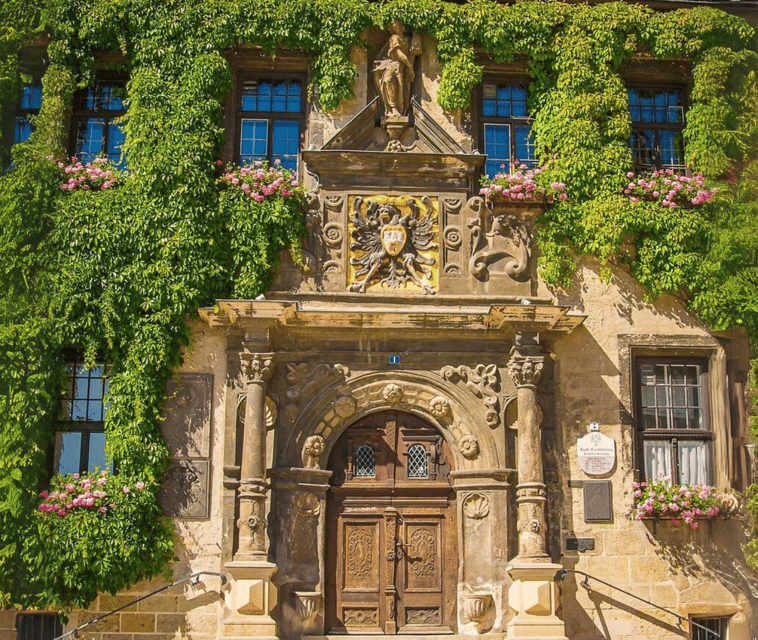
Quedlinburg’s story is written in timber, stone, and steep lanes. This two-hour walk links the town’s UNESCO World Heritage old town with the Schlossberg, where the collegiate church of St. Servatii crowns the hill. I like that the route gives you both the everyday town below and the grand historical center above.
I also like the practical touch of food recommendations, along with the chance to see famous Quedlinburg figures connected to places such as Klopstock-Haus. The main drawback is physical: cobblestones and a steeper Schlossberg section can be awkward in wet, icy, or wintry weather, and the collegiate church is not visited inside.
Key points at a glance
- 1,100 years in two hours: A brisk route that connects Quedlinburg’s medieval streets, churches, civic buildings, and hilltop heritage.
- Market square starting point: Meet at the green-signed city information office on Quedlinburger Marktplatz.
- Half-timbered architecture: The walk includes picturesque lanes, the Schuhhof, Hölle, and the Half-Welfare Museum.
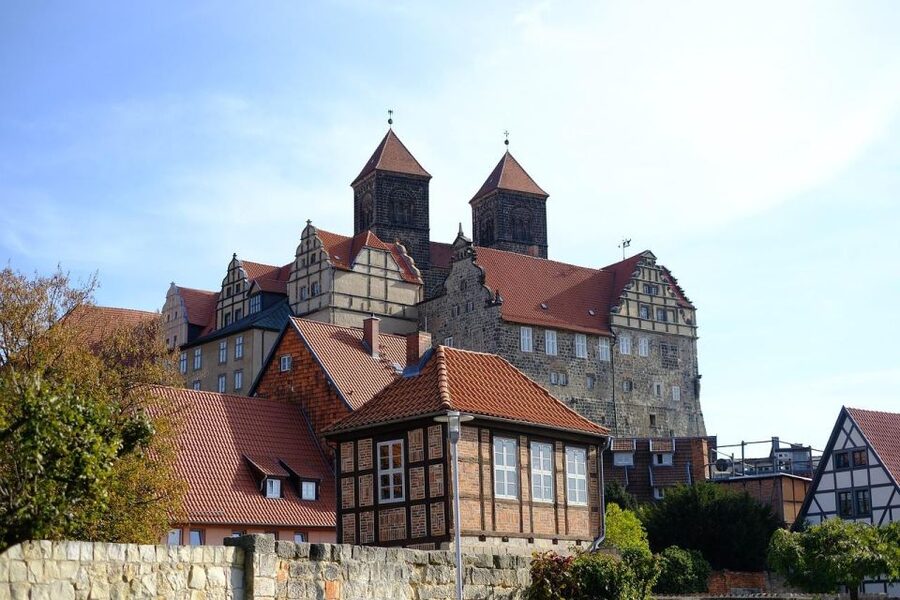
- Schlossberg highlights: See Klopstock-Haus, the Lyonel-Feininger Museum, Schlossgarten, and St. Servatii from the outside.
- Useful local advice: The guide points out culinary spots and suggests places to eat after the tour.
- Good family value: Children and adolescents up to age 16 join free of charge.
Starting at Quedlinburg’s market square
The tour begins at the Quedlinburg city information office on the market square. Look for the green sign, and arrive with your ticket ready for the guide. This central meeting point is handy because you begin among the town’s most important civic buildings rather than spending the first part of the walk finding the historic center.
The format is simple: a live guide leads the group on foot, in German, for two hours. There is no transport between stops, so you get a connected view of Quedlinburg instead of a series of disconnected photo stops. That matters here. The old town makes sense when you notice how the narrow lanes, market, churches, and Schlossberg fit together.
The tour is designed for a general audience, not for specialists in medieval architecture. You can expect explanations of the town’s long past, its notable people, and the character of its buildings. A recent high score of 4.4 from 627 ratings suggests that the experience usually delivers what it promises, with especially strong marks for detailed explanations, friendly guiding, and group sizes that allow questions.
No guide names are supplied in the booking details, so you should not book expecting a particular person. The tour is conducted in German, which is an important point for anyone who does not follow spoken German comfortably.
More Castle Tours in Germany:
- From Munich: Neuschwanstein & Linderhof Castle Full-Day Trip
★ 4.6 · 14,646 reviews - Neuschwanstein & Linderhof Castle-Fairytale Day Tour from Munich
★ 4.5 · 7,275 reviews - Neuschwanstein Castle Tour from Munich
★ 4.5 · 5,117 reviews
Town hall, market church, and the first medieval lanes
The early part of the route focuses on Quedlinburg’s old town. You see the town hall and the market church of St. Benedikti, two useful anchors for understanding how the town functioned. The market square was not simply a pretty place for photographs. It was the civic and commercial heart of Quedlinburg, and beginning here gives the historical story a clear starting point.
From the square, the walk moves into medieval lanes and past half-timbered houses. Quedlinburg is especially rewarding if you enjoy looking upward and slowing down. Timber frames vary from one building to the next, and details in the façades give the streets their character. The route is not just a parade of old houses. The guide helps connect the buildings to the people and events that shaped the town.
The Schuhhof is one of the more distinctive stops. Its name points to an old connection with shoemaking, and the enclosed lane gives you a more intimate sense of the town than the open market square. This is the sort of place where a guide adds real value, since a narrow passage can look like a pleasant shortcut if you do not know why it matters.
You also pass through Hölle, one of Quedlinburg’s memorable street names. The route then continues to Blasii Church and the Half-Welfare Museum. These stops add variety to the walk: civic architecture, religious buildings, private homes, and museum culture all appear within a compact area.
You should keep your pace flexible. The interest is in the details, and a fixed two-hour schedule means the guide cannot spend unlimited time at every doorway or church. If you have a particular interest in architecture, local personalities, or religious history, ask questions while the group is still near the relevant site.
Half-timbered houses and the character of Quedlinburg
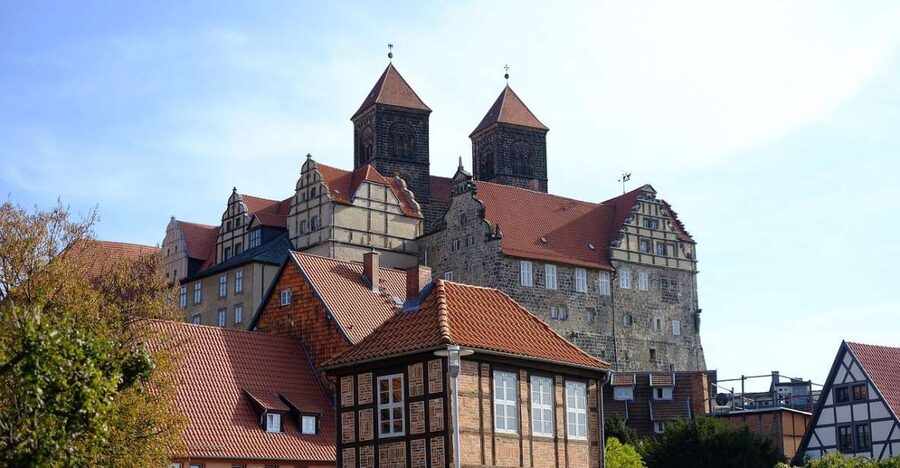
The half-timbered buildings are likely to be the visual heart of the tour. Quedlinburg’s architectural appeal comes from variety rather than one grand monument repeated again and again. Timber patterns, plastered surfaces, rooflines, and narrow façades change as you move from lane to lane.
I like this part of the route because it gives you a reason to look beyond the most famous buildings. A quick independent walk can leave you admiring the market square and Schlossberg while missing the smaller streets in between. The guided route puts those lanes into the story and shows why the town is protected as a UNESCO World Heritage Site.
You will also hear about well-known people from Quedlinburg. Klopstock-Haus, visited later on the Schlossberg route, provides one clear link between the town’s buildings and its cultural figures. The focus is not only on dates and rulers. It also includes the people who gave Quedlinburg a place in German cultural history.
The Half-Welfare Museum is included as an outside stop on the old town route. The supplied details do not promise an indoor museum visit or an extended exhibition tour, so treat it as part of the guided street experience rather than a separate museum admission. If you want to go inside later, set aside extra time after the walk.
Climbing the Schlossberg
The second half of the tour heads toward the Schlossberg. This changes the mood of the walk. The old town below is close and human in scale, while the hilltop brings together Quedlinburg’s most powerful historical and religious landmarks.
The climb is manageable for many visitors, but it is not completely flat. The route includes a steeper section and cobblestone paths. Wear shoes with a firm sole, and take extra care after rain, snow, or freezing temperatures. The tour runs in rain or sunshine, but winter conditions can affect safety. One scheduled walk was cancelled when the Schlossberg became very slippery, with a later time offered instead. That is a sensible risk to consider if you are visiting during icy weather.
At the top, the collegiate church of St. Servatii is the main attraction. Its setting on the Schlossberg helps explain the town’s historic importance and gives the walk a strong finish. The tour takes you to the church, but entry inside St. Servatii is not included. If seeing the interior is a priority, ask locally about opening times and admission separately.
This limitation is easy to overlook when planning. The exterior visit still gives you the setting and architectural context, but it is not the same as an interior church tour. Visitors who want a detailed look at religious art or the church’s interior should plan another visit.
Same walls, a different way in:
- From Munich: Neuschwanstein Castle Full-Day Trip
★ 4.7 · 3,977 reviews - Potsdam: City and Castles Tour
★ 4.7 · 3,721 reviews - Premium Neuschwanstein Castle and Linderhof VIP Tour from Munich
★ 5.0 · 2,480 reviews - Dresden: Elbe River Cruise to Pillnitz Castle
★ 4.5 · 2,411 reviews
Klopstock-Haus, Lyonel-Feininger Museum, and Schlossgarten
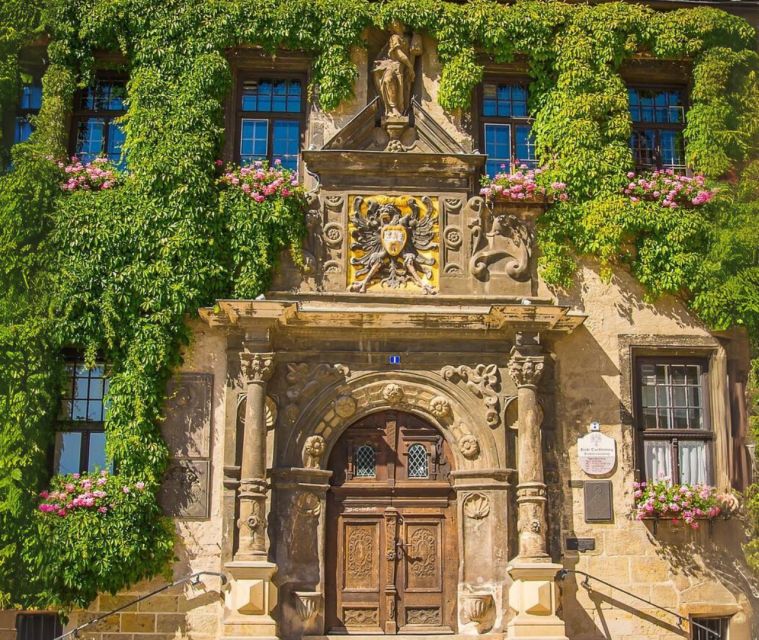
The Schlossberg section includes Klopstock-Haus, the Museum Lyonel-Feininger, and Schlossgarten. These stops broaden the tour beyond medieval buildings.
Klopstock-Haus connects Quedlinburg with the writer Friedrich Gottlieb Klopstock. Even if you do not know his work, the stop gives the guide a chance to explain one of the town’s famous personalities and place local history in a wider cultural setting. It also adds a personal story to the grander account of churches, rulers, and civic buildings.
The Lyonel-Feininger Museum brings a modern artistic connection to the route. Its presence reminds you that Quedlinburg is not only a preserved medieval town. It has also attracted artists and remains part of a continuing cultural story. The tour includes the museum as a landmark, but the supplied details do not include an indoor museum visit, so do not assume admission or gallery time is part of the two hours.
Schlossgarten gives the hilltop route some breathing room. After narrow streets and the climb, a garden setting offers a different view of the Schlossberg complex. The exact amount of time at each stop depends on the guide and group, so you should see the tour as an overview rather than a full visit to every museum and building.
Food advice that helps after the walk
The guide also points out culinary spots and gives recommendations for eating. This is a small feature, but it adds practical value. After two hours on foot, you can finish with a better idea of where to look for lunch, coffee, or dinner rather than choosing at random near the market.
Do not treat the recommendations as a guarantee that every restaurant will be open. Quedlinburg’s dining choices can be seasonal, and in January several restaurants may close at the same time. A recent winter visit found very few lunch options open, with a café providing the main choice. If you are visiting in the quieter winter months, check opening times and keep a backup plan.
The food advice is most useful when paired with the route. You hear about possible places while you are already in the center, then finish near the area where you can act on the suggestions. It is not a food tour, and you should not expect tastings or included meals.
Is $10 good value for two hours?
At about $10 per person, the tour is priced accessibly for a two-hour guided walk. The value comes from the route’s range: you cover the town hall, St. Benedikti, medieval lanes, half-timbered buildings, Blasii Church, the Half-Welfare Museum area, and the Schlossberg landmarks in one outing.
The price is particularly attractive for families because children and adolescents up to age 16 are free. A family can use the walk as a low-cost introduction to Quedlinburg before deciding which museums or interiors deserve separate visits.
The tour is also good value if you have limited time. You get a clear orientation to the old town and hilltop in one session, plus eating suggestions for later. Independent walking costs nothing, but it can leave you with a collection of attractive streets and no clear explanation of how they fit together.
There is one financial detail worth checking before you pay: the advertised price is shown in dollars here, while a cancellation account from a winter booking refers to euro charges and a partial refund. Currency conversions and current pricing can change, so confirm the amount shown at checkout.
Free cancellation is available up to 24 hours before the start, and you can reserve without paying immediately. Those terms are useful if your schedule depends on weather, especially in winter when the Schlossberg may become slippery.
Weather, footwear, and who should book
This is a walking tour for people who want context, not just photographs. It suits first-time visitors, architecture fans, families, and anyone who prefers a guide to provide the main story in a short time. It also works well early in a Quedlinburg stay, since you can return to the places that interest you most.
The German-only format is the biggest language consideration. If you do not understand German well, the historical explanations and answers to questions may be difficult to follow. The tour is not described as multilingual.
Bring shoes suited to uneven cobbles and the uphill section. Rain gear is sensible because the walk continues in poor weather unless conditions become unsafe. In freezing weather, check the status before setting out, since the hill can be cancelled or rescheduled if it is too slick.
Group size can affect the feel of the experience. One recent booking praised a manageable group where questions were easy to ask. The operator also says the tour runs even with one participant, but actual group numbers can vary by date and demand.
The tour may be less suitable if you need a fully step-free route or want to avoid hills. The supplied information specifically warns about cobblestones and a steeper section, so plan accordingly rather than assuming a flat city walk.
Should you book this Quedlinburg tour?
Book it if you want a solid first look at Quedlinburg’s old town and Schlossberg, especially if you enjoy half-timbered architecture and want the history explained in German. The two-hour length is long enough to cover the major areas without taking over your whole day, and the low price makes it an easy choice for families.
Choose a different plan, or add extra time, if your main goal is to see St. Servatii inside, visit museums at length, or take a flat, weather-proof walk. The collegiate church interior is not included, and the route can be slippery in winter.
For most German-speaking visitors, this is a practical introduction to Quedlinburg: compact, reasonably priced, and broad enough to show why the town’s lanes, houses, churches, and hilltop belong together.
FAQ
Where does the Quedlinburg tour begin?
It begins at the Quedlinburg city information office on Quedlinburger Marktplatz. Look for the green city information sign and show your ticket to the guide.
How long does the tour last?
The tour lasts two hours.
What language is the tour in?
The live tour guide speaks German. No other tour language is listed.
Is the tour suitable in rainy weather?
Yes. The tour takes place in rain or sunshine, although unsafe conditions can affect the Schlossberg section.
Does the tour go inside St. Servatii collegiate church?
No. The interior of St. Servatii is not included. The route visits the collegiate church on the Schlossberg from the outside.
Is the tour suitable for people who dislike hills or uneven ground?
The route includes cobblestone paths and a steeper section on the Schlossberg. Anyone who needs a step-free or flat route should take this into account before booking.
Newly walked in Germany
- Neuschwanstein & Linderhof Castle Luxury Private Tour from Munich★ 5.0 · 171 reviews
- Private Tour to Neuschwanstein Castle & Linderhof from Munich★ 5.0 · 131 reviews
- Neuschwanstein Castle, Ettal Abbey and Oberammergau Private Tour from Munich★ 5.0 · 160 reviews
- Half Day Private Tour Linderhof Castle & Oberammergau incl Ettal★ 4.5 · 119 reviews
- Nuremberg: Castle and Old Town Tour – incl. Tickets and red beer tasting★ 4.9 · 68 reviews
- Nuremberg:Complete Tour! Castle/Old Town/World War history★ 5.0 · 45 reviews
- Heidelberg: Discover Heidelberg Castle – experience history up close★ 4.7 · 171 reviews
- Heidelberg: Private 3-Hour Tour with Castle Visit★ 4.8 · 128 reviews
Germany Castle Tours, compared.
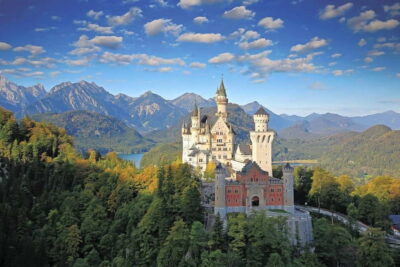
Neuschwanstein & Linderhof Castle Full-Day Trip
Read our review →
Neuschwanstein & Linderhof Castle-Fairytale Day Tour from Munich
Read our review →
Premium Neuschwanstein Castle and Linderhof VIP Tour from Munich
Read our review →
Dresden: Elbe River Cruise to Pillnitz Castle
Read our review →
Koblenz: Rhine Valley Castles and Palaces Boat Tour
Read our review →
Neuschwanstein Castle and Linderhof Palace Day Trip from Munich
Read our review →Browse the lists this tour appears in