
Review · SOUTH KOREA
Seoul : Suwon Hwaseong Fortress+Starfield Library+Waujeongsa
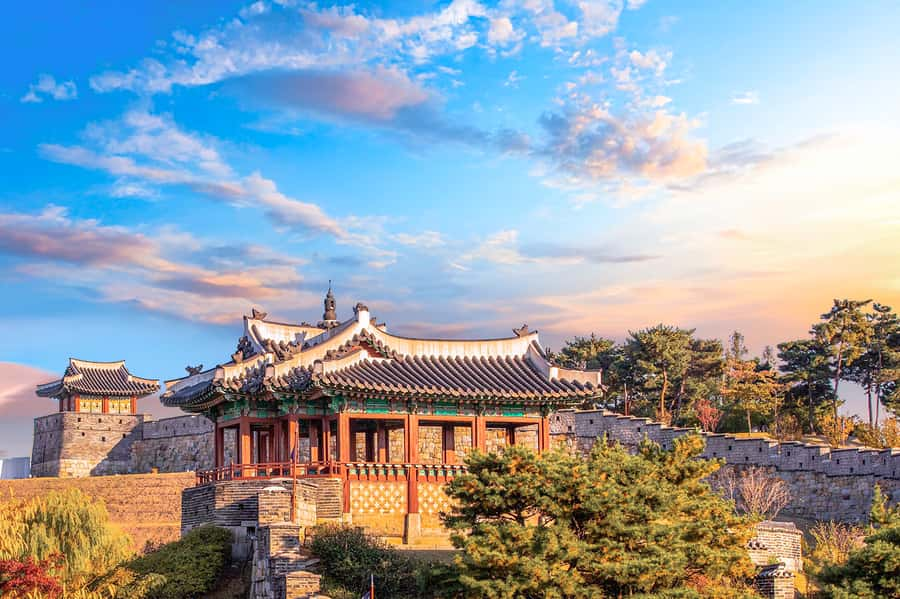
Suwon Hwaseong Fortress gives this day trip its backbone: a remarkably large 18th-century defensive wall built in part to honor King Jeongjo’s father. You’ll then shift from stone ramparts to the soaring shelves of Starfield Library, visit Waujeongsa Temple, and finish with a hands-on food and hanbok session. I like that the day joins Korea’s royal past with its modern pop-culture side, and I like that the gimbap-making class gives you something to do rather than another stop to photograph.
The main tradeoff is the pace. You cover several sites in one day, and the fortress requires a significant amount of walking. The air-conditioned or heated vehicle saves time and effort between stops, but you should wear proper walking shoes and arrive 5 to 10 minutes early, since late arrivals and no-shows are not refundable.
Key points at a glance
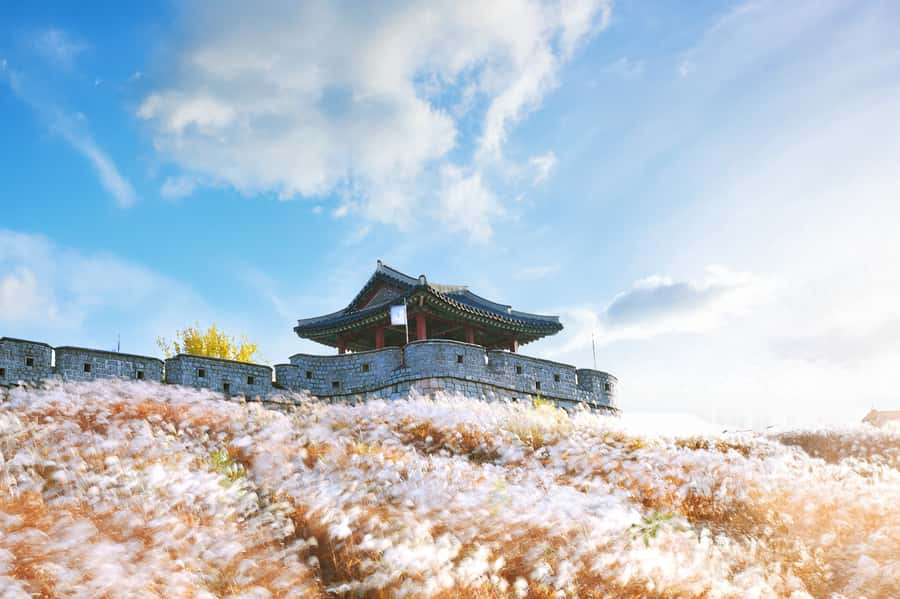
- Suwon Hwaseong reaches about 5.7 kilometers: You do not need to walk every section, but this is a substantial historic site, not a quick photo stop.
- The day mixes old Korea and present-day Suwon: Royal fortifications, a Buddhist temple, a dramatic library, and a Korean cooking activity all fit into one outing.
- The gimbap class adds real participation: You learn about dried laver, make kimbap, and can take part in a hanbok-wearing experience.
- The guide makes a real difference: Andrew, Sean Kim, Jinyong, April, and others have been praised for clear explanations, friendly help, and flexible handling of the day.
- The $49 price covers the main practical costs: Admissions, an English-speaking guide and driver, and round-trip transport from Seoul are included.
- This is not an easy-access excursion: It is not suitable for wheelchair users or people with heart problems, and baby seats are not available.
Why Suwon makes a smart day beyond Seoul

Suwon is close enough to Seoul for a manageable day trip, yet it gives you a different feel from the capital’s palace districts and shopping streets. The city’s central draw is Hwaseong Fortress, a major work of late Joseon-era planning that combines military design, royal purpose, and long views across Suwon.
I like the shape of this experience because it avoids making you choose between old and new Korea. Many day trips lean heavily toward palaces and temples. This one lets you see a UNESCO World Heritage site in the morning or early afternoon, then visit a contemporary cultural space and finish with food and clothing tied to Korean daily life.
The arrangement also makes sense if you have limited time in Seoul. You do not need to work out intercity transport, find the fortress entrances, or organize separate admission tickets. The vehicle collects you at one of three Seoul meeting points, takes you around Gyeonggi Province, and returns you to the meeting point at the end.
The exact vehicle depends on the number of people booked. It may be a car, van, or coach. That means the feel of the day can vary, but the basic benefit is the same: you spend your time seeing Suwon rather than changing trains or figuring out local connections.
More Fortress and Citadel Tours in the world:
- Carcassonne: Castle and Ramparts Entry Ticket
★ 4.6 · 2,884 reviews - Salzburg: Hohensalzburg Fortress Admission Ticket
★ 4.6 · 2,236 reviews - Salzburg: Best of Mozart Fortress Concert and Dinner
★ 4.5 · 1,424 reviews
Walking the 5.7-kilometer walls of Hwaseong
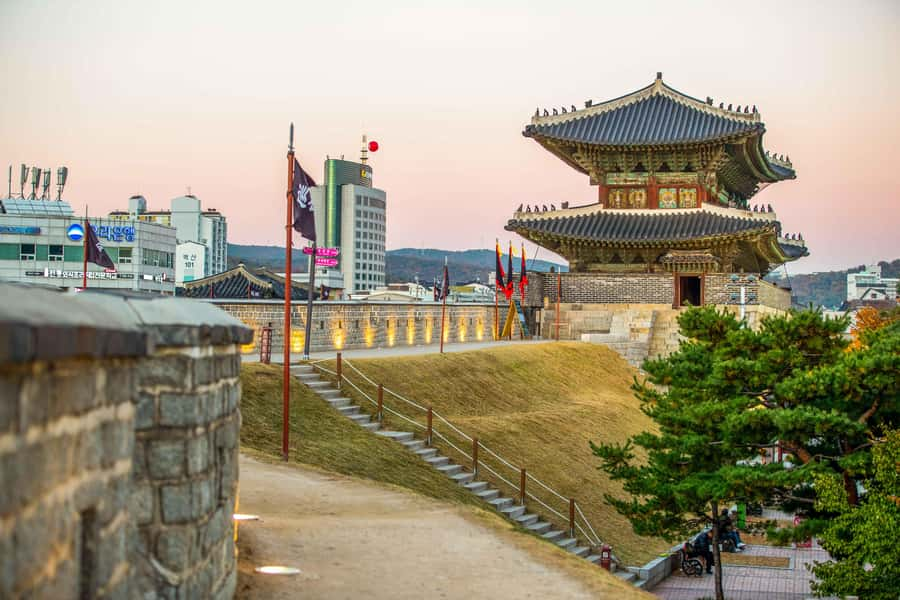
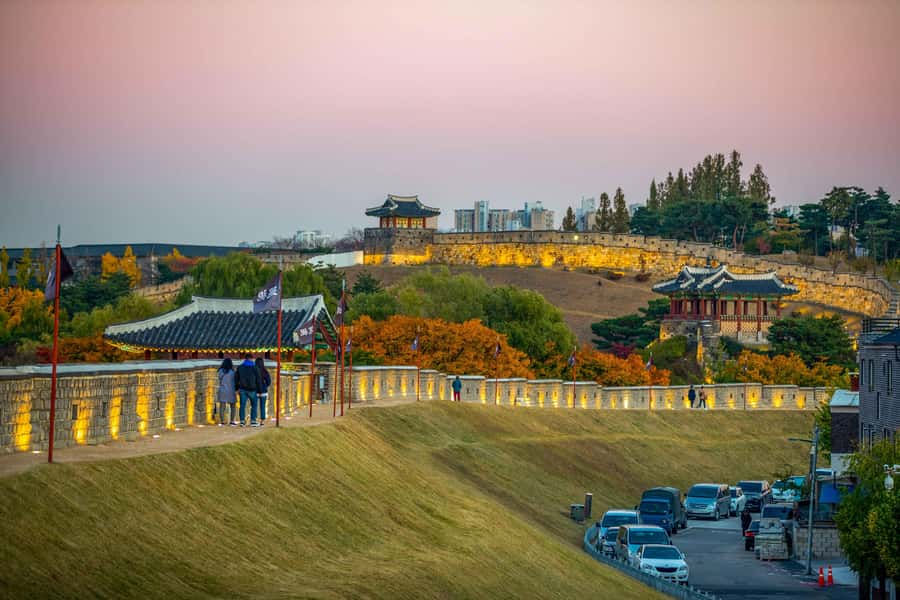
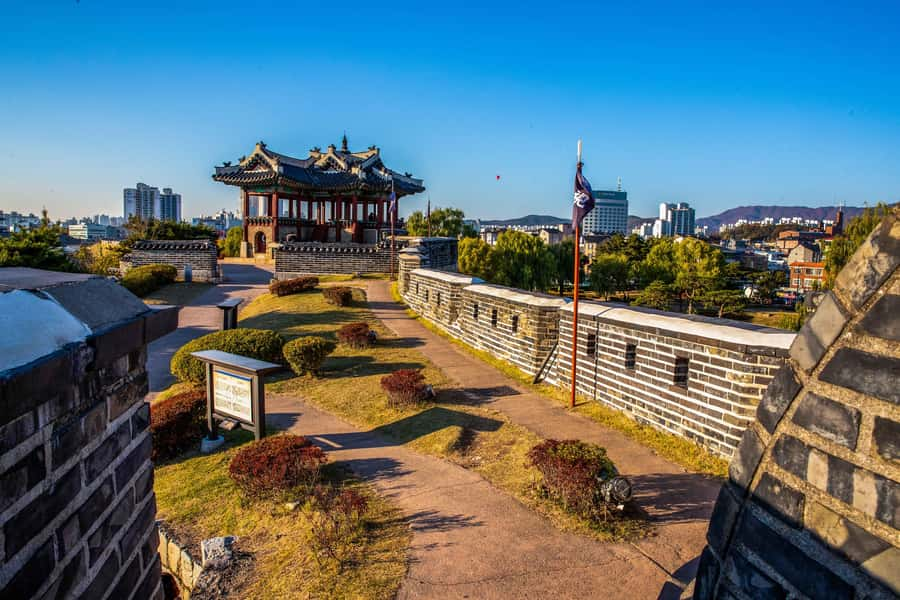
Hwaseong Fortress is the strongest reason to book this outing. Built in the 18th century, it stretches for roughly 5.7 kilometers and was designed with defense in mind. Its walls, gates, watch points, and carefully placed structures show how practical planning shaped the site.
The fortress was also connected to King Jeongjo’s wish to honor his father. That detail gives the site more feeling than a simple military ruin. You are looking at a royal project with political and family meaning, not just a long stone wall.
Your guide is important here. A bare walk around the fortress can leave you noticing only bricks, slopes, and city views. A good explanation helps you understand why the walls follow their route, how the layout helped protect the city, and why this place matters to Korean history. Guides named Andrew, Jinyong, April, and Sean Kim have been singled out for clear explanations and an energetic approach.
You may also get a chance to try traditional archery, depending on the day’s conditions and the guide’s handling of the schedule. One account also praised a martial arts demonstration as a highlight. Treat these as possible additions rather than guaranteed features, since the supplied program does not promise fixed times for them.
The physical side deserves honest attention. The site includes walking along and around historic fortifications, with slopes and uneven sections possible. Even if you are generally fit, the combination of walking, stairs, heat, and time outdoors can make this the most tiring portion of the day. Wear shoes with a solid sole, bring water, and consider a hat in summer.
The reward is the sense of scale. You get more than a single gate or preserved building. You see how a fortified city was planned, and the higher sections can provide broad views over Suwon. This is also the stop most likely to stay with you after the tour, especially if you enjoy places where the setting and the story work together.
Starfield Library, Suwon’s modern photo stop
After the fortress, Starfield Library changes the mood completely. Its main attraction is visual: tall shelves, open space, and books arranged in a dramatic interior setting. This is a contemporary cultural hub and a popular place for photographs.
Do not expect a quiet old-fashioned reading room. The appeal is the design and the scale. You can take photographs, look around, and see how a modern Korean public space turns books into architecture. After the stone walls of Hwaseong, the contrast is useful. It shows you a side of Suwon shaped by retail, design, and current city life.
This stop is less demanding physically than the fortress, but it may feel brief if your main interests are history and temples. I would treat it as a visual pause rather than the heart of the tour. It also gives you a chance to get out of the weather and reset before the next stop.
If you are taking photographs, the library is likely to be one of the easiest places on the day for striking images. Still, remember that the tour must keep moving. Your guide may limit the time here so the group can reach Waujeongsa Temple and the activity center.
A quieter visit to Waujeongsa Temple

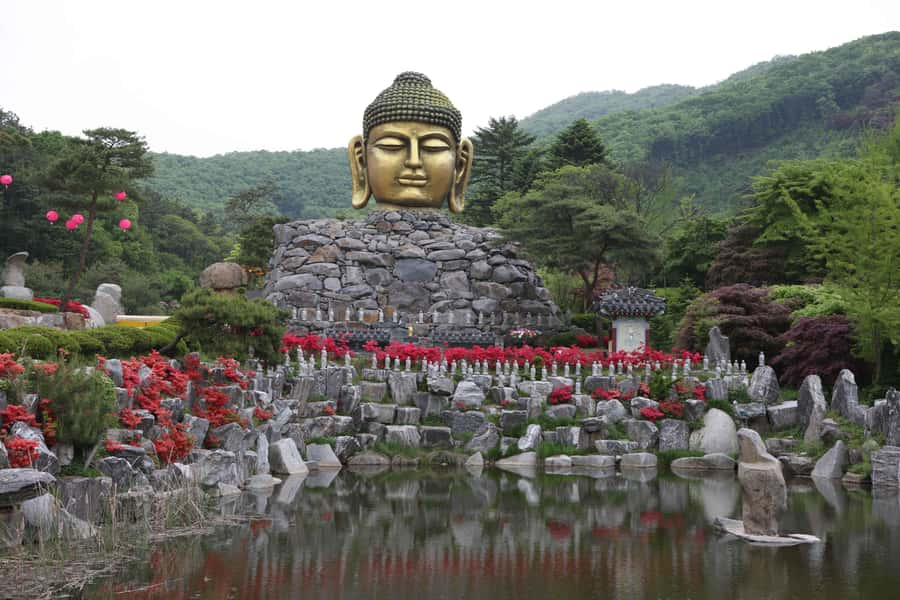
Waujeongsa Temple supplies the calmest setting of the four main stops. Its grounds include Buddhist statues and sculptures, a stone pagoda, a stone bell, and a large stone Buddha seated on a lotus pedestal. The main hall houses a Buddha statue described as more than 10 meters tall and finished with gold leaf.
The temple gives the day a different rhythm. At Hwaseong, you are following a defensive structure. At Starfield Library, you are looking upward at design and books. At Waujeongsa, you have space to slow down and consider Buddhist art, religious practice, and the way sculpture shapes a place.
The statue collection is part of the attraction. You are not visiting only for one hall or one famous gate. The combination of large figures, stonework, and temple buildings makes the grounds worth taking your time over, even if your visit is relatively short.
Your guide can also make this stop more meaningful by explaining what you are seeing. April was praised for explaining Korean history and the places on the route, while Andrew was noted for helping with individual needs. That sort of guidance matters at a temple, where a little context helps you look beyond the most obvious statue.
As with the fortress, keep the physical side in mind. The tour is not suitable for wheelchair users, and people with heart problems are advised not to book. The program does not provide baby seats, while infants aged 0 to 2 can ride free only when sitting on an adult’s lap.
More Castle Tours in the world:
- Seville: Royal Alcázar Entry Ticket
★ 4.6 · 28,378 reviews - Stonehenge, Windsor Castle, and Bath from London
★ 4.5 · 18,662 reviews - Bucharest: Dracula’s Castle, Peles Castle, & Brasov Old Town
★ 4.5 · 17,858 reviews - From Munich: Neuschwanstein & Linderhof Castle Full-Day Trip
★ 4.6 · 14,646 reviews
Making gimbap and learning about dried laver
The final activity gives the day a useful change of pace. At the laver museum and hanbok-wearing experience center, you learn about the making of gim, the dried seaweed used in many Korean dishes. You can also take part in a kimbap-making class and try on hanbok.
This is one of the best features for anyone who wants more than sightseeing. You are not only looking at Korean food in a restaurant window. You get to handle the ingredients and make something yourself. The activity also works well for families and first-time visitors because it is clear, social, and easy to remember.
One guide, Sean Kim, was praised for offering the cooking experience and keeping the information interesting. That detail points to the value of the guide’s attitude. The class is simple, but an engaged guide can explain why gim matters, how kimbap is put together, and how the activity fits into Korean food culture.
The hanbok portion adds a visual and cultural element. You can wear traditional clothing, take photographs, and finish the day with something lighter than another historical lecture. The program does not provide a meal, so do not confuse making kimbap with a full lunch or dinner. Meals and drinks are your own responsibility.
You may also find a chance to buy dried laver as a souvenir. It is a practical purchase, easy to pack, and more connected to the day than a generic gift-shop item. Personal spending is not included in the $49 price.
How the guides shape the experience

The guide is one of the biggest variables on a group tour. The listed experience uses an English-speaking guide and driver, and several guide names have received especially warm praise: Jinyong, Sean Kim, Andrew, April, and others.
The useful qualities to look for are clear history explanations, good timing, and willingness to help when the day gets hot or tiring. Andrew was described as helpful and flexible, including during a very hot summer visit. Jinyong was praised for tailoring explanations to the group. Sean Kim was noted for his energy and for making the cooking activity part of the experience rather than treating it as an afterthought.
That does not mean you can select a particular guide when booking. It does mean you should expect the experience to depend partly on who leads your departure. The guide may also adjust the order or timing because of traffic and weather.
The schedule is not a private tour designed around one person’s interests. You will need to keep moving with the group. Still, the ability to adapt matters, especially at a large site like Hwaseong where heat, walking speed, and photography can affect the day.
What the $49 price really covers
At $49 per person, this is a strong value if you want several Suwon highlights without arranging transport yourself. The price includes admission to the attractions, round-trip transportation from Seoul, an English-speaking guide and driver, and the kimbap-making and hanbok experiences.
That package matters because transport is the awkward part of combining these places independently. You would need to plan separate routes, account for transfer time, and pay for admissions as you go. The tour bundles the main costs into one booking.
The price does not include meals, drinks, or personal purchases. Plan to buy food separately, and bring a little extra if you want dried laver or other souvenirs. The program also does not promise a particular vehicle size, so a small group may ride in a car or van while a larger group may use a coach.
The value is highest for a first visit, a short Seoul stay, or anyone who wants an organized day outside the capital. It is less appealing if you already know Suwon well, prefer long unstructured visits, or want to spend an entire day studying Hwaseong at your own pace.
Practical advice before you reserve
Choose comfortable shoes first. That sounds basic, but the fortress can make or break the day for anyone wearing fashion shoes with little support.
Arrive at least 5 to 10 minutes before departure. The tour uses designated Seoul meeting points, and late arrivals or no-shows cannot receive a refund. Check the exact meeting point tied to your selected booking option rather than assuming all departures use the same location.
Children over age 3 must be included in the passenger headcount. Infants aged 0 to 2 are free only when they sit on an adult’s lap, and baby seats are not available.
Build some flexibility into your expectations. Traffic, weather, and other conditions can change the order or details of the day. Political situations, extreme weather, and other major unexpected events may lead to rescheduling or a refund, but ordinary rain or snow and a participant’s sudden illness do not automatically qualify.
Pets are not allowed. The tour is also not suitable for wheelchair users or people with heart problems, and the amount of walking makes it a poor match for anyone who cannot comfortably manage an active day.
Cancellation is straightforward if your plans change: you can cancel up to 24 hours in advance for a full refund. You can also reserve now and pay later, which helps if your Seoul schedule is still taking shape.
Who should book this Suwon day trip?
I would choose this tour if you want a broad introduction to Suwon in one day and value convenience over complete control. It suits first-time visitors, families who like hands-on activities, photographers drawn to Starfield Library, and history fans who want to see a major fortress without arranging transport.
It also works well for people who want variety. You will move from royal history to modern design, then to Buddhist sculpture and Korean food. That range keeps the day from feeling like one long museum visit.
I would think twice if you dislike group schedules, need step-free access, have heart problems, or want a slow and detailed exploration of every fortress section. The tour covers a lot, but that means each stop receives a limited amount of time.
Should you book it?
Book this experience if you want the easiest way to combine Suwon Hwaseong Fortress, Starfield Library, Waujeongsa Temple, and a gimbap and hanbok activity for $49. The strongest reasons are the UNESCO site, round-trip transport, and guides such as Andrew, Jinyong, April, or Sean Kim who can turn the stops into a connected story.
Skip it if the walking sounds difficult or if you would rather spend a full day at Hwaseong alone. For most fit visitors with one open day beyond Seoul, the mix of history, design, temple art, and food makes this a well-priced and unusually varied outing.
FAQ
Where does the tour start?
The tour starts at one of three Seoul meeting points. The exact meeting point depends on the booking option you choose.
Where does the tour end?
The activity ends back at the meeting point in Seoul.
What is included in the price?
The $49 price includes attraction admissions, round-trip transportation from Seoul, an English-speaking guide and driver, a kimbap-making experience, and a hanbok-wearing experience.
Are meals and drinks included?
No. Meals and beverages are not included, so you should budget separately for food and drinks.
How much walking is involved?
The tour involves a significant amount of walking, especially at Suwon Hwaseong Fortress. Comfortable shoes are recommended.
Is the tour suitable for wheelchair users?
No. The tour is listed as unsuitable for wheelchair users.
Can infants and children join?
Children over age 3 must be included in the passenger headcount. Infants aged 0 to 2 can join free of charge only if they sit on an adult’s lap, and baby seats are not available.
What happens if the weather or traffic changes the schedule?
The exact order or details may change because of traffic and weather. Major unforeseen events, including extreme weather or political situations, may lead to rescheduling or a refund, but ordinary rain or snow is not listed as a reason for a refund.
Can I cancel for a full refund?
Yes. You can cancel up to 24 hours before the activity for a full refund.
Newly walked in the world
- Private Tour Egyptian museum, Hanging Church, Castle of Saladin★ 5.0 · 2 reviews
- Cairo Egyptian museum, Cairo citadel and Alabaster mosque day tour★ 5.0 · 2 reviews
- Explore the History of Egyptian Museum Citadel and Khan Bazaar★ 5.0 · 2 reviews
- Egyptian Museum, Mohamed Ali Mosque and Citadel★ 5.0 · 12 reviews
- Egyptian Museum, Citadel and Old Cairo Tour★ 5.0 · 118 reviews
- Full-Day Private Guided Tour of Egyptian Museum, Pyramids and Cairo Citadel★ 5.0 · 2 reviews
- Cairo Tour to Egyptian Museum Citadel and Khan Khalili Bazaar★ 5.0 · 10 reviews
- Egyptian Museum, Cairo Citadel and Coptic Cairo Private Tour★ 5.0 · 5 reviews
Fortress & Citadel Tours, compared.



From Cairo Alexandria Catacombs, Citadel Day Trip with Lunch
Read our review →
Charleston historical walking tour with a Professor of History at The Citadel
Read our review →
Hue Customizable Tour with Imperial Citadel & Forbidden City
Read our review →
Desert Safari: Luxury Fortress Dinner, Camel Ride & Dune Bashing
Read our review →
Egyptian Museum, Citadel, and Old Cairo Guided Tour
Read our review →Browse the lists this tour appears in