Review · SEVILLE
Seville: Small-Group Alcázar Guided Tour & Entry Ticket
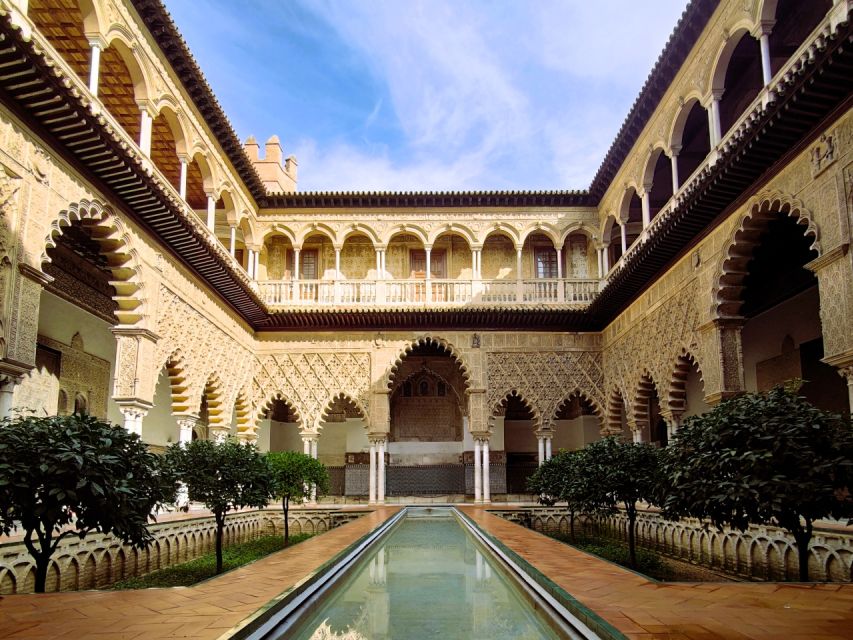
Seville’s Alcázar is not one palace but a long royal story told in stone, tile, plaster, water, and gardens. This two-hour tour moves from early palace remains through Islamic and Christian additions, then ends at the Maria Padilla Baths, where you can continue exploring on your own.
I like the small group, capped at 10 people, because a guide can answer questions and keep the pace human. I also like that the ticket is arranged ahead of time, saving you from the ticket-office queue. The main drawback is that you may still wait at security and document checks, and two hours is enough for an introduction, not every corner of this large complex.
Key points at a glance
- A maximum of 10 people: The small size makes it easier to hear your guide and ask questions.
- A clear route through several eras: You’ll see the Justice Room, Palace of Plaster, House of Trade, Mudejar Palace, Gothic Palace, and Maria Padilla Baths.
- Strong guide-led storytelling: Guides including Carlos, Carmen, Laura, Valentín, Barbara, and Marta are praised for clear explanations, humor, and historical context.
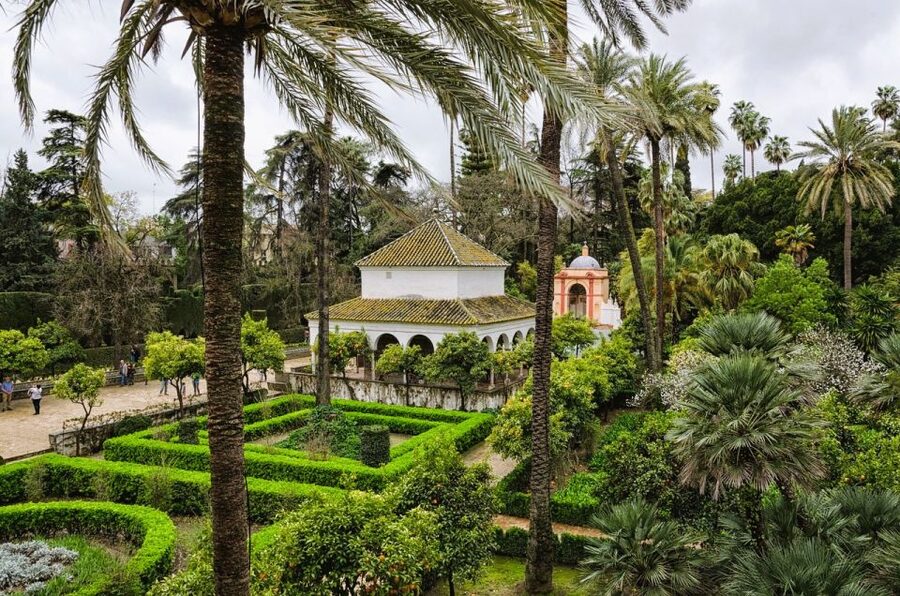
- Gardens after the tour: The guided portion ends inside the complex, so you can stay and explore the gardens without rushing to leave.
- Pre-purchased admission: You skip the ticket-office line, though security and ID checks still apply.
- A useful choice for first-time visitors: The palace can feel confusing without context, and the guide gives you a sensible path through it.
Why the Alcázar works best with a guide
The Alcázar is beautiful enough to impress you without help. Its courtyards, patterned tile, carved plaster, pools, and garden paths provide plenty to admire. But without a guide, the building can feel like a series of handsome rooms rather than a connected story.
The palace grew over centuries. Muslim rulers shaped the early complex, Christian monarchs adapted and expanded it, and later kings added their own marks. The result is not a single style. You’ll see Moorish design beside Christian Gothic construction, with later royal uses layered on top.
That mixture is the heart of the visit, but it takes explanation. A guide can point out how a room reflects its period, why a particular ruler rebuilt part of the palace, and how Seville’s role in Spanish expansion affected the Alcázar.
The guides on this tour have different personalities, but the strongest qualities are consistent. Carlos is repeatedly described as funny, warm, and able to make difficult material easy to follow. Carmen is praised for turning historical detail into stories and for answering questions thoughtfully. Laura brings enthusiasm and clear explanations, while Valentín is especially strong on the broader story of the palace and Spain.
You should still expect a real tour rather than a private lecture. With up to 10 people, the guide can pause for questions, wait while you take pictures, and keep an eye on the pace. Groups may be smaller, sometimes around six or seven people, though the advertised limit is 10.
More Castle Entry Tickets in Spain
- Seville: Alcázar and Cathedral Entry Ticket and Guided Tour
★ 4.6 · 5,056 reviews - Small-Group Alcazar of Seville Guided Tour with entry ticket
★ 5.0 · 536 reviews - Seville: Royal Alcázar Entry Ticket
★ 4.6 · 28,378 reviews
Meeting beneath Seville’s great landmarks
You meet at the large statue in Plaza del Triunfo, between the Alcázar and Seville Cathedral. This is a practical location in the center of Seville, but it can be busy, so arrive with enough time to identify the guide.
Look for a white lanyard and a white bag marked SEVILLE UNIQUE EXPERIENCES. Instructions are sent the day before by WhatsApp, text message, and/or email, so check all the contact methods you supplied when booking.
The plaza gives your guide room to introduce Seville and the palace before you enter. This opening matters because it helps you place the Alcázar in the city around it. You’ll also get a glimpse of the earliest remains of the palace complex before moving toward the entrance.
The scheduled meeting time can shift by as much as 15 minutes during the busiest periods, depending on ticket availability. Keep that in mind if you are arranging lunch, another tour, or a timed visit nearby.
Entering the Alcázar without the ticket-office queue
The tour includes a pre-purchased monument ticket, so you go past the ticket-office line and proceed toward the entrance with your guide. This is a real time-saver, especially when demand is high.
It does not mean instant entry. Everyone still passes through airport-style security, and staff check identification and ticket details. You may wait at the entrance while these checks take place. Bring the original passport or ID card used for the booking. Photocopies and pictures of documents are not accepted, and the Alcázar can deny entry if the details do not match.
A student card is also listed among the items to bring. If a student status was part of your booking, carry the original card rather than relying on a digital image.
Large bags, oversize luggage, food, drinks, pets, weapons, and sharp objects are not allowed. Pack lightly. This is useful advice for any visit to a major monument, but here it also helps you get through security with less fuss.
The Justice Room and Palace of Plaster
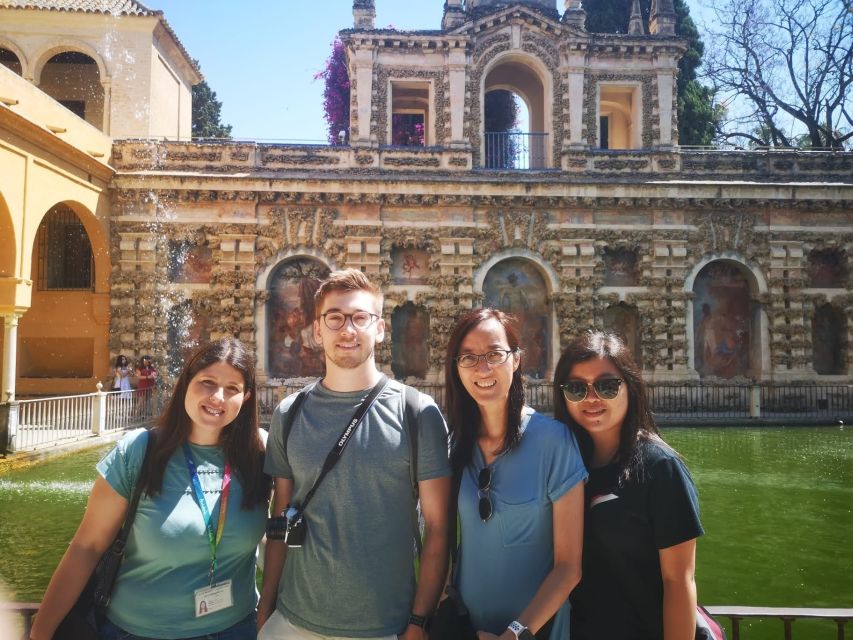
The first major indoor stops are the Justice Room and the Palace of Plaster. These rooms show why the Alcázar deserves more than a quick photo stop.
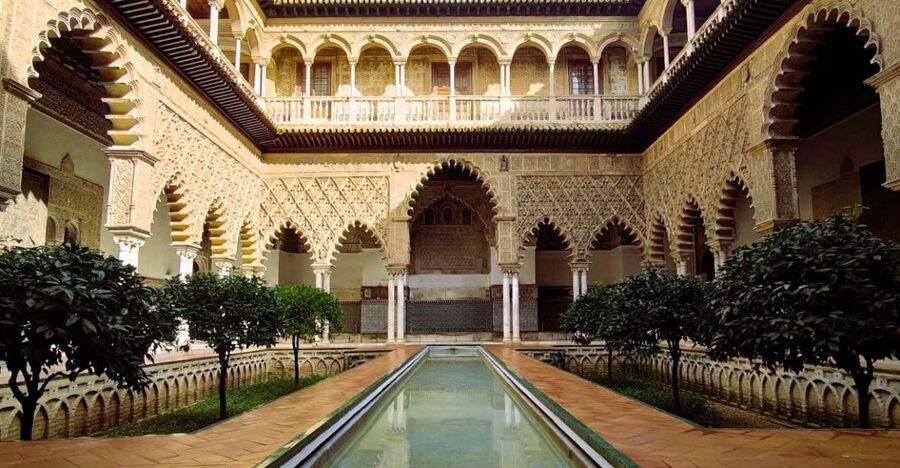
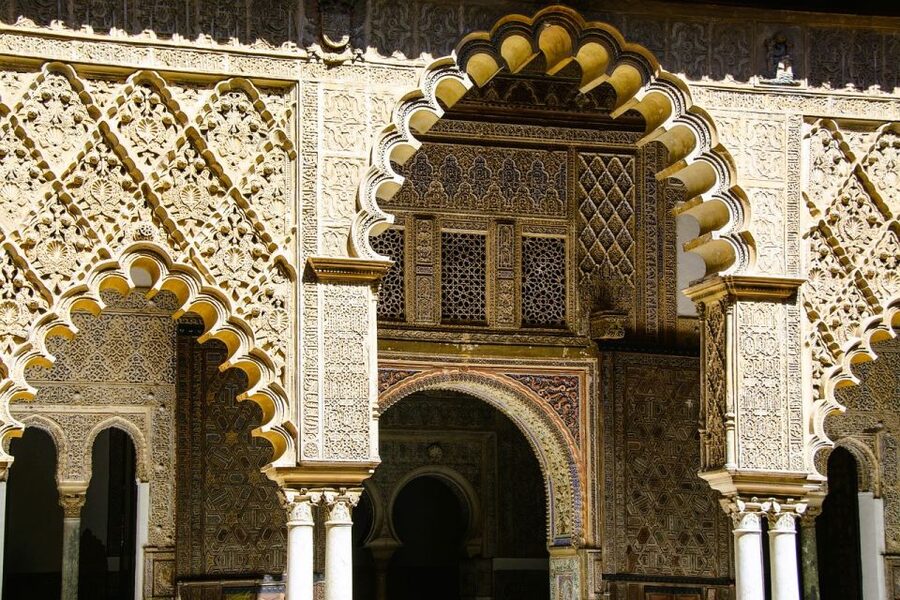
The Justice Room connects the palace to the business of rule and judgment. The Palace of Plaster is especially striking for its decoration, with surfaces that reward a slower look. Your guide’s job here is to connect the visual details to the people and events associated with the rooms.
This is where the tour’s small size begins to pay off. You can ask about a design feature, a ruler, or a particular story without having to fight for the guide’s attention. Several guides are praised for handling complicated history in a way that stays lively rather than turning into a list of dates.
Do not expect every room to receive equal time. A two-hour visit has to make choices. If you are fascinated by architecture, ask your guide questions as you go. That helps shape the explanation toward what interests you most.
More Guided Castle Tours in Seville
- Seville: Cathedral, Giralda & Alcazar Entry With Guided Tour
★ 4.6 · 8,560 reviews - Alcázar of Seville Skip-the-Line Tickets and Guided Tour
★ 4.6 · 3,941 reviews - Seville: Alcázar Guided Tour
★ 4.5 · 3,371 reviews - Seville: Alcazar Skip-the-Line Guided Tour with Tickets
★ 4.3 · 2,188 reviews
Seville’s Atlantic story in the House of Trade
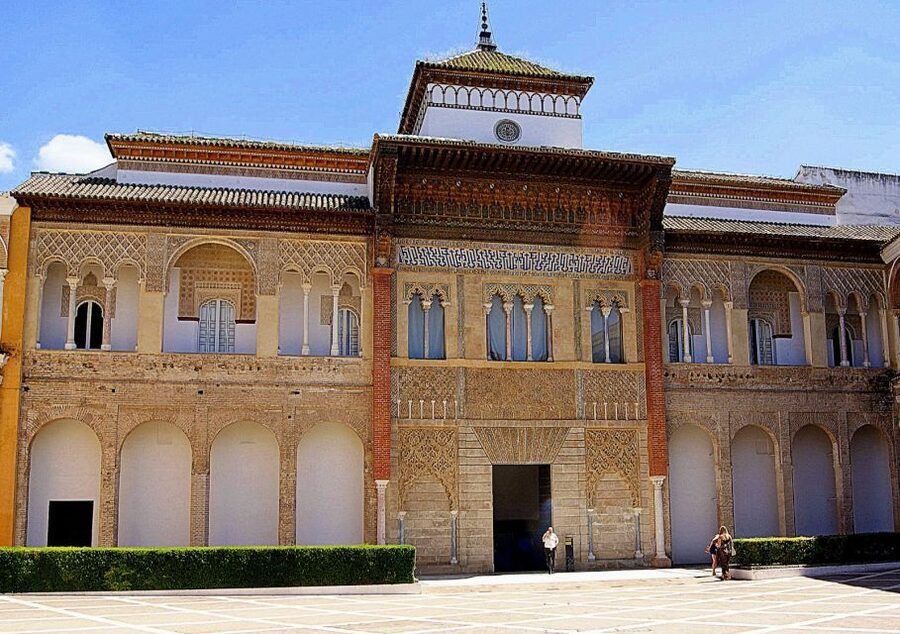
The route then reaches the House of Trade and the Admiral’s Room. These spaces connect the Alcázar to Seville’s role during the discovery and conquest of the Americas.
This part gives the palace a wider meaning. The Alcázar was not only a residence with pretty courtyards. It was also tied to royal power, administration, commerce, and Spain’s expanding reach across the Atlantic.
I find this section particularly useful for visitors who know Seville mainly for its architecture. It explains why the city became such an important center of power and why the palace mattered beyond its walls.
Your guide may also place the rooms in the larger story of Spain. Several guides are praised for doing this well, answering general questions about the country rather than sticking rigidly to the next room on the route. That broader context can make the Alcázar easier to understand.
The Mudejar Palace and Peter I’s personal mark
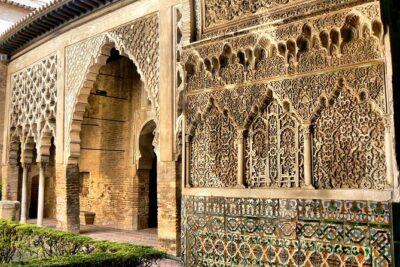
The Mudejar Palace, built by Peter I in the 1300s, is likely to be the visual high point of the indoor portion. Its design blends Moorish and Christian influences, a mix that tells you something about both the art of the period and the ambitions of its ruler.
Peter I wanted to leave his mark on the Alcázar. The palace shows how Christian kings adopted and reshaped design traditions associated with Islamic rule. Rather than presenting the building as a neat sequence of separate styles, the tour helps you see how they overlap.
Take your time with the decorative details, especially if your guide pauses to explain how the patterns and room layouts work. Guides including Barbara and Marta are praised for pointing out good places to appreciate the design and for allowing time for photographs.
The drawback is that the interiors can become crowded, particularly at popular times. A small group helps your movement, but it cannot clear the rooms. Stay close enough to hear, and be ready to pause when the guide gathers the group.
The Gothic Palace and the Christian royal chapter
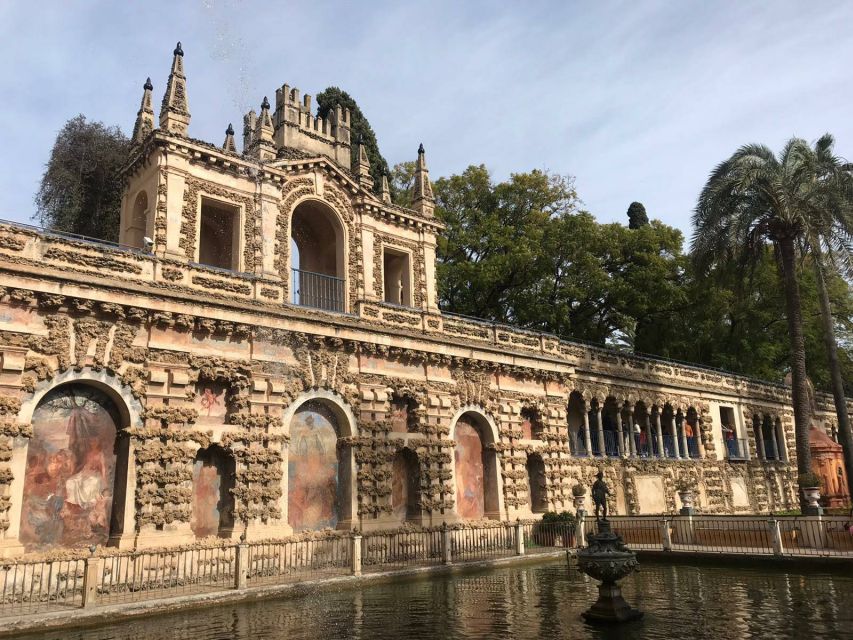
The Gothic Palace was the first Christian building added after the Castilian conquest. It offers a useful contrast to the Mudejar Palace and helps you see how different rulers used the Alcázar to express authority.
The contrast is not simply Muslim versus Christian. The entire complex shows centuries of adaptation. One generation built over, beside, or in conversation with what came before. The guide’s explanation helps you avoid the common mistake of treating each section as an isolated monument.
This is also a good point to ask questions about Spain’s religious and royal history. One guide was specifically praised for explaining the religious history of Spain, while others are noted for making a complicated subject approachable through stories and humor.
The tour keeps moving, so you will not have unlimited time in each room. If you want a very slow architectural study, you should plan to use the garden time and any permitted opportunity to revisit areas after the guided route.
Finishing at the Maria Padilla Baths
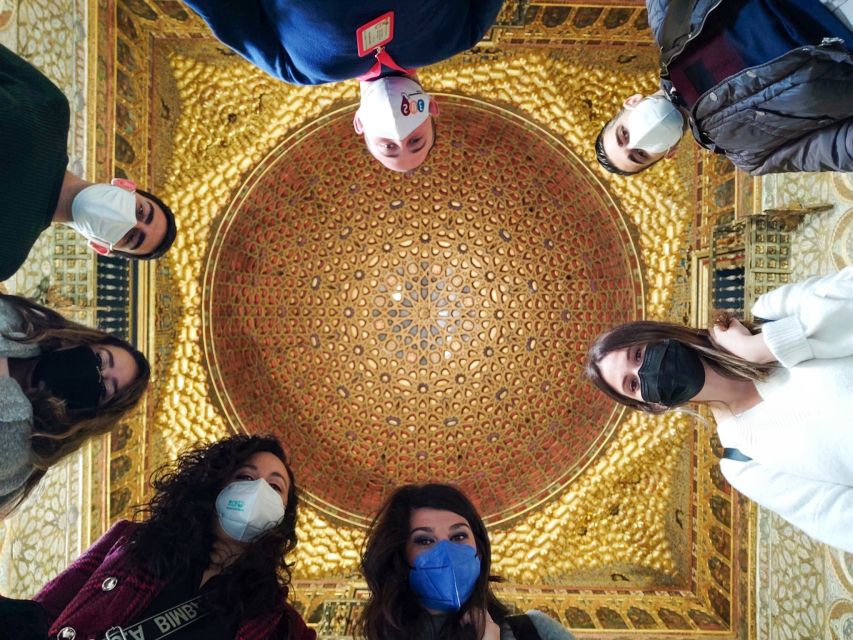
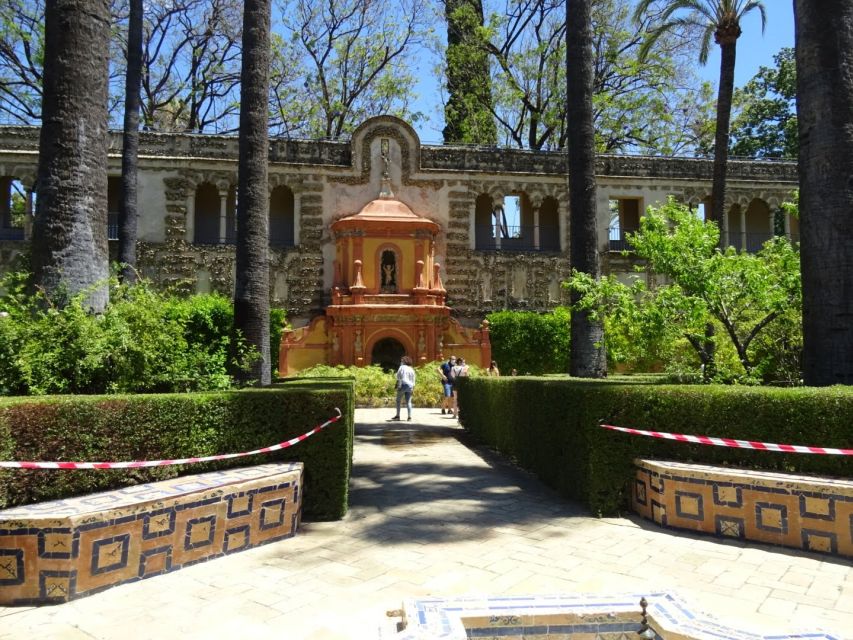
The guided visit concludes at the Maria Padilla Baths, a long, atmospheric underground space associated with the palace gardens. Reaching this point gives the tour a natural ending before you head outside into the gardens.
The location is also practical. You do not finish at the entrance and have to leave immediately. You can remain inside the Alcázar and explore the gardens at your own pace.
That extra time is one of the best features of this experience. Several guides allow a little additional time when circumstances permit, but you should treat the official guided duration as two hours. Afterward, you can slow down, take photographs, revisit an area, or simply sit and enjoy the setting.
The gardens are large enough to need their own time. The guided route gives you the history and structure; your self-guided time lets you follow your own interests. If you prefer quiet corners, water features, or a relaxed walk after the indoor rooms, do not schedule another immediate appointment.
The gardens can close for safety during heavy wind or rain alerts. Some rooms or sections may also close because of restoration, official palace use, or safety concerns. The tour operates in rain or sunshine, but access to every part is not guaranteed.
Is $58 a fair price?
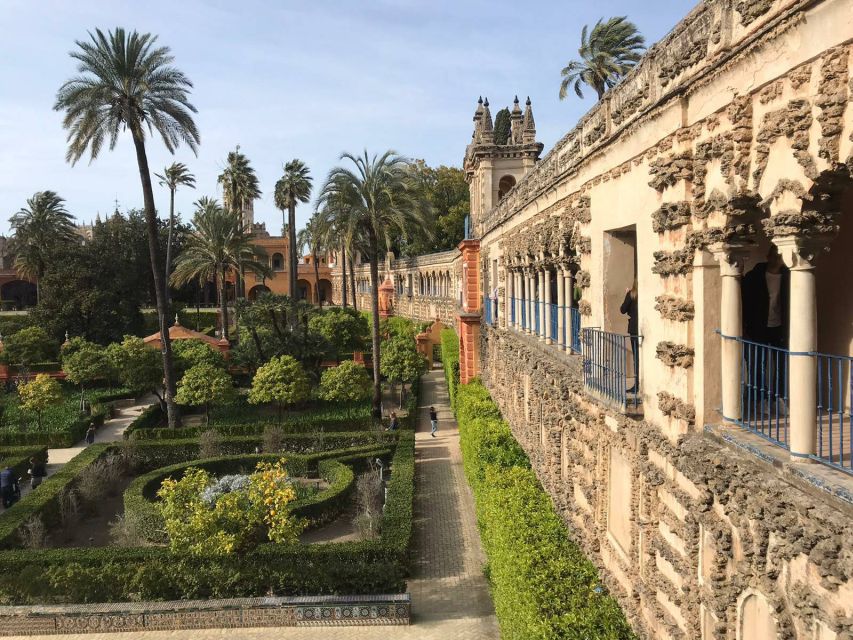
At $58 per person, this is not the cheapest way to enter the Alcázar. You are paying for more than admission, though. The price includes an English-language guided tour, a licensed local guide, the monument ticket, and a small group limited to 10 people.
The value comes down to how much help you want. If you are happy reading little or no on-site explanation and building your own route, independent entry may cost less. But the Alcázar is large, historically layered, and easy to misunderstand without background.
I think the price is easier to justify if you have limited time in Seville, care about history and architecture, or want to avoid the ticket-office queue. It also makes sense for people who prefer asking questions rather than listening through a large group.
The value is less clear if you dislike guided visits or want to spend the entire time moving at your own pace. Two hours follows a set route, even though you get free time afterward. You should also remember that the price does not include hotel pickup.
Who should book this small-group tour?
This tour suits a first visit to Seville, especially if the Alcázar is one of your main priorities. It is also a strong choice if you have only a day in the city and want a clear introduction without spending time figuring out the palace on your own.
Families and mixed-age groups may appreciate the short, focused format and the guides’ use of stories and humor. History fans should like the attention to rulers, architecture, religion, and Seville’s Atlantic connections.
The tour is wheelchair accessible, but the site may still include busy areas and security procedures. If you have particular mobility needs, confirm that the current route works for you before booking.
This may not suit you if you want a private tour, complete silence, or a long, detailed study of every room. The group is small, not private, and the palace may have closures or crowding beyond the guide’s control.
Practical advice for a smoother visit
Arrive at Plaza del Triunfo early enough to find the statue and identify the white lanyard and bag. Keep your phone available for the day-before instructions, and check WhatsApp, text messages, and email.
Bring the original identification document connected with your booking. Do not count on a photograph or photocopy. Carry a student card if relevant.
Wear something comfortable for standing and walking. The tour lasts two hours, and your time in the gardens comes afterward. Bring only a small bag, since food, drinks, large bags, and oversize luggage are not allowed.
If your group has more than seven people, headsets are provided. Even with audio equipment, stay near the guide, especially in crowded rooms. The small group makes this easier, but the Alcázar can still be noisy.
You can cancel up to 24 hours in advance for a 50 percent refund. Check the available starting times carefully, since the duration is fixed at two hours and meeting times may shift slightly during peak season.
Should you book the Alcázar tour?
I would book this tour if you want the Alcázar to make sense, not just look beautiful. The strongest reasons are the maximum group size of 10, the ticket-office shortcut, the excellent route through the palace’s major sections, and the chance to stay in the gardens afterward.
The main caution is simple: two hours goes quickly, and security, weather, restoration, or official use may affect what you see. Still, for a first visit, the tour gives you a strong foundation and leaves enough freedom afterward to enjoy the palace in your own way.
If you can choose among guides, names such as Carlos, Carmen, Laura, Valentín, Barbara, Marta, and Cristina appear repeatedly in the praise given to this experience. You cannot always select your guide, but the pattern is encouraging: expect an English-speaking local guide who aims to make the palace’s complicated past clear, lively, and memorable.
FAQ
Where does the tour meet?
Meet at the large statue in Plaza del Triunfo, between the Alcázar and Seville Cathedral.
How do I identify the guide?
The guide wears a white lanyard and carries a white bag marked SEVILLE UNIQUE EXPERIENCES.
How long does the tour last?
The guided experience lasts two hours. Afterward, you can continue exploring the Alcázar gardens at your own pace.
Is admission to the Alcázar included?
Yes. The monument entry ticket is included in the price.
Does the tour skip the entire entrance process?
The tour skips the ticket-office line because tickets are purchased in advance. You must still pass through ID checks and airport-style security, and some waiting may occur at the entrance.
What identification should I bring?
Bring the original passport or ID card whose details were used when booking. The Alcázar does not accept photocopies or pictures of documents.
Is the tour offered in English?
Yes. The tour includes an English-speaking live guide.
How large is the group?
The group is limited to 10 participants. Headsets are provided when more than seven people are in the group.
Can I stay in the Alcázar after the guided tour?
Yes. The tour ends inside the complex near the Maria Padilla Baths, and you can explore the gardens afterward. If you leave the complex, you cannot re-enter with the same ticket.
Is the tour wheelchair accessible?
Yes. The activity is listed as wheelchair accessible.
Can I bring food, drinks, or a large bag?
No. Food and drinks, pets, weapons, sharp objects, oversize luggage, and large bags are not allowed.
Can the gardens close?
Yes. The palace management may close the gardens during heavy wind or rain alerts. Other areas may close for restoration, official palace use, or safety reasons.
More Alcazar Tours in Seville
- Seville: Alcázar, Cathedral & Giralda Skip-the-Line Tour
★ 4.8 · 11,525 reviews - Seville: Priority Access Cathedral, Giralda & Alcázar Tour
★ 4.8 · 7,563 reviews - Alcazar and Cathedral of Seville Tour with Skip the Line Tickets
★ 4.5 · 4,579 reviews - Alcazar of Seville Exclusive Group, max. 9 travelers
★ 5.0 · 1,005 reviews
More Guided Castle Tours in Spain
- Seville: Alcázar, Cathedral & Giralda Fast Track Guided Tour
★ 4.5 · 2,142 reviews - Seville: Cathedral, Giralda & Alcázar Guided Tour
★ 4.5 · 2,042 reviews - Alcazar, Cathedral and Giralda Guided Tour with Priority Tickets
★ 4.5 · 1,455 reviews - Seville: Alcazar Guided Tour with Entrance
★ 4.5 · 418 reviews
Newly walked in Seville
- Alcazar of Seville Private Tour★ 4.5 · 93 reviews
- Alcazar and Cathedral of Seville Private Tour★ 5.0 · 149 reviews
- Seville: Guided Walking Tour with Alcazar & Cathedral Access★ 4.9 · 65 reviews
- Private Walking Tour Alcazar and Cathedral in Sevilla★ 5.0 · 172 reviews
- Alcázar and Jewish Quarter Guided Walking Tour in Seville★ 4.0 · 32 reviews
- VIP Guided Seville Alcazar Pre-Opening, Cathedral & Old Town★ 5.0 · 191 reviews
- Alcazar of Seville Exclusive Group, max. 9 travelers★ 4.8 · 198 reviews
- Alcazar and Cathedral Tour★ 4.5 · 215 reviews
Alcazar Tours, compared.


Alcázar, Cathedral & Giralda Skip-the-Line Tour
Read our review →
Segovia and Toledo Tour, Alcazar, and Cathedral
Read our review →
Alcazar and Cathedral of Seville Tour with Skip the Line Tickets
Read our review →
Toledo & Segovia Tour with Cathedral and Alcazar Tickets & Lunch
Read our review →
Alcázar of Seville Skip-the-Line Tickets and Guided Tour
Read our review →