
Review · KHIVA
Transfer: Bukhara – Khiva via Ancient Fortresses
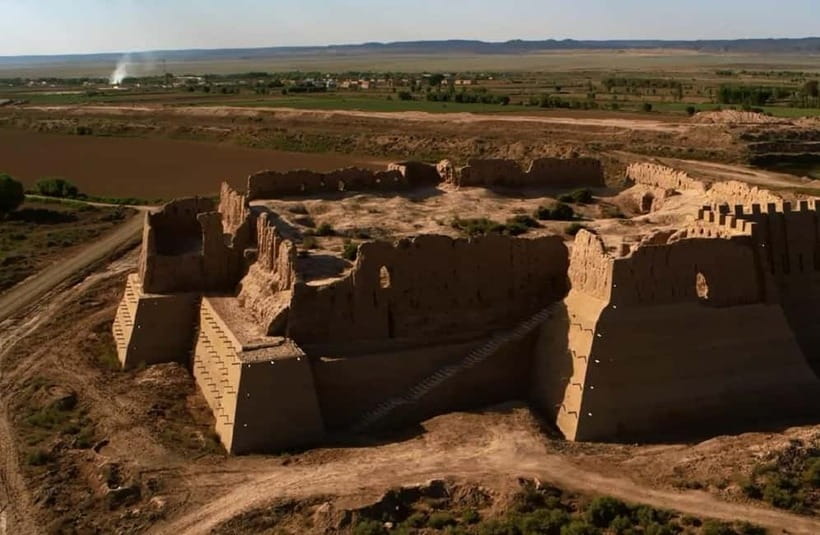
The most unusual part of this trip is that your transfer becomes a journey through Ellikkala, the land of 50 fortresses. Instead of spending nine hours simply crossing Uzbekistan, you stop at Toprakkala, Kizilkala, and Ayazkala, three stark clay ruins rising from the desert between Bukhara and Khiva.
I like two things in particular: the private door-to-door service, and the chance to see a side of Khorezm that many people miss. Drivers such as Pavlik, Jasur, and Ulugkbek have been praised for safe driving and useful explanations. The drawback is the long road day. Nine hours in a car, even with stops, requires patience, good shoes, water, and sensible expectations.
Key points to know before booking
- Three ancient fortresses in one transfer: Visit Toprakkala, Kizilkala, and Ayazkala on the way from Bukhara to Khiva.
- Toprakkala has unusual importance: The site is linked with Khorezm’s first capital, early city planning, written records, a calendar, and plaster statuettes of singers.
- Ayazkala is the dramatic stop: Its three sections and remote desert setting show how the oasis frontier was defended from northern nomads.
- A private ride costs $160 for up to three people: That works out well for a small group, but entrance tickets and personal expenses are extra.
- Drivers speak English or Russian: Pavlik, Jasur, Ali, and Ulugkbek are among the drivers praised for friendly service and careful driving.
- The trip ends at your Khiva hotel: Pickup and drop-off are included, so you do not need to arrange separate transport on either side.
Why this is a smart Bukhara to Khiva transfer
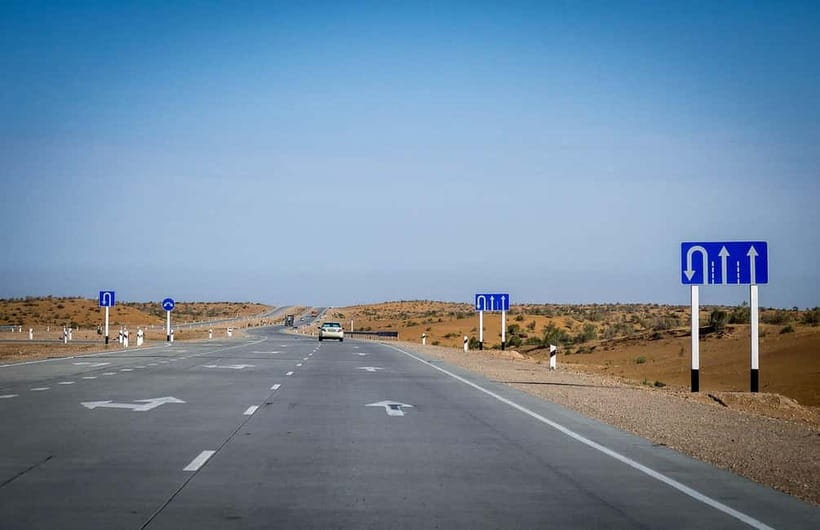
The overland route between Bukhara and Khiva can feel like a transport problem. This service gives the road a clear purpose. You leave your Bukhara hotel, cross toward Karakalpakstan, stop at three major fortress sites, and arrive at your Khiva hotel at the end of the day.
That makes the trip especially useful if you already plan to travel between the two cities. You are not adding a separate excursion with another return journey. Instead, you use a necessary transfer to reach archaeological sites that sit far from the main city centers.
The setting changes as you go. The Kyzylkum Desert provides the broad, dry backdrop, while the fortresses appear as low, weathered walls and earthen towers. These are not polished museum pieces. You are walking around exposed ruins, so the experience feels direct and physical.
I would not book this as a relaxed sightseeing day. It is a full road trip with historical stops. The reward is variety: desert views, old defensive structures, a private vehicle, and a practical arrival in Khiva.
More Fortress and Citadel Tours in the world:
- Carcassonne: Castle and Ramparts Entry Ticket
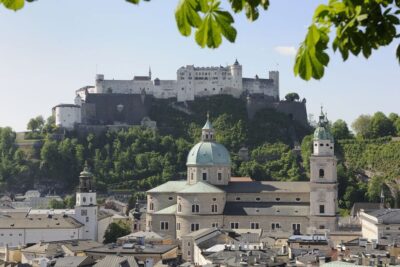
★ 4.6 · 2,884 reviews - Salzburg: Hohensalzburg Fortress Admission Ticket
★ 4.6 · 2,236 reviews - Salzburg: Best of Mozart Fortress Concert and Dinner
★ 4.5 · 1,424 reviews
Toprakkala, the former capital in clay
Toprakkala is the strongest first stop because it gives the whole journey historical weight. Its name means Clay Fortress, and the site is described as the first capital of Khorezm.
The importance here goes beyond impressive walls. Plans of a city were found at Toprakkala, offering evidence of organized statehood in the 4th century AD. The site also produced some of the earliest written sources connected with Khorezm, along with a calendar and plaster statuettes of singers.
That combination makes Toprakkala valuable even if you are not an archaeology specialist. You can look at the remains and think about the city that once occupied this remote part of the oasis. The ruin helps explain that Khorezm was not simply a string of isolated desert outposts. It supported government, record keeping, culture, and planned urban life.
Your driver may explain the site as you walk or point out details along the way. The quality of the explanation depends on your assigned driver, but the available service is offered with English- or Russian-speaking drivers. Pavlik, Jasur, and Ulugkbek have been especially praised for making the long drive more interesting through conversation and explanations.
Bring shoes with a firm sole. Comfortable clothing is more useful here than anything stylish, and sunglasses help in the open desert light. The site is exposed, so you should also carry water and be ready for sun, wind, or cold depending on the season.
Kizilkala, the Red Fortress on the road
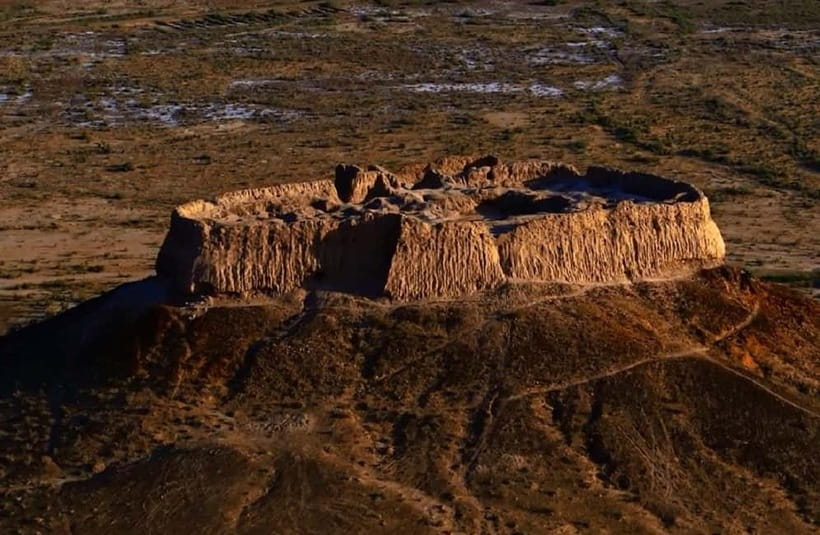
Kizilkala is a smaller stop, but it adds another layer to the route. The fortress was a garrison site, and its name means Red Fortress because of the color of the clay.
This is a good example of why the transfer works better than a direct ride. You are not seeing one famous ruin and then returning to the highway. You are building a picture of a defensive system, with different fortifications placed around the oasis.
Kizilkala may not take as much time as Ayazkala, and that is useful on a nine-hour day. It gives you a chance to stretch your legs, take photographs, and see a different form of clay construction without turning the stop into a major detour.
The service description places Kizilkala between Toprakkala and Ayazkala. The route is listed in slightly different spellings, including Kyzykkala, but it refers to the Red Fortress stop. If you are checking directions or discussing the day with your driver, use Kizilkala as the clearest name.
Ayazkala, the remote fortress group
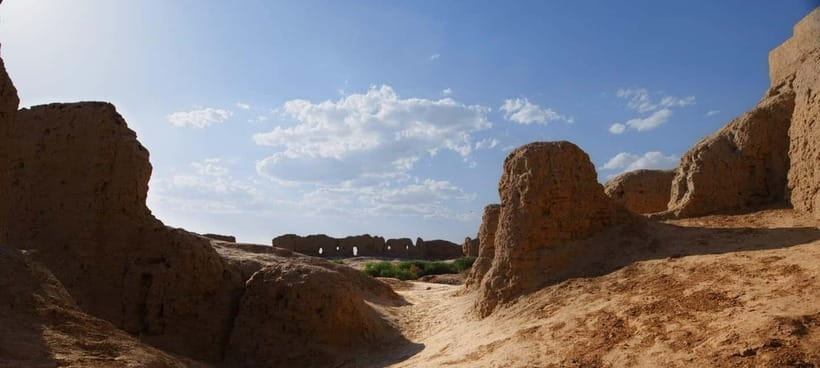
Ayazkala is likely to be the most memorable stop. It consists of three parts and is described as one of the more important fortresses in the oasis.
The fortresses were built around the borders of Khorezm to protect against raids by nomads from the north. Ayazkala was remote, well organized, and strongly protected. Its name means Severe Frost Fortress, a name that makes more sense in winter, when steppe cold can be harsh.
You get the most from Ayazkala by slowing down and looking at its position. The walls are part of a wider defensive idea, not just a single building. The open setting lets you see why a fortress could be placed there and how distance itself formed part of the protection.
Winter visitors should pay special attention to warm clothing. The advice is not decorative. Cold conditions can make an exposed ruin feel far tougher than the same visit in warmer weather. In summer or warmer months, sunglasses, water, and comfortable clothes matter just as much.
You should also accept that these are archaeological ruins in an open setting. Do not expect a visitor center, a cool indoor route, or a carefully paved walk at every point. The appeal is the raw setting, but that also means uneven walking and limited shelter.
More Castle Tours in the world:
- Seville: Royal Alcázar Entry Ticket
★ 4.6 · 28,378 reviews - Stonehenge, Windsor Castle, and Bath from London
★ 4.5 · 18,662 reviews - Bucharest: Dracula’s Castle, Peles Castle, & Brasov Old Town
★ 4.5 · 17,858 reviews - From Munich: Neuschwanstein & Linderhof Castle Full-Day Trip
★ 4.6 · 14,646 reviews
The Kyzylkum Desert between the stops
The desert crossing is not empty time. It is the part of the day that connects the fortresses and makes their location understandable.
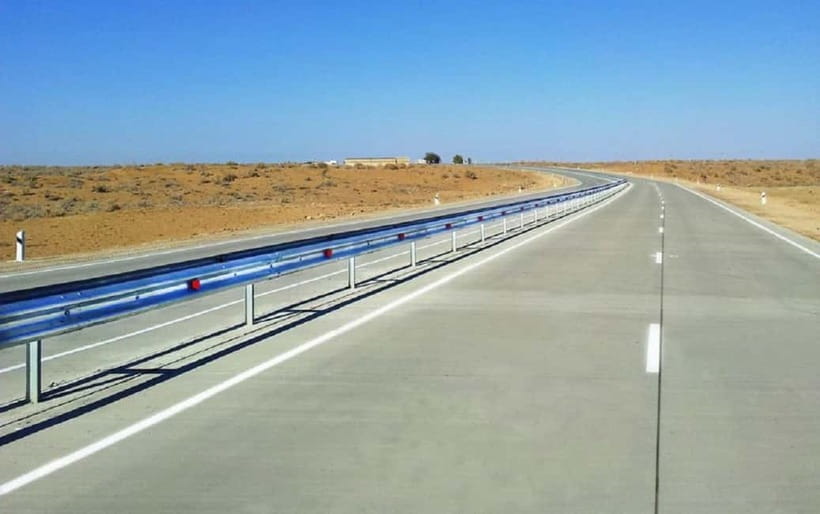
You will see broad desert scenery between stops, with the road carrying you away from the better-known urban centers of Uzbekistan. This is one reason the transfer feels different from a standard city-to-city ride. The fortresses do not sit inside a compact archaeological park. They are spread across a large historic region.
The desert also sets the pace. You spend substantial time in the air-conditioned vehicle, then get out for a concentrated visit. I prefer this rhythm to trying to force a quick visit to all three sites without any proper road time.
Bring your own water, since staying hydrated is specifically advised. Food and drinks are not allowed in the vehicle, so plan to drink before pickup, at suitable stops, or during the lunch break. An estimated lunch stop is included along the road, and one group stopped at a yurt camp for lunch. The exact lunch location is not guaranteed, so treat it as part of the day’s flexible road schedule rather than a fixed restaurant booking.
What the private vehicle adds
The private format is a major reason to choose this service. Pickup is from your Bukhara hotel, and drop-off is at your Khiva hotel. You are not required to return to Bukhara or find your way from a distant bus stop after visiting the ruins.
The listed price is $160 per group of up to three people. For three people, that is about $53 per person before entrance fees. Each monument costs about $1 to $2 per person, so the added site costs remain modest.
For one person, the value is less obvious. You are paying for convenience, a long private transfer, and access to the fortresses rather than for a cheap ride alone. For two or three people, the price becomes much easier to justify, especially since you combine transportation and sightseeing.
One practical note matters here: the advertised rate covers groups up to three, while a larger group has also used a comfortable minivan. Do not assume that the same $160 price applies to six people. Confirm the vehicle and price for a larger party before booking.
The air conditioning matters, particularly after walking around exposed ruins. Several drivers have also been praised for safe, moderate driving, which is important on a long road day. Ali was singled out for being kind and helpful, while Jasur was praised for safe driving and good English. Ulugkbek was described as friendly, sociable, careful, and generous with information. The assigned driver can vary, but these names give you a useful sense of the service level to hope for.
Timing, comfort, and the real length of the day
The stated duration is nine hours. That includes the drive from Bukhara, the three fortress visits, a possible lunch stop, and arrival in Khiva. It is best to regard this as a full day rather than a short transfer with a few quick photographs.
The timing can work well. One group reached Khiva at a good time after lunch at a yurt camp, and another arrived on schedule after stopping at several archaeological sites. Still, road conditions, time spent at each ruin, and lunch can affect the final arrival.
Wear shoes you can walk in comfortably. Comfortable clothes are recommended, and warm clothing is particularly important in winter. Sunglasses are useful in the open desert, and a camera is worth bringing for the walls, clay colors, wide views, and changing light.
The vehicle is listed as air-conditioned and wheelchair accessible. The service is private, which gives you more control over pauses than a shared bus would, but the ruins themselves are historic open-air sites. If you use a wheelchair, confirm what level of access is possible at each fortress before booking, since vehicle accessibility does not automatically mean every ruin has smooth paths.
Communication and service quality
The listed driver languages are English and Russian. That makes the trip easier if you want more than a silent transfer, but the amount of historical explanation depends on the driver assigned to you.
Several drivers have been specifically praised for good English, friendly conversation, safe road habits, and willingness to point out sites along the way. That matters because the drive occupies much of the day. A helpful driver can turn long stretches of road into useful context rather than dead time.
There is one warning to keep in mind. One booking had a poor communication experience as the departure date approached, with questions not being answered. I would confirm your pickup time, vehicle size, driver language, and lunch expectations before the day begins. Wait in your hotel lobby five minutes before the scheduled pickup.
The cancellation terms are traveler-friendly: you can cancel up to 24 hours ahead for a full refund, and reserve now while paying later. Those terms are useful when your Uzbekistan route may change, though you should still keep your hotel and onward plans aligned with the nine-hour schedule.
Who should book this transfer
I recommend it most strongly to three types of people.
First, it suits anyone already moving from Bukhara to Khiva who wants more from the road. You avoid spending the entire day on a direct transfer and see important sites that are difficult to reach on your own.
Second, it works well for history-minded visitors who enjoy ruins more than polished attractions. Toprakkala offers political and cultural importance, Kizilkala shows a garrison role, and Ayazkala presents a wider defensive system.
Third, it is a good fit for a small private group. Three people can divide the $160 cost and enjoy door-to-door service without sharing the vehicle with strangers.
I would be more cautious if you dislike long drives, outdoor walking, or basic archaeological settings. The sites are remote, the day is long, and the road takes up much of the schedule. If your only goal is to reach Khiva as quickly as possible, a direct transfer may suit you better.
Should you book it?
Book this if you want to turn a necessary Bukhara to Khiva journey into a memorable day of desert archaeology. The best reasons are the three fortress stops, the private hotel-to-hotel service, and the chance to understand Khorezm beyond its famous cities.
For the strongest value, share the vehicle with two companions, confirm the driver language and pickup details, and pack water, sunglasses, comfortable shoes, and warm layers. If you can handle nine hours on the road, the fortresses give this transfer a clear purpose and a much stronger sense of place.
FAQ
How long does the transfer from Bukhara to Khiva take?
The stated duration is 9 hours, including the fortress visits, road time, an estimated lunch stop, and arrival in Khiva.
Which fortresses are visited?
The route visits Toprakkala, Kizilkala, and Ayazkala before continuing to Khiva.
Where does pickup take place?
Pickup is from your hotel in Bukhara. You should wait in the hotel lobby five minutes before the scheduled pickup time.
Where does the trip end?
The driver drops you at your hotel in Khiva.
How much does the private transfer cost?
The listed price is $160 per private group of up to three people.
Are entrance tickets included?
No. Entrance tickets cost about $1 to $2 per monument per person and are paid separately.
What languages does the driver speak?
Drivers are available in English and Russian.
Is the vehicle air-conditioned?
Yes. An air-conditioned vehicle is included.
Is the transfer wheelchair accessible?
The activity is listed as wheelchair accessible. Since the fortress sites are outdoor archaeological locations, confirm the access conditions for each monument before booking.
Can I cancel the booking?
Yes. You can cancel up to 24 hours in advance for a full refund, and the reserve-now, pay-later option is available.
Newly walked in the world
- 3 hour: Warsaw Old Town with Royal Castle /inc. Pick-up/★ 4.7 · 14 reviews
- From Vienna: Bratislava with Local Guide, Castle & UFO Views★ 4.6 · 69 reviews
- Montreux: Chateau Chillon Entrance Ticket★ 4.7 · 158 reviews
- Day Trip to Montreux, Chaplin’s World & Chillon Castle& apéritif★ 4.5 · 178 reviews
- Lucerne CH Experience: Cheese, Chocolate, Chapel Bridge & Château★ 4.5 · 155 reviews
- Postojna Cave & Predjama Castle from Trieste★ 4.5 · 122 reviews
- Gdansk and Malbork Castle Small Group Tour from Warsaw with Lunch★ 4.5 · 20 reviews
- Everyday Chopin Concert at 7 PM with candlelight by the Castle★ 4.5 · 100 reviews
Fortress & Citadel Tours, compared.

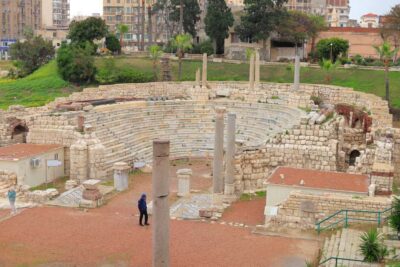
From Cairo Alexandria Catacombs, Citadel Day Trip with Lunch
Read our review →
Charleston historical walking tour with a Professor of History at The Citadel
Read our review →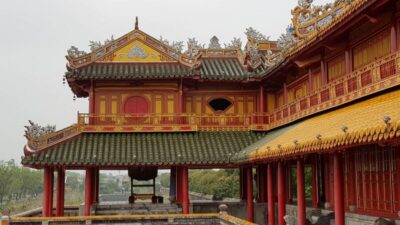
Hue Customizable Tour with Imperial Citadel & Forbidden City
Read our review →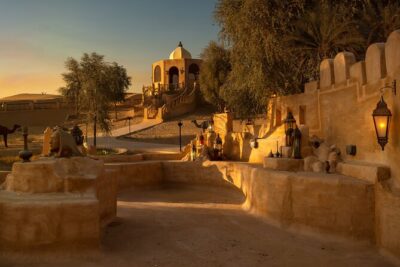
Desert Safari: Luxury Fortress Dinner, Camel Ride & Dune Bashing
Read our review →
Egyptian Museum, Citadel, and Old Cairo Guided Tour
Read our review →Browse the lists this tour appears in