
Review · OSAKA
Ultimate Osaka Walking Tour: Castle, Dotonbori & Hidden Gems
Osaka is easiest to understand on foot, and this tour gives you a full day of contrasts: the broad grounds of Osaka Castle, the neon and food stalls of Dotonbori, the old lanes around Hozenji, and the retro streets of Shinsekai. You cover a lot of ground, but the route keeps changing before the city has a chance to feel repetitive.
I like the mix of major sights and local corners, especially Hozenji Yokocho and the market streets that are easy to miss on your own. I also like the guides’ strong focus on context. Tim, Scott, Kenzo, Daniel, and Adam are all praised for explaining Japanese history, food, and daily life in clear English. The catch is simple: this is a real walking tour, often around 5 to 6 miles or 15,000 steps, and you do not enter Osaka Castle.
Key points at a glance
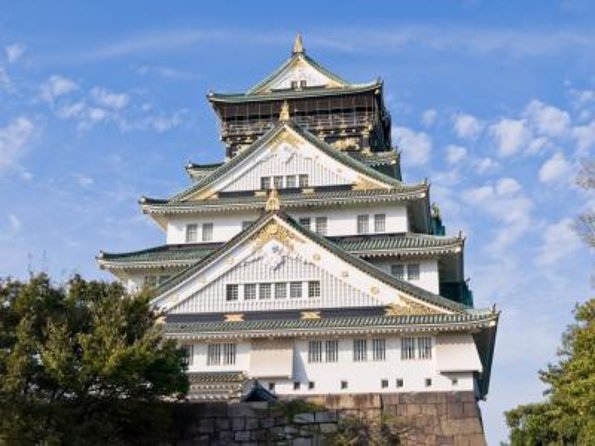
- Osaka Castle begins the day: You explore the grounds and learn about its role in Japan’s samurai-era unification, but castle entry is not included.
- A full city cross-section: The route links the castle, youth culture, shopping streets, food districts, old Osaka lanes, and Shinsekai.
- Lunch is included: You receive Osaka-style street food and a drink at a local restaurant.
- Expect serious walking: The pace is described as leisurely, but the distance can reach 5 to 6 miles.
- Two short train rides are part of the route: Fares cost ¥240 and ¥190 and are paid separately.
- Private or small-group options: Group tours allow up to 11 people, while private tours offer more flexibility for pace and questions.
Why this route gives you a useful first look at Osaka
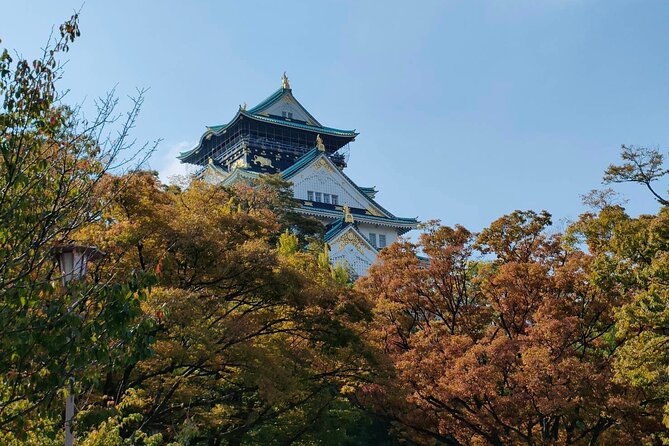
Many Osaka tours focus on Dotonbori alone. This one makes a stronger attempt to show how separate parts of the city fit together. You begin with Osaka’s military and political past, move through shopping and youth culture, stop for food, then finish in an older entertainment district with a very different mood.
That range is the main reason I would consider booking it early in an Osaka visit. You get practical orientation as well as sightseeing. A good guide can point out where to eat later, explain local customs, and help you understand why Osaka feels less formal and more food-focused than many visitors expect from Japan.
The time choices matter. A five-hour version gives you a brisk introduction, while six or seven hours allow more room for questions, food stops, and a relaxed pace. The route is not simply a string of photo stops. The guides are expected to connect the places to Osaka’s past and present, which is where the tour earns much of its value.
More Castle Walking Tours in Japan
- Tokyo Castle & Imperial PalaceーShogun Walking Tour
★ 4.7 · 1,068 reviews - Tokyo Castle & Imperial PalaceーShogun Walking Tour
★ 5.0 · 724 reviews - Osaka Castle Walking Tour and Castle Tower Admission
★ 5.0 · 561 reviews
Osaka Castle grounds, without the castle interior
The morning starts at Osaka-jo-koen Station, near Osaka Castle. The castle is one of Osaka’s major symbols, and its story is tied to the sixteenth-century struggle to unify Japan during the samurai era.
You spend about 90 minutes in the area. That is enough time for the guide to explain the castle’s role, show useful photo locations, and give you a sense of the scale of the grounds. Adam is especially praised for his explanations of the castle and for finding good places for photographs. Daniel also receives strong marks for making the castle and surrounding area easy to understand.
Be clear about what is not included: you do not go inside Osaka Castle. There is no admission ticket in the tour price, and the itinerary treats the castle grounds as the main stop. If you want to see the interior museum and observation areas, plan a separate visit.
That limitation is not necessarily a problem. The castle interior is more museum than original samurai-era building, and this tour is designed to give you a broad view of Osaka in one day. Still, if entering the castle is a top priority, you should reserve extra time before or after the walk.
Amerika-mura and Osaka’s younger side
From the castle area, the tour shifts to Amerika-mura, usually shortened to Amemura. This compact district is known for narrow streets, urban clothing shops, hip-hop influence, and youth culture.
The contrast is useful. Within the same day, you move from the city’s old power center to a neighborhood shaped by fashion, music, and modern street life. You do not need to shop here for the stop to work. The value is in seeing a side of Osaka that does not fit the usual temple-and-castle picture.
You spend about 30 minutes in the district. That is enough for a short walk and explanation, but not enough for a detailed shopping trip. If you want to browse clothing stores or take your time with the street art and small shops, a private tour or a return visit will suit you better.
Shinsaibashi-suji, Osaka’s long shopping spine
The route continues along Shinsaibashi-suji Shopping Street, a covered retail passage about 600 metres long. It has served as one of Osaka’s main shopping areas for roughly 400 years, and the modern version is packed with stores.
This stop shows you Osaka’s love of shopping in a very practical way. The covered roof helps in poor weather, and the street gives you a direct look at everyday retail culture. You can also use this part of the walk to compare Osaka’s polished shopping districts with the rougher, more eccentric streets elsewhere on the route.
The scheduled visit is about 30 minutes. That is enough to walk through, but not enough to shop seriously. Keep your wallet closed unless you already know what you want. The tour is moving toward Dotonbori, and lingering over every storefront could make the later stops feel rushed.
More Castle Walking Tours in Osaka
- Osaka: Castle History Walking Tour / Castle Tower Admission
★ 4.9 · 230 reviews - Osaka Highlights: 4-Hour Walking Tour with Castle
★ 5.0 · 152 reviews
Dotonbori, where food and neon take over
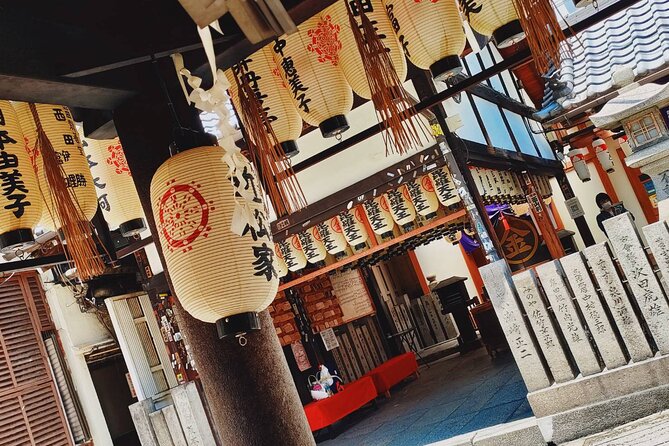
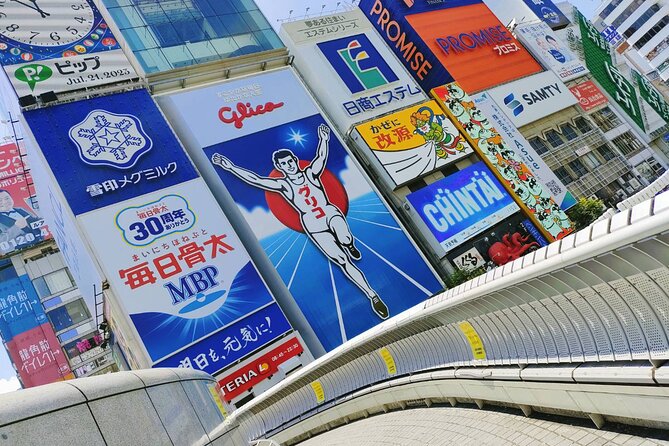
Dotonbori is the tour’s most famous urban scene. The district runs along the Dotonbori canal and is packed with neon signs, restaurants, nightlife, and street-food counters. Its retro touches and oversized storefront signs make it one of Osaka’s easiest places for photographs.
You spend about 30 minutes here, which gives you time to see the canal area and hear how the district fits into Osaka’s food culture. The stop is lively, but it is also highly commercial. You are seeing a famous entertainment quarter, not a quiet local neighborhood.
That is why the guide’s input matters. Osaka-style food can be easy to sample but harder to understand. A guide can help you decide what is worth trying and explain the city’s strong eating culture without turning the stop into a random snack hunt.
The included lunch is Osaka-style street food with a drink at a local restaurant. The exact food is not specified, so do not book this expecting a particular dish. Vegan and gluten-free meals cannot be catered for, which is an important limitation for anyone with dietary restrictions.
Hozenji Yokocho and the small Hozenji Temple
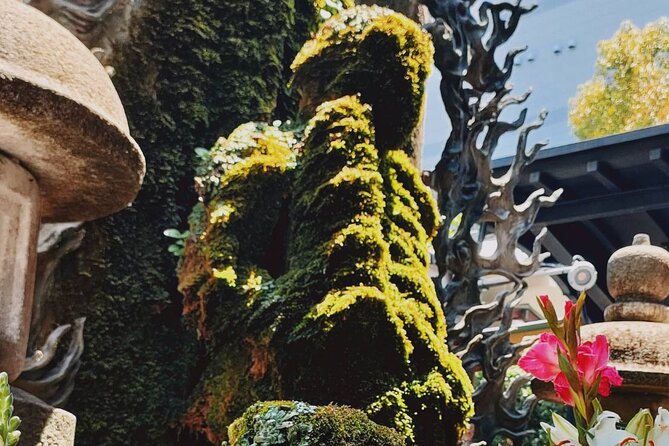
Just off the main Dotonbori crowds, Hozenji Yokocho offers a sharp change of pace. This narrow alley has cobblestones, traditional lanterns, and a preserved old-Osaka feel. It is the kind of place you might walk past without realizing what is behind the busier streets.
The alley receives about 30 minutes, followed by another 30 minutes at Hozen-ji Temple. The temple dates to the seventeenth century and is dedicated to Fudo Myoo, one of Buddhism’s Five Wisdom Kings.
I particularly like this portion of the route because it gives the tour a quieter center. Dotonbori shows Osaka as a modern food capital, while Hozenji hints at the older neighborhood life that still survives between large signs and chain stores.
Do not expect a large temple complex. Hozen-ji is small, and its appeal comes from atmosphere and setting rather than grand architecture. The guide’s explanation helps you notice the details and understand why such a modest temple remains important in the middle of a major entertainment district.
Kuromon Market, Osaka’s kitchen
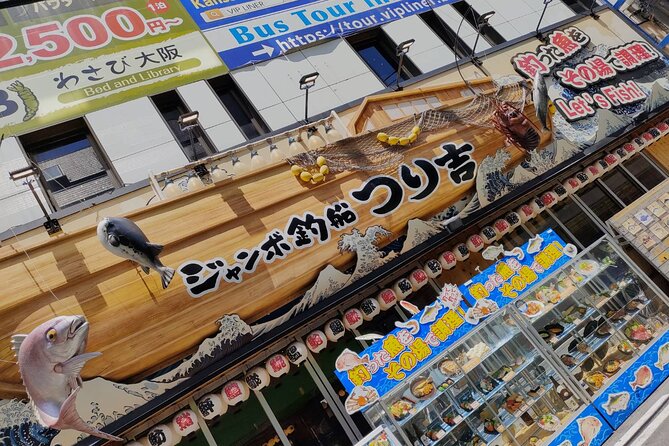
Kuromon Market has operated for more than 200 years and is often called Osaka’s Kitchen. It is a covered market known for seafood and other food stalls, making it one of the best places on this route to connect Osaka’s identity with what people actually eat.
You spend about 30 minutes here. That is enough for a guided look and food sampling, especially since lunch is included, but it is not a long market crawl. If you enjoy lingering over seafood displays, comparing snacks, or shopping for edible souvenirs, you may want to return independently.
The market is listed for day and private tours only, so check the exact version you book. The private option is the better fit if food is your main interest and you want to slow down. A group tour keeps the day moving and gives you a social setting, but the schedule will be less flexible.
Food allergies deserve advance attention. One private-tour experience included careful help with allergies, but the stated policy says vegan and gluten-free meals cannot be catered for. You should not assume that a guide can provide a suitable lunch without confirming your needs before booking.
Shinsekai and the Tsutenkaku Tower area

The final major stop is Shinsekai, a district developed before the Second World War. Its nostalgic atmosphere, neon, and Tsutenkaku Tower give it a character different from both Dotonbori and the castle grounds.
Shinsekai is a useful ending because it leaves you with a less polished picture of Osaka. The district is famous, but it feels rooted in an older entertainment culture rather than the glossy retail world of Shinsaibashi. The scheduled visit is around 30 minutes, so you get an introduction rather than a full evening there.
If you still have energy, Shinsekai is a good place to continue exploring after the tour. The tour itself ends in a different location from the starting point, and the exact end point should be checked when you book. That can be convenient if you plan to stay downtown, but it means you should not treat this as a round trip back to Osaka Castle.
The walking and train sections require honest planning
This is not a gentle sightseeing stroll. Several people describe the route as roughly 5 miles, 6 miles, or about 15,000 steps. The pace can feel relaxed, but the total distance is still substantial.
Wear comfortable shoes. That sounds basic, yet it is the most useful advice for this experience. You will walk through streets, shopping passages, market areas, and station connections. Osaka’s sidewalks are manageable, but tired feet can change your opinion of a good tour quickly.
Two short train rides are included in the route. The fares are separate, listed as ¥240 and ¥190. Keep some yen ready, and remember that the tour is mainly on foot even though public transport helps connect the districts.
The meeting point is Osaka-jo-koen Station at 3 Osakajo, Chuo Ward. Group tours do not offer hotel pickup. Pickup may be available for other arrangements, but you should confirm the details for your chosen option rather than assume a hotel collection.
Group or private tour?
The group version allows a maximum of 11 people, which is small enough for questions without creating a huge crowd. A group also works well for solo visitors. One particularly useful aspect of the guide feedback is the repeated sense that solo participants felt comfortable joining the walk and meeting others.
The group format is the better value if you want a broad introduction at a predictable price. It also keeps the day sociable. The tradeoff is less control over food stops, photography time, and walking speed.
The private version costs more in total, but the per-person price can make better sense for families or friends sharing the booking. It gives you more room to adjust the pace and ask detailed questions. Adam is praised for adapting the speed, explaining local life, and pointing out photo spots, while Scott is praised for taking extra care with directions after the tour.
The listed price is $73.29 per person. That is fair for a five to seven-hour experience that includes a guide, lunch, a drink, and a route linking several distant parts of Osaka. It is less attractive if you mainly want castle entry, long market browsing, or a short Dotonbori food walk. You are paying for orientation, interpretation, and the amount of city covered.
What the guides add to the day
The guide quality is one of the strongest reasons to book. Tim is repeatedly praised for his explanations of Japanese history, Osaka culture, food, and life as an expat. Scott is noted for clear English and for discussing Japanese society in a direct, approachable way.
Kenzo is praised for warmth, humor, patience, and obvious affection for Osaka. Daniel is described as organized, fun, and good at using the available time without making the day feel rushed. Adam is a strong choice for a private booking if you want flexibility, photography help, and a guide who has spent more than 16 years in Japan.
You cannot choose every guide with certainty unless the booking allows it, so treat these names as examples of the guiding style rather than a guarantee. The common thread is clear explanation and attention to questions. This tour works best when you use the guide actively, asking about food, customs, history, and places to return later.
Who should book this Osaka walking tour?
I would recommend it to a first-time Osaka visitor with limited time, especially someone staying only two days. It gives you a working map of the city and helps you decide where to return for a longer meal, more shopping, or an evening in Shinsekai.
It also suits solo visitors, families with older teenagers, and anyone who prefers learning about culture rather than only collecting photos. The route includes enough food, shopping, history, and neighborhood detail to keep different interests engaged.
You should think twice if you have limited mobility, dislike long walks, need a strict dietary plan, or want a slow food-focused experience. The tour requires moderate fitness, includes two train rides, and cannot provide vegan or gluten-free lunch. Castle entry is also not part of the plan.
Free cancellation is available up to 24 hours before the start time. Bad weather can lead to a new date or a full refund, while changes made within 24 hours are not accepted.
Should you book it?
Book this tour if you want Osaka explained as a whole city, not just a collection of famous signs. The best parts are the sharp changes in mood, from Osaka Castle and its samurai-era story to Amemura, Dotonbori, Hozenji, Kuromon Market, and Shinsekai.
Choose the five-hour option if you want an efficient introduction. Choose six or seven hours, or go private, if you want more breathing room for questions and food. Just bring good shoes, allow for a long day on your feet, and remember that the castle interior is not included. For a first look at Osaka, the route offers a useful balance of history, food, shopping, and everyday city life.
FAQ
How long does the Osaka walking tour last?
You can choose a tour lasting approximately five, six, or seven hours.
Where does the tour begin?
The meeting point is Osaka-jo-koen Station, at 3 Osakajo, Chuo Ward, Osaka, 540-0002, Japan.
Does the tour enter Osaka Castle?
No. The tour visits and explains the Osaka Castle area, but it does not enter the castle. Admission tickets are not included.
Is lunch included?
Yes. The tour includes Osaka-style street food with a drink at a local restaurant.
Can the tour accommodate vegan or gluten-free diets?
No. The stated lunch arrangements cannot cater for vegan or gluten-free requirements.
How much walking is involved?
The tour is mainly on foot and may involve roughly 5 to 6 miles of walking, or about 15,000 steps. A moderate level of fitness is recommended.
Are train fares included?
No. Two short train rides are required, with fares listed as ¥240 and ¥190. You pay those fares separately.
Newly walked in Japan
- Himeji: Private Guide Tour of the Castle from Osaka or Kyoto★ 4.5 · 7 reviews
- World Heritage Himeji Castle & Sake Breweries Private Tour★ 4.5 · 11 reviews
- From Nagoya: Samurai Swords and Inuyama Castle Private Tour★ 5.0 · 11 reviews
- 2.5 Hour Private History and Culture Tour in Himeji Castle★ 5.0 · 185 reviews
- Himeji: Himeji Castle Guided Tour – UNESCO Heritage★ 4.7 · 115 reviews
- Kyoto: Nijo Castle World Heritage Guided Tour with Admission★ 5.0 · 128 reviews
- Osaka: Osaka Castle & Historical Museum Guided Tour★ 4.8 · 28 reviews
- Osaka: Osaka Castle Guided Tour with Local Guide★ 4.7 · 78 reviews
Castle Walking Tours, compared.

Edinburgh Castle: Guided Walking Tour with Entry Ticket
Read our review →
3-Hour Walking Tour of Old Town & Prague Castle
Read our review →Edinburgh Castle: Guided Walking Tour with Entry Ticket
Read our review →

Prague 3-hour Afternoon Walking Tour including Prague Castle
Read our review →
Royal Mile and Edinburgh Castle – Small Group Walking Tour
Read our review →

Browse the lists this tour appears in