
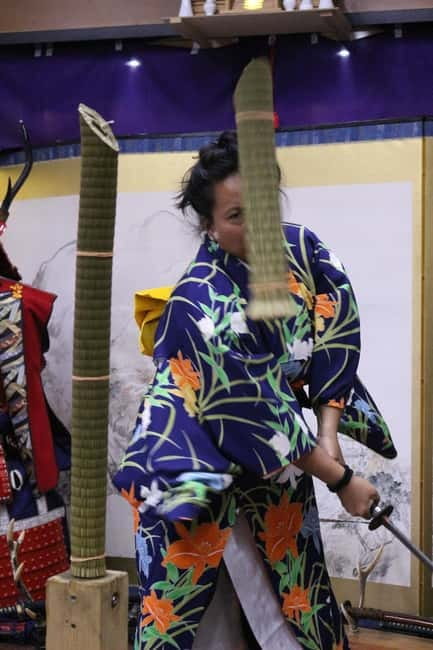
Review · OSAKA
Samurai Armor & Sword experience with phot near Osaka Castle
A real Japanese sword, a full suit of armor, and a private lesson make this more than a costume photo stop. You begin in dogi and hakama, learn how samurai carried and drew a sword, then practice basic movements before trying a cut with a real blade. I like the clear structure and the chance to learn the manners behind the weapon, not just pose with it. I also like that the session ends with armor photos sent by email.
The main caution is scheduling. At least two bookings have reportedly been cancelled for overbooking, including one on the morning of the activity. Confirm your reservation if possible, and leave room in your Osaka plans for a change.
Key points to know before booking
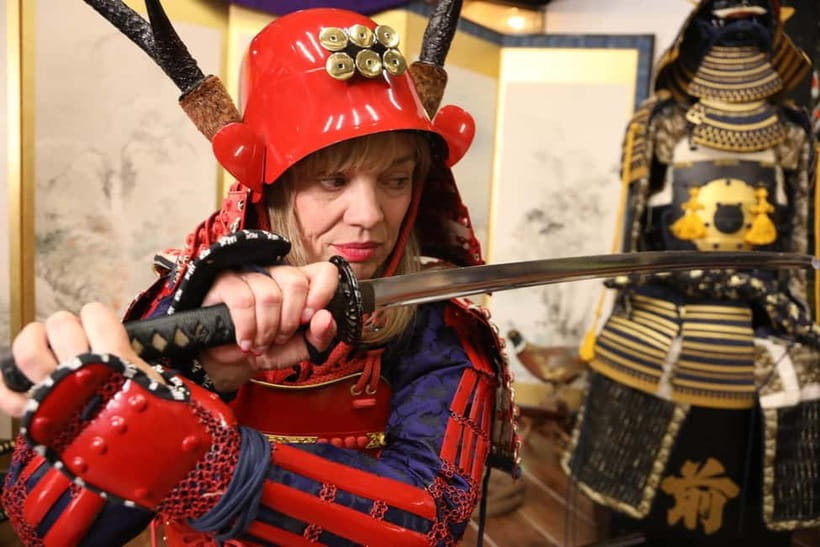
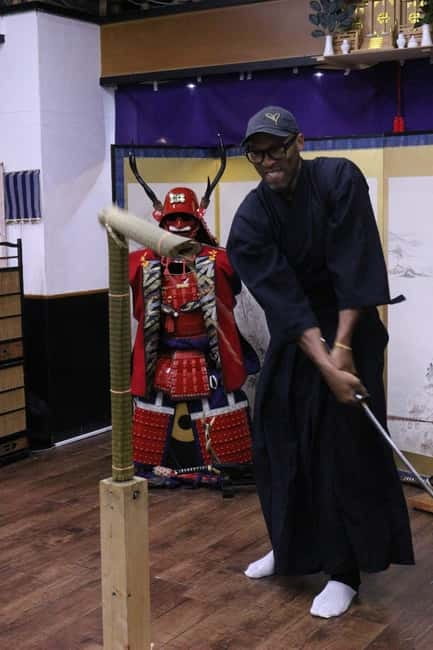
- Real sword cutting is part of the lesson: You first practice with an iai training sword, then try cutting with a real samurai sword under professional instruction.
- Armor is worn indoors: You get into samurai armor and a helmet for photographs, rather than simply holding costume pieces.
- The lesson begins at a shrine: Bowing before and after training introduces the discipline and respect tied to the practice.
- You need extra arrival time: Arrive 30 minutes before your booked start to change clothes and receive instructions.
- The group is private: Your session is arranged as a private group, with English and Japanese instruction available.
- The location needs care: Look for the wooden Samurai Honor sign and use Google Maps, since the Apple Maps address is incorrect.
A samurai lesson, not just a costume photograph
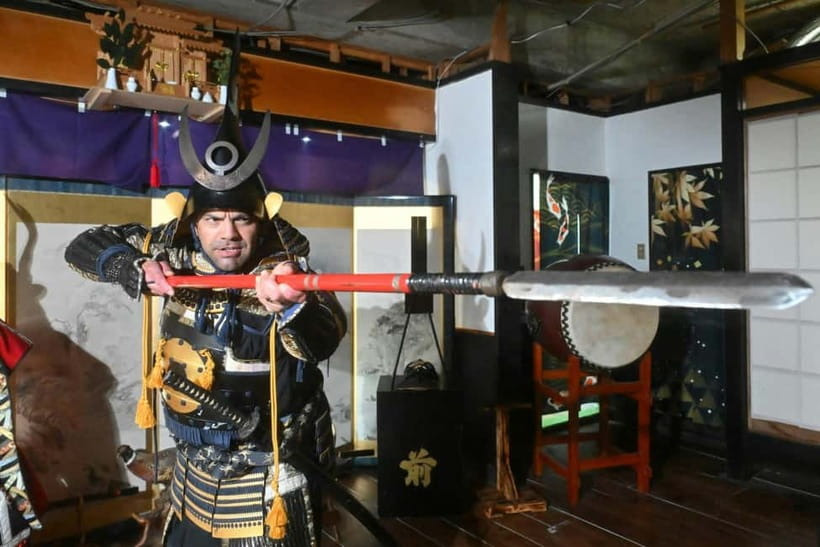
This 90-minute activity gives you a compact introduction to samurai clothing, conduct, sword movement, cutting, and armor. It takes place at Bushi no Homare, also presented as Samurai Honor, in Osaka’s Joto-ku district.
The experience is often described as being near Osaka Castle, which makes it an appealing add-on after sightseeing there. Still, the listed address is Excellence Takayama 1F, 2-3-19 Shiginonishi, Joto-ku, Osaka 536-0014. Check the route carefully before you set out. The wooden sign reading Honor of the Samurai is the useful landmark, along with activity pamphlets, hanging kimono and hakama, and the storefront itself.
You pay $106 per person. That is not a bargain-basement photo session, but the fee includes clothing, armor, a certified professional instructor, tax, tips, English-speaking staff, and photographs sent to your email. Since you also receive instruction and supervised sword cutting, the price makes more sense for someone who wants an activity rather than a quick costume portrait.
More Japanese Castle Tours in Osaka:
- Osaka Castle: Museum and Tower Entry Ticket
★ 4.5 · 2,380 reviews - Osaka Castle Walking Tour and Castle Tower Admission
★ 5.0 · 561 reviews - From Osaka: Himeji Castle, Arima Onsen & Mt. Rokko Day Tour
★ 4.6 · 339 reviews
Changing into dogi and hakama
Arrive 30 minutes before the scheduled start. You change into samurai clothing, including a dogi and hakama, before entering the training portion of the session. Bring a T-shirt, which is the only specific clothing recommendation provided.
This change matters because the activity treats the clothing as part of the lesson. You are not simply handed a plastic sword and sent toward a backdrop. The clothing helps you understand how a samurai moved, wore a sword, and carried himself.
The early arrival also prevents a rushed start. Ninety minutes is a fairly short window once changing, instruction, sword practice, cutting, armor, and photographs are all included. If you arrive at the meeting time instead of half an hour early, you may lose useful training time.
The activity is not suitable for children under 10, babies under one, or people over 80. The restrictions also list people with altitude sickness, although this is an indoor Osaka activity and no further explanation is provided. Pets, food, alcohol, drugs, baby strollers, and party groups are not allowed. Assistance dogs are allowed.
Starting with a bow at the dojo shrine
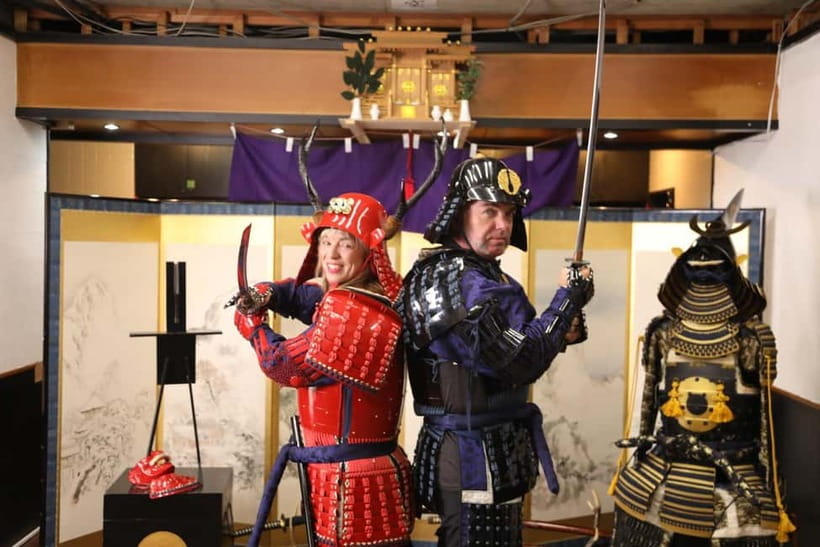
The lesson opens and closes with a bow before a shrine in the dojo. The shrine represents the ancient god of war, and the bow frames the session as disciplined training rather than playacting.
This is one of the better details in the program. Before you handle a sword, you learn that the object carries responsibility and ceremony. The bow gives the lesson a clear beginning, and it helps explain why the instructor spends time on behavior, posture, and controlled movements.
The teaching also covers the place of the sword in samurai life. The material explains that a boy from a samurai family might begin with a wooden sword and later be permitted to carry a serious sword at age 15. The point is not simply that the sword was useful in battle. It represented self-respect, duty, and the burden of carrying a dangerous weapon in public.
That background gives the physical exercises a reason. You learn why a samurai kept the sword close, how it was positioned, and why drawing it was never treated as a casual gesture.
Learning how to walk with a sword
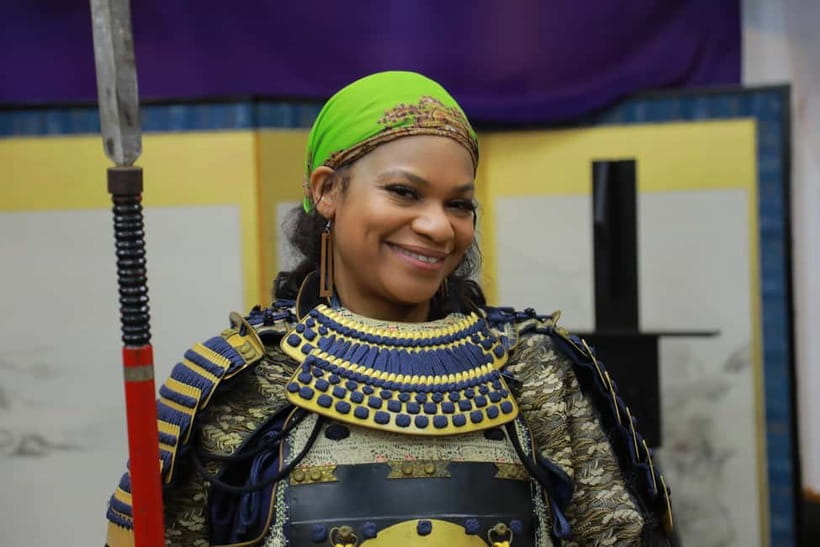
One of the most distinctive parts of the activity is practicing ordinary movement with a sword at your waist. The blade is placed into the belt with the cutting edge facing upward.
You practice walking on the left side of the road so sword scabbards would not strike each other. You also learn about keeping the koiguchi, the mouth of the scabbard, ready for a draw. These details turn a familiar costume into a piece of equipment with rules attached.
For you, this section may be more useful than it first sounds. Many sword experiences rush to the dramatic swing. Here, you first learn how the weapon affects posture, spacing, and movement. The lesson gives you a better sense of the concentration required to carry a blade safely.
The activity also explains how samurai remained close to their swords in daily life, including while eating and sleeping. That does not mean every part of samurai life is recreated for you, but it helps put the sword practice in a social and personal setting.
More Castle Tours in Osaka:
- Ultimate Osaka Walking Tour: Castle, Dotonbori & Hidden Gems
★ 5.0 · 862 reviews - 5-Hour Osaka Bike Tour to the Neighborhood of Osaka Castle
★ 5.0 · 319 reviews - Osaka Castle Guided Tour
★ 4.7 · 249 reviews - Osaka: Castle History Walking Tour / Castle Tower Admission
★ 4.9 · 230 reviews
Practicing iai with a training sword
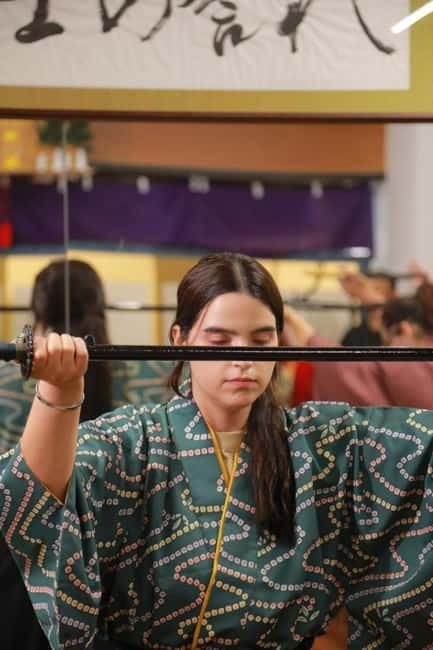
Before the real cutting exercise, you work with an iai practice sword. This is the controlled stage, where you learn the basic sequence and the correct use of the body.
The lesson includes:
- Battou: Drawing the sword from its scabbard as part of a cutting action.
- Chiburui: A symbolic movement for removing blood from the blade after a cut.
- Nottou: Returning the sword to its scabbard after the sequence.
You also practice basic stances, sword swings, and kata directly with the instructor. The instruction emphasizes using the weight of the sword rather than relying on arm strength. Done correctly, the movement can create a sound described as hi-nari.
This is where the experience earns its educational value. The goal is not to swing as hard as possible. You learn that the movement begins with stance, balance, control, and timing. A certified instructor supervises the work, and the real blade comes only after the practice stage.
The lesson is still a short introduction, not a martial arts course. You should expect a carefully guided sample of sword handling, not mastery of iai or a full study of samurai combat.
Cutting with a real samurai sword
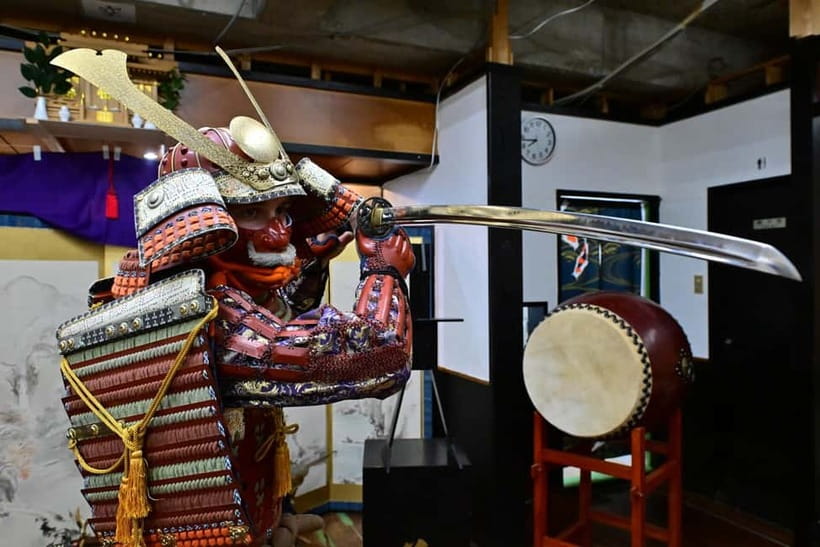
The main physical highlight is trying a cut with a real samurai sword. The activity describes the blade as offering exceptional cutting performance, but the important point for you is that this is supervised practice after the basic movements have been explained.
The sequence gives the real sword a proper place in the session. You do not begin with it. You first change clothes, bow at the shrine, learn samurai manners, practice walking with the sword, and rehearse the draw, swing, blood-removal gesture, and resheathing motion with a training sword.
That progression should appeal to anyone who wants more than a staged photograph. It also means you need to take the instruction seriously. The sword is not a harmless prop, and the program’s emphasis on posture and responsibility is practical as well as ceremonial.
Your comfort level matters. If you want a purely passive activity, this may feel more demanding than expected. If you enjoy learning a physical skill under close direction, the cutting stage gives the session a clear payoff.
Wearing armor and holding the samurai pose
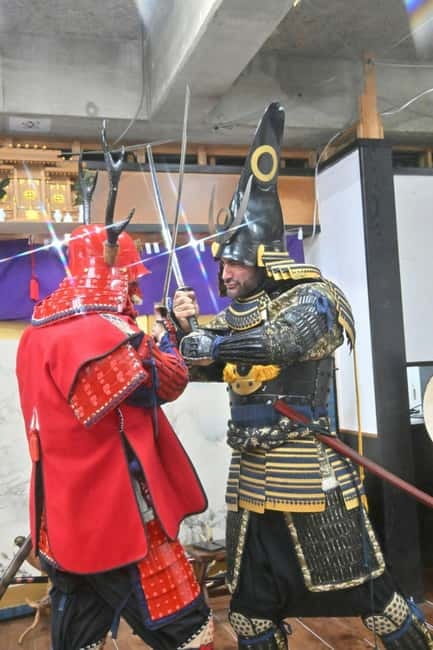
After sword training, you put on samurai armor and a helmet indoors. The armor is presented as battle equipment, but the lesson also connects it with dignity and presentation. Before going to war, a samurai would wear armor and draw a sword in a way that showed beauty and status as well as readiness.
This part should be especially appealing if you have seen armor behind glass but never had a chance to wear it. You get a different sense of the clothing once it is on your body, even during a short photo session.
The armor section is not described as an outdoor walk or a battle reenactment. It takes place indoors and is designed for the final photographs. That keeps the activity manageable in bad weather, but it also means you should not expect a large historical site or an outdoor castle shoot.
The photographs are included. The staff takes photos in the armor and sends the data to a designated email address. Movie shooting is a paid option, so standard inclusion is still photography rather than a personal video production.
What the private format changes
The activity is offered as a private group, which is a real advantage for a hands-on lesson. You can receive direct correction during sword practice, ask questions about manners, and move through the stages without sharing the session with a large public crowd.
The listed teaching languages are English and Japanese. The default interpreter language is English. Italian, Spanish, French, Chinese, Thai, and Indonesian interpretation may be possible, but staff schedules are limited and you need to ask before booking. Do not assume another language will be available on the day.
The private format may also suit couples, friends, or families with older children who want a shared activity. It is less suitable for a large celebration group. Party groups and bachelor or bachelorette groups are not allowed.
The hosts have been praised for clear instruction, friendly help, and a safe setup. Those are the qualities that matter most here. Sword practice can feel awkward at first, and an instructor who explains each movement plainly makes the difference between a rewarding lesson and a nervous photo opportunity.
How the price compares with the experience
At $106 per person, this is a specialty activity. You are paying more than you would for a standard Osaka attraction, but the fee covers several parts: samurai clothing, a professional instructor, real-sword cutting, armor, photographs, and a private session.
I would judge the value by your interest in participation. If you mainly want to see Osaka Castle, this is not an essential purchase. Osaka Castle and the activity are separate parts of your day, and transportation is not included. You must make your own way to the studio, and there is no hotel or station pickup.
If you want a structured cultural activity with a physical element, the price is easier to justify. You receive guidance rather than simply renting a costume, and the photographs give you something lasting after the session.
The experience is also compact. The lesson itself lasts 90 minutes, with an additional 30 minutes needed before the start for instructions and changing. That makes it easier to fit into an Osaka itinerary than a half-day activity, but you should allow extra time for getting to the correct address.
Booking cautions and practical planning
The cancellation policy allows free cancellation up to 24 hours before the start, and you can reserve now and pay later. Those terms help if your Osaka schedule is still shifting.
The larger concern is availability. There have been cancellations caused by overbooking, including a same-morning cancellation after a previous booking had already been cancelled for the same reason. That is a serious practical weakness, especially if you have planned the activity around a castle visit or a special occasion.
I would book with enough notice, check the confirmation, and keep a backup plan for the day. If the experience is central to your itinerary, contact the provider before you leave for the studio. That is particularly sensible because the language and location notes require care.
Use Google Maps for the address. The Apple Maps listing is reported to be incorrect. At the meeting point, look for the wooden Honor of the Samurai sign, the pamphlet rack, and the hanging kimono and hakama.
Who will enjoy this most
I would recommend this for you if you want to take part in a Japanese cultural activity rather than watch a demonstration. It suits adults and children aged 10 or older who can follow careful physical instructions and who enjoy costumes, history, and hands-on learning.
It is a good fit after sightseeing at Osaka Castle, provided you confirm the travel time and do not assume the studio is directly beside the castle. It also works well for a couple or a small private group that wants photographs with a real lesson behind them.
You may want to skip it if you dislike dressing up, have limited mobility for changing and handling a sword, or want a relaxed attraction with no physical instruction. The program also may not suit you if a same-day cancellation would cause major problems.
Should you book the samurai armor and sword experience?
Book it if the idea of learning samurai manners, practicing iai movements, cutting with a real sword, and wearing armor sounds better than simply visiting another display. The strongest parts are the clear progression from training sword to real blade, the private instruction, and the included armor photographs.
Think twice if you are choosing it only because of the Osaka Castle location. The studio is in Joto-ku, transportation is not included, and the address requires Google Maps. Also treat the overbooking reports as a real planning risk.
For the right person, $106 buys a memorable 90-minute activity with substance behind the costume. Confirm the reservation, arrive early, bring a T-shirt, and keep a little flexibility in your Osaka schedule.
FAQ
Where does the samurai armor and sword experience take place?
It takes place at Bushi no Homare, also called Samurai Honor, at Excellence Takayama 1F, 2-3-19 Shiginonishi, Joto-ku, Osaka-shi, Osaka 536-0014. Use Google Maps because the Apple Maps address is incorrect.
How early should I arrive?
Arrive 30 minutes before your reserved start time. This allows time for instructions and changing into samurai clothing.
What is included in the price?
The price includes samurai clothing, indoor samurai armor and helmet use, a certified professional instructor, English-speaking staff, tax, tips, and photographs sent to a designated email address.
Is the sword used for cutting real?
Yes. You first practice with an iai practice sword and then try sword cutting with a real samurai sword under instruction.
Can I receive instruction in a language other than English or Japanese?
English and Japanese are the listed languages. Italian, Spanish, French, Chinese, Thai, and Indonesian interpretation may be available, but you need to ask about staff schedules before booking.
Can I cancel the booking for a refund?
You can cancel up to 24 hours in advance for a full refund. The activity also offers a reserve-now, pay-later option.
Newly walked in Osaka
- (Ticket Included) Explore Osaka Castle & Museum of History★ 4.8 · 21 reviews
- Osaka: Osaka Castle – Tsuruhashi – Tennoji (Spanish Guide)★ 4.7 · 10 reviews
- Osaka: Osaka Castle 3 hours Historical Walking Tour★ 4.6 · 14 reviews
- Osaka: Early Morning Osaka Castle Guided Tour, Avoid Crowds★ 4.9 · 12 reviews
- Osaka: Explore Every Bit of Osaka Castle in 3 Hours★ 5.0 · 5 reviews
- Osaka: Castle, Tea Ceremony, Calligraphy, and Samurai Armor!★ 5.0 · 4 reviews
- Osaka: 1-Day Guided Tour – Sky Bldg, Castle, Namba Shinsekai★ 5.0 · 6 reviews
- Learn Zen in a class of making Matcha tea near Osaka Castle★ 4.8 · 17 reviews
Japanese Castle Tours, compared.
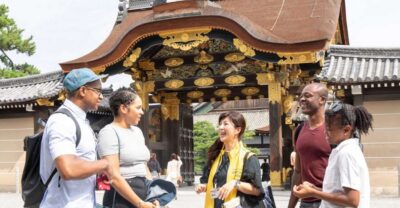
Nijo-jo Castle and Ninomaru Palace Guided Tour
Read our review →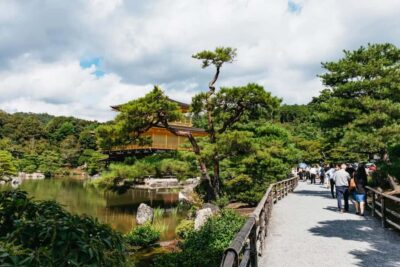
Nijo Castle, Kiyomizu & Fushimi Inari Guided Tour
Read our review →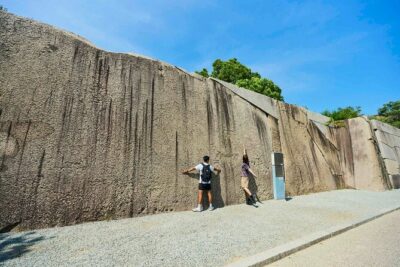
Osaka Castle Walking Tour and Castle Tower Admission
Read our review →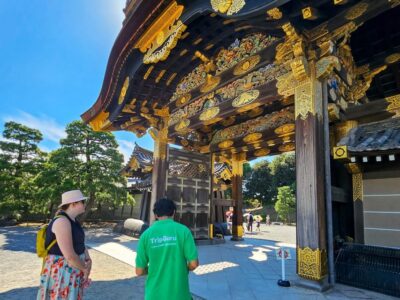
Imperial Palace & Nijo Castle Guided Walking Tour
Read our review →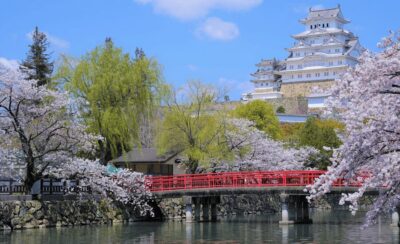
Himeji Castle, Arima Onsen & Mt. Rokko Day Tour
Read our review →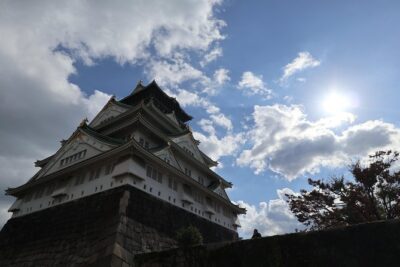
5-Hour Osaka Bike Tour to the Neighborhood of Osaka Castle
Read our review →
Browse the lists this tour appears in