
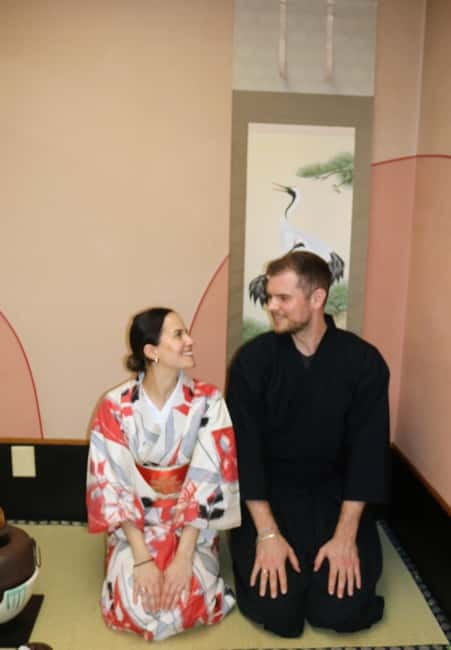
Review · OSAKA
Learn Zen in a class of making Matcha tea near Osaka Castle
Walking through the small entrance to a tea room is the heart of this experience. Inside, status, age, and nationality are set aside, and you learn how the host and guest work together to create the ceremony. I like the hands-on matcha practice and the chance to wear proper Japanese clothing, not just watch a demonstration. The small group, limited to six people, also gives you time to ask questions.
I also like the way wagashi, the delicate seasonal sweet served with tea, adds a window into Japanese ideas about beauty and the passing seasons. The main drawback is time: one hour goes quickly, especially if you want a full hair arrangement or outdoor photos. Those options cost extra, and you must arrive 30 minutes early to change.
Key points to know before booking
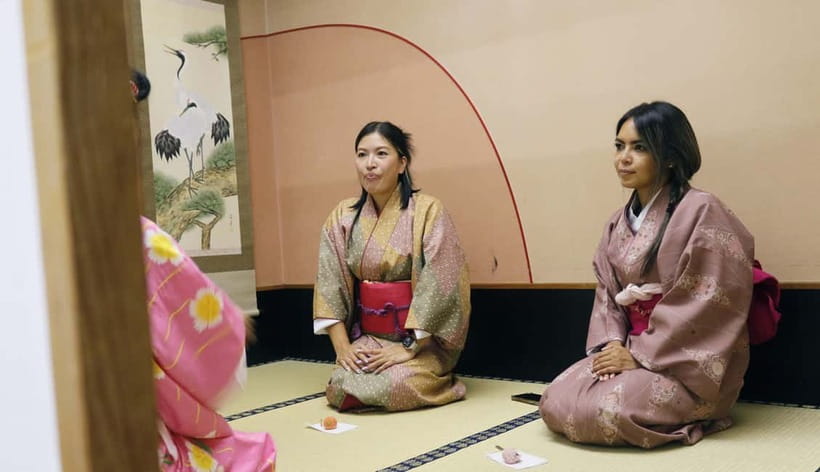
- You dress as part of the lesson: Men wear hakama and dogi, while women wear kimono. The clothing makes the etiquette feel physical and memorable.
- You prepare matcha yourself: The host serves tea, then you have the chance to make tea for another participant.
- Kaori may guide the cultural explanation: Her step-by-step explanation of tea preparation and history earned particular praise, though staff assignments can vary.
- Your ceremony is photographed: Photos are sent to your designated email address, usually allowing you to stay focused on the activity.
- Wagashi carries seasonal meaning: The sweet is not just a snack. Its colors and shape connect the tea ceremony with Japanese ideas of wabi, sabi, and the four seasons.
- The small group matters: With no more than six participants, the instructor can correct gestures and give each person a turn.
A samurai welcome in Osaka
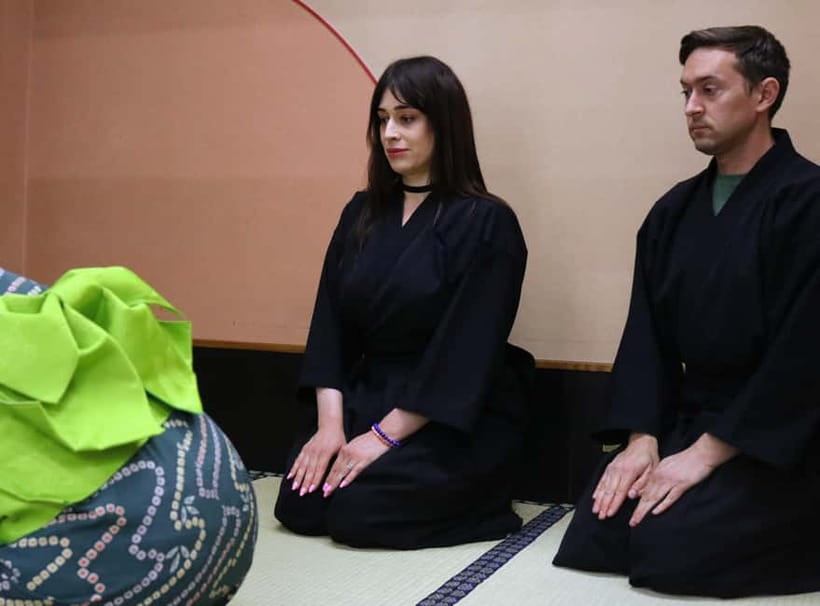
This is not a grand tea school hidden in a famous temple. It takes place at Bushi no Homare, also called Samurai Honor, in Joto-ku, Osaka. The setting is practical and intimate, which works well for a short cultural class.
The address is Excellence Takayama 1F, 2-3-19 Shiginonishi, Joto-ku, Osaka-shi, Osaka 536-0014. Use Google Maps rather than Apple Maps, since the Apple listing is reported to be incorrect. At the meeting point, look for the wooden sign reading Samurai Honor. Activity pamphlets sit on a rack outside, and hanging kimonos and hakama can help you recognize the shop.
You are asked to arrive 30 minutes before your reserved time. That early arrival is not wasted time. You need it for instructions and changing clothes, and the clothing change is part of the fun. Bring a T-shirt, which is the only item specifically requested.
The class itself lasts one hour. That makes it easy to fit into a day of sightseeing, but do not treat it as a casual drop-in. The ceremony has a set rhythm, and arriving late would cut into your dressing and instruction time.
More Japanese Castle Tours in Osaka:
- Osaka Castle: Museum and Tower Entry Ticket
★ 4.5 · 2,380 reviews - Osaka Castle Walking Tour and Castle Tower Admission
★ 5.0 · 561 reviews - From Osaka: Himeji Castle, Arima Onsen & Mt. Rokko Day Tour
★ 4.6 · 339 reviews
Choosing kimono, hakama, and the right photo options
Women wear kimono, while men wear hakama and dogi, a traditional robe. This is more than a costume change. The clothes affect how you sit, walk, bow, and move your hands, so they help you understand why tea ceremony manners are so deliberate.
The kimono colors can be selected from the available choices. One participant also received a carefully arranged hairstyle decorated with flowers, but hair arrangement and kanzashi, a traditional hair ornament, are listed as a paid option. Confirm the current cost and availability before booking if the hairstyle is important to you.
Men can add a traditional outfit with obi, tabi socks, geta wooden clogs, and an outdoor photo session. Women can add kimono accessories, tabi, zori sandals, a basket bag, hair styling, and outdoor photos. These extras can make the activity feel more like a portrait session, but they also change the price.
The standard booking includes photo shooting, with the images sent to a designated email address. A movie shoot costs extra. The included photography is a useful touch because you do not have to hand your phone to someone during the ceremony or spend the class trying to take pictures.
Still, set your expectations correctly. The included photo service is tied to the tea ceremony. If you want a longer session outdoors or a polished video, budget for the paid options and allow enough time.
What happens before the first bowl of matcha
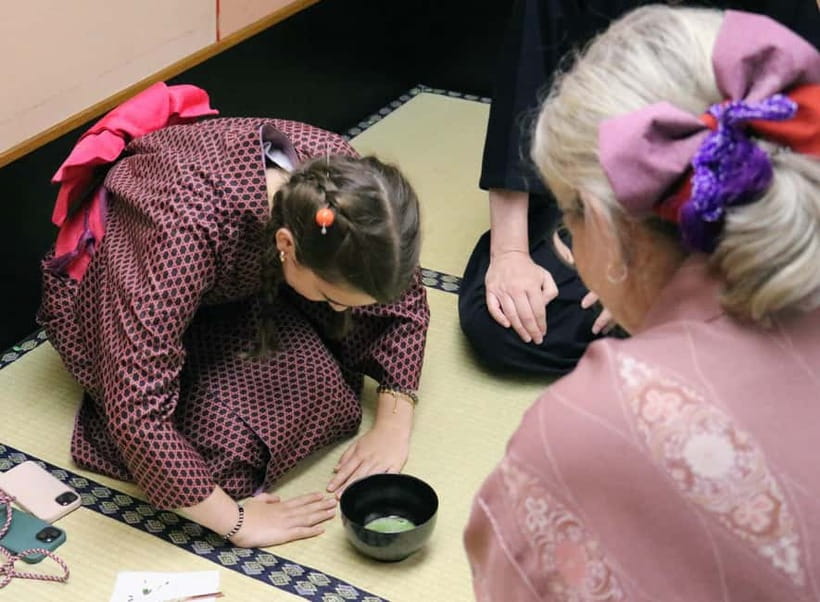
After changing clothes, you receive an introduction to the tea ceremony and its basic manners. The instructors explain how to sit, bow, stand, walk, and receive tea. These rules can seem fussy at first, but they make more sense once you see that every movement shows care for the person on the other side of the room.
The host serves matcha according to traditional practice. You learn how to respond as a guest, including the polite actions that acknowledge the preparation and effort involved. The class is not only about drinking powdered green tea. It is about the relationship between the person preparing the tea and the person receiving it.
English and Japanese are the listed languages. English interpreter staff are included, and Kaori has been specifically praised for explaining the history and preparation process step by step. Staff assignments may vary, but you can expect English support as the default.
Other languages, including Italian, Spanish, French, Chinese, Thai, and Indonesian, may be possible if staff are available. You need to ask about this before reserving, since coverage is limited.
Making matcha instead of only watching
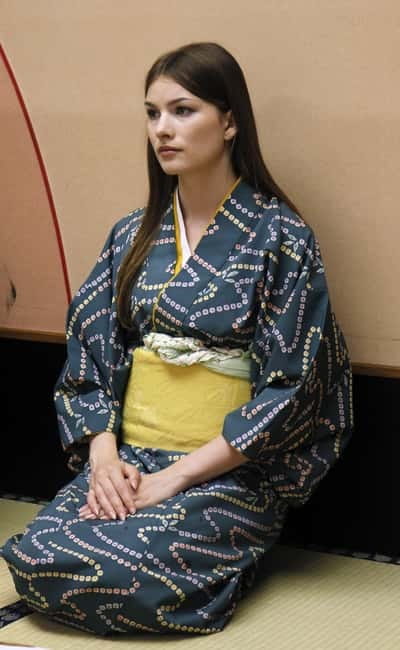
The most useful part of the class is the chance to prepare tea yourself. The instructor first demonstrates the process, then gives participants a turn. You may also prepare tea for another person in the group, which makes the host and guest relationship easier to understand.
This exchange is important. In chanoyu, hospitality does not move in one direction. The host prepares the tea with care, while the guest responds with attention, respect, and proper manners. You are not simply being served. Your behavior helps shape the atmosphere.
The class teaches beautiful gestures, but it is not a test of perfection. You are learning the pattern and the reason behind it. The small group, capped at six, should give the instructor room to guide each participant rather than rush everyone through one shared demonstration.
If you are bringing children, note the age limit. The activity is not suitable for children under 10. Older children who can sit quietly, listen, and take turns may enjoy the clothing and hands-on tea preparation, particularly if you explain beforehand that the ceremony values calm, patience, and careful movement.
More Workshops at the Castle in Osaka:
- Château du Bois-Huaut: Cellar Tour and Wine Tasting Class
★ 4.8 · 53 reviews - Blending workshop and tour of the chateau
★ 5.0 · 12 reviews - Matsumoto Castle Tour & Soba Noodle Making Workshop
★ 5.0 · 10 reviews
Wagashi, seasons, and Japanese ideas of beauty
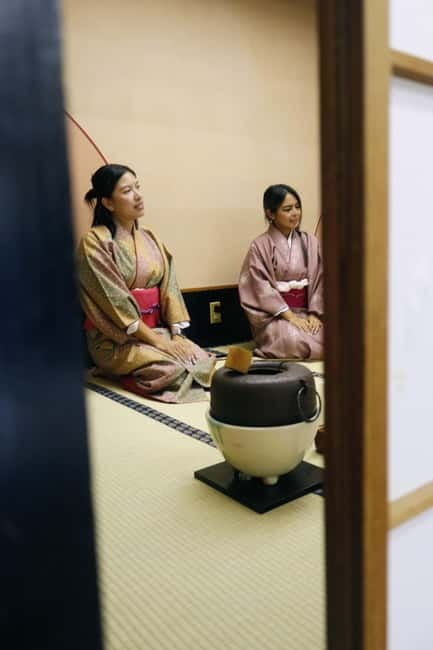
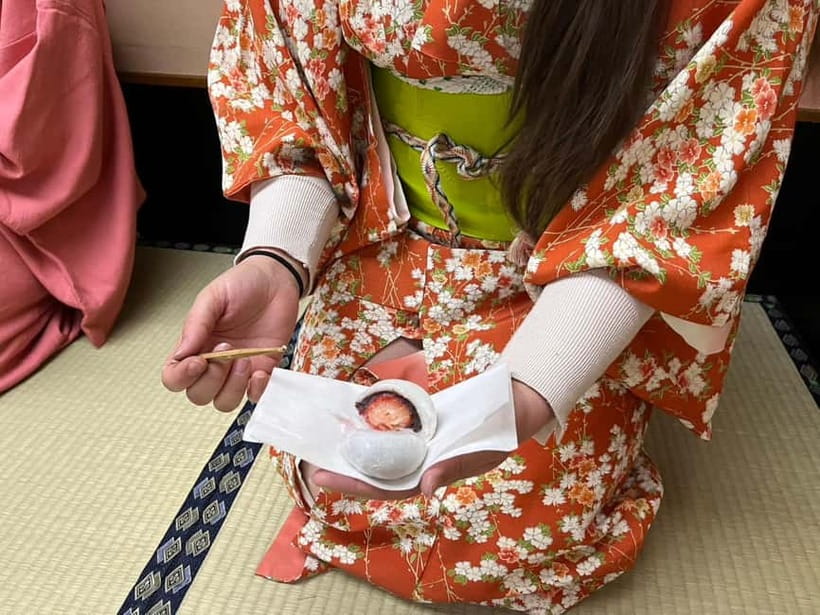
Matcha is served with wagashi, a traditional Japanese sweet. Its purpose is not only to balance the bitterness of the tea. Wagashi helps explain how Japanese food can express the seasons through color, form, and delicate handwork.
The tea ceremony and wagashi developed together over centuries. The sweet may suggest spring blossoms, summer color, autumn leaves, or winter simplicity. Its beauty is meant to be noticed before it is eaten, which can feel unusual if you are used to treating a sweet as a quick snack.
This is where the ideas of wabi and sabi enter the lesson. In simple terms, they point toward beauty in restraint, natural change, imperfection, and age. You will not master those ideas in an hour, but the combination of handmade sweets, quiet gestures, and seasonal design gives you a clear starting point.
The activity information emphasizes that each wagashi is made by craftspeople one at a time. That detail matters because the sweet is part of the visual language of the ceremony. It shows how Japanese food culture can carry history and artistic meaning without becoming a museum lecture.
The tea room as an equal space
One of the strongest ideas here is that everyone becomes equal after entering through the nijiriguchi, the low entrance associated with a tea room. The gesture traditionally requires a person to lower themselves as they enter, leaving rank and outside concerns behind.
You do not need to know Japanese history in advance to understand the point. Once everyone is seated in the same setting and following the same rules, the focus shifts to attention and mutual respect. That is a refreshing change from sightseeing, where you often move quickly from one attraction to the next.
The class presents the tea ceremony through the language of samurai culture. Men dress as samurai in hakama and dogi, while women are presented as Yamato Nadeshiko, an old cultural ideal of Japanese womanhood. The clothing and terminology are part of the experience, but you should also recognize that these are traditional images rather than a complete picture of modern Japan.
That balance is worth keeping in mind. This class offers a carefully framed cultural introduction, not everyday life in Osaka. Its value is in showing you a formal custom and giving you a respectful way to participate.
How the photography changes the experience
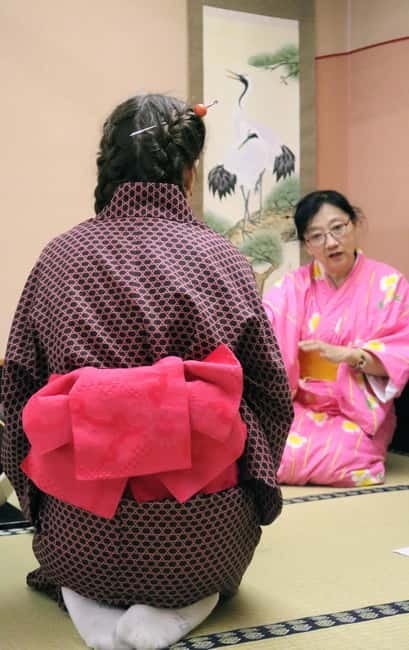
A photographer takes pictures during the ceremony, and the photos are sent to your email address. This is especially helpful when you are wearing clothing that makes it difficult to manage a phone, or when you want to concentrate on the instructor’s directions.
The photography also gives the class a keepsake beyond the matcha itself. You can record the kimono, hakama, tea utensils, and ceremony gestures without turning every moment into a personal photo project.
The standard photo service does not mean you automatically receive a full outdoor portrait session. Outdoor photography is listed as an optional paid addition, and video is also extra. If polished images are central to your plans, ask what the standard package includes and how many images you should expect.
One recent participant appreciated receiving the photos by email on the same day. That timing is useful if you are leaving Osaka soon or want to share the images while your trip is still underway, though delivery timing can vary.
Is $40 a fair price for one hour?
At $40 per person, the price is reasonable if you want several elements in one short activity: traditional clothing, an English-supported cultural lesson, matcha, wagashi, instruction from a certified professional, and photography.
The value is strongest for first-time visitors who want more than a quick tea tasting. You are paying for the preparation and clothing change as well as the tea itself. The chance to make matcha for another participant gives you an active role, which is more memorable than simply sitting through a performance.
The price is less attractive if your only goal is to drink matcha. You could find a simpler tea stop elsewhere for less money, but it would not include kimono or hakama, formal etiquette instruction, and ceremony photos.
Remember that hair styling, hair ornaments, extended clothing packages, outdoor photos, and movie shooting can add to the cost. The base price is easiest to judge when you want the one-hour indoor lesson and included photography.
Who will get the most from this class?
I would choose this for someone who wants a structured cultural activity in Osaka and appreciates clear explanations. It suits couples, families with children aged 10 or older, and small groups of friends who want photos together without arranging a separate studio session.
It is also a good choice if you are curious about Japanese manners. The class explains why you bow, sit, walk, and receive tea in particular ways, rather than presenting those gestures as random rules.
You may want to skip it if you dislike changing clothes, sitting through formal instruction, or posing for photos. The ceremony asks for patience and attention. It is not a fast, casual tasting.
The class is also not suitable for people over 95 or people with altitude sickness, according to the stated restrictions. Pets, alcohol, drugs, and nudity are not allowed.
Practical booking advice for Osaka
Book with the one-hour schedule in mind, then allow the extra 30 minutes before the start for changing. No pickup or drop-off is included, and transportation to the venue is your responsibility.
Check the exact route carefully because the Apple Maps address is not correct. Google Maps is the recommended map, and the wooden Samurai Honor sign, pamphlet rack, and hanging garments are the useful arrival clues.
You can cancel up to 24 hours before the activity for a full refund, and the reserve-now-pay-later option lets you hold a place without paying on the day of booking. These terms are helpful when your Osaka plans are still shifting.
The default language is English, with Japanese also available. If you need another language, ask about staff availability before you commit rather than assuming it will be provided.
Should you book the Samurai Honor tea ceremony?
Book it if you want a compact, personal introduction to matcha, Japanese etiquette, and traditional clothing. The best parts are the hands-on tea preparation, the careful explanation of wagashi and seasonal beauty, and the chance to receive ceremony photos without managing a camera yourself.
I would especially recommend it for first-time visitors, families with older children, and anyone who wants a cultural activity that feels more involved than sightseeing. Just allow time for changing, confirm any hair or outdoor photography extras, and use Google Maps.
Skip it if you want a full-day historical tour, a large formal tea school, or an inexpensive cup of matcha with no dressing-up component. For the right audience, though, $40 buys a focused hour in which you learn by doing, not just by watching.
FAQ
Where does the tea ceremony take place?
It takes place at Bushi no Homare, also called Samurai Honor, at Excellence Takayama 1F, 2-3-19 Shiginonishi, Joto-ku, Osaka-shi, Osaka 536-0014.
How do I identify the meeting point?
Look for a wooden sign reading Samurai Honor. A rack with activity pamphlets is outside, and hanging kimonos and hakama may also help you find the shop.
Which map should I use?
Use Google Maps. The provided information warns that the address shown on Apple Maps is incorrect.
How early should I arrive?
Arrive 30 minutes before your reserved start time. This allows time for instructions and changing clothes.
What clothing is provided?
Men wear hakama and dogi. Women wear kimono. Additional accessories and some clothing packages may be paid options.
Is hair styling included?
Hair arrangement and kanzashi are listed as paid options. Availability and pricing should be confirmed before booking.
Are photos included?
Photo shooting is included, and the photo data is sent to your designated email address. Outdoor photography and movie shooting cost extra.
Can children join the class?
Children under 10 are not permitted. The activity is suitable only for children who meet the stated age requirement and can take part in the formal class setting.
Newly walked in Osaka
- (Ticket Included) Explore Osaka Castle & Museum of History★ 4.8 · 21 reviews
- Osaka: Osaka Castle – Tsuruhashi – Tennoji (Spanish Guide)★ 4.7 · 10 reviews
- Osaka: Osaka Castle 3 hours Historical Walking Tour★ 4.6 · 14 reviews
- Osaka: Early Morning Osaka Castle Guided Tour, Avoid Crowds★ 4.9 · 12 reviews
- Osaka: Explore Every Bit of Osaka Castle in 3 Hours★ 5.0 · 5 reviews
- Osaka: Castle, Tea Ceremony, Calligraphy, and Samurai Armor!★ 5.0 · 4 reviews
- Samurai Armor & Sword experience with phot near Osaka Castle★ 4.6 · 16 reviews
- Osaka: 1-Day Guided Tour – Sky Bldg, Castle, Namba Shinsekai★ 5.0 · 6 reviews
Japanese Castle Tours, compared.
Nijo-jo Castle and Ninomaru Palace Guided Tour
Read our review →
Nijo Castle, Kiyomizu & Fushimi Inari Guided Tour
Read our review →
Osaka Castle Walking Tour and Castle Tower Admission
Read our review →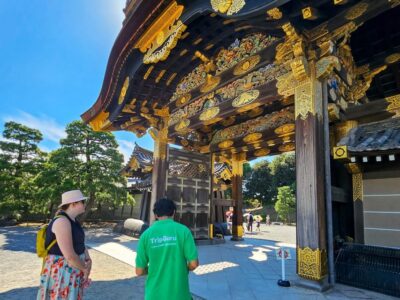
Imperial Palace & Nijo Castle Guided Walking Tour
Read our review →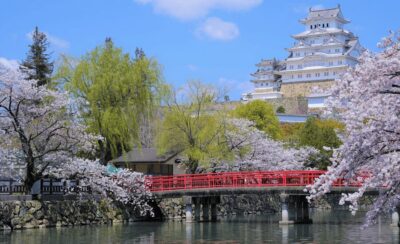
Himeji Castle, Arima Onsen & Mt. Rokko Day Tour
Read our review →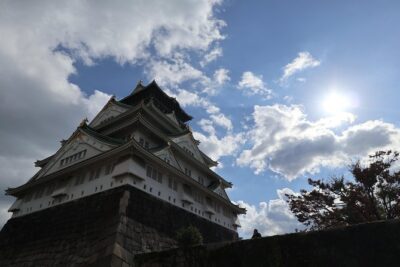
5-Hour Osaka Bike Tour to the Neighborhood of Osaka Castle
Read our review →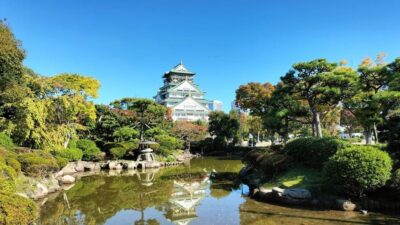
Browse the lists this tour appears in