
Review · JAPANESE
Matsumoto Castle Tour & Soba Noodle Making Workshop
Matsumoto’s best pairing is its black-and-white castle and a bowl of noodles you helped make by hand. This three-hour experience gives you both, with a guide explaining the castle before a soba master walks you through dough, rolling, cutting, and cooking. I especially like the clear shape of the day: 90 minutes at the castle, 60 minutes at the workshop, and 30 minutes to eat.
I also like the hands-on nature of the meal and the fact that you use real soba tools rather than simply watching a demonstration. The main consideration is the castle tower’s steep, narrow stairs, plus the shared 500-gram soba portion, which is designed for two or three people rather than one large serving.
Key points at a glance
- Matsumoto Castle comes first: Spend about 90 minutes touring one of Japan’s five castles with National Treasure status.
- You make the noodles yourself: Follow each stage from flour and dough to rolling and cutting under a soba master’s guidance.
- The meal is part of the lesson: A restaurant cooks your noodles, and you eat them with one extra dish.
- The portion is shared: At least 500 grams of soba is needed, so the workshop serving suits two or three people.
- English guidance is included: Guide Tom has been praised for local stories and clear information, but the assigned guide may vary.
- Plan for stairs: The castle tower is not suitable for wheelchair users and can be hard for anyone with limited mobility.
Why this Matsumoto pairing works so well
Matsumoto Castle gives you the grand setting. Soba gives you the local taste. Put together, they make a better use of three hours than a quick castle visit followed by an unrelated lunch.
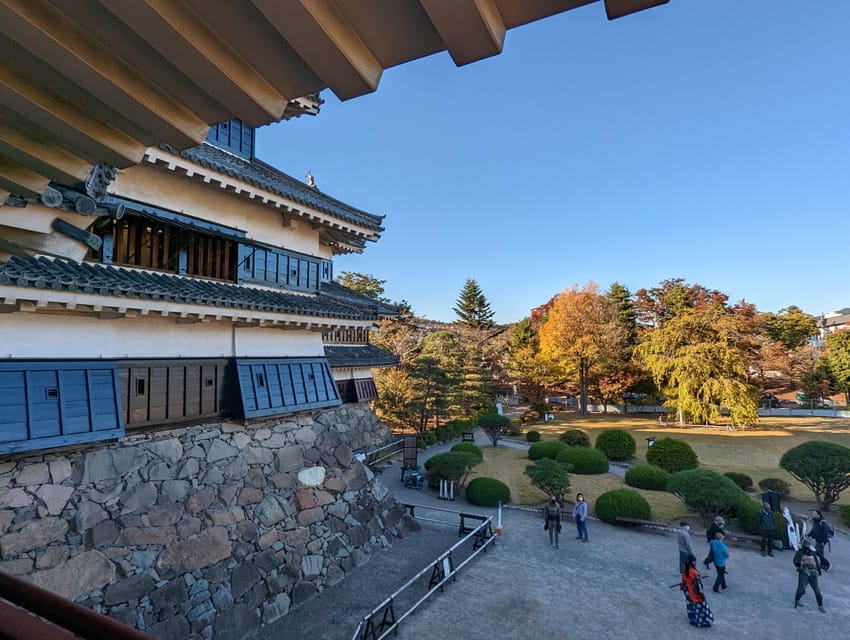
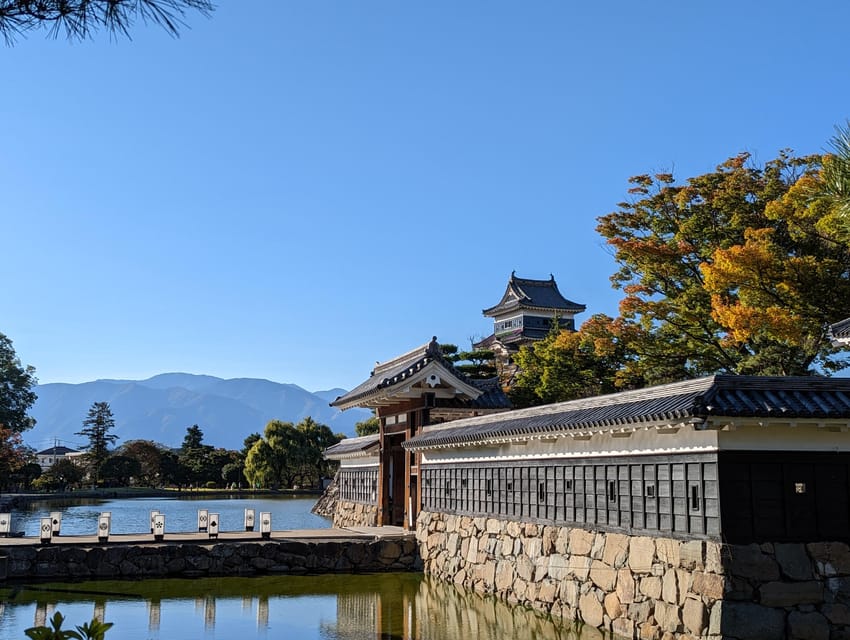
The castle is one of only five in Japan with National Treasure status. Its original structure remains well preserved, making the visit about more than outside photographs. You will enter the castle, climb through its timber levels, and see the building as a defensive structure rather than a modern reconstruction.
Then the mood changes. At the workshop, you leave behind the dark wood and old weapons of the castle and take on the work of a soba apprentice. That contrast is the charm. You are not simply told that soba is important to Japanese food culture. You handle the dough, work with the tools, cut the noodles, and eat the result.
At $92 per person, this is not a bargain-priced castle ticket with a snack attached. You are paying for admission, an English-speaking guide, a 60-minute lesson with a soba specialist, the equipment, and a prepared meal with an extra dish. I think the cost makes sense if you value instruction and a planned experience. It makes less sense if you only want to see the castle and grab a cheap bowl of noodles on your own.
More Japanese Castle Tours in Japan:
- Osaka Castle: Museum and Tower Entry Ticket
★ 4.5 · 2,380 reviews - Kyoto: Nijo-jo Castle and Ninomaru Palace Guided Tour
★ 4.7 · 1,020 reviews - Kyoto: Nijo Castle, Kiyomizu & Fushimi Inari Guided Tour
★ 4.7 · 700 reviews
Meeting your guide at Matsumoto Castle
The meeting point is just outside the main gate of Matsumoto Castle, in front of the ticket gate and the entrance to the paid admission area. That detail matters. You do not need to search around town for a restaurant or workshop before the tour begins.
Your guide leads the castle portion in English. Tom is one guide associated with the experience, and he has been praised for explaining the area and adding local stories. Guide assignments can change, so book this for the structure and activities rather than expecting a particular person.
Arrive with enough time to find the main gate. The experience begins at the castle, not with hotel pickup, and transport to or from your accommodation is not included. If you are coming by train or staying elsewhere in Matsumoto, allow time to reach the meeting point on your own.
The tour lasts about three hours, but the listed times are estimates. The castle portion takes roughly 90 minutes, the soba lesson about an hour, and lunch about half an hour. The day may finish a little earlier or later, so avoid scheduling a tight train departure immediately afterward.
Inside Matsumoto Castle’s original timber structure
Matsumoto Castle is the historical anchor of the experience. It is often recognized by its dark exterior, which gives it the nickname Crow Castle, though that nickname is not the main reason to visit. The important point for you is that this is an original castle structure, not a postwar concrete copy.
The guide helps give the building context as you move through it. You can expect the castle visit to focus on the architecture, its preservation, and the role of the building in Japanese history. A guide also makes it easier to understand why a castle that looks elegant from outside was built with defense in mind.
The climb is part of the experience, but it is also the clearest warning. The stairs to the upper levels are steep and narrow. You may need to move carefully, particularly when passing other people. This is not the right outing for anyone who cannot manage tight, uneven-feeling stairways.
Pregnant participants are listed as unsuitable for the activity, and wheelchair users cannot take part. The issue is not just the castle entrance. The tower’s internal stairs make the visit physically demanding and limit access to the upper floors.
Give yourself time to look up as you climb. The timber construction and compact layout are easy to miss if you treat the castle as a fast photo stop. The 90-minute estimate is useful because it gives the guide enough time to explain the building without turning the morning into a long lecture.
From flour to hand-cut soba
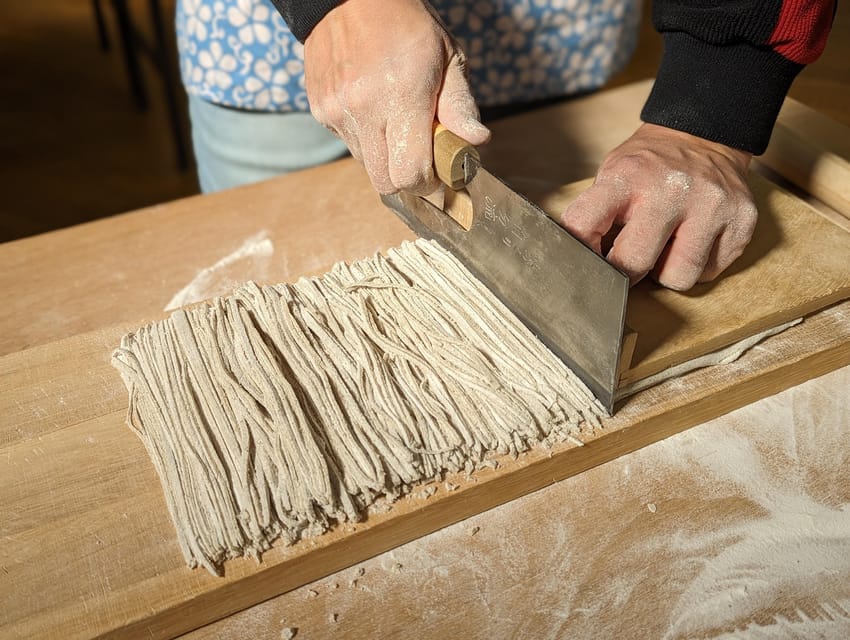
After the castle, the experience moves to the soba-making workshop. You begin with a short video introduction that explains soba and shows the stages ahead. This is useful because it gives you the broad sequence before your hands get busy.
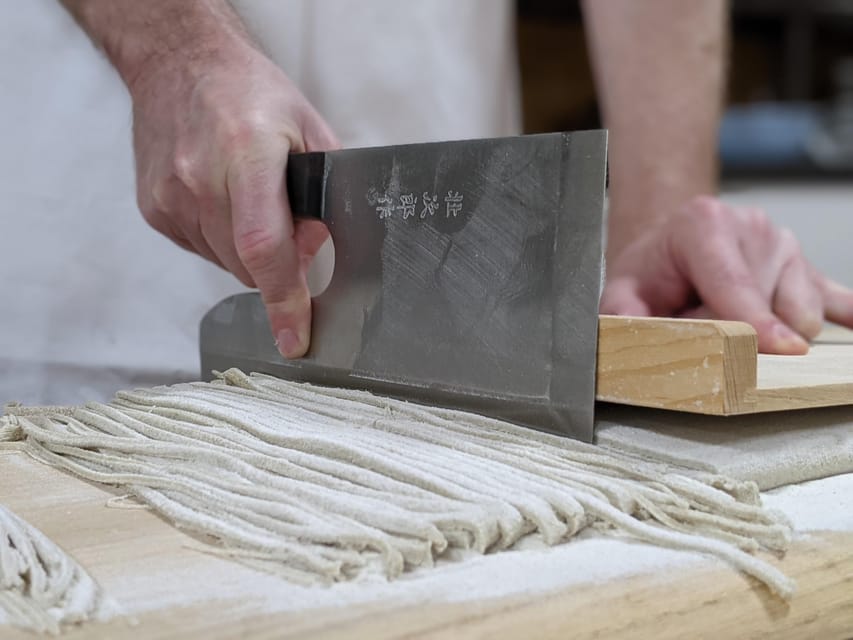
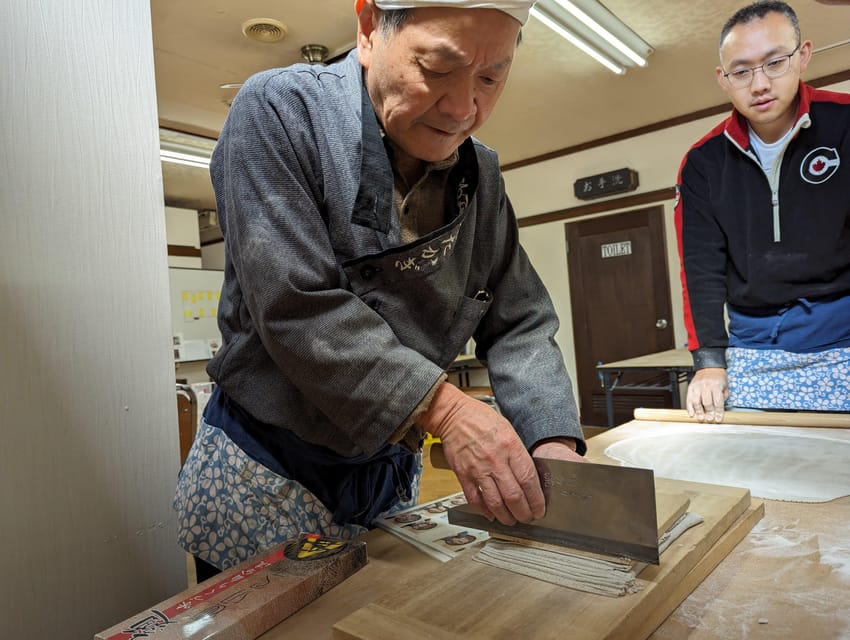
The lesson covers the process from preparing the dough to cutting the noodles. You use authentic soba-making tools and work with guidance from an experienced soba master. The goal is not to watch a professional make perfect noodles while you stand nearby. You take part from start to finish.
Expect the master to help you with each stage. Owen’s account of the experience points to the practical value of that close instruction, especially when the chef corrected and guided each step. You may not produce restaurant-perfect strands on your first try, and that is part of the fun. The lesson lets you see how much skill goes into noodles that look simple in a bowl.
The workshop is a good fit for families and mixed-age groups. A family with parents and a teenager found the activity approachable, and the shared task gives everyone something to do. It also works for couples and friends, though the portion arrangement is important to understand before booking.
At least 500 grams of soba is required for preparation. That amount is intended as a shared serving for two or three people. If you book alone, confirm how the serving will be handled, since the workshop is not designed around a small individual batch.
More Workshops at the Castle in Japan:
- Learn Zen in a class of making Matcha tea near Osaka Castle
★ 4.8 · 17 reviews - Château du Bois-Huaut: Cellar Tour and Wine Tasting Class
★ 4.8 · 53 reviews - Blending workshop and tour of the chateau
★ 5.0 · 12 reviews
Eating the noodles you just cut
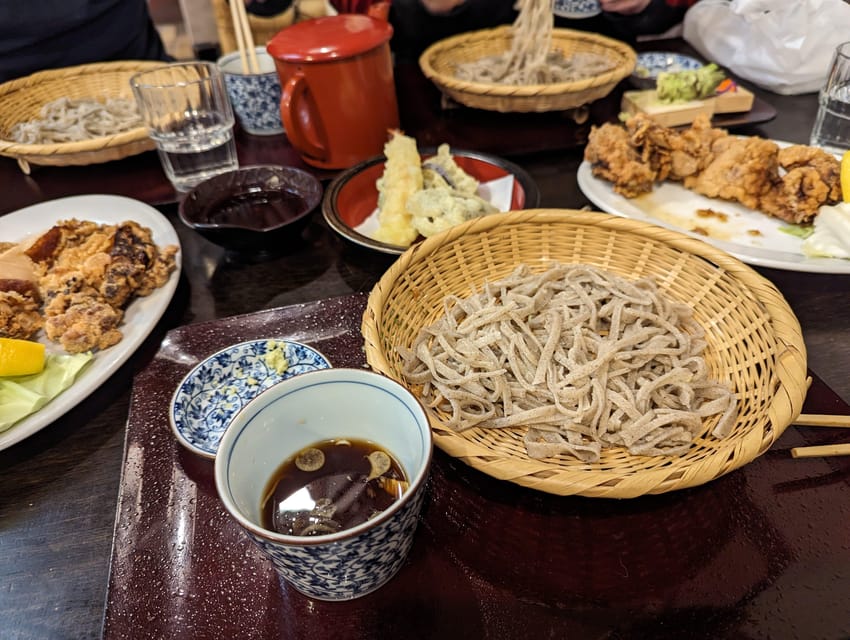
Once the noodles are cut, you move to the restaurant area. The soba master cooks the noodles, so you do not need to manage a boiling pot or worry about ruining the final stage.
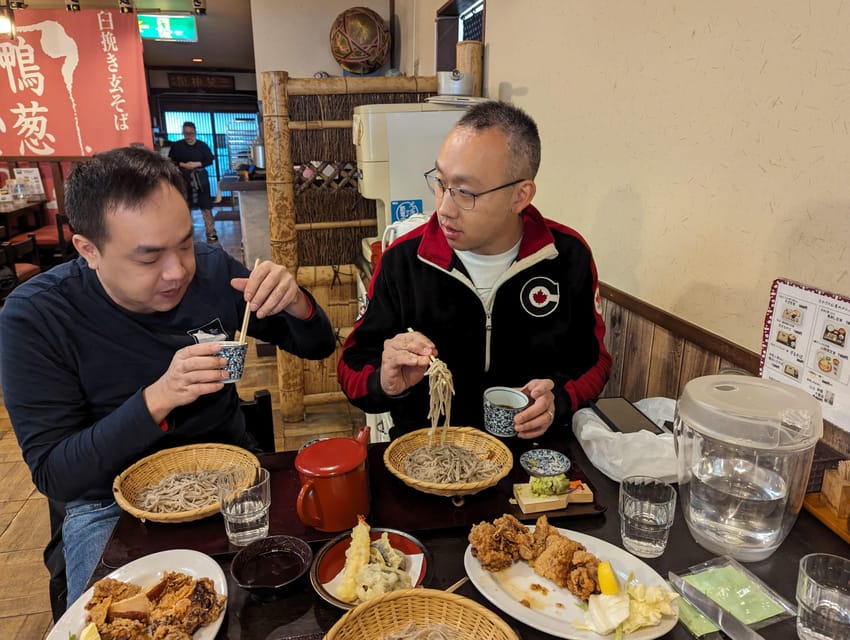
You can eat the soba hot or chilled. It may be served with tempura, or with another side dish depending on the meal arrangement. The included meal comes with your own soba creation and one extra dish. Other snacks, drinks, and additional side dishes are not included.
This part gives the workshop a satisfying finish. You get to compare the raw noodles you cut with the cooked result, then eat them while the process is still fresh in your mind. The meal is not a separate restaurant stop squeezed into the schedule. It is the payoff for the work you just did.
The portion is meant to be shared, so do not arrive expecting a large solo lunch. The included extra dish adds variety, but you should budget for drinks or other food if you have a big appetite. Dietary needs should be given when booking. Vegetarian and vegan options are available on request, and allergies should be reported in advance.
What the guide adds to the day
The guide matters most during the castle visit. Matsumoto Castle can be appreciated without help, but the building’s age and design are easier to understand when someone points out what you are seeing.
A good guide also keeps the day moving. You are not left to work out how to get from the castle to the workshop or what happens after the noodle cutting. English is the tour language, and the experience includes a live guide rather than a recorded audio track.
Tom has been praised for sharing information about the area and telling good stories. That suggests the guide can add local character beyond a list of dates. Still, no specific guide is guaranteed, so I would not book solely because of his name.
The small review sample gives the experience a perfect 5 rating from 10 reviews. That is encouraging, especially since the praise focuses on the core features: clear English, the guide’s local information, careful help from the soba chef, and the pleasure of eating the finished noodles. It is not enough to promise that every tour will feel identical, but it matches the design of the activity.
How the $92 price holds up
The price is $92 per person. The value depends on how you would otherwise arrange the day.
A standard castle visit would not include a private lesson with a soba master or a meal made from noodles you prepared. On this tour, your fee covers castle admission, the English-speaking guide, the workshop, the tools, guidance during the lesson, and your soba with one extra dish.
For a first visit to Matsumoto, the combination saves you from piecing together two activities. You also get a set time for lunch and an English explanation throughout the castle portion. I see the price as fair for a guided food and culture experience, especially if you enjoy learning by doing.
The value drops if you are traveling on a strict budget, do not eat soba, or prefer to explore at your own pace. Drinks, extra snacks, souvenirs, and other side dishes cost extra. Hotel pickup and drop-off are also not included, so add your own transport costs when planning the day.
The shared portion is another point to weigh. Two or three people can split the 500 grams naturally. Solo participants may find the arrangement less convenient, even though the activity itself remains possible to consider.
Who should book this experience
I would recommend this tour to first-time visitors who want a compact introduction to Matsumoto. It combines the city’s best-known historic sight with a food tradition you can take part in, not just photograph.
Families with older children and teenagers are a strong match. The castle provides history and architecture, while the soba lesson gives younger participants a practical task. The activity also suits couples and friends who want lunch to be part of the outing rather than an afterthought.
It is a particularly good choice if you value English guidance. The castle can be visited independently, but the tour removes guesswork and adds local stories. The workshop also benefits from instruction, since making noodles from scratch is less straightforward than it may look.
I would be cautious if you have mobility limits, are pregnant, dislike narrow stairs, or need a wheelchair-accessible route. I would also hesitate if you need a precise finish time for a train or another booking. The schedule is estimated, not fixed to the minute.
Book your dietary requirements when you reserve. Vegetarian and vegan arrangements are available on request, but allergies need to be known ahead of time. Drinks and extra food are separate, so plan a little spending money beyond the $92 fee.
Booking flexibility and practical planning
You can cancel up to 24 hours before the experience for a full refund. You can also reserve now and pay later, which helps if your Matsumoto schedule is still changing.
Check available starting times before booking because the tour runs for three hours and the departure options vary. Since there is no hotel pickup, look up your route to Matsumoto Castle before the day begins.
Wear something that lets you move comfortably. The castle stairs are the main physical challenge, and you will also need to work at the soba bench during the workshop. The supplied information does not give a dress code, so focus on comfort and ease of movement.
Should you book the Matsumoto Castle and soba tour?
Book it if you want more than a castle photograph. The best part is the connection between place and food: you see an original castle with an English-speaking guide, then learn a local craft and eat what you made.
The tour is especially worthwhile for families, couples, and first-time visitors who prefer a planned half-day activity. The main reasons to pause are the $92 price, the shared soba portion, the lack of hotel transport, and the steep castle stairs.
If those limits fit your plans, this is a well-shaped Matsumoto experience. You leave with a better understanding of the city’s landmark and a meal that has your own fingerprints in it.
FAQ
How long does the Matsumoto Castle and soba-making experience last?
The experience lasts about three hours. The estimated schedule includes 90 minutes at Matsumoto Castle, 60 minutes making soba, and 30 minutes for lunch.
Where does the tour meet?
Meet your English-speaking guide just outside the main gate of Matsumoto Castle, in front of the ticket gate and entrance to the paid admission area.
Is admission to Matsumoto Castle included?
Yes. The experience includes a guided tour and admission to Matsumoto Castle.
Is the tour conducted in English?
Yes. The activity includes a live English-speaking guide.
What happens during the soba workshop?
You watch a short introduction, learn how soba is made, prepare the dough, use soba-making tools, cut the noodles, and receive guidance from an experienced soba master.
Do I get to eat the noodles I make?
Yes. The soba master cooks your noodles, and you eat your creation with one extra dish. The soba may be served hot or chilled.
Is the soba portion individual?
The workshop requires at least 500 grams of soba, so the serving is intended to be shared by two or three people.
Are vegetarian or vegan options available?
Yes. Vegetarian and vegan options are available on request. You should provide any dietary requirements or allergy information when booking.
Is the activity suitable for wheelchair users or pregnant women?
No. The experience is listed as unsuitable for wheelchair users and pregnant women. The castle tower has steep, narrow stairs.
Newly walked in Japan
- Tokyo: Edo Castle and Imperial Palace Guided Walking Tour★ 5.0 · 6 reviews
- (Ticket Included) Explore Osaka Castle & Museum of History★ 4.8 · 21 reviews
- Peace Memorial Park, Hiroshima Castle, & Garden Private Tour★ 4.8 · 7 reviews
- Osaka: Osaka Castle – Tsuruhashi – Tennoji (Spanish Guide)★ 4.7 · 10 reviews
- Osaka/kyoto: Himeji Castle, Kobe. Luxury Day Trip with Guide★ 5.0 · 2 reviews
- Osaka: Osaka Castle 3 hours Historical Walking Tour★ 4.6 · 14 reviews
- Osaka: Early Morning Osaka Castle Guided Tour, Avoid Crowds★ 4.9 · 12 reviews
- Osaka: Explore Every Bit of Osaka Castle in 3 Hours★ 5.0 · 5 reviews
Japanese Castle Tours, compared.
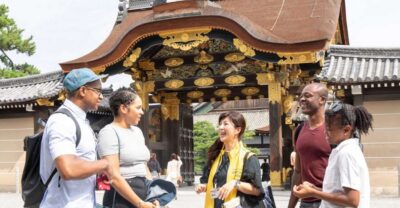
Nijo-jo Castle and Ninomaru Palace Guided Tour
Read our review →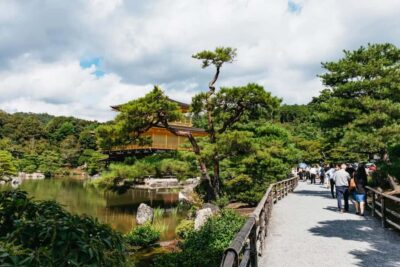
Nijo Castle, Kiyomizu & Fushimi Inari Guided Tour
Read our review →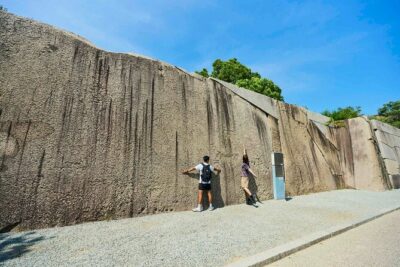
Osaka Castle Walking Tour and Castle Tower Admission
Read our review →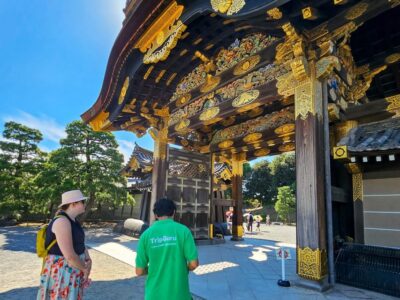
Imperial Palace & Nijo Castle Guided Walking Tour
Read our review →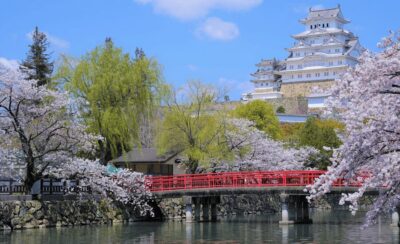
Himeji Castle, Arima Onsen & Mt. Rokko Day Tour
Read our review →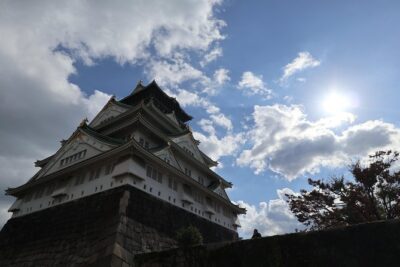
5-Hour Osaka Bike Tour to the Neighborhood of Osaka Castle
Read our review →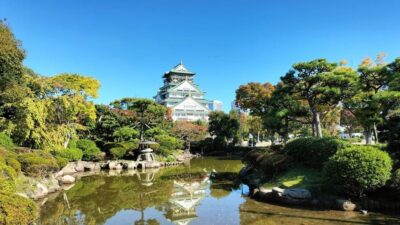
Browse the lists this tour appears in