
Review · KYOTO
Kyoto: Nijo Castle, Kiyomizu & Fushimi Inari Guided Tour
Kyoto packs centuries of temples, palaces, gardens, and shrines into a city that can be hard to cover on your own. This 11-hour bus tour tackles five major sights in one long, well-planned day, beginning with Arashiyama and ending beneath the red torii gates of Fushimi Inari.
I like the early visit to Arashiyama Bamboo Grove, before the day is fully underway, and I like having a bus connect places that sit in different parts of Kyoto. Guides such as Cesar, Angeles, Paula, and Alex have earned strong praise for clear explanations and for switching quickly between English and Spanish.
The trade-off is simple: this is a full day with plenty of walking, fixed departure times, and crowds at Kyoto’s most famous places. Summer heat can be tough, and the packed schedule gives you a taste of each sight rather than a slow, private visit.
Key points to know before booking

- Five major Kyoto sights in one day: Arashiyama, Kinkaku-ji, Nijo Castle, Kiyomizu-dera, and Fushimi Inari.
- Early Arashiyama stop: You get 70 minutes at the bamboo grove, when it can feel calmer than later in the day.
- Ticket choice matters: Admissions to Kinkaku-ji, Nijo Castle, and Kiyomizu-dera are included only with the appropriate ticket option.
- Strong bilingual guiding: The tour runs in English and Spanish, with guides praised for history, organization, and group care.
- A genuine full-day outing: Expect about 11 hours, walking, stairs, changing weather, and several timed returns to the bus.
- Flexible end point: You can finish at Fushimi Inari or continue to Kyoto Station.
Why this Kyoto day tour works
If you have only one day for Kyoto, public transport can eat up more time than you expect. Arashiyama lies west of the city, while Fushimi Inari is in the southeast. Nijo Castle, Kinkaku-ji, and Kiyomizu-dera add more stops between them.
A coach removes much of that planning. You meet outside Hotel Keihan Kyoto Grande, board the bus, and let the driver handle the road connections. The rides are usually around 30 to 40 minutes, giving you a chance to rest between walks. Several people have singled out drivers such as Ken, Hamada-san, Kobashi-san, and Ikeda-san for smooth, careful driving.
You should not mistake this for a quiet temple tour. It is a sightseeing sweep. You will see the defining sights, hear useful background, and have time to explore at every stop, but you will not have hours to wander every garden or follow every trail.
The price is $54 per person, which is good value if the admissions option is included and you want transport between five hard-to-link sights. The value is less clear if you already have plenty of Kyoto time, enjoy planning train routes, or want long visits at only one or two temples.
More Guided Castle Tours in Japan
- Kyoto: Nijo-jo Castle and Ninomaru Palace Guided Tour
★ 4.7 · 1,020 reviews - Kyoto: Imperial Palace & Nijo Castle Guided Walking Tour
★ 4.7 · 453 reviews - Osaka Castle Guided Tour
★ 4.7 · 249 reviews
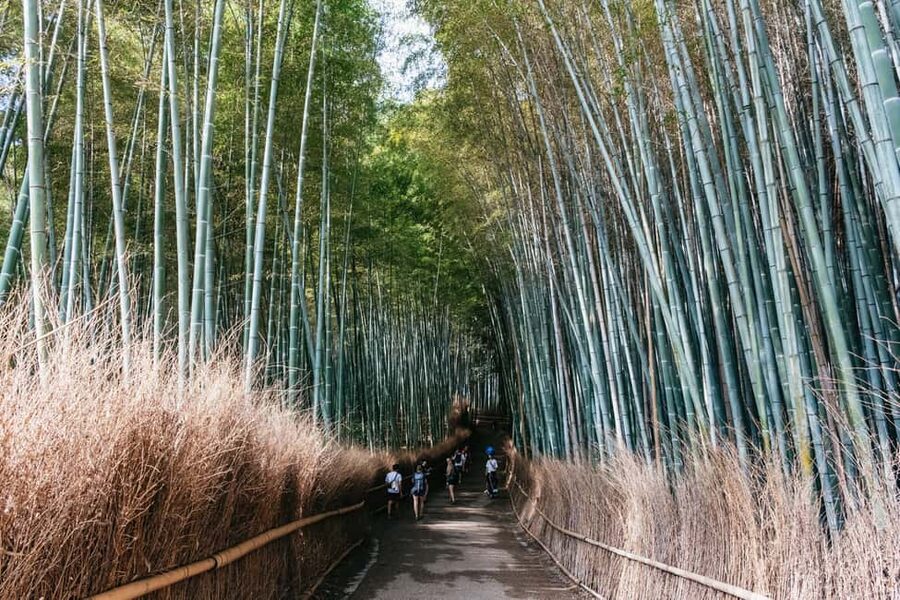
Arashiyama Bamboo Grove before the crowds
The first major stop is Arashiyama, reached after roughly 40 minutes by bus. You have 70 minutes of free time, centered on the famous bamboo grove.
The tall bamboo creates the visual drama here. Paths run beneath slender green trunks, and the soft movement of the leaves gives the place a calmer feel than many central Kyoto streets. The early timing is one of the tour’s smartest choices. It does not guarantee solitude, but it gives you a better chance of taking photographs before the area fills up.
You will need to manage the time yourself. The grove is not a huge site, yet it is easy to stop every few steps for photographs. Keep an eye on the meeting time and do not assume you can continue exploring all of Arashiyama.
Comfortable shoes matter from the start. You may also want water in hand, especially from late spring through summer. The grove offers a scenic opening to the day, but the visit is brief enough that you should treat it as a focused stop rather than a complete tour of the district.
Kinkaku-ji and its gold-covered reflection
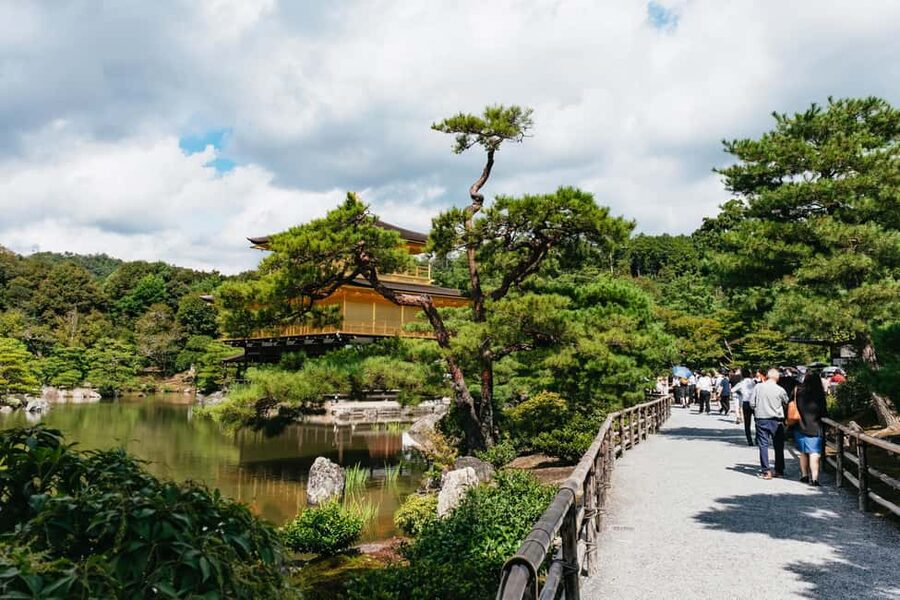
The bus then heads to Kinkaku-ji, better known as the Golden Pavilion. You have about 45 minutes here.
The pavilion is covered in gold leaf and sits beside a pond framed by gardens. The main pleasure is visual: the bright building, water, trees, and carefully arranged setting come together in a compact scene that photographs well from several angles.
Forty-five minutes is enough to walk the marked route, see the pavilion, take pictures, and hear the main explanation. It is not enough for a long garden stroll or an unhurried pause. The site can also be crowded, particularly during popular seasons.
Admission is included only when you buy the option with tickets. Check this carefully before paying. If you choose a package without admissions, you should not assume that the bus fare covers entry to the pavilion or the later paid sites.
Nijo Castle and the shogun’s former residence
Nijo Castle follows, with about 90 minutes to explore. This is one of the more historically substantial stops because it combines a grand residence, gardens, traditional rooms, and a clever security feature.
Inside the castle, look for the nightingale floors. Their boards make a chirping sound when stepped on, designed to warn of unwanted movement. It is a small detail, but it helps bring the political world of the shogun into focus.
The traditional tatami rooms show the formal side of elite Japanese life. Outside, the gardens give you space to slow down after the indoor visit. The 90-minute block is generous compared with the shorter pavilion stop, though you still need to follow the group’s timing.
Nijo Castle access depends on the ticket option. There is also an important qualification: circumstances beyond the operator’s control can prevent the castle visit. If that happens, the substitute is Sanjusangen-do Temple. Weather, traffic, road closures, or other same-day conditions can also change the order or content of the day.
More Japanese Castle Tours in Japan:
- Osaka Castle: Museum and Tower Entry Ticket
★ 4.5 · 2,380 reviews - Osaka Castle Walking Tour and Castle Tower Admission
★ 5.0 · 561 reviews - From Osaka: Himeji Castle, Arima Onsen & Mt. Rokko Day Tour
★ 4.6 · 339 reviews - 5-Hour Osaka Bike Tour to the Neighborhood of Osaka Castle
★ 5.0 · 319 reviews
Kiyomizu-dera and a useful lunch break
After another bus ride, you reach Kiyomizu-dera for a 2.5-hour stop that includes the temple visit, lunch, and free time. This is the longest stop of the day, and it needs to be.
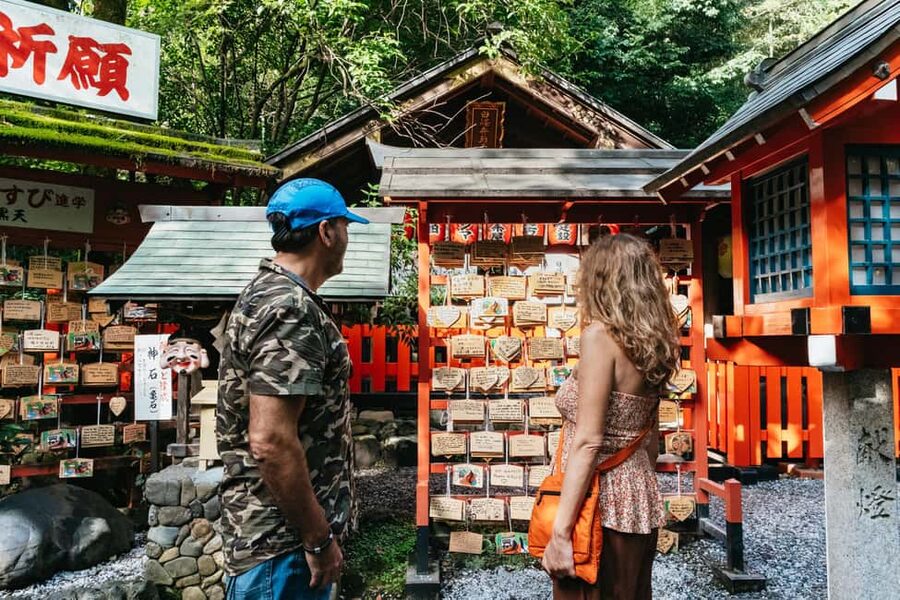
Kiyomizu-dera is known for its large wooden stage projecting over the hillside. From here, you get broad views across Kyoto, though the exact feel depends on weather and season. The approach is also part of the experience, with shops selling traditional sweets, drinks, and crafts.
You are responsible for food and drinks, so use this long break sensibly. It is a good place to buy lunch rather than trying to carry food all day. You can also use the extra time to explore at your own pace, take photographs, and recover from the morning’s walking.
The approach and temple grounds include slopes and steps. This is one reason the tour is not suitable for wheelchair users or people with mobility impairments. Even if you are generally active, bring supportive shoes and allow yourself time to pause.
Kiyomizu-dera admission is included only with the ticket option. If you want a day with the least financial guesswork, compare the total price of the ticket package with the separate admission costs before booking.
Fushimi Inari and the red torii gates
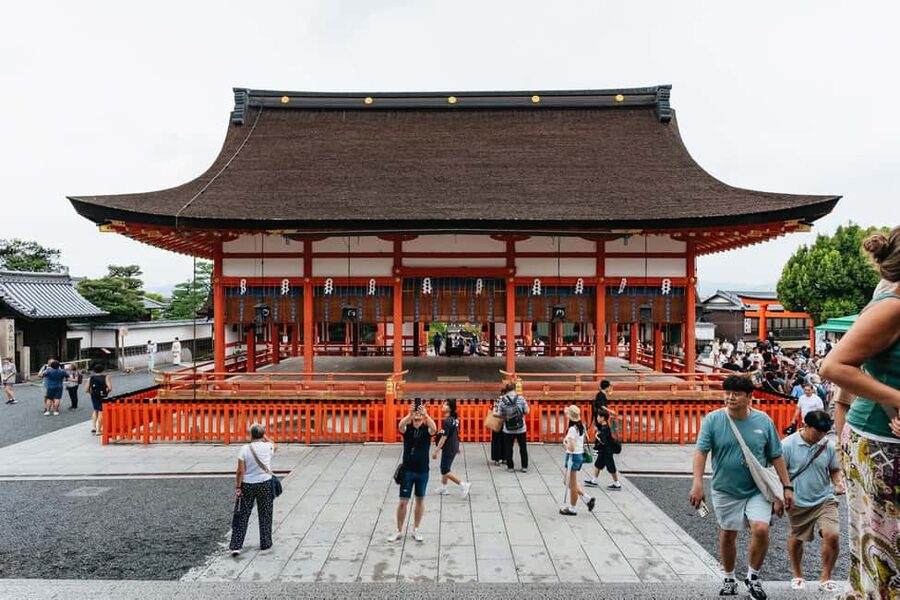
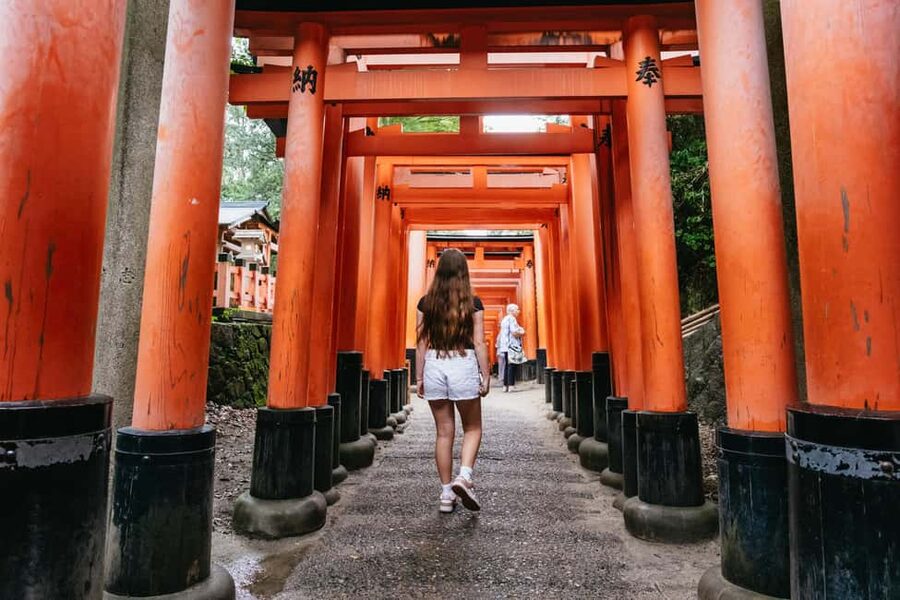
The final major stop is Fushimi Inari Taisha, with about 90 minutes of free time. This shrine is famous for its thousands of vermilion torii gates, which form covered paths up the wooded mountainside.
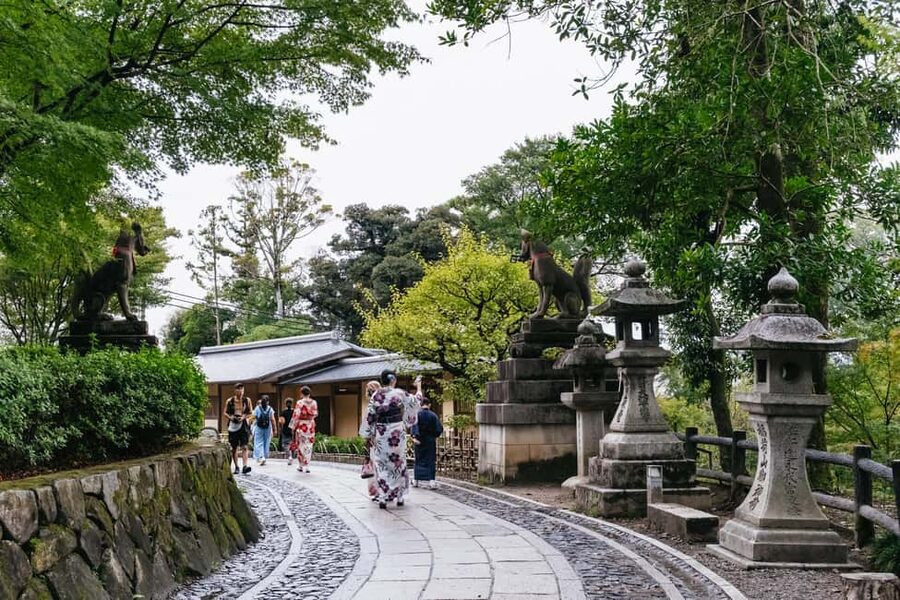
You do not need to walk the entire route to enjoy the shrine. The lower section gives you the strongest concentration of gates and is the practical choice during a timed tour. If you walk uphill, remember that every minute spent climbing is a minute you must reserve for returning to the bus.
This is a fitting final stop because it feels different from the castle and temples earlier in the day. The torii gates create a repeated pattern, while the route gradually becomes quieter as it rises. You will want your camera, but watch your footing and keep track of time.
Some tours finish here, while others offer drop-off at Kyoto Station. Confirm the available end point when you board, especially if you have an evening reservation or train to catch.
The guides make the packed schedule manageable
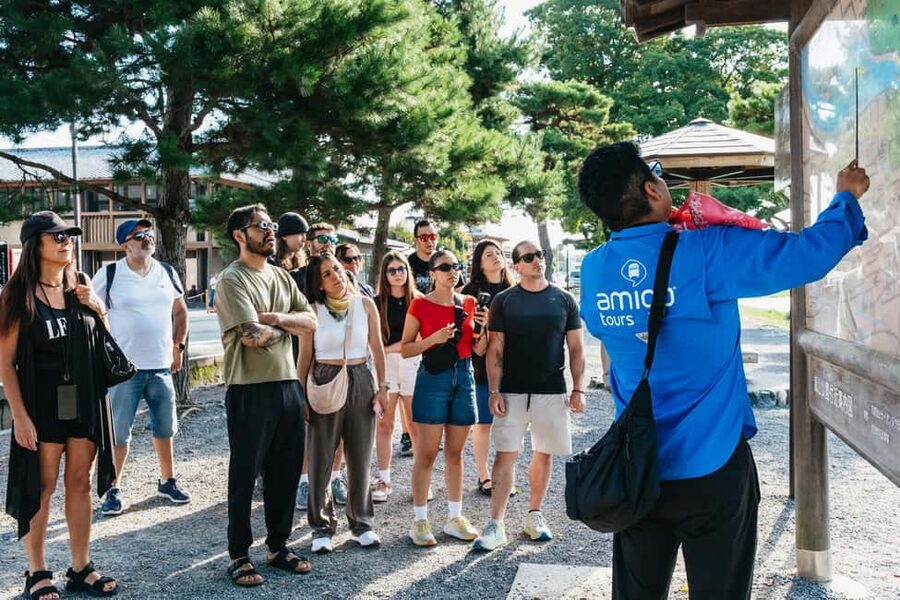
The guide can make or break a day with this many stops. The strongest part of this experience is the repeated praise for guides who keep the group moving without turning the day into a rushed march.
Cesar is often praised for his history explanations, patience, and ability to move between English and Spanish. Angeles is noted for clear instructions, careful timing, and making sure people return to the meeting points. Paula, Alex, Andrea, Heli, and other guides have also been praised for friendly delivery and useful background on Japanese culture.
The bilingual format can mean that explanations take longer than they would in a single-language group. Still, the guides are expected to give both language groups the same information. You should stay close enough to hear, especially at crowded sites. One practical improvement would be portable audio equipment in noisy areas, so consider positioning yourself near the guide during explanations.
The guides also help with the small but important parts of a group day: pointing out meeting places, answering questions, suggesting food choices, and helping with photographs. Their organization matters more than theatrical storytelling here.
Walking, weather, and the pace of the day
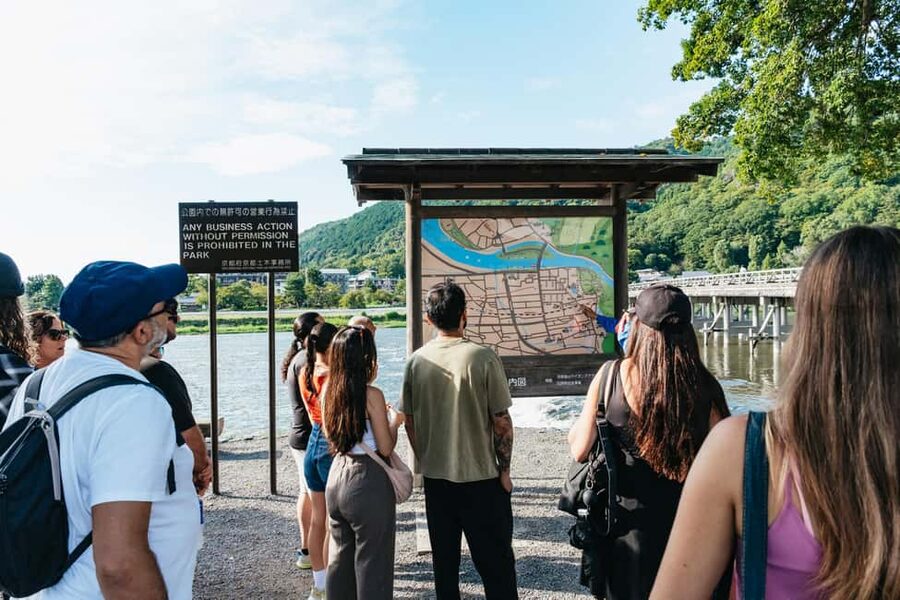
The bus gives your feet breaks, but this is not a low-effort excursion. You walk through a bamboo grove, temple grounds, castle rooms, shopping streets, and shrine paths. There are slopes and stairs, especially around Kiyomizu-dera and Fushimi Inari.
Bring comfortable shoes, a hat, sunscreen, and water. Summer can be very hot, and one July review specifically noted the heat. Rain does not necessarily stop the tour, but it can make paths less comfortable and views less clear.
The schedule usually provides enough time to see each main feature, according to the overall pattern of feedback. Still, the last stop can feel shorter if the day runs late or darkness arrives. Crowds are another reality. Early Arashiyama helps, but Kinkaku-ji, Kiyomizu-dera, and Fushimi Inari are among Kyoto’s best-known places.
The tour is most comfortable for someone who accepts a little crowding in exchange for seeing a lot. If you dislike fixed meeting times, prefer empty temples, or want to sit for long meals, you may find the pace tiring.
Who should book this experience?
I would choose this tour for a first visit to Kyoto, especially if you have only one full day. It gives you a useful overview and removes the stress of working out routes between distant sights.
It also suits families and solo visitors who want a clear structure. The reviews describe guides helping people stay oriented, and the bus provides a welcome break between walking sections. The bilingual setup is especially useful if you prefer English or Spanish explanations.
I would be more cautious if you have mobility limits, a strict dietary plan, or a strong preference for independent exploration. You should also confirm the ticket package, because the three main admissions are not automatically part of every option.
Booking decision
Book this tour if your goal is to see Kyoto’s most famous sights efficiently, with transport and live explanations handled for you. The $54 starting price is attractive for a full day, particularly when the selected option includes the three paid admissions.
Skip it if you have several days in Kyoto and want to explore slowly. For everyone else, this is a practical introduction to the city: long, active, crowded at times, but carefully organized and unusually good at fitting Kyoto’s major sights into one day.
FAQ
How long does the Kyoto tour last?
The tour lasts about 11 hours. The schedule begins at Hotel Keihan Kyoto Grande and finishes at either Fushimi Inari Taisha or Kyoto Station.
Where is the meeting point?
Meet outside Hotel Keihan Kyoto Grande. The guide will be holding an Amigo Tours sign. You should arrive at least 10 minutes before departure for check-in.
Which languages are available?
The tour is offered in English and Spanish. The guide provides information to both language groups during the day.
Is admission to Kinkaku-ji included?
Admission to Kinkaku-ji is included only if you select and purchase the option with tickets.
Is admission to Nijo Castle included?
Nijo Castle admission is included only with the ticket option. The castle may be replaced by Sanjusangen-do Temple if it cannot be visited for reasons outside the operator’s control.
Is admission to Kiyomizu-dera included?
Kiyomizu-dera admission is included only when you purchase the option with tickets.
Are food and drinks included?
No. Food and drinks are not included. The Kiyomizu-dera stop includes time for lunch and free exploration.
Is the tour suitable for wheelchair users?
No. The tour is not suitable for wheelchair users or people with mobility impairments. It includes substantial walking, slopes, and steps.
Can I cancel the booking?
You can cancel up to 24 hours in advance for a full refund. The reserve-now, pay-later option lets you hold a place without paying at the time of booking.
Newly walked in Japan
- Himeji: Private Guide Tour of the Castle from Osaka or Kyoto★ 4.5 · 7 reviews
- World Heritage Himeji Castle & Sake Breweries Private Tour★ 4.5 · 11 reviews
- From Nagoya: Samurai Swords and Inuyama Castle Private Tour★ 5.0 · 11 reviews
- 2.5 Hour Private History and Culture Tour in Himeji Castle★ 5.0 · 185 reviews
- Kyoto: Nijo Castle World Heritage Guided Tour with Admission★ 5.0 · 128 reviews
- Himeji: Himeji Castle Guided Tour – UNESCO Heritage★ 4.7 · 115 reviews
- Osaka: Osaka Castle & Historical Museum Guided Tour★ 4.8 · 28 reviews
- Osaka: Osaka Castle Guided Tour with Local Guide★ 4.7 · 78 reviews
Japanese Castle Tours, compared.
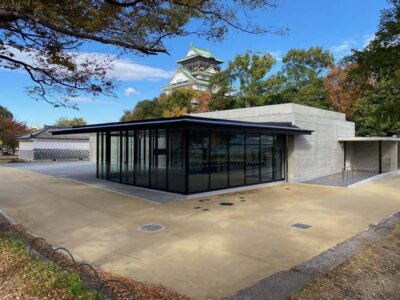
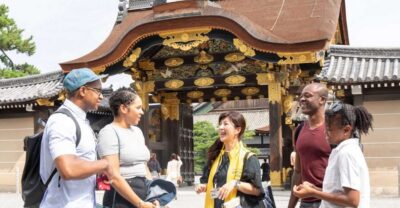
Nijo-jo Castle and Ninomaru Palace Guided Tour
Read our review →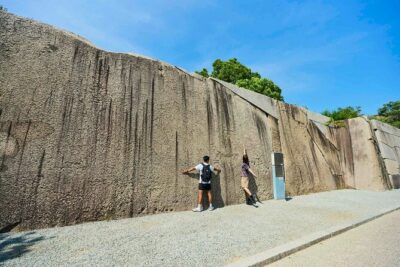
Osaka Castle Walking Tour and Castle Tower Admission
Read our review →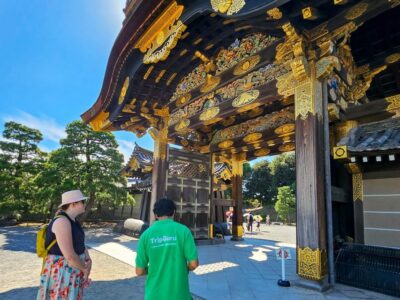
Imperial Palace & Nijo Castle Guided Walking Tour
Read our review →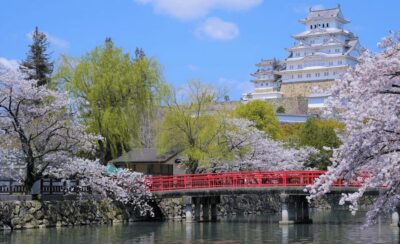
Himeji Castle, Arima Onsen & Mt. Rokko Day Tour
Read our review →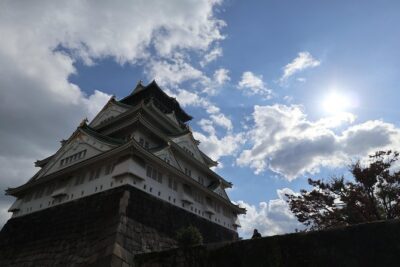
5-Hour Osaka Bike Tour to the Neighborhood of Osaka Castle
Read our review →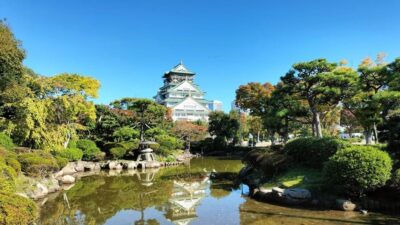
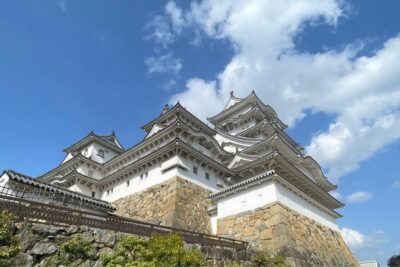
Best of Himeji Castle: 3hr Tour with Licensed Guide
Read our review →Browse the lists this tour appears in