
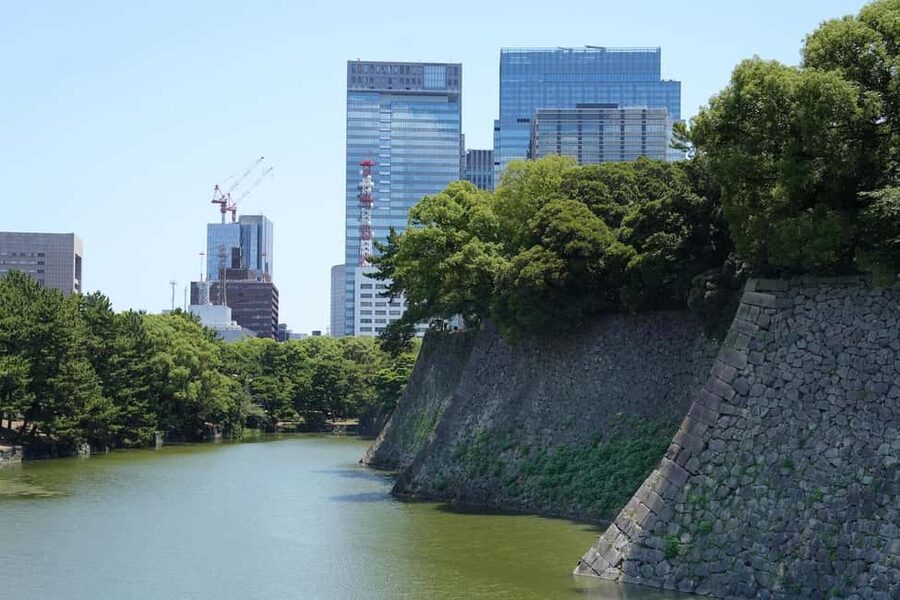
Review · JAPAN
Tokyo: Edo Castle and Imperial Palace Guided Walking Tour
Edo Castle is not just a palace you look at from behind a fence. This walk helps you read the stone walls, moats, gates, and guardhouses as clues to how Japan was governed for 260 years. I like the use of a map showing Edo in the 1650s, and I like that the route ends at Hirakawa Gate instead of circling back through the same streets.
I also like the small group of up to eight people, which gives you a fair chance to ask questions. The main drawback is simple: this is a 150-minute walking tour with many outdoor stops, so comfortable shoes and weather-ready clothing matter. The very low $3.22 price makes it an easy buy, but do not expect meals, transport, or a short indoor museum visit.
Key points to know before you go
- A 1650s map brings Edo Castle to life: Use it to picture the shogun’s city before modern Tokyo covered the old streets.
- The route covers real defensive features: You will see Sakurada-mon, Kikyo-mon, Ote-mon, stone walls, moats, guardhouses, and surviving tower structures.
- The former main hall site gets the most time: Thirty minutes here gives the guide room to explain government, court life, and the castle’s changing role.
- The tour connects two political eras: Learn how Edo Castle served the Tokugawa Shogunate, then became the Imperial Palace after the Meiji Restoration.
- Small groups keep the walk personal: The maximum is eight people, with an English-speaking guide and time for questions.
- The route is one-way: You start at Tokyo Station’s Marunouchi South Gate and finish at Hirakawa Gate, so plan your next stop from the north side of the palace grounds.
Why this castle walk is more than a palace photo stop
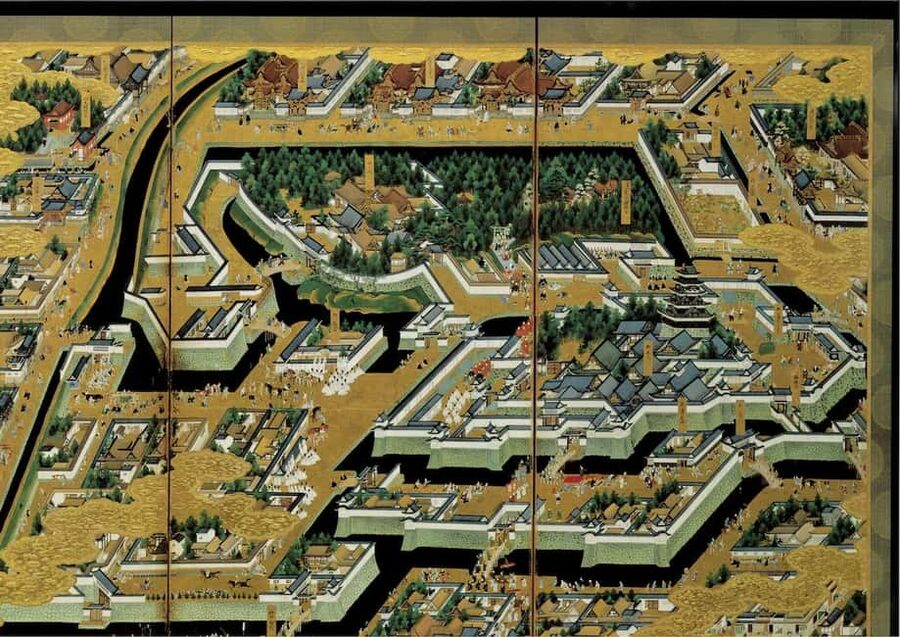
The most useful thing about this experience is its focus on what remains. Edo Castle’s great buildings are largely gone, but the defensive bones are still easy to follow: broad moats, massive stone walls, formal gates, guard posts, and the open site of the former main hall.
That makes the tour a good fit if you enjoy history that needs a little imagination. You are not walking through furnished rooms. You are standing where power was organized, where visitors were controlled, and where the shogun’s government directed Japan for roughly 260 years.
The guide uses a map of Edo from the 1650s to connect the surviving ground with the city that once surrounded it. This is a smart teaching tool. Without it, the palace grounds can feel like a pleasant but confusing mix of lawns, walls, and empty spaces. With it, you can begin to picture the castle as the center of a working capital.
The walk also links the Tokugawa period to the Meiji Restoration. Edo Castle later became the Imperial Palace, the current residence of the Emperor. You get both stories in one visit, rather than treating the shogunate and modern imperial period as separate chapters.
More Castle Walking Tours in Japan
- Tokyo Castle & Imperial PalaceーShogun Walking Tour
★ 4.7 · 1,068 reviews - Ultimate Osaka Walking Tour: Castle, Dotonbori & Hidden Gems
★ 5.0 · 862 reviews - Tokyo Castle & Imperial PalaceーShogun Walking Tour
★ 5.0 · 724 reviews
Meeting at Tokyo Station’s Marunouchi South Gate
The tour begins at the ground floor of Tokyo Station’s Marunouchi South Exit. Look for the distinctive historic yellow-colored dome. The meeting point is outside the station rather than at the palace itself, which makes sense because Tokyo Station is a clear landmark and a useful transport hub.
Give yourself enough time to find the correct exit. Tokyo Station is large, and arriving at the wrong side can turn a simple meeting into a rushed start. The stated coordinates are 35.68048457383692, 139.76571024138642 if you need to check your position.
From the station, you walk about five minutes to the first stop. That opening stretch lets the guide shift your attention from modern Marunouchi to the older political center beyond it.
Mitsubishi Ichigokan Museum and the first change of scene
The first guided stop is Mitsubishi Ichigokan Museum, with about ten minutes set aside. The purpose here is less about a full museum visit and more about placing the castle in its modern urban setting.
This is a useful opening because Tokyo’s business district can make the old castle difficult to imagine. The tour begins among present-day buildings, then gradually leads you toward the moats and gates that once defined the shogun’s seat.
Do not expect a museum admission or a long indoor art visit. The activity is a walking tour, and the museum stop is brief. If you want to tour the museum itself, you would need to arrange that separately.
Sakurada-mon Gate and the castle’s outer defenses
After another seven-minute walk, you reach Sakurada-mon Gate for a ten-minute explanation. This is one of the route’s strongest early stops because a gate immediately shows how the castle controlled movement.
The guide can use the gate, surrounding walls, and moat to explain the castle as a working defensive complex rather than a single residence. You will begin to see why access mattered, how visitors were funneled through specific points, and how the scale of the defenses reflected the shogun’s authority.
The route then moves through a series of shorter stops. At an unnamed point in Chiyoda, the guide spends about five minutes continuing the story. Next comes the area by the Sakashita Gate security post, followed by Kikyo-mon Gate. Each explanation is short, so the walk keeps moving instead of turning into a long lecture in one place.
This rhythm suits the site. You see a physical feature, hear its meaning, and then move on before the details blur together.
More Guided Castle Tours in Japan
- Kyoto: Nijo-jo Castle and Ninomaru Palace Guided Tour
★ 4.7 · 1,020 reviews - Kyoto: Nijo Castle, Kiyomizu & Fushimi Inari Guided Tour
★ 4.7 · 700 reviews - Kyoto: Imperial Palace & Nijo Castle Guided Walking Tour
★ 4.7 · 453 reviews - Osaka Castle Guided Tour
★ 4.7 · 249 reviews
Sakurada Tatsumi Yagura and the view of castle engineering
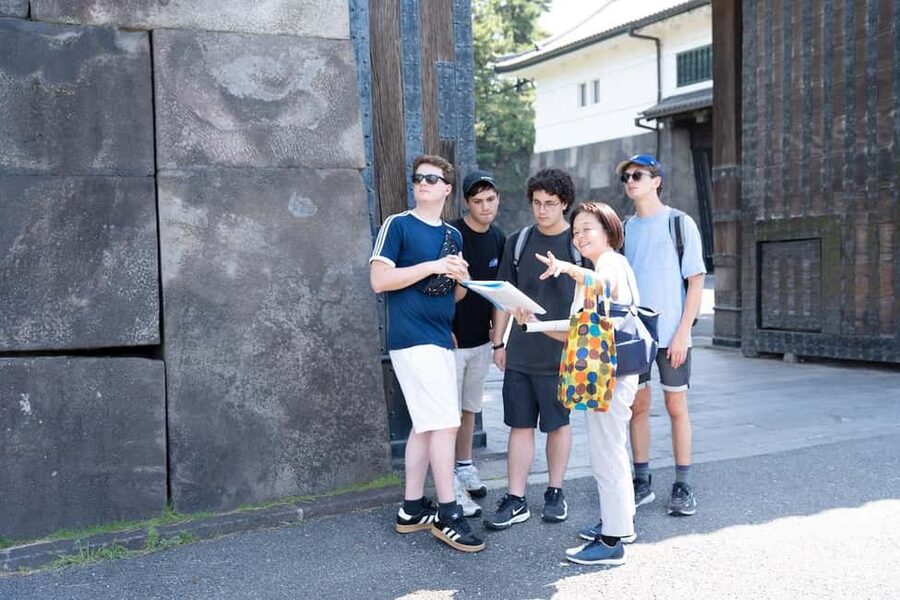
Sakurada Tatsumi Yagura receives about six minutes. A yagura is a watchtower structure, and this stop gives you another way to read the castle’s defenses.
The stonework deserves your attention. One especially useful point from the tour’s historical discussion is that the walls show more than one masonry style. Edo Castle was built through tenka-fushin, a system in which regional lords were assigned major construction work. As a result, you can notice differences in how stones were cut and fitted.
The stone walls include both carefully cut masonry and rougher fitted work. These differences are not merely decorative. They help show how a huge political project was carried out by different domains, each bringing its own building methods and materials.
If you enjoy architecture, this may be one of the best parts of the walk. The castle’s stones are not background scenery. They are evidence of labor, regional participation, and the organization of power.
Ote-mon, Ote-San’no, and the guarded approach
The route continues to Ote-mon Gate, with about five minutes of guiding, then to the ruins of Ote-San’no Gate for another five minutes. These stops build a picture of how important visitors approached the central castle area.
Ote-mon is one of the key entrances, and the gate sequence helps you understand that Edo Castle had layers of control. Passing through the castle was not a casual stroll. Different gates and checkpoints marked different levels of access.
At the Hyakunin Bansho Guardhouse, the guide has about seven minutes to explain the guards and the people who watched the entrance. This is one of the stops that can make the old castle feel human. Instead of thinking only about shoguns and generals, you start thinking about the guards who worked there, the visitors they checked, and the rules that governed daily movement.
The stop is short, but it adds an important social layer. The castle was a workplace, a residence, and a government center. It needed people at every gate to keep the system running.
Thirty minutes at the former Honmaru main hall site
The longest stop comes at the site of Edo Castle’s Honmaru, or main hall. You spend about thirty minutes here, making it the natural center of the tour.
The main hall itself no longer remains, so the guide’s explanation does much of the work. This is where the map and the earlier gates come together. You can place the central government area inside the defensive structure you have been walking through.
The discussion covers the Tokugawa Shogunate and the way the Tokugawa family managed power. It also looks at the people who lived and worked within the castle. That human focus matters. The castle was not simply a symbol of one ruler. It was a complicated world of officials, guards, household members, and courtly spaces.
One particularly interesting historical point concerns the castle keep. After the Great Fire of Meireki, the foundations for a new keep were completed, but the keep itself was not rebuilt. The decision was made to give priority to restoring Edo rather than spending more on a grand tower.
That detail says a great deal about practical government. A missing landmark can be more revealing than a surviving one. The choice shows the tension between prestige and public recovery, and it gives you a sharper view of how the shogunate responded after disaster.
The guide also covers the political side of the inner palace, including the role of the Ōoku, the women’s quarters. This helps correct the usual picture of castle life as only male officials and military decisions. The inner palace had its own influence and political meaning.
You may also hear about the fujomon, or impure gate, and the obi-kuruwa. These less familiar features are valuable because they point to the rules, boundaries, and ideas about purity that shaped movement inside the castle.
Kita-Hanebashi and the route toward Hirakawa Gate
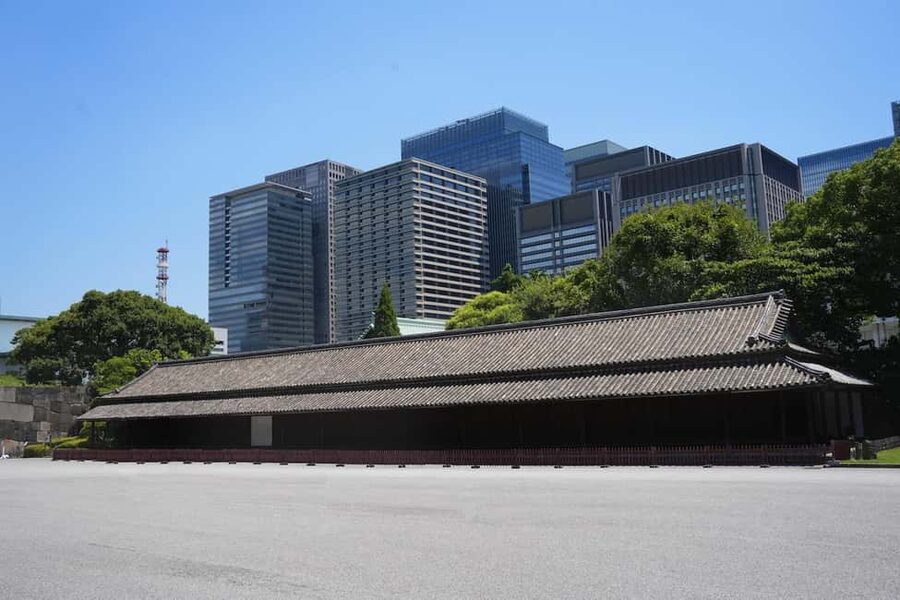
After the Honmaru site, the walk continues to Kita-Hanebashi Gate for about five minutes. This keeps the focus on movement through the castle rather than ending at the main historic site.
A five-minute walk leads to Takebashi, where the guide speaks for another five minutes. Then the route continues to Hirakawa Bridge, with about seven minutes of explanation before ending at Hirakawa Gate.
This final section is practical as well as historical. Hirakawa Gate is the endpoint, so you do not return to Tokyo Station. That one-way format gives the walk a sense of progress, but you need to plan your next move from the palace’s northern side.
The route includes repeated short walks of four to seven minutes. That means the experience is not a single long talk. You are constantly changing position, seeing another wall or gate, and using the next feature as a prompt for the story.
What the $3.22 price really means
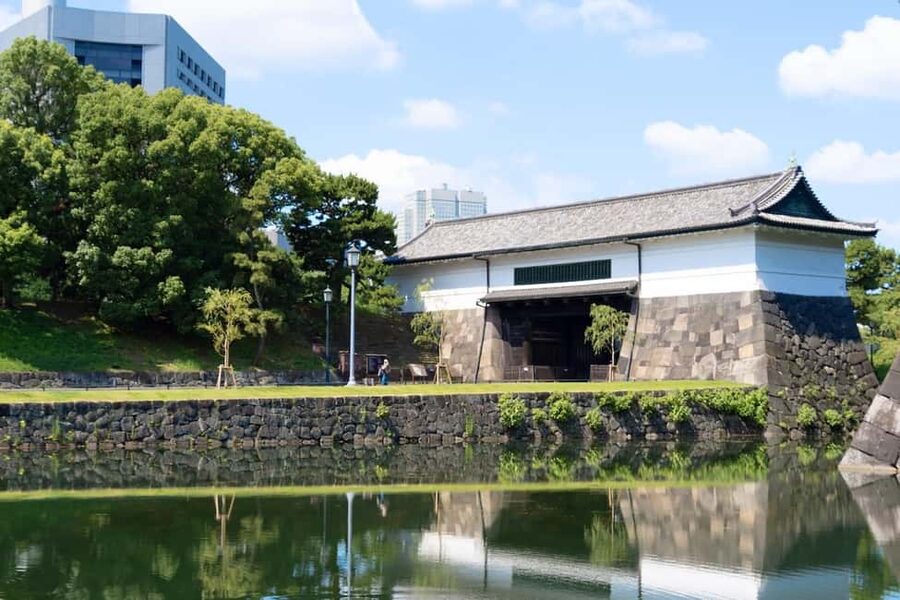
At $3.22 per person, this is unusually inexpensive for a 150-minute guided walk in central Tokyo. If that price is available when you book, the value is hard to ignore. You are paying very little for an English-speaking guide, a small group, and a structured route through a major historic site.
The price is most attractive if you would otherwise walk around the palace grounds without knowing what you were seeing. The walls, moats, and gates are impressive, but their meaning is not always obvious from signs alone. A guide turns them into a connected story.
Keep your expectations in line with the cost. Transport to Tokyo Station is not included, and neither are meals or drinks. There is also no promise of a full palace interior visit. The experience is an outdoor historical walk, not a palace admission package.
A small gift is included. That is a pleasant extra, but the real value is the interpretation and the chance to ask questions in a group capped at eight.
Who will get the most from this tour
I would choose this for anyone who wants a clear introduction to Edo Castle without spending half a day in a museum. It suits history fans, architecture enthusiasts, and first-time visitors who want Tokyo’s political story explained in place.
It is also a good choice if you prefer a small group. Eight participants is small enough for the guide to keep track of the group and respond to questions, while still offering the energy of a shared walk.
Families with older children may find the gates, guards, moats, and castle stories easier to follow than a long lecture. The route also works for visitors who want to connect the Tokugawa period with the Imperial Palace of today.
I would be more cautious if you dislike outdoor walking, need frequent indoor breaks, or want to see furnished palace rooms. The route contains many stops but no listed meal break. Wear comfortable shoes, and remember that the review from a February visit describes cold conditions, so winter layers are sensible.
The activity is marked wheelchair accessible. Since the experience covers a long outdoor route with multiple walking sections, you should still confirm that the route suits your particular needs before booking.
Booking flexibility and timing
The duration is 150 minutes, and you can check available starting times when choosing a date. The activity offers free cancellation up to 24 hours in advance for a full refund, and you can reserve now while paying later.
Those terms are useful for a Tokyo schedule, where weather, jet lag, and train plans can change. Still, do not treat the flexible booking policy as a reason to arrive late. The group begins at a specific meeting point and then moves through a one-way route.
The tour is offered in English with a live guide. No guide name is provided, so you should not book expecting a particular individual. The guide’s role is central, especially at the Honmaru site where the buildings are gone and the history must be explained clearly.
Should you book this Edo Castle walk?
Book it if you want context, not just photographs. The route gives you a practical way to understand why Edo Castle mattered, how the Tokugawa government operated, and how the site changed after the Meiji Restoration.
The best reasons to go are the 1650s map, the attention to stonework, the guardhouses and gates, and the generous thirty-minute stop at the former main hall. The small group and low price add to the appeal.
Skip it if you want an indoor palace tour, a food experience, or a quick landmark visit. For everyone else, especially history-minded visitors who can handle two and a half hours on foot, this is a remarkably inexpensive way to read Tokyo’s past directly from its walls and moats.
FAQ
Where does the tour start?
It starts at the ground floor of the Marunouchi South Exit of Tokyo Station, near the historic yellow-colored dome.
Where does the tour finish?
The tour finishes at Hirakawa Gate, or 平川門.
How long does the tour last?
The tour lasts 150 minutes.
What language is the tour offered in?
The tour is offered in English with a live English-speaking guide.
What is included in the price?
An English-speaking guide and a small gift are included.
Are meals, drinks, or transport included?
No. Transportation to the starting point, meals, and drinks are not included.
What should I wear?
Wear comfortable shoes because the experience includes walking between many castle gates, walls, moats, guardhouses, and historic sites.
More Palace Tours in Japan
- Imperial Palace East Garden and Edo Castle Walking Tour in Tokyo
★ 5.0 · 510 reviews - Kyoto: Nijo Castle and Kyoto Imperial Palace Guided Tour
★ 4.6 · 98 reviews - Tokyo: Edo Castle Ruins & Imperial Palace East Garden Tour
★ 4.4 · 13 reviews
Newly walked in Japan
- (Ticket Included) Explore Osaka Castle & Museum of History★ 4.8 · 21 reviews
- Peace Memorial Park, Hiroshima Castle, & Garden Private Tour★ 4.8 · 7 reviews
- Osaka: Osaka Castle – Tsuruhashi – Tennoji (Spanish Guide)★ 4.7 · 10 reviews
- Osaka/kyoto: Himeji Castle, Kobe. Luxury Day Trip with Guide★ 5.0 · 2 reviews
- Osaka: Osaka Castle 3 hours Historical Walking Tour★ 4.6 · 14 reviews
- Osaka: Explore Every Bit of Osaka Castle in 3 Hours★ 5.0 · 5 reviews
- Osaka: Early Morning Osaka Castle Guided Tour, Avoid Crowds★ 4.9 · 12 reviews
- Samurai Armor & Sword experience with phot near Osaka Castle★ 4.6 · 16 reviews
Castle Walking Tours, compared.

Edinburgh Castle: Guided Walking Tour with Entry Ticket
Read our review →
3-Hour Walking Tour of Old Town & Prague Castle
Read our review →Edinburgh Castle: Guided Walking Tour with Entry Ticket
Read our review →

Prague 3-hour Afternoon Walking Tour including Prague Castle
Read our review →
Royal Mile and Edinburgh Castle – Small Group Walking Tour
Read our review →
Browse the lists this tour appears in