
Review · JAPAN
Tokyo Castle & Imperial PalaceーShogun Walking Tour
Edo Castle once covered a huge part of central Tokyo. Today, you walk through its surviving moats, gates, stone walls, gardens, and ruins while learning how the shogun controlled Japan from this fortress. The most surprising part is seeing how little needs to remain for the old castle to make sense.
I like the small group of up to 10 people, which makes it easier to ask questions and hear the guide outdoors. I also like the way this tour connects samurai history with Japan’s modern imperial family, rather than treating the castle as an isolated ruin. The main drawback is simple: much of the experience takes place outside, and the tour does not provide a look inside the emperor’s residence.
- Edo Castle’s defenses: See how moats, gates, walls, and layered entrances protected Japan’s shogun.
- A clear link to modern Japan: Connect the 260-year samurai peace with the continuing imperial system.
- Ninomaru Garden and East Gardens: Enjoy trees from across Japan, seasonal scenery, and special koi.
- English-only guiding: Guides including Anju, Fuma, Yuka, and Kosei are praised for clear explanations and warm conversation.
- A compact two-hour route: Cover major sites without giving up half a day in Tokyo.
- Good value at $23: You pay for interpretation, pacing, and context as much as for access to the grounds.
Why Edo Castle Makes Tokyo’s Imperial Palace More Interesting
If you walk around the Imperial Palace on your own, you will see handsome gates, broad lawns, moats, old stones, and carefully kept gardens. You may also wonder what you are looking at. This tour supplies the missing story.
Edo Castle was Japan’s largest castle. It was not just a fortified home for one powerful lord. It was the political center of the shogunate, a vast compound built to control movement, protect the shogun, and project authority. The present Imperial Palace occupies part of that historic area, so the tour lets you move between two eras in one morning or afternoon.
I find the connection between the shogun and emperor especially useful. Many first-time visitors know that Japan has an emperor, and many know the word samurai, but the relationship between imperial tradition and military rule can be hard to follow. A good guide helps you separate the emperor’s long ceremonial legacy from the shogun’s practical control during the Edo period.
The tour also explains how the 260-year period of relative peace affected Japanese society. You are not simply looking at stones. You are learning why the castle mattered, how its defenses worked, and how Tokyo grew around this seat of power.
Meeting at Wadakura Fountain Park
The tour begins in front of Starbucks Coffee Kōkyo Gaien Wadakura Fountain Park Store at 3-1 Kōkyo Gaien, Chiyoda City. Your guide holds a Local Guide Stars sign, which gives you a clear visual marker in a busy central area.
Allow enough time to reach the meeting point. The name is long, and the Imperial Palace area has several entrances and open spaces, so arriving at the exact Starbucks location matters. Once the group gathers, the guide leads you on foot toward the palace grounds and brings the setting into focus.
The tour is conducted in English only. Japanese language support is not available, so you should choose it if you can comfortably follow spoken English for two hours. The small group helps here. You can ask for a point to be repeated, and guides are regularly praised for answering questions and keeping conversation moving.
The guiding style can vary by person. Anju is often described as cheerful and patient, while Fuma receives praise for mixing historical facts with humor. Yuka, Tomo, Keiko, Koyo, Ai, Mai, Nana, and Kosei have also led tours praised for clear explanations, friendly energy, and good pacing. Kosei is especially noted for comparing Japanese customs with international life, a useful way to connect old events with present-day Tokyo.
More Castle Walking Tours in Japan
- Ultimate Osaka Walking Tour: Castle, Dotonbori & Hidden Gems
★ 5.0 · 862 reviews - Tokyo Castle & Imperial PalaceーShogun Walking Tour
★ 5.0 · 724 reviews - Osaka Castle Walking Tour and Castle Tower Admission
★ 5.0 · 561 reviews
Sakurada Tatsumi Yagura and the First Look at the Defenses
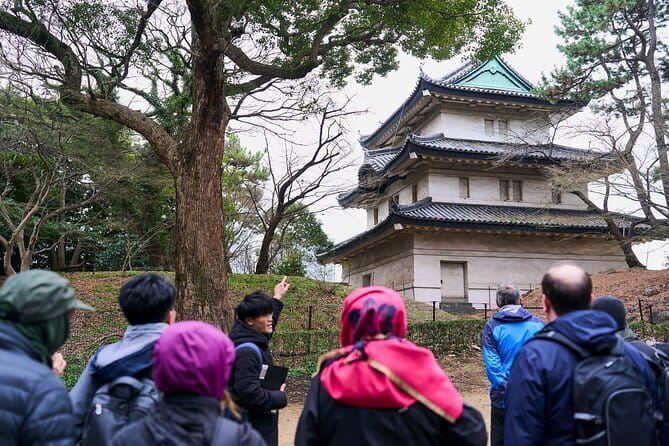
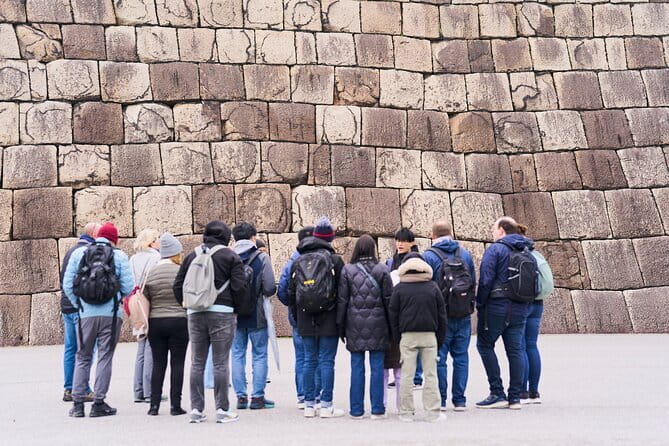
The first main stop is Sakurada Tatsumi Yagura, a traditional corner watchtower and an excellent introduction to the castle’s defensive plan. You have about five minutes here for a guided visit and photographs.
A short stop does not mean an unimportant one. The tower helps you understand the castle as a military complex rather than a simple palace. Its position, sturdy construction, and relationship to the surrounding moat show how defenders watched approaches and controlled access.
Your guide may point out details you would otherwise pass without a thought. That is one of the strongest reasons to book this walk. A stone wall can look like a stone wall until someone explains its shape, purpose, and place in the castle’s larger system.
This is also a good early photo stop. The grounds combine old masonry with open views and seasonal trees, so you can get pictures before the route becomes more garden-focused.
Ote-Mon Gate and Edo Castle’s Layered Entry System

The tour spends about 15 minutes at Ote-Mon Gate, one of the most important surviving entrances. This is where the castle’s security system becomes easier to picture.
Castle gates were not merely openings in a wall. They controlled who entered, how people approached, and how defenders could respond. The design made direct movement difficult and helped protect the shogun’s inner areas. Your guide explains how defenses were layered, which is far more useful than simply hearing that Edo Castle was difficult to attack.
The scale of Edo Castle is hard to grasp from a modern map. Tokyo has grown around it, and busy roads and office buildings can make the old fortress seem smaller than it was. At Ote-Mon, stories about the former grounds help restore that sense of size.
You should expect to walk and listen in an open public setting rather than stand in a quiet museum. Other people may be nearby, and the pace is designed to keep the group moving. That is a fair trade for seeing the actual gates, moat lines, and walls in place.
Tokyo Imperial Palace and the Continuing Imperial System
The next stop is the Tokyo Imperial Palace, with roughly 20 minutes for sightseeing and explanation. The palace is the emperor’s residence today, but this tour is mainly about the grounds, history, views, and visible structures. It does not promise entry into the private residence.
This is where the tour shifts from military power to imperial continuity. Japan’s imperial system is presented as a tradition reaching back 2,600 years, while the shogun ruled the country in practice for long periods. Your guide helps explain how those two forms of authority fit into different parts of Japanese history.
I appreciate this section because it prevents a common mix-up. Edo Castle was the shogun’s base during the Edo period, while the modern Imperial Palace represents the imperial institution. The same central site carries both stories, but they are not the same story.
You will have chances to photograph palace views, gates, stonework, and open grounds. The scale can feel formal and spacious. It is a calm contrast to Tokyo’s crowded streets, though the lack of interior access may disappoint anyone expecting rooms, throne halls, or palace ceremonies.
Same walls, a different way in:
- Osaka Castle: Museum and Tower Entry Ticket
★ 4.5 · 2,380 reviews - Kyoto: Nijo-jo Castle and Ninomaru Palace Guided Tour
★ 4.7 · 1,020 reviews - Kyoto: Nijo Castle, Kiyomizu & Fushimi Inari Guided Tour
★ 4.7 · 700 reviews - Imperial Palace East Garden and Edo Castle Walking Tour in Tokyo
★ 5.0 · 510 reviews
Ninomaru Garden: A Softer Side of the Castle
The tour then reaches Ninomaru Garden for about 15 minutes. Here the mood changes. After the hard lines of gates and walls, you see a more carefully shaped garden with seasonal plants, old trees, water, and views designed for enjoyment as well as meaning.
The garden is valuable because it shows the world behind the defenses. Samurai power was not only about warfare. The shogun’s compound also included spaces for formal life, quiet reflection, ceremony, and displays of taste.
You may encounter special koi and trees representing different parts of Japan. These details give the garden a national character. Instead of seeing only a Tokyo park, you begin to see a place that gathers symbols and plant life from across the country.
The stop is short, so I would not expect a long, unhurried garden visit. Still, the guide’s explanation changes what you notice. Anju, Fuma, and other guides are praised for pointing out features people might otherwise walk past, including the meaning behind garden elements and the relationship between the natural setting and the former palace.
Edo Castle Ruins and the Shape of a Lost Palace
The Edo Castle Ruins stop lasts about 10 minutes. Ruins can sound less exciting than a complete castle, but here they are central to the experience. Edo Castle is gone in large part, and the remaining foundations and stones ask you to use your imagination.
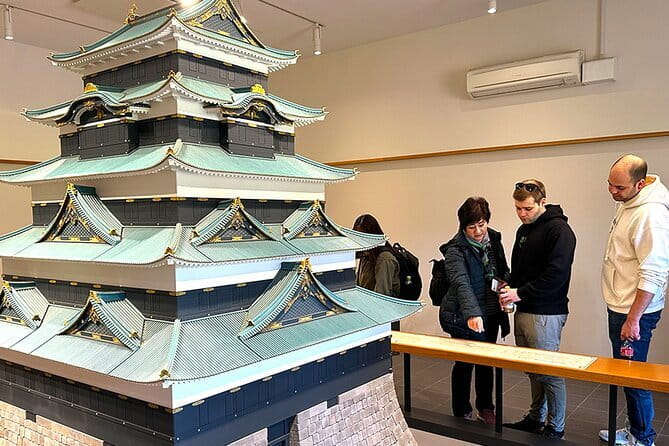
The guide helps by explaining the former palace and the size of the compound. You will also see a miniature structure of the former palace, which gives you a more concrete idea of what once occupied the site.
This is where the title’s hidden-world idea earns its place. The castle is hidden less by secrecy than by modern Tokyo. Its traces are spread through the Imperial Palace grounds, and the route teaches you how to read them.
Do not expect a restored fortress with furnished rooms or tall towers. If you need dramatic architecture at every stop, the tour may feel restrained. If you enjoy reconstructing the past from walls, foundations, and careful explanation, the ruins are rewarding.
Imperial Palace East Gardens and the Final Walk
The final major stop is the Imperial Palace East Gardens, with about 20 minutes for a guided visit. This is the most relaxed part of the route and often the best place to slow down for photographs.
You can see varied trees, seasonal garden scenery, old stones, and koi. The East Gardens provide a pleasant finish because they combine beauty with the historical remains you have already learned to recognize.
The garden also gives you time to ask final questions. Guides are often praised for keeping a steady pace rather than rushing from point to point. Some groups run beyond two hours when conversation continues, but you should plan around the stated two-hour duration.
The route returns to the Starbucks meeting point. Since the tour is on foot and includes slopes and outdoor paths, wear shoes you can use comfortably for a couple of hours. Bring water and dress for the day’s weather. In rain, heat, or cold, the outdoor nature of the walk becomes much more important.
What $23 Buys You

At $23 per person, this is a reasonably priced way to visit the Imperial Palace grounds with a guide. Entry to many public garden areas may not be the main expense here. You are paying chiefly for the explanation, route planning, and the ability to connect scattered remains into one story.
That value depends on your interests. If you are happy reading signs and taking photographs, you may prefer to explore independently. If you want to understand samurai culture, the shogun’s defenses, Edo Castle’s size, and the modern imperial system, the guide adds a great deal.
The small group is important to the price calculation. A group of up to 10 feels more personal than a large coach tour, and it gives you room to ask questions. It also lets the guide adjust the pace and point out details to the whole group.
The 4.7 rating from 1,068 reviews supports the idea that the tour delivers consistent value, especially through its guides. Praise centers on friendly personalities, clear English, useful facts, patient answers, and a comfortable pace. Teresa offered the most balanced assessment, noting that the price felt a little high because the gardens may not require an entrance fee, while also explaining that the garden was more rewarding with the story behind it.
Practical Details You Should Know Before Booking
Security checks take place when entering the Imperial Palace area. Do not bring knives or alcohol. Photography is encouraged, so keep your camera or phone ready, but listen carefully before stepping away from the group for a picture.
A large portion of the tour is outside. Check the weather and dress accordingly. Comfortable shoes are sensible because the route involves walking, slopes, and several stops across broad grounds.
Wheelchairs can be used within the Imperial Palace grounds, but some slopes and sections require walking or going down on foot. If you have mobility concerns, contact the provider before booking so you can confirm how the current route will work for you.
Free cancellation is available up to 24 hours before the tour for a full refund. You can also reserve now and pay later, which helps if your Tokyo schedule is still changing.
Who Will Enjoy This Two-Hour Walk
I would recommend this tour to you if you like history but do not want a long museum lecture. It suits anyone curious about samurai culture, the Edo period, the rise of Tokyo, or the way Japan’s imperial tradition continued into the present.
It is also a good first-day activity for getting your bearings in central Tokyo. The route introduces a quiet side of the city without taking a full day. Families, solo visitors, couples, and small groups can all fit comfortably into the format, provided everyone can follow English and walk outdoors.
Fans of the television series Shōgun may find the tour especially useful. One participant who had become interested in the Edo period through the series appreciated hearing several historical perspectives. The guide can help separate television drama from the larger political and social setting.
You may want to skip it if you need interior palace access, a complete castle building, or a private tour. You should also reconsider on a day when you cannot manage outdoor walking. The route is calm and manageable, but it is still a walking tour across open grounds.
Should You Book the Tokyo Castle and Imperial Palace Shogun Walking Tour?
Book it if you want the Imperial Palace to make sense, not just look attractive. For $23, you get two hours of guided context, a small group, surviving Edo Castle defenses, gardens, ruins, koi, and a clear explanation of how samurai power and imperial tradition fit into Tokyo’s story.
The strongest reason to go is the guiding. Names such as Anju, Fuma, Yuka, Tomo, Keiko, Koyo, Ai, Mai, Nana, and Kosei appear often in connection with warm, clear, engaging tours. Your guide will vary, but the format is built around conversation and explanation.
Skip it if you prefer to wander alone or expect to enter the emperor’s private rooms. Otherwise, this is a practical, fairly priced way to turn a beautiful but sometimes confusing palace visit into a readable chapter of Japanese history.
FAQ
How long does the Tokyo Castle and Imperial Palace Shogun Walking Tour last?
The tour lasts two hours, though the exact starting time depends on availability.
How large is the tour group?
The group is limited to 10 participants.
What language is the tour conducted in?
The tour is conducted in English only. Japanese language support is not available.
Where does the tour begin?
Meet in front of Starbucks Coffee Kōkyo Gaien Wadakura Fountain Park Store at 3-1 Kōkyo Gaien, Chiyoda City, Tokyo. The guide holds a Local Guide Stars sign.
What places are included on the route?
The route includes Sakurada Tatsumi Yagura, Ote-Mon Gate, Tokyo Imperial Palace, Ninomaru Garden, Edo Castle Ruins, and the Imperial Palace East Gardens. It returns to the Starbucks meeting point.
Can I take photographs?
Yes. Photography is encouraged throughout the tour.
Are there any items I should not bring?
There is a security check at the Imperial Palace. Do not bring knives or alcohol.
Is the tour accessible by wheelchair?
Wheelchairs can be used within the Imperial Palace grounds, but some slopes and sections require walking or going down on foot.
Newly walked in Japan
- Himeji: Private Guide Tour of the Castle from Osaka or Kyoto★ 4.5 · 7 reviews
- World Heritage Himeji Castle & Sake Breweries Private Tour★ 4.5 · 11 reviews
- From Nagoya: Samurai Swords and Inuyama Castle Private Tour★ 5.0 · 11 reviews
- 2.5 Hour Private History and Culture Tour in Himeji Castle★ 5.0 · 185 reviews
- Kyoto: Nijo Castle World Heritage Guided Tour with Admission★ 5.0 · 128 reviews
- Himeji: Himeji Castle Guided Tour – UNESCO Heritage★ 4.7 · 115 reviews
- Osaka: Osaka Castle Guided Tour with Local Guide★ 4.7 · 78 reviews
- Osaka: Osaka Castle & Historical Museum Guided Tour★ 4.8 · 28 reviews
Castle Walking Tours, compared.

Edinburgh Castle: Guided Walking Tour with Entry Ticket
Read our review →
3-Hour Walking Tour of Old Town & Prague Castle
Read our review →Edinburgh Castle: Guided Walking Tour with Entry Ticket
Read our review →

Prague 3-hour Afternoon Walking Tour including Prague Castle
Read our review →
Royal Mile and Edinburgh Castle – Small Group Walking Tour
Read our review →

Browse the lists this tour appears in