
Review · JAPAN
Tokyo: Edo Castle Ruins & Imperial Palace East Garden Tour
The most interesting part of this tour is that Tokyo’s Imperial Palace grounds let you read the city’s past in stone. The Edo Castle ruins reveal how the shoguns guarded their seat of power, while the gardens show a quieter side of the imperial grounds today.
I like the route’s clear historical sequence, from Wadakura Fountain and the moat to Otemon Gate, guardhouses, the former main hall, and Ninomaru Garden. I also like the chance to see the Tenshu-dai, the base of the lost castle keep, and pause beside a koi pond. The main caution is that you do not enter the Imperial Palace buildings or its inner grounds, and the tour can feel like a guided park walk if your guide gives only brief explanations.
Key points to know before you book
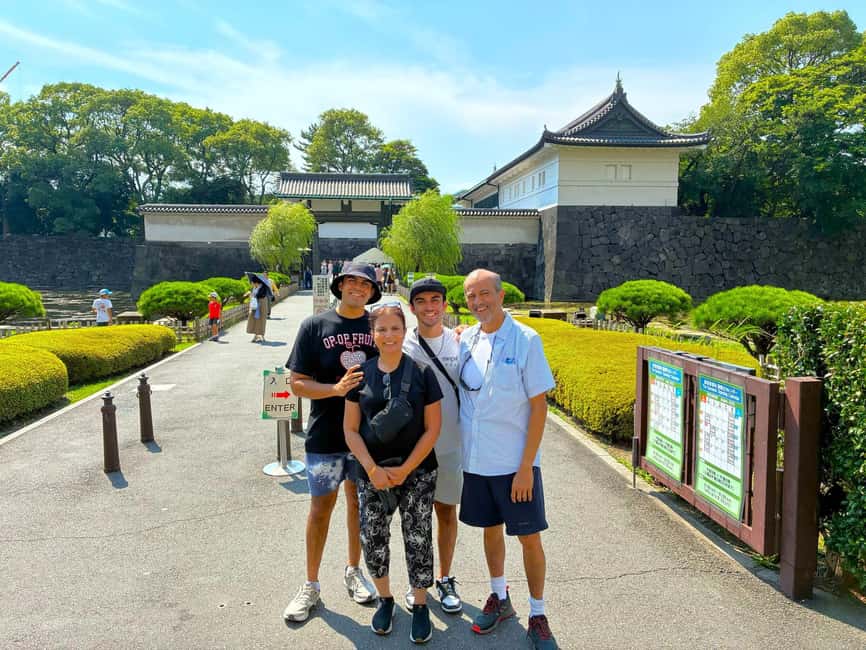
- Otemon Gate and guardhouses show how carefully Edo Castle controlled access to the shogun’s headquarters.
- The Tenshu-dai offers a useful sense of the castle’s former scale, even though the keep itself is gone.
- Ninomaru Garden brings a calm finish, with landscaped paths and koi in the pond.
- Wadakura Fountain links the modern park setting to a royal wedding celebration.
- Guide quality matters: Mari and Isao are noted for friendly, patient explanations, while one short review found the commentary too thin.
- The two-hour route is compact, but expect walking, stairs or uneven surfaces, and no palace interior access.
What this Edo Castle tour actually shows you
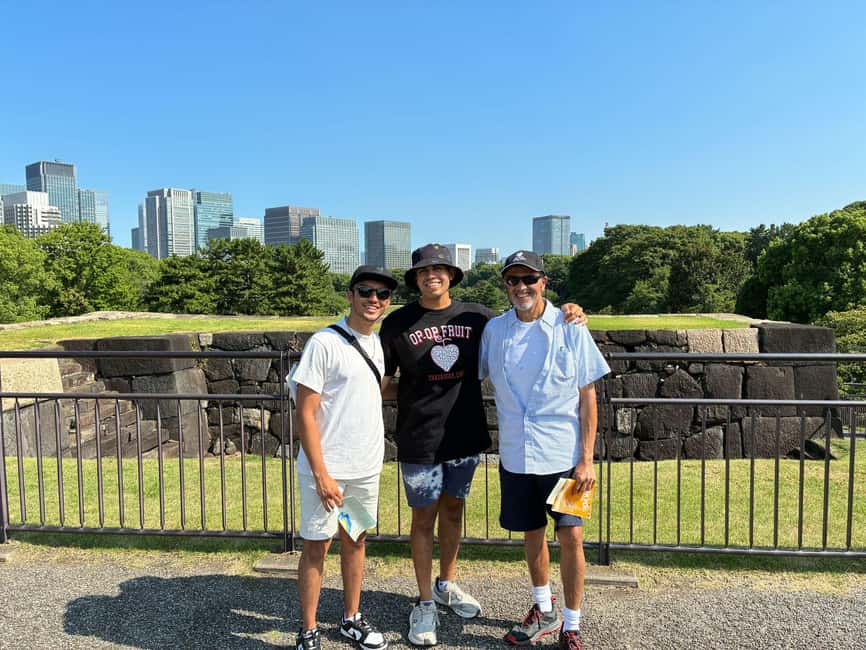
This is not a palace-room tour. It is a guided walk through the former Edo Castle grounds, now part of the Imperial Palace East Garden. That distinction matters.
The Imperial Family still lives at the palace, so the inner grounds and palace buildings are closed to this experience. Instead, you see the public gardens, castle foundations, defensive gates, guard posts, and surviving structural traces. If you want grand interiors, ceremonial halls, or a look inside the present-day residence, this will not meet that goal.
If you want to understand how Tokyo developed from the shogun’s fortified headquarters into the modern capital, the route makes good sense. The guide connects each stop to castle defense, samurai administration, imperial history, and the changing use of the site.
The tour costs $37 per person for about two hours. I consider that a fair price if you want context and someone to point out details you might otherwise pass without noticing. The admission is included, and a guide can help turn scattered stones and broad lawns into a readable story.
The value depends heavily on the guide. Mari and Isao received especially warm praise for being friendly, patient, and willing to answer questions. One guide also took extra time to explain the palace and Japan’s history. But one short review described the outing as little more than a walk through a park, with almost no explanation. That difference is worth keeping in mind when you book.
More Castle Gardens and Grounds in Japan
- Imperial Palace East Garden and Edo Castle Walking Tour in Tokyo
★ 5.0 · 510 reviews - Himeji: Himeji Castle & Kokoen Garden 3.5-Hour Guided Tour
★ 4.9 · 30 reviews - Kanazawa: Half-Day Private Tour – Garden, Castle, Geisha
★ 5.0 · 10 reviews
Starting at Wadakura Fountain and the moat
Meet outside the Wadakura Free Rest Area, in front of the entrance. Your guide waits with a yellow sign. This indoor rest area is a practical meeting point, especially if you need a brief pause before the walk begins.
The first stop is Wadakura Fountain National Park. The fountain was built to commemorate a royal wedding, giving your guide an easy way to introduce the modern imperial story before turning back to Edo Castle and the shoguns.
You spend about 10 minutes here. That is enough for an introduction and a few photographs, but not a long garden visit. The fountain itself is not the main attraction. Its value is the connection between the present imperial era and the older castle grounds nearby.
The route then follows Wadakura Moat for roughly five minutes. Moats were not decorative features at a military stronghold. They slowed attackers, controlled movement, and made the castle harder to approach. At this point, you begin to see why Edo Castle was more than a residence. It was a heavily managed center of power.
Bring water and wear comfortable shoes. Even a short two-hour walk feels less pleasant in stiff footwear, especially if the ground is uneven or you are visiting in warm weather.
Otemon Gate: the castle’s serious front door
Otemon Gate is one of the route’s strongest stops. It was the main entrance to Edo Castle, and its size helps you picture the scale and importance of the site.
The guide explains how visitors moved through the entrance and why access was tightly controlled. This is where the tour’s samurai and defense themes become concrete. Instead of hearing only about shoguns in the abstract, you see the physical points where guards checked, watched, and restricted people entering the castle.
The tour then continues to the Ote San-no-mon Gate Ruins. The surviving remains are not a complete gatehouse, so you need to use your imagination. A good guide makes that easier by explaining how the gates worked together and how the approach could be defended.
I find these stops most useful for people who enjoy practical history. You are not simply looking at old stones. You are learning how a powerful castle managed movement and security. If your interest is mainly architecture in perfect condition, the ruins may feel modest. Their appeal comes from the story and the setting.
Guardhouses and the samurai system
The Doshin Bansho and Hyakunin Bansho guardhouses show another side of castle life. These were working posts, not grand monuments. Their purpose was surveillance and control, and their location near the entrance tells you how seriously the castle treated security.
The Hyakunin Bansho, or Hundred-Man Guardhouse, is particularly useful for understanding the number of people involved in protecting the castle. The name points to a large guard unit stationed here. Your guide discusses the samurai role in guarding the approach and helps explain how the castle operated as a controlled compound.
The tour allows about 10 minutes at the Hyakunin Bansho. That is a short visit, but the compact timing keeps the walk moving. You will not get a full military history lecture at every stop. Ask questions if you want more detail, especially if your guide is one of the patient, conversational leaders praised by several customers.
This is also where the experience can vary most. A guide who explains the daily work of guards, the order of the gates, and the meaning of the guardhouse names adds real value. A guide who simply points to each structure leaves you with less than you hoped for.
More Palace Tours in Japan
- Kyoto: Nijo-jo Castle and Ninomaru Palace Guided Tour
★ 4.7 · 1,020 reviews - Kyoto: Imperial Palace & Nijo Castle Guided Walking Tour
★ 4.7 · 453 reviews
Edo Castle ruins and the former Honmaru
The central castle ruins are the heart of the tour. Edo Castle was once the seat of the Tokugawa shoguns, who ruled Japan for centuries from this enormous stronghold. Today, much of what you see is open space, stonework, foundations, and broad garden areas rather than a complete castle.
That can surprise visitors. There is no reconstructed central keep towering over the garden. The castle’s former Honmaru, or main compound, is now an open area that requires some mental reconstruction. Your guide supplies the missing framework by explaining where major buildings stood and how the compound functioned.
The Honmaru area receives about 10 minutes, with another 15 minutes devoted to the broader Edo Castle ruins. The pacing gives you time to look around without turning the tour into a long historical lecture.
For me, the appeal is the contrast between the castle’s former power and the quiet open grounds today. The site once supported the shogun’s administration and residence. Now, the same area invites a slow walk and a view across Tokyo’s central district.
The ruins are best for visitors who enjoy reading a site through foundations and scale. If you need intact rooms, painted screens, or a restored keep, adjust your expectations before booking.
The missing keep and the Tenshu-dai view
One stop focuses on an Edo Castle keep restoration model. This helps you picture the structure that no longer exists. A model can do what the remaining stone base cannot: show the height, form, and visual dominance of the keep within the castle complex.
You also visit the Tenshu-dai, the stone base where the keep once rose. The guide points out the connection between the model and the surviving foundation. Together, they give you a better sense of how imposing Edo Castle must have been.
The Tenshu-dai also provides panoramic views of the surrounding area. Do not expect a high observation deck or a city skyline attraction. The appeal is the open view from an important historic point, with the modern capital existing around the old castle center.
This stop is especially useful if you have trouble imagining ruins as complete buildings. The model supplies the missing visual piece, while the stone base gives the idea a physical location.
Trees, tea, and the East Garden
The itinerary includes a stop identified as the prefectural tree area, followed by Suwa no Chaya. These quieter stops break up the heavier castle discussion.
The tree area gives the guide a chance to point out plantings connected with Japan’s prefectures. It is not a major monument, but it adds a civic and cultural layer to the gardens. You see how the grounds function not only as a historic site but also as a carefully maintained public space.
Suwa no Chaya is a traditional tea house in the garden setting. The stop is brief, around 10 minutes, so treat it as a chance to see the structure and hear its place in the garden rather than as a tea ceremony. Food and drinks are not included.
After this, the route continues through the Imperial Palace East Gardens. The gardens are the present-day setting for many of the old castle remains. Their calm paths, plants, and open lawns soften what could otherwise be a purely defensive or political story.
I like this change of pace. A tour made up only of gates and stone foundations could feel repetitive. The garden stops give you room to breathe and help explain why the Imperial Palace grounds remain important beyond their political history.
Ninomaru Garden and the koi pond
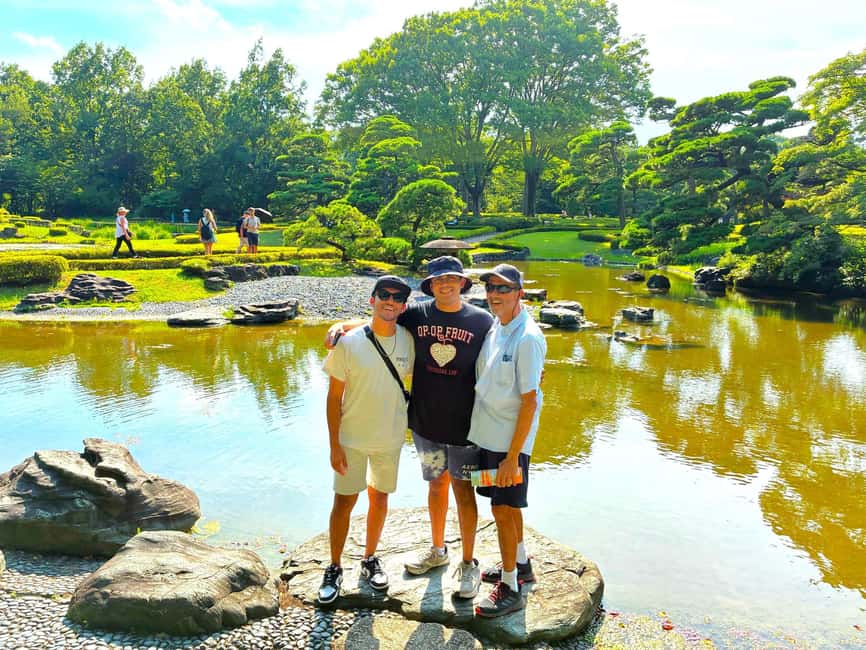
Ninomaru Garden is the most peaceful stop on the route. Allow about 15 minutes here, enough time to slow down, look across the pond, and watch the koi.
The garden offers a strong contrast with Otemon Gate and the guardhouses. Earlier stops focus on barriers, patrols, and control. Ninomaru shifts attention to design, quiet movement, water, and cultivated beauty.
This is a good place for photographs, though flash photography is not allowed. A camera is worth bringing, but you will get more from the stop if you put it down for a moment and look at the pond and garden as a complete scene.
The garden does not erase the site’s military past. It adds another layer. Edo Castle was a seat of power, but it was also a place where people lived, worked, received visitors, and maintained formal gardens. That wider view makes the experience more satisfying than a simple list of castle ruins.
The tour finishes back at the Wadakura Free Rest Area. Because the route returns to its starting point, you do not need to plan a separate pickup. Hotel transportation is not included, so arrange your own way to the meeting point.
Who will get the most from the $37 price
I would recommend this tour to you if you want a short, guided introduction to Tokyo’s political past and prefer explanations to independent sign reading. The guide adds the most value at the gates, guardhouses, Honmaru, and Tenshu-dai, where the ruins need context.
It also suits visitors with limited time. Two hours is long enough to see the major points without consuming half a day. The walk covers several connected stops, and the final garden section gives the route a pleasant finish.
Private and small-group options are available. A smaller group may be especially useful if you want to ask questions about the shoguns, samurai, imperial family, or castle design. It may also help you hear the guide more clearly in open areas.
I would be more cautious if you expect access to palace buildings. You do not enter them. You also should not book this as a grand castle reconstruction tour, because most of the original buildings are gone and the focus is on ruins, gardens, models, and surviving gates.
The tour is not suitable for children under six, people with mobility impairments, or wheelchair users. Comfortable shoes are important, and water is sensible. Smoking is not allowed.
Free cancellation is available up to 24 hours before the start, and you can reserve now and pay later. Those options are useful if your Tokyo schedule is still shifting.
Should you book this Edo Castle walk?
Book it if you want the former castle explained in a clear, compact route, especially if you are curious about shogun power, samurai security, and the connection between Edo and modern Tokyo. The best parts are Otemon Gate, the guardhouses, the Honmaru area, the Tenshu-dai, and Ninomaru Garden.
The main question is how much guidance you need. With an engaged guide such as Mari or Isao, the $37 price is sensible because the ruins gain meaning and you can ask questions. If the commentary is brief, you may feel you could have walked through the gardens on your own.
Go in expecting an outdoor history walk, not an Imperial Palace interior visit. With that expectation, this is a useful first look at Tokyo’s old center of power and a pleasant break from the city streets.
FAQ
How long does the tour last?
The tour lasts two hours.
What language is the tour conducted in?
The live tour guide speaks English.
Where do I meet the guide?
Meet outside the Wadakura Free Rest Area, in front of the entrance. The guide will be holding a yellow sign.
Does the tour enter the Imperial Palace buildings?
No. The palace buildings are not open to the public, and the tour does not enter the inner grounds of the Imperial Palace.
What can I see instead of the palace interior?
You visit the Imperial Palace East Gardens, Edo Castle ruins, Otemon Gate, the Ote San-no-mon Gate Ruins, the Doshin Bansho, the Hyakunin Bansho, the Tenshu-dai, and Ninomaru Garden.
Is admission included?
Yes. Admission to Edo Castle and the Imperial Palace is included.
Is hotel pickup provided?
No. Hotel pickup and drop-off are not included.
Is food included?
No. Food and drinks are not included. Bring water for the walk.
Can I take photographs?
Yes, you can bring a camera and there is a commemorative photo opportunity. Flash photography is not allowed.
Is the tour suitable for wheelchair users?
No. The experience is not suitable for wheelchair users or people with mobility impairments. It is also not suitable for children under six.
Newly walked in Japan
- Himeji: Private Guide Tour of the Castle from Osaka or Kyoto★ 4.5 · 7 reviews
- World Heritage Himeji Castle & Sake Breweries Private Tour★ 4.5 · 11 reviews
- From Nagoya: Samurai Swords and Inuyama Castle Private Tour★ 5.0 · 11 reviews
- 2.5 Hour Private History and Culture Tour in Himeji Castle★ 5.0 · 185 reviews
- Kyoto: Nijo Castle World Heritage Guided Tour with Admission★ 5.0 · 128 reviews
- Himeji: Himeji Castle Guided Tour – UNESCO Heritage★ 4.7 · 115 reviews
- Osaka: Osaka Castle Guided Tour with Local Guide★ 4.7 · 78 reviews
- Osaka: Osaka Castle & Historical Museum Guided Tour★ 4.8 · 28 reviews
Castle Gardens & Grounds, compared.
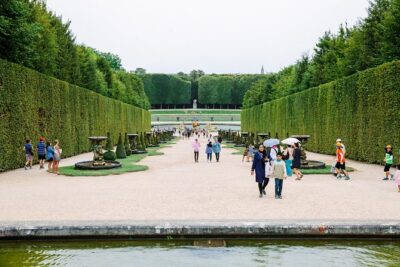
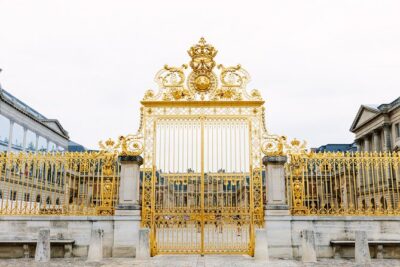
Versailles Château and Gardens Walking Tour from Paris by Train
Read our review →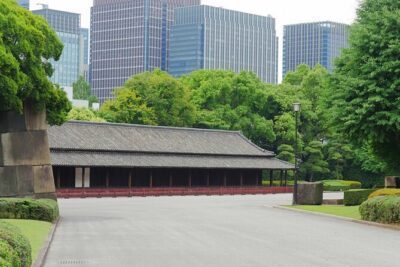
Imperial Palace East Garden and Edo Castle Walking Tour in Tokyo
Read our review →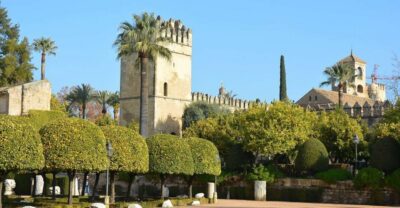
Cordóba: Gardens & Fortress of Catholic Monarchs Guided Tour
Read our review →
De Haar Castle Gardens and Park Only Entry Ticket
Read our review →
Batumi City – Botanical Garden – Petra Fortress from Kutaisi
Read our review →Browse the lists this tour appears in