
Review · CHAPULTEPEC
Chapultepec Castle & Anthropology Museum Tour
Mexico City packs centuries of history into two remarkable places. This half-day tour takes you from the Olmec carved heads and Aztec Stone of the Sun at the National Museum of Anthropology to the marble halls and rooftop views of Chapultepec Castle. A guide gives the objects a story, rather than leaving you to decode small museum panels.
I like two things here: first, the route covers both major Chapultepec sights without making you plan tickets or find your way through enormous galleries. Second, the best guides, including Leonardo, Gio, Ligia, Antonio, and Miriam, connect pre-Columbian, colonial, imperial, and modern Mexico in a way that makes the displays easier to understand. You see the famous pieces with a useful sense of place and time.
The tradeoff is pace. Five hours on your feet, about 3 kilometers of walking, and two large museums can feel like a lot. Some groups have felt rushed at the Anthropology Museum, while others found the guide spent too long on small details. Group size and the guide’s English can make a real difference.
Key Points to Know Before You Book
- Two major sights in one morning: Visit the National Museum of Anthropology for about 2.5 hours, then spend about two hours at Chapultepec Castle.
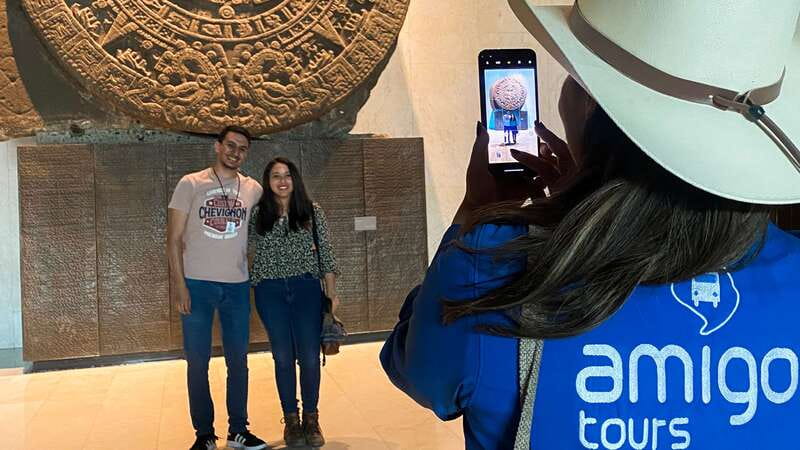
- The Aztec Stone of the Sun is a highlight: Your guide explains the famous calendar stone along with Olmec heads and other major objects.
- Chapultepec Castle requires a climb: The castle sits on Chapultepec Hill, so expect an uphill walk and plenty of standing.
- The guide makes the difference: Guides such as Leonardo, Gio, Ligia, Antonio, and Miriam have been praised for clear storytelling and strong command of Mexican history.
- Bring only a small handbag: Food, drinks, and backpacks are not allowed inside. Tickets are included, but meals are not.
- Private tours cost more but may suit you better: A private option can give you a more personal pace and more room for questions.
Why These Two Museums Work Well Together
The National Museum of Anthropology and Chapultepec Castle tell different parts of Mexico’s story, but they belong in the same day. The Anthropology Museum begins far back, with the civilizations and cultural regions that shaped Mesoamerica. The castle carries the story forward through Spanish rule, independence, the short-lived empire of Maximilian, the presidency, and the Mexican Revolution.
I like this pairing because it prevents Mexico’s past from becoming a list of disconnected dates. You first see the objects created by Indigenous civilizations, then walk through a palace shaped by European power and Mexican nation-building. The contrast is the point.
At $79 per person, the value depends on how much help you want inside the museums. The admission tickets are included, along with an English-speaking guide. If you are short on time or do not read Spanish, the tour can save you from wandering through huge collections without knowing what deserves your attention.
It is less compelling if you prefer to study every display at your own pace. The Anthropology Museum is large enough to fill a full day, and this tour gives you only about 2.5 hours there. You will see important sections, but not everything.
More Chapultepec Castle Tours in the world:
- Mexico City: Chapultepec Castle and Anthropology Museum Tour
★ 4.5 · 637 reviews - 5 Hour Tour through Chapultepec, Anthropology Museum and Castle
★ 5.0 · 239 reviews - PRIVATE Tour in Chapultepec Castle and Museum of Anthropology
★ 5.0 · 144 reviews
Starting at the National Museum of Anthropology
The tour begins at the National Museum of Anthropology on Paseo de la Reforma, beside Chapultepec Park. This is a practical meeting point near public transportation, though you should arrive early. The group needs to enter on time, and one poor experience involved a visitor arriving early but failing to find the guide or receive clear communication.
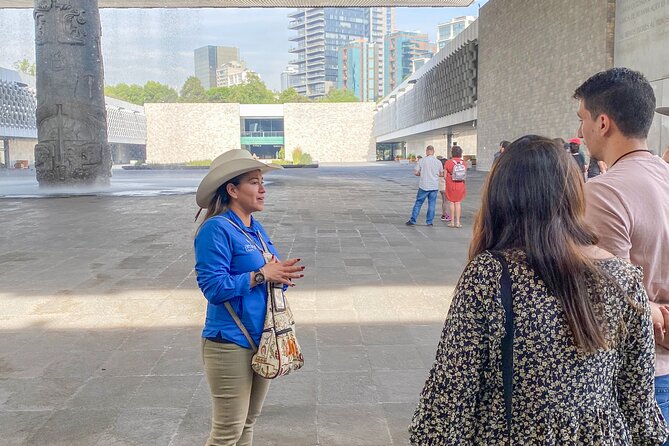
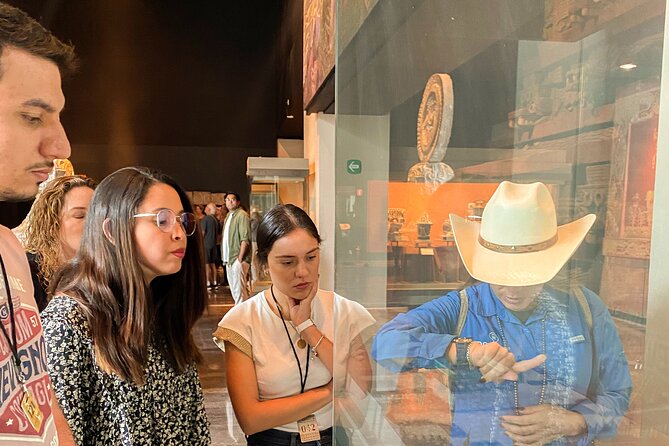
Inside, your guide leads you through selected galleries rather than trying to cover the entire museum. That is the sensible approach. The collection is too large for a short visit, and a good guide helps you focus on objects that explain the wider story.
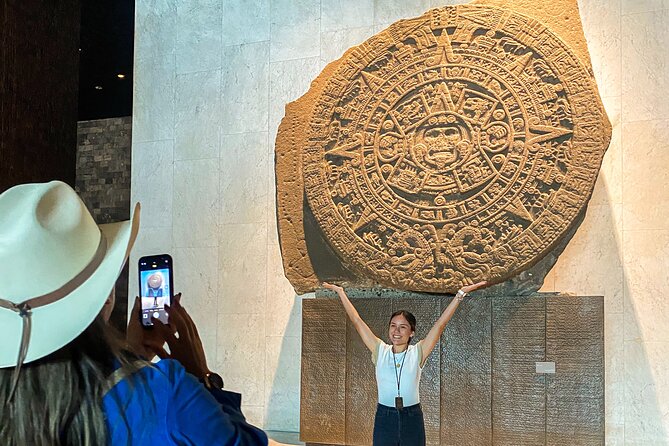
You will see the Aztec Stone of the Sun, one of Mexico’s most recognizable archaeological objects. It is often called the Aztec calendar stone, though its meaning is more complex than a simple calendar. The guide can give you the background needed to make sense of its symbols instead of leaving you with a quick label and a photo stop.
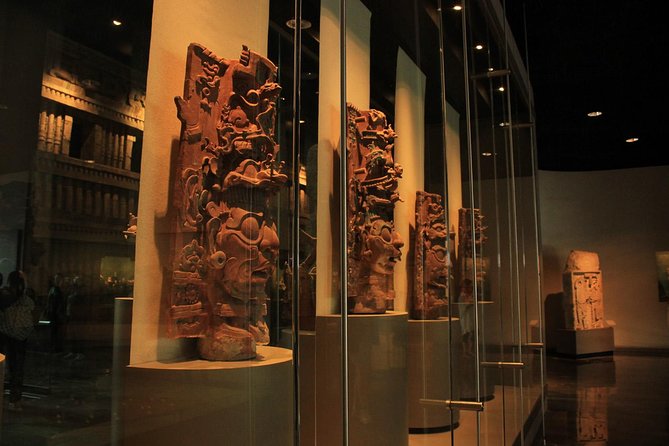
The Olmec carved heads are another major stop. These monumental stone faces were found in the humid lowlands of Tabasco and Veracruz. Their size and distinctive features make them memorable, but the larger value comes from placing them in the early history of Mesoamerican cultures.
The museum also introduces the different cultural regions and Indigenous groups that shaped Mexico. This matters because Mexico is not one single cultural story. The museum shows the variety behind the modern country, and the tour’s selected route gives you a basic framework for understanding it.
What the 2.5-Hour Museum Visit Feels Like
Two and a half hours is enough for a strong introduction, not a full museum visit. I would think of it as a guided first pass. You will see major works and hear the links between them, then return later if a particular gallery catches your interest.
This is where the guide’s ability matters most. Several guides have been praised for turning difficult subjects into clear explanations. Leonardo is often singled out for connecting pre-Hispanic, colonial, and modern Mexico. Gio has been praised for making complex history easier to follow, while Ligia brings many years of experience to the subject. Antonio, Miriam, Alan, Alicia, Lili, Nadia, and Marium have also received strong personal praise for their explanations and care with the group.
That praise should not make you expect the same experience every time. English ability and presentation style can vary. A few people found the guide hard to understand, especially in a larger group. Others found the guide warm, patient, and easy to follow.
Headsets may be used when the group is large, which helps you hear in busy galleries. Still, a large group can make the museum feel less relaxed. The stated maximum is 25 people, although one account described a group of about 30. If you want plenty of time for questions and a slower pace, the private upgrade is the safer choice.
Crossing Chapultepec Park to the Castle
After the Anthropology Museum, the tour continues through Chapultepec Forest. This enormous urban park covers about 810 hectares and links the two attractions geographically as well as historically.
The route to the castle involves walking uphill to the top of Chapultepec Hill. The climb is manageable for most people who can handle moderate walking, but it is not a flat museum transfer. You should wear comfortable shoes and expect more standing once you arrive.
The walking distance for the entire experience is listed at about 1.8 miles, or 3 kilometers. That figure does not tell the whole story, since museum floors and the hill add time on your feet. Eat a good breakfast before you go. Food and drinks are not included, and one account described a short refreshment break that felt tight because of the line.
If stairs or hills are a concern, contact the operator before booking and ask what assistance is possible. One person received help arranging an elevator ride to reach the castle, but the tour information does not promise a particular accessibility arrangement.
More Castle Museums in the world:
- Osaka Castle: Museum and Tower Entry Ticket
★ 4.5 · 2,380 reviews - Cairo: Egyptian Museum, Citadel, and Old Cairo Guided Tour
★ 4.7 · 853 reviews - Amboise: Clos Lucé Castle, Da Vinci Park and Museum Ticket
★ 4.7 · 779 reviews - Museum of Egyptian Civilization, Citadel & Old Cairo Tour
★ 4.7 · 530 reviews
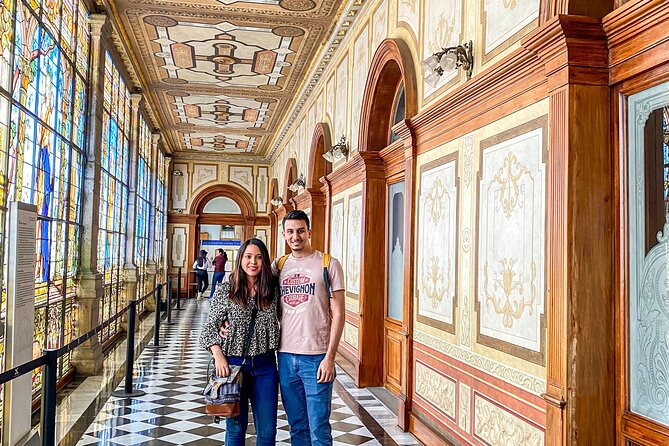
Entering Chapultepec Castle’s Twelve Halls
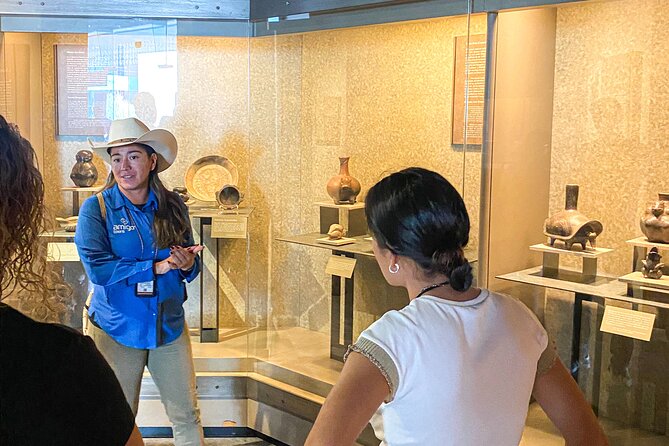
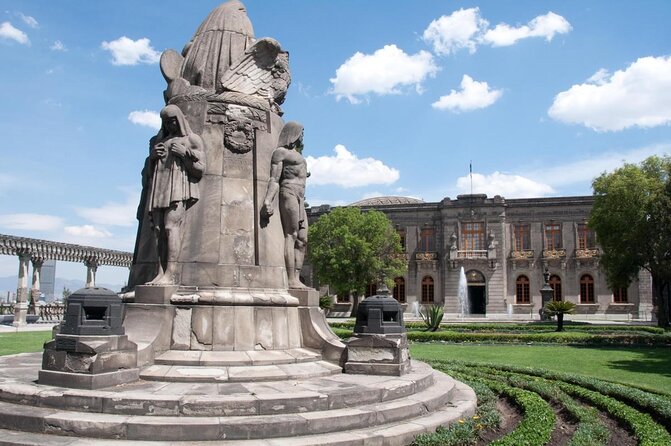
Chapultepec Castle began as a retreat for Aztec rulers. It was later partly destroyed and rebuilt as a palace for Emperor Maximilian of Habsburg. After that, it served as a residence for Mexico’s presidents before most of the building became the National History Museum.
That sequence gives the castle its unusual character. It is not simply a fortress, palace, or museum. It is a building shaped by Indigenous foundations, Spanish colonial rule, European monarchy, Mexican independence, presidential power, and national memory.
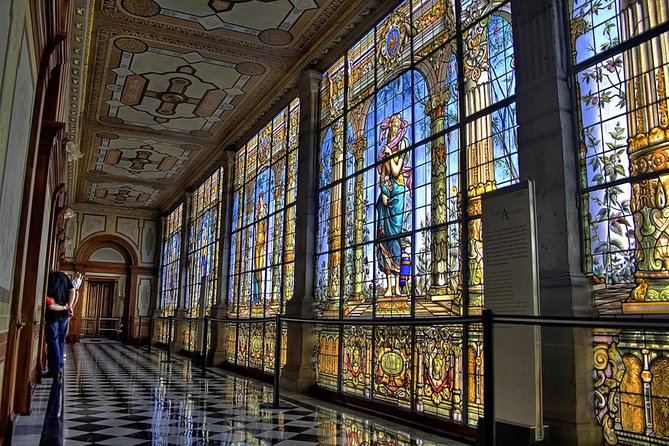
During the two-hour visit, you move through 12 halls and see royal apartments, marble staircases, historic carriages, sculptures, busts, weapons, and murals. The state carriages associated with Maximilian and Benito Juárez help put political figures into a physical setting. The sword connected with independence fighter José María Morelos adds a more personal link to the struggle for independence.
The murals are especially worth your attention. Works associated with artists including José Clemente Orozco and John O’Gorman show how Mexico used public art to interpret battles, national identity, and political change. Do not hurry past them while following the group. The castle’s small information panels cannot provide the full context, but the guide’s explanation can help you understand what you are looking at.
The castle also rewards you with views over Mexico City. Several people have described the building as stunning, with beautiful views of the skyline. The setting is one of the strongest reasons to include it, even if you are less interested in palace interiors.
The Main Drawback: A Full Morning on Your Feet
The tour lasts about five hours, and the two museum visits are both standing-heavy. One person described it as a long day but worthwhile. Another suggested shortening the museum portion, while a different visitor felt the Anthropology Museum deserved a separate, longer visit.
Both views make sense. If you love history, art, and archaeology, the packed schedule gives you a lot in one morning. If you tire easily or want time for photographs and quiet looking, the pace may feel demanding.
The break between the museums can also affect your impression of the day. The timing is not described in detail, and some people found the pause longer than expected. Since the tour finishes in the afternoon at Chapultepec Castle, you still have the rest of the day free, but the morning may feel longer than the advertised five hours if the group starts late or moves slowly.
This is not a casual sightseeing stroll. It is a guided history lesson with a fair amount of walking. That is a strength for an active visitor who wants substance, but a drawback if you want a relaxed museum morning.
Group Tour or Private Upgrade?
The regular tour suits you if you want the main sights, a professional guide, and a clear route at a reasonable price. It is especially useful for a first visit to Mexico City, a short stay, or anyone who would feel lost in the Anthropology Museum’s many galleries.
The private option makes more sense for families, serious museum fans, or anyone who wants to ask many questions. It may also help if your group has different walking speeds or wants to spend extra time on archaeology, art, imperial history, or the Revolution.
A private tour does not remove every possible problem. One booking issue resulted in a private tour being canceled and replaced with a museum-only public experience, followed by a request for a partial refund. That appears to have been a service problem rather than a normal feature of the tour, but it is a reason to confirm the exact version of your booking before the day begins.
Practical Details That Matter
The tour is offered in English, and confirmation is sent at booking. The start point is the National Museum of Anthropology, while the tour ends at Chapultepec Castle. That is useful because you can continue exploring Chapultepec Park or make your own plans in the afternoon without returning to the first museum.
Tickets to both museums are included. Food and drinks are not. Backpacks, food, and drinks cannot enter the museums, and only a handbag is allowed, so pack lightly. You should also wear shoes suitable for museum floors and the uphill approach to the castle.
Free cancellation is available up to 24 hours before the start time. Changes or cancellations inside that 24-hour window are not refunded, and poor weather may lead to a new date or a full refund.
Who Will Enjoy This Tour Most?
I would choose this experience if you want a strong introduction to Mexico City’s major cultural sights and prefer explanation over independent browsing. It is also a good fit if you have limited time and want to cover two places that would otherwise require separate planning.
History fans will get the most from it, especially those interested in the Aztecs, Maya, Olmec culture, Spanish colonialism, independence, Maximilian, Benito Juárez, and the Mexican Revolution. The castle adds architecture and city views, while the Anthropology Museum provides the archaeological foundation.
I would hesitate if you dislike fixed schedules, large groups, or long periods on your feet. If the Anthropology Museum is a top priority, consider visiting it separately for a longer session. You could then give Chapultepec Castle its own slower visit.
Should You Book the Chapultepec Castle and Anthropology Museum Tour?
Book it if you want to understand what you are seeing rather than simply walk past famous objects. The strongest part of the experience is the connection between the two sites, especially when your guide explains how Indigenous civilizations, colonial rule, empire, independence, and modern Mexico fit together.
The main question is pace. At $79, the tour offers convenience, admission to both museums, and a guide who can save you from getting lost in vast collections. It is good value when your Mexico City schedule is tight. It is less ideal for slow museum people.
If you book, arrive early, bring only a small handbag, eat beforehand, and prepare for a lot of standing. If you can accept those limits, this is one of the more efficient ways to meet Mexico City’s archaeological, political, and artistic past in a single morning.
FAQ
How long does the Chapultepec Castle and Anthropology Museum tour last?
The experience lasts approximately five hours. About 2.5 hours are scheduled at the National Museum of Anthropology and about two hours at Chapultepec Castle, with time between the sites.
Where does the tour start and finish?
It starts at the National Museum of Anthropology on Avenida Paseo de la Reforma and ends at Chapultepec Castle. Both locations are in Chapultepec Park.
Are admission tickets included?
Yes. Admission to the National Museum of Anthropology and Chapultepec Castle is included in the tour price.
Is the tour offered in English?
Yes. The tour is offered in English and includes a professional guide.
How much walking is involved?
A moderate amount of walking is involved, listed at about 1.8 miles or 3 kilometers. You also walk uphill to Chapultepec Castle, which sits on Chapultepec Hill.
Can I cancel for a full refund?
You can cancel at least 24 hours before the experience for a full refund. Cancellations or changes made less than 24 hours before the start time are not refunded.
Newly walked in the world
- Everyday Chopin Concert at 7 PM with candlelight by the Castle★ 4.5 · 100 reviews
- Bratislava: DayTrip: Castles around Vienna +underground lake★ 4.9 · 30 reviews
- Vienna: Guided Bratislava & Devín Castle Tour via Hainburg★ 4.6 · 88 reviews
- Warsaw: Skip-the-Line Royal Castle Guided Tour★ 4.9 · 79 reviews
- 3 hour: Warsaw Old Town with Royal Castle /inc. Pick-up/★ 4.7 · 14 reviews
- From Vienna: Bratislava with Local Guide, Castle & UFO Views★ 4.6 · 69 reviews
- Montreux: Chateau Chillon Entrance Ticket★ 4.7 · 158 reviews
- Day Trip to Montreux, Chaplin’s World & Chillon Castle& apéritif★ 4.5 · 178 reviews
Chapultepec Castle Tours, compared.
Chapultepec Castle and Anthropology Museum Tour
Read our review →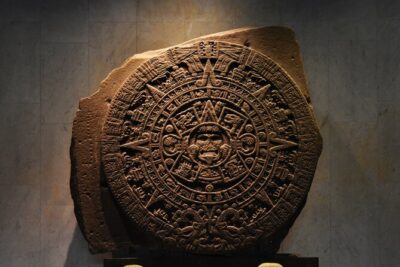
5 Hour Tour through Chapultepec, Anthropology Museum and Castle
Read our review →
Browse the lists this tour appears in