
Review · CHAPULTEPEC
PRIVATE Tour Downtown & Anthropology Museum & Chapultepec Castle
Mexico City’s story comes into focus on this full-day private tour, which links the Aztec capital of Tenochtitlan, colonial churches, Diego Rivera’s murals, and modern Reforma Avenue. You move between major sights by private vehicle, with time to walk, look around, and ask questions.
I like the private format, since your guide can adjust the pace and explain what interests you most. I also like the range of stops, from Chapultepec Castle and the National Anthropology Museum to Templo Mayor and the Metropolitan Cathedral. The drawback is the sheer amount of ground covered: you may walk up to 7 miles, and several major sights receive only a short visit.
Key points to know before booking
- Chapultepec Castle gives you grand views and Mexico’s imperial and presidential story in one compact stop.
- The National Anthropology Museum is the day’s main event, with world-famous pre-Hispanic collections and modern Indigenous culture galleries.
- A private guide makes the packed schedule workable, especially when you want background rather than a quick photo stop.
- The historic center connects Aztec, Spanish, and modern Mexico, with Templo Mayor, the cathedral, Bellas Artes, Alameda Central, and Rivera murals.
- Museum tickets are included, but lunch and admission to Templo Mayor are not.
- Expect a long day with plenty of walking, despite having an air-conditioned vehicle and driver.
A full day that explains Mexico City in layers
This tour is designed for a first look at Mexico City. It does not focus on one neighborhood or one period. Instead, it moves through the city’s main chapters: the Mexica capital, Spanish rule, independence, the Revolution, and modern Mexican identity.
That broad approach is the tour’s strength. You are not left trying to connect isolated monuments on your own. A good guide can explain why the Metropolitan Cathedral was built beside the remains of Tenochtitlan, how Diego Rivera used public murals to tell a national story, and why the Anthropology Museum places ancient cultures below galleries about their descendants.
You should also know what this format cannot do. Mexico City is huge, and eight or nine hours is not enough for a slow visit to every stop. The central attractions are sometimes quick photo and orientation stops, while the castle and Anthropology Museum receive the most scheduled time.
The experience is private, so only your group participates. That matters here. You can ask for more explanation at an exhibit, take photos without holding up a busload of people, or adjust the order when traffic and crowds make that sensible.
More Private Castle Tours in Mexico
- PRIVATE Tour in Chapultepec Castle and Museum of Anthropology
★ 5.0 · 144 reviews - PRIVATE Tour Chapultepec Castle
★ 5.0 · 130 reviews - Private Walking Tour Anthropology Museum & Chapultepec Castle
★ 5.0 · 91 reviews
Chapultepec Castle and the climb above the city
The day begins, or may begin depending on the final order, in Chapultepec Forest. At 647 hectares, the forest is one of Mexico City’s great open spaces, and the approach gives you a break from the city’s traffic and hard surfaces.
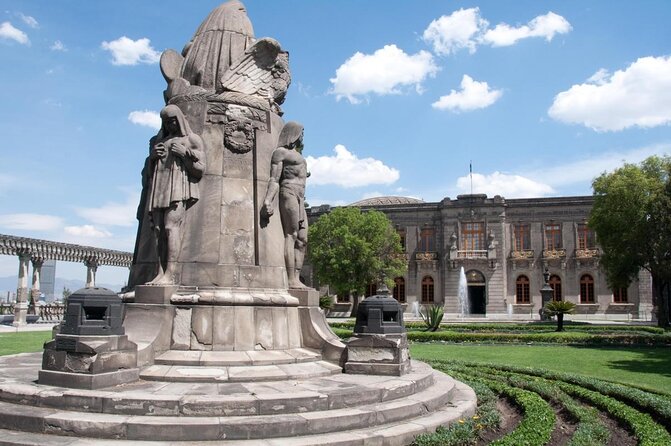
Near the entrance, the Monument to the Niños Héroes recalls the young cadets associated with the 1847 defense of Chapultepec. From there, you climb the hill toward Chapultepec Castle. The walk is not a mountain hike, but it is uphill, and comfortable shoes are important.
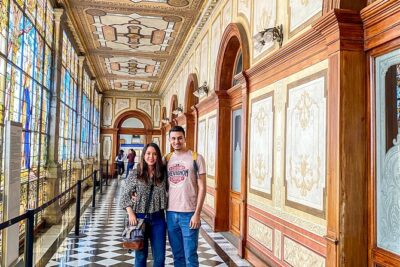
The castle has served as an imperial palace and presidential residence. Inside, you can expect a mixture of architecture, rooms, artwork, and national history. Its setting is part of the appeal. From the hill, you get a broad view toward Mexico City and Reforma Avenue, making this one of the best places on the tour to understand the capital’s size.
The scheduled visit is about one hour, including the approach. That is enough for the main rooms and viewpoints, but not for every detail. If you are especially interested in Mexican political history, ask your guide to focus on the castle’s imperial and presidential chapters.
The Anthropology Museum deserves your best attention
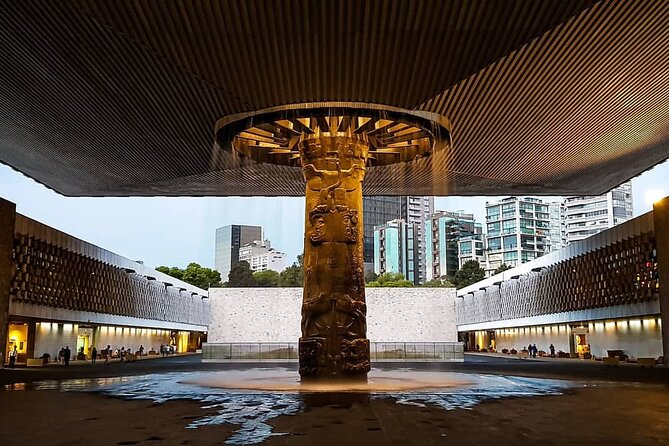
The National Museum of Anthropology is the intellectual center of the day. It is a huge, world-class museum in Chapultepec Forest, arranged around a long rectangular courtyard with display halls on three sides.
The 12 ground-floor galleries focus on pre-Hispanic Mexico. Upper galleries show the lives and traditions of Indigenous communities today, with present-day cultures placed above the ancient civilizations connected to them. That layout makes an important point: Indigenous Mexico is not only a subject from the distant past.
Two hours sounds generous, but it is barely enough for an introduction. You will need to make choices. A guide can help you understand the major objects and avoid spending all your energy on the first few rooms. If you try to see every case, the museum can become tiring before the day is half over.
The guides are one of the strongest parts of this experience. Jorge, who has been described as a retired anthropology and ethnology professor, has especially strong museum background and was involved in rearranging the museum. Other guides named in connection with the tour include Pilar, Jacqueline, Tlilal, José Luis, Alejandro, and George.
You should not assume you will receive a particular guide unless the provider confirms it. Still, the repeated praise for guides who explain artifacts clearly, connect them to modern culture, and answer questions is important when comparing this tour with a basic driver-led city circuit.
Reforma Avenue and El Ángel
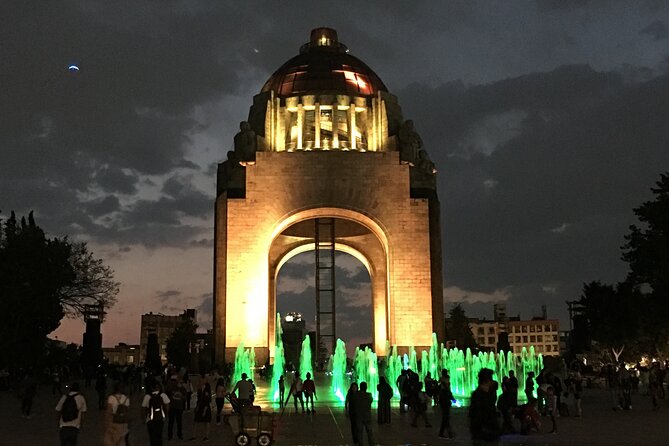
The golden Angel of Independence, usually called El Ángel, is one of Mexico City’s most familiar symbols. The winged figure rises above Reforma Avenue, a major boulevard where traffic, demonstrations, office buildings, and visitors all meet.
This is a short exterior stop, not a long monument visit. You will likely have time for photographs and a brief explanation of the monument’s place in Mexican national identity. It works well as a transition between Chapultepec and the historic center.
Because the stop is brief, do not expect to climb the monument or explore its interior. The value comes from seeing an image that appears throughout the city and understanding why it matters.
More Chapultepec Castle Tours in the world:
- Chapultepec Castle & Anthropology Museum Tour
★ 4.5 · 1,348 reviews - Mexico City: Chapultepec Castle and Anthropology Museum Tour
★ 4.5 · 637 reviews - 5 Hour Tour through Chapultepec, Anthropology Museum and Castle
★ 5.0 · 239 reviews
Alameda Central and the Palace of Fine Arts
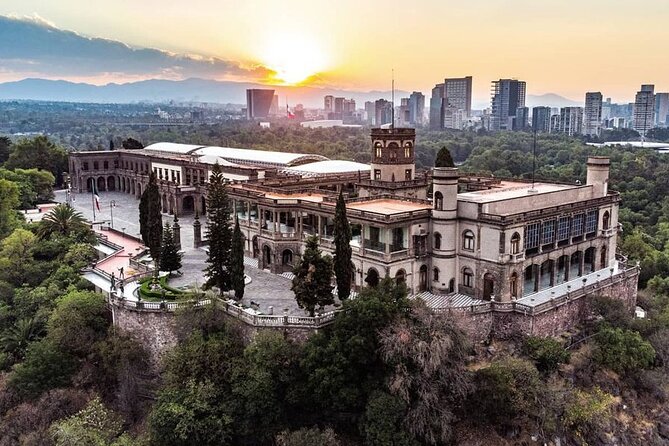
Alameda Central is one of the oldest public parks in the Americas. For more than four centuries, it has been part of Mexico City’s public life. The park gives you a sense of the historic center as a place for daily activity, not just a collection of old buildings.
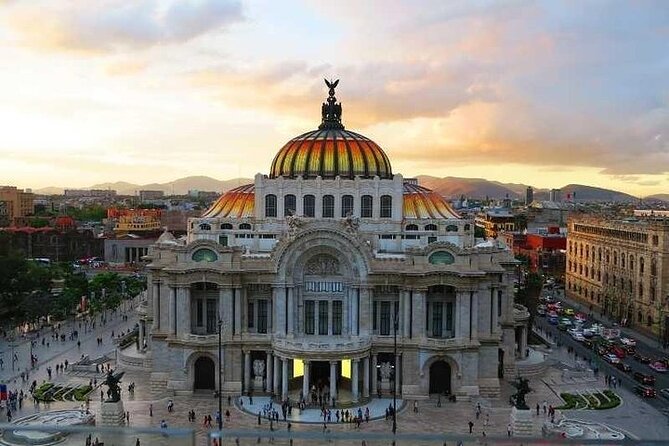
Beside it, the Palacio de Bellas Artes is hard to miss. Its pale exterior, domes, and cultural importance make it one of the city’s signature buildings. It has hosted music, dance, theater, opera, literature, and exhibitions of painting, sculpture, and photography.
The tour’s stop here is mainly about orientation and exterior appreciation. If you want a full visit to the Bellas Artes interiors or its famous murals, confirm how much time your guide can provide. The day already includes several museums, so the schedule may favor seeing the building from outside.
I like this pairing because it shows two sides of central Mexico City. Alameda Central is open and public, while Bellas Artes is formal and ceremonial. Together, they help you read the center as a living urban district.
Templo Mayor and the buried Mexica capital
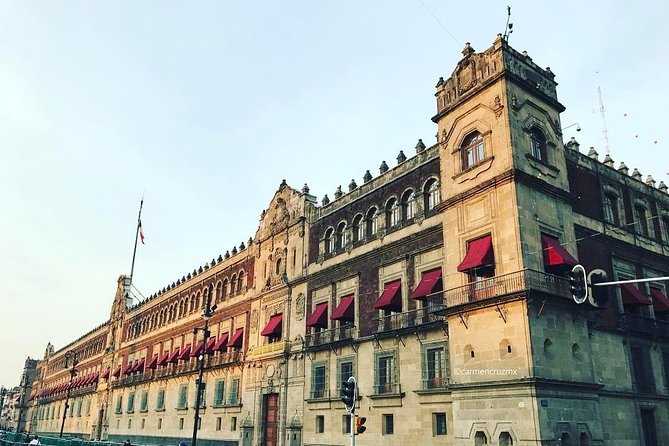
Templo Mayor is where the city’s oldest story becomes physical. Tenochtitlan was built on an island in the lake, with canals and artificial islands forming the basis of the Mexica capital. The Templo Mayor developed at its center.
After the Spanish conquest, the old temple disappeared beneath the colonial city. The Metropolitan Cathedral was later built nearby, and for centuries the scale of the pre-Hispanic ceremonial center was largely forgotten. Excavations brought that earlier city back into view.
The stop is scheduled for about 30 minutes, and admission is not included. That short visit can work as an introduction to the ruins and museum, but it is not enough for a careful museum tour. If ancient Mexico is your main interest, ask about spending additional time here and confirm the separate ticket cost.
Templo Mayor is especially meaningful when visited before or after the Anthropology Museum. The museum gives you a wider national picture, while this site places Mexica power directly beneath the modern center.
Rivera’s murals in the Secretariat of Public Education
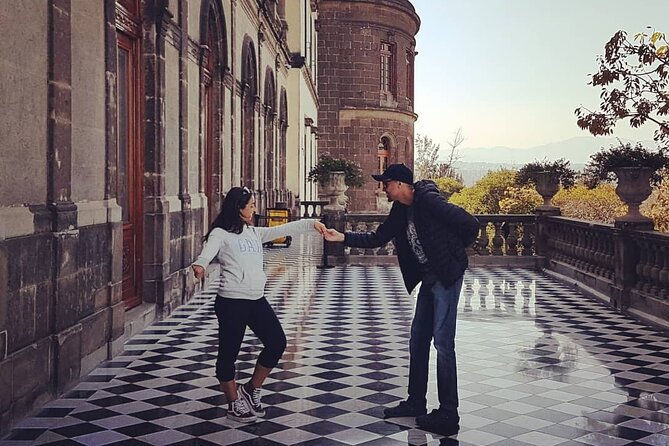
The murals inside the Secretariat of Public Education are one of the more distinctive stops. Diego Rivera painted them between 1929 and 1951, covering the colonial palace with scenes that move from the arrival of Quetzalcóatl, the plumed serpent deity, through Indigenous life and the post-Revolutionary period.
The murals on the first level above the patio focus on life before the Spanish conquest. You are not simply looking at decorative paintings. Rivera used public art to tell a version of Mexican civilization, social struggle, and national identity.
The scheduled visit is about 30 minutes, and admission is included. That makes this a valuable stop because it offers a major cultural sight that many visitors miss when they only see the best-known buildings around the Zócalo.
A guide is particularly useful here. Without context, the number of figures and scenes can feel overwhelming. With explanation, you can follow the broad story and notice how Rivera presents ordinary people, political power, religion, and conflict.
The Metropolitan Cathedral and the center of Tenochtitlan
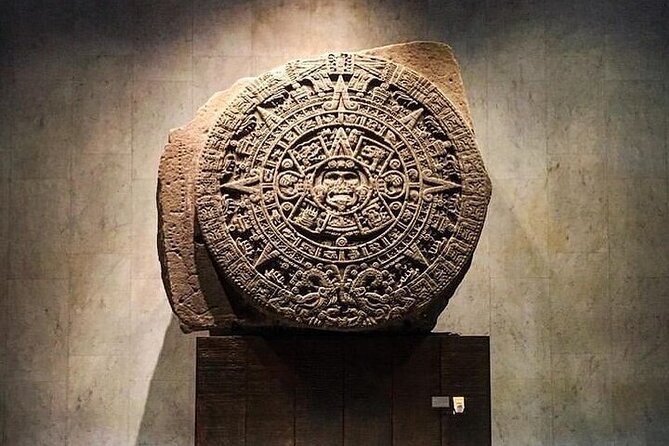
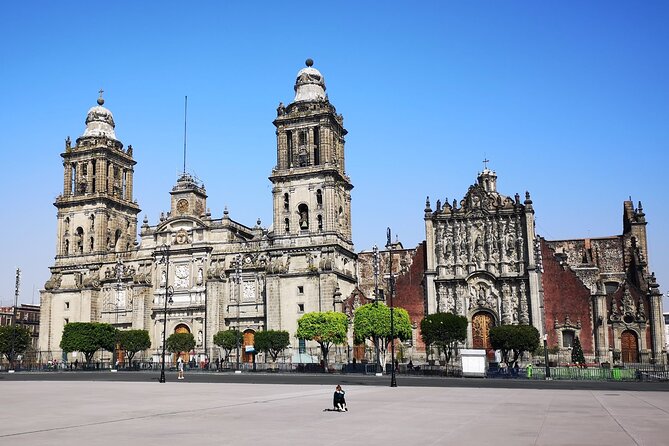
The Metropolitan Cathedral is one of the most important buildings in the historic center. Its foundations occupy the former heart of Tenochtitlan, and the church was built on or near the remains of an Aztec temple.
The building brings together five centuries of Mexican art and architecture. Its size reflects the ambition of the Spanish colonial project, while its interior shows how religious buildings also became containers for painting, sculpture, altars, and changing artistic styles.
The scheduled visit is only 15 minutes. That is enough to enter, take in the scale, and hear the basic story, but not enough for close study. If you are interested in architecture or religious art, you may want to return independently.
The cathedral is also a useful final piece in the historical sequence. Templo Mayor represents the Mexica capital. The cathedral represents colonial power built into the same urban core. Around both, modern Mexico City continues its daily life.
How the private vehicle changes the day
The air-conditioned vehicle and private driver matter because the route covers separate areas of Mexico City. You are not spending the whole day figuring out transfers or waiting for a group to gather.
That convenience does not remove traffic. A 2024 experience included a complaint about losing time in rush-hour traffic while going to a restaurant for tacos. This is a fair warning: lunch choices and traffic can affect the schedule, especially in a city this large.
Lunch is not included. Some guides have recommended or arranged restaurants, including El Cardenal near the cathedral, and one solo visitor appreciated being taken to an authentic restaurant. You should discuss lunch early and be clear about your priorities. A quick meal near the route protects sightseeing time, while a longer restaurant stop may make the day feel less rushed but can reduce time at the monuments.
The tour also involves more walking than the vehicle description might suggest. One visitor measured about 7 miles, or 11 kilometers, over the day. Most people can participate, but you should wear supportive shoes and tell the guide if you need a slower pace or more time seated.
What the $142 price gets you
At $142 per person, this is not a budget city tour. You are paying for a private vehicle, driver, English-speaking guide, museum tickets, fuel surcharge, and the ability to shape the day around your group.
The value is strongest for first-time visitors with limited time. You can cover major sights that would be difficult to connect efficiently on your own, and a strong guide can provide the historical links that make the city easier to understand.
The value is weaker if you prefer slow museum visits or already know the historic center well. Several stops are short, Templo Mayor costs extra, and lunch is separate. You may also find the price harder to justify if you mainly want transportation and photographs.
Private touring works best when you use the flexibility. Tell the guide what matters most. If you care about ancient Mexico, protect time at Templo Mayor and the Anthropology Museum. If architecture is your priority, ask for more attention at the cathedral and Bellas Artes. If you want photographs, say so early. Guides have taken many photos for solo visitors and have adjusted the day for special moments along the route.
Who will get the most from this tour
I would recommend this experience to a first-time visitor who wants a strong overview in one long day. It also suits families or small groups that value private transportation, English explanations, and a schedule built around their own needs.
It is a good choice for history and culture enthusiasts, especially if you can request a guide with strong anthropology or Mexico City expertise. The Anthropology Museum alone can justify the day for many people.
Solo visitors can benefit from the private format, particularly when they want help with photographs and local food. Couples and friends also gain from having a guide who can balance explanation with free time.
I would be more cautious if you dislike long days, uphill walks, or moving through several major sights at a quick pace. The experience covers a lot, but it cannot give every place the time it deserves.
The provider offers free cancellation up to 24 hours before the start time. Changes or cancellations inside that window are not refunded, and poor weather may lead to a new date or a full refund.
Should you book it?
Book this tour if you want Mexico City’s biggest historical sights tied together by a private guide rather than visited as disconnected stops. The strongest reasons are the Anthropology Museum, Chapultepec Castle, the private format, and the chance to connect Templo Mayor with the cathedral and colonial center.
Before booking, ask which guide is assigned, how lunch will be handled, and how the time will be divided among the short central stops. If you want a slower, more detailed museum day, choose fewer sights. If you want a broad first look and can handle a full day on your feet, this is a practical and worthwhile introduction to Mexico City.
FAQ
How long does the tour last?
The tour lasts approximately 8 to 9 hours.
Is this a private tour?
Yes. Only your group participates in the activity.
Is hotel pickup available?
Pickup is offered. The experience also includes a private driver and air-conditioned vehicle.
Is the tour offered in English?
Yes. English is one of the offered languages.
Are museum tickets included?
Museum tickets are included. Admission to Templo Mayor is not included.
Is lunch included?
No. Lunch is not included in the tour price.
How much walking is involved?
You should expect substantial walking, including the uphill approach to Chapultepec Castle. One reported day covered about 7 miles, or 11 kilometers.
How much time is scheduled at Chapultepec Castle?
The scheduled visit to Chapultepec Castle is about one hour, with admission included.
How much time is scheduled at the Anthropology Museum?
The scheduled visit to the National Museum of Anthropology is about two hours, with admission included.
Can most people participate?
The tour information says most people can participate. Because the day includes extensive walking and a climb toward the castle, you should consider your own mobility and stamina.
What is the cancellation policy?
You can cancel at least 24 hours before the start time for a full refund. Cancellations or changes made within 24 hours are not refunded. If poor weather cancels the experience, you will be offered another date or a full refund.
More Castle Museums in the world
- Osaka Castle: Museum and Tower Entry Ticket
★ 4.5 · 2,380 reviews - Cairo: Egyptian Museum, Citadel, and Old Cairo Guided Tour
★ 4.7 · 853 reviews - Amboise: Clos Lucé Castle, Da Vinci Park and Museum Ticket
★ 4.7 · 779 reviews - Museum of Egyptian Civilization, Citadel & Old Cairo Tour
★ 4.7 · 530 reviews
More Private Castle Tours in the world
- Cairo Citadel, Old Cairo and Khan El Khalili: Private Tour
★ 4.6 · 741 reviews - From Amman: Jerash, Ajloun Castle or Umm Qais Private Tour
★ 4.7 · 360 reviews - Seville Private Walking Tour with Alcazar & Cathedral Tickets
★ 5.0 · 332 reviews - Sintra Cascais Private Tour with Pena Palace and Mouros Castle
★ 4.5 · 280 reviews
Newly walked in the world
- Bratislava: DayTrip: Castles around Vienna +underground lake★ 4.9 · 30 reviews
- Vienna: Guided Bratislava & Devín Castle Tour via Hainburg★ 4.6 · 88 reviews
- Warsaw: Skip-the-Line Royal Castle Guided Tour★ 4.9 · 79 reviews
- 3 hour: Warsaw Old Town with Royal Castle /inc. Pick-up/★ 4.7 · 14 reviews
- From Vienna: Bratislava with Local Guide, Castle & UFO Views★ 4.6 · 69 reviews
- Montreux: Chateau Chillon Entrance Ticket★ 4.7 · 158 reviews
- Day Trip to Montreux, Chaplin’s World & Chillon Castle& apéritif★ 4.5 · 178 reviews
- Lucerne CH Experience: Cheese, Chocolate, Chapel Bridge & Château★ 4.5 · 155 reviews
Chapultepec Castle Tours, compared.
Chapultepec Castle & Anthropology Museum Tour
Read our review →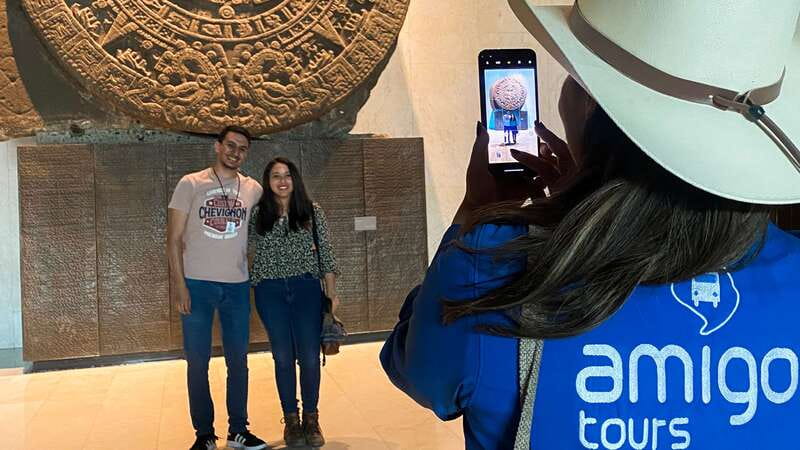
Chapultepec Castle and Anthropology Museum Tour
Read our review →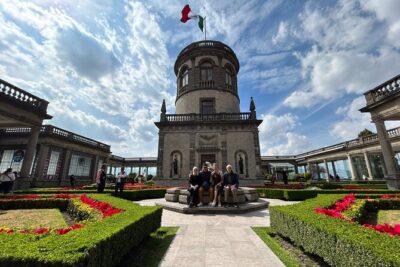
Browse the lists this tour appears in