
Review · MILAN
Milan: Sforza Castle and Michelangelo’s Pietà Rondanini Tour
Michelangelo’s Pietà Rondanini is the heart of this experience. It is not the polished, anatomically perfect sculpture you may expect from Michelangelo. The elongated figures and rough marble make it feel private, troubled, and unfinished, as if the artist was still searching for the right form near the end of his life. I like that the tour gives this final work the attention it deserves, rather than treating it as a quick stop on the way to the castle rooms.
I also like the way the tour connects Leonardo da Vinci with the Sforza court. You walk through the Ducal Courtyard and the Cortile della Rocchetta while hearing about Leonardo not just as the painter of The Last Supper, but as an engineer and court designer. The main drawback is time: 90 minutes is enough for the key sights, but not enough to explore every museum at leisure. Some visitors found the archaeological displays rushed.
Key points to know before booking
- Michelangelo’s final sculpture: Study the unfinished Pietà Rondanini and learn how it differs from his earlier, idealized Pietà.
- Leonardo’s Milan home: Hear how Leonardo spent nearly 20 years working for Ludovico il Moro as an engineer, architect, and court artist.
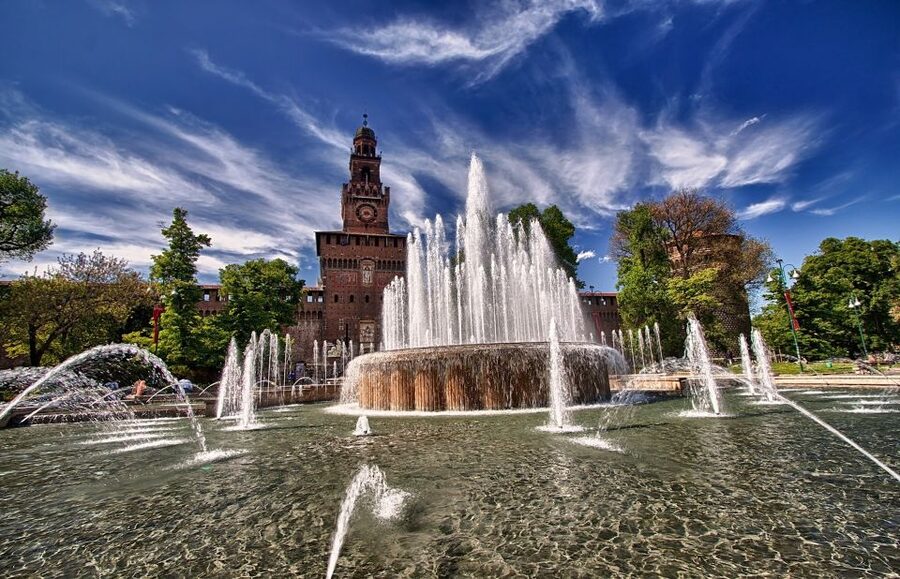
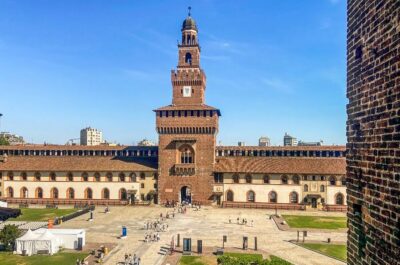
- Castle courtyards: See the Corte Ducale, Cortile della Rocchetta, Filarete Tower, and traces of the fortress’s changing roles.
- Short, focused format: The 1.5-hour schedule suits a first visit, though it leaves little time for a broad museum visit.
- Small groups: Groups can be intimate, sometimes with only a few people, and private tours are available.
- Easy meeting point: Meet outside in Piazza Castello, under the Filarete clock tower, not inside the courtyards.
Why the Pietà Rondanini deserves the first look
Many visitors arrive at Sforza Castle expecting walls, towers, and military history. The first major surprise is that the most powerful moment may be a small, quiet encounter with Michelangelo’s last sculpture.
Michelangelo worked on the Pietà Rondanini until only a few days before his death at age 89. The subject is familiar: Mary supports the body of Christ. But this version has none of the calm beauty associated with the artist’s earlier Pietà in St. Peter’s Basilica.
The figures are narrow and almost weightless. Their forms seem to merge with the marble instead of emerging from it in a fully finished way. You can see the rough surface and the marks of an artist still working through the stone. That unfinished quality is not a defect to be explained away. It is the point of the encounter.
Your guide spends time on Michelangelo’s late style and his concern with mortality. That context matters. Without it, you might simply see an incomplete sculpture and wonder why it receives such attention. With a good explanation, the work becomes a record of a very old artist pushing against his own limits.
The setting inside the castle adds to the mood. The sculpture is kept in a dedicated museum space rather than displayed as one object among many. The tour does not ask you to compare it with a long line of famous works. Instead, it gives you time to look, listen, and notice how the figures seem to lean into one another.
If you prefer finished, grand Renaissance art, this may not be your favorite sculpture in Milan. If you enjoy art that leaves room for thought, it can be the most memorable part of the visit.
More Castle Tours in Italy:
- Milan: Sforza Castle Entry Ticket with Digital Audio Guide
★ 4.0 · 2,675 reviews - From Siena: Chianti and Castles Tour with Wine Tastings
★ 4.6 · 631 reviews - Milan: The Last Supper & Sforza Castle Guided Tour
★ 4.6 · 610 reviews
Entering Sforza Castle through Milan’s old power center
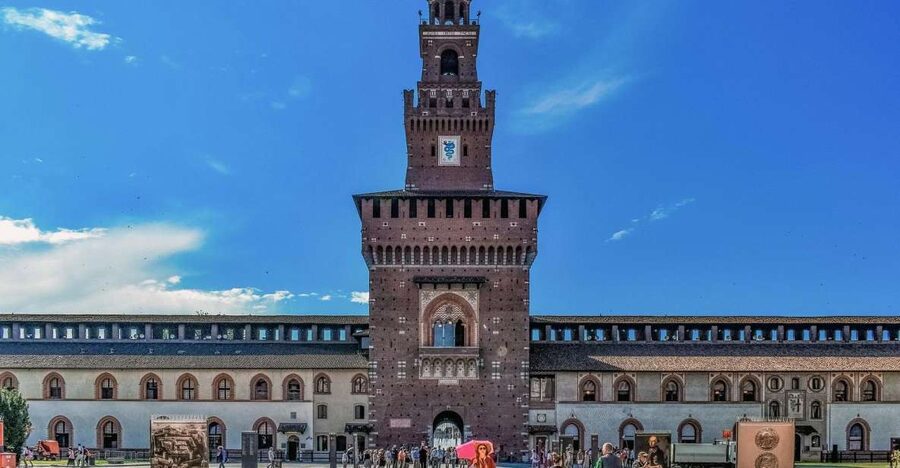
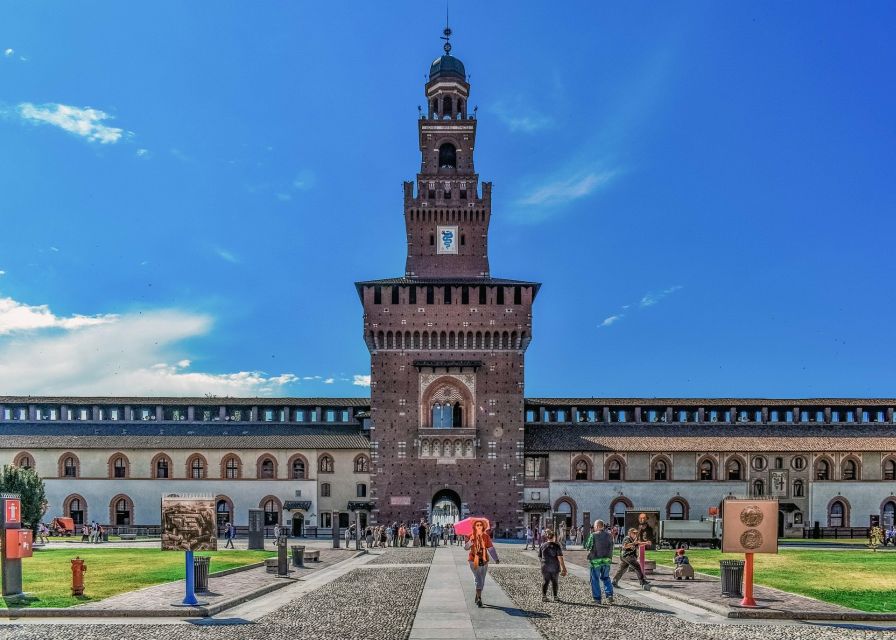
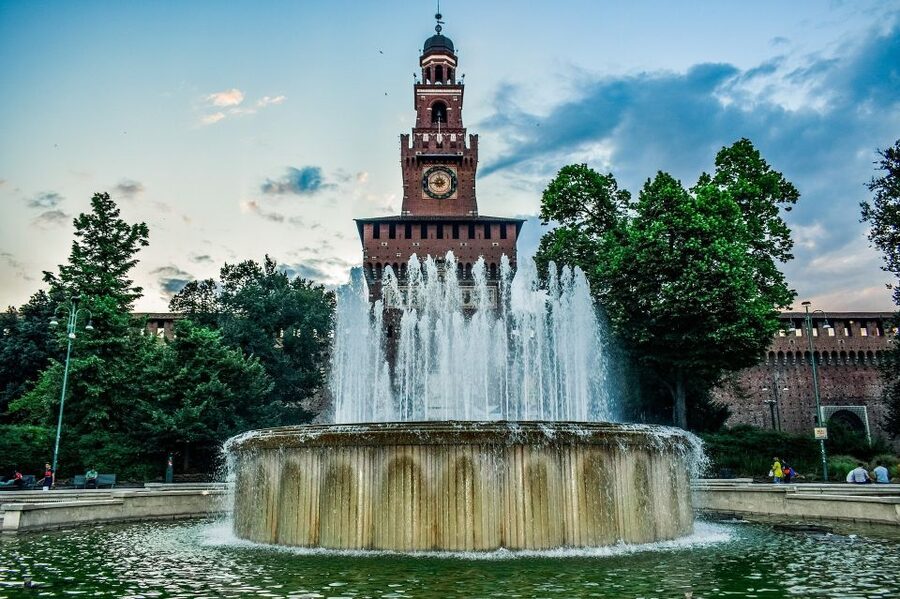
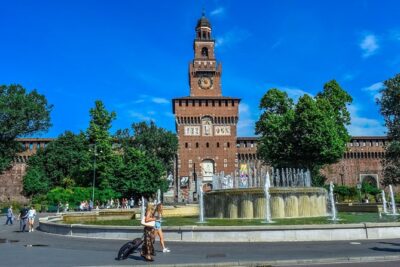
Sforza Castle is easy to recognize from Piazza Castello. Meet your guide outside, under the clock tower of the Filarete Tower, in front of the castle. Do not go into the courtyards first. The meeting point is outside, and the guide carries a purple Hidden Experiences flag or board.
The castle began as a medieval fortress connected with the Visconti family. After the Visconti line ended, the Sforza family reshaped the site and made it the center of ducal power in Milan. What you see today is not just a preserved military structure. It is a place that changed with the city, moving from defensive stronghold to court residence, then to a major museum complex.
The Filarete Tower gives the entrance its strong visual focus. It also helps you understand the castle’s scale. The thick walls and broad courtyards were designed to project authority as much as to protect the ruling family.
Your guide explains the Visconti and Sforza dynasties through stories of ambition, marriage, political survival, and court life. That approach is more useful than memorizing a string of dates. You begin to see why Milan became such an important Renaissance center and how art served the people who controlled the city.
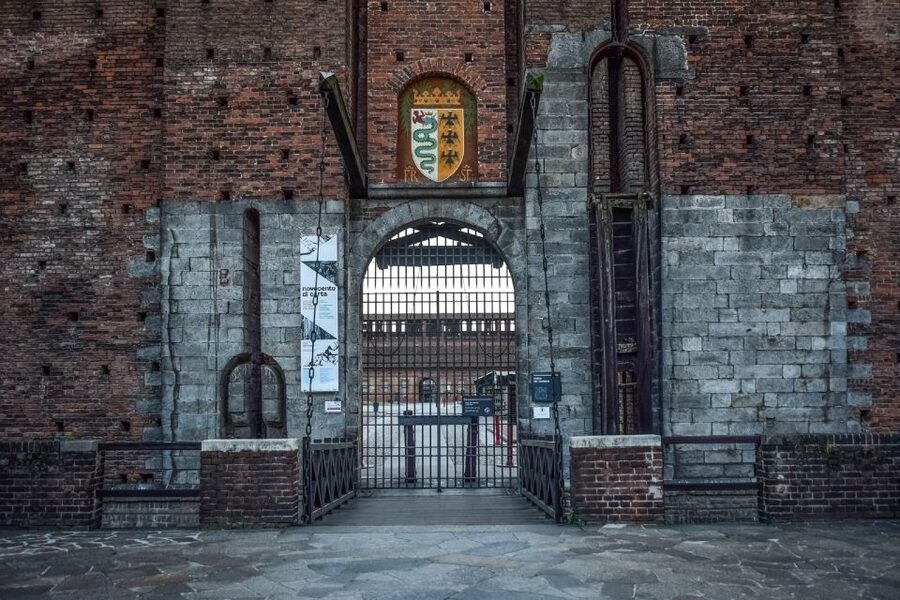
Look for the Biscione, the serpent symbol associated with Milan and the Visconti family. It appears in the city’s visual identity and helps connect the castle to Milan beyond the walls. Details like this give the tour a practical edge: you leave better able to spot Milanese symbols elsewhere.
The Ducal Courtyard and Leonardo’s working life
The Corte Ducale is where the castle’s military character gives way to courtly display. Arched walkways, broad open space, and Renaissance decoration show how the site was adapted for rulers who wanted comfort, ceremony, and prestige as well as protection.
This is where the story of Leonardo becomes especially useful. Most people associate Leonardo with The Last Supper, but his work for the Sforza court was far broader. He spent nearly two decades in Milan, serving Ludovico il Moro as a court engineer, architect, designer, and artist.
Inside Sforza Castle, the guide places Leonardo in that working environment. He was not simply a solitary painter waiting for inspiration. He was part of a demanding court system, taking on practical projects and helping create the image of Sforza power.
That distinction makes the visit more interesting. You see Leonardo as a problem solver who moved between art, architecture, engineering, and entertainment. The castle becomes a place where his varied skills made sense.
The tour does not promise a large display of Leonardo masterpieces. Instead, it explains the setting in which he worked and the relationship between artist and patron. For many people, that is more valuable than seeing another isolated name on a museum label.
The Cortile della Rocchetta adds another layer. Its design feels more defensive and enclosed, reminding you that the castle was never only a palace. The transition between the open Ducal Courtyard and the more fortified sections helps you read the building as both residence and stronghold.
What you see in the castle museums
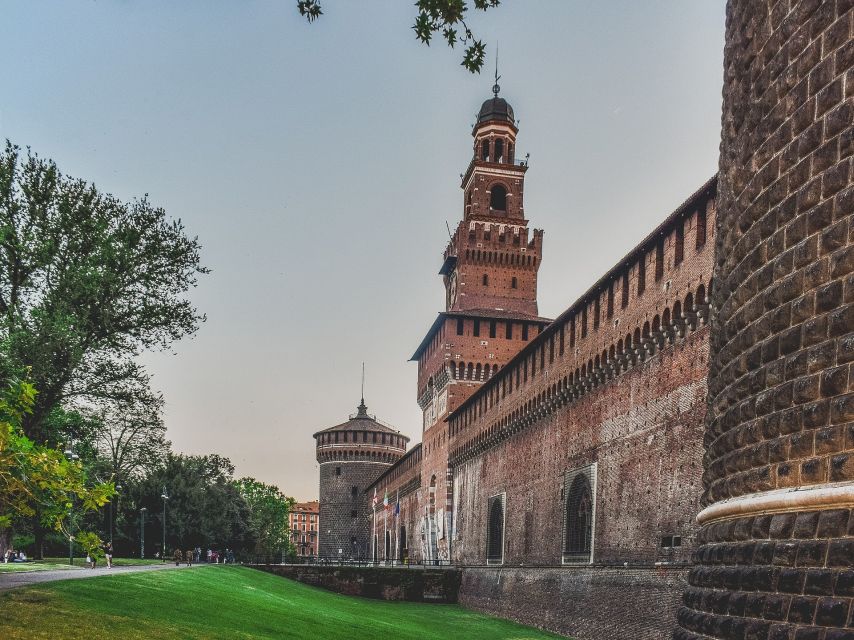
Sforza Castle contains several museum collections, and this tour uses a short route through selected areas rather than attempting to cover everything. That is the right approach for a 90-minute visit, but you should set your expectations carefully.
The main emphasis is the Pietà Rondanini, the castle’s history, its courtyards, and the Renaissance court linked with Leonardo. You may also pass through parts of other museum collections, including archaeological displays and additional art or historical exhibits.
A guide can point out the most useful objects and explain why they matter. That saves you from wandering through rooms without knowing which details deserve your attention. Anna from Norway described the format as concise, with the guide choosing the most important and interesting things to see. That is a fair description of the tour’s strength.
The tradeoff is pace. Fabio was praised for his guidance, but one visitor felt the archaeological museum was covered too quickly. If archaeology is your main interest, you may want to return on your own after the tour and give those rooms more time.
The castle is large enough that independent visitors can lose their sense of priority. You may spend too long on minor displays and then rush the Pietà Rondanini. A guided visit protects the central experience, but it is not a substitute for a full museum day.
Same walls, a different way in:
- Milan: Last Supper and Sforza Castle Guided Tour
★ 4.6 · 498 reviews - Montalcino: Brunello Wine Tasting & Lunch in a Tuscan Castle
★ 4.6 · 324 reviews - Lake Garda: Historic Castle Cruise with Wine Tasting
★ 4.5 · 241 reviews - Sforza Castle and Michelangelo’s Pietà Rondanini guided experience
★ 4.5 · 220 reviews
The guides make the short format work
The strongest part of this tour is the human guide. The experience is built around explanation, and the feedback points repeatedly to guides who speak clearly, answer questions, and turn difficult history into a story you can follow.
Several guides received especially warm praise. Giorgio was noted for combining art history with an engaging explanation of Michelangelo’s final work. Fabio was described as making Milanese history exciting. Stefania was praised for connecting dates, people, and events so clearly that the castle became easier to understand.
Other named guides include Simon, Sylvia, Lore, Mary, Chiara, Nina, Lara, Simone, and Lorella. The exact guide depends on the date and language, so you should not book expecting one particular person unless the operator confirms it.
Group size can make a real difference. Some departures are very small, with only three, four, or six people. One visitor ended up with a private-feeling experience, while another had a group of four and appreciated the time for questions. A private group can also be booked if you want a more personal schedule.
The tour is offered in English, Italian, German, French, and Spanish. Clear speech matters in the castle courtyards, where sound can carry unevenly. Headphones are provided from 11 participants, although one visitor reported intermittent earpiece problems. If your group is small, stay close enough to hear the guide directly.
Is $47 a fair price for 90 minutes?
At $47 per person, this is not the cheapest way to see Sforza Castle. The price includes admission to the castle and museum, a certified guide, and a small-group format. It does not include food, drinks, or hotel transport.
The value depends on your priorities. If you only want to walk through the courtyards and take photographs, you can find a less expensive approach. If you want the Pietà Rondanini explained properly, plus a clear account of the castle’s rulers and Leonardo’s role, the fee is easier to justify.
I think the price works best for a first visit to Milan, especially if your schedule is tight. A guide gives you a usable framework in 90 minutes. You learn what the castle was for, why the Sforza family mattered, where Leonardo fits in, and why Michelangelo’s unfinished sculpture deserves serious attention.
The value is less convincing if you already know Milanese Renaissance history or plan to spend several hours studying every museum room. In that case, the short guided route may feel too selective.
A useful plan is to take the tour first, then return to the museum areas that caught your interest. The included admission makes that worth checking, although the exact ability to remain or reenter should be confirmed at the time of booking.
Practical details that can save you time
The tour lasts 1.5 hours, with starting times varying by date. Check availability before you build it into a tight schedule. Some tours have run slightly longer, which can be welcome when the guide is answering questions, but it may affect a restaurant booking or another timed attraction.
Arrive at Piazza Castello with enough time to find the Filarete clock tower. The correct meeting point is outside the castle, not inside the courtyards. Look for the purple Hidden Experiences sign.
You do not need to arrange transport from your hotel unless you choose an optional paid pickup. The central meeting point makes this a straightforward addition to a day focused on the Duomo and central Milan, though the activity itself does not include those sights.
The tour is wheelchair accessible. Wear comfortable shoes, since the experience includes courtyards and museum areas rather than a single seated presentation.
Cancellation is free up to 24 hours before the start time, and you can reserve now and pay later. Those terms are useful if your Milan plans are still shifting.
Who should take this tour?
This tour suits you if you want a clear introduction to Sforza Castle without spending half a day working out the museum layout. It is particularly good for visitors interested in Michelangelo, Leonardo, Renaissance politics, or the way art and power worked together.
Families can also benefit from the storytelling. A strong guide gives children and adults a reason to look closely at the castle’s symbols, towers, and sculpture rather than treating the visit as another series of old rooms.
Art lovers should book it for the Pietà Rondanini, but should understand that the sculpture’s unfinished nature is central to its appeal. It is quiet and emotionally spare, not a flashy highlight.
You may want a different plan if archaeology is your main goal, if you dislike guided pacing, or if you want to inspect every museum collection in detail. The tour chooses highlights for you, which is both its advantage and its limit.
Should you book the Sforza Castle and Pietà Rondanini tour?
I would book this tour if you have about 90 minutes and want the castle to make sense, rather than simply look impressive from the outside. The combination of Michelangelo’s final sculpture, Leonardo’s years at the Sforza court, and the castle’s political story gives you a strong introduction to Milan’s Renaissance identity.
Book with realistic expectations. You are paying for focus and explanation, not an exhaustive museum visit. If possible, choose a small-group departure and keep extra time afterward for the rooms you were not able to examine closely.
FAQ
How long does the Sforza Castle and Pietà Rondanini tour last?
The tour lasts 1.5 hours.
What is included in the tour price?
The price includes entrance fees to Sforza Castle and its museum, a certified guide, and a small-group guided tour. Headphones are provided for groups of 11 participants or more.
How much does the tour cost?
The listed price is $47 per person.
Where do I meet the guide?
Meet in Piazza Castello, under the Filarete clock tower, in front of Sforza Castle. The meeting point is outside the castle courtyards.
How will I recognize the guide?
Look for the guide holding a Hidden Experiences purple flag or board.
Is the tour offered in English?
Yes. The available languages are English, Italian, German, French, and Spanish.
Is the tour wheelchair accessible?
Yes, the activity is listed as wheelchair accessible.
Can I book a private group?
Yes, a private group option is available.
Can I cancel the tour for a full refund?
Yes. You can cancel up to 24 hours in advance for a full refund.
Does the tour include hotel pickup or food?
No. Food and drinks are not included. Hotel pickup and drop-off are optional and require an extra charge.
Newly walked in Italy
- Postojna Cave & Predjama Castle from Trieste★ 4.5 · 122 reviews
- City walk through Spanish steps, Trevi fountain, Pantheon, Navona, Angel Castle★ 5.0 · 55 reviews
- Milan Private Tour – Duomo, Sforza Castle & Gelato Tasting★ 5.0 · 40 reviews
- Milan: Duomo, Scala, Sforza Castle and Last Supper Private Tour★ 5.0 · 38 reviews
- Private Tour – St. Angel’s Castle★ 5.0 · 42 reviews
- Milan: Private Tour – Duomo, Sforza Castle & Gelato Tasting★ 4.8 · 36 reviews
- Private 2-Hour Tour of the Medieval Castle over Lake Como★ 5.0 · 9 reviews
- Palermo: Medieval castles of Caccamo & Cefalù. Small Group Tour★ 5.0 · 24 reviews
Milan Castle Tours, compared.
Sforza Castle Entry Ticket with Digital Audio Guide
Read our review →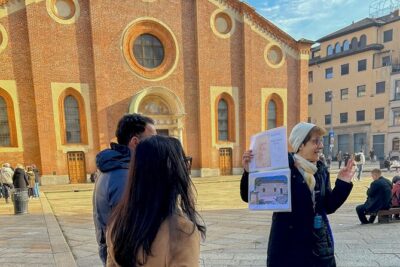
Sforza Castle and Michelangelo’s Pietà Rondanini guided experience
Read our review →
Milan Private Tour – Duomo, Sforza Castle & Gelato Tasting
Read our review →Private Tour – Duomo, Sforza Castle & Gelato Tasting
Read our review →Browse the lists this tour appears in