
Review · ROME
St. Angel’s Castle: 2-Hour Private Tour
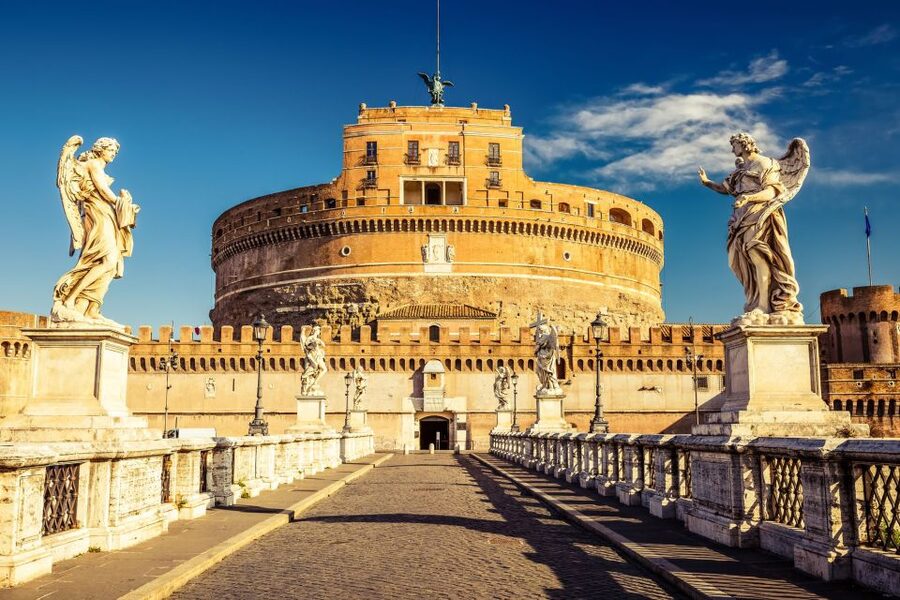
St. Angel’s Castle is one of Rome’s great shape-shifters. It began as Emperor Hadrian’s mausoleum in the 3rd century A.D., then became a fortress, prison, Vatican office complex, and papal residence. I like that this private two-hour tour follows those changes inside the actual rooms, rather than treating the building as just another photo stop. I also like the terrace views and the chance to see Pope Paul III’s apartment.
The main drawback is its pace. Two hours gives you a strong introduction, but this is a large monument with art, weapons, prison areas, papal rooms, and many layers of history. The castle also has stairs and uneven walking, so it is not suitable for wheelchair users or people with limited mobility.
Key points at a glance
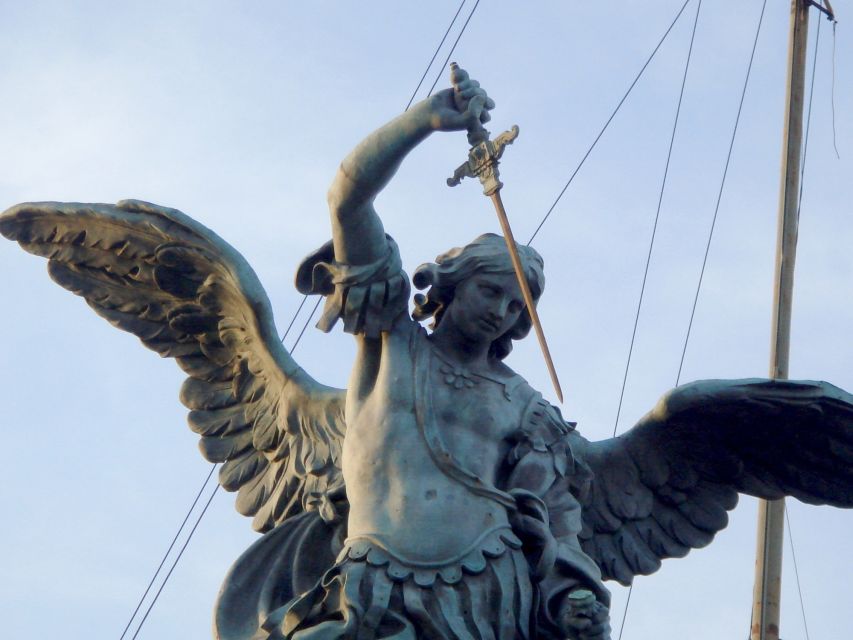
- A mausoleum turned fortress: Follow the building from Hadrian’s tomb to its later roles as prison, Vatican treasury office, archive, and papal residence.
- Private guiding: Your English or Italian speaking guide can shape the visit around your interests, with past guests singling out guides such as Vincenzo for clear, engaging storytelling.
- Papal escape route: Learn how the Passetto connected the castle with the Vatican and served as an escape path during attacks.
- Renaissance rooms and art: See the Hall of Paolina, the Hall of Perseus, Pope Paul III’s apartment, paintings, marbles, ceramics, and ancient arms.
- Rome from above: The castle terrace gives you broad views over the historic center.
- An easy finish in central Rome: The tour ends at the meeting point, with the option to remain inside and continue at your own pace.
Why St. Angel’s Castle makes a strong private tour
Some Roman monuments tell one main story. St. Angel’s Castle tells several, one on top of another. The structure began as a grand tomb for Emperor Hadrian, but later rulers changed its purpose as Rome’s political and religious needs shifted.
That makes a guide especially useful here. Without help, you may notice thick walls, grand rooms, and a fine view, but miss how the building’s purpose changed over time. A good guide can connect the imperial tomb to the medieval fortress, then explain why popes needed defensive rooms, a protected escape route, and private apartments inside the same complex.
A private group also gives you more room to ask questions. If you are interested in the Borgia pope, prison life, military history, Renaissance art, or the castle’s role in movies, you can steer the conversation in that direction. One particularly praised guide, Vincenzo, is described as kind, cultured, and compelling. Another guide was praised for making even subjects rarely covered in books easy to follow.
You pay $135.94 per person, so this is not the budget way to see the castle. The price makes the most sense for couples, families, or small groups who want personal attention and a guide focused on their interests. If you mainly want to walk through the rooms and take photos, a private tour may cost more than you need. If you want the building’s many layers explained without joining a large group, the price is easier to justify.
More Private Castle Tours in Italy
- Private Tour – St. Angel’s Castle
★ 5.0 · 42 reviews - Milan Private Tour – Duomo, Sforza Castle & Gelato Tasting
★ 5.0 · 40 reviews - Milan: Duomo, Scala, Sforza Castle and Last Supper Private Tour
★ 5.0 · 38 reviews
Meeting your guide outside the castle
You meet your guide in front of the entrance to St. Angel’s Castle. Arrive 15 minutes before the start time. The guide waits with a sign bearing the tour name, which is useful in a busy central area where several groups may be gathering.
There is no hotel pickup, drop-off, or private vehicle included. Plan to reach the castle on your own and allow extra time to find the entrance. The tour ends back at the meeting point, so you can arrange the rest of your day from there.
Entry tickets are included. That removes one practical chore and means you do not need to buy a separate admission ticket before the tour. Starting times vary, so check the available time slots when booking.
From Hadrian’s mausoleum to a medieval fortress
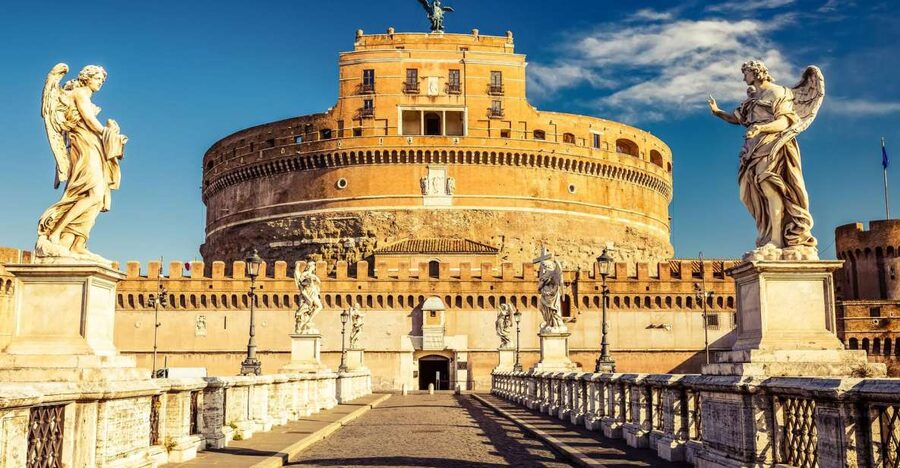
The first part of the tour sets up the castle’s long transformation. In the 3rd century A.D., the structure was built as a mausoleum for Emperor Hadrian. That original purpose matters because the building was not designed as a palace or prison. Its later uses grew from the strength and position of the original monument.
Your guide then traces the castle’s change into a fortress during the Middle Ages. Thick defensive construction gave the building a new military role, and its location made it part of Rome’s system of protection and power.
Later, the castle served as a prison and housed offices connected with the Vatican treasury and archive. Those functions are easy to overlook when you see the more polished papal rooms, but they are central to understanding the place. St. Angel’s Castle was not simply a royal residence. It was also a working compound, a defensive refuge, and a place of confinement.
This part should appeal to you if you prefer history with a clear chain of cause and effect. The guide is not only naming dates and occupants. You are shown how one building kept being adapted to meet new needs.
The Hall of Paolina and the Hall of Perseus
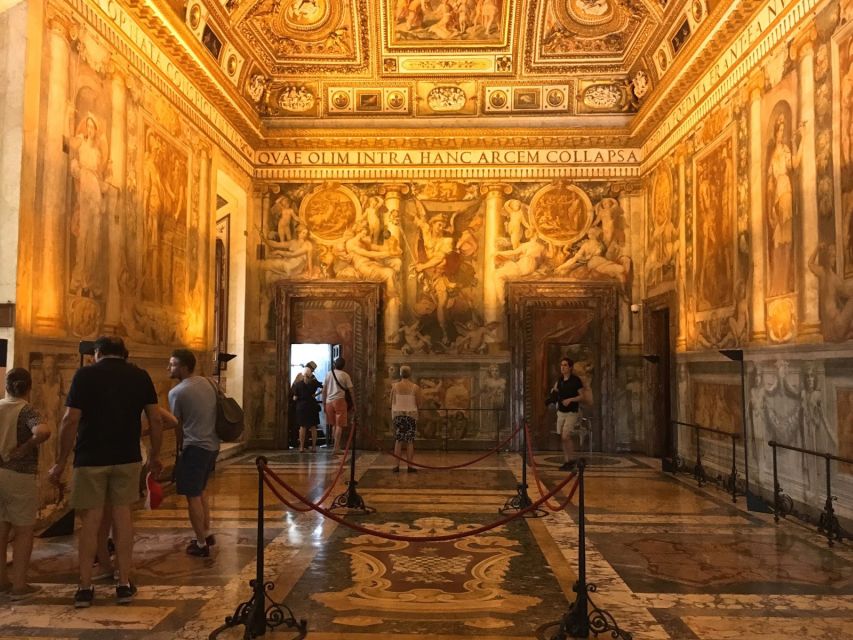
The tour includes the Hall of Paolina, with stories connected to Alexander the Great. It also visits the Hall of Perseus, where you learn about the myth of the Greek hero Perseus.
These rooms give the tour a welcome change of pace. You move from walls, weapons, and military use into painted decoration, classical stories, and Renaissance ideas about power. The mythological themes are not just decoration. They help show how Renaissance popes used art and ancient stories to present authority and culture.
A private guide can make these rooms more rewarding because you can stop to ask what a scene means or why it appears in a papal setting. The exact amount of time spent in each hall may depend on your guide and your interests, so tell the guide early if art or mythology is a priority.
Same walls, a different way in:
- Milan: Sforza Castle Entry Ticket with Digital Audio Guide
★ 4.0 · 2,675 reviews - Milan: Sforza Castle and Michelangelo’s Pietà Rondanini Tour
★ 4.7 · 1,119 reviews - From Siena: Chianti and Castles Tour with Wine Tastings
★ 4.6 · 631 reviews - Milan: The Last Supper & Sforza Castle Guided Tour
★ 4.6 · 610 reviews
Pope Paul III’s apartment and the papal side of the castle
The visit to Pope Paul III’s apartment is one of the tour’s strongest stops. The rooms show the castle in its Renaissance role as a papal residence, a sharp contrast to its earlier identity as a tomb and fortress.
This is where the building’s history becomes personal. Instead of thinking only about armies and walls, you see how a pope lived and worked inside a fortified structure. The apartment also helps explain why St. Angel’s Castle remained important after its strict military role had changed.
The tour can also cover the Borgia pope if that subject interests you. One past guest specifically wanted extra attention on that period and found the guide willing to spend more time on it. That is a useful benefit of booking privately. You can ask for emphasis on the people or events that matter most to you instead of following a fixed group script.
Art, arms, marbles, and ceramics
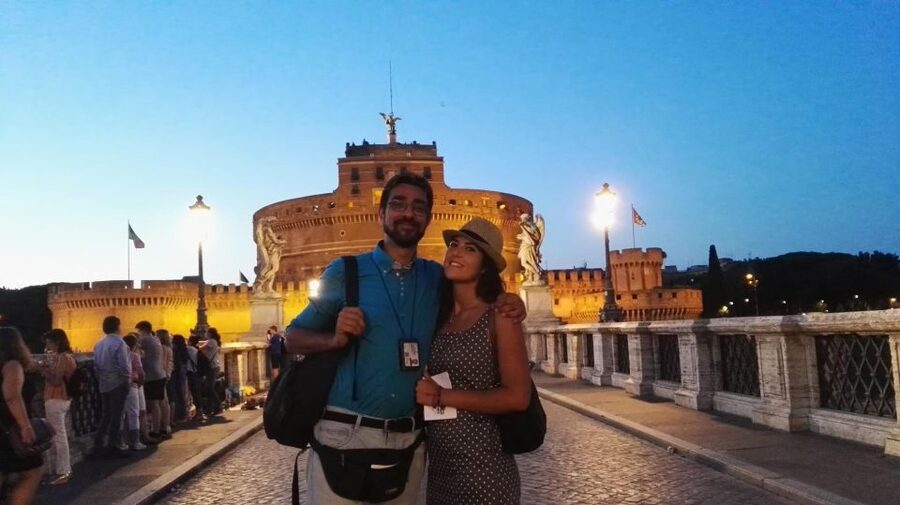
St. Angel’s Castle holds more than political stories. You can see ancient arms, marbles, ceramics, and sculptures, along with a painting gallery featuring works by Carlo Crivelli, Luca Signorelli, and Dosso Dossi.
The collection adds visual detail to the tour, but it also creates a time-management issue. With only two hours, you will not study every object at length. If you are an art specialist, tell your guide what you want to see. If you are visiting with children or family members with mixed interests, the guide can help balance paintings with stories of popes, prisons, and escape routes.
I like this mix because it keeps the tour from feeling like a single-topic history lesson. You get military architecture, religious power, mythology, decorative art, and daily life in one visit. The trade-off is that each subject receives an introduction rather than a full museum-style examination.
The Passetto and the castle’s escape story
The famous Passetto is one of the most memorable subjects covered on the tour. It was a protected path used by popes to escape the castle when the Vatican was under attack.
The Passetto helps explain the close relationship between St. Angel’s Castle and the Vatican. The castle was not only nearby. It formed part of a defensive plan, giving the popes a route to a stronghold when danger reached the Vatican.
Ask your guide to explain how the path fit into the wider story of papal security. This is the sort of detail that can change how you view the castle from outside. What first looks like an isolated monument becomes part of a larger network of power and protection.
The available information does not promise access to every section of the Passetto, so treat this as a history lesson about the route rather than a guarantee of a full walk along it. Your guide can explain what you can see during your visit.
Prison levels, secrets, and stories that keep the tour moving
The castle’s prison role gives the visit a darker edge. You learn about the prison levels and the secrets tied to the building, alongside its more famous papal rooms.
This contrast is one reason the experience works well for families and mixed-interest groups. Someone fascinated by architecture can focus on the walls and defensive design. Someone drawn to political intrigue can ask about popes and prisoners. Someone interested in Rome’s popular culture can hear about the castle’s role in famous movies.
The strongest guiding style here is likely to be story-led. Past feedback praised a guide for making the castle’s past and lesser-known details interesting and engaging, while another guest described a guide as passionate and fun. Those qualities matter in a building with many corridors and historical turns. A dry list of dates would make the visit feel longer than it is. Clear stories help you remember why each area matters.
The terrace and Rome’s historic center
The castle terrace is the natural high point of the visit, both literally and for many people emotionally. From here, you get panoramic views across Rome’s historic center.
The view gives you a chance to connect the castle to the city around it. After hearing about the Vatican, the Passetto, medieval defense, and papal power, you can look out over the area and understand the castle’s position within Rome.
Bring comfortable shoes. The visit includes walking through a large historic building, and the tour is not recommended for people with limited mobility. Large bags and luggage are not allowed, so arrive with only what you need. Children should bring a passport or ID card, as specified for the activity.
The terrace is also a good point to pause and take photos, but do not expect the whole experience to be a viewpoint visit. The panorama is one part of a tour built around the building’s long and unusual history.
Ending at Piazza Navona
The advertised route ends with a stroll toward Piazza Navona, a major symbol of Rome’s Baroque style. This gives the experience a pleasant urban finish, connecting the castle’s ancient, medieval, and Renaissance stories with one of central Rome’s best-known public spaces.
The stated end point for the activity is back at the meeting point, and you may stay inside the castle afterward to continue exploring independently. Because of that, confirm the exact route and ending arrangement with your guide at the start. You should not assume that a transfer to Piazza Navona is included.
Even so, the location makes it easy to continue sightseeing on foot after the visit. The castle is well suited to a day that also includes central Rome, especially if you want to pair its fortress and papal history with Baroque streets and piazzas.
Is two hours enough?
Two hours is enough for a guided overview with real substance. You can cover the main historical changes, selected halls, the papal apartment, the Passetto story, art collections, prison history, and the terrace.
It is not enough for a slow, exhaustive examination of every object and room. If you want to read every label or spend long periods with the paintings, plan to use the option of remaining inside after the guided portion. That extra time is important because it lets you turn a brisk introduction into a longer self-guided visit.
The private format helps the timing. You are not waiting for a large group to gather or listening to questions unrelated to your interests. Still, tell the guide what matters most at the beginning. A family that wants dramatic castle stories should say so. An art-focused couple should request more time with the gallery and Renaissance decoration.
Who should book this tour?
I would choose this tour if you want context, questions answered, and a flexible conversation rather than a quick walk through a monument. It is especially suitable for first-time visitors to St. Angel’s Castle, families with different interests, and anyone curious about the links between Rome’s emperors, popes, prisoners, and military defenses.
The tour also suits history fans who want to ask about the Borgia period, the Passetto, or the castle’s prison levels. Guides such as Vincenzo have been praised for making the material both cultured and engaging, which is exactly what a complex site like this needs.
I would think twice if you have limited mobility, use a wheelchair, or dislike stairs and extended walking. I would also compare the price with a standard admission option if you prefer independent museum visits and do not need a guide.
You can cancel up to 24 hours before the activity for a full refund, and the reserve-now, pay-later option keeps your plans flexible. Those policies are useful, but the main decision is simple: do you value a personal guide enough to pay $135.94 per person?
Final call: book it for the stories, not just the view
Book this private tour if you want to understand why one Roman building could be a mausoleum, fortress, prison, Vatican office, and papal home. The terrace is memorable, but the real value comes from connecting the rooms and roles into one clear story.
Skip it if you only want a quick photo stop or need step-free access. For everyone else, the private format, included admission, strong guide feedback, and option to continue alone afterward make this a useful way to see one of Rome’s most unusual monuments.
FAQ
How long does the St. Angel’s Castle tour last?
The tour lasts two hours. You may have the option to remain inside afterward and continue exploring at your own pace.
What is the price of the tour?
The listed price is $135.94 per person.
Is admission to St. Angel’s Castle included?
Yes. Entry tickets are included in the price.
Is this a private tour?
Yes. The experience is for a private group.
What languages are available?
Live guiding is available in English and Italian.
Where do I meet the guide?
Meet the guide in front of the entrance to St. Angel’s Castle. The guide waits with a sign showing the tour name.
How early should I arrive?
Arrive 15 minutes before the activity starts.
Is the tour suitable for wheelchair users?
No. The tour is not suitable for wheelchair users or people with limited mobility.
Can I bring luggage or a large bag?
No. Luggage and large bags are not allowed. Comfortable shoes are recommended, and children should bring a passport or ID card.
More Two-Hour Experiences in Italy
- Private 2-Hour Tour of the Medieval Castle over Lake Como
★ 5.0 · 9 reviews - Prague Castle & Castle District: 2-Hour Guided Tour
★ 4.6 · 622 reviews - From Ivy Lea: 2-Hour Two Castle 1000 Islands Scenic Cruise
★ 4.5 · 142 reviews - Córdoba: Alcázar and Jewish Quarter 2-Hour Guided Tour
★ 4.2 · 50 reviews
Newly walked in Italy
- HIKING TOUR: VARENNA, Castle of VEZIO Villa MONASTERO, FIUMELATTE★ 5.0 · 48 reviews
- Castles of Puglia Day Trip from Bari★ 4.5 · 7 reviews
- Enchanted Castle of Sciacca – Museum Tickets★ 3.5 · 63 reviews
- Taormina; Taormina Castle Tour★ 3.8 · 11 reviews
- Milan: Skip-the-line Sforza Castle and Museums Private Tour★ 4.7 · 7 reviews
- Siena: Tour and Wine Tasting in a Tuscan Private Castle★ 4.9 · 50 reviews
- Sforza Castle & Michelangelo’s Pietà Rondanini Guided Tour★ 4.7 · 3 reviews
- Sarzana: pesto experience at Sarzanello Fortress★ 5.0 · 4 reviews
Private Castle Tours, compared.

Cairo Citadel, Old Cairo and Khan El Khalili: Private Tour
Read our review →
From Amman: Jerash, Ajloun Castle or Umm Qais Private Tour
Read our review →
Seville Private Walking Tour with Alcazar & Cathedral Tickets
Read our review →
Sintra Cascais Private Tour with Pena Palace and Mouros Castle
Read our review →
Skip-the-Line Wawel Castle Chambers Private Tour
Read our review →
Castles of Transylvania: Private Day Trip from Bucharest
Read our review →
Dracula’s Castle, Peles Castle and Brasov – Private Day Trip from Bucharest
Read our review →
Neuschwanstein & Linderhof Castle Luxury Private Tour from Munich
Read our review →Browse the lists this tour appears in