
Review · JAPAN
Hiroshima Castle 1h guide tour
Hiroshima Castle is more than a pretty wooden keep in the middle of the city. It tells the story of Hiroshima before the atomic bombing, from the Mori clan and Edo-period life to the streets that once surrounded the castle. The tower you see today is a reconstruction, built from records made before 1945.
I like the private format, which gives you a better chance to ask questions, and I like the short one-hour length for a busy Hiroshima day. Masae received especially warm praise for clear explanations, while Hina was noted for her kindness and hospitality. The main caution is value: the tour costs $52 per person, while the admission ticket alone was reported as less than $3, and guide quality has been uneven.
Key points to know before you book
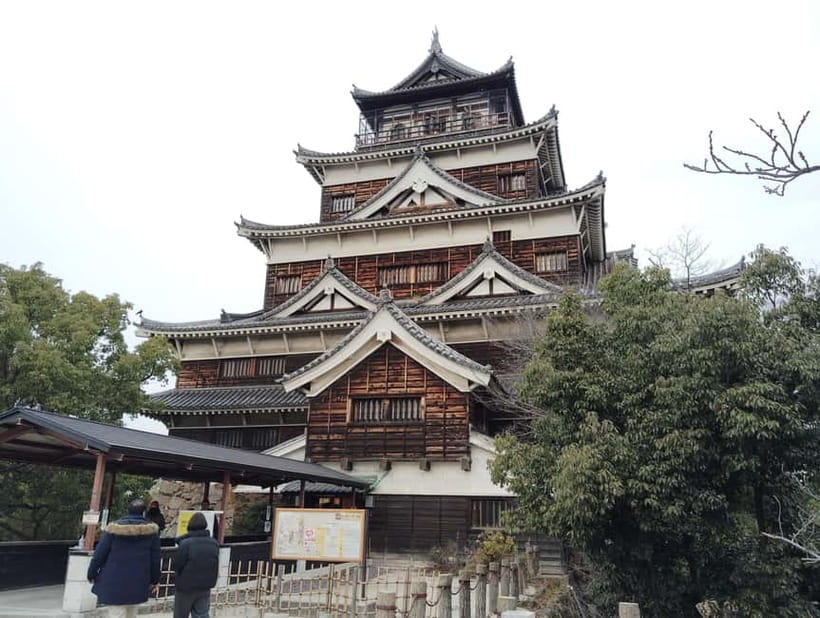
- The castle keep was rebuilt from prewar records: The present tower helps you picture the castle lost in the atomic bombing.
- Mori clan history anchors the visit: You learn about the lord who built Hiroshima Castle and modeled it on the residence of Japan’s powerful unifier.
- The top-floor view is part of the hour: You get a broad look over Hiroshima from the castle tower.
- It is a private tour in English or Japanese: The format suits visitors who want direct access to a guide rather than a large group.
- Guide quality matters here: Masae and Hina received strong praise, but two critical accounts describe limited English, little explanation, and a rushed visit.
- The meeting point is simple: Look for your guide in front of the main keep with a yellow DeepExperience sign.
Why Hiroshima Castle deserves an hour
Hiroshima is often planned around the Peace Memorial Park and A-Bomb Dome. Those places are essential, but they show only one part of the city’s story. Hiroshima Castle takes you farther back, to the era when the city was shaped by a feudal lord, a castle town, and the political order of the Edo period.
The castle was built by Mori, the lord of Hiroshima, in imitation of the residence of the powerful man who unified Japan. That detail gives the visit a useful starting point. You are not just looking at a reconstructed building. You are seeing a symbol of the authority, planning, and social order that shaped Hiroshima for centuries.
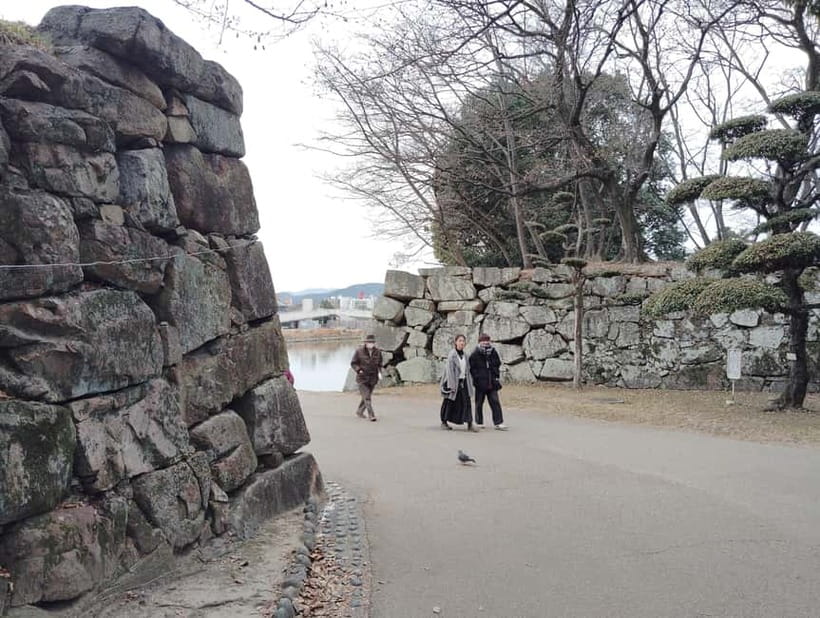
The castle was regarded as a symbol of Hiroshima for more than 300 years. Its setting in the center of the modern city makes the contrast especially clear. Tall buildings and busy streets are nearby, yet the castle grounds offer a glimpse of the older city that came before them.
I find that a local guide can make this kind of place easier to read. Without context, the exhibits may feel like a series of objects and labels. With a good guide, the Mori clan, the castle town, Edo-period life, and the destruction of 1945 connect into one story.
More One-Hour Experiences in Japan:
- Loch Ness 1-Hour Cruise with Urquhart Castle Views
★ 4.5 · 1,102 reviews - Prague: 1-Hour Castle Tour With Fast-GET Admission Ticket
★ 4.5 · 435 reviews - Cordoba: Alcázar de los Reyes Cristianos 1-Hour Guided Tour
★ 3.8 · 240 reviews
Meeting your guide at the main keep
The tour begins in front of Hiroshima Castle’s main keep, called the Tenshu. Your guide waits with a yellow sign panel marked DeepExperience, so the meeting point should be easy to identify.
This is a useful arrangement because you do not need to search through a large entrance area or find a separate office. Still, arrive with enough time to locate the keep and your guide calmly. The meeting point is at the castle itself, and the tour returns there at the end.
The experience is offered as a private group tour, with English and Japanese available. That does not automatically guarantee a long conversation or a detailed lecture, but it does give you a more personal setup than a large scheduled group. You can ask about an exhibit, request clarification, or tell the guide what interests you most.
Bring water and a camera. The visit involves walking through the castle and viewing the city from the top, so comfortable shoes are sensible. The information provided does not list special access arrangements, so you should confirm any mobility needs before booking.
Seeing the reconstructed keep
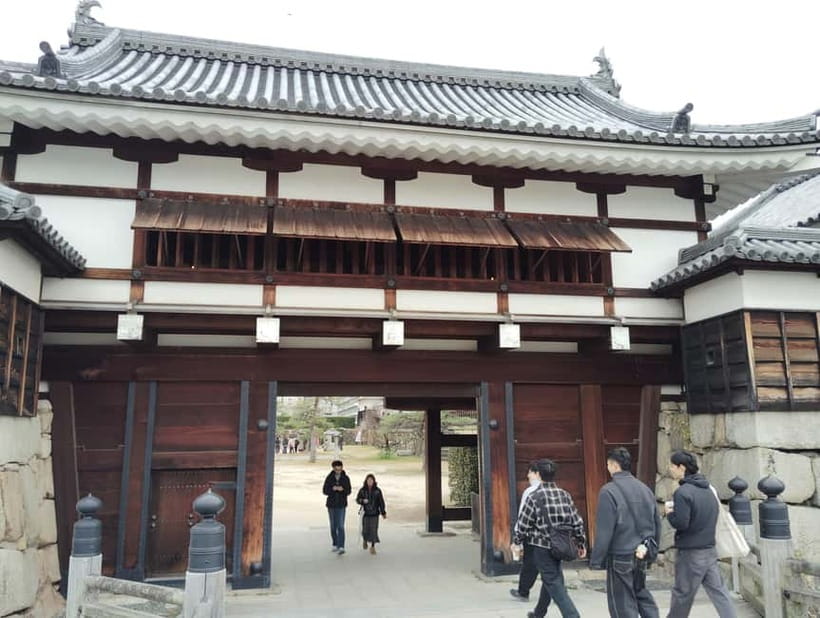
The castle’s board-walled keep is the visual heart of the visit. Its size and design help explain why Hiroshima Castle remained such an important city symbol for centuries. The dark wooden exterior has a quiet, traditional look, and it is easy to understand why the building is a favorite photo subject.
The present keep is not the original structure. The atomic bombing in 1945 destroyed the castle’s former beauty, along with much of the historic city around it. The current tower was reconstructed using documents recorded before the bombing.
That point deserves attention. A reconstruction can never replace the original building, but here it gives you a physical way to consider what Hiroshima looked like before the war. The tower is not simply an old castle that survived unchanged. It is a postwar rebuilding based on historical evidence, and that distinction is part of the story.
Your first stop is essentially a photo stop, but it should not be treated as a quick backdrop. Look at the board walls, the scale of the keep, and the way the castle sits inside a modern city. The guide can help explain what is original, what was lost, and how the castle came to represent Hiroshima again.
Inside the tower: Mori, Edo life, and old Hiroshima
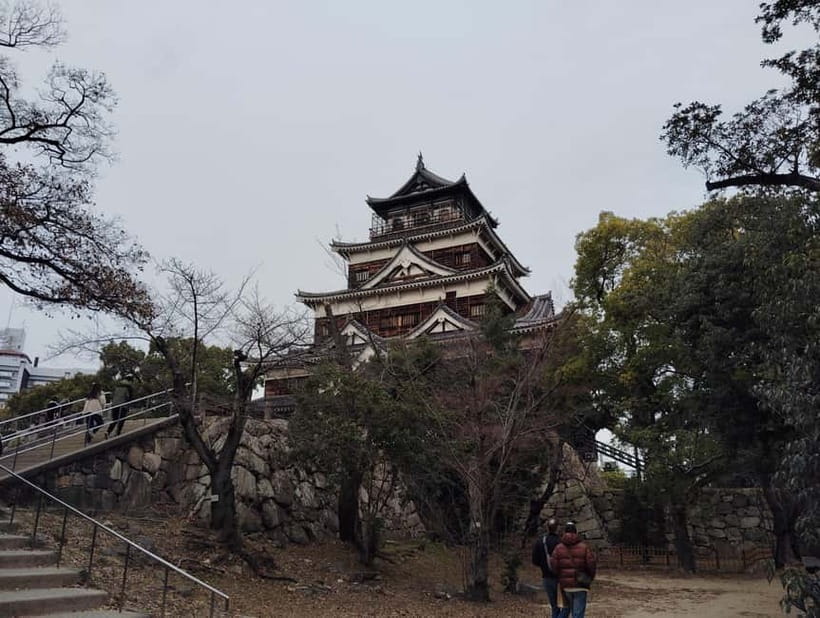
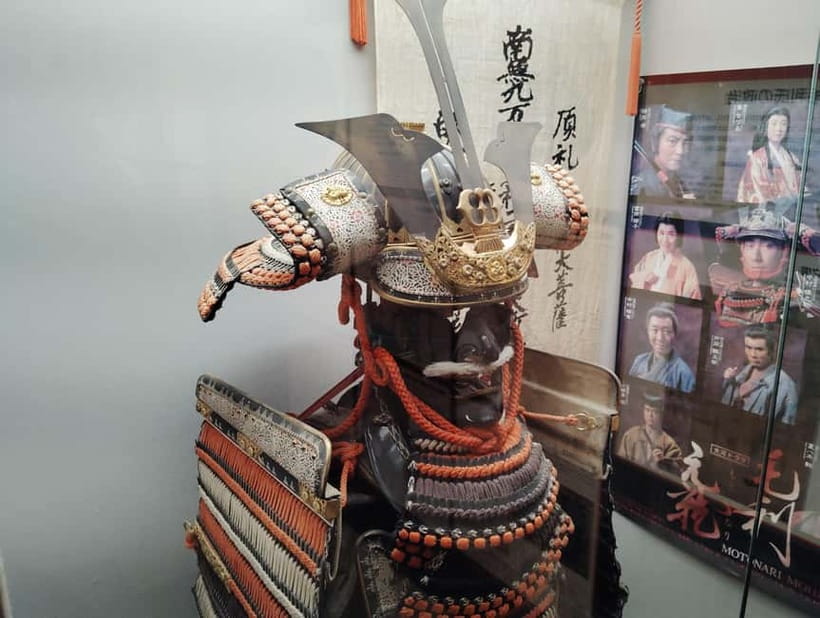
Inside the keep, the exhibits focus on three main subjects: the Mori clan, life during the Edo period, and the former streets of Hiroshima.
The Mori material explains the political background of the castle. Hiroshima Castle was built by Mori, the local lord, and its design was influenced by the residence of the man who unified Japan. That connection places the castle within the wider story of Japan’s feudal rulers and their display of power.
The Edo-period exhibits bring the story closer to daily life. Rather than focusing only on lords and battles, they help you consider how people lived in the castle town, how society was organized, and how Hiroshima developed around its central stronghold.
The displays about old Hiroshima are valuable because they connect the castle to the city beyond its walls. You are not only learning about one building. You are seeing how streets and urban life were arranged before the modern city took shape.
This is where the guide can make the greatest difference. A local explanation can point out why a particular object matters, explain terms that may be unfamiliar, and connect the displays to Hiroshima’s wider past. Masae was praised for explaining things clearly and helping visitors enjoy the castle more than they would alone. Hina was also praised for her kind explanations and hospitality.
Still, do not assume every booking will produce the same result. One critical account described a guide who mainly walked with the group, offered little explanation, had limited English, and left visitors to listen to exhibit audio on their own. Another account described a rushed visit and unwanted promotion of additional tours. Those complaints are serious because the guide is the main reason to pay far more than the standard entrance fee.
More Castle Tours in Japan:
- Osaka Castle: Museum and Tower Entry Ticket
★ 4.5 · 2,380 reviews - Tokyo Castle & Imperial PalaceーShogun Walking Tour
★ 4.7 · 1,068 reviews - Kyoto: Nijo-jo Castle and Ninomaru Palace Guided Tour
★ 4.7 · 1,020 reviews - Ultimate Osaka Walking Tour: Castle, Dotonbori & Hidden Gems
★ 5.0 · 862 reviews
The view from the top of Hiroshima Castle
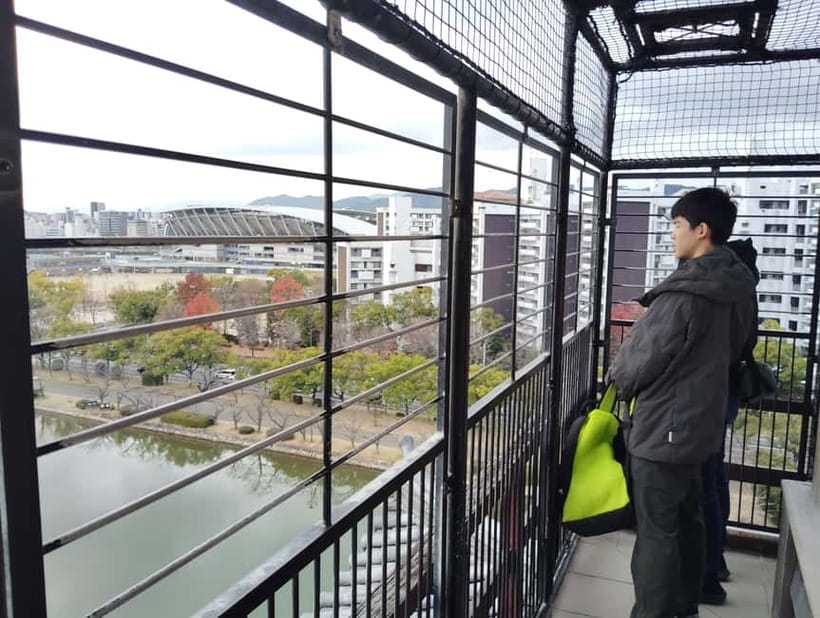
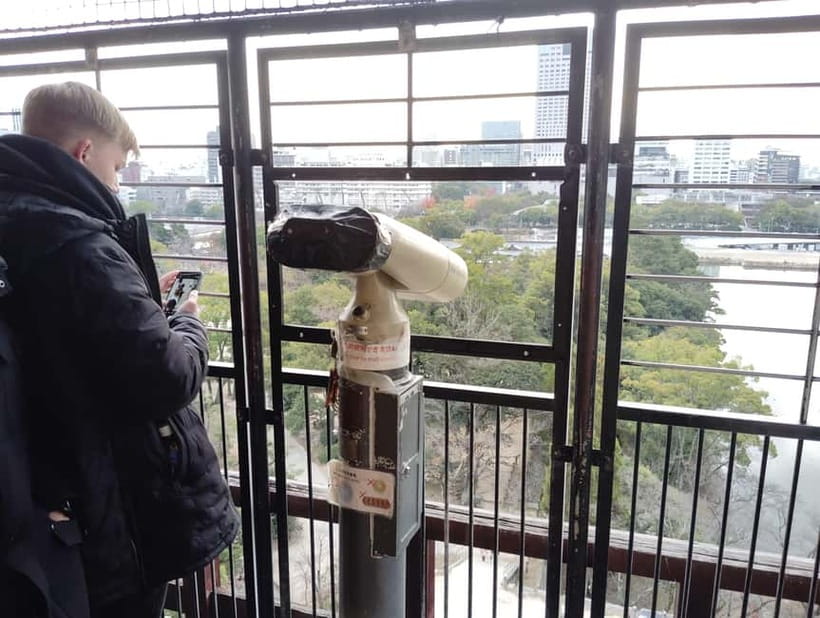
The tour includes access to the top of the castle tower, where you can look across Hiroshima. The view is a simple but worthwhile payoff after the indoor exhibits.
From above, the castle’s location in the center of the city becomes clear. You can appreciate the contrast between the traditional keep and the modern streets around it. The view also helps you understand why a castle built centuries ago mattered so much: it was not an isolated monument, but the focal point of a city.
The information provided does not promise a particular landmark or a specific direction from the viewing level, so keep your expectations sensible. You are paying for a city view from the castle tower, not a dedicated sightseeing platform with a long list of named sights.
I would bring your camera, as recommended, but I would also give the view a few quiet minutes. After hearing about the prewar castle and its destruction, looking across present-day Hiroshima gives the visit a strong final note.
How the one-hour schedule works
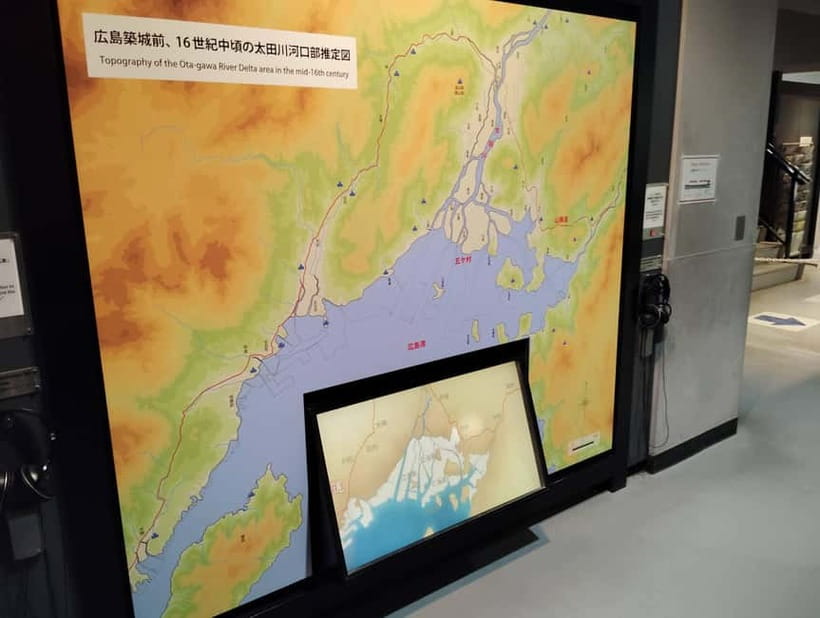
The advertised duration is one hour, beginning and ending at Hiroshima Castle. That makes it easy to fit before or after another central Hiroshima visit.
A likely flow is:
- Meet at the main keep
- Walk around the castle and stop for photographs
- Enter the tower and view the exhibits
- Hear explanations about the Mori clan, Edo life, and old Hiroshima
- Go to the top for the city view
- Finish back at the castle
The compact schedule is a strength if you have limited time. You can add the castle without giving up most of a morning or afternoon. It also works well for visitors who prefer a focused visit instead of a long historical tour.
There is one timing warning. One booking was reported to have lasted about two and a half hours instead of the advertised one hour. That may suit you if you enjoy a slow visit, but it can cause trouble if you have a train, meal, or another timed activity afterward. Ask your guide at the start how long the visit is expected to take.
The range of reported experiences suggests that the pace may depend heavily on the guide. Some visitors found the explanation detailed and helpful. Others felt rushed or received almost no active explanation. If the history matters to you, tell the guide at the beginning that you want context for the exhibits rather than only a walk through the building.
Is $52 per person good value?
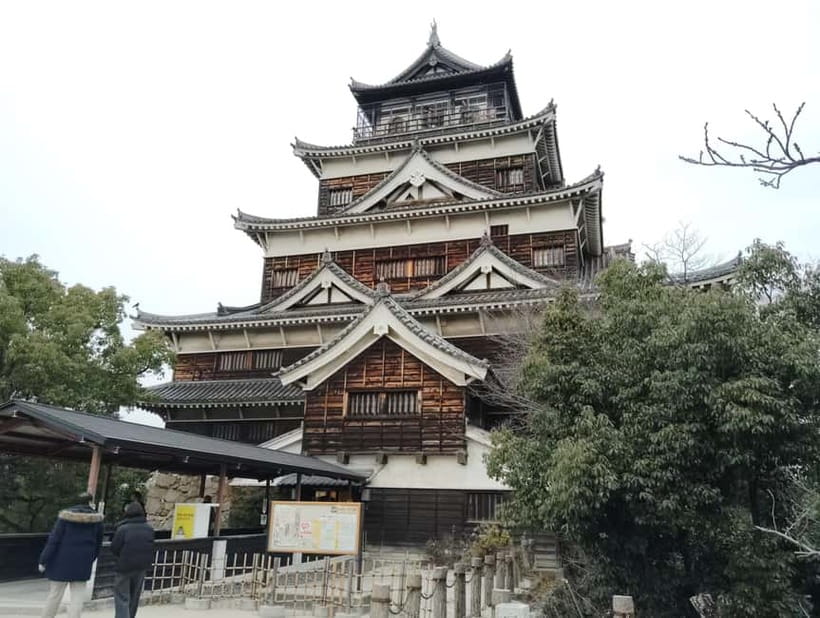
The price is $52 per person, including admission, the guide, access to the exhibits, and the view from the tower.
The admission itself is inexpensive. One critical booking specifically compared the $52 tour price with an entrance ticket of less than $3. That comparison is fair and important. You are not paying for an expensive attraction ticket. You are paying mainly for the time, language help, private format, and historical interpretation.
That can be good value if you want a personal introduction to Hiroshima’s prewar history and do not enjoy studying museum panels on your own. A strong guide can explain why the Mori clan matters, show how the exhibits connect to the city, and help you see the reconstructed keep as more than a photo stop.
It is poor value if the guide simply accompanies you while you read or listen to the exhibits yourself. The two low ratings make that risk clear. Since the tour costs many times the basic entrance fee, the explanation must be active and useful for the price to make sense.
The best approach is to book this only if guided interpretation matters to you. If you are happy exploring independently, the castle admission gives you the building, exhibits, and tower view for far less. If you want a private English-language visit and can secure a strong guide such as Masae, the extra cost may be justified.
Who should book this castle tour?
I would recommend it most strongly to first-time visitors who want historical context but have only an hour. The private format also suits couples, families, or small groups who prefer to ask questions at their own pace.
It is a good match for you if:
- You want to understand Hiroshima before 1945, not only its wartime history.
- You prefer an English-speaking guide to reading displays alone.
- You value a private group setting.
- You want a short cultural activity in the center of Hiroshima.
- You enjoy architecture, castle towns, and Edo-period history.
- You want a guide to connect the castle with the wider city.
I would be more cautious if you are mainly looking for the cheapest way to see the castle. The regular admission is much lower than the tour price. I would also be cautious if you have a tight schedule, since one visit lasted much longer than planned.
The mixed guide reports mean that you should treat the guide as the deciding factor. Masae received strong praise for clear and professional explanations, and Hina was praised for kindness and hospitality. At the same time, two accounts described weak English, limited historical knowledge, little active guiding, and an unwanted attempt to sell more tours. That gap is too wide to ignore.
Booking details worth knowing
You can cancel up to 24 hours before the activity for a full refund, and you can reserve now and pay later. Those terms help if your Hiroshima plans are still shifting.
The tour is available in English or Japanese. Confirm your preferred language when you book, and make sure the person making the reservation understands that you want a guided explanation of the exhibits.
The guide waits with a yellow DeepExperience sign in front of the main keep. Bring water and a camera, and allow a little extra time to find the meeting point. If you have a later reservation, ask about the expected finish time before the tour gets underway.
Should you book Hiroshima Castle 1h guide tour?
Book it if you want a focused, private history lesson and are willing to pay for the guide rather than the admission ticket. The reconstructed keep, Mori clan exhibits, Edo-period material, and view from the top make a well-shaped one-hour visit.
Skip it if you only want to see the castle building or take photographs. You can enter for much less and explore independently. The tour becomes worthwhile only when the guide gives the active, clear explanation promised by the format.
If you book, request a guide who can explain the exhibits in your chosen language, ask how long the visit will take, and make your interest in castle history clear at the start. With a strong guide, Hiroshima Castle adds an important older chapter to your understanding of the city. Without one, the $52 price is difficult to defend.
FAQ
How long does the Hiroshima Castle guide tour last?
The advertised duration is one hour. One booking was reported to last about two and a half hours, so ask the guide at the beginning if you need to keep to a firm schedule.
Where do I meet the guide?
Meet in front of the main keep, or Tenshu, of Hiroshima Castle. The guide will be waiting with a yellow DeepExperience sign panel.
Is admission to Hiroshima Castle included?
Yes. The tour price includes admission to Hiroshima Castle, access to the exhibits, the guide’s explanations, and the view from the top of the castle tower.
What languages are available?
The tour is offered with a live guide in English or Japanese.
Is this a private group tour?
Yes. The activity is described as a private group experience.
Can I cancel the booking?
You can cancel up to 24 hours in advance for a full refund. You can also reserve now and pay later.
Newly walked in Japan
- Tokyo: Edo Castle and Imperial Palace Guided Walking Tour★ 5.0 · 6 reviews
- (Ticket Included) Explore Osaka Castle & Museum of History★ 4.8 · 21 reviews
- Peace Memorial Park, Hiroshima Castle, & Garden Private Tour★ 4.8 · 7 reviews
- Osaka: Osaka Castle – Tsuruhashi – Tennoji (Spanish Guide)★ 4.7 · 10 reviews
- Osaka/kyoto: Himeji Castle, Kobe. Luxury Day Trip with Guide★ 5.0 · 2 reviews
- Osaka: Osaka Castle 3 hours Historical Walking Tour★ 4.6 · 14 reviews
- Osaka: Early Morning Osaka Castle Guided Tour, Avoid Crowds★ 4.9 · 12 reviews
- Osaka: Explore Every Bit of Osaka Castle in 3 Hours★ 5.0 · 5 reviews
1-Hour Experiences, compared.

Loch Ness 1-Hour Cruise with Urquhart Castle Views
Read our review →
1-Hour Castle Tour With Fast-GET Admission Ticket
Read our review →
Alcázar de los Reyes Cristianos 1-Hour Guided Tour
Read our review →
3-hour City Tour with Castle Walk + 1-hour Cruise
Read our review →
Prague Castle: 1-Hour Introduction Tour with Entry Ticket
Read our review →
Château Olivier: One Hour Vineyard Tour with Wine Tasting
Read our review →Browse the lists this tour appears in