
Review · ROME
City walk through Spanish steps, Trevi fountain, Pantheon, Navona, Angel Castle
Rome reveals itself best on foot, and this route strings together a fine set of central sights without trying to cover the entire city. In three hours, you move from the Spanish Steps to the Trevi Fountain, Pantheon, and Piazza Navona, then finish beside the Tiber at Castel Sant’Angelo. The real value is the connection between places, not just the places themselves.
I like the private format, which gives your group a relaxed pace and room for questions. I also like the bridge between famous monuments and smaller details, including Caravaggio paintings in the Church of St. Louis of the French. The main consideration is the price: $524.97 for up to three people is much easier to justify for a full group than for one or two people.
Key points at a glance
- Three hours on foot: A compact route covers eight major stops without requiring museum transfers or a bus.
- Private for up to three people: Your party receives the guide’s attention rather than following a large group.
- Strong art and architecture mix: See Baroque fountains, ancient Roman construction, political Rome, Caravaggio, and a papal fortress.
- Chris and Gigi are named guides: Expect clear explanations of Rome’s figures, buildings, and changing role through the centuries.
- Morning or afternoon departure: You can fit the walk around meals, museum visits, or a travel day.
- Ends outside Castel Sant’Angelo: You see the castle from the exterior, but entry inside is not part of the walk.
Why this route works for a first look at Rome
This is a useful orientation walk because the sights are close enough to connect on foot, yet different enough to show several sides of Rome. You begin in the elegant heart of the city, pass through its political center, step into ancient Roman architecture, then finish at a fortress beside the river.
The route also has a good rhythm. The Spanish Steps and Trevi Fountain give you grand urban scenes. The Pantheon changes the mood with its enclosed ancient space. St. Louis of the French adds a focused art stop, while Piazza Navona opens back into a large public square.
You should expect a guided walk rather than a series of formal museum visits. Most stops are viewed in public spaces, and the guide provides the background that helps you understand what you are seeing. The Pantheon and the Church of St. Louis of the French are the main indoor-style moments listed along the way.
The walk is offered in English and lasts about three hours. Since it is private, the pace can feel less hurried than a large group tour. Still, this is a walking experience, so comfortable shoes matter. The total route includes several different areas and ends some distance from the starting point.
More Castle Walking Tours in Italy:
- Edinburgh Castle: Guided Walking Tour with Entry Ticket
★ 4.7 · 11,699 reviews - Prague: 3-Hour Walking Tour of Old Town & Prague Castle
★ 4.7 · 5,696 reviews - Edinburgh Castle: Guided Walking Tour with Entry Ticket
★ 5.0 · 5,540 reviews
Starting at the Spanish Steps and Piazza di Spagna
The meeting point is Babington’s tea room at Piazza di Spagna, 23. This puts you directly beside the Spanish Steps, a fitting place to begin a tour about Rome’s architecture and public life.
The first 30 minutes focus on the steps, the square, and the nearby area. Your guide can help you read the setting as more than a famous photo stop: this is a formal urban space shaped by design, movement, and the way people gather around it.
The Spanish Steps are also a practical first stop because you get your bearings quickly. The area is central and easy to connect with the rest of the walk. You may find the square busy, particularly at popular times, so stay close to your guide and listen carefully during the explanation.
This stop is free, as are the other listed stops. The absence of an admission charge keeps the experience focused on the guide’s interpretation rather than ticket handling.
Trevi Fountain and the art of a public spectacle
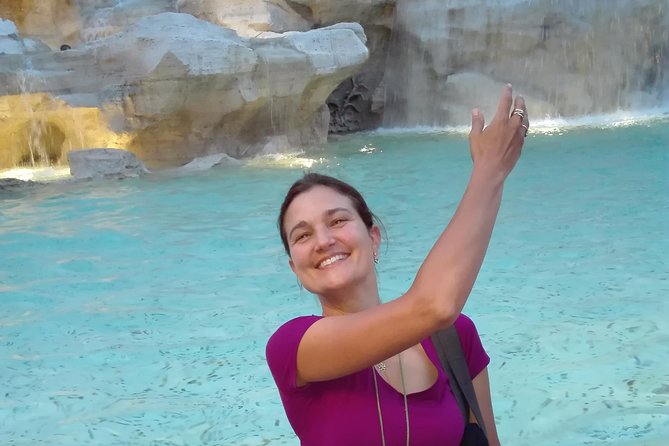
From the Spanish Steps, the route continues to the Fontana di Trevi for about 25 minutes. The guide covers the fountain’s history and architecture, giving you a way to look beyond the water, stone, and crowds.
Trevi is one of those places where a guide can add real value. Without context, you may see a grand fountain and move on. With an explanation of its design and place in Rome, you get a clearer sense of how the city used public monuments to create drama in everyday streets.
You will want time for photographs here, but keep your expectations sensible. The fountain is a major Rome sight, so the stop is not designed as a quiet private viewing. The benefit of having a guide is that you can learn while the area around you is active.
The 25-minute stop is long enough for a clear explanation and a look at the details, but not so long that the tour gets stuck at one monument. That balance matters on a route with seven more stops ahead.
Piazza Colonna and modern political Rome
Piazza Colonna receives about 20 minutes, with attention to its past and its role as a modern political center. This is a useful change of focus after the decorative power of Trevi.
The square helps show that Rome is not only an open-air museum. Its historic spaces still relate to government and public life. A good guide can connect the older architecture with the city’s present-day function, giving you a more complete picture of Rome.
This stop may appeal most to you if you enjoy context. It is not presented as a major ticketed attraction, and the value comes from the explanation. The guide’s ability to clarify important figures and events matters here, which is one reason the experience is more useful with a private guide than with a simple self-guided route.
Chris and Gigi are among the guides associated with this experience. The strongest praise attached to the guiding style centers on clear explanations of Rome’s figures and the meaning behind what you see. That is especially helpful at a stop like Piazza Colonna, where the story may not be obvious from the architecture alone.
More Castle Tours in Italy:
- Milan: Sforza Castle Entry Ticket with Digital Audio Guide
★ 4.0 · 2,675 reviews - Milan: Sforza Castle and Michelangelo’s Pietà Rondanini Tour
★ 4.7 · 1,119 reviews - From Siena: Chianti and Castles Tour with Wine Tastings
★ 4.6 · 631 reviews - Milan: The Last Supper & Sforza Castle Guided Tour
★ 4.6 · 610 reviews
Inside and outside the Pantheon
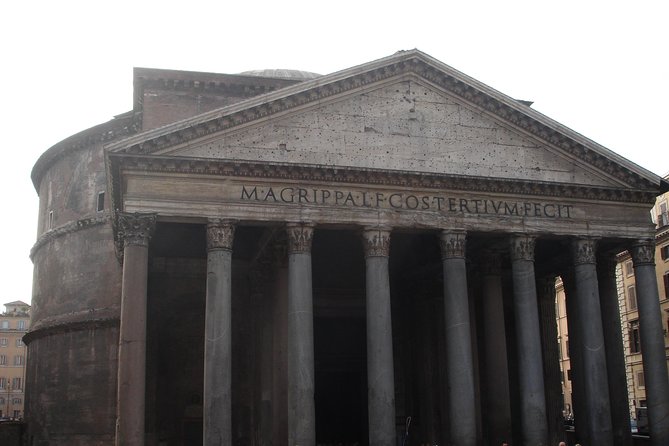
The Pantheon gets around 30 minutes, making it the longest single stop on the route. The guide discusses its architecture and tells you about the building both outside and inside.
This is the architectural center of the walk. The Pantheon brings ancient Roman engineering into direct view, and its interior gives you a very different experience from the open squares earlier in the route. You can compare the building’s exterior effect with the feeling of standing inside it.
The stop is listed with no admission ticket included, and the experience does not promise a separate extended visit. You should think of it as a guided look at the building rather than a full museum session. If the interior is busy or access conditions change, the guide’s explanation remains an important part of the stop.
Thirty minutes is a sensible amount of time for a first visit. You get the structure’s main ideas without losing too much of the afternoon to a single monument. If the Pantheon is a major personal priority, you may want to return on your own for more time after the walking tour.
Caravaggio at the Church of St. Louis of the French
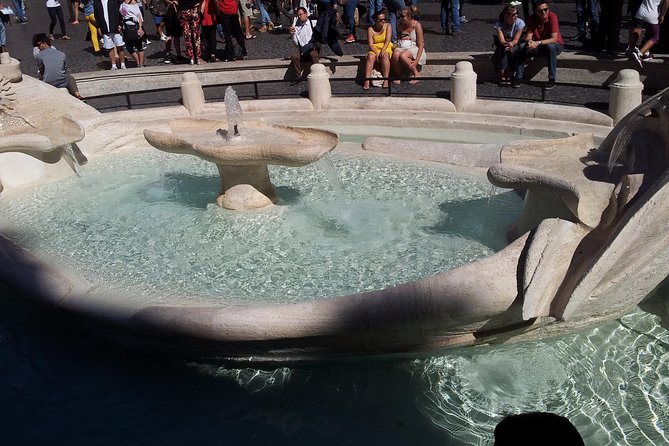
The Church of St. Louis of the French receives about 20 minutes, with particular attention to the Chapel of Saint Matthew and its Caravaggio paintings. This is one of the most appealing details of the route because it adds serious art to a walk otherwise centered on streets, squares, and monuments.
The stop is brief, but the focus is specific. Rather than treating the church as a quick architectural pause, the guide can direct your attention to the paintings and explain why they matter. That makes the visit easier to appreciate, especially if you do not already know the work.
This is also a reminder that Rome’s major art is not confined to formal galleries. A church can hold an important artistic experience, and you can encounter it as part of an ordinary walk through the city center.
Because the stop depends on access to a functioning church, keep in mind that conditions may affect what you can see. The supplied tour details identify the paintings and chapel, but they do not promise a private viewing or extended time inside.
Piazza Navona, from stadium to Baroque square
Piazza Navona receives about 25 minutes and brings together several layers of Rome. The guide explains the central fountain and traces the square’s change from an ancient stadium to a Baroque public space.
This is one of the strongest history stops because the shape of the modern piazza reflects an older use of the site. You are not simply looking at a fountain in a large square. You are seeing how Rome built new public life over an earlier foundation.
The central fountain provides the visual focus, while the surrounding space helps you understand the scale of the former stadium. A guide can make that transition easier to picture, particularly when the present-day square gives few immediate clues about its earlier form.
The 25-minute visit gives you time to take in the square and hear its main story. It is not enough for a long café break or a leisurely meal, so save those for after the walk. The route still has the Tiber and Castel Sant’Angelo ahead.
The Tiber and Rome’s working river
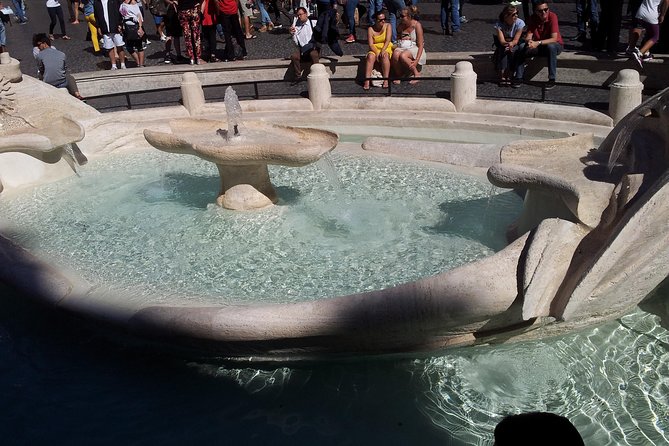
The Fiume Tevere stop lasts about 10 minutes. The focus is river life in the city and the bridges that cross it.
After several monumental squares, this short pause changes the scale of the tour. You get a look at Rome’s movement along the water and the role of its bridges in linking neighborhoods. It is a brief stop, but it helps the walk feel like a journey through the city rather than a checklist of famous buildings.
Ten minutes will not allow for a long riverside exploration. Instead, treat it as a connecting point between central Rome and the final castle. The guide’s explanation is particularly useful because the river may otherwise seem like scenery between larger attractions.
Finishing at Castel Sant’Angelo
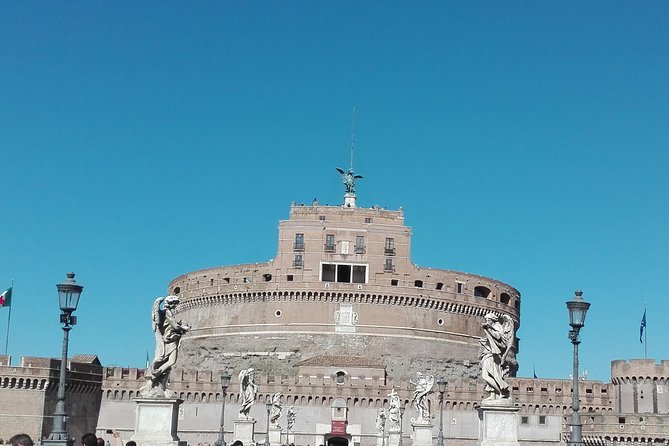
The tour ends in front of Saint Angel Castle, officially the Museo Nazionale di Castel Sant’Angelo, after about 20 minutes devoted to its history through the centuries from the outside.
The exterior is an effective final stop. By this point, you have seen ancient construction, religious art, public squares, and political Rome. Castel Sant’Angelo adds military and papal history to the picture, giving the route a strong closing image beside the Tiber.
It is important to understand the boundary here: this experience views Castel Sant’Angelo from the outside. Entry into the museum is not included. That can be a benefit if you have another appointment or simply want a guided introduction before deciding if you want to return, but it may disappoint you if exploring the castle interior is your main goal.
The end point is Piazza Pia, in front of the castle. That makes the walk useful for continuing your day in this part of Rome, although no onward transportation or additional activity is included.
What the private format is worth
The price is $524.97 per group of up to three people. For a full group, that works out to about $175 per person. For two people, it is about $262.49 each, and for one person the cost is the full group rate.
That makes this a premium walking tour. You are paying for a private English-speaking guide, a flexible pace, and a route that brings together many headline sights in a short period. You are not paying for a meal, transport, or a long museum admission package.
I think the value is strongest for three people who want one organized introduction to central Rome. It is also easier to justify if you prefer asking questions, want the guide to adjust the pace, or dislike being placed in a large group.
For one person, the price is harder to defend unless a private format is especially important to you. If you mainly need directions between the Spanish Steps and Castel Sant’Angelo, a self-guided walk will cost far less. The private tour earns its price through explanation and convenience, not through included tickets.
Timing, meeting point, and practical planning
You can choose a morning or afternoon departure. A morning walk may suit you if you want to see the central sights before other plans. An afternoon departure can work well if you have a free block after an early visit elsewhere.
The advertised duration is approximately three hours, and the stop times add up to that amount. Allow a little flexibility around the schedule because city walking can be affected by crowds, access to churches, and the pace of your own group.
You receive a mobile ticket, and the tour is offered in English. The meeting point is Babington’s tea room at Piazza di Spagna. The end point is in front of Castel Sant’Angelo, so plan your day around finishing there rather than returning to the Spanish Steps.
The activity is private, and only your group participates. Service animals are allowed, the route is near public transportation, and most people can take part. The information provided does not describe the walking distance, number of stairs, or seating opportunities, so ask the provider if those details matter for your group.
Tips are not included. Free cancellation is available up to 24 hours before the local start time for a full refund. Changes or cancellations made less than 24 hours before the start are not accepted for a refund.
Who will enjoy this walk most
I would choose this tour for a first or second visit when you want Rome’s central sights explained in one connected outing. It suits couples, families, or a small group of friends who can share the private price.
It is also a good choice if you care about the story behind the monuments. The route includes more than the biggest photo stops, with political Rome at Piazza Colonna, Caravaggio at St. Louis of the French, the Tiber’s bridges, and the transformation of Piazza Navona.
You may want another plan if you prefer lengthy time inside museums or churches. The Pantheon and St. Louis of the French receive focused visits, but this is still a moving city walk. Castel Sant’Angelo is seen only from the outside.
Should you book this Rome walking tour?
Book it if you want a private, English-language introduction to Rome’s central monuments and value a guide who explains meaning, people, and historical change. The route is especially strong for its variety, moving from the Spanish Steps and Trevi Fountain to Caravaggio, the Pantheon, Piazza Navona, the Tiber, and Castel Sant’Angelo.
Think twice if you are traveling alone and watching every euro, or if your top priority is entering Castel Sant’Angelo and spending hours inside the Pantheon. For up to three people, though, the cost becomes more reasonable, and the three-hour format gives you a clear first look without taking over your whole day.
FAQ
How long does the walking tour last?
The tour lasts approximately three hours.
How many people can join the private tour?
The price covers one private group of up to three people.
What language is the tour offered in?
The tour is offered in English.
Where does the tour begin?
It begins at Babington’s tea room, Piazza di Spagna, 23, in Rome.
Where does the tour end?
The walk ends in front of Castel Sant’Angelo, also called Saint Angel Castle, at Piazza Pia.
Is Castel Sant’Angelo visited inside?
No. The route covers the history of Castel Sant’Angelo from the outside.
Can I choose when the tour starts?
Yes. You can select a morning or afternoon tour time.
Are admission tickets and tips included?
The listed stops have no admission ticket charge included in the tour details. Tips are not included.
Newly walked in Italy
- Postojna Cave & Predjama Castle from Trieste★ 4.5 · 122 reviews
- Milan Private Tour – Duomo, Sforza Castle & Gelato Tasting★ 5.0 · 40 reviews
- Milan: Duomo, Scala, Sforza Castle and Last Supper Private Tour★ 5.0 · 38 reviews
- Private Tour – St. Angel’s Castle★ 5.0 · 42 reviews
- Milan: Private Tour – Duomo, Sforza Castle & Gelato Tasting★ 4.8 · 36 reviews
- Private 2-Hour Tour of the Medieval Castle over Lake Como★ 5.0 · 9 reviews
- Palermo: Medieval castles of Caccamo & Cefalù. Small Group Tour★ 5.0 · 24 reviews
- Private daytour medieval castles from Civitavecchia port★ 4.5 · 7 reviews
Castle Walking Tours, compared.

Edinburgh Castle: Guided Walking Tour with Entry Ticket
Read our review →
3-Hour Walking Tour of Old Town & Prague Castle
Read our review →Edinburgh Castle: Guided Walking Tour with Entry Ticket
Read our review →

Prague 3-hour Afternoon Walking Tour including Prague Castle
Read our review →
Royal Mile and Edinburgh Castle – Small Group Walking Tour
Read our review →

Browse the lists this tour appears in