
Review · ITALY
Bari: Norman-Swabian Castle Guided Tour
Bari’s Norman-Swabian Castle is not just a grand shell to admire from the outside. Inside, you’ll find a working museum with archaeological displays, plaster sculpture, audio-visual exhibits, and walkways over excavation areas. I especially like the way the tour connects the building’s architecture with the people who lived there, rather than treating the castle as a pile of old stones.
I also like the art-history focus and the chance to see the Gipsoteca’s 1911 plaster copies. The guide can point out details you would likely miss on your own, and guides Francesca and Fabio have been praised for clear, lively explanations. The main drawback is time: 80 minutes gives you a guided introduction, but you may want to stay longer for all the displays.
Key points at a glance
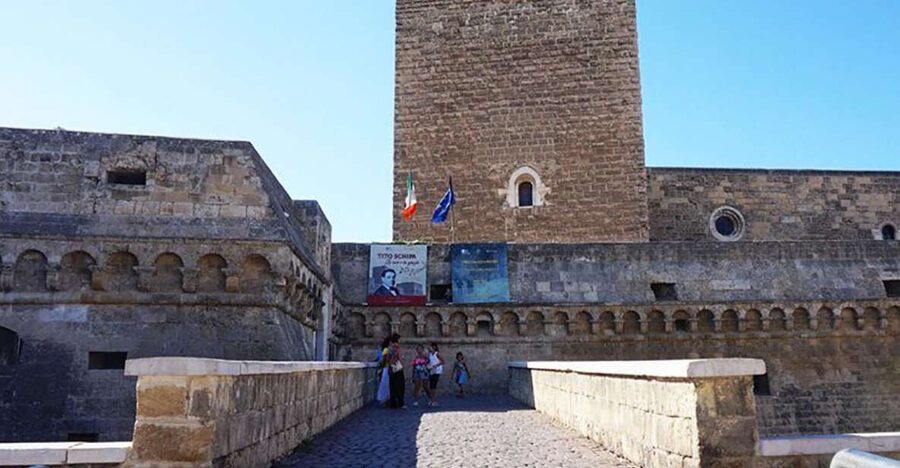
- The castle’s moat and towers: Begin with the courtyard, extensive moat, and three imposing stone towers.
- The Gipsoteca: See plaster copies of sculptures and monument carvings made in 1911 for the 50th anniversary of Italian unity.
- Archaeological finds: Examine ceramic tableware excavated from the castle’s east wing.
- Small details with character: Look for jewelry in the Minorenni Tower and stone-winged cats in the Norman Room.
- Strong guide-led format: Art-history guides such as Francesca and Fabio explain the castle’s owners, structure, and changing use.
- Flexible booking: The tour lasts 80 minutes, welcomes several languages, and allows cancellation up to 24 hours before departure.
Why Bari’s castle deserves your time
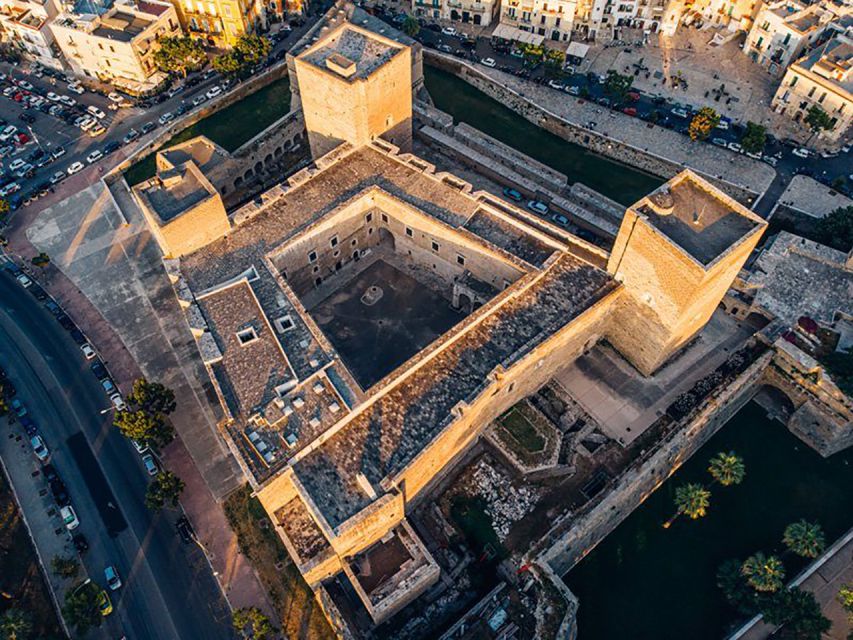
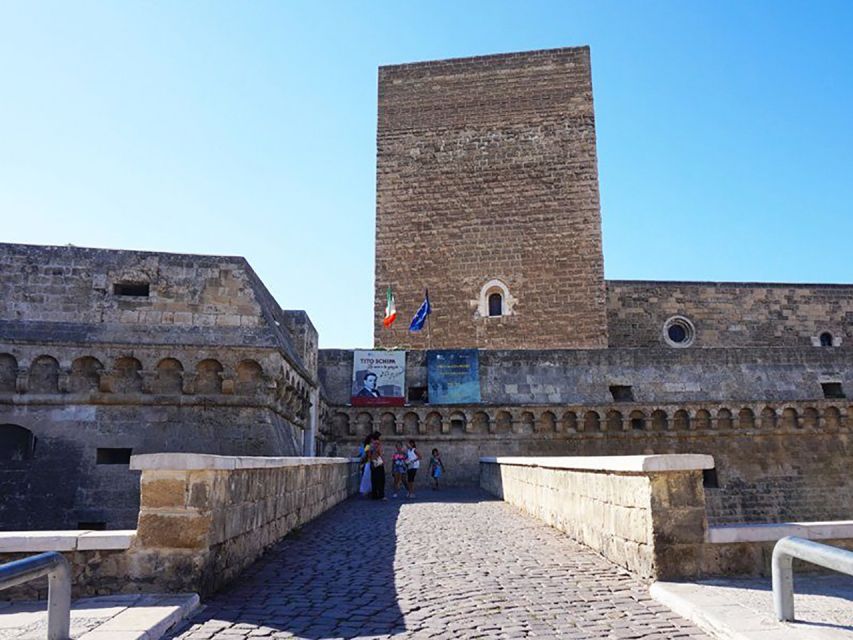
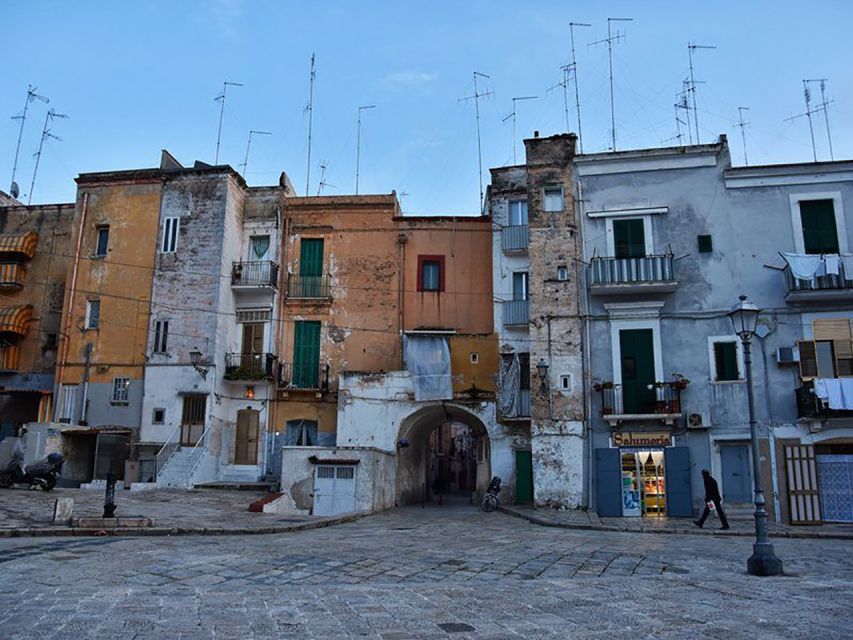
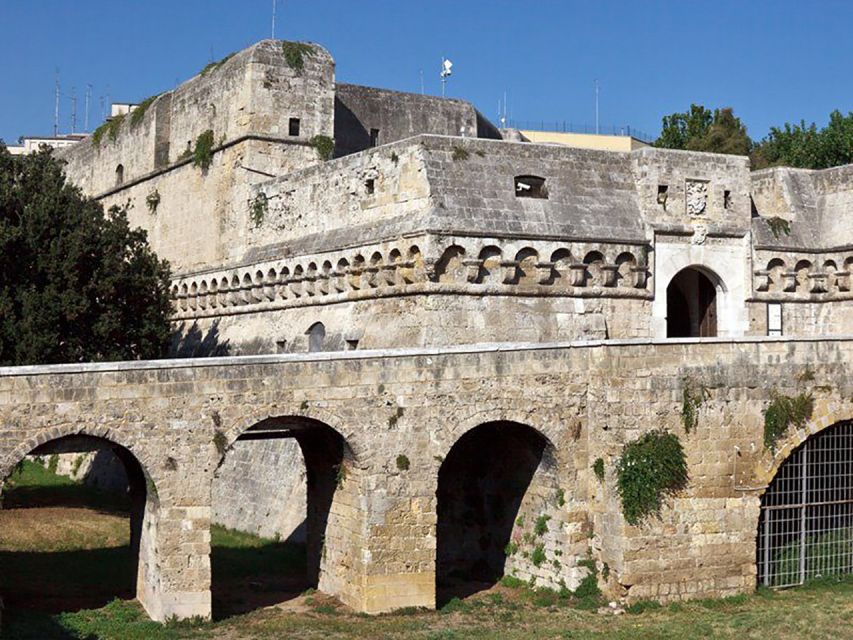
Bari’s Norman-Swabian Castle is one of the city’s most recognizable buildings, and its broad moat gives it a serious medieval presence. The experience begins at the castle entrance, where your guide waits beside the so-called high arch, clearly visible from the square.
That meeting point matters because the castle is a major landmark, but it can still be easy to approach without knowing exactly where to look. You do not need to arrange transport as part of the tour, since transport is not included. Plan to reach the square on your own and arrive ready to find the high arch.
The castle dates from the 13th century and has since been turned into a museum. That mixed identity is the point. You are not walking through a perfectly preserved royal residence with every room dressed as it once was. Instead, you are seeing a fortified building adapted for exhibitions, archaeological work, and public interpretation.
I find that useful for understanding Bari. The castle is not presented as a single frozen moment. Its structure, displays, and excavation areas show how the site has changed over time.
More Guided Castle Tours in Italy
- Milan: The Last Supper & Sforza Castle Guided Tour
★ 4.6 · 610 reviews - Milan: Last Supper and Sforza Castle Guided Tour
★ 4.6 · 498 reviews - Valpolicella: Amarone Chateau Guided Tour and Wine Tasting
★ 4.5 · 164 reviews
The courtyard, moat, and three stone towers
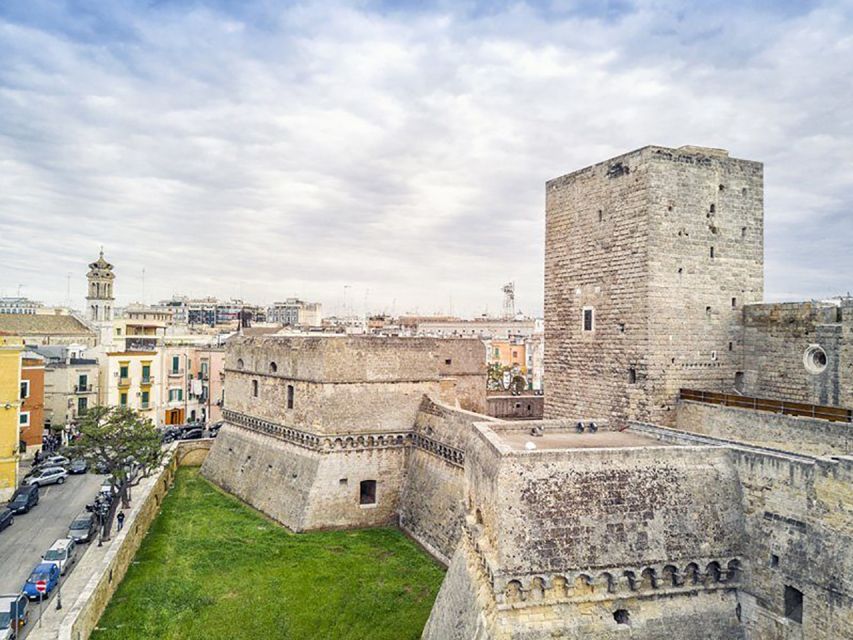
Your guide leads you into the central courtyard, a good place to get your bearings before the indoor exhibits begin. Look up at the three stone towers outside. They give the castle its weight and help explain why the building was designed as a defensive stronghold rather than a comfortable palace.
The moat is another major feature. It is one of the castle’s most noticeable details from outside, and seeing it as part of the whole structure makes the building easier to read. The guide can connect the defensive layout with later changes to the castle, including how the building was used by different owners and families.
The courtyard also gives you a chance to see the castle’s scale. An 80-minute tour cannot cover every corner at leisure, but a guide helps you spend your attention in the right places. Instead of wandering past towers and walls without context, you learn what to look for in the stonework and layout.
Wear comfortable shoes. The tour includes the courtyard, interior rooms, and archaeological walkways, so you will be moving through different surfaces and spaces. The practical advice is simple: dress for walking and bring an umbrella or rain gear if the forecast is uncertain.
Inside the Gipsoteca’s 1911 plaster sculptures
The Gipsoteca in the west wing is one of the most distinctive stops. Here you will see plaster copies of well-known sculptures and carvings from monuments. These pieces were made by Mario Sabatelli and Pasquale Duretti in 1911 to mark 50 years of Italian unity.
Plaster casts can sound less exciting than original marble or bronze, but they serve a useful purpose. They allow you to examine forms and decorative details that may otherwise be spread across different buildings or difficult to view closely. In a castle museum, they also add an art-focused layer that you would not expect from the moat and towers alone.
This is where the guide’s art background becomes especially useful. A good explanation can help you notice the shape of a carving, the purpose of a monument detail, or the reason these copies were created for the anniversary. Guides Francesca and Fabio are specifically praised for giving clear explanations without making the visit feel like a school lesson.
The Gipsoteca will appeal most to you if you enjoy sculpture, architectural detail, or Italian civic history. If your main goal is simply to see medieval rooms, this section may feel like a change of pace. I think that change is worthwhile, since it shows how the castle later became a place for art and public memory.
Ceramic tableware from the east wing
The tour also takes you to ceramic tableware excavated from the east wing. These objects are less dramatic than a tower or a moat, but they can tell you more about daily life than a grand facade can.
A plate, bowl, or serving piece helps turn the castle from a military monument into a place where people ate, worked, and lived. Your guide can put the objects into the wider story of the castle’s changing occupants and uses. That is one reason a guided visit offers more than a quick independent walk through the building.
The ceramics are also a reminder that archaeological finds are often fragmentary and practical. You are not only looking at decorative treasures. You are looking at evidence recovered from the site itself, connected to the east wing rather than brought in simply to fill a museum case.
Do not rush this section. The displays may not have the instant impact of the stone towers, but they reward a little attention. If you stay after the formal tour, you can take more time with smaller objects and revisit areas that moved quickly during the group visit.
Same walls, a different way in:
- Milan: Sforza Castle Entry Ticket with Digital Audio Guide
★ 4.0 · 2,675 reviews - Milan: Sforza Castle and Michelangelo’s Pietà Rondanini Tour
★ 4.7 · 1,119 reviews - From Siena: Chianti and Castles Tour with Wine Tastings
★ 4.6 · 631 reviews - Montalcino: Brunello Wine Tasting & Lunch in a Tuscan Castle
★ 4.6 · 324 reviews
Jewelry in the Minorenni Tower
The Minorenni Tower contains jewelry displays, adding a more personal scale to the visit. Towers usually make you think of defense and surveillance. Jewelry shifts the focus toward clothing, status, taste, and the individuals connected with the castle.
The supplied information does not specify the exact pieces or materials, so you should not expect a particular type of collection. What you can expect is a display that broadens the visit beyond architecture and military history.
This stop works well as part of the larger route. You see the castle’s outer defenses, then move into art, household objects, and personal items. Together, these sections show several sides of the building without pretending that every room has remained unchanged since the 13th century.
The Norman Room and its stone-winged cats
The Norman Room contains additional objects, including stone-winged cats. They are the sort of detail that can easily be missed if you are exploring alone, especially when your attention is fixed on the room’s larger architectural features.
I like the fact that this display includes unusual visual details rather than only formal historical material. The cats give the room a bit of personality and create an easy landmark to remember after the tour. Your guide can also explain how the objects fit into the castle’s Norman setting and later museum presentation.
Some rooms include audio and video demonstrations. These displays help bring the castle’s past into focus without relying only on written labels. They were singled out as especially atmospheric, and you should allow extra time if you want to watch everything rather than move on with the group.
Archaeological platforms and audio-visual displays
One of the tour’s practical strengths is that it does not limit you to polished exhibition rooms. Excavation platforms and walkways let you see archaeological work within the castle. These areas give the building a sense of ongoing discovery.
You may find that the platforms are more interesting than expected because they show how evidence is found and interpreted. The route is not only about viewing finished objects in cases. It also lets you see parts of the site where the ground itself holds clues.
The audio-visual demonstrations add another layer. They can explain the castle’s development or help recreate aspects of its past in a way that static labels cannot. The exact presentation may vary by room, but the experience includes several of these displays.
If you have another appointment soon after the tour, keep your schedule loose. The advertised duration is 80 minutes, but you may want to remain inside afterward. One visitor had to leave a few minutes early for another engagement and regretted missing the rest of the displays. That is useful advice: do not book this immediately before a train, meal, or timed attraction if you want to see the museum properly.
What the guide adds to the visit
The guide is the main reason to choose this experience instead of entering alone. The tour is led by a live guide in Italian, English, French, or Spanish, and the guide specializes in art history.
You can expect help with several kinds of questions:
- How the castle changed under different owners
- Why particular towers and structural features matter
- How life inside the castle may have worked
- What the objects in the museum reveal
- Why the Gipsoteca was created in 1911
- Which details deserve a closer look
Francesca receives especially strong praise for being punctual, energetic, and easy to follow. She has also been able to adjust the visit when a schedule changed. Fabio is described as precise, well-prepared, and engaging, with explanations that avoid a dry classroom tone.
Guide quality can vary from one departure to another, but the available guide feedback points to a consistent strength: explanations are not limited to names and dates. The guide draws attention to the structure, family life, ownership, and museum displays. That wider approach is valuable if you want to understand the castle rather than simply photograph it.
A private group is available if you prefer a more personal format. The standard group setup may suit most people, especially at this price, while a private option makes more sense if your party wants to ask many questions or keep a custom pace.
Is $42 a fair price?
At $42 per person, this is not the cheapest way to spend an hour in Bari, but the price includes the entry ticket and the guided tour. You are paying for access plus interpretation, not for transport, food, or a long half-day itinerary.
I think the value is strongest if you would otherwise walk through the castle quickly and miss the meaning of the displays. The guide helps tie together the moat, towers, Gipsoteca, ceramics, jewelry, Norman Room, and excavation areas. That is a lot to absorb in 80 minutes without help.
The value is less clear if you only want exterior photographs or if you prefer to read every label at your own pace. In that case, the fixed tour rhythm may feel limiting, though you can stay longer if the museum’s opening arrangements allow it. The supplied details confirm that the guided portion lasts 80 minutes, but they do not specify how long you may remain afterward, so ask on arrival if lingering is important to you.
Children under 11 enter free. That makes the tour more appealing for families, although the castle’s historical explanations and art displays may suit older children best. Wheelchair access is available, which removes a major practical concern for visitors who need an accessible route.
Who should book this castle tour?
I would choose this tour if you want a clear introduction to Bari’s most important castle and prefer a guide to explain what you are seeing. It is especially well suited to people interested in architecture, art, archaeology, and the way a historic building changes use over time.
It also works well as a first activity in Bari. After 80 minutes, you will have a better sense of the city’s medieval setting and a list of details to revisit on your own. The tour is short enough to fit into a busy day, but substantial enough to feel like more than a quick photo stop.
You may want to skip it if your schedule is extremely tight, if you dislike guided pacing, or if the Gipsoteca and museum displays do not appeal to you. The castle is not presented as a fully furnished medieval residence, and the visit includes later plaster copies and archaeological exhibits.
Book with comfortable clothes and shoes. Take rain protection if needed, meet beside the high arch in the square, and leave room after the tour if you want to watch the audio-visual displays or study the excavation areas.
Should you book the Norman-Swabian Castle tour?
Yes, if you want the castle to make sense rather than simply look impressive. The moat, three towers, Gipsoteca, ceramic finds, jewelry, stone-winged cats, and excavation platforms give you a varied visit, while the guide adds the context that ties them together.
The best reason to book is the quality of the explanation. Francesca and Fabio are praised for making the castle’s ownership, structure, and daily life understandable without turning the tour into a lecture. Just remember that 80 minutes is an introduction, not enough time for every display at a slow pace. If you can spare extra time afterward, the $42 price feels reasonable.
FAQ
How long does the Bari castle tour last?
The guided tour lasts 80 minutes.
How much does the tour cost?
The listed price is $42 per person.
What does the price include?
The price includes the entry ticket and the guided tour of the Norman-Swabian Castle of Bari.
Is transportation included?
No. Transport is not included, so you must make your own way to the meeting point.
Where is the meeting point?
Your guide waits beside the so-called high arch, which is clearly visible from the square.
Which languages are available?
The live tour guide can conduct the tour in Italian, English, French, or Spanish.
Is the castle tour wheelchair accessible?
Yes, the activity is listed as wheelchair accessible.
Are children admitted free?
Children under 11 years of age enter free.
Can I book a private group?
Yes, a private group option is available.
What should I bring?
Bring comfortable shoes, comfortable clothes, and an umbrella or rain gear if the weather may be wet.
Newly walked in Italy
- HIKING TOUR: VARENNA, Castle of VEZIO Villa MONASTERO, FIUMELATTE★ 5.0 · 48 reviews
- Castles of Puglia Day Trip from Bari★ 4.5 · 7 reviews
- Enchanted Castle of Sciacca – Museum Tickets★ 3.5 · 63 reviews
- Taormina; Taormina Castle Tour★ 3.8 · 11 reviews
- St. Angel’s Castle: 2-Hour Private Tour★ 5.0 · 9 reviews
- Milan: Skip-the-line Sforza Castle and Museums Private Tour★ 4.7 · 7 reviews
- Siena: Tour and Wine Tasting in a Tuscan Private Castle★ 4.9 · 50 reviews
- Sforza Castle & Michelangelo’s Pietà Rondanini Guided Tour★ 4.7 · 3 reviews
Guided Castle Tours, compared.

Edinburgh Castle: Guided Walking Tour with Entry Ticket
Read our review →
Cathedral, Giralda & Alcazar Entry With Guided Tour
Read our review →Edinburgh Castle: Guided Walking Tour with Entry Ticket
Read our review →
Stonehenge, Windsor Castle and Bath Full Day Guided Tour
Read our review →
Alcázar of Seville Skip-the-Line Tickets and Guided Tour
Read our review →
Dublin Book of Kells, Castle and Molly Malone Statue Guided Tour
Read our review →
Quebec City: Guided Tour of Fairmont Le Château Frontenac
Read our review →Browse the lists this tour appears in