
Review · ROME
Castel Sant’ Angelo: The most famous Fortress of Rome
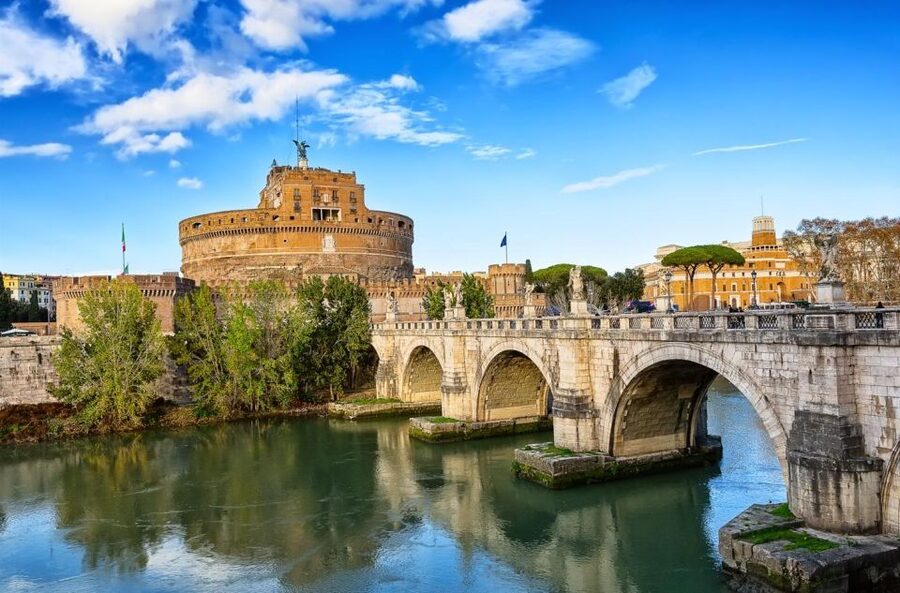
Castel Sant’Angelo is Rome’s great fortress with a past life. It began as Emperor Hadrian’s tomb, later became a papal stronghold, and still feels like a defensive building rather than a polished palace. I like the mix of imperial Rome, papal power, prison stories, and rooftop views in one visit. I also like that you can explore at your own speed instead of being tied to a live guide.
The main caution is the ticket setup. The €16 entrance price is separate from service and processing charges, and the advertised price is about $39 per person. If you choose the audio guide, check that you receive the access details for each person, bring your own phone and headphones, and download the guide on Wi-Fi before arriving.
Key points at a glance
- Hadrian’s tomb became a papal fortress: The building’s original purpose helps explain its massive form and unusual layout.
- The Angel’s Terrace gives you Rome from above: This is the visit’s main visual reward, with a celebrated view of the city.
- The Papal Rooms show the fortress at its most formal: These rooms provide a sharp contrast to the darker prison spaces.
- The Spiral Staircase is part of the story: It links the monument’s Roman beginnings with its later fortress design.
- An audio guide is optional: Choose from Spanish, French, Italian, English, German, or Chinese, but use your own smartphone and headphones.
- The ticket is nominative: Enter every participant’s full name when booking, and bring a passport or identity card.
Why Castel Sant’Angelo feels different from other Roman monuments
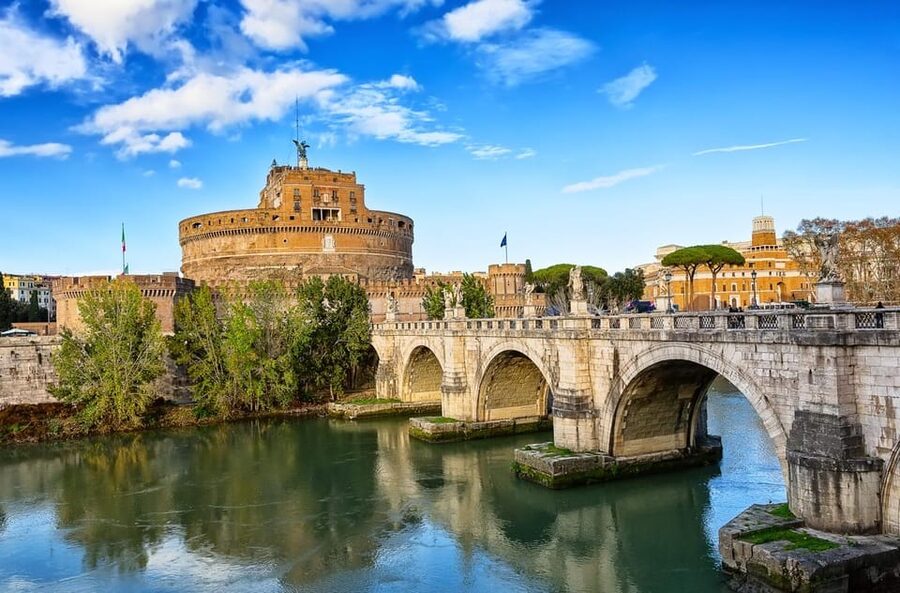
Many Roman sights ask you to picture a vanished building. Castel Sant’Angelo gives you a building that kept changing jobs. It was first created as the mausoleum of Emperor Hadrian, then adapted into a papal fortress during the early Renaissance. It also held prisoners and served as a place of execution.
That long working life is what makes the visit so interesting. You are not simply walking through decorated rooms. You are moving through a structure built for burial, altered for defense, used for government, and tied to some of the most dangerous moments in papal Rome.
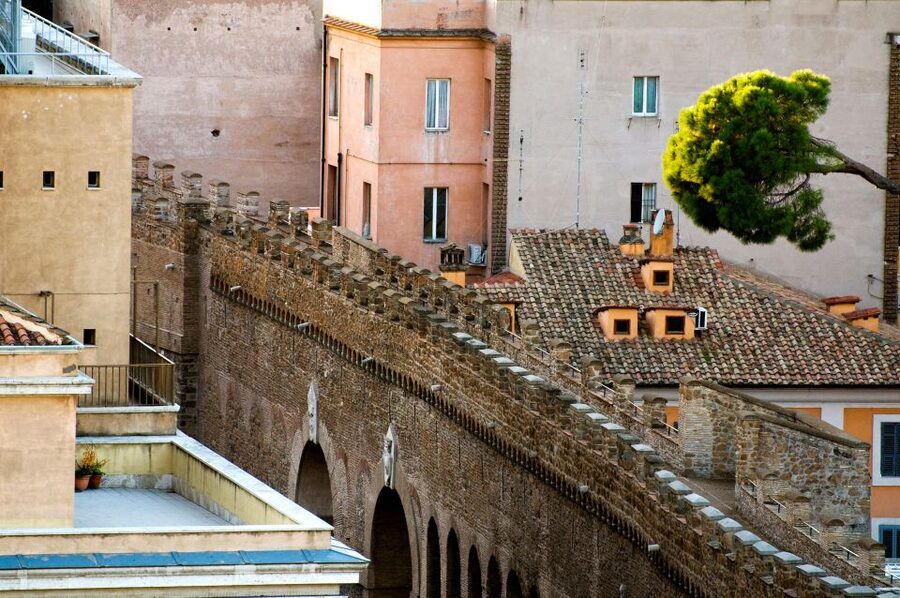
The castle was connected to the Vatican Palace by an elevated walkway. Popes could use this protected route to escape if the city became unsafe. That detail gives the fortress a practical edge. It was not only a grand monument. It was also an emergency exit with thick walls.
The prison history adds another layer. Benvenuto Cellini, the famous goldsmith, was held here, as was Cagliostro. You should not expect a separate prison museum with a full cast of characters, but knowing who spent time behind these walls makes the darker parts of the visit more meaningful.
More Fortress and Citadel Tours in Italy
- Fortress: Prisons, Museum of Fortifications and Alps Museum
★ 4.5 · 125 reviews - San Leo: Fortress Entry Ticket and Cagliostro’s Prison
★ 4.2 · 38 reviews - Bard: Fortress Exhibitions and Museums Entrance
★ 4.3 · 29 reviews
Starting your two-hour visit inside the fortress
The experience is designed to last about two hours, though your pace will shape the visit. Since you explore independently, you can spend more time in the rooms that interest you and move quickly through sections that feel less compelling.
The entrance arrangement depends on the option you book. Some options include the Castel Sant’Angelo ticket, while others may offer different forms of access or an audio guide. Read the exact selection carefully before paying. The meeting point can also vary according to the option.
Fast-track entry uses a separate entrance, which can save useful time in a city where queues quickly eat into a sightseeing day. The fast-track ticket must be booked at least one day before your visit, so this is not something to leave until the last minute.
Bring the full name of every person on the booking exactly as required. The ticket is nominative, meaning the names are needed for entry. You should also carry a passport or identity card. This is a small detail, but it can become a large problem if you arrive without the required identification.
The Roman tomb of Emperor Hadrian
The castle’s first identity was a mausoleum for Emperor Hadrian. That origin matters because the building’s heavy, rounded form was not initially planned as a military fort. It was built as an imperial tomb, a place meant to project power and preserve the memory of a ruler.
As you move through the structure, keep that beginning in mind. The later papal additions can make the building feel like a maze of rooms, corridors, stairways, and defensive spaces. The Roman purpose gives the whole complex a clear starting point.
The visit does not present the monument as a single frozen moment. Instead, you see how Rome reused an important building across centuries. That is one reason I prefer Castel Sant’Angelo to a monument that offers only one historical chapter. The structure itself is the exhibit.
The Spiral Staircase and changing levels
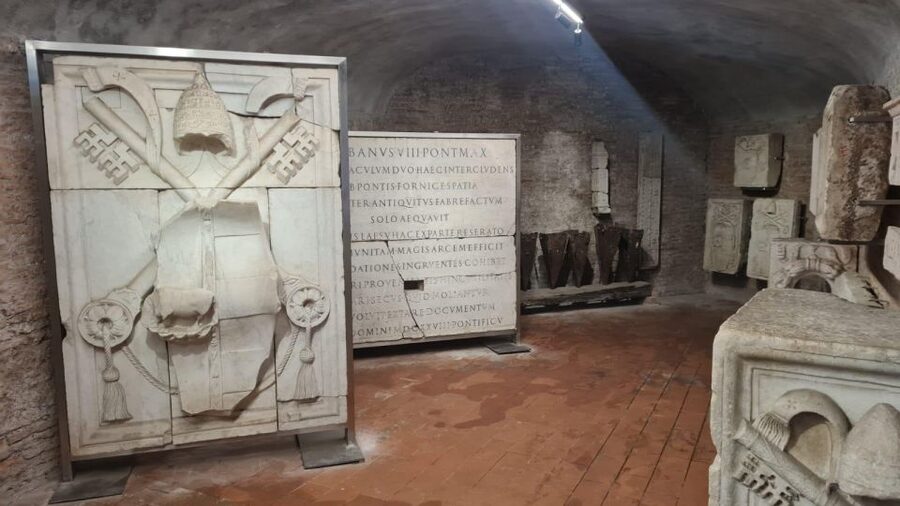
The Spiral Staircase is one of the named stops on the visit. It is both a practical route and a reminder that the castle was built in layers. You are moving through a structure whose purposes changed over time, and the stairway helps you feel that change physically.
Expect walking through an old fortress rather than a modern museum. The route includes changes in level and enclosed areas, so comfortable shoes are a sensible choice. Large bags, luggage, baby strollers, weapons, and sharp objects are not allowed. Assistance dogs are permitted, but other pets are not.
The staircase may not be the biggest visual highlight, especially compared with the terrace, but it helps connect the different sections. I would not rush through it. Pay attention to how the route shifts from monumental Roman construction toward the more controlled spaces of papal use.
Same walls, a different way in:
- Milan: Sforza Castle Entry Ticket with Digital Audio Guide
★ 4.0 · 2,675 reviews - Milan: Sforza Castle and Michelangelo’s Pietà Rondanini Tour
★ 4.7 · 1,119 reviews - From Siena: Chianti and Castles Tour with Wine Tastings
★ 4.6 · 631 reviews - Milan: The Last Supper & Sforza Castle Guided Tour
★ 4.6 · 610 reviews
The Papal Rooms and the private side of power
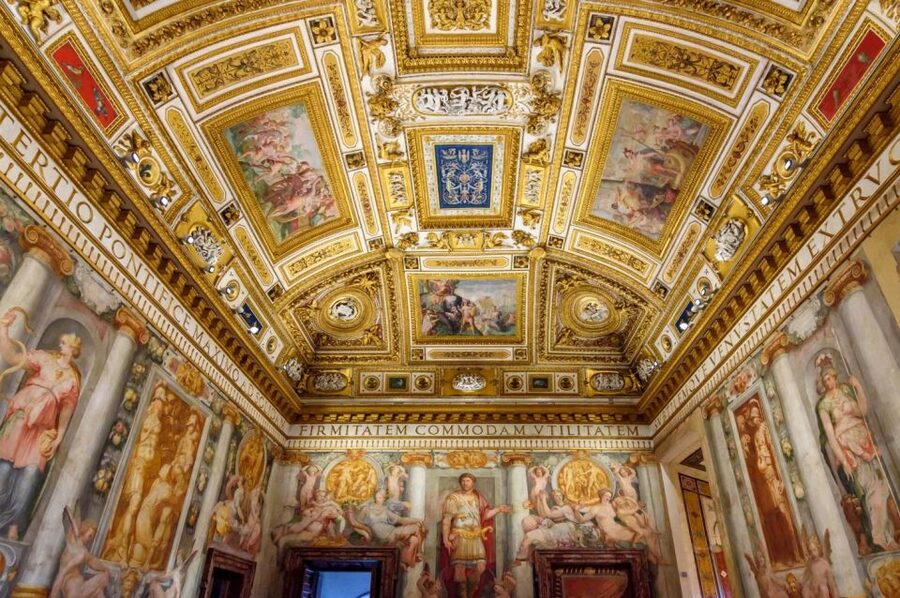
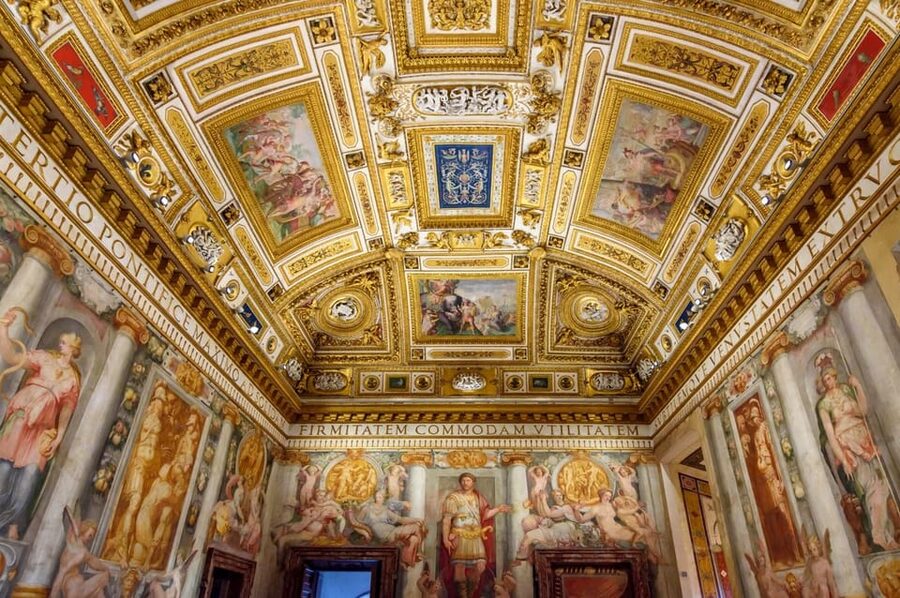
The Papal Rooms show the fortress in its more official and refined role. These spaces contrast with the prison areas and the harder military character of the outer structure.
This is where the visit becomes less about siege protection and more about the people who controlled Rome. The rooms help you picture the castle as a papal residence and refuge, not just a block of stone guarding the river.
The Papal Rooms are also useful for pacing. After the darker prison story and the enclosed routes, these interiors offer a change in mood. You can use them to notice the difference between spaces designed to display authority and spaces designed to restrict movement.
You should not expect a live guide to supply extra explanation. No live guide is included. That is a drawback if you enjoy asking questions or hearing a story shaped around your interests. It is an advantage if you prefer to pause, read, and move on without a group.
The Hall of Emperor Hadrian’s Ashes
The Hall of Emperor Hadrian’s Ashes is another key stop. Its name brings you back to the monument’s original purpose and keeps the Roman emperor at the center of the story.
This part of the route is especially useful for understanding the building before it became a papal fortress. Without that connection, Castel Sant’Angelo can seem like a collection of unrelated rooms. The hall ties the later fortress to the emperor whose tomb began the complex.
I like this kind of historical layering because you do not need a long lecture to grasp the basic sequence. Hadrian’s tomb came first. Papal use came later. The prison and execution functions formed part of the building’s darker working life.
Angel’s Terrace and the best view of the visit
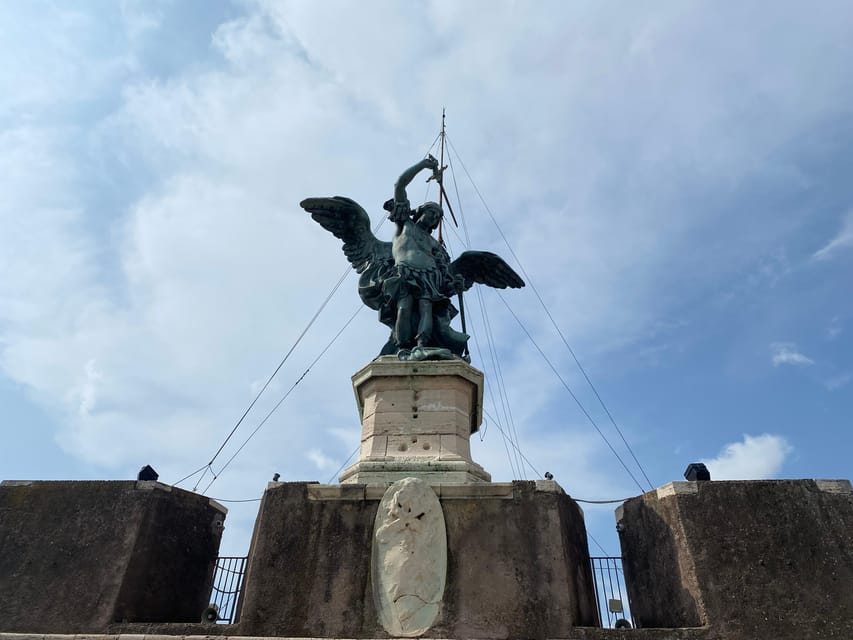
The Angel’s Terrace is the payoff. From here, you get one of Rome’s best-known fortress views, and the open air provides a welcome change after the interior passages.
Allow enough time for the terrace rather than treating it as a quick photo stop. The appeal is not only the picture. The high position helps you understand why this building mattered. A fortress needs control, sightlines, and a strong position, and the terrace makes that role easier to grasp.
The view is also a good reason to visit at a relaxed pace. You can take in Rome from above, look back at the massive building beneath you, and connect the monument’s Roman, papal, and military roles.
Weather will affect how much you enjoy this part of the visit. The provided details do not promise a particular view condition or special sunset timing, so plan the terrace as a major stop but not as a guaranteed perfect photograph. Even on a less-than-ideal day, it remains the clearest way to see the castle’s position within the city.
Choosing the audio guide option
The optional audio guide is available in English, Italian, French, Spanish, German, and Chinese. It can add useful context, especially because the route includes several different periods and functions.
You need a smartphone and headphones to use it properly. Download the audio guide before starting, while you have Wi-Fi. Once downloaded, it works without Wi-Fi, which is helpful inside a thick-walled historic building where a signal may not be reliable.
I would treat the audio guide as a convenience, not a reason to skip preparation. Make sure your phone is charged, bring headphones, and confirm that the access details are present before you leave for the entrance. There have been problems with missing QR codes and with two people receiving only one audio guide, so check the materials as soon as you receive them.
If two people are sharing one phone, you can still listen together, but that is less comfortable than having one guide per person. The price of the audio option may be worthwhile for independent sightseeing, but only if you actually receive the access needed to use it.
Is the roughly $39 price good value?
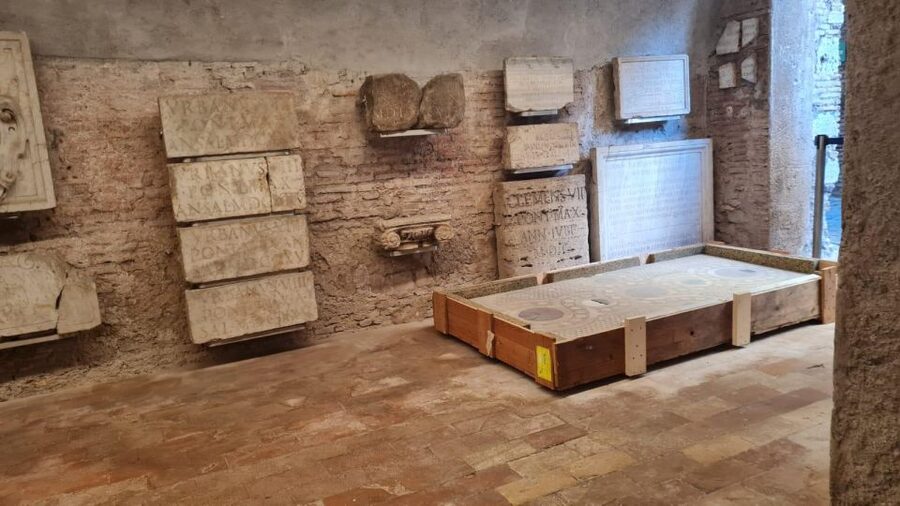
The advertised price is $39 per person, while the entrance ticket itself costs €16 per person. The difference covers service and processing charges, and possibly the added option you select. That means you are paying for more than the basic admission.
I see the value in the price if fast-track access matters to you, you want an audio guide, or you are visiting Rome on a tight schedule. Saving queue time can be useful when you have a full day planned around the Vatican and nearby sights.
The value is weaker if you only need a basic entrance ticket and are comfortable arranging it directly. In that case, the additional charges may feel high compared with the stated €16 admission cost. Read the inclusions before selecting an option, since the ticket and audio guide are not automatically included in every choice.
The flexible cancellation policy also has practical value. You can cancel up to 24 hours ahead for a full refund, and the reserve-now, pay-later option lets you hold a place without paying immediately. Those terms help if your Rome schedule is still shifting.
Who will enjoy this experience most?
I would recommend this visit to anyone interested in Rome’s changing political power. It suits people who want more than a single palace or church, since the route brings together an emperor’s tomb, papal rooms, prison history, and city views.
It also suits independent sightseers. You do not need to keep up with a guide, and you can give the terrace or the Papal Rooms as much time as you wish. The optional audio guide gives structure without requiring a live tour.
Families should check the restrictions before booking. Baby strollers are not allowed, and large bags and luggage are prohibited. The need for an identity document and a nominative booking also makes this an experience that rewards careful preparation.
You may want a different option if you need transport, a personal guide, or a fully narrated group experience. Transportation is not included, and there is no live guide. This is a self-directed fortress visit with optional recorded commentary.
Practical preparation before you go
Use the following checklist to avoid the most common snags:
- Enter every participant’s full name during booking.
- Bring a passport or identity card.
- Carry a smartphone and headphones if you select the audio guide.
- Download the audio content on Wi-Fi before arrival.
- Confirm that any QR code or access information is available before heading to the entrance.
- Leave weapons, sharp objects, large bags, luggage, baby strollers, alcohol, and drugs behind.
- Book fast-track access at least one day before the visit.
- Check the meeting point for your exact ticket option.
The activity is valid for two hours, with starting times based on availability. Because the meeting point can change by option, do not rely on a general map pin alone. Use the instructions attached to your specific booking.
Should you book Castel Sant’Angelo?
Book it if you want a self-guided visit with a strong mix of Roman, papal, prison, and military history, especially if the Angel’s Terrace is high on your Rome wish list. The fortress gives you a different view of the city from the grand churches and ancient ruins.
Choose the audio option only if you are ready to manage your own phone, headphones, and download. If you want a personal storyteller or transport, this is not the right format.
For most independent visitors, the visit offers good value when fast-track entry and flexible booking matter. Just compare the option prices carefully against the €16 entrance cost, check the names and QR details, and arrive prepared for a two-hour walk through one of Rome’s most unusual monuments.
FAQ
How long does the Castel Sant’Angelo experience last?
The experience is valid for two hours. You explore the fortress at your own pace during the available starting time.
Is a live guide included?
No. A live guide is not included. An optional audio guide may be available, depending on the option you select.
In which languages is the audio guide available?
The audio guide is available in Spanish, French, Italian, English, German, and Chinese.
What do I need to use the audio guide?
You need a smartphone and headphones. Download the guide on Wi-Fi before starting. After downloading, it works without Wi-Fi.
Do I need identification to enter?
Yes. Bring a passport or identity card. The ticket is nominative, so you must provide the full names of all participants when booking.
What is not allowed inside Castel Sant’Angelo?
Weapons, sharp objects, baby strollers, luggage, large bags, pets, alcohol, and drugs are not allowed. Assistance dogs are permitted.
Can I cancel the booking?
Yes. You can cancel up to 24 hours before the activity for a full refund. The reserve-now, pay-later option is also available for flexible planning.
Newly walked in Italy
- Postojna Cave & Predjama Castle from Trieste★ 4.5 · 122 reviews
- City walk through Spanish steps, Trevi fountain, Pantheon, Navona, Angel Castle★ 5.0 · 55 reviews
- Private Tour – St. Angel’s Castle★ 5.0 · 42 reviews
- Milan: Private Tour – Duomo, Sforza Castle & Gelato Tasting★ 4.8 · 36 reviews
- Milan Private Tour – Duomo, Sforza Castle & Gelato Tasting★ 5.0 · 40 reviews
- Milan: Duomo, Scala, Sforza Castle and Last Supper Private Tour★ 5.0 · 38 reviews
- Palermo: Medieval castles of Caccamo & Cefalù. Small Group Tour★ 5.0 · 24 reviews
- Private daytour medieval castles from Civitavecchia port★ 4.5 · 7 reviews
Fortress & Citadel Tours, compared.


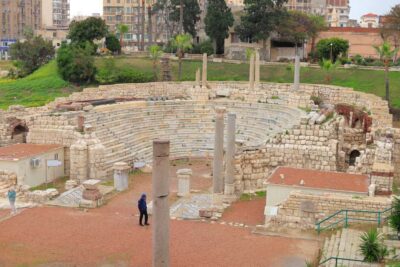
From Cairo Alexandria Catacombs, Citadel Day Trip with Lunch
Read our review →
Charleston historical walking tour with a Professor of History at The Citadel
Read our review →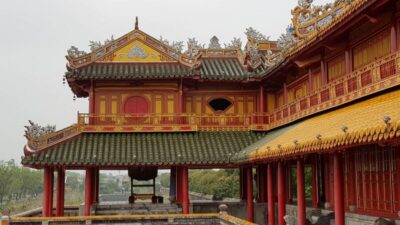
Hue Customizable Tour with Imperial Citadel & Forbidden City
Read our review →
Desert Safari: Luxury Fortress Dinner, Camel Ride & Dune Bashing
Read our review →
Egyptian Museum, Citadel, and Old Cairo Guided Tour
Read our review →Browse the lists this tour appears in