
Review · ITALY
Ferrara: Estense Castle Guided Tour
Ferrara’s Estense Castle is not just a grand palace with a moat. It began as a military fortress, then became the home of the ruling Este family. This tour takes you from the medieval halls and cannon route to elegant ducal rooms, ending below ground in the old prisons. That change from fortress to court is the castle’s most interesting story.
I like the way the tour connects architecture with the Estense family’s secrets and legends. I also like the range of spaces, from the open views at the Oranges Garden to frescoed halls and the darker underground cells. The main thing to consider is language: the tour and included audio support are in Italian only, so you’ll get the most from it if you understand Italian.
Key points at a glance
- The castle changed purpose: It began as a defensive fortress and later became the residence of Ferrara’s ducal court.
- The route has real variety: Expect medieval rooms, the cannons’ flight, noble apartments, a chapel, gardens, prisons, and art exhibitions.
- The Oranges Garden gives the best pause: It overlooks Ferrara’s squares from the noble floor.
- The tour is in Italian: Guides such as Virna and Luisa Veronese have received especially warm praise for their storytelling.
- Admission costs extra: The activity price is about $15, while the castle ticket is purchased separately, with a €1 discount through the Amici del Castello arrangement.
- Saturday timing matters: The tour starts at 3:30 p.m., with arrival requested 30 minutes earlier in the castle courtyard.
Why Estense Castle is Ferrara’s essential stop
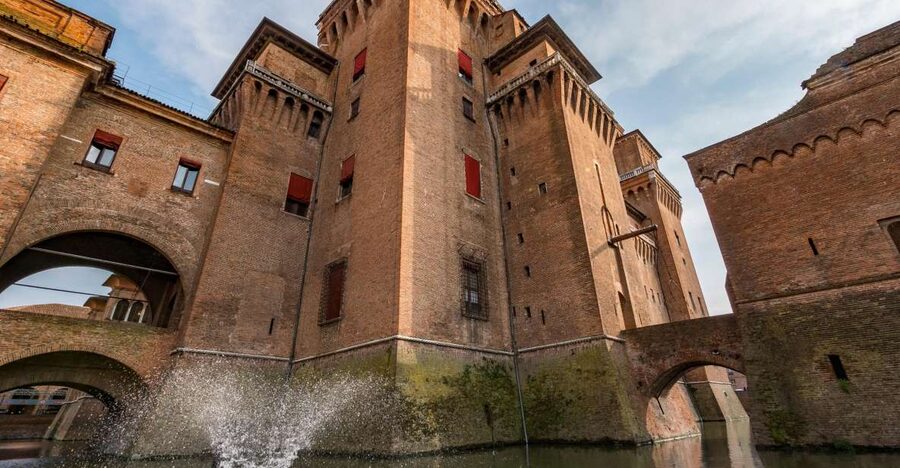
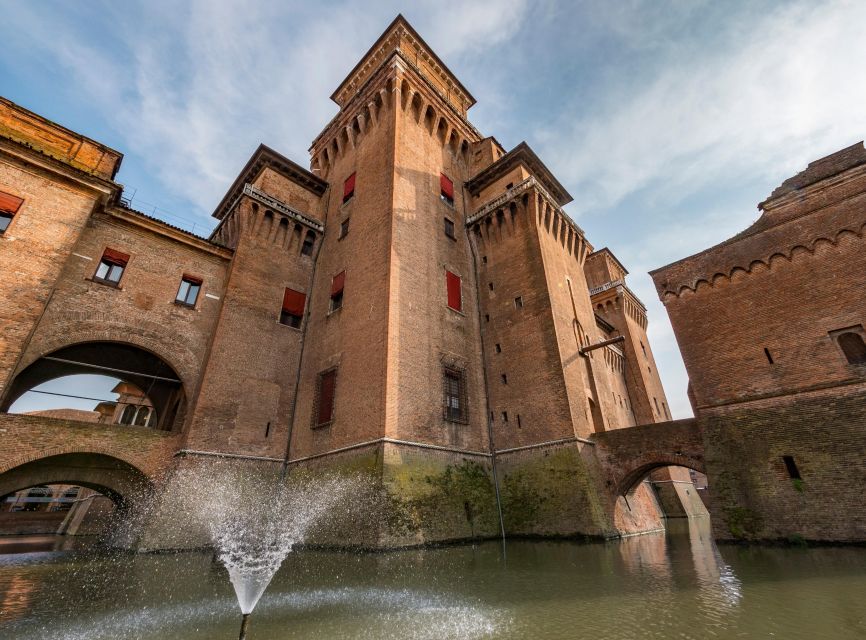
The Estense Castle is Ferrara’s defining sight, and its moat gives you the first clue to its past. The water and fortified form recall a time when this was a military stronghold, not a polished court residence. Later, the Este rulers reshaped it into a palace suited to ceremonial life, political power, and family display.
I find that contrast more rewarding than a palace tour that simply moves from one decorated room to another. Here, the building itself explains Ferrara’s changing fortunes. Thick defensive spaces lead toward refined rooms, gardens, chapels, and painted halls. The route lets you see power becoming more comfortable, but never entirely safe.
The guided format matters because the castle can otherwise feel like a collection of impressive rooms without a clear thread. A qualified guide gives the Estense family a human story, including the legends and events linked to the building. The tour is designed to show not only what you are looking at, but why the space changed.
The total activity is described as lasting two hours, while the guided portion is about an hour and a half. That leaves a little flexibility for entering, gathering the group, and moving through the rooms. Plan on giving the castle a proper part of your afternoon rather than treating it as a quick photo stop.
More Guided Castle Tours in Italy
- Milan: The Last Supper & Sforza Castle Guided Tour
★ 4.6 · 610 reviews - Milan: Last Supper and Sforza Castle Guided Tour
★ 4.6 · 498 reviews - Valpolicella: Amarone Chateau Guided Tour and Wine Tasting
★ 4.5 · 164 reviews
Starting in the medieval halls
Meet in the castle courtyard near the loggia, under the arcade. The stated meeting time is 30 minutes before the 3:30 p.m. Saturday departure, so do not arrive at the last second. The courtyard is an attractive place to get oriented, but the meeting arrangement has occasionally felt confusing, especially when the castle is crowded.
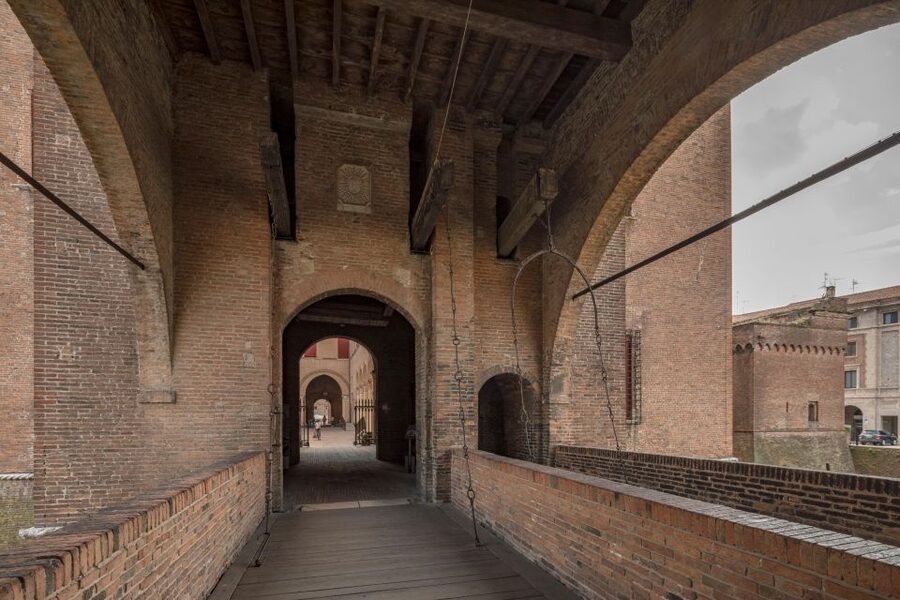
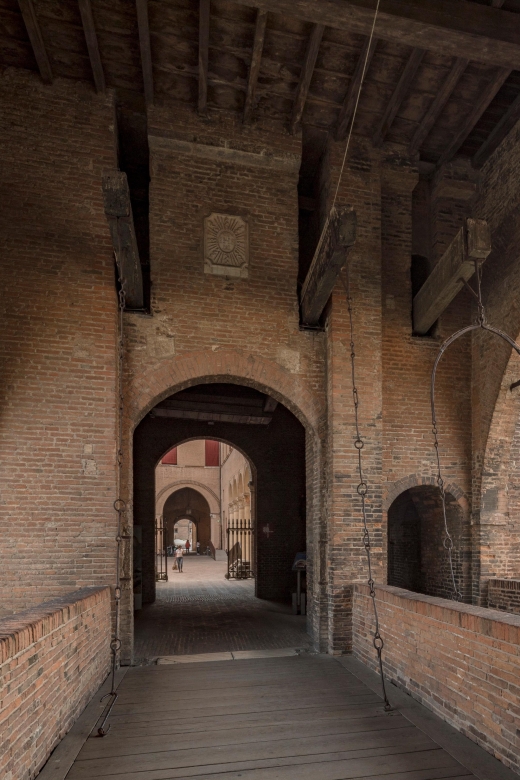
Once the group is together, the tour begins on the first floor with the ancient medieval halls. These rooms introduce the fortress side of the building. Their importance is not just visual. They help you understand why the castle was built with defensive features before it became a ducal residence.
You will also pass along the evocative cannons’ flight. The name alone tells you what this passage was for. It is one of the more unusual parts of the visit because it keeps the castle’s military identity in view while the route moves toward the noble floor.
This first section may appeal most to visitors who like buildings to show their working parts. It is not simply a parade of polished interiors. You see the structure’s earlier role before entering the more formal areas of court life.
The noble floor and Oranges Garden
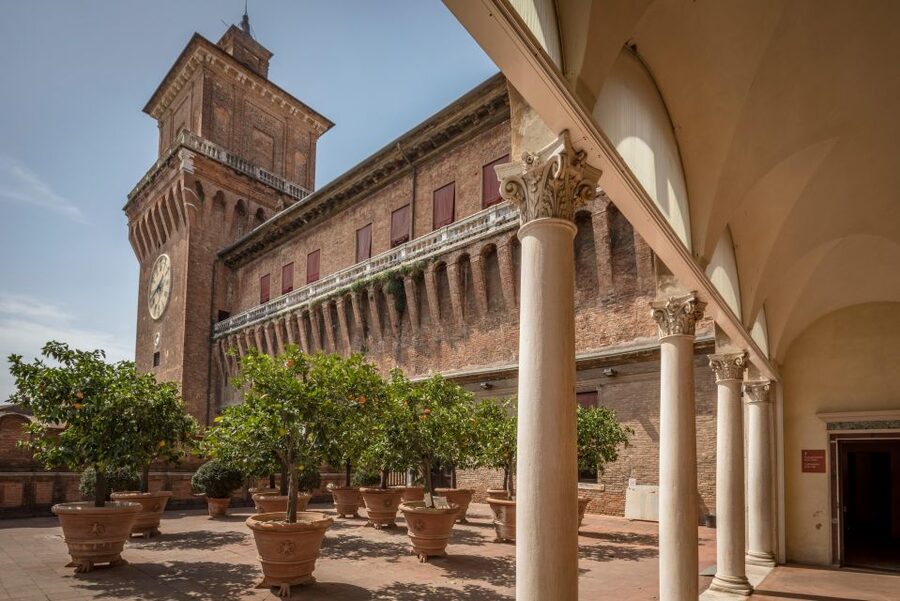
From the medieval level, the route rises to the noble floor. This is where the castle takes on a more ceremonial mood. The Oranges Garden is one of the clear highlights, offering a view over Ferrara’s squares.
The garden is especially useful as a pause in the tour. After enclosed halls and fortress passages, you get a wider sense of the city beyond the moat. The name refers to the orange trees associated with the garden, though the key attraction here is the outlook across Ferrara.
I would pay attention to the city view rather than rushing through for photographs. The garden helps explain the castle’s relationship with Ferrara. This was not an isolated country residence. It was a seat of power placed directly in the urban center.
The exact amount of time spent at each stop depends on the guide and the movement of the group. If you like taking photographs, keep your camera ready but listen first. The tour’s strongest feature is the connection between each place and the Este family’s life.
The ducal chapel and frescoed halls
The ducal chapel brings a religious setting into the tour. As with the other rooms, the guide provides the context that turns a decorated interior into part of the court’s daily world. You can expect the chapel to feel more intimate than the broad reception rooms that follow.
The wide frescoed halls are the grandest portion of the noble route. Here, look upward and across the walls. The decoration is not background wallpaper. It helped present the court as cultured, wealthy, and worthy of respect.
I like that the tour does not stop at the postcard view of the castle exterior. The interiors show the Este family’s public image and private world in more detail. A good explanation of the frescoes can help you notice the difference between a defensive building and a palace designed to impress.
The guide is central to this part. The booking includes an Italian-speaking live guide and headsets, so you can hear the explanation clearly even when the rooms are busy. The audio equipment is a practical benefit, not a luxury. It keeps you from having to stand directly beside the guide at every moment.
The Italian-only format is still the tour’s largest limitation. If your Italian is basic, you may enjoy the architecture and visual details, but you will miss much of the storytelling about the Este family. A separate visit with another language option may suit you better if interpretation is essential.
Same walls, a different way in:
- Milan: Sforza Castle Entry Ticket with Digital Audio Guide
★ 4.0 · 2,675 reviews - Milan: Sforza Castle and Michelangelo’s Pietà Rondanini Tour
★ 4.7 · 1,119 reviews - From Siena: Chianti and Castles Tour with Wine Tastings
★ 4.6 · 631 reviews - Montalcino: Brunello Wine Tasting & Lunch in a Tuscan Castle
★ 4.6 · 324 reviews
Descending to the underground prisons
The route eventually reaches the underground prisons. This is a strong ending because it brings the visit back to the castle’s harsher side. The noble rooms above suggest ceremony and privilege, while the cells below recall confinement, fear, and control.
These spaces also make the castle’s transformation easier to understand. The building was never only a palace. Its defensive and punitive functions remained part of its identity. Moving from frescoed halls down to the prisons gives the tour a clear dramatic shape without needing artificial effects.
The underground section may be less comfortable for anyone who dislikes enclosed spaces or uneven historic interiors. The supplied information confirms wheelchair accessibility for the activity, but older buildings can still involve different kinds of movement from room to room. If you have specific mobility concerns, confirm the route details before booking.
The Boldini and Crema exhibitions
The final part includes exhibitions dedicated to Ferrara painters Giovanni Boldini and Giovanni Battista Crema. This adds a later artistic chapter to a tour otherwise focused on medieval and ducal spaces.
The exhibitions are a useful change of pace. You move from the Este family’s rooms and the castle’s fortress structure into Ferrara’s painting tradition. If you already know Boldini or Crema, you may want extra time with the works. If you do not, the exhibitions still show that Ferrara’s artistic life continued long after the castle’s courtly era.
Keep in mind that the guided visit itself lasts about an hour and a half, while the full activity is listed at two hours. The time available for the exhibitions may be limited by the guide’s pace and the group schedule. You may need to return to particular works on your own if you want a slower look.
The guides and the value of the storytelling
The strongest praise centers on the guides’ preparation and ability to bring the past to life. Virna is specifically praised for being very prepared, while Luisa Veronese is described as making the period feel vivid through her storytelling. Those names may help you know what kind of guiding style can make this experience work well, though a particular guide is not guaranteed.
The guide’s role is especially important because the castle has several layers of meaning. Without context, you may see a moat, cannon passage, garden, chapel, painted hall, and prison. With a clear explanation, you can follow the castle’s shift from fortress to court and understand how the Estense family used the building.
Headsets are included. That is useful in a large stone building where voices can carry poorly and the group may spread out. The audio support is in Italian, just like the live tour.
One lower-rated experience points to a disorganized meeting point and an overcrowded castle. I would take that seriously as a planning note rather than a reason to reject the visit. Arrive early, find the loggia in the courtyard, and expect conditions to be less calm when the castle is busy. Another positive comment highlights the architecture, which is exactly where the castle remains rewarding even if the group feels crowded.
Is the $15 tour price good value?
The activity price is about $15 per person, but that is not the full admission cost. You also pay separately for the Estense Castle entrance. The full museum ticket is listed at €12, with a €1 discount per ticket through the Amici del Castello arrangement connected with the tour.
That puts the basic adult cost at roughly the tour price plus about €11 for admission, subject to the booking currency and current rates. For that combined amount, I think the value is solid if you want a guided explanation in Italian. You are paying for access to a major Ferrara sight plus a structured route through areas that can be hard to understand on your own.
Reduced admission is available for several categories, including minors aged 13 to 18, people over 65, university students with the required enrollment badge, groups of at least 15, certain exhibition ticket holders, Coop Alleanza associates, and FAI associates. Children under 13 have free admission, with one child between ages 6 and 18 free for each paying adult under the listed conditions.
Some people will not need the guide. If you read Italian well and prefer your own pace, you might choose a standard castle visit and spend longer with the exhibitions. If you want the family story, the building’s legends, and a logical route through the fortress and palace, the extra tour cost is easier to justify.
Who should book this castle tour?
I would recommend it to you if you are visiting Ferrara for the first time and want the city’s main monument explained in one organized visit. It is also a good fit if you enjoy architecture, court history, and the contrast between grand interiors and uncomfortable underground spaces.
Italian speakers will get the full benefit. You may also enjoy it with limited Italian if you are happy to follow the visual route and catch the broad story, but the tour does not offer English guiding. The included headsets improve hearing, not translation.
Families can benefit from the changing scenery. Medieval rooms, cannons, a garden, a chapel, frescoes, and prisons offer more variety than a single series of formal rooms. The underground section may need a little preparation for younger children, since the mood becomes darker.
Art lovers should note the Boldini and Crema exhibitions at the end. They are not a separate reason for everyone to book the tour, but they add substance for anyone interested in Ferrara’s painters.
The tour can be canceled up to 24 hours before departure for a full refund, and you can reserve while paying later. That flexibility is helpful when your Emilia-Romagna schedule is still shifting.
Should you book the Estense Castle Guided Tour?
Book it if you understand Italian and want the Estense Castle’s full story, from military fortress to ducal residence and underground prison. The route is varied, the price is reasonable once you account for the separate museum ticket, and guides such as Virna and Luisa Veronese have shown the kind of warm, story-led approach this building needs.
Think twice if you need English or another language, or if you strongly prefer exploring at your own pace. Also arrive early because the courtyard meeting point can be confusing and the castle may be crowded.
For an Italian-speaking visitor, this is a practical way to make sense of Ferrara’s most important monument in one Saturday afternoon.
FAQ
Where does the Estense Castle tour meet?
Meet in the courtyard of Estense Castle, near the loggia and under the arcade.
When does the guided tour start?
The tour starts every Saturday at 3:30 p.m. You should arrive 30 minutes before departure.
How long does the tour last?
The activity is listed as lasting two hours. The guided portion lasts about one and a half hours.
Is castle admission included in the tour price?
No. You must purchase the Estense Castle entrance ticket separately. A €1 discount per ticket is applied through the Amici del Castello arrangement.
What language is the tour in?
The live tour guide and included audio support are in Italian only.
What does the tour visit inside the castle?
The route includes medieval halls, the cannons’ flight, the noble floor, the Oranges Garden, the ducal chapel, frescoed halls, underground prisons, and exhibitions dedicated to Giovanni Boldini and Giovanni Battista Crema.
Is the tour wheelchair accessible?
Yes. The activity is listed as wheelchair accessible.
Newly walked in Italy
- HIKING TOUR: VARENNA, Castle of VEZIO Villa MONASTERO, FIUMELATTE★ 5.0 · 48 reviews
- Castles of Puglia Day Trip from Bari★ 4.5 · 7 reviews
- Enchanted Castle of Sciacca – Museum Tickets★ 3.5 · 63 reviews
- Taormina; Taormina Castle Tour★ 3.8 · 11 reviews
- St. Angel’s Castle: 2-Hour Private Tour★ 5.0 · 9 reviews
- Milan: Skip-the-line Sforza Castle and Museums Private Tour★ 4.7 · 7 reviews
- Siena: Tour and Wine Tasting in a Tuscan Private Castle★ 4.9 · 50 reviews
- Sforza Castle & Michelangelo’s Pietà Rondanini Guided Tour★ 4.7 · 3 reviews
Guided Castle Tours, compared.

Edinburgh Castle: Guided Walking Tour with Entry Ticket
Read our review →
Cathedral, Giralda & Alcazar Entry With Guided Tour
Read our review →Edinburgh Castle: Guided Walking Tour with Entry Ticket
Read our review →
Stonehenge, Windsor Castle and Bath Full Day Guided Tour
Read our review →
Alcázar of Seville Skip-the-Line Tickets and Guided Tour
Read our review →
Dublin Book of Kells, Castle and Molly Malone Statue Guided Tour
Read our review →
Quebec City: Guided Tour of Fairmont Le Château Frontenac
Read our review →Browse the lists this tour appears in