
Review · JAPAN
Hiroshima Heritage Trail: A-Bomb Dome, Castle, and Shukkien
Hiroshima’s story comes into sharp focus on this four-hour walk from the Atomic Bomb Dome to the quiet paths of Shukkeien Garden. You move from the city’s most painful chapter to its feudal past and then to a peaceful Japanese garden, giving you three very different ways to understand Hiroshima.
I like the private format, especially for families or anyone with serious questions. I also like the guide’s personal approach. Tahir is praised for explaining difficult subjects clearly and bringing history to life without making the tour feel like a lecture.
The main thing to consider is the amount of walking. The Peace Park portion lasts about two and a half hours, and good shoes matter. The schedule is also fairly tight, so the garden may need to be shortened if weather or earlier stops cause delays.
Key points to know before booking
- A 2.5-hour Peace Park visit: Most of the tour is devoted to Hiroshima’s atomic-bomb memorials and the Peace Memorial Museum.
- A private group for up to two people: You get a more personal pace and can ask questions freely.
- Three very different settings: The route links a memorial park, a reconstructed castle, and a traditional garden.
- Tahir’s clear storytelling: He is especially good at making complex events easier to understand and answering detailed history questions.
- Entry tickets included: You do not need to arrange admission separately for the included sites.
- Plan for a lot of walking: Comfortable shoes, sun protection, and weather-ready clothing are sensible choices.
Hiroshima in four hours: a serious tour with a wide range
This is not a light sightseeing stroll with a few historical facts added on. The first part deals directly with the atomic bombing of 1945, its effect on Hiroshima, and the city’s effort to remember what happened. The later stops broaden the picture, showing that Hiroshima is also a castle city and a place of carefully preserved Japanese culture.
That mix is the tour’s greatest strength. If you visit only the Peace Memorial Museum, you may leave with a powerful but narrow view of Hiroshima. Adding the castle and Shukkeien Garden gives you a better sense of the city before and after the war.
The tour costs $180 per private group of up to two people. That price is easier to justify for a couple, parent and child, or two friends who want a guide’s full attention. For one person, the price feels much steeper. Since entry tickets are included, you are paying mainly for the guide, the private setting, and the convenience of having the major stops arranged together.
More History Inside the Walls in Japan:
- Osaka: Castle History Walking Tour / Castle Tower Admission
★ 4.9 · 230 reviews - 2.5 Hour Private History and Culture Tour in Himeji Castle
★ 5.0 · 185 reviews - Kyoto: Nijo Castle World Heritage Guided Tour with Admission
★ 5.0 · 128 reviews
Starting beside the Peace Memorial Mailbox
The meeting point is at the Peace Memorial Mailbox, near the taxi stand, next to the telephone booth and at the corner of the parking area. That is a practical location, but pay close attention to the exact spot. The meeting instructions describe several nearby landmarks, so give yourself enough time to find the right corner.
The activity ends back at the same meeting point. That makes planning easier, particularly if you have a train, hotel transfer, or another Hiroshima activity afterward.
The guide speaks English, Urdu, Pashto, or Pushto. A private group means you can ask for explanations when a subject is unclear, pause for questions, and adjust the pace within the limits of the schedule.
Facing the Atomic Bomb Dome and Peace Park
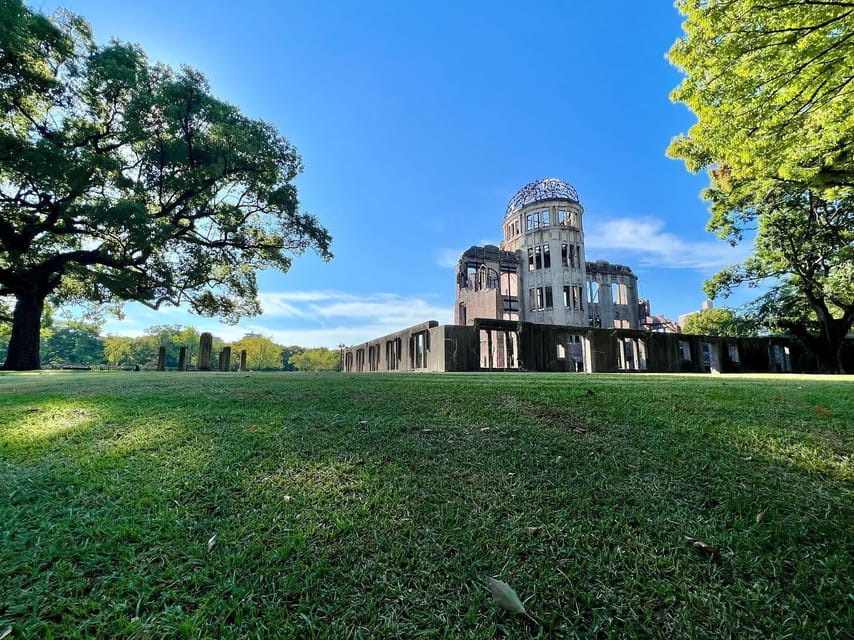
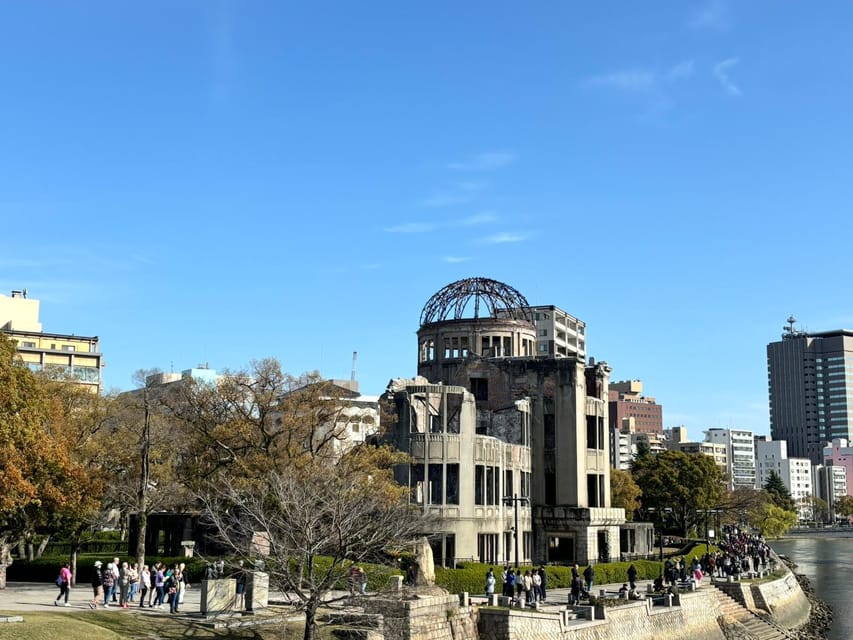
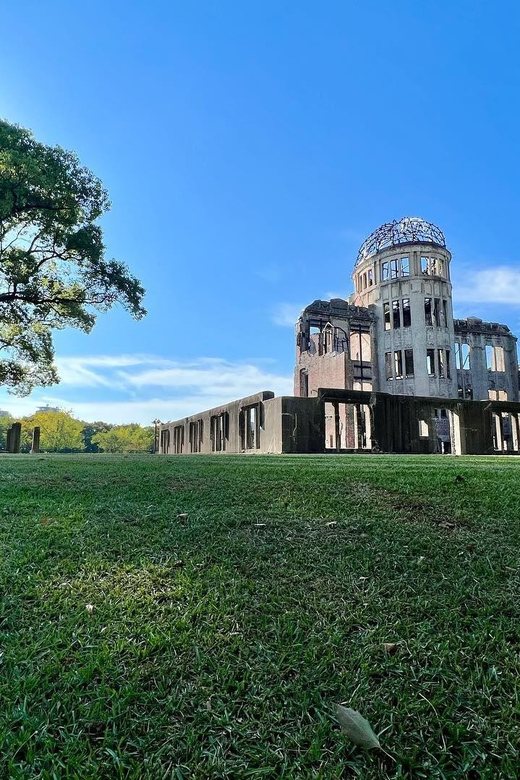
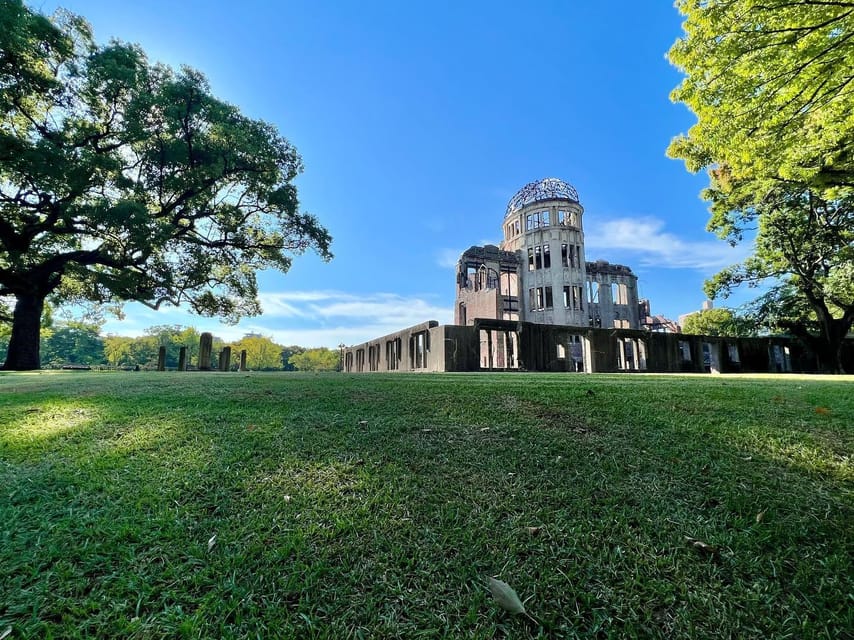
The Atomic Bomb Dome is the first major sight, and it is an unsettling one. Its damaged frame remains as a physical reminder of the atomic bomb that destroyed much of Hiroshima in 1945. You do not need much decoration here. The building’s exposed structure does the work.
From there, the guided visit through Hiroshima Peace Memorial Park takes about two and a half hours. This is the heart of the experience, so expect the guide to spend time on both the visible memorials and the wider story of the bombing.
The Peace Memorial Museum is included in the visit. Its exhibits cover the events leading up to the bombing and what followed. The subject matter is emotionally difficult, and you should allow yourself some quiet time as you move through the displays. This is not a stop to rush through with a camera in hand.
Tahir’s strength, based on the way his guiding is described, is context. He can explain complicated events in plain language and respond to detailed questions from people who already know a good deal about the period. That matters here. Hiroshima’s story includes military decisions, civilian suffering, international politics, and the city’s later peace message. A good guide helps connect those pieces without turning the visit into a pile of dates.
I also like that the tour does not treat the museum as the only important place. The open park, memorial structures, and Atomic Bomb Dome help you understand how Hiroshima presents memory in public space. The museum gives you documentary evidence; the park gives you room to think.
This part can feel long if you are mainly interested in castles or gardens. The 2.5-hour visit is a clear signal that the tour takes the Peace Park seriously. If you prefer a quick introduction, this may be more time than you want. If you want to understand Hiroshima’s central story, the time is well used.
Hiroshima Castle and the city’s feudal past
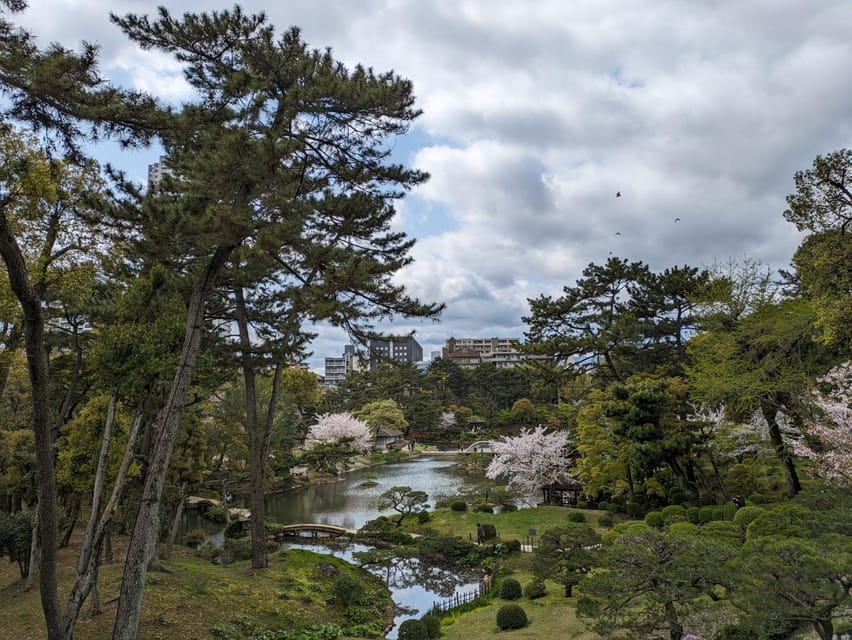
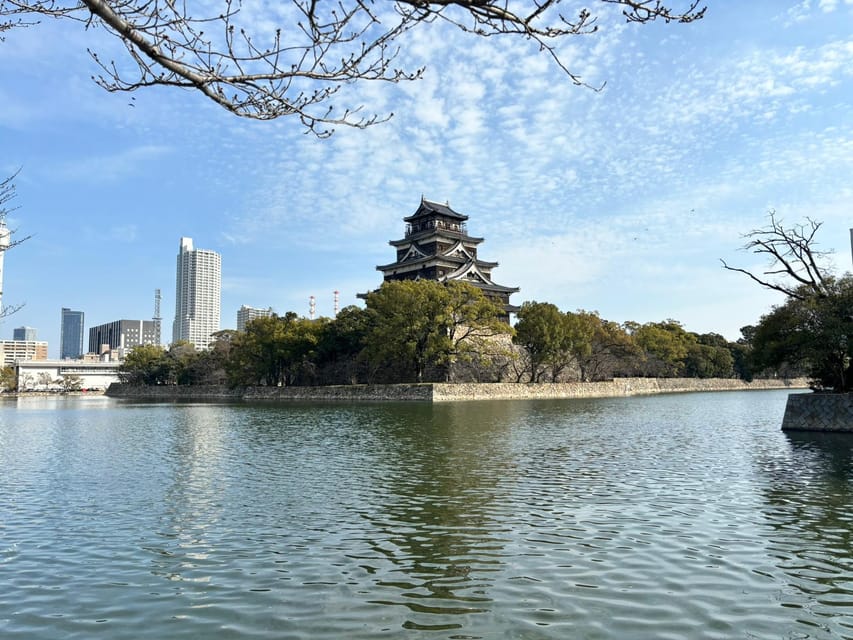
After the Peace Park, the tour shifts to Hiroshima Castle for about 30 minutes. The change in mood is useful. Instead of focusing on the twentieth century, you move back into Japan’s feudal period and the city’s earlier political life.
The castle offers a glimpse into Japanese history through its structure and displays. You can visit the castle and climb its tower, according to the tour description, but half an hour is not enough for a slow inspection of every room. Think of this as a focused introduction rather than a full castle study.
That short stop works best because it follows the long Peace Park visit. You get a different visual setting and a chance to consider Hiroshima as an old castle city, not only as the site of the atomic bombing. The guide can also help connect the castle to the broader story of Japan’s past.
The limitation is time. A 30-minute visit does not leave much space for lingering, detailed photography, or a leisurely look through all displays. If castles are your main interest, you may want a separate visit later. On this tour, the castle serves as one part of a larger historical arc.
More Castle Tours in Japan:
- Osaka Castle: Museum and Tower Entry Ticket
★ 4.5 · 2,380 reviews - Tokyo Castle & Imperial PalaceーShogun Walking Tour
★ 4.7 · 1,068 reviews - Kyoto: Nijo-jo Castle and Ninomaru Palace Guided Tour
★ 4.7 · 1,020 reviews - Ultimate Osaka Walking Tour: Castle, Dotonbori & Hidden Gems
★ 5.0 · 862 reviews
Quiet paths through Shukkei-en Garden
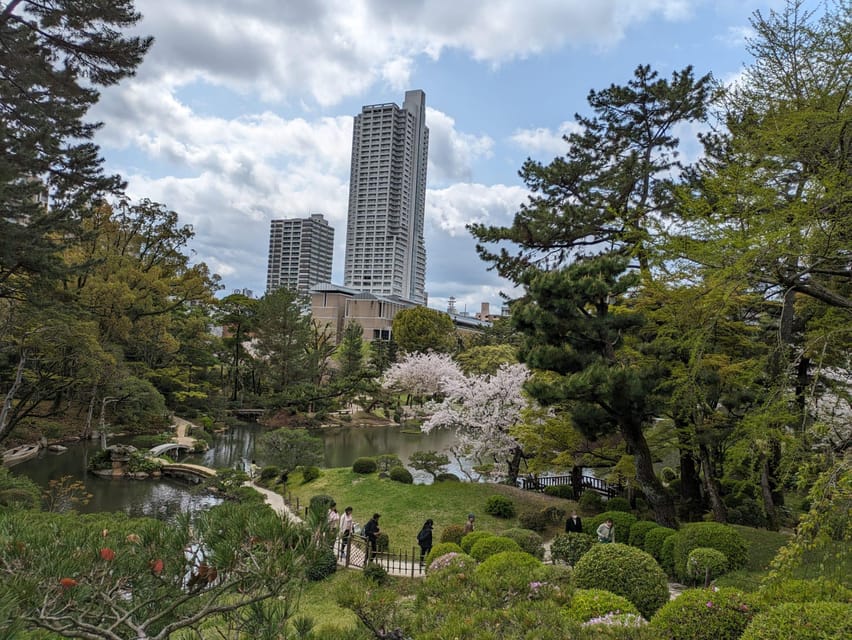
The final stop is Shukkei-en, also written as Shukkeien, a traditional Japanese garden. Its ponds, bridges, manicured plantings, and carefully arranged views provide a calm finish after the intensity of the Peace Park.
You get about 30 minutes here. That is enough for a pleasant walk and a first look at the garden’s design, but not enough to explore every path at a slow pace. The visit is best understood as a quiet closing chapter rather than a full garden afternoon.
The garden is especially valuable because it changes the rhythm of the day. Hiroshima’s history can feel heavy, and the garden gives you a place to slow down and pay attention to water, plants, bridges, and the shaping of space. It does not erase the earlier experience. It gives you a different way to process it.
Weather matters. In rain, the garden may be skipped. That happened during one reported tour, and the guide helped the group reach its next destination instead. This is practical and considerate, but it also means the final stop is less certain than the main Peace Park visit. If Shukkei-en is a top priority, ask about the day’s conditions and available time before you set out.
Walking, timing, and comfort

The tour lasts four hours, with roughly two and a half hours at Peace Memorial Park, 30 minutes at Hiroshima Castle, and 30 minutes at Shukkei-en. Add time for moving between locations and the schedule leaves little room for long breaks.
Wear comfortable shoes. One person who joined the tour wished they had done so, because there is a lot of walking. A sun hat and weather-appropriate clothing are also listed as useful items. Hiroshima weather can affect the garden portion, and the Peace Park section places you outdoors as well as inside the museum.
This is a wheelchair-accessible activity, which is important information for anyone planning around mobility needs. Still, it is sensible to discuss the exact route and the walking pace with the provider before booking if someone in your group has limited stamina.
The private setup helps with comfort. You are not trying to keep up with a large group, and you can ask the guide to clarify a point or pause briefly. The four-hour limit remains, however. Private does not mean leisurely at every stop.
What makes the guide part valuable
The guide is the difference between seeing these places and understanding them. Tahir is described as someone who answers questions in detail, explains difficult material clearly, and uses vivid storytelling. That is particularly useful at the Peace Memorial Museum, where the amount of information can feel overwhelming.
A family with history-minded members would likely get strong value from this format. A guide who can handle questions from people with a serious interest in the past is more useful than someone who only gives a short speech at each stop.
The private arrangement also suits visitors who want a thoughtful conversation rather than a fixed script. You can ask about a date, a building, or a point raised in the museum while it is still fresh. The available languages, English, Urdu, Pashto, and Pushto, make the tour accessible to a wider range of visitors.
You should still confirm the requested language and guide availability when booking. Tahir is the guide name associated with the strongest descriptions of the experience, but a specific guide is not guaranteed in the supplied details.
Who gets the best value from the $180 price
I would consider this tour a good value for two people who want a private historical introduction to Hiroshima in one morning or afternoon. The price includes entry tickets, a live guide, and a planned route through four important places. You also avoid the work of arranging admissions and deciding how to connect the stops.
It is less attractive if you are comfortable touring independently and mainly want transport or a quick orientation. The activity does not promise a meal, hotel pickup, or a dedicated vehicle. The meeting point is fixed, and the tour ends there.
Families can benefit from the private format, especially when children or older relatives need occasional pauses or simpler explanations. History enthusiasts should appreciate the guide’s ability to handle questions. Visitors who want a relaxed garden visit or a long castle exploration may find the schedule too compressed.
Free cancellation is available up to 24 hours before the activity for a full refund. You can also reserve now and pay later, which helps if your Hiroshima schedule is still changing. Those policies reduce the risk of booking a tour before your wider Japan plans are settled.
My call: book it for context, not speed
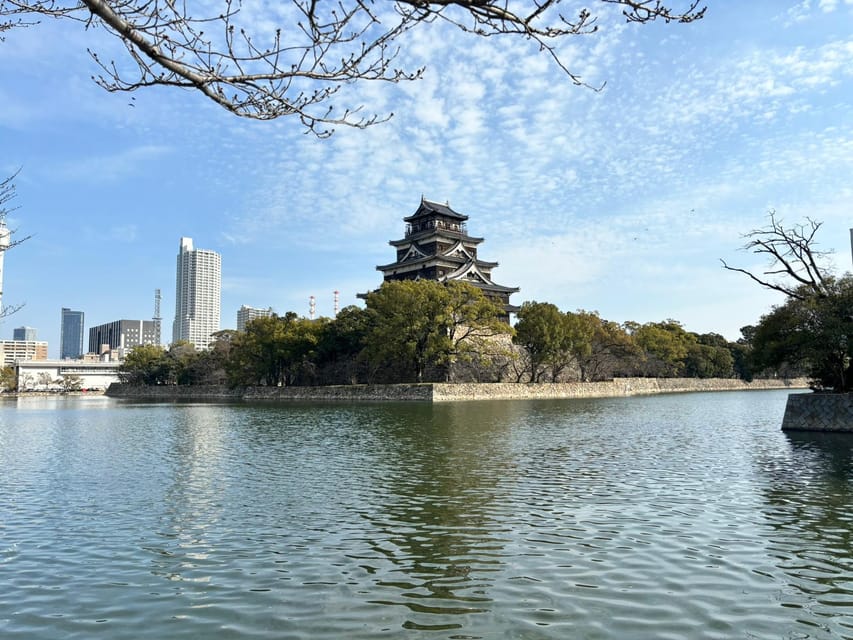
Book this experience if you want Hiroshima explained as a whole city, not only as the place marked by the Atomic Bomb Dome. The combination of Peace Park, Hiroshima Castle, and Shukkei-en gives you a thoughtful progression from tragedy to older Japanese history to quiet beauty.
The strongest reason to book is the guide-led Peace Park visit. Tahir’s clear explanations and willingness to answer serious questions add value that a self-guided walk may not provide. The main cautions are the four-hour pace, the amount of walking, and the possibility that rain cuts the garden visit short.
For two people who want a private, history-focused introduction, I would book it. If you want to linger at every site, spend hours in the museum, or explore Shukkei-en at leisure, plan extra independent time before or after the tour.
FAQ
How long does the Hiroshima Heritage Trail take?
The activity lasts four hours.
Where does the tour start?
It starts at the Peace Memorial Mailbox, right at the taxi stand, next to the telephone booth, and at the corner of the parking area.
Where does the tour end?
The activity ends back at the meeting point.
What places are included?
The tour includes Hiroshima Peace Memorial Park, the Atomic Bomb Dome area, Hiroshima Castle, and Shukkei-en Garden.
Is the Peace Memorial Museum included?
The tour description includes a visit to the Peace Memorial Museum as part of the Peace Memorial Park portion.
How much time is spent at each main stop?
The Peace Memorial Park visit lasts about two and a half hours. Hiroshima Castle and Shukkei-en Garden are each scheduled for about 30 minutes.
What languages does the guide speak?
The available guide languages are English, Urdu, Pashto, and Pushto.
Is this a private tour?
Yes. It is a private group activity for up to two people.
Are entry tickets included?
Yes. All entry tickets are included in the activity price.
Newly walked in Japan
- Tokyo: Edo Castle and Imperial Palace Guided Walking Tour★ 5.0 · 6 reviews
- (Ticket Included) Explore Osaka Castle & Museum of History★ 4.8 · 21 reviews
- Peace Memorial Park, Hiroshima Castle, & Garden Private Tour★ 4.8 · 7 reviews
- Osaka: Osaka Castle – Tsuruhashi – Tennoji (Spanish Guide)★ 4.7 · 10 reviews
- Osaka/kyoto: Himeji Castle, Kobe. Luxury Day Trip with Guide★ 5.0 · 2 reviews
- Osaka: Osaka Castle 3 hours Historical Walking Tour★ 4.6 · 14 reviews
- Osaka: Early Morning Osaka Castle Guided Tour, Avoid Crowds★ 4.9 · 12 reviews
- Osaka: Explore Every Bit of Osaka Castle in 3 Hours★ 5.0 · 5 reviews
Historical Tours, compared.
Edinburgh Castle Guided History Tour with Tickets
Read our review →
Charleston historical walking tour with a Professor of History at The Citadel
Read our review →
Buda Castle District Dark History, Legends and Vampire Night Tour
Read our review →
Luxembourg: Nature, History and Castles Full-Day Tour
Read our review →
Dublin to Cork, Blarney Castle & Cóbh Heritage Centre by train
Read our review →

Lake Garda: Historic Castle Cruise with Wine Tasting
Read our review →
Castle History Walking Tour / Castle Tower Admission
Read our review →Browse the lists this tour appears in