Review · KRAKOW
Krakow: Wawel Castle & Cathedral, Old Town & City Basilica
Wawel Hill gives you Krakow in one powerful sweep: royal apartments, a cathedral of coronations, a bell tower with city views, and crypts filled with Polish rulers. The tour then moves into the UNESCO-listed Old Town, ending at St. Mary’s Basilica and its extraordinary Veit Stoss altar.
I like the way this tour joins major sights that are often visited separately, and I like the mix of art, politics, religion, and everyday city history. The main caution is its fixed 210-minute pace. With so much ground covered, you need to arrive on time and be ready for stairs, including the climb to the bell tower.
Key Points About This Krakow Tour
- Wawel’s State Rooms: See Renaissance interiors, historic tapestries, Italian paintings, porcelain, weapons, and Eastern art.
- Sigismund Bell climb: Reach the tower for broad views over Krakow and the chance to touch the legendary bell.
- Royal Cathedral and crypts: Visit the church where Polish monarchs were crowned, married, and buried.
- Old Town walk: See the Main Market Square, Cloth Hall, historic streets, and Collegium Maius.
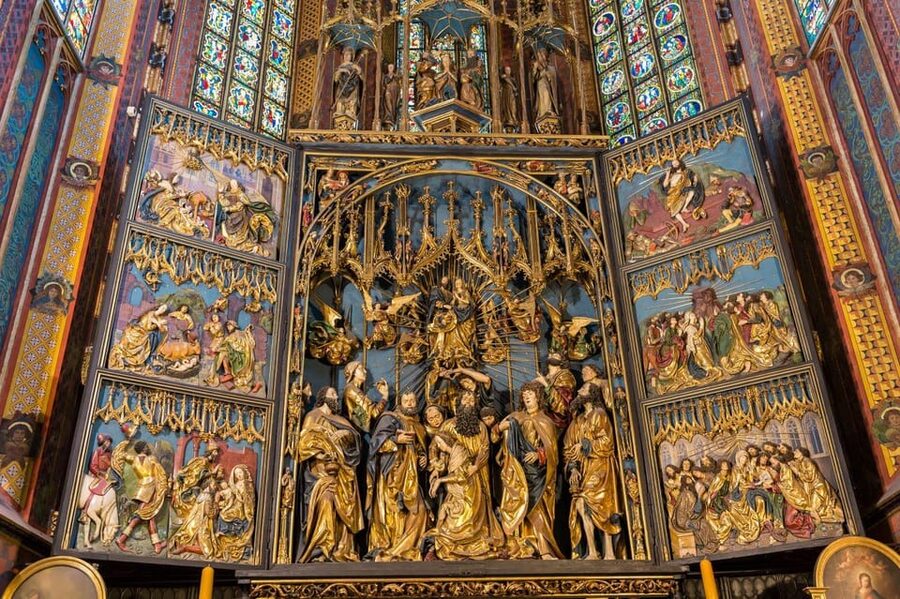
- Veit Stoss altar: Study one of Krakow’s great Gothic works inside St. Mary’s Basilica.
- Practical format: The tour lasts 210 minutes, includes fast-track access to one permanent castle exhibition, and is not suitable for wheelchair users.
Why Wawel Hill Is the Right Place to Begin
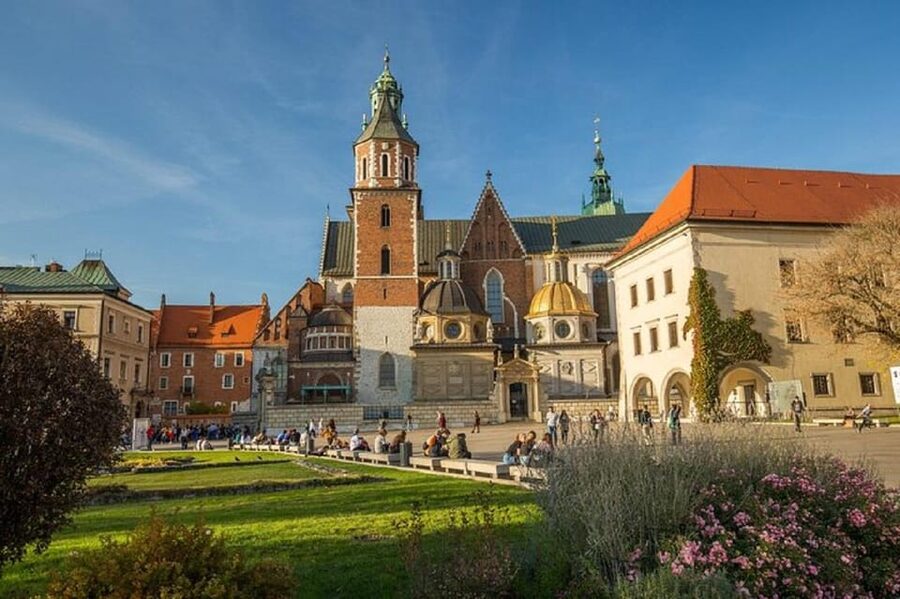
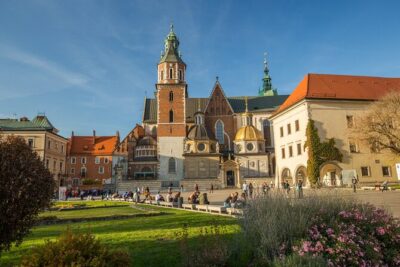
Krakow’s story begins most clearly on Wawel Hill. Above the city, the castle and cathedral form a compact center of Polish power, faith, and art. Starting here gives you context for the rest of the walk. The Old Town was not simply a pretty medieval district. It grew around the royal seat on the hill.
Your guide first leads you through Wawel Castle, now a museum rather than a working royal residence. The included fast-track access applies to one permanent exhibition, subject to availability. That detail matters because the castle complex contains several separate areas, and this tour does not cover every exhibition.
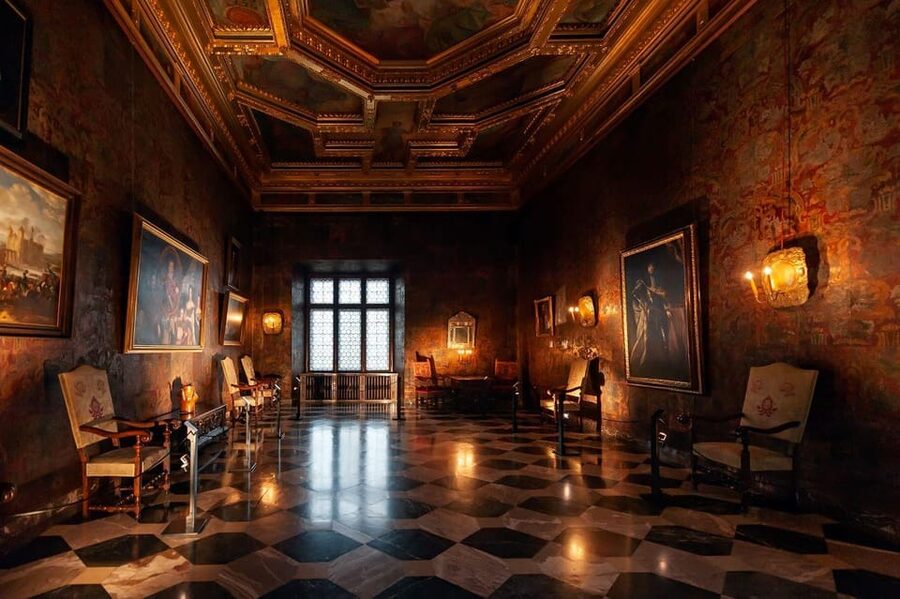
The State Rooms are the natural focus. Look for Renaissance design, decorated chambers, historic tapestries, and the Italian paintings associated with the Lanckoroński collection. This is not just a procession through grand rooms. The objects help explain how Poland’s rulers displayed status, taste, military strength, and connections with the wider European world.
The collections also include porcelain, weaponry, and Eastern art. One unusual feature is the collection of Ottoman tents, described as the largest in Europe. That makes the castle more interesting than a standard royal residence filled only with portraits and furniture. Poland’s position between Western Europe and the Ottoman world appears in the objects themselves.
A guide adds value here because the castle’s rooms can otherwise feel disconnected. I would pay close attention to explanations of how the State Rooms were used and how the works relate to Polish royal life. The architecture may catch your eye first, but the context is what turns a grand interior into a meaningful stop.
More Castle and Cathedral Tours in Krakow
- Krakow: Wawel Castle & Cathedral Guided Tour
★ 4.7 · 2,111 reviews - Krakow: Wawel Royal Hill with Optional Castle and Cathedral
★ 4.2 · 1,220 reviews - Krakow: Wawel Castle and Cathedral Guided Tour
★ 4.6 · 595 reviews
Wawel Cathedral and the Royal Crypts
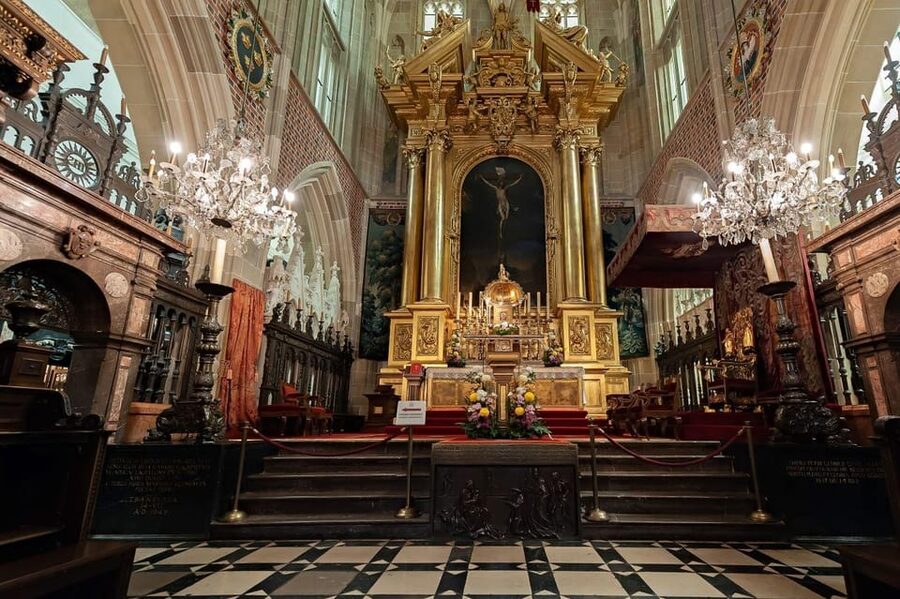
Next comes Wawel Cathedral, a Gothic church that served as the setting for royal coronations, weddings, and funerals. Its chapels, domes, tombs, and decorative details give the visit a more personal tone than the castle rooms. You are looking at the place where national ceremonies were held, not simply another old church.
The cathedral contains richly decorated chapels and golden domes. Your guide explains the religious and political meaning behind the building, helping you see why Wawel remains such an important Polish symbol. The connection between church and state is especially clear here, since monarchs were crowned in the cathedral and later buried nearby.
The route continues below ground into the royal crypts. These are the resting places of Polish rulers and important national figures. The setting is solemn and atmospheric, so this part is likely to appeal to you if you enjoy history presented through people rather than dates alone.
The crypts can also feel more confined than the castle and cathedral. If you dislike enclosed spaces, keep that in mind. The tour also includes stairs, and the full experience is not designed for wheelchair users.
Touching the Sigismund Bell
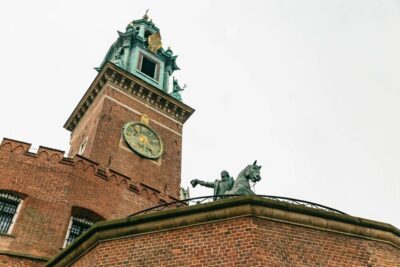
The bell tower adds one of the tour’s most distinctive moments. You climb up for views across Krakow, then see the Sigismund Bell and have the rare chance to touch it. That physical detail makes the visit memorable. You are not only looking at an important object behind a barrier. You are close enough to feel its scale and workmanship.
The tower climb is also the tour’s clearest physical challenge. Wear comfortable shoes and expect steps. The information provided does not give an exact number of stairs or a recommended age range, so you should judge the climb based on your own comfort and mobility.
From the tower, you get panoramic views of Krakow. The sight helps orient you before the walking portion begins. You can see how Wawel Hill relates to the Old Town and why this location controlled the city’s political and religious life for centuries.
Access to the bell tower can be suspended during important religious, state, or jubilee events, or during visits by important officials. The same applies to the cathedral and royal tombs. If that happens, the organizer may replace the cathedral visit with another location within the castle complex. This is an important limitation, although it is outside the organizer’s control.
Walking From Wawel to Krakow’s Old Town
After the castle complex, the tour continues on foot into the historic center. The route links royal Krakow with the city of merchants, guilds, students, and public ceremonies. That change in setting gives the tour a useful rhythm. You move from controlled museum interiors to streets where Krakow’s daily life still unfolds.
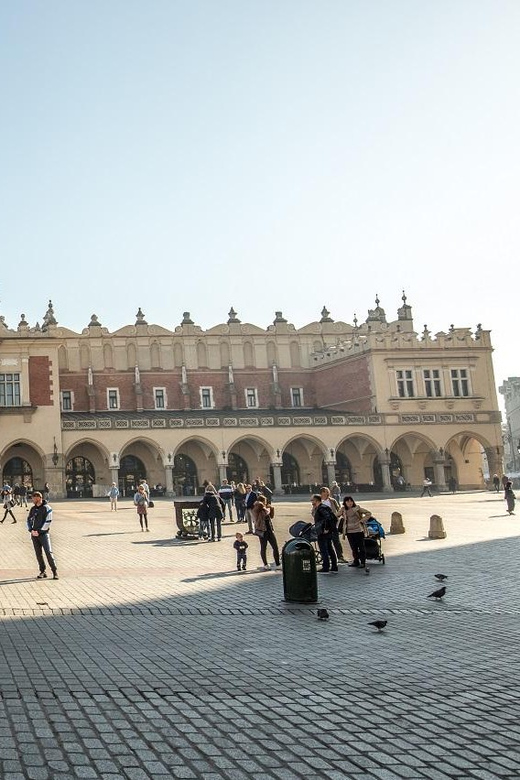
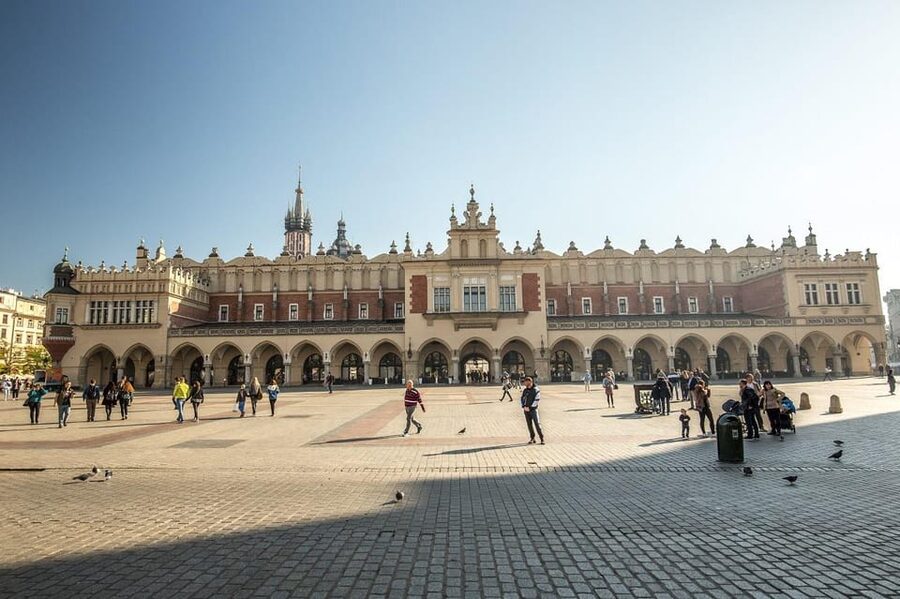
The Main Market Square is the major open space on the route. Here you see the Cloth Hall, one of the city’s best-known landmarks. The square connects several parts of Krakow’s story: trade, civic life, religious processions, and royal arrivals.
The Cloth Hall is especially useful for understanding Krakow as a commercial center. Its name points to the trade that once took place there, while its position in the square shows how important commerce was to city life. Your guide also explains how merchant groups and guilds shaped the medieval city.
The streets around the square are attractive, but they can also be busy and distracting. Stay close to the guide, especially when the group crosses open public areas. This is a group tour, and late arrivals can cause problems because the route involves timed entries and several separate sites.
More Castle and Cathedral Tours in Poland
- Krakow: Wawel Castle and Cathedral Guided Tour
★ 4.7 · 273 reviews - Krakow: Wawel Guided Tour – Cathedral and/or Castle
★ 4.5 · 249 reviews - Guided Tour of the Wawel Castle & Cathedral in Cracow
★ 4.7 · 24 reviews - Krakow: Wawel Castle & Cathedral Guided Tour
★ 4.5 · 20 reviews
Collegium Maius and the Story of Copernicus
The walk includes Collegium Maius, the oldest university building in Poland. Its importance is easy to miss if you only admire the exterior, so the guide’s explanation matters here.
The building is linked with Nicolaus Copernicus, its most famous student. That connection gives the walk a scientific angle. Krakow was not only a royal and religious center. It was also a place of study, debate, and intellectual life.
I like this stop because it widens the picture of the city. The castle shows power, the cathedral shows faith, the square shows trade, and Collegium Maius shows education. Together, these places explain why Krakow has such a strong cultural identity.
The tour does not list a separate interior visit to Collegium Maius, so you should expect it primarily as part of the guided Old Town walk rather than as another full museum stop. That keeps the route moving, but it also means you may want to return later if the university building catches your interest.
St. Mary’s Basilica and the Veit Stoss Altar
The final major stop is St. Mary’s Basilica, a Gothic church on the Main Market Square. Admission is included, and the basilica provides a strong finish because it brings together architecture, art, worship, and local identity.
The central work is the altar carved by Veit Stoss. It is an extraordinary Gothic masterpiece, filled with figures, detail, and religious symbolism. A quick look cannot do it justice. Your guide points out the craftsmanship and explains how the scenes function within the church, giving you a better way to read the work than simply admiring its size.
The basilica is an active place of worship. Visitors should behave respectfully, and access can occasionally be affected by religious events. The same general caution applies to Wawel Cathedral. A church visit may feel less flexible than a museum visit, but that is also part of its character. These are working religious spaces, not preserved sets.
St. Mary’s Basilica is a good ending because the altar gives you one clear artistic focus after a tour filled with many objects and buildings. If you enjoy art, this may be the section you remember best. If your main interest is royal history, Wawel will likely remain the highlight.
What the $88 Price Gives You
At $88 per person, this is not the cheapest way to see Krakow’s historic center. The value depends on how much you want explained and how efficiently you want to visit the major interiors.
The price includes a certified local guide, entry to Wawel Cathedral, one permanent Wawel Castle exhibition with fast-track access when available, and St. Mary’s Basilica. You also receive the guided Old Town walk, which connects the sites rather than treating them as isolated tickets.
That combination can make the price reasonable for a first visit. Buying individual admission and trying to coordinate the castle, cathedral, tower, and basilica on your own may take more time and require more planning. A guide also helps you understand what you are seeing, particularly in the State Rooms and at the Veit Stoss altar.
There are limits. Other Wawel exhibitions are not included, and lunch is not included. The tour lasts three and a half hours, so you should plan to eat before or after rather than expect a meal break during the route.
The value is strongest for you if you have only a short time in Krakow and want a concentrated introduction. It is less attractive if you prefer slow museum visits, long photography stops, or choosing every room independently.
Language, Pace, and Guide Quality
Tours are offered in English, French, German, Italian, Spanish, and Polish. Confirm your preferred language when booking, since the experience is guide-led and the explanations are a major part of what you pay for.
Recent tours have been led by guides including Helen and Magdalena, both praised for clear explanations, professional conduct, and a warm manner. One German-speaking booking happened to have only two participants plus the guide, which made the experience relaxed and conversational. Group size is not fixed in the information provided, so you should not book expecting a private tour.
The pace is described as well balanced, but the itinerary is ambitious. You cover a castle, cathedral, tower, crypts, Old Town, university building, square, and basilica in 210 minutes. That is efficient, not leisurely.
I would choose this tour if you like moving steadily and hearing the story as you go. You may prefer separate visits if you want to sit quietly in each church, study every painting, or spend a full morning in the castle museum.
Meeting Point and Practical Advice
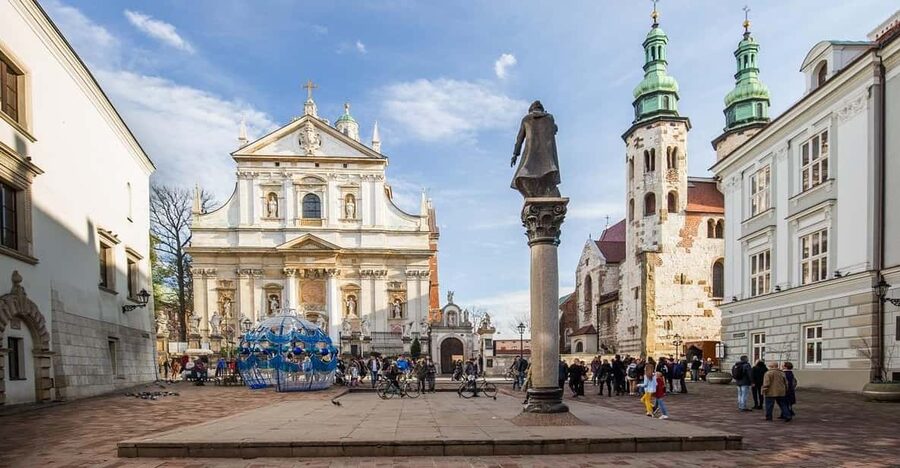
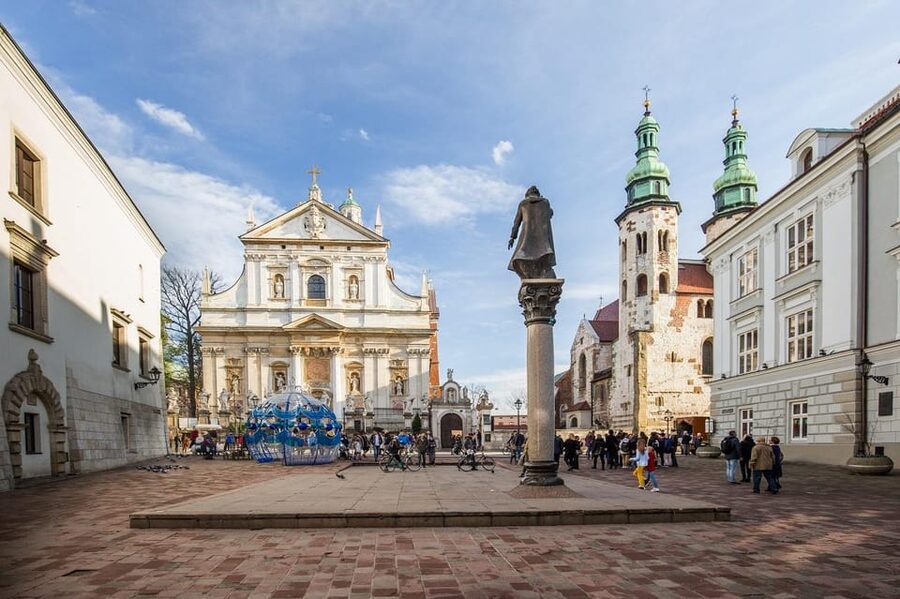
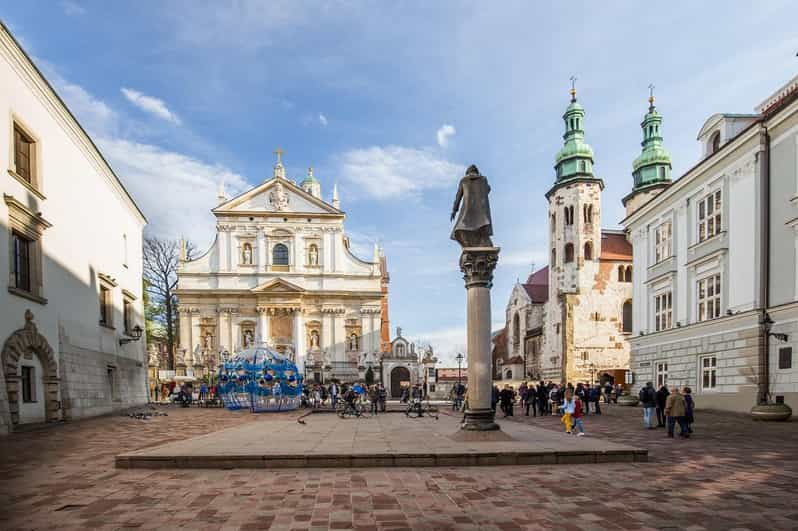
The meeting point is St. Mary Magdalene Square, by the Piotr Skarga Monument. Look for the guide holding an Excurison.city sign. The spelling of the sign matters, so check it before you set out.
Arrive early. The tour is a group experience, and late arrival can mean missing the start or struggling to join the group at the first site. The route includes outdoor walking and stairs, so comfortable shoes are essential.
Pets are not allowed. The experience is not suitable for wheelchair users, mainly because of the tower climb, stairs, historic interiors, and uneven access between sites. If mobility is a concern, contact the organizer before booking rather than assuming that every part can be adapted.
The tour offers free cancellation up to 24 hours before departure and a reserve-now, pay-later option. Those policies are useful if your Krakow schedule is still changing, but they do not remove the need to plan around the fixed meeting time.
Who Should Book This Tour?
I would recommend it to a first-time visitor who wants the essential Krakow story in one outing. It suits people who enjoy a mix of royal rooms, religious buildings, art, city streets, and strong historical explanation.
It is also a good fit if you have only a few days in Krakow. The route covers the city’s best-known cultural center without requiring you to arrange separate admissions or work out the historical connections yourself.
Art lovers should pay special attention to the Lanckoroński Italian paintings, the castle’s tapestries, the Eastern collections, and the Veit Stoss altar. History fans will get the most from the royal crypts, coronation cathedral, Sigismund Bell, and stories of monarchs and national figures.
I would hesitate if you dislike group tours, cannot manage stairs, want a wheelchair-accessible route, or prefer to spend a full day at one museum. The tour is broad by design. It gives you a strong first look, but it cannot cover every Wawel exhibition in detail.
Should You Book It?
Book this tour if you want a guided introduction to Krakow’s royal center and Old Town, with entry to the most important interiors and a clear historical thread. The chance to touch the Sigismund Bell, see the royal crypts, and study the Veit Stoss altar gives the route several memorable highlights.
Skip it if you need a slow, fully flexible schedule or if stairs are a serious issue. For most first-time visitors who can keep pace, the $88 cost is justified by the number of major sites, included admissions, and the help of a local guide who can turn a crowded city center into a coherent story.
FAQ
How long does the tour last?
The tour lasts 210 minutes, or three and a half hours.
What languages are available?
The live guide may lead the tour in English, French, German, Italian, Spanish, or Polish.
Where does the tour meet?
Meet at St. Mary Magdalene Square by the Piotr Skarga Monument. Look for the guide holding an Excurison.city sign.
Is admission to Wawel Castle included?
Fast-track access to one permanent exhibition at Wawel Castle is included, subject to availability. Other exhibitions are not included.
Does the tour include Wawel Cathedral and St. Mary’s Basilica?
Yes. Admission to Wawel Cathedral and an entrance ticket to St. Mary’s Basilica are included.
Is the tour suitable for wheelchair users?
No. The experience is not suitable for wheelchair users because the route includes historic buildings, stairs, and a tower climb.
More Medieval Old Town Tours in Poland
- Krakow: Skip-the-Line Wawel Castle & Old Town Guided Tour
★ 4.9 · 23 reviews - Krakow: Old Town and Wawel Castle Guided Golf Cart Tour
★ 4.4 · 13 reviews - Segway Tour Krakow: Grand Tour (Old Town + Wawel Castle)
★ 5.0 · 10 reviews - 3 hour: Warsaw Old Town with Royal Castle /inc. Pick-up/
★ 4.7 · 14 reviews
More Medieval Old Town Tours in Krakow
- Old Town Krakow & Wawel Castle Walking Tour
★ 5.0 · 1,508 reviews - Kraków: Old Town & Wawel Castle Walking Tour in English
★ 4.8 · 532 reviews - Krakow’s Essential Tour of the Old Town and Wawel Castle
★ 5.0 · 340 reviews - Historic Krakow : Old Town & Wawel Castle Walking tour
★ 5.0 · 318 reviews
Newly walked in Krakow
- Krakow: Wawel Castle Guided Tour with Skip-The-Line Entry★ 5.0 · 2 reviews
- Krakow: Skip-the-Line Wawel Castle & Old Town Guided Tour★ 4.9 · 23 reviews
- Rynek Underground Museum & Wawel Castle, Cathedral – Cracow★ 5.0 · 3 reviews
- Krakow: Wawel Castle Guided Tour★ 4.7 · 14 reviews
- Krakow: Wawel Castle, Cathedral, Salt Mine, and Lunch★ 5.0 · 2 reviews
- Krakow: Wawel Castle, Cathedral, Salt Mine, and Lunch★ 4.9 · 6 reviews
- Krakow: Wawel Castle, Cathedral, Rynek Underground & Lunch★ 4.4 · 12 reviews
- Krakow: Wawel Castle, Cathedral, Salt Mine, and Lunch★ 4.9 · 4 reviews
Wawel & Polish Castles, compared.
Wawel Royal Hill with Optional Castle and Cathedral
Read our review →
Old Town & Wawel Castle Walking Tour in English
Read our review →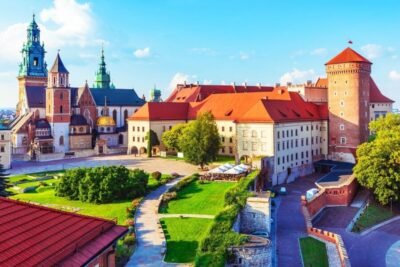
Skip-the-Line Wawel Castle Chambers Private Tour
Read our review →