
Review · ITALY
Montalcino: Castle and Vineyards Tour with Tasting
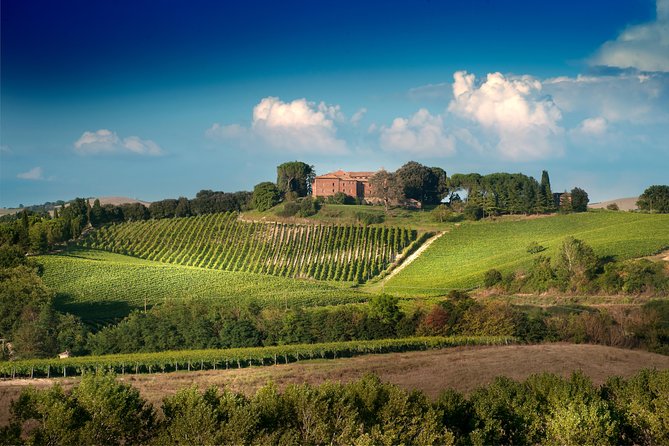
Montalcino’s wine country makes the strongest impression here through its setting: a 600-year-old castle ringed by Brunello vineyards, with medieval walls, old cellars, and a chapel holding a fragment associated with the Virgin Mary. You move from the estate’s past to its wine production, then settle in for three pours in the historic courtyard.
I like the small group of no more than 10 people, which gives you a better chance to ask questions, and I like the tasting’s focus on several wines rather than one token sample. The main caution is time: one hour is short, and the castle portion may feel more like a quick introduction than a full architectural tour.
- A 600-year-old castle provides the setting for the visit, not just a backdrop for the tasting.
- The Baldassare Peruzzi bridge, built in the early 16th century, is one of the tour’s most distinctive stops.
- Medieval cellars and noble vineyards connect the estate’s architecture with its wine production.
- Three selected wines are served at the end, with local snacks and, on some tastings, pecorino cheese.
- English and Italian hosts lead small groups capped at 10 participants.
- The $41 price is reasonable if you value the castle setting and guided tasting, but less so if you expect a long winery tour.
A Castle Tour in the Heart of Brunello Country
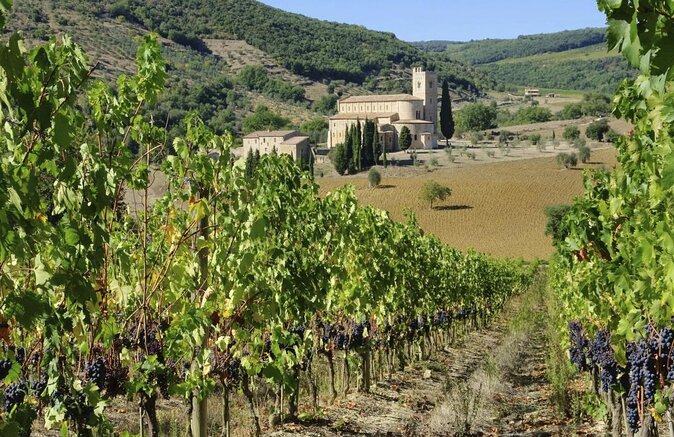
This is a compact introduction to Montalcino’s wine world. You are not simply driven to a modern tasting room, handed a glass, and sent on your way. The visit takes place at a historic estate where the castle, vineyards, chapel, bridge, and cellars all help explain the place.
The castle has about 600 years of history, and the route begins at its main entrance. From there, you walk along the full circuit of the walls before reaching the Baldassare Peruzzi bridge. Built in the early 16th century, the bridge gives the visit a clear sense of age and place.
I like this approach because it puts the wine in context. Brunello is not presented as an isolated product. It is part of a working estate shaped by buildings, religious sites, noble vineyards, and underground storage rooms.
At the same time, you should set your expectations carefully. The whole activity lasts only one hour. That is enough for a short guided walk and tasting, but not enough for a leisurely exploration of every corner of a large castle complex.
Following the Walls to the Peruzzi Bridge
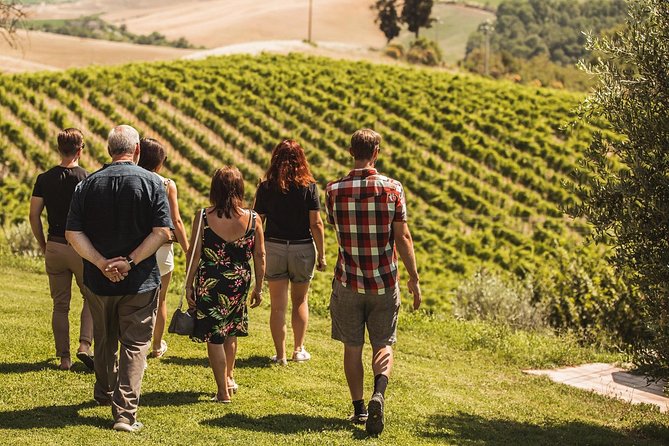
The route starts outside, at the castle entrance, and continues along the walls. This is the most scenic part of the walk, especially for anyone who wants the classic Montalcino combination of stone architecture and vineyard views.
The walls also help you understand how the estate was built and protected. Rather than moving straight from the entrance to a tasting table, you get a brief look at the structure that shaped the property.
The Baldassare Peruzzi bridge adds a particularly appealing detail. Its early 16th-century date gives the walk a firm historical marker, and its connection to the castle makes it more meaningful than a simple photo stop.
I would not expect an extended architecture lecture here. The schedule is tight, and the outdoor castle section may last only around 10 to 15 minutes. If you have come mainly for medieval buildings, you may wish the route included more rooms and courtyards.
Still, the short walk works well for a wine-focused visit. You get enough background to make the estate feel like a real place rather than a decorative venue.
More Castle Tours in Italy:
- Milan: Sforza Castle Entry Ticket with Digital Audio Guide
★ 4.0 · 2,675 reviews - Milan: Sforza Castle and Michelangelo’s Pietà Rondanini Tour
★ 4.7 · 1,119 reviews - From Siena: Chianti and Castles Tour with Wine Tastings
★ 4.6 · 631 reviews
The Chapel and Its Unusual Relic
The Chapel of the Virgin of the Veil is another specific stop on the route. It still contains a fragment said to be part of the Virgin Mary’s veil, giving the chapel a religious connection that is unusual within a wine visit.
This detail adds variety to the tour. You are not hearing only about grapes, barrels, and bottle labels. The chapel points to the estate’s wider cultural past and helps explain why the castle matters beyond its current wine production.
The chapel is also a reminder that rural estates in Tuscany often combine practical, religious, and noble uses in one complex. Here, you can see those layers within a very short walk.
Because the tour is brief, the chapel visit is best viewed as a focused stop rather than a full religious-history presentation. You may get the key facts and a chance to see the site, but not a long period for quiet inspection.
Vineyards, Cellars, and How the Wine Is Made
After the castle walls and chapel, the visit turns toward wine production. You pass noble vineyards and ancient medieval cellars while learning how wine is made from start to finish.
This part is important because it ties the scenery to the bottle. The vineyards are not only a pleasant view from the castle walls. They are the source of the estate’s wines, and the cellars show where the next stages of production take place.
I like seeing both sides of the estate in one hour. The vineyards explain the setting, while the cellars give you a sense of the work behind the tasting. If you already know a good deal about wine production, the explanation may feel basic. If you are still learning the difference between vineyard work, cellar work, and tasting, it gives you a useful framework.
The main limitation is the amount of time spent indoors. Some departures may include only a short interior winery visit, around 15 minutes, rather than a long walk through the full wine-making operation. That makes this a good orientation, not a detailed technical winery course.
The experience is strongest when you treat the cellar visit as part of the story. You are seeing an old estate adapted to wine production, rather than touring a large industrial facility.
Three Wines in a Historic Courtyard
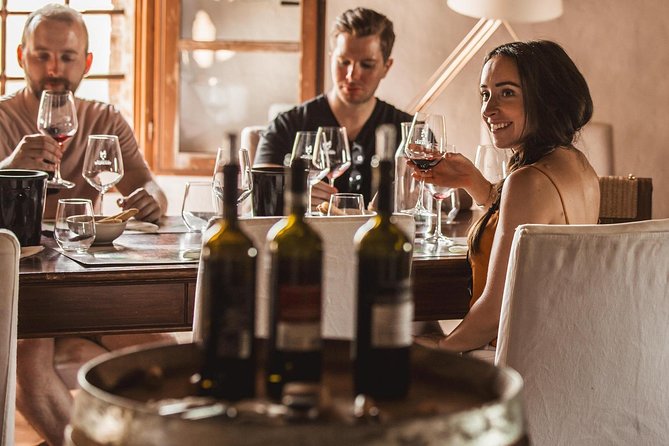
The tasting is the payoff, and it takes place in the castle’s historical courtyard. Three selected wines are served, with the focus on local production and the Brunello region.
For $41, three wines plus a castle and cellar tour is a fair package, especially if you want a short activity that combines culture with food and drink. You are paying for the setting and the host’s explanation as much as for the wine itself.
The tasting also gives you a chance to compare different varieties rather than judging one wine on its own. I recommend paying attention to how the host describes each pour, then noting which one you prefer. Even a short tasting becomes more useful when you compare color, aroma, body, and finish from glass to glass.
The food pairing can vary in generosity. The advertised plan includes local snacks, and one tasting included several types of aged pecorino, which is exactly the sort of pairing that suits Tuscan wine. Another tasting was accompanied only by two breadsticks, so you should not book this expecting a full meal or a large spread of regional food.
That difference matters. The wine tasting is a central part of the experience, but the snacks are best treated as a small accompaniment. If you need lunch, arrange it separately.
Same walls, a different way in:
- Milan: The Last Supper & Sforza Castle Guided Tour
★ 4.6 · 610 reviews - Milan: Last Supper and Sforza Castle Guided Tour
★ 4.6 · 498 reviews - Montalcino: Brunello Wine Tasting & Lunch in a Tuscan Castle
★ 4.6 · 324 reviews - Lake Garda: Historic Castle Cruise with Wine Tasting
★ 4.5 · 241 reviews
Meeting the Winemaker and Asking Questions
The experience includes contact with a local winemaker or wine host, with English and Italian available. This is useful because a small group gives you a better setting for questions than a crowded tasting room.
You can ask about the estate, its vineyards, the production process, and the wines in your glass. The host can also explain details that are easy to miss when you explore a castle on your own.
No individual guide name is provided, so you should not book this expecting a specific personality. The quality of the visit will depend partly on the host leading your departure. The available feedback points to a friendly guide and helpful answers, which is encouraging, but the format remains short and focused.
With a maximum of 10 participants, you should have a reasonable chance to hear the explanation and speak up. That small size is one of the better features of the tour. It keeps the tasting more personal and reduces the chance that you will be standing behind a large crowd while trying to see the bottles or food.
What the One-Hour Schedule Really Means
The one-hour duration is both a benefit and a limitation. I like it for a travel day when you want to add Montalcino wine country without committing to half a day. It can fit neatly between other visits, meals, or drives.
You will likely move at a steady pace:
- The castle entrance and walls introduce the estate.
- The Peruzzi bridge provides a notable historical stop.
- The chapel adds a religious and cultural detail.
- Vineyards and medieval cellars explain the wine setting.
- The courtyard tasting closes the visit with three wines and snacks.
That sounds full because it is full. You will not have much spare time at each stop. The castle visit may feel especially quick, and some people may wish to see more of the interior areas.
I would book this when you want a focused sample of the estate. I would not book it as your only castle visit in Tuscany or as a complete study of Brunello production.
Is $41 Good Value?
At $41 per person, the value depends on what you want from a wine outing. For a guided walk through a historic estate, a cellar visit, and three wines in a courtyard, the price is sensible.
The value is strongest for you if:
- You want a small-group activity.
- You care about the castle setting as much as the wine.
- You prefer a short visit that fits a busy itinerary.
- You want an introduction to Brunello country without arranging a private winery visit.
- You enjoy tasting several wines with at least a small food pairing.
The value is weaker if you want a long vineyard walk, a large selection of food, or a detailed look at every part of the castle. The tasting snacks may be modest, and the castle tour can be shorter than the full description suggests.
I would also avoid judging the price only by the volume of wine or food. Much of the appeal comes from drinking in a historical courtyard after walking through medieval spaces. That setting is difficult to reproduce with a standard tasting-room appointment.
Who Will Enjoy This Most?
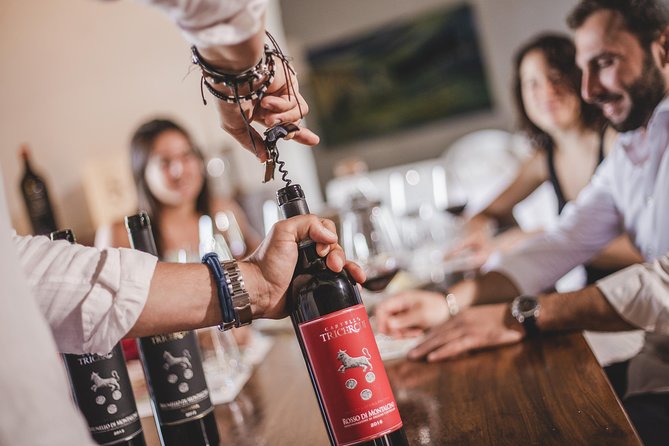
I think this tour suits first-time wine visitors, couples, small groups of friends, and anyone who wants a taste of Montalcino without spending several hours at one estate. It also works well for people who enjoy combining architecture, local history, and food.
Wine beginners should find the format approachable. Three pours provide comparison without becoming overwhelming, and the estate gives you something to see between glasses.
More experienced wine enthusiasts may want a longer cellar tour or more technical discussion. You might still enjoy the setting and the opportunity to taste local wines, but the short schedule may leave you wanting more.
The activity is not suitable for wheelchair users. The route includes castle walls, a bridge, a chapel, vineyards, and old cellars, so you should consider the physical character of the site before booking.
The tour is available in English or Italian. If you want to ask detailed questions, confirm that your preferred language is available for your chosen start time.
Booking Tips for a Better Visit
Reserve this when your day already includes Montalcino or nearby wine country. The activity is too short to justify a long detour by itself unless the castle and tasting are your main reason for coming.
If food matters to you, eat beforehand or plan a meal afterward. The pairing may include excellent local cheese, including pecorino at some tastings, but the portions can be light.
Leave room in your expectations for a quick castle visit. You will see meaningful parts of the site, but you may not tour every room or courtyard. If you are especially interested in the architecture, ask the host questions during the walk rather than waiting until the last few minutes.
You also have useful booking flexibility. You can cancel up to 24 hours before the activity for a full refund, and you can reserve now while paying later. Starting times vary, so check availability before building the rest of your day around it.
Should You Book the Montalcino Castle and Vineyards Tour?
I would book it if you want a short, well-rounded introduction to Montalcino wine culture with a real castle, old cellars, and three wines in a memorable setting. The small group and local host add value, and the $41 price is fair when the food pairing is more than just breadsticks.
I would skip it if your main goal is a long winery tour, a deep look at castle interiors, or a substantial meal. The hour goes quickly, and the castle portion may be shorter than you expect.
For most visitors, the best way to see this activity is as a compact afternoon stop: a little medieval architecture, a little vineyard history, and a proper Brunello-region tasting at the end.
FAQ
Where does the tour take place?
The activity takes place at a famous estate in Tuscany’s Brunello region, including its castle, vineyards, medieval cellars, chapel, bridge, and historical courtyard.
How long does the activity last?
The tour and tasting last one hour.
How many wines are included?
The tasting includes three selected wines.
Is food included with the wine tasting?
Yes. The tasting includes local snacks. The amount may be modest, and the pairing can include items such as pecorino cheese or breadsticks.
Is the castle visit included?
Yes. The activity includes a tour of the castle and its walls, along with stops at the Baldassare Peruzzi bridge and the Chapel of the Virgin of the Veil.
Is a cellar visit included?
Yes. The experience includes a tour of the ancient medieval cellars.
What languages are available?
The host or greeter is available in English and Italian.
How large is the group?
The activity uses a small group limited to 10 participants.
Is the tour suitable for wheelchair users?
No. The activity is not suitable for wheelchair users.
Can I cancel the booking?
Yes. You can cancel up to 24 hours in advance for a full refund. You can also reserve now and pay later.
Newly walked in Italy
- HIKING TOUR: VARENNA, Castle of VEZIO Villa MONASTERO, FIUMELATTE★ 5.0 · 48 reviews
- Castles of Puglia Day Trip from Bari★ 4.5 · 7 reviews
- Enchanted Castle of Sciacca – Museum Tickets★ 3.5 · 63 reviews
- Taormina; Taormina Castle Tour★ 3.8 · 11 reviews
- St. Angel’s Castle: 2-Hour Private Tour★ 5.0 · 9 reviews
- Milan: Skip-the-line Sforza Castle and Museums Private Tour★ 4.7 · 7 reviews
- Siena: Tour and Wine Tasting in a Tuscan Private Castle★ 4.9 · 50 reviews
- Sforza Castle & Michelangelo’s Pietà Rondanini Guided Tour★ 4.7 · 3 reviews
Italy Castle Tours, compared.
Sforza Castle Entry Ticket with Digital Audio Guide
Read our review →
Sforza Castle and Michelangelo’s Pietà Rondanini Tour
Read our review →
From Siena: Chianti and Castles Tour with Wine Tastings
Read our review →
Montalcino: Brunello Wine Tasting & Lunch in a Tuscan Castle
Read our review →
Lake Garda: Historic Castle Cruise with Wine Tasting
Read our review →
Sforza Castle and Michelangelo’s Pietà Rondanini guided experience
Read our review →
Trieste: Miramare Castle & Museum Entry Ticket & Audio App
Read our review →Browse the lists this tour appears in