
Review · JAPAN
From Nagoya: Inuyama Castle, Ena Gorge, Magome, Tsumago Tour
Inuyama Castle is the star here, an old wooden keep perched above the Kiso River and one of only twelve original castle towers left in Japan. The day then shifts from castle history to river scenery and two preserved Nakasendo post towns, giving you a useful taste of central Japan beyond Nagoya. The variety is the main attraction.
I like the all-in-one transport, since reaching four separate places by public transport in one day would take careful planning. I also like the generous free time at Magome and Tsumago, where you can choose a snack shop, old inn, waterwheel, or quiet lane rather than follow a rushed group walk. The main catch is simple: this is a ten-hour day with roughly six hours spent moving between stops, and English support may rely on translation tools or recorded audio.
Key points to know before booking
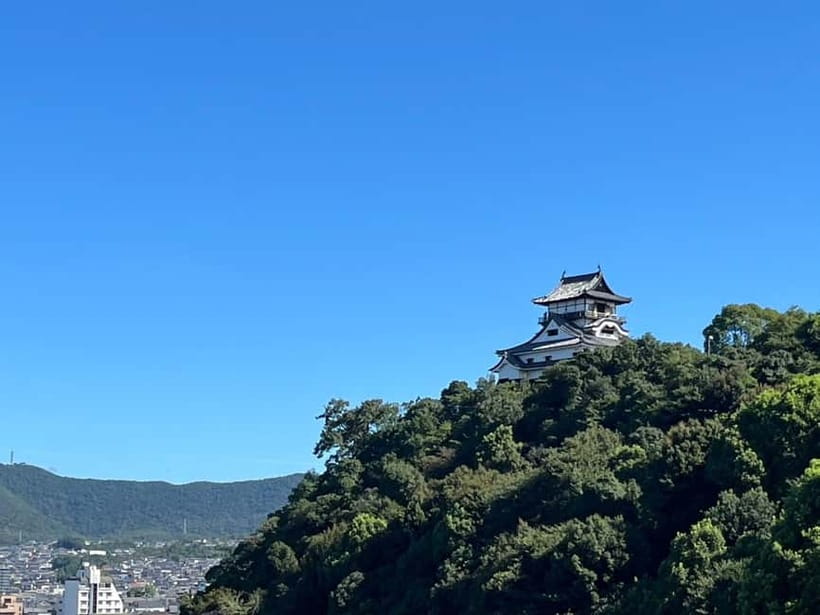
- Inuyama Castle is one of Japan’s twelve surviving ancient castle towers, with a steep old-style interior and wide views near the Kiso River.
- Ena Gorge changes with the seasons, from spring cherry blossoms to autumn color and winter birdlife.
- Magome-juku gives you the best time for food and wandering, with stone paving, wooden buildings, tea shops, and local snacks.
- Tsumago-juku is smaller and quieter, a preserved post town with a famous walking route toward Magome.
- The $60 price covers the bus, guide, and castle admission, but not lunch or personal purchases.
- The day works best for independent visitors who value convenience, not for anyone seeking a slow, detailed visit at every stop.
Why this day trip works from Nagoya
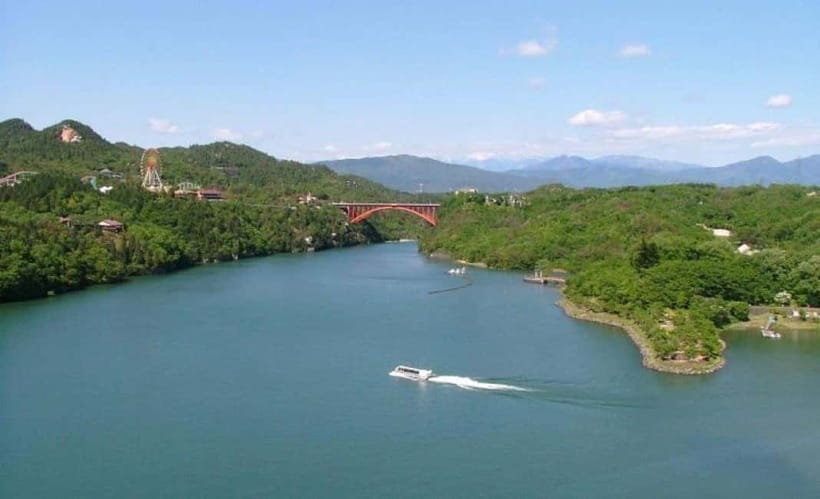
Central Japan has plenty of worthwhile places outside the city, but they are scattered. Inuyama lies to the north, while Ena, Magome, and Tsumago sit farther into the Kiso region. A direct bus tour turns an awkward route into one long outing.
You meet behind the BIC CAMERA at Nagoya Station’s West Exit, beside a Ministop convenience store. Arrive at least ten minutes early. This is a practical meeting point, but Nagoya Station is large, so give yourself time to find the West Exit rather than cutting it close.
The vehicle handles the day’s long stretches. You do not need to work out separate train connections, local buses, or the final walk into each historic district. That convenience matters most at Magome and Tsumago, where public transport planning can eat into your sightseeing time.
The tradeoff is the length of the day. The scheduled transfers add up to about five hours and forty-five minutes. Add four hours of visits and the schedule fills almost the entire ten-hour span. Bring water, wear shoes with good grip, and treat the bus as part of the experience rather than an annoying gap between attractions.
More Castle Tours in Japan:
- Osaka Castle: Museum and Tower Entry Ticket
★ 4.5 · 2,380 reviews - Tokyo Castle & Imperial PalaceーShogun Walking Tour
★ 4.7 · 1,068 reviews - Kyoto: Nijo-jo Castle and Ninomaru Palace Guided Tour
★ 4.7 · 1,020 reviews
Inuyama Castle and its steep wooden stairways
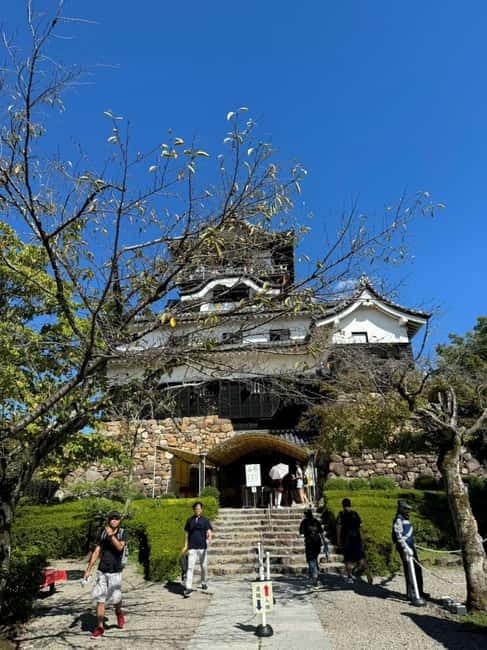
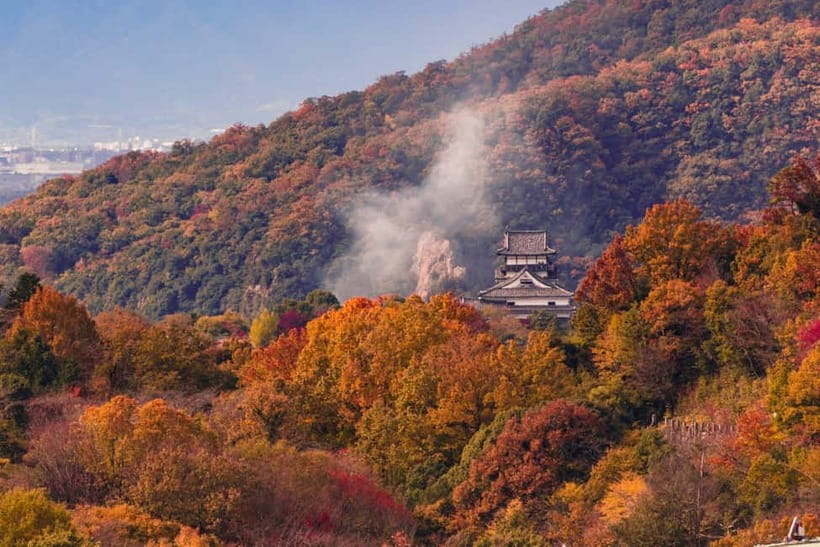
After about an hour on the road, you reach Inuyama Castle for roughly one hour of sightseeing. Built during the Muromachi Shogunate period, the castle sits on a hill beside the Kiso River. Its elevated position gives the visit a strong sense of place before you even enter.
Inuyama is one of Japan’s twelve surviving original castle towers. It is also counted among the four National Treasure castles, along with Himeji, Matsumoto, and Hikone. That makes this more than a quick photo stop. You are seeing a rare piece of Japan’s premodern castle architecture that survived without being rebuilt as a modern concrete replica.
The structure is compact but unusual. It has three floors on the outside, four floors inside, and two underground levels. The interior uses steep wooden stairs, so take your time and keep one hand free. This is not a polished museum with broad, easy corridors. Its tight passageways and old construction are part of the appeal, but they also mean the visit can feel physically demanding.
The castle is sometimes called Baidi Castle, a name linked to the Chinese poet Li Bai and his poem about an early departure from Baidi Castle. That detail adds an interesting cultural thread to a building otherwise rooted in Japanese military history.
The included admission ticket improves the value of the outing. You are not paying the $60 tour price and then adding a separate castle fee. Still, one hour is a short visit if you want to study every room, take photographs, and linger over the river views. I would focus first on the castle interior and upper views, then use any remaining minutes for the grounds.
Ena Gorge, Oi Dam, and a short scenic pause
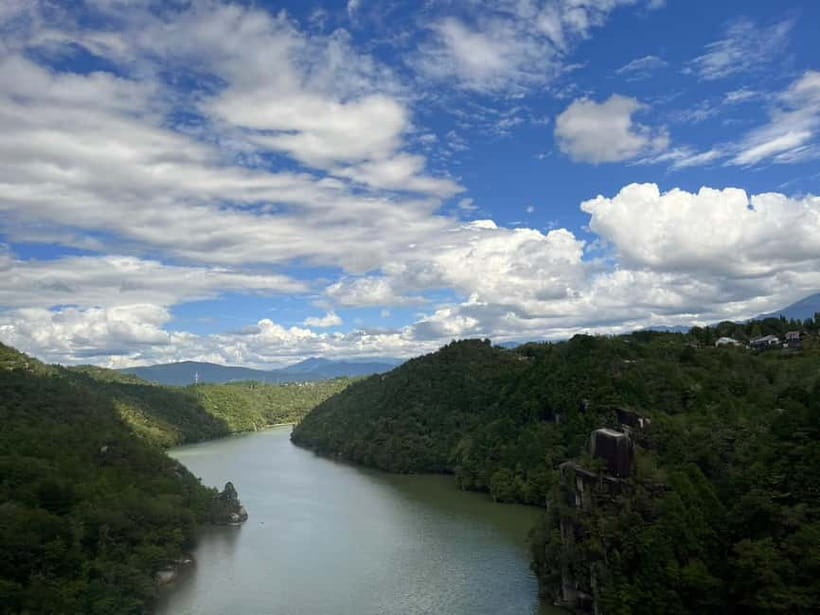
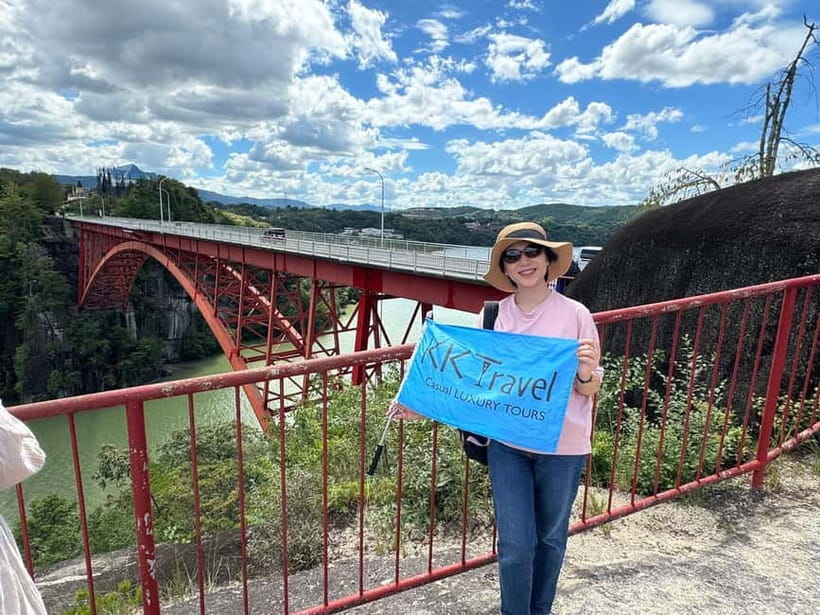
The next transfer takes about an hour and a half, followed by roughly thirty minutes at Ena Gorge. The gorge formed after the Kiso River was blocked by Oi Dam about eighty years ago, creating a man-made lake. It is a useful reminder that Japanese scenery is not always untouched wilderness. Engineering and geology work together here.
Geographer Shige Subaru gave the gorge its name in 1920. The area extends from the lake near Oi Dam upstream toward the Nakatsu River, with unusual rock formations shaped by natural erosion.
The short stop is best treated as a scenic break, not a full outdoor excursion. You may see distinctive formations such as Umbrella Rock, which rises sharply from the ground and is protected as a national natural feature. Red rock covered with brown moss adds another strong visual detail.
Season makes a real difference:
- Spring brings around 200 cherry trees in Ren Park, along with azaleas.
- Summer frames the red Einakyo Bridge with thick green foliage.
- Autumn puts red leaves and maples around the water.
- Winter can bring mandarin ducks and starlings, making the area useful for bird watching.
Thirty minutes gives you time for photographs and a quick look around, but not a long walk along the gorge. If Ena is your main reason for booking, the timing may feel brief. If you see it as a pleasant middle stop between the castle and the post towns, it fits the day well.
Magome-juku, where the old road becomes a village
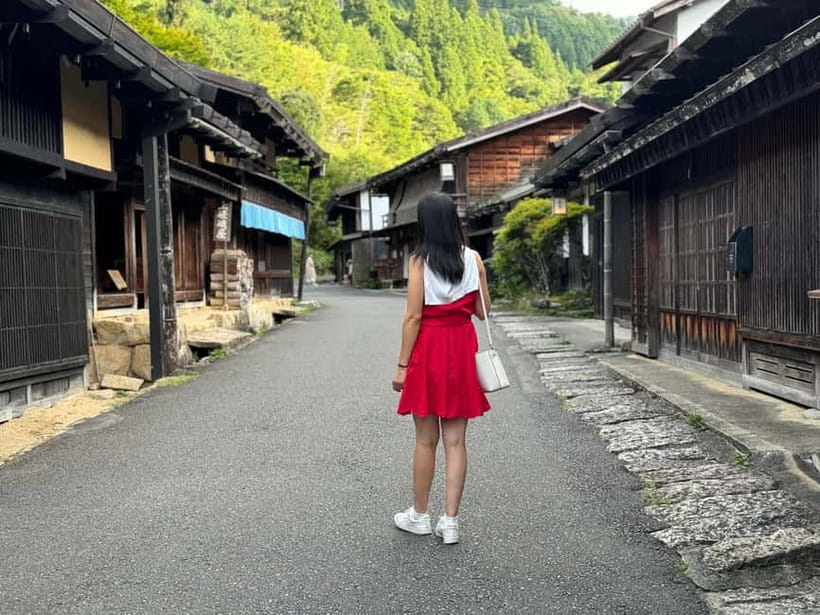
After another forty-five-minute transfer, you reach Magome-juku for about an hour and a half. This is the day’s best stop for combining history, food, and unhurried walking.
Magome was the 43rd of the 69 post stations along the Nakasendo, the inland road that linked Edo, now Tokyo, with other parts of Japan during the Edo period. The route ran about 540 kilometers from Edo, and Magome was roughly 332 kilometers from Nihonbashi, its starting point.
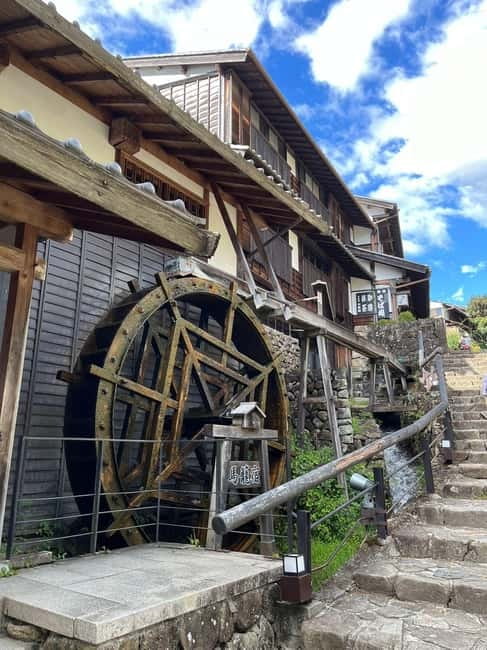
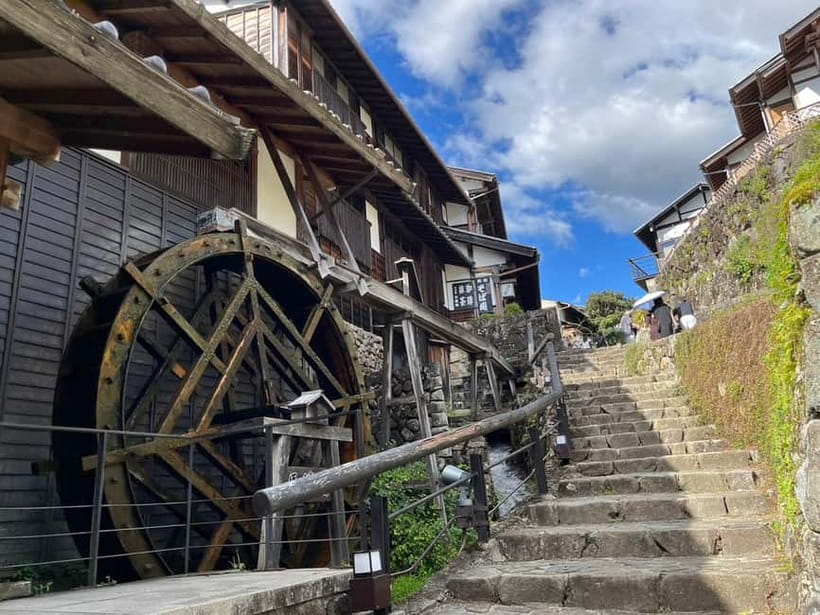
The post town follows a steep mountain road paved with stone. Wooden buildings line the street, many now serving as tea shops, small restaurants, art stores, inns, and places selling regional food. Flowers sit outside the houses, while old wells and waterwheels help explain how the town once worked.
This is a place to slow your pace. Walk uphill, then turn around and look back along the stone street. Pause at a shop for a local snack. Check the small displays and storefronts. The charm is in the details, not in one grand monument.
The tour includes lunch time, street food opportunities, local snacks, and free time, but dining is not included in the price. Bring cash. Some places may not accept credit cards, and the activity specifically advises you to carry enough money for personal expenses.
The ninety-minute visit is a useful balance. You have enough time to eat and wander, though not enough for a serious long-distance hike. If you hoped to walk the full route to Tsumago, you should understand that this tour transports you to Tsumago instead. That is good news for anyone who wants to see both post towns without spending several hours on foot, but less appealing if the famous trail is your main goal.
Same walls, a different way in:
- Ultimate Osaka Walking Tour: Castle, Dotonbori & Hidden Gems
★ 5.0 · 862 reviews - Tokyo Castle & Imperial PalaceーShogun Walking Tour
★ 5.0 · 724 reviews - Kyoto: Nijo Castle, Kiyomizu & Fushimi Inari Guided Tour
★ 4.7 · 700 reviews - Osaka Castle Walking Tour and Castle Tower Admission
★ 5.0 · 561 reviews
Tsumago-juku and the quiet end of the route
A thirty-minute transfer takes you from Magome to Tsumago-juku. You get about one hour here, including guided sightseeing and free time.
Tsumago is smaller in feel than Magome. Its preserved buildings and calm lanes make it easy to picture the old post-road setting. The town is part of the celebrated route between Magome and Tsumago, which has become a popular hiking path and received one star in the Michelin Green Guide.
That recognition should not lead you to expect a huge attraction. Tsumago’s appeal is modest and human scale. You walk, look at old wooden facades, notice the street layout, and enjoy the absence of modern clutter in the preserved area. The hour is enough for a good first impression and photographs.
The limitation is time. If you want to explore every side street or walk a large part of the historic trail, you will need a separate visit. Here, Tsumago functions as the final concentrated taste of the Nakasendo before the long ride back to Nagoya.
What the guide and transport add
The guide is described as Japanese or Chinese-speaking, and the tour is designed around live guidance. English communication may not be consistent. Some language support has been handled through translation apps or prepared audio, with clear explanations of meeting times and walking routes.
That arrangement can work well if you are comfortable with simple instructions and visual guidance. One useful feature of this kind of tour is that the guide keeps the group moving between stops, which matters on a day with several fixed departure times.
Transport is the strongest practical benefit. You are collected and returned to the Nagoya Station area, with the castle, gorge, and post towns connected by one bus. A few passengers have wished for assigned seating, so you should not assume you can choose a particular seat or sit with a companion in a preferred place.
The tour operator is 株式会社KKT. The available feedback gives the experience a 4.4 rating from 18 reviews, with especially strong praise for punctual departures, helpful staff, smooth timing, and the ability to enjoy each stop without feeling hurried. Several comments also point to the value for money.
Is $60 a fair price?
At $60 per person, the tour is priced as a transport-and-access package rather than a luxury guided excursion. Your fare includes round-trip bus transportation, the live guide, and the first avenue admission ticket for Inuyama Castle. It does not cover food, drinks, shopping, or other personal costs.
The value becomes clear when you consider the route. Four separate destinations are difficult to combine independently in one day without paying for several train and bus segments, arranging local transfers, and watching the clock. The bus also removes the need to return to a station after each historic site.
The price is less attractive if you want long visits at each stop. Ena Gorge receives only thirty minutes, Tsumago one hour, and Inuyama one hour. You are buying breadth and convenience, not a deep study of one location.
I would budget extra cash for lunch at Magome and small purchases along the old streets. The exact meal cost is not provided, so keep your food choice flexible. Cash is especially sensible because not every place accepts cards.
Who should book this tour?
I would recommend it to you if you are staying in Nagoya and want to see historic central Japan without renting a car. It suits first-time visitors, photographers, castle fans, and anyone who wants a mix of architecture, scenery, food, and traditional streets in one day.
It also works well if you prefer a guided framework but still want free time. Magome and Tsumago are not treated as a forced march from one photo point to another. You receive direction, then have room to choose your own pace.
You may want a different plan if you dislike long bus rides, need detailed English commentary, or want to hike the full Magome to Tsumago route. The schedule is full, the castle stairs are steep, and the language support may involve translation technology rather than continuous English narration.
Wear comfortable walking shoes. Bring water, a camera, weather-appropriate clothing, and cash. The old streets are uneven in places, and the castle visit involves steep stairs. Check the forecast before leaving, since the gorge and post towns are outdoor stops.
FAQ
Where does the tour meet in Nagoya?
The meeting point is at the Ministop convenience store behind BIC CAMERA at Nagoya Station’s West Exit.
How early should I arrive?
You should arrive at least ten minutes before departure.
How long does the experience last?
The tour lasts about ten hours, including transport from Nagoya and the return journey.
What is included in the price?
Round-trip bus transportation, a live tour guide, and the first avenue admission ticket for Inuyama Castle are included.
Is lunch included?
No. Dining expenses are not included, although you have time for lunch, street food, and local snacks at Magome-juku.
What languages are available?
The stated languages are Japanese and Chinese. English support may use translation tools or prepared audio.
Is Inuyama Castle admission included?
Yes. The Inuyama Castle First Avenue admission ticket is included.
How much free time do I get at each place?
The schedule provides about one hour at Inuyama Castle, thirty minutes at Ena Gorge, one and a half hours at Magome-juku, and one hour at Tsumago-juku.
Can I cancel the booking?
You can cancel up to 24 hours in advance for a full refund. You can also reserve now and pay later.
Should you book it?
Book this tour if you want four distinct central Japan sights in one manageable day and value a bus that takes care of the complicated connections. The best parts are Inuyama Castle’s original wooden keep, Magome’s old stone street, and the chance to compare Magome with smaller Tsumago.
Skip it if your priority is a long Nakasendo hike, extensive castle study, or detailed English commentary at every stop. For $60, the tour gives you strong practical value, but its success depends on accepting a busy schedule and several hours on the road.
Newly walked in Japan
- Tokyo: Edo Castle and Imperial Palace Guided Walking Tour★ 5.0 · 6 reviews
- (Ticket Included) Explore Osaka Castle & Museum of History★ 4.8 · 21 reviews
- Peace Memorial Park, Hiroshima Castle, & Garden Private Tour★ 4.8 · 7 reviews
- Osaka: Osaka Castle – Tsuruhashi – Tennoji (Spanish Guide)★ 4.7 · 10 reviews
- Osaka/kyoto: Himeji Castle, Kobe. Luxury Day Trip with Guide★ 5.0 · 2 reviews
- Osaka: Osaka Castle 3 hours Historical Walking Tour★ 4.6 · 14 reviews
- Osaka: Early Morning Osaka Castle Guided Tour, Avoid Crowds★ 4.9 · 12 reviews
- Osaka: Explore Every Bit of Osaka Castle in 3 Hours★ 5.0 · 5 reviews
Japan Castle Tours, compared.
Tokyo Castle & Imperial PalaceーShogun Walking Tour
Read our review →
Nijo-jo Castle and Ninomaru Palace Guided Tour
Read our review →
Ultimate Osaka Walking Tour: Castle, Dotonbori & Hidden Gems
Read our review →Tokyo Castle & Imperial PalaceーShogun Walking Tour
Read our review →
Nijo Castle, Kiyomizu & Fushimi Inari Guided Tour
Read our review →
Osaka Castle Walking Tour and Castle Tower Admission
Read our review →
Imperial Palace East Garden and Edo Castle Walking Tour in Tokyo
Read our review →Browse the lists this tour appears in