
Review · ITALY
Fortress: Prisons, Museum of Fortifications and Alps Museum
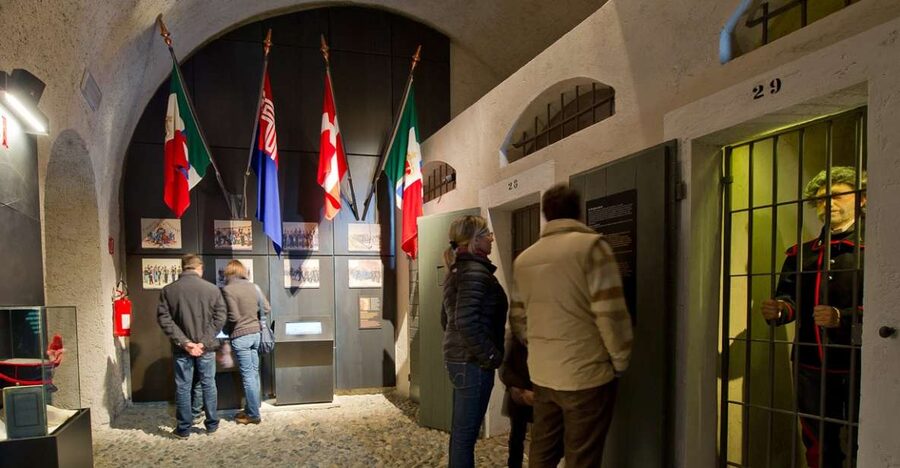
Fort Bard is not a single museum inside an old building. It is a whole mountain stronghold, built in layers above the Aosta Valley, where you move between military history, Alpine culture, and dramatic stone architecture. The 24 prison cells are especially memorable: each is only about 1.3 by 2 metres, arranged in four blocks behind an entrance gallery.
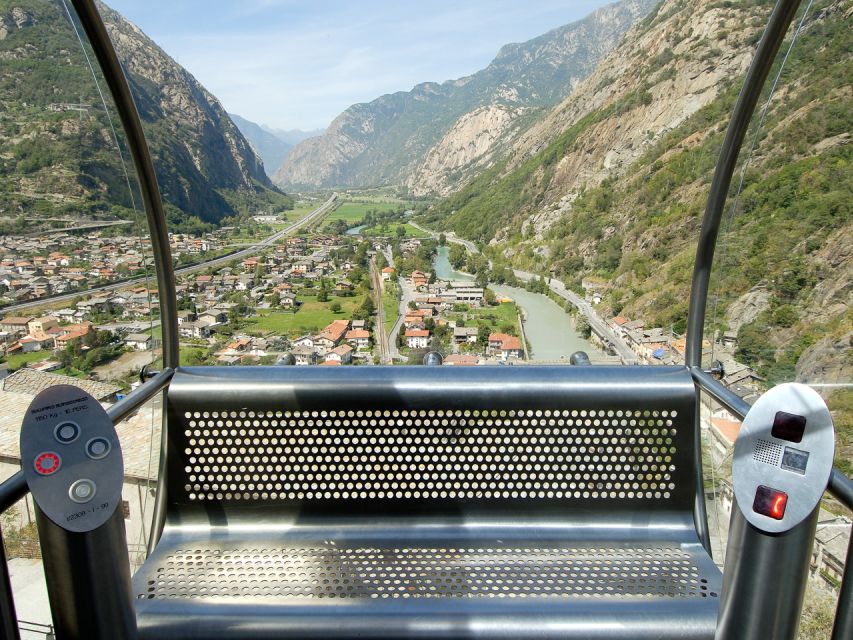
I like the way the ticket lets you choose three exhibition spaces, so you can shape the visit around your interests. I also like the panoramic lifts, which save your legs on the climb and open up broad views of the valley. The main catch is that there is no live guide. You need a smartphone, the Museon app, and enough time to read and listen at your own pace.
Key points to know before visiting
- Three museum spaces included: Choose from the Museum of the Alps, the Prisons, the Museum of Fortifications and Frontiers, plus any art exhibitions open during your visit.
- Tiny original prison cells: See 24 narrow cells measuring about 1.3 by 2 metres, arranged along four sections of the fortress.
- Panoramic lifts included: Ride between levels and enjoy views of the Aosta Valley without treating the entire visit as a steep hike.
- Fortifications told through models and weapons: Follow the development of Alpine defensive systems, from older military methods to 19th-century fortress design.
- Audio guide through the Museon app: Download the app on your phone and collect the QR code at the ticket counter.
- Good flexibility for $17: The ticket is valid for 90 days, and cancellation is free up to 24 hours before the visit.
Fort Bard is the main attraction, not just a backdrop
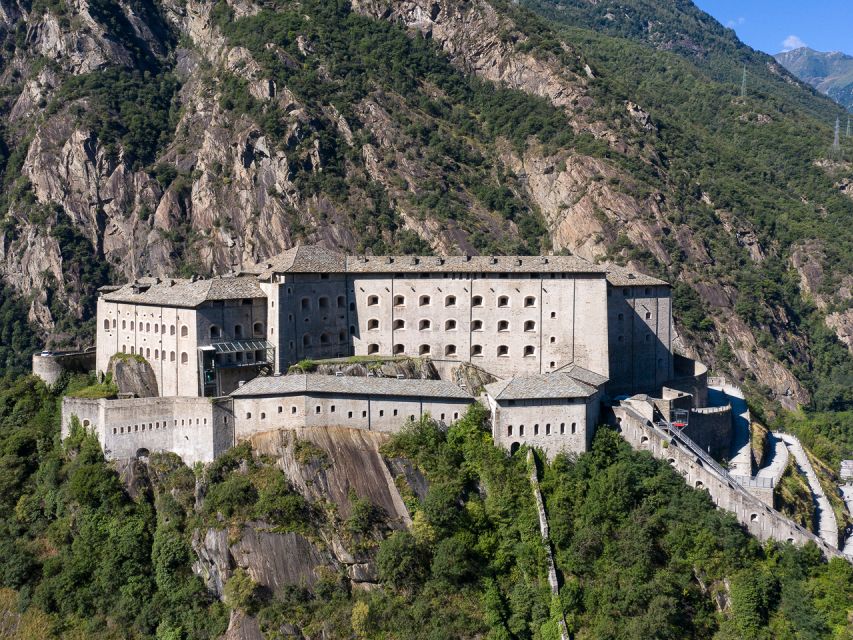
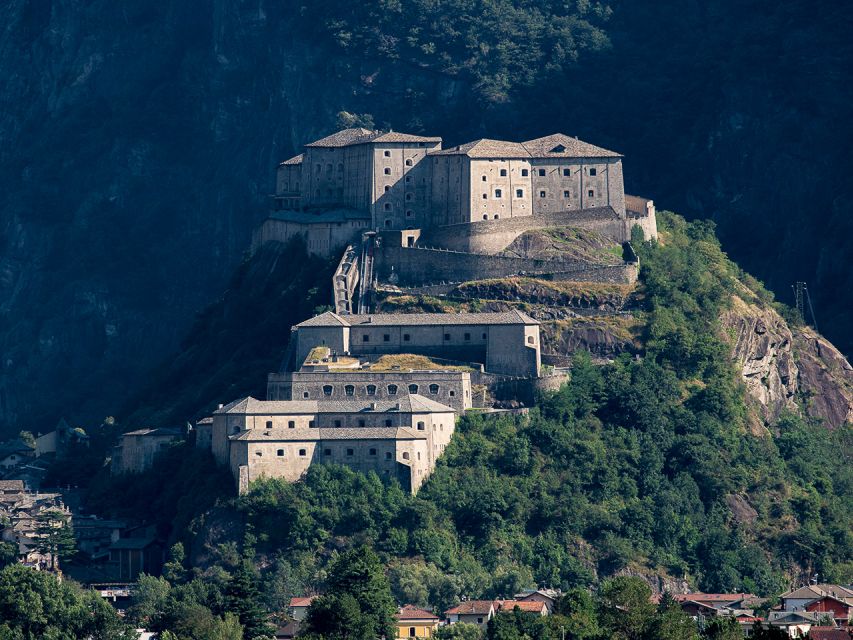
Fort Bard occupies a rocky height above the medieval village of Bard in Italy’s Aosta Valley. Its position explains almost everything about the site. The fortress controlled an important route through the Alps, so the walls, terraces, courtyards, and military buildings were designed around movement, sightlines, and defence.
You enter through the ticket system at one of two counters. One is at the start of the first panoramic lift. The other is above the medieval village, behind the Church of Bard. Check your voucher there before going farther into the complex. This matters because the ticket must be exchanged for entry, and the fortress is spread over several levels rather than arranged like one compact museum.
The panoramic lifts are part of the appeal. They connect the lower approach with the upper sections and give you a changing view of the valley as you rise. I would not treat them as a minor convenience. They make the visit more manageable, especially if you want to save your energy for the museums, courtyards, and walkways.
The fortress itself supplies much of the visual drama. You pass through imposing walls, original architectural elements, parade grounds, courtyards, a chapel, and open walkways. The stonework is not simply decoration around the displays. It helps you understand why this location mattered and how a defensive complex could control a narrow Alpine route.
More Fortress and Citadel Tours in Italy
- San Leo: Fortress Entry Ticket and Cagliostro’s Prison
★ 4.2 · 38 reviews - Bard: Fortress Exhibitions and Museums Entrance
★ 4.3 · 29 reviews - Castel Sant’ Angelo: The most famous Fortress of Rome
★ 4.0 · 13 reviews
The Museum of Fortifications follows weapons and strategy
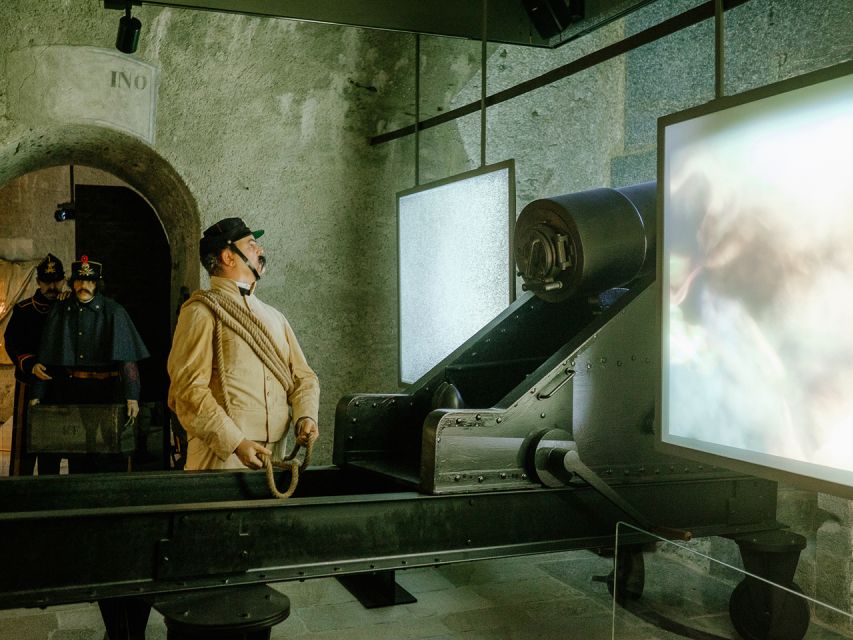
The Museum of Fortifications and Frontiers is the clearest place to understand the military purpose of Fort Bard. Its first section uses historical settings, scale models, film footage, and authentic weapons to explain how fortresses in the Western Alps changed as weapons and military strategies changed.
This approach gives the subject a useful structure. Instead of looking at walls as fixed objects, you see them as responses to new technology. As weapons improved, defensive systems had to change. The museum connects those developments to the broader network of fortresses across the Western Alps.
The models are useful because a fortress can be hard to understand from ground level. A scale reconstruction shows how the parts fit together, where soldiers would have moved, and how walls and buildings worked as a system. Film footage adds another layer, though the exact amount of material you spend with it will depend on your pace.
The second part turns to the changes of the late 19th and early 20th centuries. Here, Fort Bard is placed within the wider system of 19th-century fortresses. Scale models and large reconstructions show how defence planning developed during a period when older fortress designs faced new military demands.
I would give this museum time if you enjoy engineering, military history, or political geography. It is less about heroic stories and more about how geography, weapons, and strategy shaped the Alps. If your interest is mainly art or village life, this may be the section you move through fastest.
The final section asks whether the Alps are a boundary. That question gives the museum a wider purpose. A mountain pass can separate communities, but it can also connect them. The Alps may act as a border, a barrier, an obstacle, or a line of union, depending on the point of view.
This is a good idea for a final room because it moves beyond weapons and walls. Fort Bard was built to control passage, yet the same mountain routes also carried trade, communication, and cultural exchange. You do not need a military background to understand the question. The museum gives you facts, then leaves room for your own answer.
The Prisons offer the most intimate part of the visit
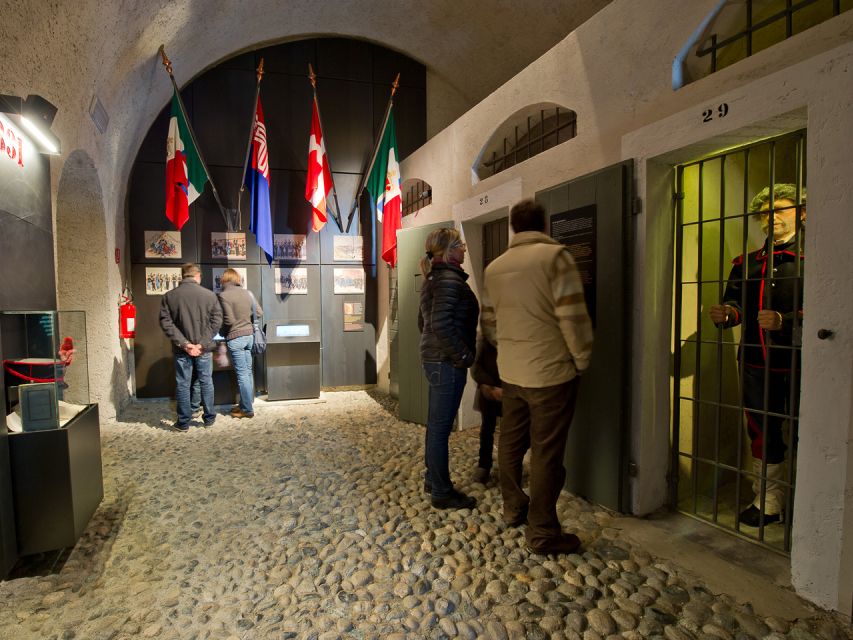
The route to the Prisons follows the panoramic path through the fortress. This is one of the most atmospheric sections because the scale changes sharply. The open courtyards and large defensive walls give way to a confined interior with 24 very small cells.
Each cell measures about 1.3 by 2 metres. They are arranged along four sections, preceded by an entrance gallery devoted to an iconographic presentation of the fortress. The narrow dimensions are easy to picture, but seeing the repeated cells in sequence makes the conditions more immediate.
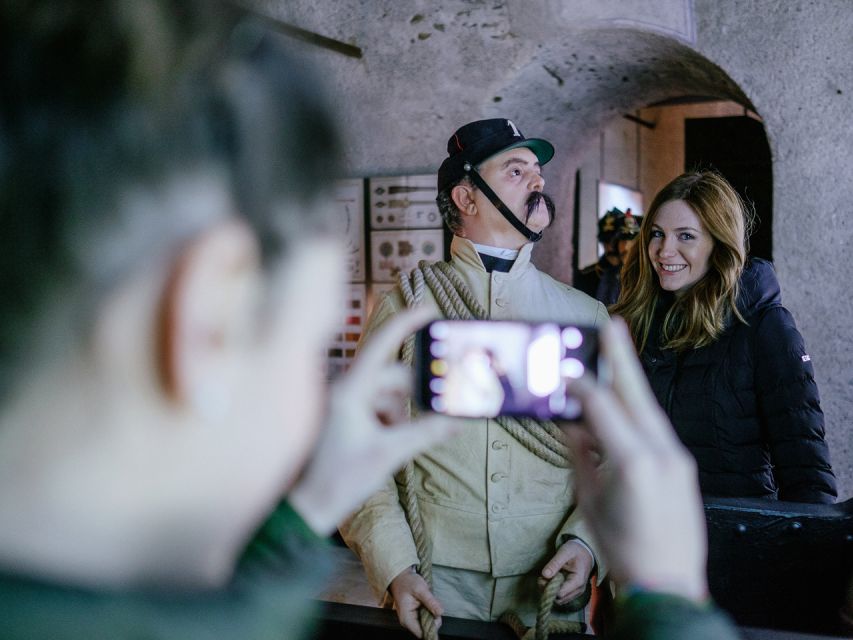
The Prisons are a good choice if you want a shorter, more focused museum section. They do not require the same amount of historical reading as the fortification exhibition, yet they add a human side to the complex. Military design can feel abstract when you are looking at models. The cells bring the consequences of confinement into view.
Do not rush through the entrance gallery. Its images help connect the prison spaces to the fortress as a whole. The rooms are small, so the area may feel enclosed, particularly if you stop for the audio content. Move at a calm pace and let the structure do some of the work.
This section may also be the least comfortable for some visitors. The cells are exceptionally tight, and the atmosphere is naturally severe. That is part of its value, but it is worth knowing before you choose it. The museum spaces are not all interchangeable. The Prisons are the most direct and physical reminder that Fort Bard was a working military complex, not just a scenic viewpoint.
The Museum of the Alps shifts from nature to daily life
The Museum of the Alps gives the visit a broader setting. Its three parts examine the natural and human components of the mountain environment, Alpine civilization, and the way the mountains changed during the modern era.
The first section looks at the mountain environment. It connects natural features with the ways people have used and adapted to them. The subject is not presented as scenery alone. The mountains shaped routes, settlement, work, and defence, so this museum helps connect the fortress to the region around it.
The second part focuses on Alpine civilization. This is where you get more attention on human life in the mountains. The museum places local culture within its environment, showing that Alpine communities developed in response to altitude, terrain, and access.
The final section covers modernity and the transformation of the mountains. That gives the museum a useful time span. You move from natural conditions and traditional life toward the changes brought by the modern era.
I would choose this museum if you want a break from military subjects. It also works well for anyone who wants to understand the Aosta Valley beyond the fortress walls. The Museum of the Alps does not replace time in the villages or countryside, but it offers a compact introduction to the relationship between mountain geography and human life.
The three-part arrangement makes it easier to follow than a collection of unrelated objects. You begin with the setting, then look at the people who lived there, then consider how modern life changed the region. Allow enough time to read the displays, since the value comes from the connections between the sections.
Same walls, a different way in:
- Milan: Sforza Castle Entry Ticket with Digital Audio Guide
★ 4.0 · 2,675 reviews - Milan: Sforza Castle and Michelangelo’s Pietà Rondanini Tour
★ 4.7 · 1,119 reviews - From Siena: Chianti and Castles Tour with Wine Tastings
★ 4.6 · 631 reviews - Milan: The Last Supper & Sforza Castle Guided Tour
★ 4.6 · 610 reviews
Your ticket covers three spaces, so choose with care
At $17 per person, the ticket is good value if you use the fortress areas included in the admission. You receive access to three exhibition spaces of your choice from the permanent museums, including the Museum of the Alps, the Prisons, and the Museum of Fortifications and Frontiers. You can also enter art exhibitions that are open during your visit.
You also receive access to the panoramic lifts, chapel, parade grounds, courtyards, and walkways. That matters because the fortress is not simply a pay-to-enter gallery. The architecture and outdoor routes are a major part of the visit.
If you have only a short amount of time, I would choose the Prisons, one of the two larger museums, and the outdoor fortress route. If military history interests you most, choose the Museum of Fortifications and Frontiers with the Prisons. If you want a more general introduction to the area, combine the Museum of the Alps with either the fortifications exhibition or the Prisons.
The 90-day validity adds useful flexibility. It does not mean the visit lasts 90 days. It means you have a long window in which to use the ticket, subject to available starting times. This is handy if your Aosta Valley plans change or if you want to wait for better weather before taking in the outdoor views.
A 10 percent discount at the Fort bookshop is included as well. That will matter most if you want a book about the fortress, Alpine culture, or military architecture. It is a small benefit, but it adds value for visitors who like to carry home more than photographs.
The audio guide replaces a live explanation
There is no guided tour with a live guide included. Instead, the audio guide is delivered through the Museon app. You need to download the app on your smartphone, then collect a QR code at the ticket office to use the service.
This arrangement gives you control over the pace. You can spend longer in the parts that interest you and move on when a display does not hold your attention. It also means you should arrive with your phone ready, since downloading an app at the entrance can be an avoidable nuisance.
The app is especially useful for the architecture. Fort Bard has several levels, passages, and outdoor spaces, and the historical meaning of each area may not be obvious from the stonework alone. Audio context can help you connect the chapel, parade grounds, courtyards, and walkways to the wider defensive system.
The trade-off is personal guidance. A live guide could answer questions and adjust the explanation to your interests. Here, you set the pace and rely on the app. For independent visitors, that is usually a fair exchange. If you prefer a structured tour led by a person, this ticket may feel less satisfying.
The visit has been described as well organized, and that fits the way the admission is arranged. You receive the ticket, gain access to the lifts and fortress areas, then choose the museum combination that suits you. Still, give yourself time to orientate yourself at the start. The complex is larger and more layered than the $17 price might suggest.
What the reviews reveal about expectations
The overall rating is 4.5 from 125 reviews, with organization and interesting content receiving clear praise. That matches the strongest part of the visit: Fort Bard offers several connected subjects rather than one thin display.
One Italian visitor rated the visit three stars because a Marvel exhibition was not present. Part of Avengers: Age of Ultron was filmed at Fort Bard, so film fans may arrive expecting a dedicated Marvel display. Do not book this ticket on the assumption that such an exhibition is included. The admission covers the fortress, three permanent museum spaces of your choice, and art exhibitions open at the time of your visit. Temporary displays can change.
That is a useful warning because the fortress has a cinematic look, but its main purpose here is historical and cultural. You are paying for the building, the fortification displays, the Alpine museum, the prison cells, and the views, not for a film-location tour.
Another visit was rated five stars for its organization, while a four-star assessment called the content interesting. I would read those reactions as a sign that this works best when you want a self-guided cultural visit with several themes. It is less suitable if you want a tightly scripted attraction with a host leading every step.
Practical details that affect your day
The activity is wheelchair accessible, and the panoramic lifts help with movement between levels. The available information does not give a full route map or specify which individual museum areas may have limitations, so confirm any precise access needs at the ticket office.
Free cancellation is available up to 24 hours before the visit for a full refund. You can also reserve now and pay later, which is useful when your schedule in the Aosta Valley is still shifting.
The ticket counter location deserves attention. The first counter is at the beginning of the first panoramic lift. The second is at the top of the medieval village, behind the Church of Bard. Since you must exchange your voucher, keep it easy to find and allow time to reach the correct counter.
The ticket does not state a fixed visit length. That is sensible for a complex with several museums and open-air areas, because your timing depends on how much you read, how long you spend with the audio guide, and which three exhibition spaces you select. The 90-day validity gives you flexibility, but check availability and starting times before you go.
Who should book Fort Bard?
I would book this for anyone interested in fortresses, military design, Alpine culture, or historic architecture. It is also a strong choice if you want a mountain visit with substance, rather than a viewpoint with a short photo stop.
Families can choose between models, films, open courtyards, lifts, and the striking prison cells. The subject matter is serious, and the narrow cells may not suit every child, but the variety helps prevent the visit from feeling like one long wall-to-wall museum.
Independent visitors should appreciate the app and the ability to choose three exhibition spaces. You can build a military-focused visit, a culture-focused visit, or a mix of both. People who want a live guide should know from the start that they will be exploring on their own.
Film fans can enjoy recognizing Fort Bard as a location associated with Avengers: Age of Ultron, but that should be a bonus rather than the reason for booking. No dedicated Marvel exhibition is promised.
Should you book this $17 fortress visit?
Yes, if you want to understand why Fort Bard occupies such an important position in the Aosta Valley. The price covers much more than entry to a single building: you get the lifts, historic spaces, outdoor routes, audio guide, and three museum areas.
Choose it with realistic expectations. This is a self-guided visit, not a live tour. The fortress is the star, the museums add context, and the views reward you between sections. If you prepare the Museon app in advance and select your three exhibition spaces with care, $17 buys a full and flexible look at one of the Alps’ most imposing defensive sites.
FAQ
How much does entry to Fort Bard cost?
The listed price is $17 per person.
How long is the ticket valid?
The ticket is valid for 90 days. This refers to the period in which you can use the ticket, not the length of one visit.
Which museums can I visit?
Your ticket includes access to three exhibition spaces of your choice from the permanent museums. Options include the Museum of the Alps, the Prisons, and the Museum of Fortifications and Frontiers.
Are the panoramic lifts included?
Yes. The ticket includes access to the panoramic lifts, as well as the chapel, parade grounds, courtyards, and walkways.
Is a live guide included?
No. A guided tour with a live guide is not included. The ticket includes an audio guide accessed through the Museon app.
How do I use the audio guide?
Download the Museon app on your smartphone. A QR code for the included service is provided at the ticket office.
Where do I exchange my voucher?
You can exchange it at the ticket counter at the start of the first panoramic lift or at the counter behind the Church of Bard, at the top of the medieval village.
Can I cancel the booking?
Yes. You can cancel up to 24 hours in advance for a full refund. The reserve-now-and-pay-later option is also available.
More Castle Museums in Italy
- Trieste: Miramare Castle & Museum Entry Ticket & Audio App
★ 4.2 · 213 reviews - Osaka Castle: Museum and Tower Entry Ticket
★ 4.5 · 2,380 reviews - Chapultepec Castle & Anthropology Museum Tour
★ 4.5 · 1,348 reviews - Cairo: Egyptian Museum, Citadel, and Old Cairo Guided Tour
★ 4.7 · 853 reviews
Newly walked in Italy
- Postojna Cave & Predjama Castle from Trieste★ 4.5 · 122 reviews
- City walk through Spanish steps, Trevi fountain, Pantheon, Navona, Angel Castle★ 5.0 · 55 reviews
- Milan Private Tour – Duomo, Sforza Castle & Gelato Tasting★ 5.0 · 40 reviews
- Milan: Duomo, Scala, Sforza Castle and Last Supper Private Tour★ 5.0 · 38 reviews
- Private Tour – St. Angel’s Castle★ 5.0 · 42 reviews
- Milan: Private Tour – Duomo, Sforza Castle & Gelato Tasting★ 4.8 · 36 reviews
- Palermo: Medieval castles of Caccamo & Cefalù. Small Group Tour★ 5.0 · 24 reviews
- Private daytour medieval castles from Civitavecchia port★ 4.5 · 7 reviews
Fortress & Citadel Tours, compared.
From Cairo Alexandria Catacombs, Citadel Day Trip with Lunch
Read our review →
Charleston historical walking tour with a Professor of History at The Citadel
Read our review →
Hue Customizable Tour with Imperial Citadel & Forbidden City
Read our review →
Desert Safari: Luxury Fortress Dinner, Camel Ride & Dune Bashing
Read our review →
Egyptian Museum, Citadel, and Old Cairo Guided Tour
Read our review →Browse the lists this tour appears in