
Review · ITALY
Bari: Norman-Swabian Castle Entry Ticket
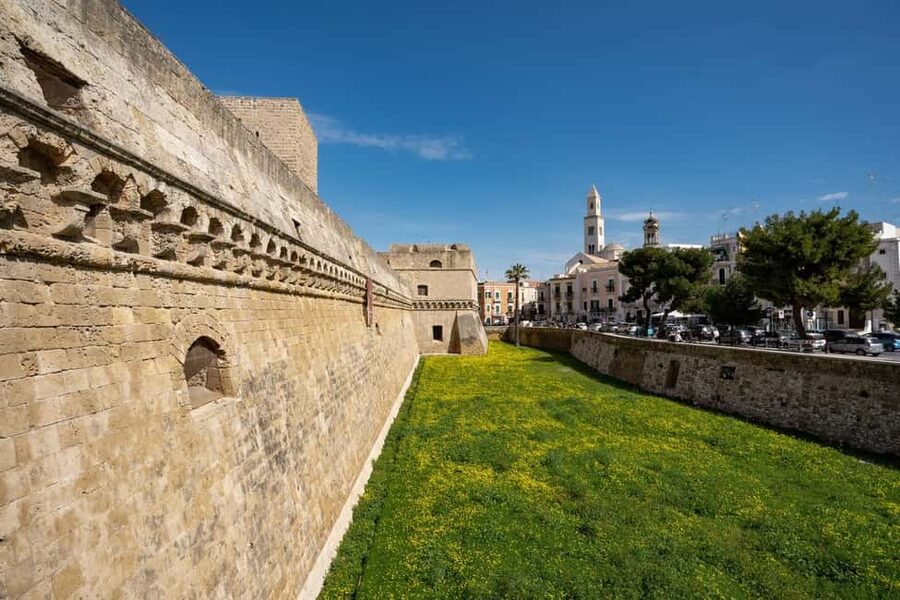
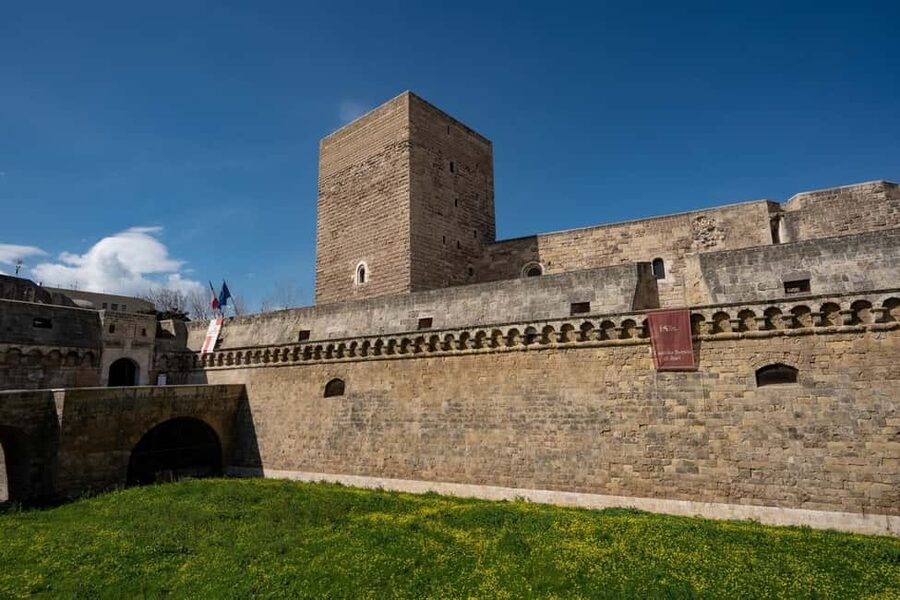
Bari’s Swabian Castle is not just a big stone fort. It is a compact lesson in how power changed hands in southern Italy. Norman foundations, Swabian rebuilding, and Renaissance refinement all appear within the same walls, between Bari Cathedral and the docks. I like the castle for two clear reasons: the architecture rewards close looking, and the interior displays help you follow its long transformation instead of leaving you with empty rooms and a few plaques.
I also like the choice of an optional audio guide, especially since the castle’s story crosses several ruling families and centuries. The main drawback is scale. This is a one-day-valid entry ticket, not a full guided tour, and one visitor found the admission expensive for the amount on view. Go with realistic expectations, and the castle makes a useful, focused stop in Bari.
Key points to know before entering
- Norman beginnings: Ruggero II built the original castle in 1131 to help secure the Norman conquest of Bari.
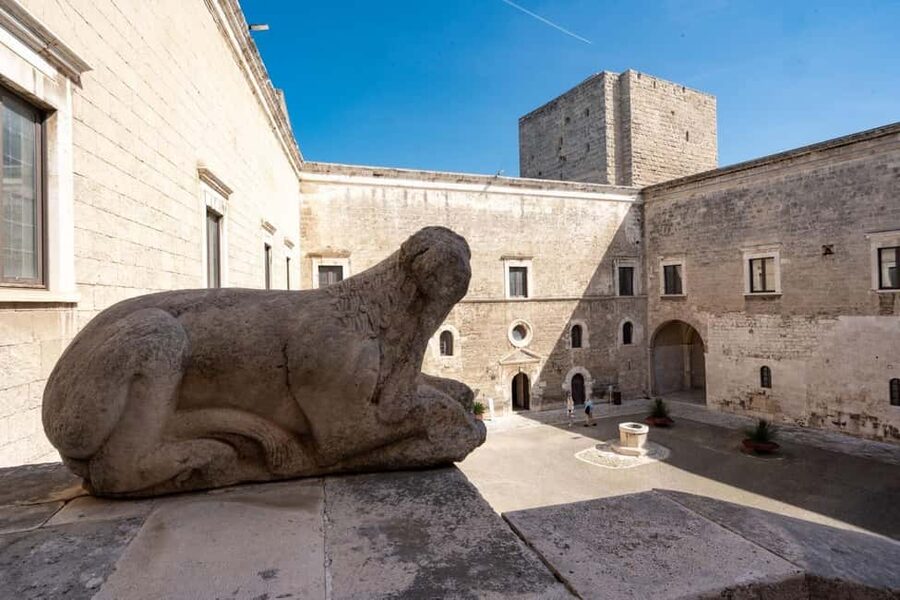
- Swabian architecture: Frederick II rebuilt the fortress in the 13th century, leaving visible work in the entrance portal, atrium, and loggia.
- Renaissance conversion: Isabella of Aragon and Bona Sforza later turned the military stronghold into a more refined residence.
- Interior collections: Look for Renaissance ceramics, jewellery, and wooden models of the castles at Bari, Barletta, and Monopoli.
- The Gipsoteca: This gallery, opened in 2011, contains plaster casts of important monuments and places of worship across Puglia.
- Practical access: The ticket is valid for one day, entry time matters, and the site is wheelchair accessible.
Why Bari’s castle matters
The castle sits in a useful place for understanding Bari. It is in the oldest part of the city, close to the cathedral and the waterfront docks. You can pair it with a walk through the historic center, but the castle also gives you a different view of the city’s past. Instead of seeing Bari only as a port and old-town maze, you see it as a prize claimed and reshaped by successive rulers.
Ruggero II built the first castle in 1131 after the Norman conquest of Bari. That date matters because the fortress was not created as a decorative palace. Its basic purpose was control. The thick, angular form tells you that security came first.
Frederick II of Swabia rebuilt much of the castle in the 13th century. The fortress you see today therefore carries both Norman and Swabian associations, though not every visible stone belongs to one period. I find that layering more interesting than a building that presents one neat historical moment.
The later change is just as important. During the 16th century, Isabella of Aragon and her daughter Bona Sforza adapted the severe military structure into a Renaissance residence. Poets and artists were drawn to their court, and the building took on a more polished character. You are not simply looking at a fortress that survived. You are looking at a fortress that changed its job.
More Castle Entry Tickets in Italy
- Milan: Sforza Castle Entry Ticket with Digital Audio Guide
★ 4.0 · 2,675 reviews - Trieste: Miramare Castle & Museum Entry Ticket & Audio App
★ 4.2 · 213 reviews - San Leo: Fortress Entry Ticket and Cagliostro’s Prison
★ 4.2 · 38 reviews
The entrance portal and Frederick II’s mark
Start by taking your time at the entrance. The majestic portal is one of the clearest places to look for Frederick II’s intervention. The details include architraves, cornices, corbels, and capitals, so this is a good spot to slow down rather than hurry straight inside.
You do not need to be an architecture specialist to enjoy this section. Look for the contrast between defensive mass and formal decoration. A military building needs a strong entrance, but the carved elements show an interest in order and display as well as protection.
The atrium continues that impression. It gives you a sense of how the castle’s internal spaces were organized and how later rulers could adapt an older stronghold. The loggia, positioned between architraves, cornices, corbels, and capitals, adds another layer of visual detail.
The audio guide can help here. The ticket information lists English, Italian, French, Spanish, and German, with the audio guide available as an extra option. Since no personal guide is included, the recording is useful if you want dates and political background while you walk. Without it, you can still appreciate the forms, but the transitions between Norman, Swabian, and Renaissance phases may be less clear.
From military fortress to Renaissance residence
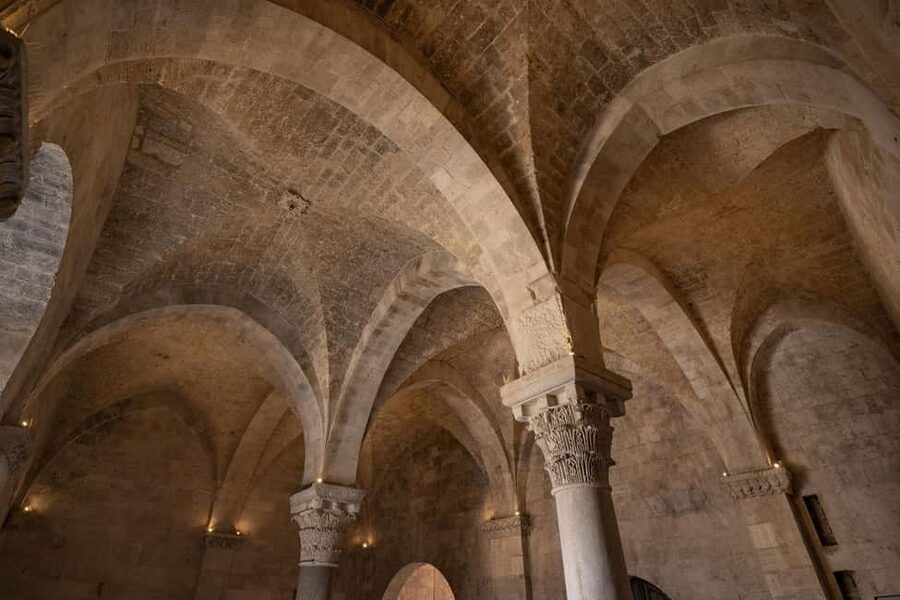
The most engaging part of the castle’s story is the change under Isabella of Aragon and Bona Sforza. A fortress built to project power became a residence suitable for court life. That shift gives the building more personality than a simple military monument.
As you move through the interior, think about the different needs of the people who used it. A conquering ruler needed a defensible base. A later royal household needed rooms and settings appropriate for culture, ceremony, and social life. The same structure had to serve both purposes.
The castle’s connection with poets and artists helps explain why the Renaissance phase is more than a decorative footnote. It shows how southern Italian rulers used architecture to express status and attract cultural life. You might not see every detail of court life in the rooms, but the collections and displays help fill in the picture.
One useful feature is the set of installations that explains how the fortress changed over the centuries. These displays are especially helpful if you prefer a visual explanation to a long block of text. They show the castle as a work in progress, not a frozen medieval object.
That interpretive approach is one of the strongest reasons to pay for entry. You are not only walking around an old structure. You are given a way to read its alterations and understand why its appearance is mixed.
What you’ll find inside the collections
The castle holds several collections, including Renaissance ceramics and jewellery. These objects provide a smaller, more personal view of the period. Walls and portals tell you about power and construction. Ceramics and jewellery tell you about taste, status, and daily life at a more human scale.
The displays also include wooden models of the castles of Bari, Barletta, and Monopoli. I would make a point of seeing these models even if you are mainly visiting for the architecture. They let you compare fortifications and understand how castles worked as part of a wider defensive network.
The models are also useful for families and for anyone who finds military architecture hard to read from ground level. A large fortress can be difficult to understand when you are standing inside it. A model gives you the wider outline in seconds.
The collections do not turn the visit into a major art museum experience. That is worth saying clearly. This is a castle first, with displays that support the building’s story. If you expect room after room of important artworks, the visit may feel limited. If you want objects that explain the castle and its setting, the collections add real value.
Same walls, a different way in:
- Milan: Sforza Castle and Michelangelo’s Pietà Rondanini Tour
★ 4.7 · 1,119 reviews - From Siena: Chianti and Castles Tour with Wine Tastings
★ 4.6 · 631 reviews - Milan: The Last Supper & Sforza Castle Guided Tour
★ 4.6 · 610 reviews - Milan: Last Supper and Sforza Castle Guided Tour
★ 4.6 · 498 reviews
The Gipsoteca and Puglia in plaster
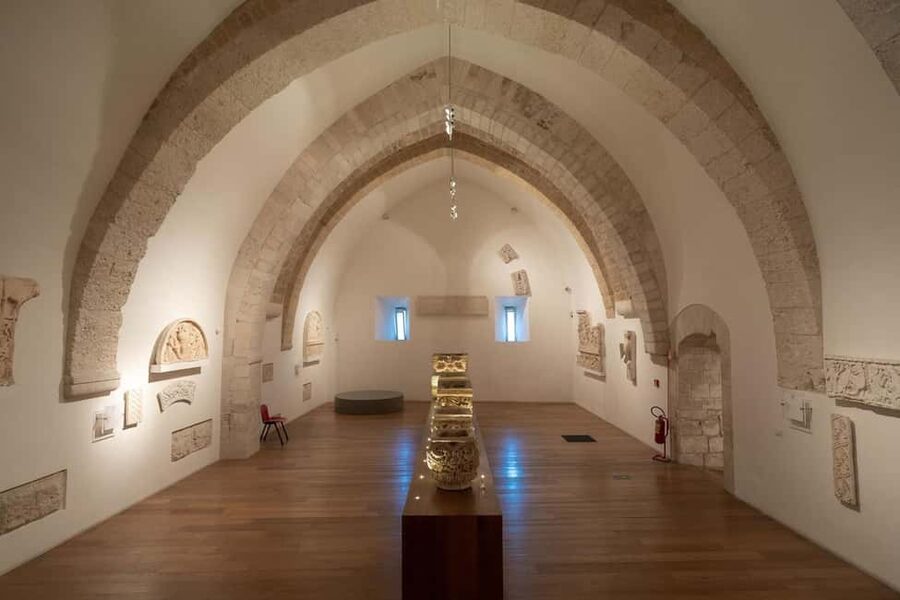
The Gipsoteca is one of the more distinctive parts of the visit. Opened in 2011, it contains plaster casts of important monuments and places of worship in Puglia.
A plaster cast can sound less exciting than an original object, but it serves a practical purpose. Puglia has many historic buildings, and you cannot see all of them during one trip. The Gipsoteca brings details from across the region into one room, giving you a preview of architectural forms you may otherwise miss.
This section also broadens the visit beyond Bari. The castle is rooted in one city, but the casts connect it to the wider artistic and religious heritage of Puglia. I would pay attention to carved details and architectural shapes rather than treating the gallery as a quick side room.
The Gipsoteca opened in 2011, so it is a relatively recent addition compared with the castle itself. That contrast is part of the appeal. You move from medieval and Renaissance stonework to a modern museum presentation designed to preserve and explain regional monuments.
If you are planning more time in Puglia, the gallery can help you decide what kinds of buildings interest you. It will not replace visiting the original sites, but it gives you a useful regional reference point.
How long to allow and how the ticket works
The ticket is valid for one day, and you must respect the entry time selected when booking. The information does not provide a fixed visit length, so I would treat this as a flexible castle visit rather than a timed tour with a set itinerary.
There is no transportation included, and no meals or drinks are part of the ticket. That is not a problem for most visitors because the castle is in central Bari, but you need to plan it as one stop within your own day. You are buying admission, not a city tour or a transfer service.
The adult admission is listed as 10 euros. The optional audio guide costs 6 euros, bringing the listed total to 16 euros if you choose both. The headline price may be shown as about 14 dollars, depending on the booking display and exchange rate, so check the final amount before paying.
At 10 euros, the ticket is fair if you care about the building, the historical displays, and the Gipsoteca. Adding 6 euros for the audio guide makes more sense if you want dates, names, and context without reading every panel. If you are content to look around quickly, admission alone is the better value.
Free admission is available on the first Sunday of each month and on certain dates: April 25, June 2, and November 4. Opening times can change according to museum requirements, so check the schedule before you set your day around the visit.
Is the audio guide worth the extra cost?
I would choose the audio guide if this is your first visit to Bari or if the castle’s political history is the main reason you are going. The story has several turns: Norman conquest, Swabian rebuilding, and Renaissance adaptation. A voice track can make those changes easier to follow as you move between spaces.
The guide is offered in English, Italian, French, Spanish, and German. No guide’s personal name is provided, and this is not a live guided walk. You receive an audio option rather than a person leading a group.
A clear explanation can also help with the installations showing the fortress’s evolution. One particularly positive assessment praised the audio guide and found the room installations, which explain the castle’s development, the best part of the visit. That matches the practical value of the site: its displays do the most work when they explain change.
If you already know medieval southern Italian history, you may not need the extra cost. You can focus on the architecture and objects instead. The choice comes down to how much explanation you want while walking.
Accessibility and small practical matters
The castle is listed as wheelchair accessible. That is useful, but the information provided does not specify which routes, rooms, or surfaces may have limitations. If you need precise access details, confirm them with the provider before arrival.
Entry times are mandatory, so do not treat the ticket like an open-ended pass. Opening hours may also change. Check both details close to your visit, especially if your Bari schedule includes a train, ferry, or another timed activity.
There is no transportation included, and the ticket does not cover food, drinks, or souvenirs. Plan those separately. The central location makes it sensible to combine the castle with Bari Cathedral and the old city, but the exact amount of walking between stops depends on your own route.
Cancellation is flexible up to 24 hours before the scheduled visit, with a full refund available under that condition. That helps if your Bari plans are still moving around.
Who will enjoy this castle most?
I would recommend this visit to you if you enjoy architecture, medieval politics, or seeing how one building changes across centuries. It is also a good stop for anyone who wants a manageable indoor attraction in the historic center.
Families may like the wooden castle models and the visual installations. The Gipsoteca can also help younger visitors connect large, unfamiliar buildings with recognizable shapes and details.
The castle may be less satisfying if you want a long guided experience, extensive room access, or a large collection of famous artworks. The ticket gives you entry and, if selected, an audio guide. It does not promise a full tour led by a historian.
The mixed rating of 3.8 from nine ratings suggests a solid but not universally compelling experience. The strongest points are the building’s architecture, the audio guide, and the displays explaining its development. The main concern is value if you expect a great deal to see for the admission price.
Should you book the Norman-Swabian Castle ticket?
Book it if you want a focused look at Bari’s history and you are willing to pay attention to details. The Norman origin, Frederick II’s rebuilding, the Renaissance residence, and the Gipsoteca give the visit more substance than the exterior alone suggests.
Choose the audio guide if you want the political story explained in English or another supported language. Skip it if your main goal is a quick architectural visit and you are comfortable exploring without spoken commentary.
I would not make the castle the only reason to visit Bari. I would make it part of a day in the old center, pairing it with the cathedral and nearby streets. At 10 euros for admission, it is a reasonable cultural stop. At 16 euros with the audio guide, it is best for you if interpretation matters as much as the stonework.
FAQ
Where is the Swabian Castle of Bari?
The castle is in the oldest part of Bari, between Bari Cathedral and the docks.
What is included with the adult ticket?
The adult entry ticket is listed at 10 euros. An audio guide is available separately for 6 euros if you select that option.
Is the audio guide available in English?
Yes. The optional audio guide is available in English, Italian, French, Spanish, and German.
How long is the ticket valid?
The ticket is valid for one day. You must respect the entry time selected during booking.
Is the castle wheelchair accessible?
Yes, the activity information lists the castle as wheelchair accessible.
Can I cancel the ticket for a refund?
Yes. You can cancel up to 24 hours in advance for a full refund.
Are there days when admission is free?
Yes. Admission is free on the first Sunday of each month and on April 25, June 2, and November 4. Opening times and museum requirements can change, so check the schedule before visiting.
Newly walked in Italy
- HIKING TOUR: VARENNA, Castle of VEZIO Villa MONASTERO, FIUMELATTE★ 5.0 · 48 reviews
- Castles of Puglia Day Trip from Bari★ 4.5 · 7 reviews
- Enchanted Castle of Sciacca – Museum Tickets★ 3.5 · 63 reviews
- Taormina; Taormina Castle Tour★ 3.8 · 11 reviews
- St. Angel’s Castle: 2-Hour Private Tour★ 5.0 · 9 reviews
- Milan: Skip-the-line Sforza Castle and Museums Private Tour★ 4.7 · 7 reviews
- Siena: Tour and Wine Tasting in a Tuscan Private Castle★ 4.9 · 50 reviews
- Sforza Castle & Michelangelo’s Pietà Rondanini Guided Tour★ 4.7 · 3 reviews
Castle Entry Tickets, compared.


Edinburgh Castle: Guided Walking Tour with Entry Ticket
Read our review →
Castle Tour with Local Guide and Entry Ticket
Read our review →
Prague Castle 2.5-Hour Tour Including Admission Ticket
Read our review →
Edinburgh Castle: Guided Walking Tour with Entry Ticket
Read our review →
Prague Castle and Lobkowicz Palace Entry Tickets
Read our review →
Alcázar and Cathedral Entry Ticket and Guided Tour
Read our review →Browse the lists this tour appears in