
Review · OSAKA
Explore selectable area and Osaka castle (3hours)
Osaka’s appeal comes into focus when you move beyond the postcard views. This private walk pairs Osaka Castle’s grand history with the older streets and food culture of Shinsekai, while your guide adds Japanese greetings, temple manners, chopstick practice, and local photo stops. I like the small private format and the chance to ask questions without holding up a large group. I also like that Yuta and Yuka take time with guests rather than rushing from sight to sight.
The main drawback is that three hours is short for Osaka Castle, Shinsekai, and any meaningful look at Dotonbori. You will also pay separately for trains, food, and optional admissions, and the day involves plenty of walking. Wear sneakers, carry cash, and confirm the final route and ending point before you go.
Key points at a glance
- Osaka Castle begins the story: Spend about 90 minutes in the castle park learning how the fortress was built and why it matters to Osaka.
- Shinsekai brings food and neighborhood character: The second half centers on local streets, shopping, temples, shrines, and Osaka specialties.
- Private guiding keeps the pace flexible: Ask questions about culture, daily life, language, and customs as you walk.
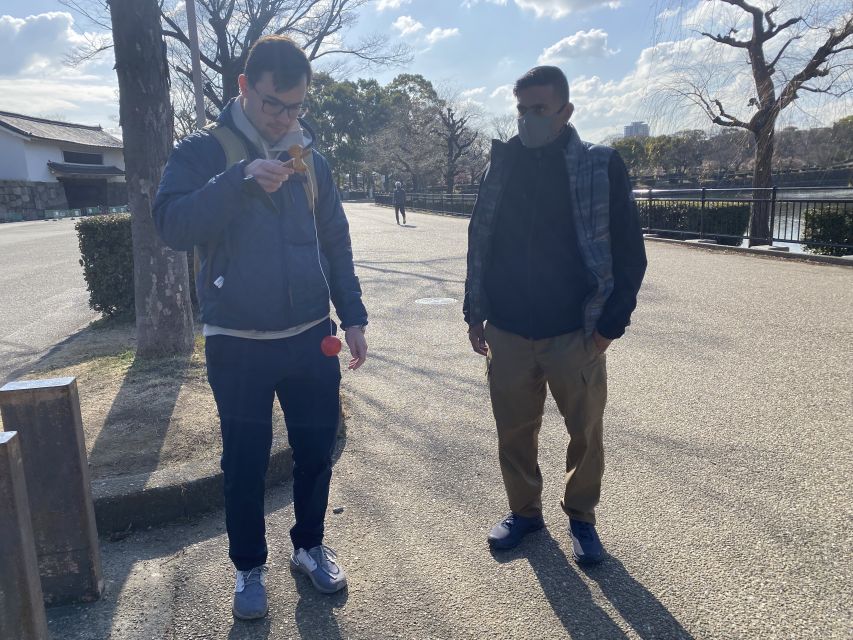
- Small cultural lessons make the tour practical: Practice greetings, chopstick use, Japanese manners, and a round of kendama.
- Budget for extras: Food, train fare, and optional entry fees are not included. Allow about ¥2,000 for food.
- The route needs clarification: The main description mentions Dotonbori, but the detailed route finishes in Shinsekai. Ask the provider to confirm what is included.
Why this Osaka walk feels different
Many Osaka sightseeing tours give you a fast sequence of famous names. This one tries to explain how to behave and communicate along the way. You may practice a few simple Japanese phrases, learn how to greet local people, and receive guidance on manners at temples and shrines.
That approach is useful because small customs can feel confusing when you first arrive in Japan. Knowing how to act near a shrine, how to use chopsticks properly, or how to keep your voice down on public transportation helps you feel more at ease for the rest of your trip.
The guide also brings props and traditional toys, including kendama, a Japanese cup-and-ball game. It is a simple touch, but it gives the walk a hands-on quality that a standard photo tour lacks. You receive a pair of chopsticks as a gift, too.
The guiding is available in English or Japanese. Yuta and Yuka are named guides associated with the experience. One account describes Yuka as a trainee working with Yuta, with English that was not perfect but easy to understand. That is a fair expectation: communication should work well for ordinary questions, though you should not expect polished lecture-style English.
More Japanese Castle Tours in Osaka:
- Osaka Castle: Museum and Tower Entry Ticket
★ 4.5 · 2,380 reviews - Osaka Castle Walking Tour and Castle Tower Admission
★ 5.0 · 561 reviews - From Osaka: Himeji Castle, Arima Onsen & Mt. Rokko Day Tour
★ 4.6 · 339 reviews
Starting at Osaka Castle Park
The meeting point is Ōsakajōkōen Station, one of the stations on the JR Osaka Loop Line. After leaving the ticket gate, look for the small 7-Eleven and wait in front of it. This is a clear enough landmark, but station areas can be busy, so arrive with your phone charged and allow time to find the correct exit.
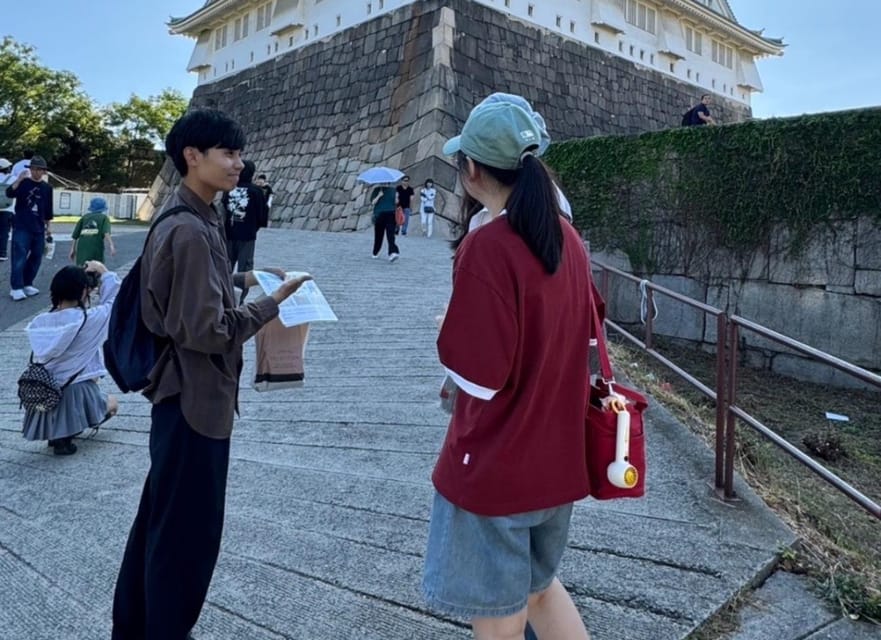
The tour begins in Osaka Castle Park. The first section lasts about an hour and a half, giving you time for a guided walk, photos, sightseeing, and possible shopping. The focus is not only on the castle’s appearance. Your guide explains how Osaka Castle was built and adds cultural background that can be easy to miss when you walk through the grounds alone.
Osaka Castle is one of the city’s defining sights, but the scale can make it feel distant. A personal guide helps connect the stone walls, moats, gates, and castle structure with the people and events behind them. I would listen closely here, because this is the part of the tour that supplies the historical framework for the rest of your Osaka visit.
You should also expect outdoor walking. The tour operates in rain unless the weather becomes dangerous, so bring suitable clothing and do not assume that a light shower will cancel the outing. Comfortable clothes and good shoes matter more than dressy travel clothes.
There may be shopping or an optional visit to an attraction during this portion, but entry fees are not included. If you want to go inside a paid site, keep extra money available and ask the guide what the cost will be before committing.
The 15-minute train ride
The move from Osaka Castle to Shinsekai takes about 15 minutes by train. Transportation fare is not included, so carry enough cash or another accepted way to pay for your own ticket.
This short ride is part of the experience, not dead time. You get a look at how the city connects its major districts, and your guide can continue explaining local behavior and etiquette. The activity specifically asks you not to make noise on public transportation, which is a useful reminder in Japan, where quiet train manners matter.
Because the guide is private, you can use this transfer to ask practical questions. Ask about food, greetings, neighborhood customs, or places you plan to visit later. The ride is brief, so keep your question list focused.
Exploring Shinsekai for the second half
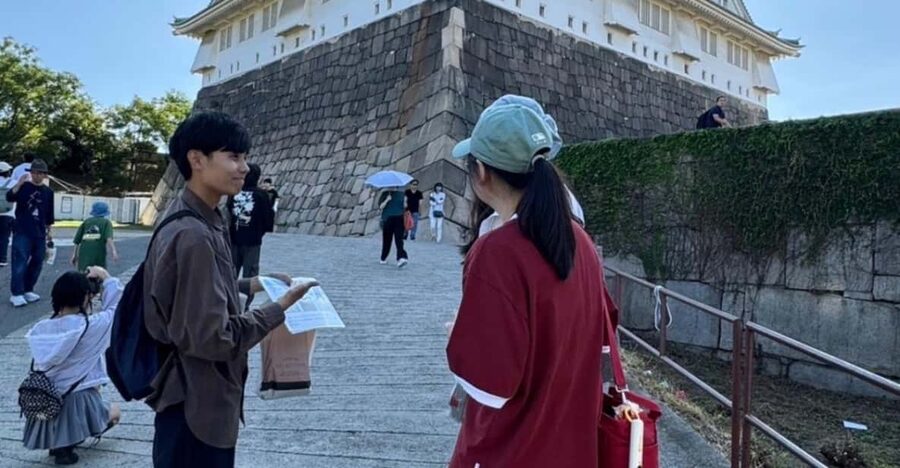
Shinsekai occupies roughly the final hour and a half. The plan includes a break, guided walking, shopping, and time for local food. This is where the tour shifts from Osaka’s formal landmark to the city’s everyday character.
The guide recommends Osaka specialties, but you pay for your own meals and drinks. Set aside about ¥2,000 for food, as requested in the tour information. That amount is an estimate rather than a fixed meal price, so your final cost will depend on what you choose.
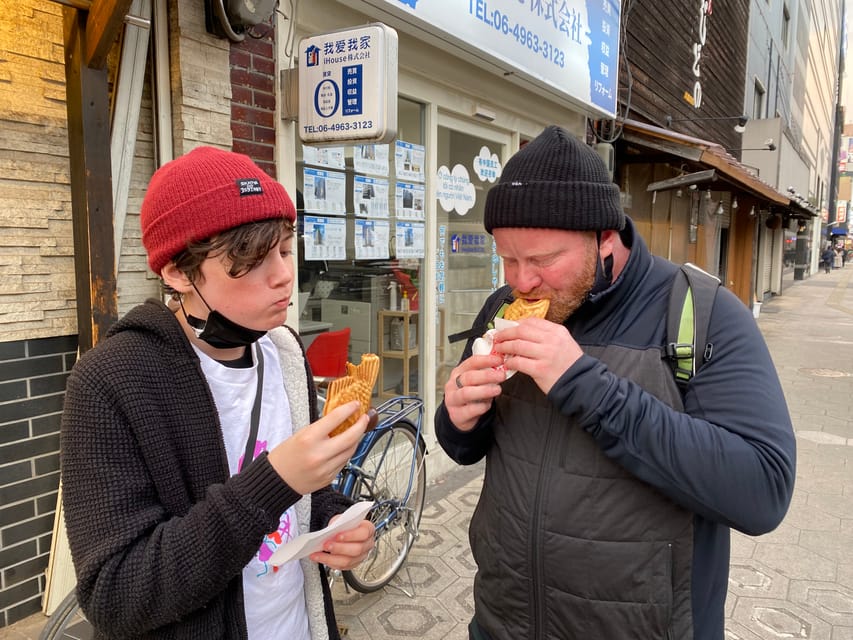
Food is not simply a quick snack stop here. You can learn how to use chopsticks and ask about dishes that are distinctive to Osaka. If you are unsure what to order, the guide’s recommendations are one of the stronger reasons to take this tour. You get help making a choice instead of guessing from a menu.
Shinsekai also includes chances to visit a real temple or shrine, practice appropriate manners, and see where local people shop. The experience does not promise a long religious lecture. Instead, it gives you a chance to ask what to do when you enter, where to pray, and how to behave respectfully.
The walking route can include popular attractions as well as less obvious photo locations. Do not expect a secret neighborhood completely untouched by tourism. Shinsekai is a well-known part of Osaka. The benefit is having someone explain what you are seeing and point out places you might otherwise pass without noticing.
More Castle Tours in Osaka:
- Ultimate Osaka Walking Tour: Castle, Dotonbori & Hidden Gems
★ 5.0 · 862 reviews - 5-Hour Osaka Bike Tour to the Neighborhood of Osaka Castle
★ 5.0 · 319 reviews - Osaka Castle Guided Tour
★ 4.7 · 249 reviews - Osaka: Castle History Walking Tour / Castle Tower Admission
★ 4.9 · 230 reviews
How Dotonbori fits into the plan

Dotonbori appears in the main description as one of the areas connected with the experience, but the detailed three-hour itinerary lists Osaka Castle and Shinsekai, with the tour ending in Shinsekai. That difference matters if you are booking this specifically for the famous canal, neon signs, and food streets of Dotonbori.
I would contact Spejapa-Excursion before paying and ask one direct question: Is Dotonbori included in this three-hour route, or is it only part of the broader description? The listed train transfer and the two 90-minute walking sections leave little time for a full Dotonbori visit.
This is not necessarily a problem. Osaka Castle and Shinsekai make a sensible half-day pairing, and Shinsekai gives you a different side of the city. But clear expectations will prevent disappointment. The detailed stop information says the finish is 新世界, or Shinsekai, while another instruction says the activity ends back at the meeting point. Confirm that detail as well.
What the private format adds
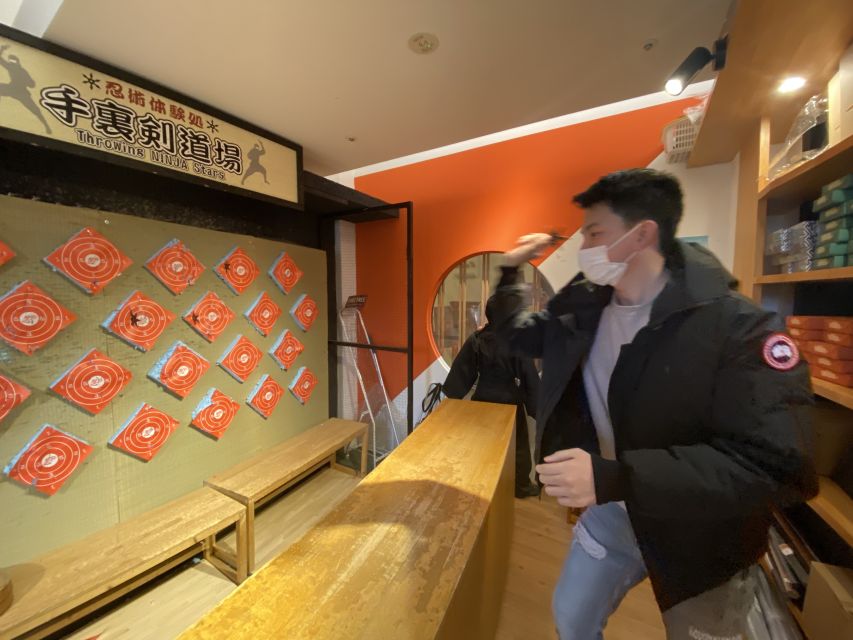
The group is private, which is valuable for a culture-focused walk. You can stop to ask why a custom matters, repeat a phrase, or spend more time at a food stop without waiting for a large group to catch up.
A private tour does not automatically mean a completely custom route. The advertised structure still centers on Osaka Castle and Shinsekai. But the smaller setting should make it easier to shape the conversation around your interests, especially if you want help with Japanese language, food, photography, or etiquette.
The private format also suits people who dislike being rushed. One five-hour booking described a relaxed pace, detailed answers, and no pressure to leave a place quickly. That booking was longer than the three-hour version described here, so do not assume the same amount of time. Still, it suggests the guiding style is patient rather than mechanical.
The tradeoff is price. At $67 per person, this is not the cheapest way to see Osaka’s major sights, especially since trains, meals, and entry fees come extra. Yet the price can be reasonable if you value a private English-speaking guide, cultural explanations, food advice, and a route that combines a major landmark with a neighborhood walk.
For one person, the cost may feel high compared with using a map and public transportation. For a couple or small private party, the personal attention may make better financial sense. Consider what you want from the day: simple transportation between sights, or conversation and local guidance as you go.
Walking, food, and practical preparation
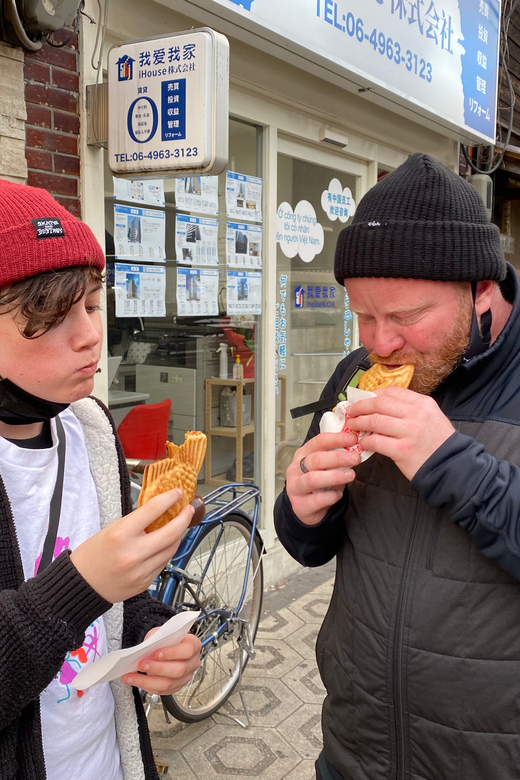
Plan for a lot of time on your feet. The itinerary gives you two 90-minute walking sections plus station transfers, so sneakers are the sensible choice. One account specifically advises bringing sneakers, and I agree.
Bring cash. You need it for food, transportation, and possible paid admissions. The tour information suggests about ¥2,000 per person for a meal, but keep a little extra if you want drinks or additional snacks.
A charged smartphone is also important. You may need it for meeting-point details, communication, directions, or photos. The guide helps with good photo locations, so you will likely use your phone throughout the walk.
Bare feet are not allowed. Wear normal footwear that is comfortable for walking and suitable for entering places where shoes are expected to remain on.
The tour runs in rain except during risky weather. A compact rain layer is sensible, though the activity details do not specify whether umbrellas or other equipment are provided. Dress for the forecast rather than counting on perfect skies.
The experience is listed as wheelchair accessible, but the route includes station movement, train travel, and walking around outdoor areas. If you use a wheelchair, confirm the exact route and transfer arrangements in advance. The activity is not suitable for pregnant women, people with visual impairments, or people over 80 years old according to the stated restrictions.
Who will get the most from this tour

I would recommend this experience to a first-time Osaka visitor who wants an introduction to the city without joining a large group. It is especially useful if you want more than photographs. The lessons in greetings, manners, chopsticks, and shrine behavior give you tools you can use throughout Japan.
It also suits food-curious visitors who would rather receive recommendations than choose blindly. The guide can explain Osaka dishes and help you approach a meal with more confidence.
Families and playful adults may enjoy the kendama activity and the hands-on nature of the route. The private format can also help if your group has a particular interest in language, shopping, or photography.
I would be more cautious about booking it if you want a slow, detailed castle visit, a full Dotonbori evening, or a tour built around paid interior attractions. Three hours goes quickly, and the listed price does not cover the extras.
Booking details worth checking first
You can cancel up to 24 hours in advance for a full refund, and the reserve-now, pay-later option keeps your plans flexible. Starting times vary, so check availability for the date you want.
English and Japanese are the available languages. Since the experience is private, tell the provider your language preference when arranging the tour.
Before booking, clarify three items:
- Confirm if Dotonbori is actually included.
- Confirm if you finish in Shinsekai or return to the original station meeting point.
- Ask which optional admissions, if any, are likely during your chosen route.
These questions take little effort and make the three-hour plan much easier to understand.
Should you book this Osaka experience?
Book it if you want a friendly, personal introduction to Osaka that combines history, food, manners, and neighborhood life. The strongest features are the private format, patient question time, local food guidance, and practical cultural lessons. Yuta and Yuka’s approach appears suited to people who want conversation rather than a memorized speech.
Skip it if your priority is a strict Dotonbori itinerary, a long castle interior visit, or an all-inclusive price. You will need to pay for trains, food, and possible admissions, and the route involves plenty of walking.
For a first Osaka afternoon, I see good value in the combination of Osaka Castle and Shinsekai, provided you confirm the route before booking. Bring cash, wear sneakers, keep your phone charged, and treat the meal stop as part of the learning experience rather than an included restaurant visit.
FAQ
How long does the tour last?
The stated duration is three hours. Check the available starting times for your chosen date.
Where does the tour start?
It starts at Ōsakajōkōen Station, one of the stations on the JR Osaka Loop Line. After leaving the ticket gate, wait in front of the small 7-Eleven.
Which languages are available?
The tour is offered in English and Japanese.
Is the tour private?
Yes. It is held as a private group experience.
Is transportation included?
No. You pay your own train fare. The transfer from Osaka Castle to Shinsekai takes about 15 minutes.
Are food and drinks included?
No. Food and drinks are not included. You should budget about ¥2,000 per person for a meal.
Is entry to Osaka Castle or other attractions included?
Optional entry fees are not included. Ask the guide about any paid places before entering.
Does the tour visit Dotonbori?
Dotonbori appears in the general description, but the detailed route lists Osaka Castle and Shinsekai and finishes in Shinsekai. Confirm the exact route with the provider before booking.
What should I bring?
Bring comfortable clothes, cash, and a charged smartphone. Sneakers are a good choice because the tour includes substantial walking.
Can I cancel for a refund?
You can cancel up to 24 hours in advance for a full refund. The reserve-now, pay-later option is also available.
Newly walked in Osaka
- (Ticket Included) Explore Osaka Castle & Museum of History★ 4.8 · 21 reviews
- Osaka: Osaka Castle – Tsuruhashi – Tennoji (Spanish Guide)★ 4.7 · 10 reviews
- Osaka: Osaka Castle 3 hours Historical Walking Tour★ 4.6 · 14 reviews
- Osaka: Early Morning Osaka Castle Guided Tour, Avoid Crowds★ 4.9 · 12 reviews
- Osaka: Explore Every Bit of Osaka Castle in 3 Hours★ 5.0 · 5 reviews
- Osaka: Castle, Tea Ceremony, Calligraphy, and Samurai Armor!★ 5.0 · 4 reviews
- Samurai Armor & Sword experience with phot near Osaka Castle★ 4.6 · 16 reviews
- Osaka: 1-Day Guided Tour – Sky Bldg, Castle, Namba Shinsekai★ 5.0 · 6 reviews
Japanese Castle Tours, compared.
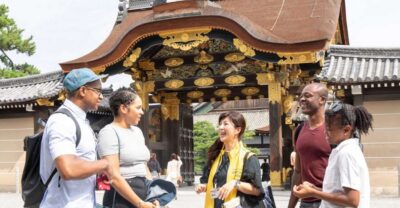
Nijo-jo Castle and Ninomaru Palace Guided Tour
Read our review →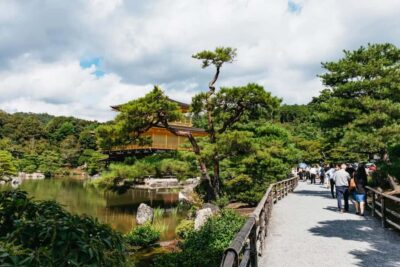
Nijo Castle, Kiyomizu & Fushimi Inari Guided Tour
Read our review →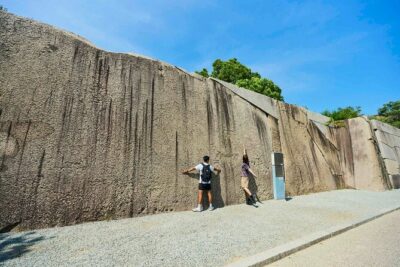
Osaka Castle Walking Tour and Castle Tower Admission
Read our review →
Imperial Palace & Nijo Castle Guided Walking Tour
Read our review →
Himeji Castle, Arima Onsen & Mt. Rokko Day Tour
Read our review →
5-Hour Osaka Bike Tour to the Neighborhood of Osaka Castle
Read our review →
Browse the lists this tour appears in